AI voice assistants are transforming how businesses handle phone calls, from customer support to booking and lead management. Modern platforms combine real-time voice processing, workflow automation, and system integrations to streamline call operations.
As voice technology advances, capabilities such as automated voiced message, tts and RTT call. This support is becoming increasingly important for businesses that require efficient and reliable call handling, especially in face of problems like restricted call. This guide compares the top AI voice assistants to help you choose the right solution.
Top 10 AI Voice Assistants Comparison Table: TL;DR
Platform | Pricing Model | Best For | Key Strength | Inbound/Outbound |
Usage-based | SMB call automation | End-to-end voice automation | Both | |
Usage-based | Developers building agents | API-first voice agents | Both | |
Enterprise pricing | Enterprise Contact center automation | Enterprise voice assistants | Inbound | |
Usage-based | Real-time voice systems | Low-latency conversations | Both | |
Infrastructure pricing | Engineering teams | Real-time audio infra | Both | |
Usage-based | Voice AI applications | Realistic voice + AI call agents | Both | |
Enterprise pricing | Contact centers | Conversational AI platform | Both | |
Subscription | Customer experience automation | Voice + chatbot automation | Both | |
Usage-based | AI call automation | Programmable voice workflows | Both | |
Subscription | AI Sales call automation | Outbound AI calling | Outbound |
What Is an AI Voice Assistant?
AI voice assistants are technological solutions designed to handle phone calls by leveraging advanced speech recognition, natural language processing, and real-time audio capabilities. Unlike consumer-grade smart assistants, these tools are specifically engineered for business-centric workflows. Common business applications include automating customer support inquiries, managing appointment bookings, and streamlining lead qualification processes. Their primary function is to enhance operational efficiency and customer interaction within a phone-based communication framework.
How to Choose the Best AI Voice Assistant?
Selecting the optimal AI voice assistant for a business requires careful consideration of several critical factors to ensure alignment with specific operational needs and strategic objectives. We have tested these platforms, key aspects to evaluate include:
- Voice quality and response latency: The clarity and naturalness of the AI's voice, along with its speed of response, are crucial for a seamless and positive customer experience.
- Inbound and outbound call support: Businesses should assess whether the platform effectively handles both incoming customer queries and outgoing calls for sales or outreach purposes.
- Conversation depth and automation capabilities: The ability of the AI to manage complex dialogues, understand nuanced requests, and automate a wide range of tasks is vital for comprehensive support.
- Integrations with CRM, calendars, and telephony: Seamless integration with existing business systems, such as Customer Relationship Management (CRM) platforms, scheduling tools, and telephony infrastructure, ensures a unified and efficient workflow.
- Ease of setup and deployment speed: The simplicity and rapidity with which the AI voice assistant can be implemented and configured are important for minimizing disruption and accelerating time-to-value.
- Pricing model and scalability: Understanding the cost structure, whether usage-based or subscription, and the platform's capacity to scale with business growth, is essential for long-term financial planning.
Solvea: Best for SMB Call Automation

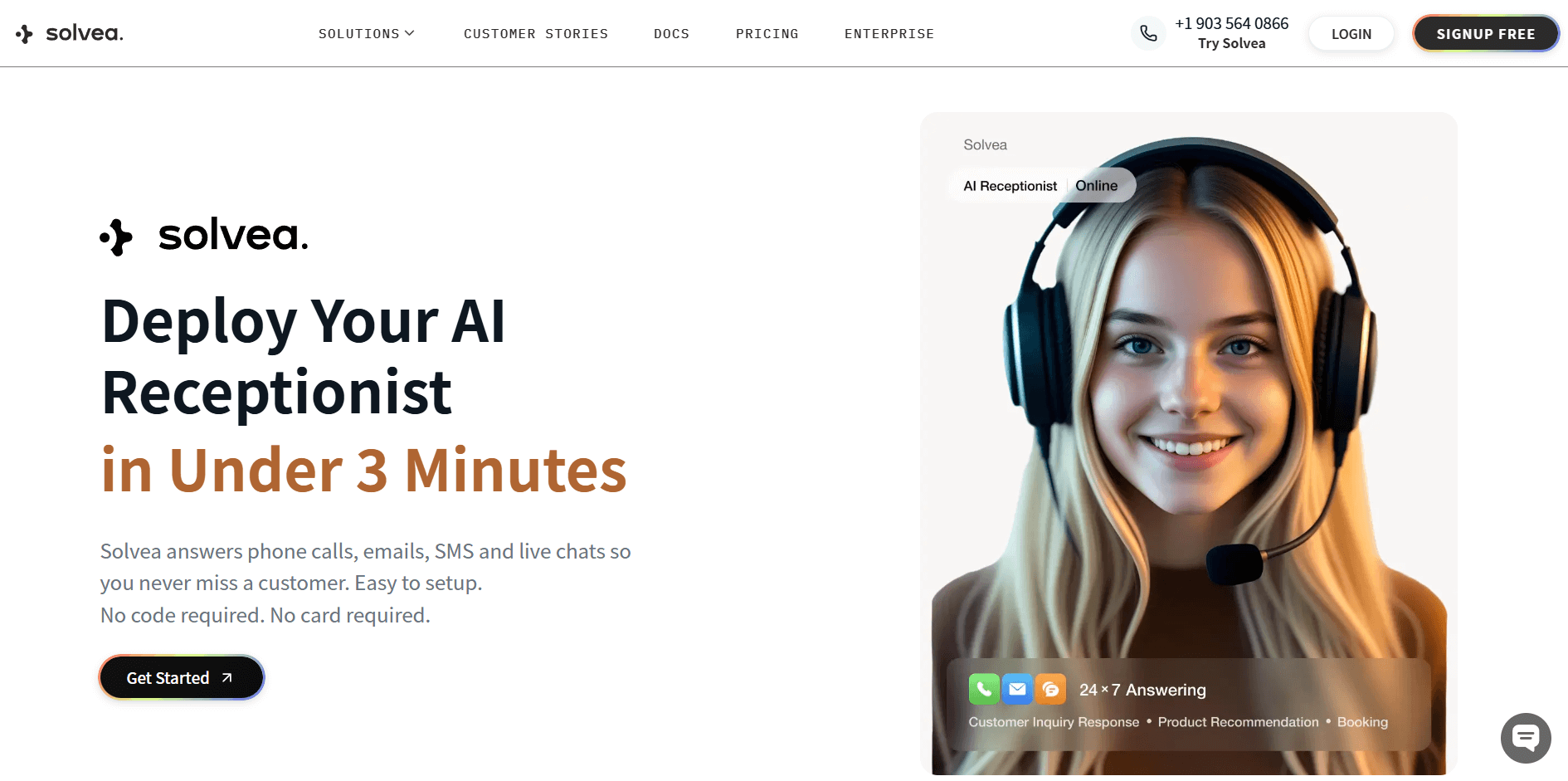
Solvea is positioned as a robust, business-ready AI voice automation platform specifically engineered for real-world phone workflows, distinguishing itself from tools primarily designed for developer experimentation. It focuses on delivering tangible resolutions rather than merely facilitating conversations, making it ideal for small to medium-sized businesses (SMBs) seeking efficient and effective call automation without extensive technical overhead. It also provides specific solutions like retail, hotel and real estate.
Solvea operates by providing end-to-end voice and workflow automation. It excels in automating a wide array of customer interactions, including customer support, appointment bookings, and lead qualification. The platform integrates voice interactions with broader business workflows, ensuring a seamless operational flow and efficient help desk. Designed for rapid deployment, Solvea minimizes the complexity and time typically associated with setting up AI solutions, allowing businesses to quickly implement and benefit from its capabilities.
Solvea allows businesses to set up an AI voice assistant through a clear and structured process. Users first design the agent by defining its role, tone, and primary tasks, such as handling support calls or booking appointments. Next, they connect a knowledge base that includes company information, FAQs, pricing, or policies, so the agent can respond accurately and consistently. Users can then configure integrations and plugins, linking the assistant to tools like calendars or CRM systems. This enables the agent to take real actions during calls, such as scheduling appointments or updating records.
Once everything is configured, the AI voice assistant can run automatically, handling calls according to the defined workflows while businesses monitor and optimize performance over time.
Key points:
- Automates customer support, bookings, and lead qualification: Solvea excels in automating a wide array of customer interactions, from handling routine support queries to managing appointment schedules and qualifying sales leads.
- End-to-end voice + workflow automation: The platform offers comprehensive automation that integrates voice interactions with broader business workflows, ensuring a seamless operational flow.
- Minimal setup required: Designed for rapid deployment, Solvea minimizes the complexity and time typically associated with setting up AI solutions, making it accessible for businesses seeking quick implementation.
- Built for SMB call operations: Solvea is particularly well-suited for small to medium-sized businesses (SMBs) that require efficient and effective call automation without extensive technical overhead.
Vapi: Best for Developers Building Agents

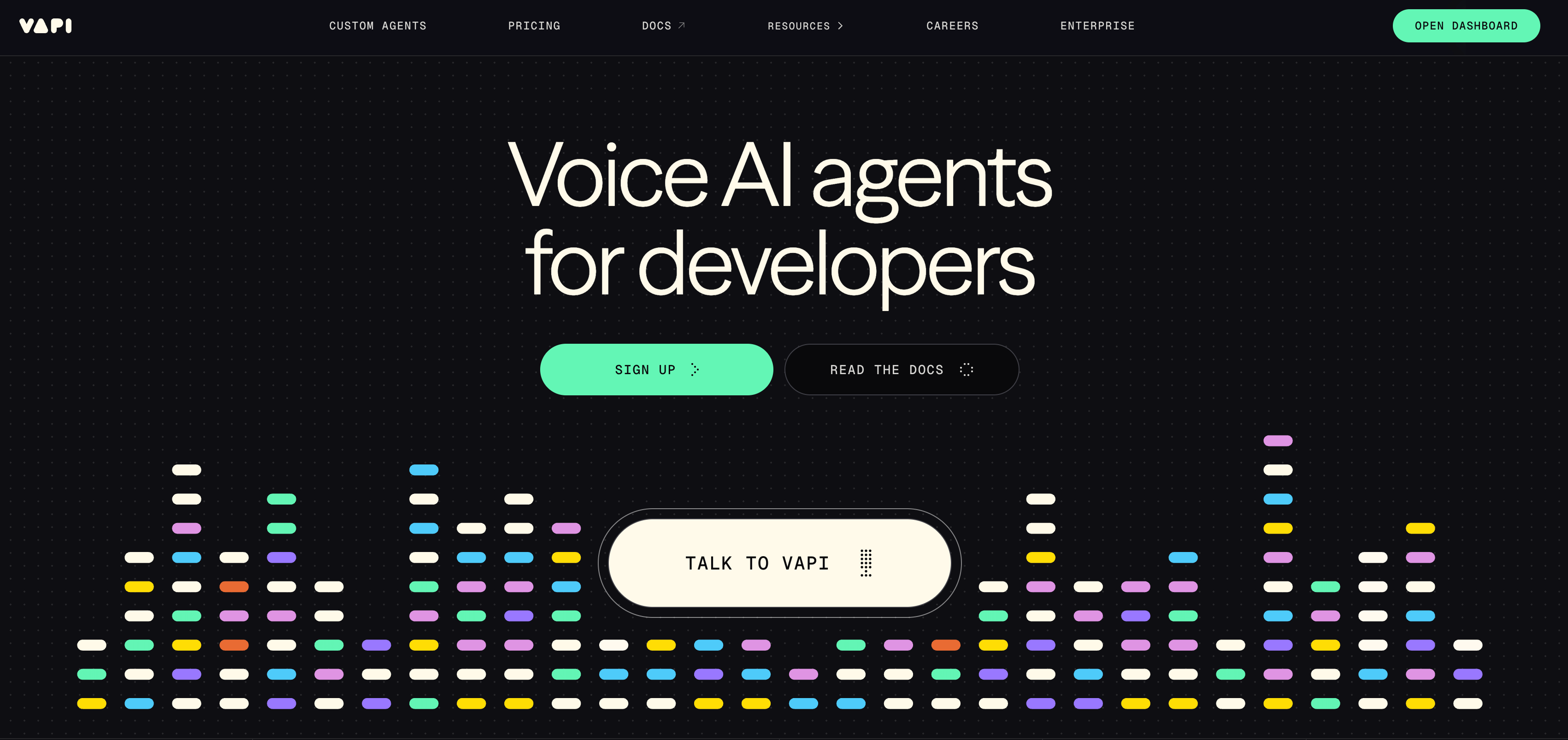
Vapi is a developer-focused voice agent platform built for teams that want full control over how conversational systems are designed and deployed. Rather than offering a ready-to-use business workflow solution, it provides the building blocks needed to create custom voice agents tailored to specific product or application requirements.
To use Vapi, developers typically begin by defining conversation logic and integrating speech recognition, language models, and voice output through its API. Teams can connect their preferred LLM providers and configure prompts, call flows, and response handling according to their own architecture. The platform is then integrated into existing applications or telephony systems, where developers manage deployment, monitoring, and scaling based on usage needs.
Key points:
- API-driven voice agent architecture: Vapi's core strength lies in its robust API, allowing developers to programmatically control and integrate voice agents into their applications.
- Flexible LLM integrations: The platform supports integration with various Large Language Models (LLMs), providing adaptability in conversational AI capabilities.
- Requires engineering resources: Due to its developer-centric nature, Vapi is best utilized by organizations with dedicated engineering teams capable of custom development and integration.
- Suitable for custom voice applications: It is an ideal choice for businesses that need highly customized voice solutions that cannot be met by off-the-shelf products.
Poly AI: Best for Enterprise Contact Center Automation

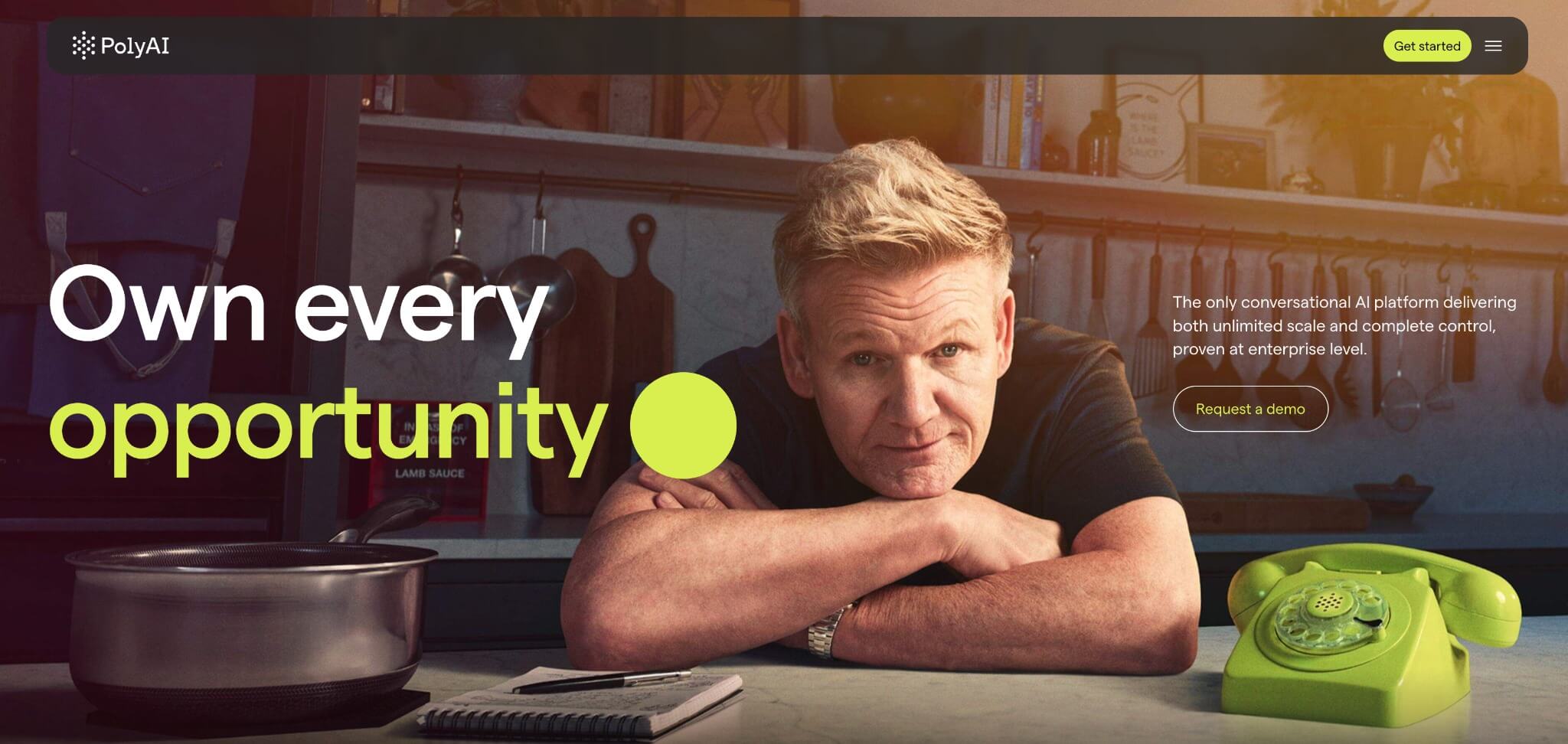
Poly AI is an enterprise-focused AI voice assistant platform built for large-scale contact center environments. It is primarily used to automate inbound customer service calls, particularly in industries that manage high call volumes and complex service workflows.
Organizations typically begin by defining use cases such as billing inquiries, account management, or service troubleshooting. PolyAI works with enterprises to map conversation flows and integrate the assistant into existing contact center systems. The platform is then connected to backend data sources and telephony infrastructure, enabling it to handle live customer interactions while escalating complex cases to human agents when necessary. Ongoing optimization is usually managed in collaboration with internal operations and IT teams.
Key points:
- Enterprise-grade voice customer support automation: PolyAI provides robust solutions for large organizations, focusing on automating complex customer service scenarios.
- Natural, human-like conversational voice AI: The platform prides itself on its ability to generate highly realistic and natural conversations, enhancing the customer experience.
- Designed for call centers and large support teams: Its features and scalability are geared towards the demanding environments of large contact centers and extensive support operations.
- Strong integrations with contact center systems: Poly AI offers seamless integration with existing contact center infrastructure, ensuring smooth deployment and operation.
Retell AI: Best for Real-time Voice Systems

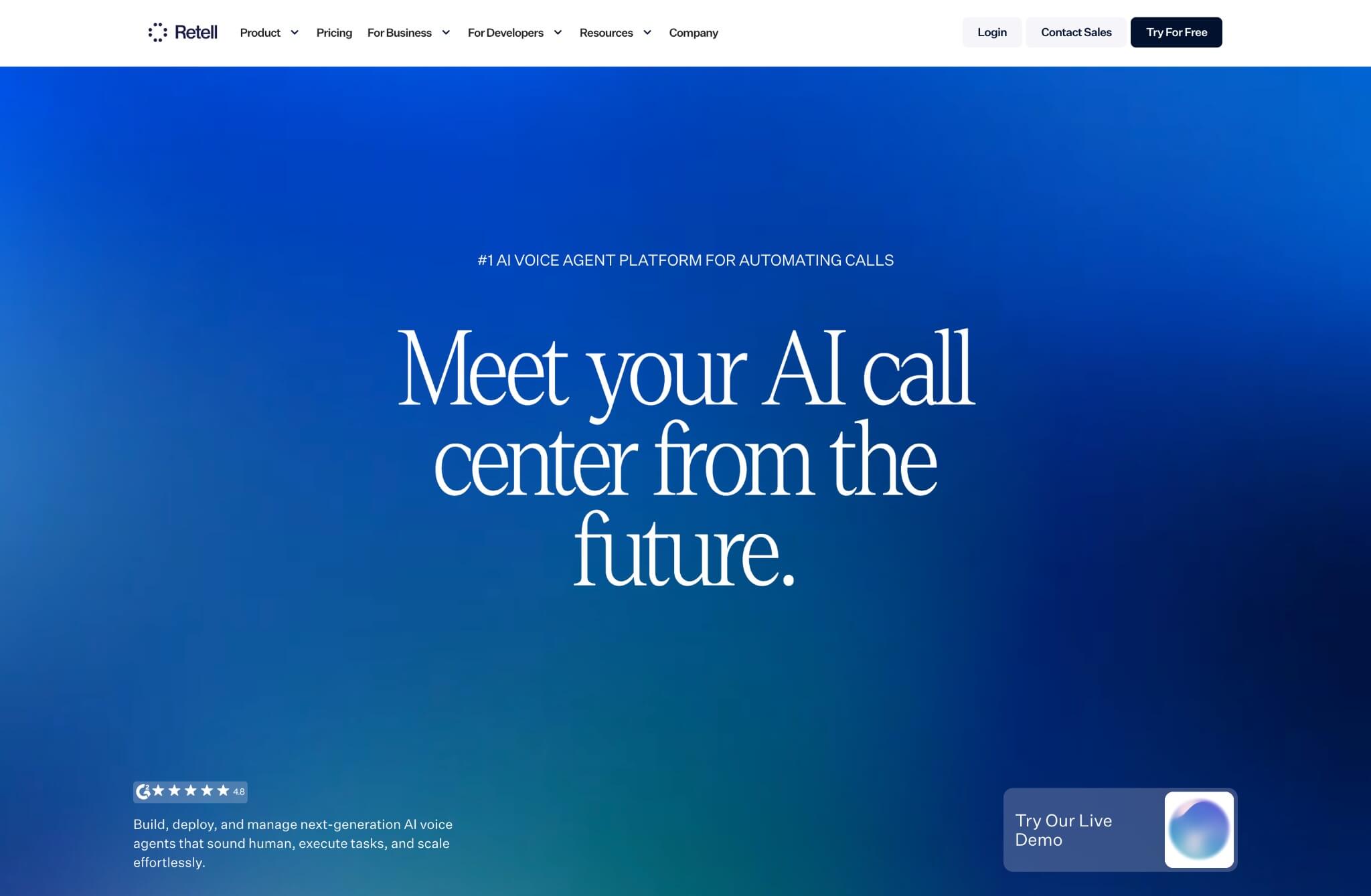
Retell AI is a real-time voice AI platform focused on low-latency conversational performance. Rather than positioning itself as a complete business automation solution, it primarily serves as a voice infrastructure layer that enables fast and responsive AI-driven conversations.
To use Retell AI, developer teams typically integrate its real-time voice APIs into their existing applications or backend systems. The platform handles streaming audio input and output while connecting to external language models and business logic defined by the development team. Because it operates as an infrastructure component, configuration, orchestration, and workflow management are usually managed externally within the broader system architecture.
Key points:
- Fast streaming voice conversations: Retell AI is built for speed, enabling rapid and fluid voice interactions crucial for dynamic conversational applications.
- Works as infrastructure inside larger systems: It is typically deployed as a backend service, providing real-time voice capabilities to more extensive software solutions.
- Developer-oriented deployment: Similar to Vapi, Retell AI requires technical expertise for integration and deployment, making it suitable for developer teams.
- Strong real-time performance: The platform is engineered for high performance in real-time scenarios, ensuring minimal delays in voice communication.
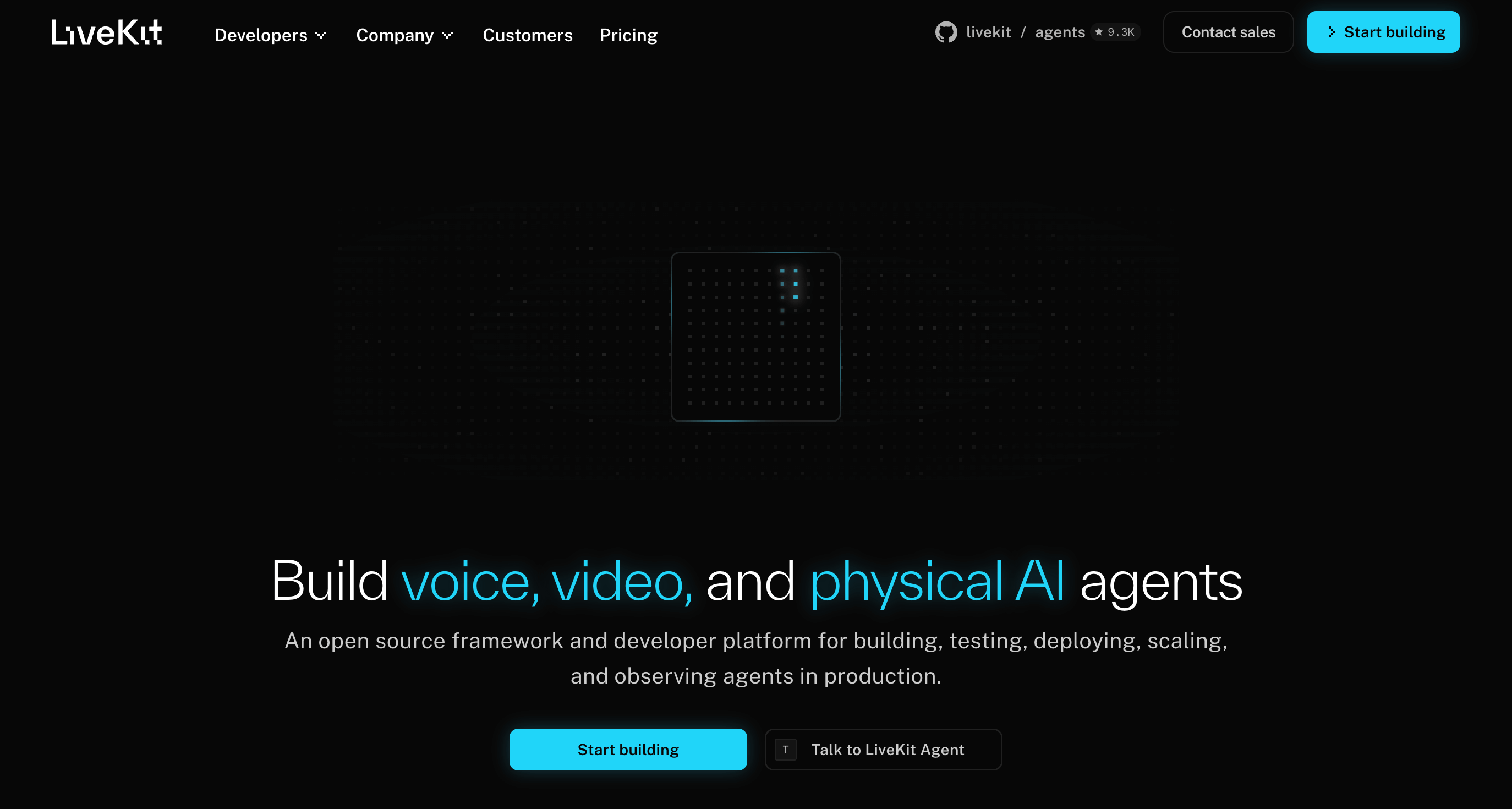
LiveKit: Best for Engineering Teams

LiveKit is a real-time audio and video infrastructure platform rather than a ready-to-deploy AI voice assistant. It provides the underlying communication layer that enables developers to build voice and video features into their own applications.
To use LiveKit, engineering teams typically integrate its SDKs and WebRTC-based infrastructure into custom systems. Developers handle signaling, media streaming, and scaling through LiveKit, while separately building or integrating AI agents, speech recognition, and language models on top of it. Because LiveKit focuses on communication infrastructure, the conversational logic and automation workflows must be designed and maintained independently.
Key points:
- WebRTC-based communication infrastructure: LiveKit leverages WebRTC to provide robust and scalable real-time audio and video capabilities.
- Requires custom AI agent development: While it offers the infrastructure, businesses need to develop their own AI agents on top of LiveKit to create a complete voice assistant solution.
- Highly scalable real-time audio system: The platform is designed to handle a large volume of concurrent audio streams, making it suitable for applications requiring extensive real-time communication.
- Popular for engineering teams: Its infrastructure-focused nature makes it a preferred choice for engineering teams looking to build custom communication solutions from the ground up.
ElevenLabs: Best for Realistic Voice

ElevenLabs is a leading platform specializing in realistic voice AI and AI call agents. It is designed for businesses looking to deploy human-like conversational AI for various applications, including customer support, sales, and lead qualification. The platform focuses on delivering highly natural and expressive voices, making AI interactions more engaging and effective.
ElevenLabs’ AI call agents are capable of handling complex inquiries, booking meetings, and resolving support issues in real-time. It offers integrations with CRMs, payment systems, and telephony, enabling comprehensive workflow automation.
Key points:
- Realistic voice AI and human-like conversations: ElevenLabs excels in generating highly natural and expressive voices, making AI interactions more engaging and effective.
- Comprehensive AI call agent capabilities: Its agents can handle complex inquiries, book meetings, and resolve support issues in real-time, suitable for various business applications.
- Integrations for workflow automation: The platform offers integrations with CRMs, payment systems, and telephony to enable seamless workflow automation.
- Continuous innovation and enterprise readiness: ElevenLabs is committed to continuous improvement, with updates enhancing its features, security, and suitability for enterprise use.
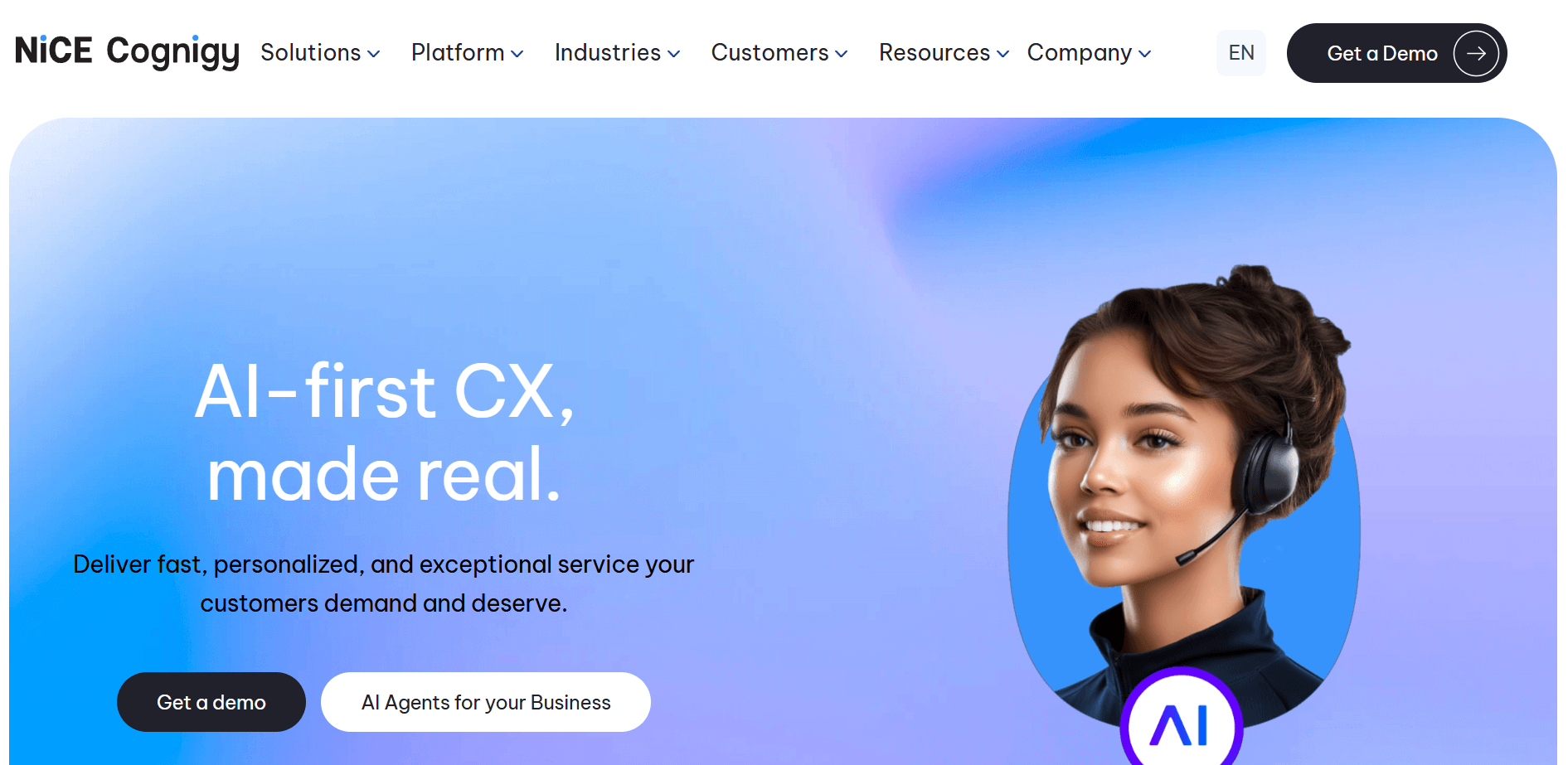
Cognigy: Best for Enterprise Contact Center

Cognigy is an enterprise-grade conversational AI platform designed for customer service automation within contact centers. It enables organizations to build and deploy AI agents that can communicate autonomously with customers across various channels, including phone, chat, and messaging.
The platform supports both generative AI and deterministic, rule-based automation, offering flexibility and control for enterprises. It features advanced language understanding, multi-LLM architecture, and AI Copilot tools to empower human agents. Cognigy is built for high interaction volumes and complex implementations, providing robust solutions for large enterprises seeking to optimize their customer experience.
Key points:
- Enterprise-grade conversational AI platform: Cognigy is built for large organizations, focusing on automating complex customer service scenarios across multiple channels.
- Hybrid AI approach: It combines generative AI with deterministic automation, allowing for both flexible and controlled conversational flows.
- Advanced language understanding and multi-LLM architecture: The platform leverages advanced AI to understand nuanced requests and offers flexibility in choosing the best-fit LLM for each task.
- AI Copilot for agent empowerment: Cognigy provides tools to assist human agents, enhancing their productivity and ability to manage customer queries effectively.
Yellow.ai: Best for Custom Experience

Yellow.ai is an AI agent platform specializing in customer experience (CX) and employee experience (EX) automation. It empowers businesses to build, test, and deploy powerful AI agents that can think, act, and resolve issues autonomously across various channels. Yellow.ai aims to deliver smarter interactions and human-like conversations in complex scenarios.
The platform offers omnichannel orchestration with multi-modal support, allowing seamless communication through voice, text, images, and video. It features robust analytics to continuously improve AI agent performance and a multi-LLM architecture for flexibility and avoiding vendor lock-in.
Key points:
- AI agents for CX and EX automation: Yellow.ai focuses on automating customer and employee interactions across various touchpoints.
- Multi-channel and multi-modal support: The platform enables seamless communication through diverse channels and media types, maintaining conversational context.
- Performance-driven analytics and multi-LLM architecture: It provides dynamic insights to optimize AI agent performance and offers flexibility in LLM selection.
- Enterprise-grade security and extensive integrations: Yellow.ai ensures data security and integrates with over 150 enterprise systems for smooth deployment.
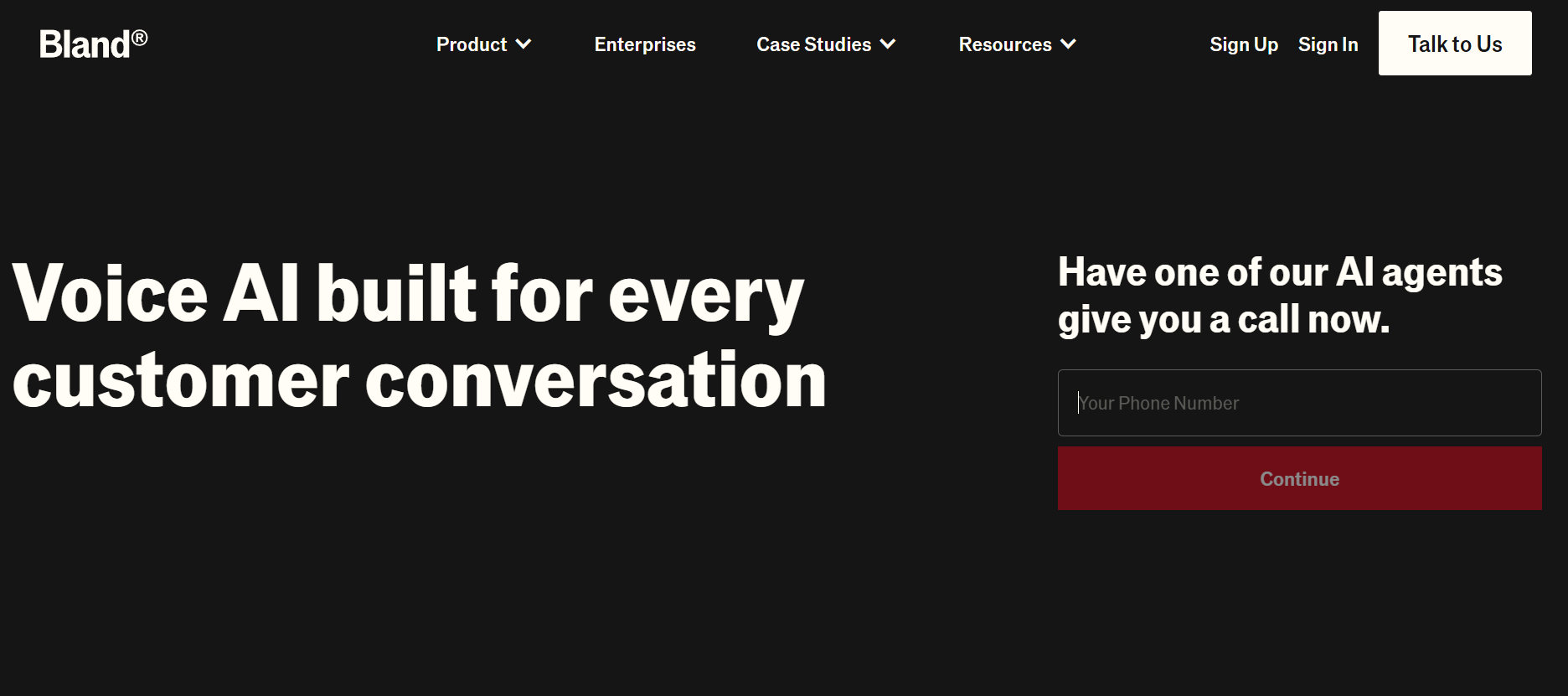
Bland AI: Best for Programmable AI Call

Bland AI is a voice automation platform designed to streamline phone communications for businesses using conversational AI. It focuses on automating both inbound and outbound phone calls with AI that sounds human, making it suitable for sales, customer support, and various other enterprise communication needs. Bland AI emphasizes custom-trained models and dedicated infrastructure for its clients.
The platform offers features like bulk contact imports, intelligent contact prioritization, automated retry logic, and real-time dashboards for campaign tracking. It supports omni-channel generative AI communication, including calls, SMS, and chat, and can handle up to 1 million concurrent calls.
Key points:
- Automated phone calls with human-like AI: Bland AI specializes in automating inbound and outbound calls using highly natural-sounding AI agents.
- Custom-trained models and dedicated infrastructure: The platform offers fine-tuned models and dedicated servers for enhanced performance and data security.
- Comprehensive call automation features: It includes tools for contact management, campaign tracking, and structured data extraction from conversations.
- Omni-channel communication and scalability: Bland AI supports calls, SMS, and chat, and is designed to handle high volumes of concurrent communications.
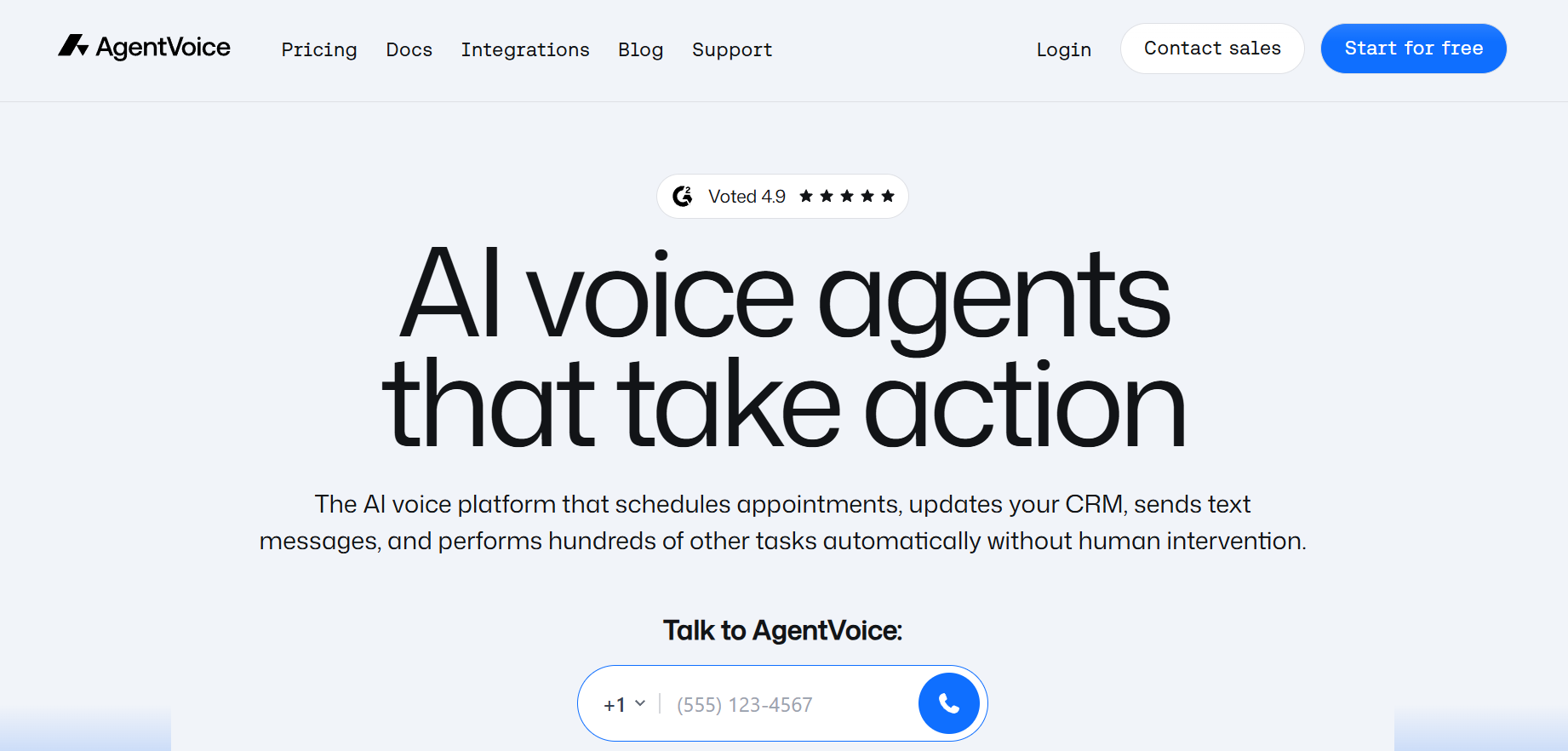
AgentVoice: Best for Outbound Sales Call

AgentVoice is an AI voice agent platform primarily focused on transforming outbound calling into a structured and efficient workflow. It is designed to automate sales calls, lead qualification, appointment scheduling, and customer follow-ups, ensuring timely and personalized communication. AgentVoice aims to provide measurable outcomes for businesses through its AI-powered calling campaigns.
The platform offers features such as bulk contact imports with validation, campaign-level goals, intelligent contact prioritization, and automated retry logic. It provides real-time dashboards for progress tracking and structured data extraction that integrates with CRMs.
Key points:
- AI voice agents for outbound calling: AgentVoice specializes in automating outbound sales calls, lead qualification, and customer follow-ups.
- Structured campaign workflows: It transforms outbound calling into a structured process with clear goals and real-time progress tracking.
- Advanced contact management and prioritization: The platform includes features for bulk contact imports, validation, and intelligent prioritization.
- Real-time insights and CRM integration: AgentVoice provides dashboards for tracking campaign progress and extracts structured data for seamless integration with CRMs.
Why Solvea Stands Out?
Solvea distinguishes itself in the crowded AI voice assistant market through its unique combination of features and strategic positioning, particularly for businesses seeking immediate and impactful call automation solutions. Its key differentiators include:
- Built specifically for business call automation: Unlike more general-purpose AI platforms or developer tools, Solvea is purpose-built to address the specific challenges and requirements of business call operations. This specialized focus ensures that its features and functionalities are directly aligned with enhancing call center efficiency and customer service.
- Combines voice, AI, and workflow automation in one platform: Solvea offers a holistic solution that integrates voice interaction capabilities with advanced AI and comprehensive workflow automation. This end-to-end approach means businesses can manage entire call processes, from initial customer contact to resolution and follow-up, all within a single, unified platform.
- Faster deployment compared to developer-centric tools: One of Solvea's significant advantages is its ease and speed of deployment. Designed for minimal setup, it allows businesses to quickly implement and benefit from AI voice automation without the extensive technical resources or development cycles often required by API-driven or infrastructure-focused solutions like Vapi or LiveKit. This makes it an ideal choice for SMBs looking for rapid time-to-value.
Conclusion
Choosing the right AI voice assistant depends on a business’s needs, technical capabilities, and strategic goals.
For rapid deployment and end-to-end call automation with minimal technical overhead, platforms like Solvea and Bland AI offer scalable, business-ready solutions.
For highly customized voice agents and real-time communication infrastructure, developer-focused tools such as Vapi, LiveKit, and Retell AI provide flexible, API-driven architectures.
Enterprises seeking human-like conversational AI and robust contact center automation can consider PolyAI, Cognigy, or Yellow.ai for omnichannel customer and employee experience.
For applications emphasizing realistic, expressive voices or outbound sales workflows, ElevenLabs and AgentVoice deliver specialized capabilities.
Ultimately, the right choice is the one that transforms your customer interactions—whether by saving time, improving engagement, or driving measurable outcomes—while fitting your team’s technical capacity and business objectives.
FAQ
1. What is the best AI voice assistant for business calls?
The best AI voice assistant depends on your specific business needs. Platforms like Solvea are designed for ready-to-use call automation, offering quick deployment and end-to-end solutions for businesses. In contrast, developer-focused tools such as Vapi or LiveKit provide greater customization options but require more technical resources for implementation.
2. Are AI voice assistants able to replace human agents?
AI voice assistants are most effective when used to handle repetitive and high-volume calls, significantly improving efficiency and reducing operational costs. However, human agents remain crucial for managing complex, sensitive, or highly nuanced conversations that require empathy, critical thinking, and advanced problem-solving skills.
3. Do AI voice assistants support inbound and outbound calls?
Most modern AI voice assistants are equipped to support inbound calls, efficiently handling customer inquiries and support requests. The capability for outbound calling varies by provider, with some platforms offering robust features for sales, outreach, and proactive customer engagement, while others may have more limited outbound functionalities.
4. Is an AI voice assistant difficult to set up?
The difficulty of setting up an AI voice assistant largely depends on the chosen platform. End-to-end solutions like Solvea are typically designed for ease of deployment, featuring minimal setup requirements to enable rapid integration into existing workflows. Conversely, developer-first frameworks often demand more technical expertise and configuration, leading to a more involved setup process.
5. How are AI voice assistants priced?
Pricing models for AI voice assistants commonly vary. Many platforms adopt a usage-based pricing structure, where costs are determined by factors such as call minutes or conversation volume. Additionally, some providers may charge extra for advanced features, premium integrations, or specialized functionalities, offering tiered plans to accommodate different business scales and needs.


![Top 10 Meeting Minutes Apps for Different Uses [2026 Shortlist]](https://cdn.shulex-voc.com/shulex/upload/2026-03-08/fcfbef6a-f3e0-4d44-b1fc-7cf1b0e9d380.jpg)
![The 10 Best AI Email Assistants in 2026 [Tested & Reviewed]](https://cdn.shulex-voc.com/shulex/upload/2026-03-03/d8f69c8e-5b60-4ee3-879b-2197c44d88cf.png)
![Top 10 AI Voice Assistants in 2026 [Tested & Reviewed]](https://cdn.shulex-voc.com/shulex/upload/2026-02-13/636d1241-b2b9-48dd-98e1-ea779de15697.jpg)