Go to market automation is not a giant operating model. It is a way to make the next step happen when a lead, prospect, or customer reaches out and the team would otherwise rely on memory, a spreadsheet, or a late callback.
For a small service business, that can mean answering a missed call, collecting the request, checking fit, booking a time, routing the handoff, and keeping the result in one place. That is where go to market automation starts to matter: not in theory, but at the point where a repeatable workflow is costing time, context, or revenue.
This guide explains what go to market automation is, when it matters, when it does not, which workflows to automate first, and how to decide whether the work still belongs with people.
What is go to market automation?
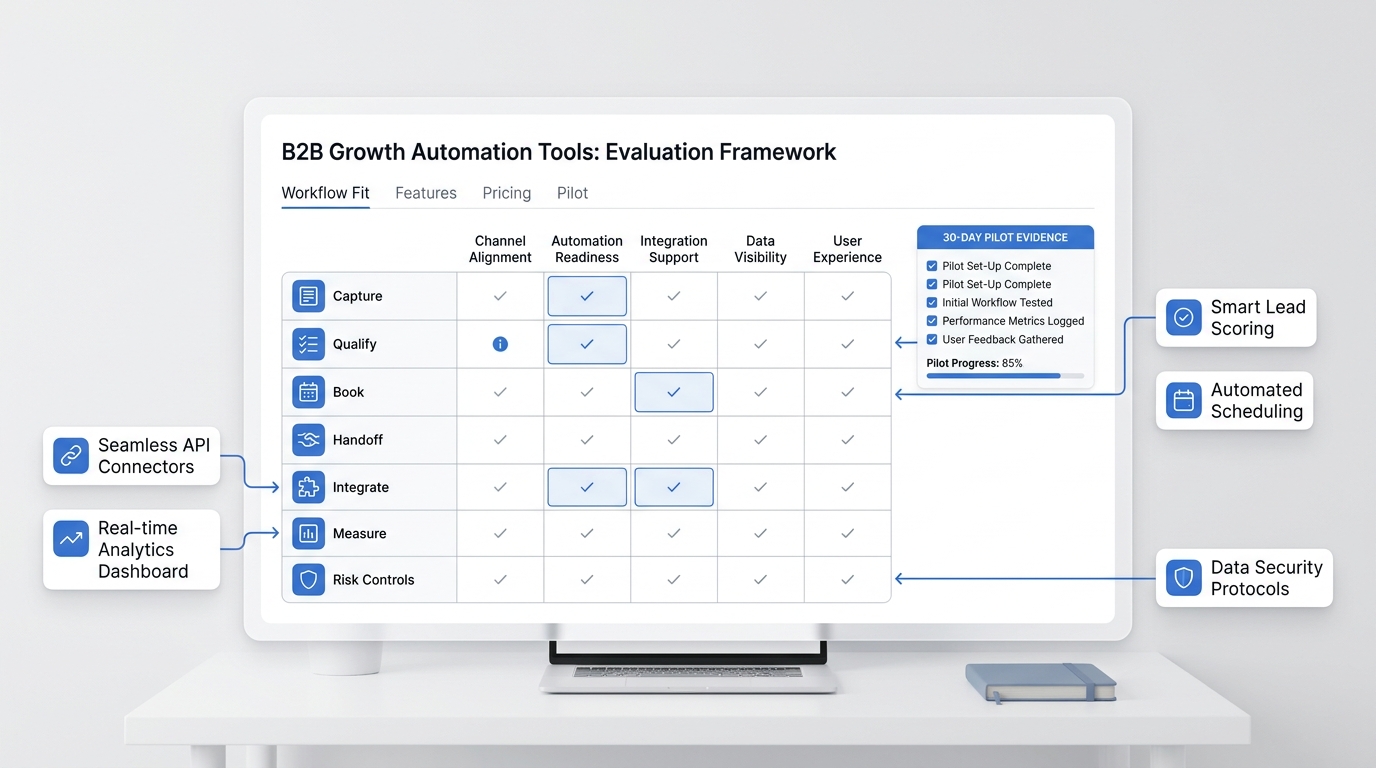
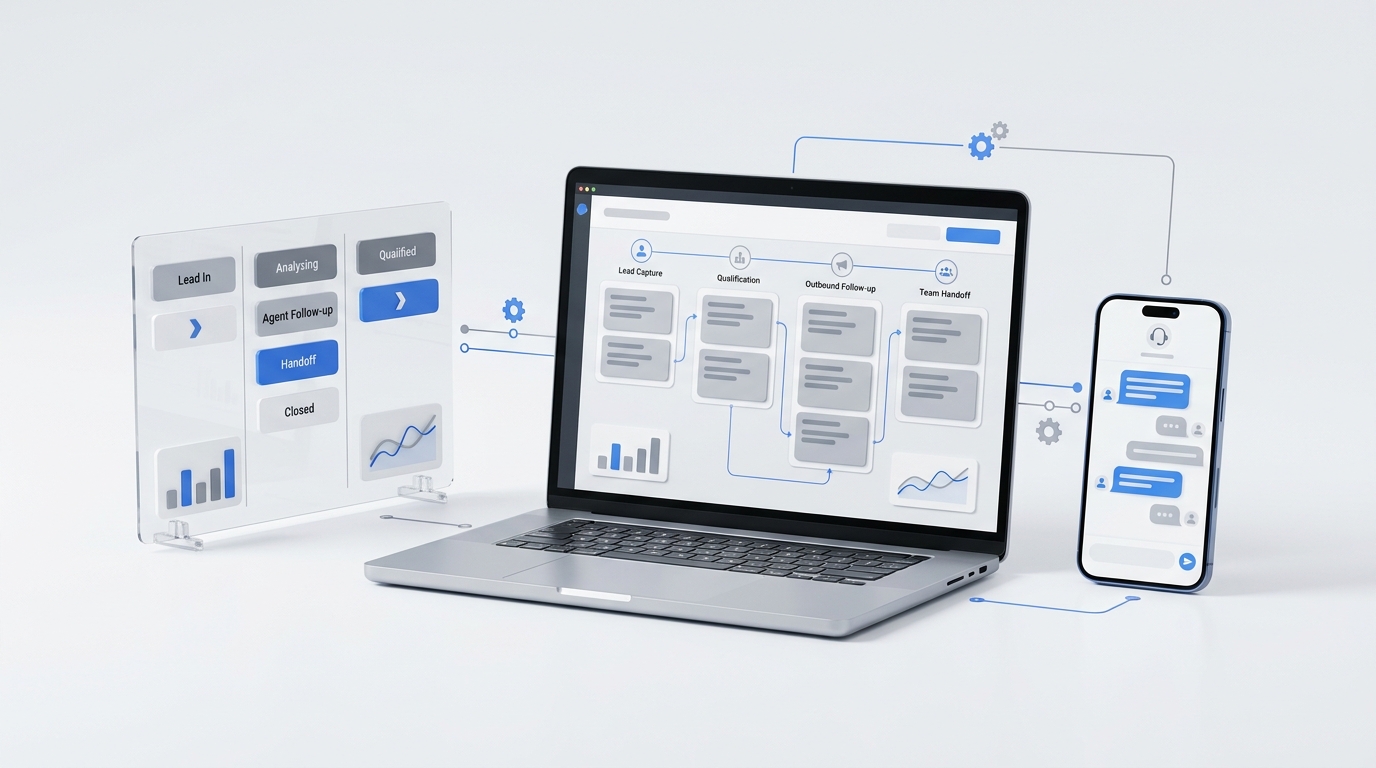
Go to market automation is the use of software, rules, and AI to move a prospect or customer through repeatable go-to-market steps. Those steps usually include lead capture, response, qualification, booking, routing, follow-up, onboarding, and measurement.
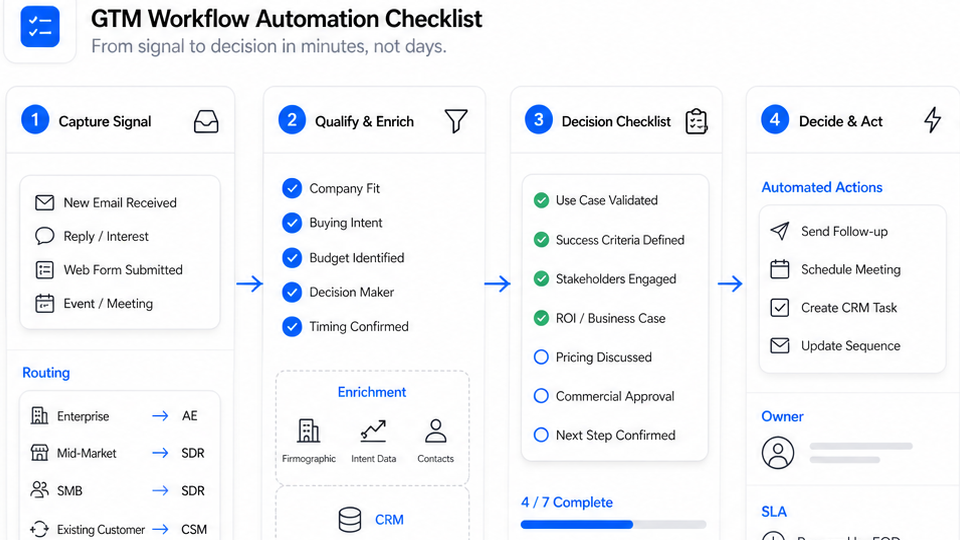
A simple go to market automation workflow has three parts:
- Trigger: something happens, such as an inbound call, a form fill, a chat request, a quote request, or a booked appointment.
- Decision: the system checks context, such as service requested, location, urgency, lead source, or availability.
- Action: the system responds, asks the next question, books, routes, updates a record, sends a reminder, or escalates.
That is the practical meaning of go to market automation. It does not replace strategy. It handles the repeatable execution around strategy so leads do not fall between tools or people.
When go to market automation matters
Go to market automation matters when the same workflow happens often enough that small delays start to show up in revenue or team load.
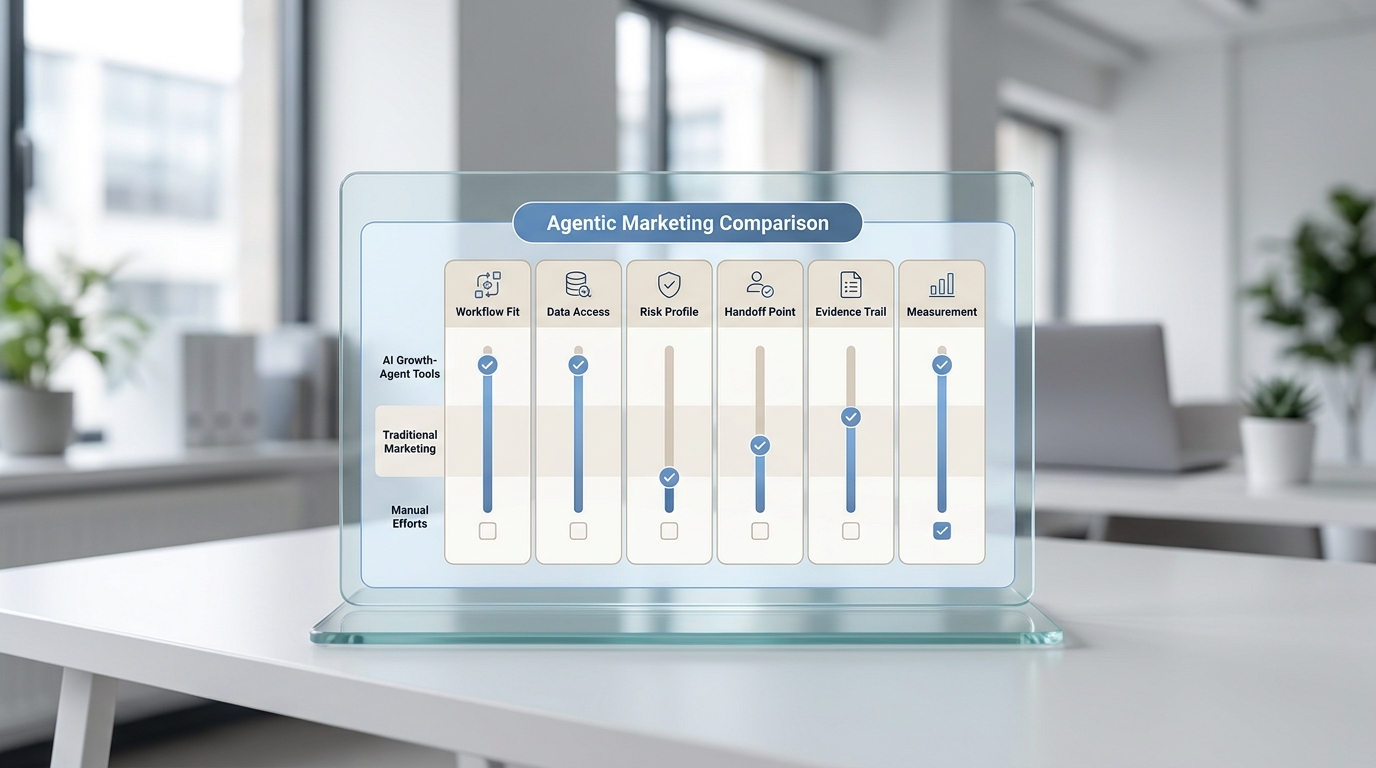
| Signal | What it looks like | Why it matters |
|---|---|---|
| Repetition | The same request shows up every week | Repetition gives automation enough value to justify setup |
| Slow response | Leads wait too long for a next step | Delay lowers conversion and creates leakage |
| Handoff loss | Context gets lost between people or tools | The team spends time re-asking basic questions |
| No owner | Nobody knows who should do the next step | Work stalls even when demand is real |
| Measurable outcome | You can name the result | Measurement keeps the workflow honest |
If a workflow is frequent, predictable, and tied to bookings, quotes, or follow-up, go to market automation usually matters.
If the workflow is rare, unstable, or hard to define, it usually does not.
When it does not matter yet
Go to market automation is not the right first move when:
- the workflow changes every time;
- the team still disagrees on the process;
- the work is high risk or sensitive;
- no one can say what a successful result looks like;
- the manual version is still working fine.
In those cases, adding automation only makes the confusion move faster.
A quick decision test
Ask these five questions:
- Does this workflow happen every week?
- Is the next step clear?
- Does a delay cost time or revenue?
- Can one system own the record?
- Can we define success in one metric?
If most answers are yes, go to market automation is probably worth testing.
If most answers are no, keep the process manual for now.
The first workflows to automate
The best first go to market automation workflow is usually one that starts with a real customer signal.
- missed calls
- after-hours booking requests
- lead qualification
- quote follow-up
- appointment confirmation
- customer message routing
These are narrow enough to control and close enough to revenue to measure.
That is also why a lot of teams start with conversation-driven automation instead of campaign orchestration. It is easier to improve one live handoff than to automate an entire funnel.
What to keep human
Not every step should be automated.
Keep a person involved when the workflow includes:
- sensitive complaints
- unusual pricing
- contract exceptions
- emergency situations
- unclear policy
- high-value negotiation
- final approval
Go to market automation should handle the routine path. People should handle judgment, exceptions, and edge cases.
A simple implementation rule
If you cannot write the workflow in one sentence, do not automate it yet.
Example:
When a new lead calls after hours, capture the service need, confirm the service area, and either book the appointment or create a callback task with the summary.
That sentence has a trigger, a decision, an action, and a handoff rule. That is enough structure to start.
How Solvea fits
Solvea fits the first mile of go to market automation: answering calls, capturing context, routing the next step, and keeping the handoff visible.
For service teams, that usually means the front door workflow:
- missed calls
- SMS replies
- email follow-up
- live chat response
- booking requests
Solvea's AI Receptionist handles the inbound conversation layer, while AI Agent Builder helps teams shape how the workflow responds, routes, and follows up.
If your first go to market automation project starts with customer conversations, Solvea is built for that layer.
Where this fits in the content map
If you want the broader how-to, read GTM Automation: Beginner Guide to Your First Workflow.
If you want the use-case breakdown, read GTM Workflow Automation: Use Cases by Funnel Stage.
If you are deciding whether an AI-led workflow is worth it at all, compare this article with What Is Agentic Marketing and When It Matters.
Your AI Receptionist, Live in Minutes.
Scale your front desk with an AI that never sleeps. Solvea handles unlimited multi-channel inquiries, books appointments into your calendar automatically, and ensures zero missed opportunities around the clock.
FAQ
Is go to market automation the same as marketing automation?
No. Marketing automation usually means campaign and nurture work. Go to market automation is broader: it can include response, qualification, routing, booking, follow-up, and handoff.
What should I automate first?
Start with the workflow that is repeated, time-sensitive, and easy to measure. For many service businesses, that is missed calls or booking follow-up.
How do I know it is working?
You should see a faster next step, fewer dropped leads, and a cleaner handoff. If the workflow runs but nothing improves, it is not helping yet.
Bottom line
Go to market automation matters when the same workflow shows up often, a delay costs revenue, and the next step can be defined clearly.
If the process is still fuzzy, keep it manual. If it is repeatable and tied to bookings or follow-up, automate the first mile and measure the result.
For teams that live on calls and messages, go to market automation usually starts at the front desk. That is where Solvea can help.