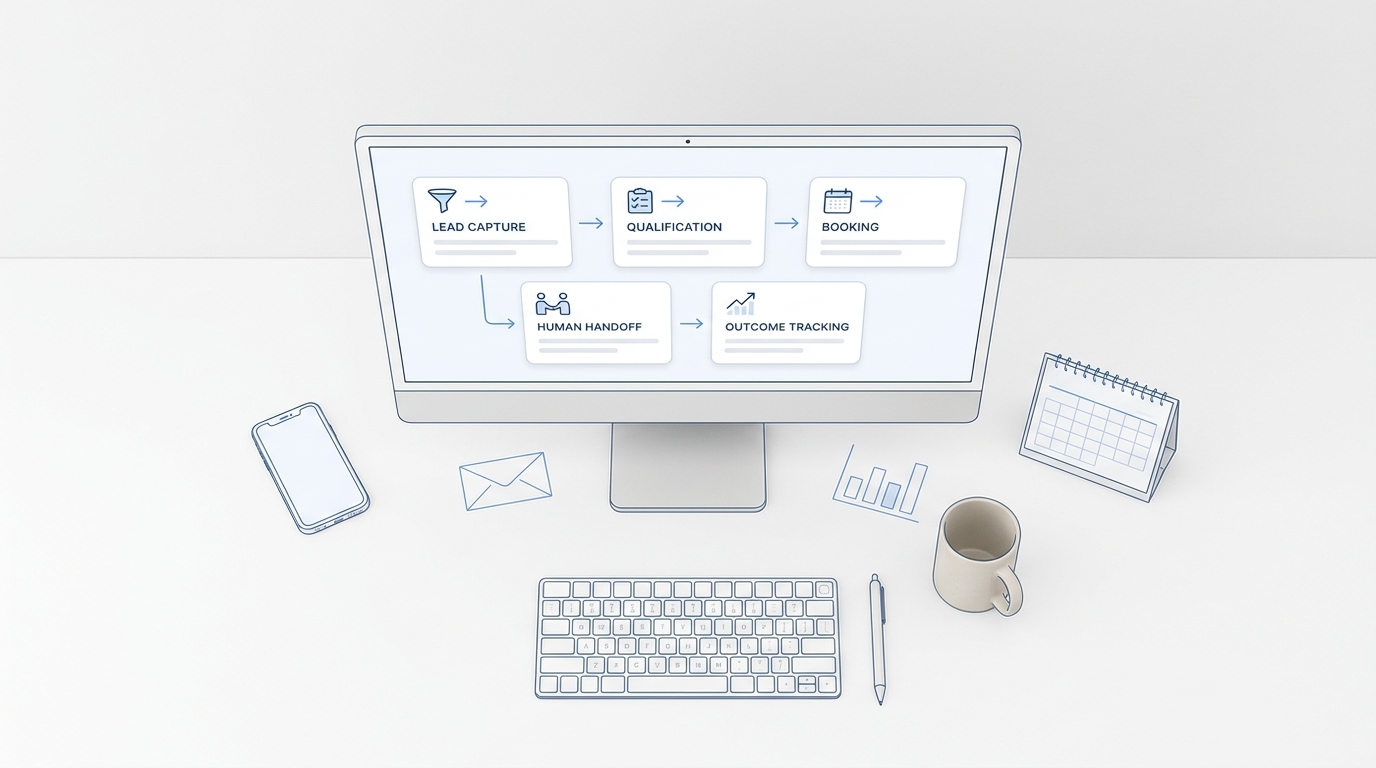
An agentic marketing comparison should not start with a vendor grid.
It should start with a sharper question: which marketing or growth workflow can an AI agent safely own, and what proof will show that it is helping?
That question matters because agentic marketing tools can look similar in a demo. One platform drafts campaigns. Another qualifies leads. Another updates a CRM, answers calls, routes conversations, books appointments, or coordinates follow-up. Those are not the same operating job. A good buying process separates broad AI claims from the workflow, data, permissions, evidence, and handoff design your team actually needs.
This guide gives SMB buyers a practical checklist for comparing agentic marketing tools before they commit budget, connect customer data, or expand automation across the team.
What agentic marketing means in a buyer comparison
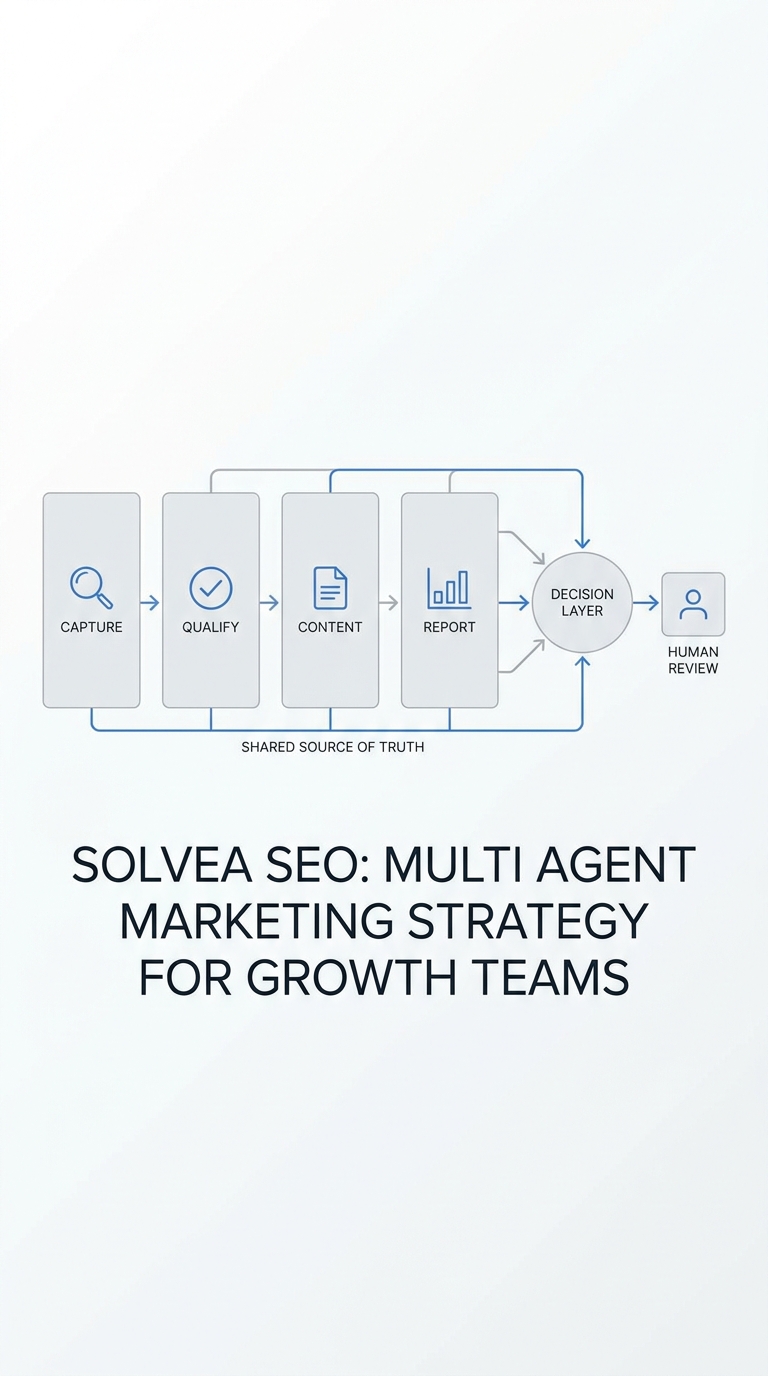
Agentic marketing is the use of AI agents to complete bounded marketing or growth workflows with access to goals, context, tools, and handoff rules. IBM's overview of agentic AI frames these systems around goal pursuit, tool use, data access, and limited human oversight.
That is different from a basic automation rule. A rule might send the same email whenever a form is submitted. An agentic workflow can inspect the inquiry, understand intent, use approved data sources, choose a next step, create a task or response, and hand off uncertain cases to a person.
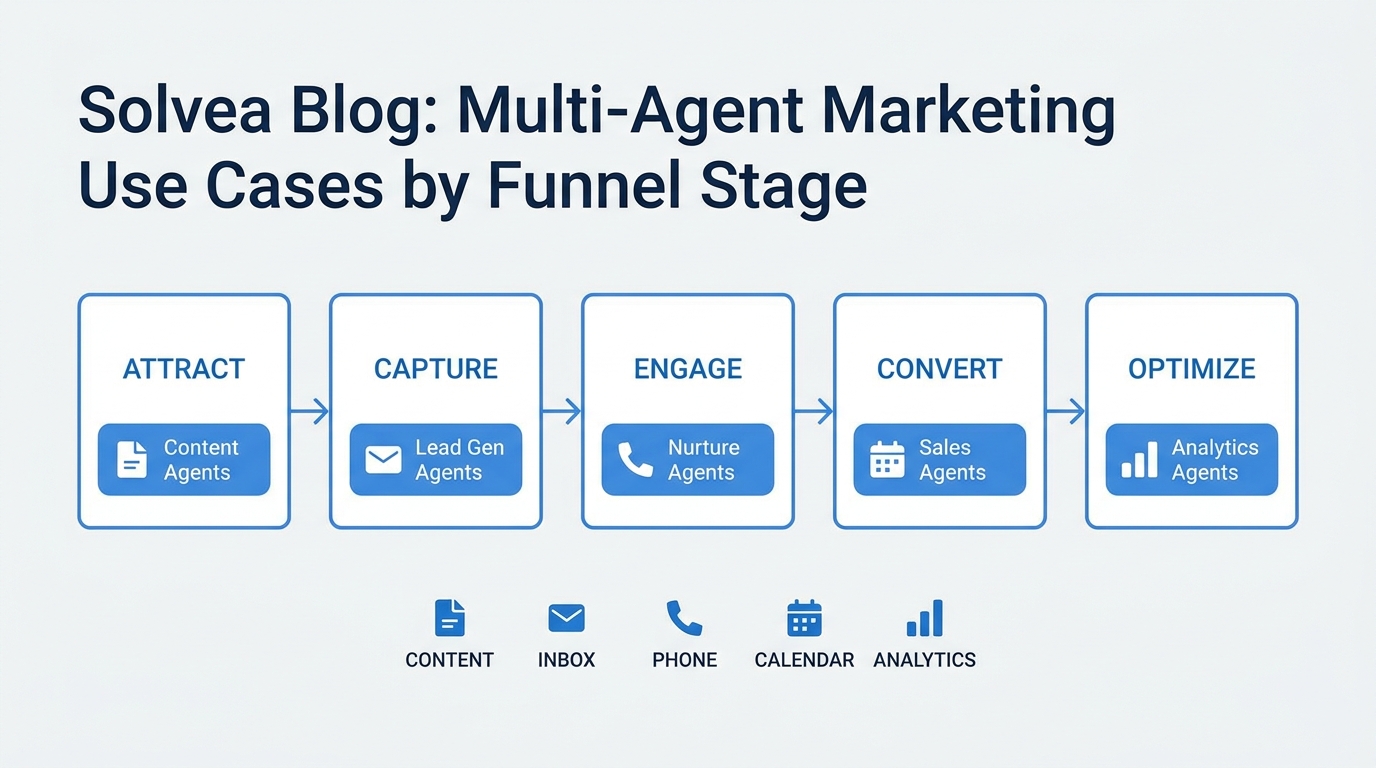
That does not mean the agent should run all of marketing. For service-based SMBs, the best starting point is usually narrower: respond to missed calls, qualify appointment requests, collect missing details, route customer conversations, follow up after a quote, or summarize the next action for the owner.
So the comparison should focus less on "Which tool has the most AI features?" and more on "Which tool can own this specific growth step with the right controls?"
The buyer checklist
Use this agentic marketing comparison checklist before you rank tools.
| What to check | Why it matters | Strong signal | Weak signal |
|---|---|---|---|
| Workflow fit | The agent needs a job, not a vague mandate. | The tool maps to one clear trigger, outcome, owner, and handoff. | The demo promises broad AI growth without naming the operational step. |
| Data access | Agents fail when they cannot see the context behind a decision. | It connects to inboxes, calendars, CRM records, forms, knowledge base content, and conversation history. | It depends mostly on prompts or manual copy-paste. |
| Action rights | Autonomy should match business risk. | Permissions separate draft, tag, route, call, message, book, update, and escalate actions. | The agent can take high-impact actions with unclear limits. |
| Evidence trail | Your team needs to inspect what happened. | Every action leaves a transcript, source, summary, status, owner, or timestamp. | The output appears without enough context to debug. |
| Handoff rules | Agentic marketing should make human work clearer. | Sensitive, uncertain, urgent, or high-value cases route to the right person. | Edge cases stay inside the automation until a customer complains. |
| Measurement | A pilot needs a business result. | Metrics include response speed, qualified leads, bookings, handoffs, correction rate, and assisted conversions. | The only metric is how many AI outputs were generated. |
If a product cannot pass the workflow, data, permission, and evidence checks, pause the purchase. Those four areas decide whether agentic marketing becomes useful operating leverage or another tool your team has to supervise manually.
1. Compare the workflow before the platform
Start your agentic marketing comparison by writing down the workflow you want improved.
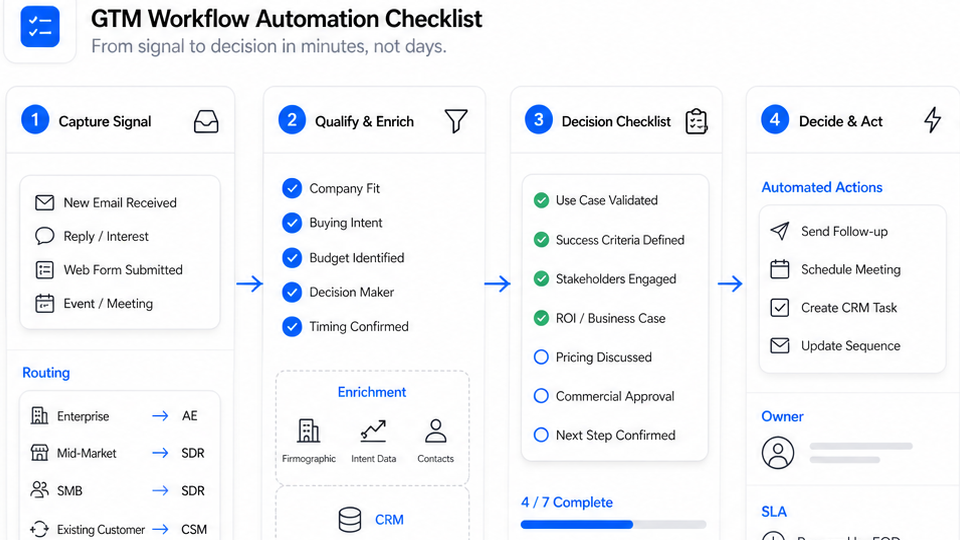
Good workflow candidates usually have four traits:
- A visible trigger, such as a missed call, new inquiry, form fill, quote request, inbound text, abandoned booking, or returning customer question.
- A measurable outcome, such as booked appointment, qualified callback, owner handoff, completed intake, updated customer record, or resolved FAQ.
- A clear data dependency, such as service type, location, availability, customer history, pricing boundaries, or prior conversation notes.
- A human fallback, such as owner review, staff assignment, manager approval, or compliance review.
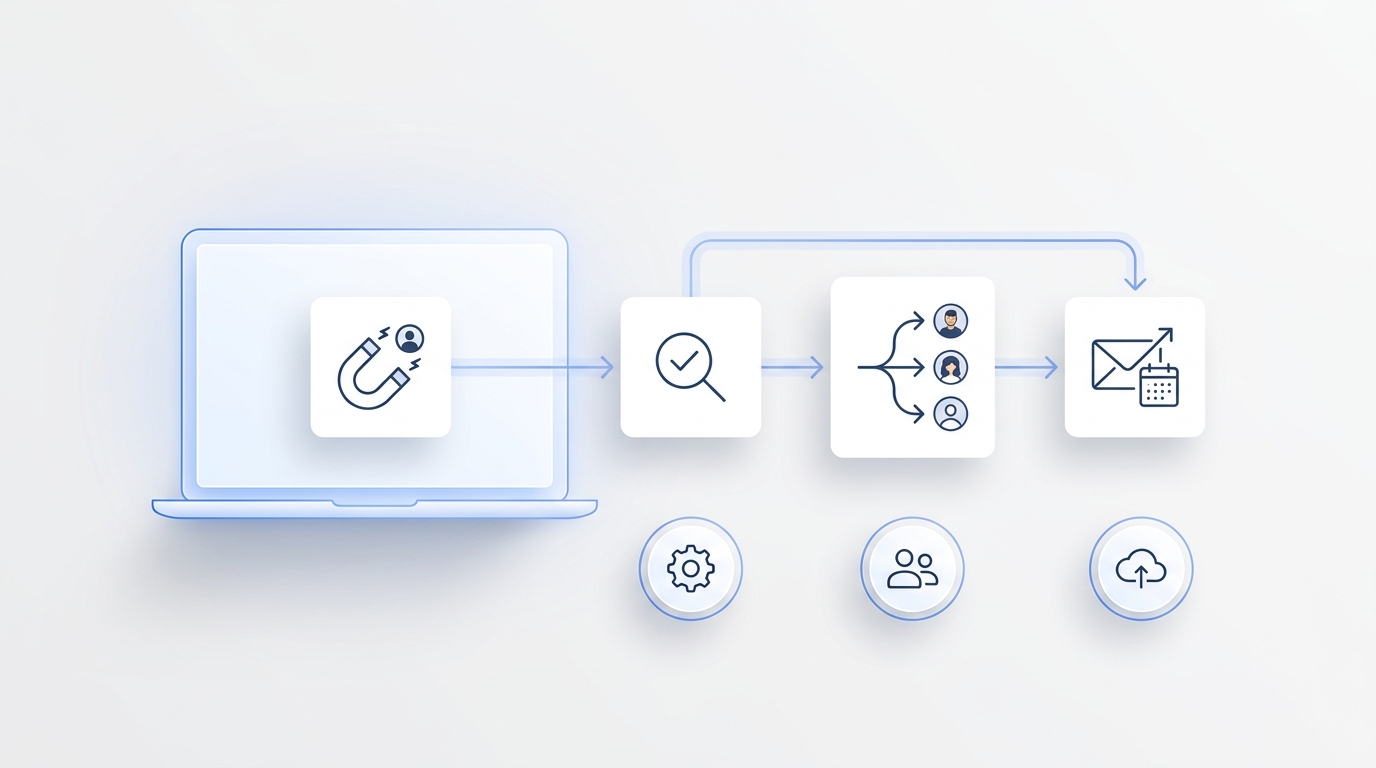
"Use AI for marketing" is too broad. "When a homeowner calls after hours, capture the service need, ask for location, determine urgency, summarize the request, send the owner a follow-up task, and text the caller that the request was received" is specific enough to test.
The right comparison category depends on that workflow. A content operations AI tool may be useful for campaign planning and publishing, but it will not solve missed inbound calls. A CRM agent may be strong when the business already runs a clean CRM, but too heavy when the immediate problem is after-hours response. A customer-conversation agent may be the best first step when revenue leaks through phone, SMS, email, chat, or WhatsApp.
2. Separate assistants from agents
Many AI marketing tools are useful without being truly agentic.
An assistant helps a person create, summarize, analyze, or draft. It can save time, but a human still drives the workflow.
An agent owns a bounded outcome. It can observe a trigger, use tools, check data, decide the next step, log the result, and escalate when it reaches a rule or confidence boundary.
Use this quick test:
| Capability | AI assistant | AI agent |
|---|---|---|
| Drafts campaign copy | Yes | Yes |
| Reads live customer context | Sometimes | Should |
| Uses integrations or tools | Limited | Core capability |
| Updates workflow status | Rarely | Should |
| Decides when to hand off | Usually no | Should |
| Measures against a business outcome | Indirectly | Directly |
Both product types can be valuable. The mistake is buying an assistant when your real pain is workflow ownership.
3. Check the data layer
Agentic marketing tools only perform well when they can use the right context.
Before comparing products, list the data the agent needs to make a good decision. For a service SMB, that often includes:
- Customer name, contact details, and conversation history.
- Source channel: call, SMS, email, chat, WhatsApp, form, or website widget.
- Service type, inquiry topic, urgency, location, and availability.
- Booking rules or calendar access.
- Knowledge base answers and approved response boundaries.
- CRM, customer status, order status, or previous appointment notes.
- Team routing rules by owner, location, service, language, or escalation type.
If a tool cannot access that context, the agent will either ask customers for information you already have or produce generic next steps. That weakens the customer experience and makes the pilot harder to trust.
This is where Solvea fits into the comparison for service-based SMBs. Solvea is built around the customer-conversation layer: AI Receptionist, omnichannel inbox, AI Agent Builder, knowledge base, contact management, analytics, long-term memory, outbound calling, and integrations. That matters when the growth problem is not "make more marketing assets" but "turn customer intent into a qualified next step before the lead goes cold."
4. Match autonomy to risk
Agentic marketing is not better because the agent does more. It is better when the agent does the right work within the right boundary.
Classify every workflow by consequence:
| Risk level | Example workflow | Buyer check |
|---|---|---|
| Low | Tagging a lead source, summarizing a call, drafting a response | Can the agent complete the task and log evidence automatically? |
| Medium | Sending an approved follow-up, collecting missing booking details, routing a quote request | Are templates, timing rules, and owner routing explicit? |
| High | Quoting price, changing a confirmed appointment, handling legal, medical, or financial details | Does the product force human review or restrict the agent to drafting? |
| Critical | Emergencies, disputes, refunds, compliance-sensitive advice | Can the system recognize and immediately hand off these cases? |
In a buying process, ask vendors to show the permission model. Do not accept a generic answer like "the AI knows when to escalate." You want to see the actual limits: what it can send, what it can update, when it asks for approval, and where the review queue lives.
5. Demand evidence, not just output
Agentic marketing tools should make work easier to audit.
For every agent action, your team should be able to answer:
- What triggered the action?
- What source information did the agent use?
- What did the agent decide?
- What message, task, status, call, booking, or note did it create?
- Who owns the next step?
- What happened after the customer responded?
This evidence trail is not a nice-to-have. It is how you debug mistakes, improve the knowledge base, coach the agent, and decide whether the workflow should expand.
For a small business owner, the evidence should appear in normal operating views: conversation records, summaries, tasks, owner assignments, transcripts, tags, contact history, analytics, or a team inbox. A hidden developer log is not enough if the person accountable for the customer experience cannot use it.
6. Compare tool categories honestly
The agentic marketing category is broad. A fair comparison separates tools by job.
| Tool category | Best fit | Watch out for |
|---|---|---|
| CRM and marketing-suite agents | Teams with mature CRM data, campaign operations, and sales handoffs. | Setup, governance, and data hygiene may be heavier than a small team can maintain. |
| Content operations AI | Briefing, repurposing, channel packaging, approvals, and publishing workflows. | More content does not automatically create qualified pipeline. |
| Sales and prospecting agents | Account research, enrichment, outbound sequencing, and rep activation. | Poor fit when the biggest loss is inbound response speed. |
| Customer-conversation agents | Missed calls, lead intake, FAQs, appointment routing, follow-up, and owner handoff. | Must have strong knowledge base, permissions, and evidence controls. |
| Custom agent builders | Technical teams building specialized agent workflows around internal systems. | Often too much setup for non-technical SMB operators. |
| Automation connectors with AI steps | Moving data between tools with light classification or drafting. | Useful plumbing, but may not handle complex customer conversations. |
Enterprise products such as Salesforce Agentforce and HubSpot Breeze can be a strong fit for teams that already have clean CRM processes and dedicated operations ownership. A service SMB should still ask a simpler question: which option improves the next customer response this week without adding a complex implementation project? If you are still mapping the broader category, use Solvea's AI growth agents comparison and alternatives as a companion guide.
7. Run a pilot that proves the comparison
A demo cannot prove an agentic marketing workflow. A controlled pilot can.
Use a 14-day pilot before expanding:
| Day range | What to do | Evidence to collect |
|---|---|---|
| Days 1-2 | Pick one workflow and record the baseline. | Current missed calls, response time, lead volume, bookings, handoff delays, owner follow-up time. |
| Days 3-5 | Configure the agent with minimum required channels, knowledge, permissions, and escalation rules. | Connected data sources, allowed actions, blocked actions, handoff owners, test conversations. |
| Days 6-10 | Run with daily review. | Agent actions, human corrections, customer questions, failed handoffs, knowledge gaps. |
| Days 11-14 | Decide whether to keep, adjust, expand, or stop. | Response speed, qualified leads, bookings or callbacks, handoffs completed, correction rate, assisted conversions. |
The goal is not to prove that the tool is impressive. The goal is to prove that a defined workflow performs better with acceptable risk.
8. Ask these questions in every vendor demo
Bring the same script to each vendor conversation:
- Which exact workflow should we test first for a service business?
- What trigger starts the agent?
- What data sources does it need?
- Which actions can it take without approval?
- Which actions require human review?
- How does the agent know when to stop?
- Where do transcripts, summaries, decisions, and timestamps appear?
- How do we correct bad outputs or update the knowledge base?
- What happens if the connected CRM, calendar, inbox, or phone integration fails?
- Which metric should decide whether we expand after 14 days?
If the vendor cannot answer with workflow-specific detail, the product may still be useful, but it is not ready to own a revenue-adjacent process without tighter scoping.
Where Solvea fits
Solvea belongs in an agentic marketing comparison when the workflow starts with customer conversations.
That includes missed calls, after-hours inquiries, appointment requests, service questions, quote intake, customer follow-up, and routing across phone, SMS, email, chat, and WhatsApp. Solvea's AI Receptionist, omnichannel inbox, AI Agent Builder, knowledge base, contact management, analytics, long-term memory, outbound calling, and integrations are designed for service SMBs that need customer intent captured and routed quickly without hiring a full front desk or running a developer-led implementation. Teams comparing implementation effort can also use the agent workflow management cost and ROI guide.
Solvea is not the first tool to compare if your main need is media buying, enterprise campaign orchestration, or custom model engineering. It is strongest when your bottleneck is response, qualification, booking, follow-up, and human handoff.
That distinction keeps the buying process honest. Agentic marketing should not mean "buy the most advanced AI platform." It should mean "move the workflow closest to revenue faster, with evidence and control."
Your AI Receptionist, Live in Minutes.
Scale your front desk with an AI that never sleeps. Solvea handles unlimited multi-channel inquiries, books appointments into your calendar automatically, and ensures zero missed opportunities around the clock.
FAQ
What is agentic marketing?
Agentic marketing is the use of AI agents to complete bounded marketing or growth workflows with goals, context, tools, and human handoff rules.
How should buyers compare agentic marketing tools?
Compare tools by workflow fit, data access, action permissions, evidence trails, handoff rules, implementation effort, and measurable pilot outcomes.
What should SMBs automate first with agentic marketing?
Start with high-intent workflows where delay costs money, such as missed-call response, appointment request qualification, quote intake, customer message routing, or follow-up after an inquiry.
What is the difference between marketing automation and agentic marketing?
Marketing automation usually follows predefined rules. Agentic marketing can use context, reason through a goal, use connected tools, decide a next step, and escalate when it reaches a boundary.
Where does Solvea fit in an agentic marketing stack?
Solvea fits the customer-conversation layer for service SMBs: AI answering, omnichannel inbox, no-code agent configuration, knowledge base, contact history, analytics, and integrations.
Start with the workflow closest to revenue
The best agentic marketing comparison is practical. Choose one workflow, define the trigger, connect only the data it needs, set action limits, review the evidence trail, and measure the outcome after two weeks.
For many service SMBs, that first workflow is the customer conversation that happens before a booking, quote, visit, or callback. If that is the bottleneck, compare Solvea's AI Receptionist, omnichannel inbox, and AI Agent Builder against your current response process, then check current pricing when you are ready to pilot.