Content Operations AI Use Cases by Funnel Stage
Content operations AI is most useful when it is assigned to a specific funnel job, not when it is dropped into the team as a general writing assistant.
That distinction matters for growth teams because content work does not fail in one place. Awareness content may fail because topics are not tied to demand. Capture assets may fail because offers are unclear. Sales enablement may fail because proof is stale. Retention content may fail because customer questions never make it back into the roadmap.
The practical question is not "Should we use AI for content?" It is "Which content operations AI use case belongs at each funnel stage, what control does it need, and how will we know it worked?"
This guide maps content operations AI by funnel stage so you can choose workflows with clear inputs, review gates, handoffs, and metrics.
The Funnel-Stage Rule
Before choosing content operations AI tools, write the workflow in one sentence:
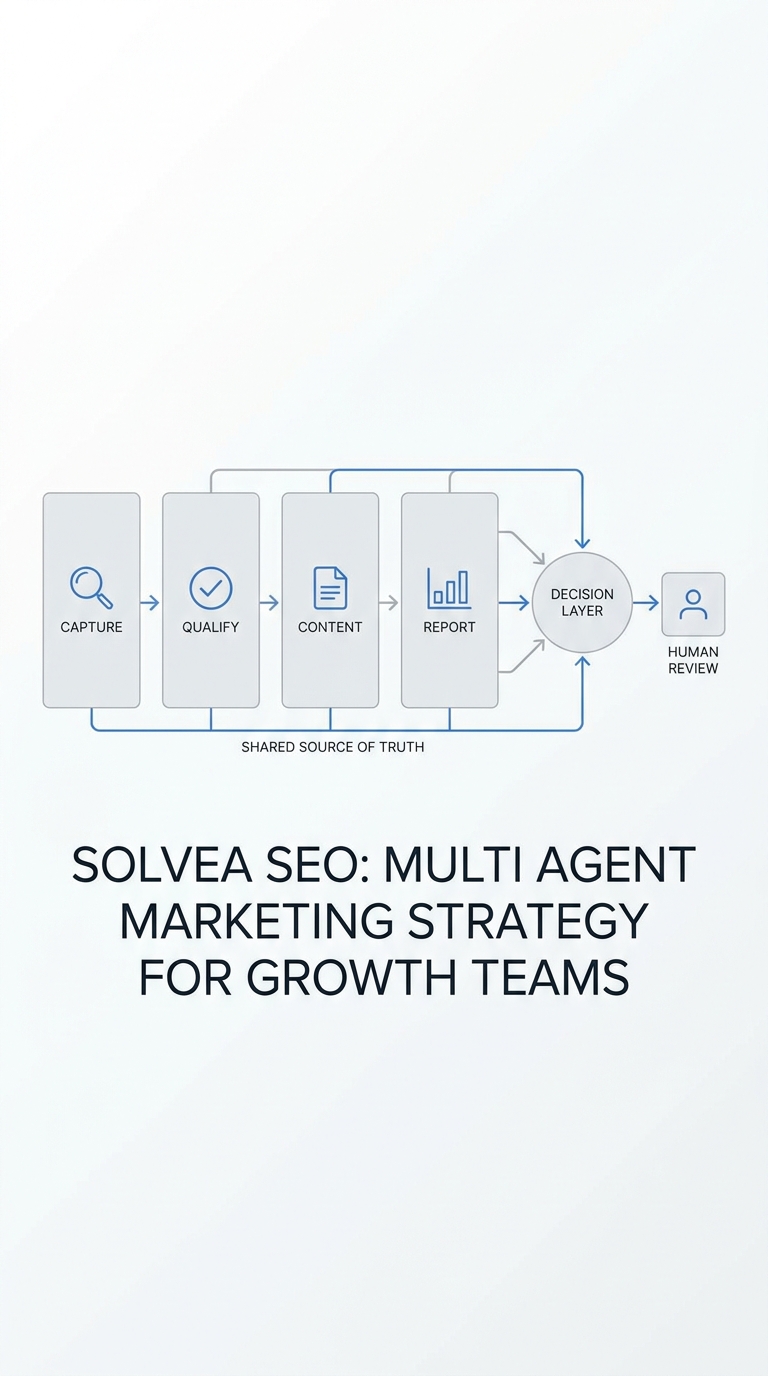
When this audience signal appears, AI helps produce this content asset, checks it against this source of truth, routes it to this owner, and measures this next action.
If you cannot complete that sentence, the workflow is probably too broad.
For example, "use AI to create more blog posts" is not a content operations workflow. "Turn five recurring sales-call objections into a sourced comparison article draft, route it to the product marketer, and measure demo-page clicks" is a workflow.
The second version gives AI a job, a source, a reviewer, and a metric.
Funnel-Stage Matrix
Use this matrix to decide where content operations AI should help first.
| Funnel stage | Common content problem | Strong AI use case | Required control | Success metric |
|---|---|---|---|---|
| Awareness | Topics are chosen from guesses | Cluster customer questions into search themes | Approved audience and keyword rules | Indexed URLs, qualified organic clicks |
| Education | Drafts repeat generic advice | Turn source material into practical guides | Evidence ledger and SME review | Scroll depth, internal-link clicks |
| Capture | CTAs do not match intent | Match article angle to next-step offer | Offer library and UTM rules | CTA clicks, signup starts |
| Qualification | Sales asks the same questions repeatedly | Convert objections into comparison and FAQ assets | Product claims checklist | Assisted demos, qualified signups |
| Conversion | Proof is scattered | Assemble proof-backed decision content | Approved proof library | Trial starts, demo conversions |
| Onboarding | New users miss key setup steps | Create role-based setup content | Product workflow owner | Activation events |
| Retention | Support questions stay trapped in inboxes | Turn repeat questions into help and nurture content | Support-source review | Ticket deflection, expansion assists |
| Reactivation | Dormant leads get generic follow-up | Generate segment-specific reactivation messages | CRM segment rules | Replies, reactivated trials |
The highest-leverage content operations AI workflow is usually the stage where demand already exists but the team is slow to turn signals into assets.
Awareness: Turn Demand Signals Into Topic Clusters
At the top of the funnel, content operations AI should help teams organize demand signals, not invent demand.
Useful inputs include search queries, sales-call notes, customer support questions, product demo objections, community discussions, and competitor comparison terms. The AI job is to group those signals into topic clusters and flag which ones deserve a page, article, checklist, comparison, or glossary entry.
For awareness content, the best output is not a draft. It is a planning table:
| Signal | Search intent | Suggested asset | Internal link target | Proof needed |
|---|---|---|---|---|
| "How do we manage content across channels?" | Informational | Workflow guide | Content operations AI strategy | Source-of-truth process |
| "Which AI content tools fit growth teams?" | Commercial investigation | Evaluation article | B2B growth automation tools | Tool category definitions |
| "What should AI own in GTM?" | Educational | Checklist | AI marketing agents strategy | Permission-level examples |
This is where an existing strategy page such as Solvea's content operations AI guide should become a hub. New articles should support that hub with narrower jobs instead of competing with it.
Education: Build Useful Guides From Approved Sources
Educational content is where many teams overuse AI. They ask for a complete guide, then spend review time removing vague advice.
A stronger content operations AI workflow starts with an evidence ledger. The ledger can include product pages, support docs, customer quotes, approved screenshots, pricing pages, glossary definitions, Search Console queries, and internal subject-matter notes.
AI can then help with:
- Turning the evidence ledger into an outline.
- Identifying missing proof before drafting.
- Converting rough notes into clean examples.
- Checking whether each section answers the search intent.
- Suggesting internal links to related assets.
The human reviewer should not be asked, "Is this good?" The reviewer should be asked, "Are these claims true, are these examples useful, and is this the right next step for the reader?"
For Solvea, this matters because product claims should stay grounded in what the site currently says: Solvea combines a business number, AI receptionist, and shared team follow-up; PC Desk keeps calls, texts, emails, WhatsApp, AI summaries, owners, and statuses together; Agent Builder lets teams customize AI behavior without code.
Capture: Match Each Article to One Next Step
Capture-stage content operations AI should connect the article's intent to the next action.
For a broad guide, the next step may be a related article or pricing page. For a comparison article, the next step may be a product demo, checklist, or evaluation worksheet. For a workflow article, the next step should usually be a setup template or implementation plan.
Use this rule:
| If the article intent is... | The CTA should offer... |
|---|---|
| Learn the concept | A beginner guide, glossary, or framework |
| Compare options | A checklist, scorecard, or demo plan |
| Implement a workflow | A setup sequence or operating template |
| Fix a specific leak | A diagnostic worksheet or product path |
Content operations AI can help by reading the draft, classifying intent, and suggesting the next-step asset. It can also check whether UTM parameters, campaign names, and landing-page links follow the team's measurement rules.
The output should be a CTA map, not a pile of generic buttons.
Qualification: Convert Objections Into Comparison Assets
Middle-funnel visitors often want to know whether a solution fits their operating reality. They are not looking for more definitions. They want tradeoffs.
Content operations AI can turn recurring objections into comparison assets when the source material is controlled.
Good inputs:
- Sales-call objections.
- Demo questions.
- Support-ticket patterns.
- Churn reasons.
- Competitor page claims.
- Product limitation notes.
- Pricing and implementation constraints.
Good outputs:
- Comparison tables.
- Buyer checklists.
- Demo questions.
- Red-flag lists.
- Use-case fit maps.
For example, a growth team evaluating AI workflows may need to compare content operations AI, GTM workflow automation, sales automation agents, and AI marketing agents. Those are related, but they are not interchangeable.
This article should link readers toward the right adjacent asset: GTM workflow automation use cases for funnel workflows, sales automation agents for sales handoff, and AI marketing agents strategy for growth-team ownership.
Conversion: Assemble Proof Without Losing Context
Conversion-stage content needs proof, but proof can become messy fast. Testimonials live in one place, product facts in another, screenshots in another, and pricing changes somewhere else.
Content operations AI can help by assembling proof packets for a specific asset:
| Proof type | What AI can prepare | What humans must approve |
|---|---|---|
| Product capability | Pull current feature descriptions | Whether the capability is accurately framed |
| Customer language | Cluster objections and outcomes | Which quotes can be used publicly |
| Pricing | Check current pricing page text | Any price, discount, or plan claim |
| Workflow example | Draft before/after scenario | Whether the scenario is realistic |
| Competitive angle | Summarize public positioning | Any direct competitor claim |
Do not let AI create proof. Let it organize proof that already exists.
For a product like Solvea, a conversion-stage content workflow might start with customer conversations in PC Desk, identify repeated missed-call or follow-up concerns, map those concerns to an AI receptionist or shared-inbox workflow, and route the draft to the owner who can approve the final claim.
Onboarding: Turn Setup Steps Into Role-Based Content
Once someone signs up, content operations AI should help users reach the first useful outcome faster.
The job is different from SEO. The inputs come from product setup paths, onboarding calls, support questions, and activation analytics. The output should be role-based guidance:
- Owner: what to configure first.
- Front desk or operator: how to review AI summaries and next steps.
- Sales or booking owner: how to manage callbacks and follow-up.
- Admin: how to connect calendars, CRMs, or shared records.
AI can turn one setup workflow into multiple versions without rewriting the product truth. That is valuable when the same workflow needs a help article, an onboarding email, a checklist, and an in-app tooltip.
The control is simple: one source workflow, many content surfaces.
Retention: Feed Customer Questions Back Into Content
Retention content often improves when support and customer-success signals are treated as content inputs.
Content operations AI can group repeat customer questions into:
- Help-center articles.
- Feature education emails.
- Renewal objection explainers.
- Product update notes.
- Sales enablement refreshes.
- Internal knowledge-base updates.
The review gate is stricter here because incorrect support content creates direct customer pain. AI should identify patterns, draft first versions, and flag missing product facts. A product or support owner should approve final guidance.
For Solvea-style workflows, this is where customer-conversation records become useful. Calls, texts, summaries, owners, and statuses can reveal which questions keep recurring and which follow-up content would reduce friction.
Reactivation: Personalize Follow-Up Without Losing the Rules
Reactivation workflows are a good fit for content operations AI when segmentation is already defined.
The AI should not decide who receives a message. It should turn an approved segment and offer into a compliant draft set:
| Segment | Useful content operation | Guardrail |
|---|---|---|
| Trial started, no setup | Setup checklist email | Do not overstate activation status |
| Demo attended, no decision | Decision recap and proof packet | Use only approved claims |
| Old lead, new feature fit | Feature update campaign | Respect unsubscribe and CRM rules |
| Customer inactive | Workflow reminder | Avoid unsupported ROI promises |
The metric is not "emails created." It is replies, reactivated trials, return visits, and assisted conversion.
How to Prioritize Content Operations AI Use Cases
Use this five-question scorecard before adding a new workflow:
| Question | Score 0 | Score 1 | Score 2 |
|---|---|---|---|
| Is the input source reliable? | Unknown | Partially approved | Approved source of truth |
| Is the reviewer clear? | No owner | Shared owner | One accountable owner |
| Is the output format known? | Vague | Partly defined | Exact asset type |
| Is the handoff path clear? | No route | Manual route | Workflow or owner path |
| Is the metric measurable? | No metric | Proxy metric | Funnel-stage metric |
Prioritize workflows scoring 8-10. Repair workflows scoring 5-7 before building. Reject workflows below 5 until the source, owner, format, handoff, or metric is clearer.
A 14-Day Pilot Plan
Here is a practical way to test content operations AI without reorganizing the whole team.
Days 1-2: Pick One Funnel Leak
Choose one measurable problem:
- High organic impressions but low clicks.
- Many article visits but few CTA clicks.
- Repeated sales objections.
- Slow support-content updates.
- New users missing the same setup step.
Days 3-4: Build the Source Packet
Collect the approved source material: product pages, existing blog posts, support notes, customer-question patterns, pricing pages if relevant, and internal owner notes.
Days 5-7: Draft the Workflow Output
Use AI to create the first asset: outline, comparison table, FAQ block, onboarding checklist, or reactivation draft.
Days 8-10: Review for Truth and Usefulness
The reviewer checks claims, examples, links, CTA fit, and handoff path. Anything unsupported is removed or marked for follow-up.
Days 11-14: Publish, Route, and Measure
Publish the asset or ship the campaign. Track the funnel-stage metric that matches the workflow: organic clicks, CTA clicks, qualified signups, assisted demos, activation events, replies, or support deflection.
Tool Evaluation Checklist
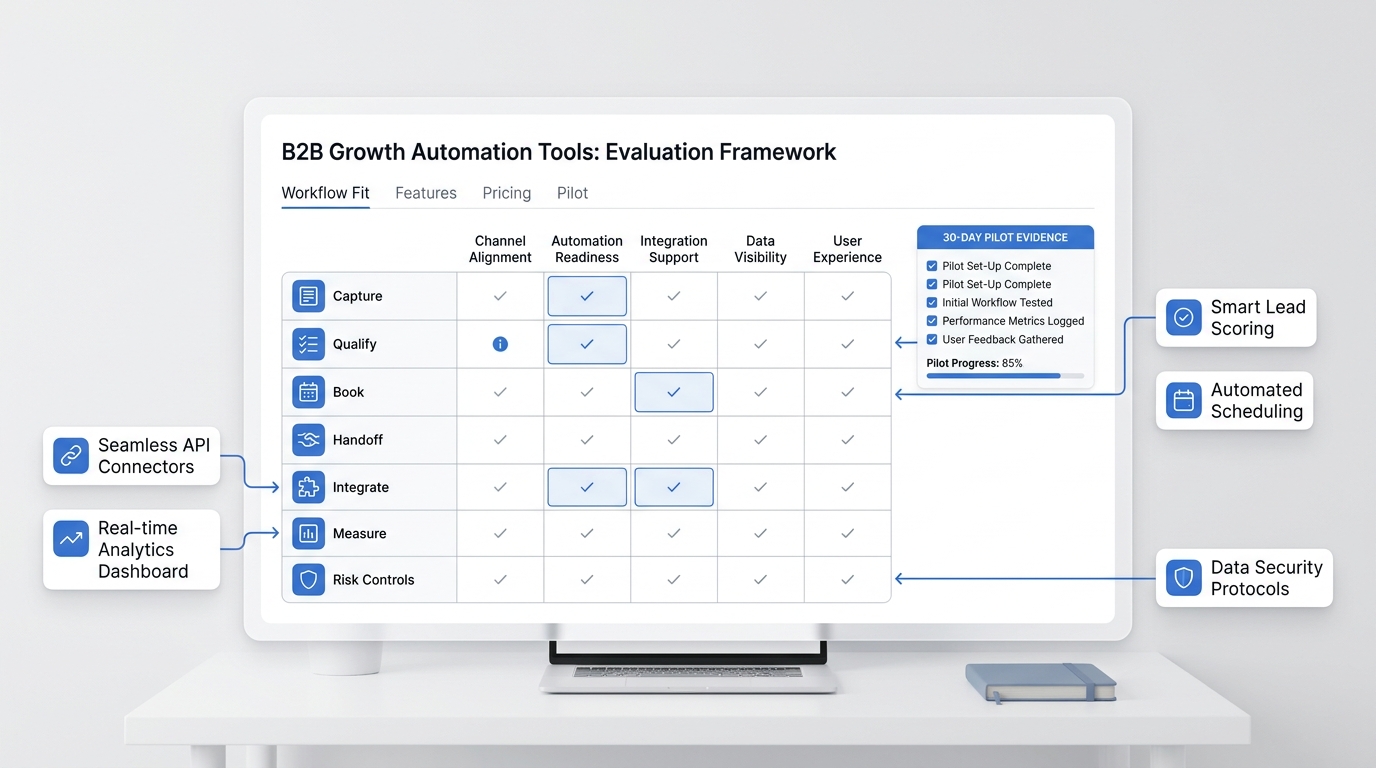
When evaluating content operations AI tools, look past generation quality. The operational questions matter more:
- Can the tool use approved source material?
- Can it separate drafts from publish-ready content?
- Can reviewers see what claims need approval?
- Can it preserve internal links and campaign rules?
- Can it adapt one source into multiple formats?
- Can it route work to the right owner?
- Can it connect content output to funnel metrics?
- Can it support multilingual or multi-channel publishing without losing control?
This is also where broader workflow tools matter. If your content operation depends on customer conversations, bookings, call summaries, handoffs, and follow-up, the content system should connect to those customer-facing workflows rather than sit in a separate writing tool.
Bottom Line
Content operations AI works best when each use case has a funnel stage, source packet, reviewer, handoff, and metric.
Use AI to speed up the operational parts of content: clustering signals, preparing outlines, adapting assets, checking links, matching CTAs, and turning customer questions into useful follow-up. Keep humans in charge of positioning, proof, pricing, product claims, and final approval.
For growth teams, the win is not more content. The win is a content operation that turns real demand signals into the right asset at the right funnel stage, with enough control to trust what gets published.
Your AI Receptionist, Live in Minutes.
Scale your front desk with an AI that never sleeps. Solvea handles unlimited multi-channel inquiries, books appointments into your calendar automatically, and ensures zero missed opportunities around the clock.
Sources and Further Reading
- Solvea: Content Operations AI: Strategy for Growth Teams
- Solvea: GTM Workflow Automation: Use Cases by Funnel Stage
- Solvea: PC Desk
- Solvea: Agent Builder
- Solvea: Integrations
- Google Analytics Help: Campaign URL Builder and manual campaign parameters
- Google Search Central: SEO Starter Guide