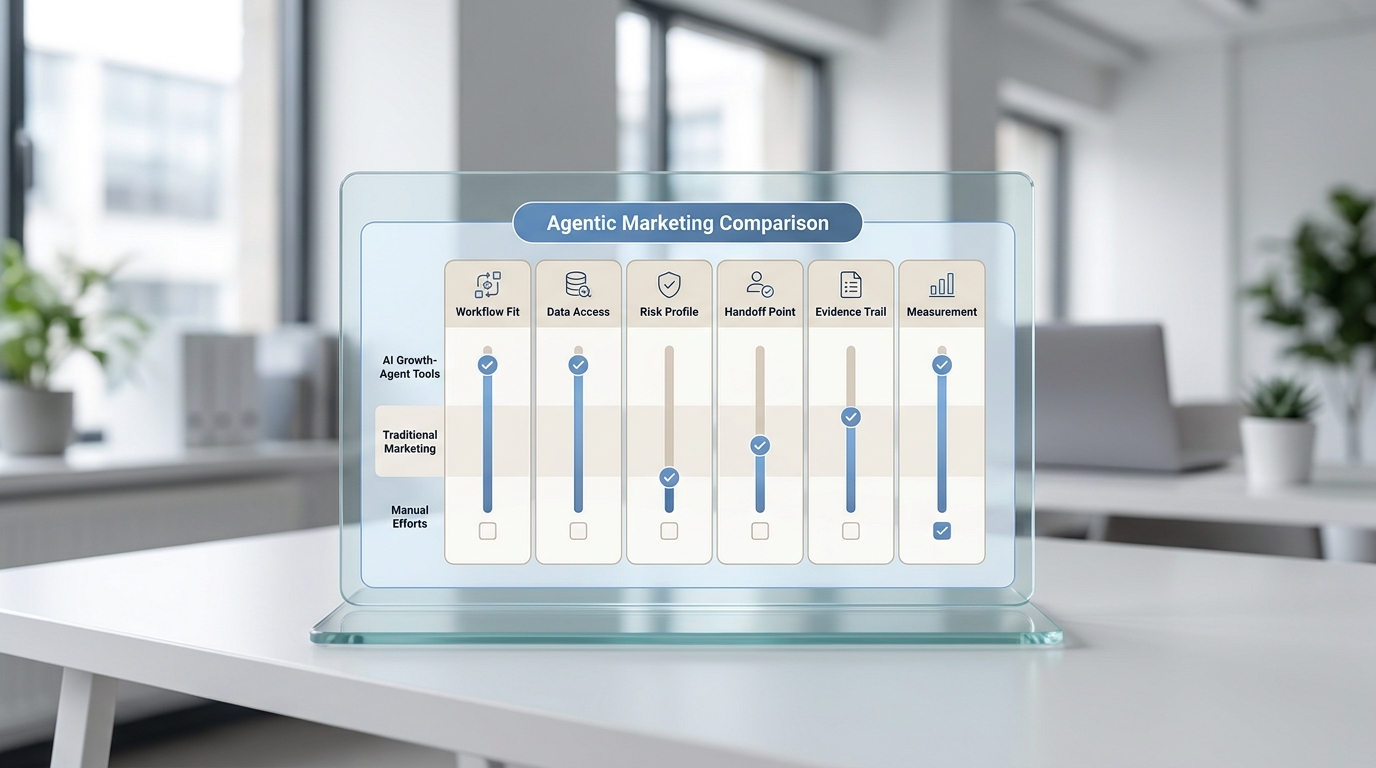
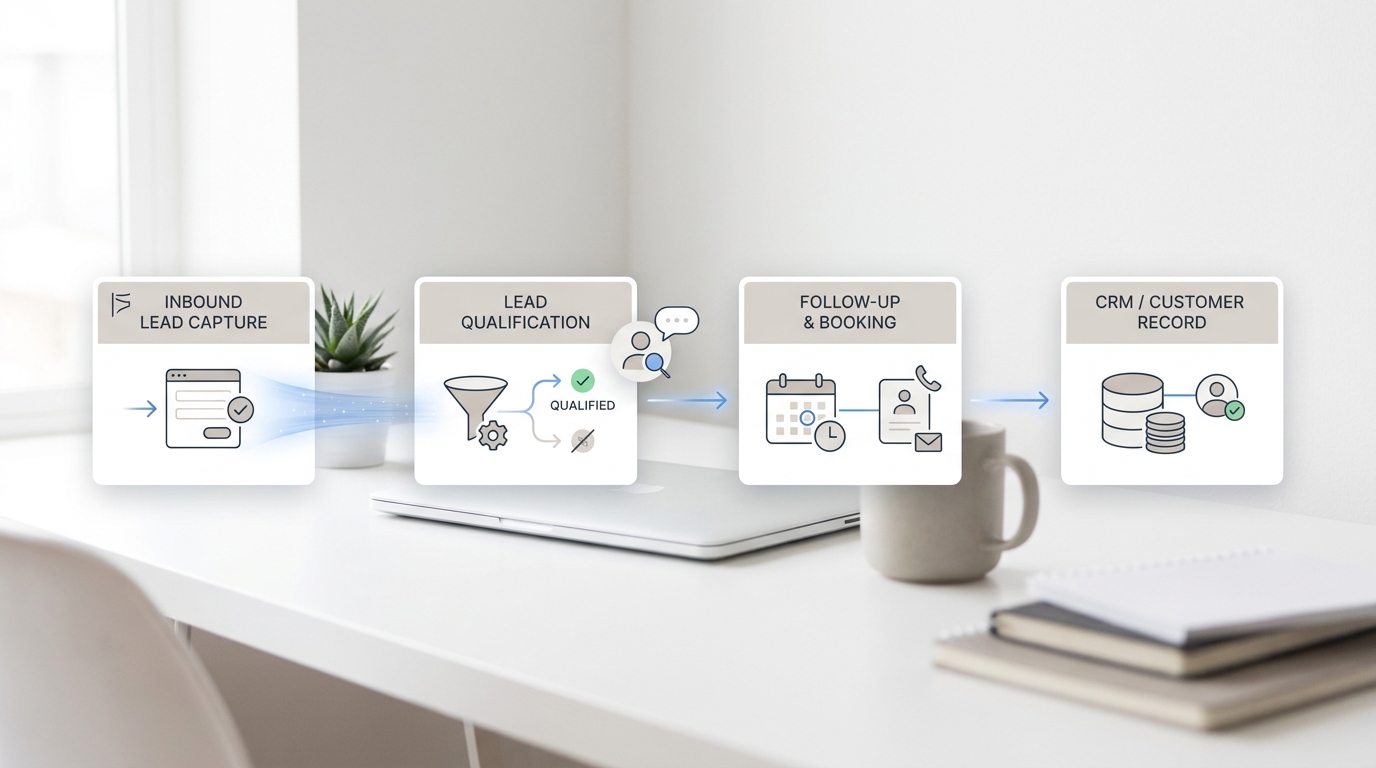
AI marketing agents are useful when they help a growth team move faster without losing control of the customer journey.
That is the strategic shift. A normal AI tool can draft copy, summarize notes, or answer a prompt. An AI marketing agent should work against a goal, use connected context, choose a next step, and leave a record a human can review. IBM describes agentic AI around autonomous systems that pursue goals, use tools, and act with limited oversight; marketing teams should translate that into one practical question: which growth workflow is safe and valuable enough for an agent to own?
This guide gives growth teams a strategy for choosing, scoping, and measuring AI marketing agents. It is written for lean teams that care less about vague autonomy and more about faster lead response, cleaner handoffs, better follow-up, and measurable pipeline support.
What AI marketing agents should actually do
An AI marketing agent should not be defined by the model behind it. It should be defined by the workflow it can improve.
Useful AI marketing agents usually handle one of six jobs:
| Agent role | What it watches | What it can do | Human checkpoint |
|---|---|---|---|
| Capture agent | Calls, forms, chat, SMS, email, missed inquiries | Collects intent, contact details, service need, urgency, and context | Unusual requests, sensitive topics, angry customers |
| Qualification agent | New leads and returning prospects | Scores fit, asks structured questions, tags stage, routes next step | High-value opportunities, unclear fit, pricing exceptions |
| Follow-up agent | Stale leads, no-shows, quote requests, post-service messages | Drafts or sends approved reminders and next-step messages | Discounts, refunds, compliance-sensitive language |
| Content agent | Briefs, campaign ideas, SEO topics, social repurposing | Builds first drafts, variants, calendars, and distribution assets | Final messaging, claims, legal review, brand voice |
| Journey agent | Customer segments, lifecycle triggers, campaign behavior | Recommends or assembles next-best journeys and personalization | Audience rules, suppression, budget, deliverability risk |
| Reporting agent | Channel data, campaign results, sales notes, support trends | Summarizes performance, flags changes, recommends next actions | Budget shifts, strategy changes, public claims |
The strategic mistake is asking one agent to do all six jobs at once. Growth teams should start with the agent role closest to a visible bottleneck and narrow enough to audit.
A four-part AI marketing agents strategy
Growth teams need a simple operating model before they buy tools or build custom agents.
1. Pick the revenue moment, not the feature
Start with a moment where delay or manual handoff already costs money.
Good first moments include:
- A high-intent lead calls after hours.
- A form submission sits unanswered until the next day.
- A sales-qualified inquiry lands in the wrong inbox.
- A quote request needs follow-up but nobody owns it.
- A campaign generates replies that need triage before sales sees them.
- A content idea needs to become a brief, outline, and distribution plan.
Weak first moments sound broader: "automate marketing," "run campaigns with AI," or "replace manual work." Those are categories, not operating decisions.
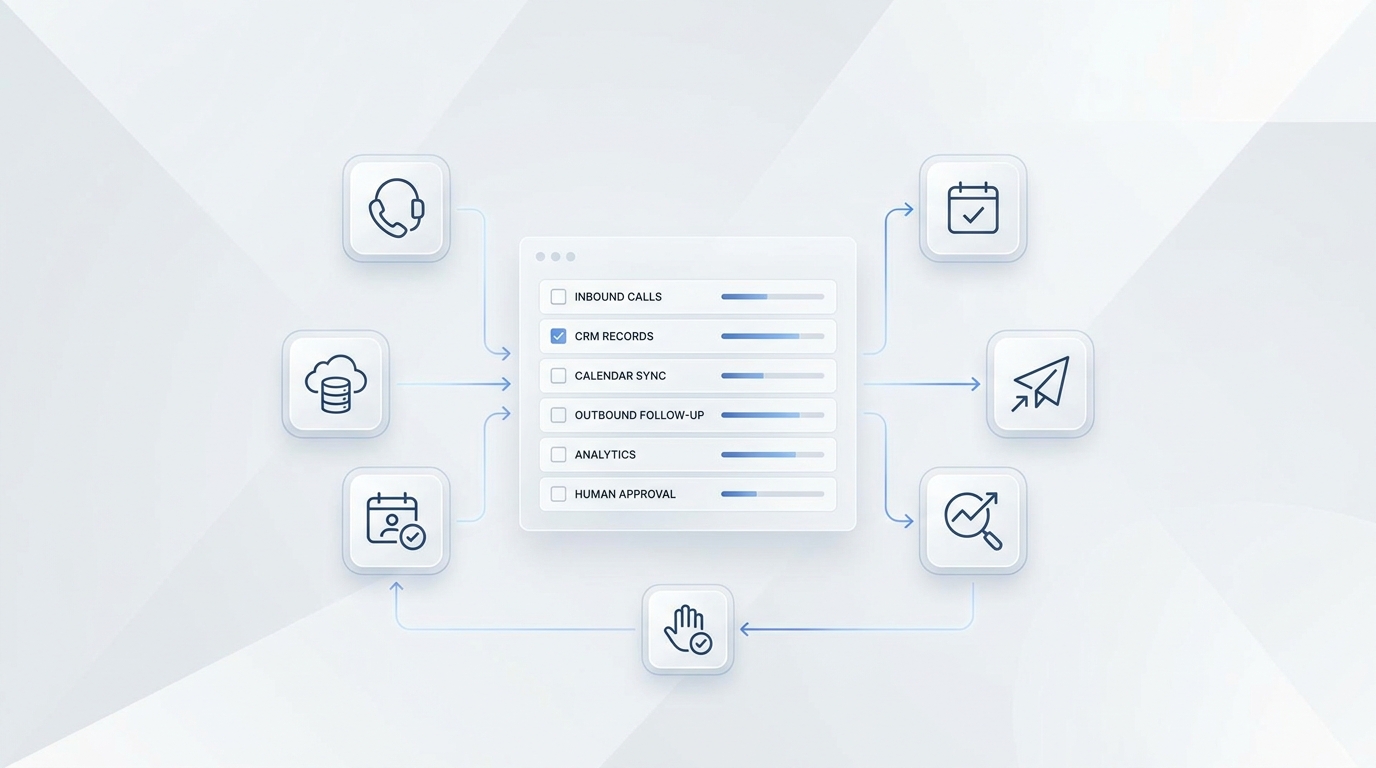
For service businesses, Solvea's strongest fit is the customer-response layer: the business phone, AI receptionist, PC Desk, shared inbox, AI Agent Builder, and integrations. That makes it relevant when growth depends on answering, capturing, summarizing, routing, and following up on demand that arrives through calls, messages, chat, email, or booking requests.
2. Decide the agent's authority level
AI marketing agents should earn autonomy in stages.
| Authority level | What the agent can do | Best for | Example |
|---|---|---|---|
| Observe | Read inputs and summarize | New workflows, high-risk contexts | Summarize missed calls and surface urgent ones |
| Recommend | Suggest a next step | Workflows with unclear rules | Recommend whether a lead needs sales, booking, or support |
| Draft | Prepare the message or task | Brand-sensitive work | Draft a follow-up email for review |
| Act within rules | Complete approved actions | Frequent, low-risk tasks | Send a confirmation, tag a lead, create a callback task |
| Optimize | Adjust steps from results | Mature workflows with clean data | Recommend campaign follow-up segments based on replies |
Most growth teams should begin at observe, recommend, or draft. Move to act within rules only when the team has approved source data, message boundaries, escalation rules, and rollback steps.
3. Connect the source of truth
AI marketing agents are only as useful as the context they can access.
Before launch, name the source of truth for:
- Customer identity and conversation history.
- Channel source and campaign source.
- Lead status, owner, and next step.
- Business hours, location, services, booking rules, and FAQs.
- Calendar availability or routing rules.
- Consent, suppression, and opt-out requirements.
- The place where final decisions are recorded.
Google Cloud's marketing agents guide frames agents, generative AI, and data as separate parts of the marketing toolkit. That distinction matters: an agent without reliable data becomes a fast guesser. A growth team needs connected customer context before it trusts an agent with customer-facing action.
Solvea's current public product pages position the product around a business phone with AI receptionist, PC Desk, shared inbox, summaries, team follow-up, AI Agent Builder, and integrations such as Google Calendar, HubSpot, Zendesk, Freshdesk, Shopify, WhatsApp, LINE, and live chat. Those connections are what make a customer-response agent more practical than a disconnected prompt workflow.
4. Measure the handoff, not just the output
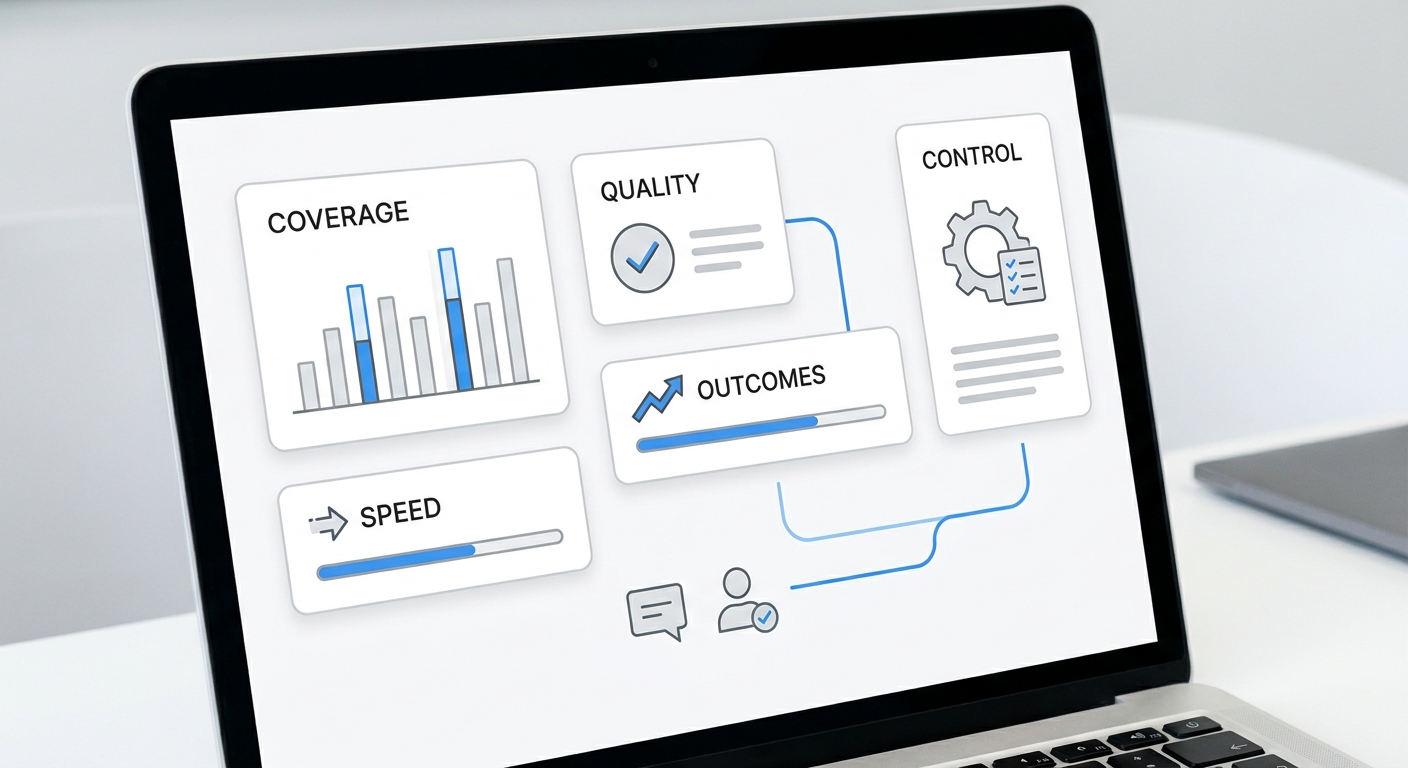
AI marketing agents should be measured by business movement, not asset volume.
Use one primary metric and one quality metric:
| Workflow | Primary metric | Quality metric |
|---|---|---|
| Missed-call capture | Recovered inquiries or booked callbacks | Handoff accuracy |
| Lead qualification | Qualified leads routed | False-positive or correction rate |
| Follow-up | Replies, bookings, or reactivated leads | Opt-outs and complaint rate |
| Content operations | Publish-ready assets shipped | Claim accuracy and review edits |
| Journey personalization | Conversion lift or assisted conversions | Suppression and eligibility errors |
| Reporting | Decision cycle time | Recommendation acceptance rate |
If a pilot increases output but creates unclear handoffs, the agent has not improved the growth system. If it makes the next action faster and easier to audit, it is worth expanding.
The growth-team workflow map
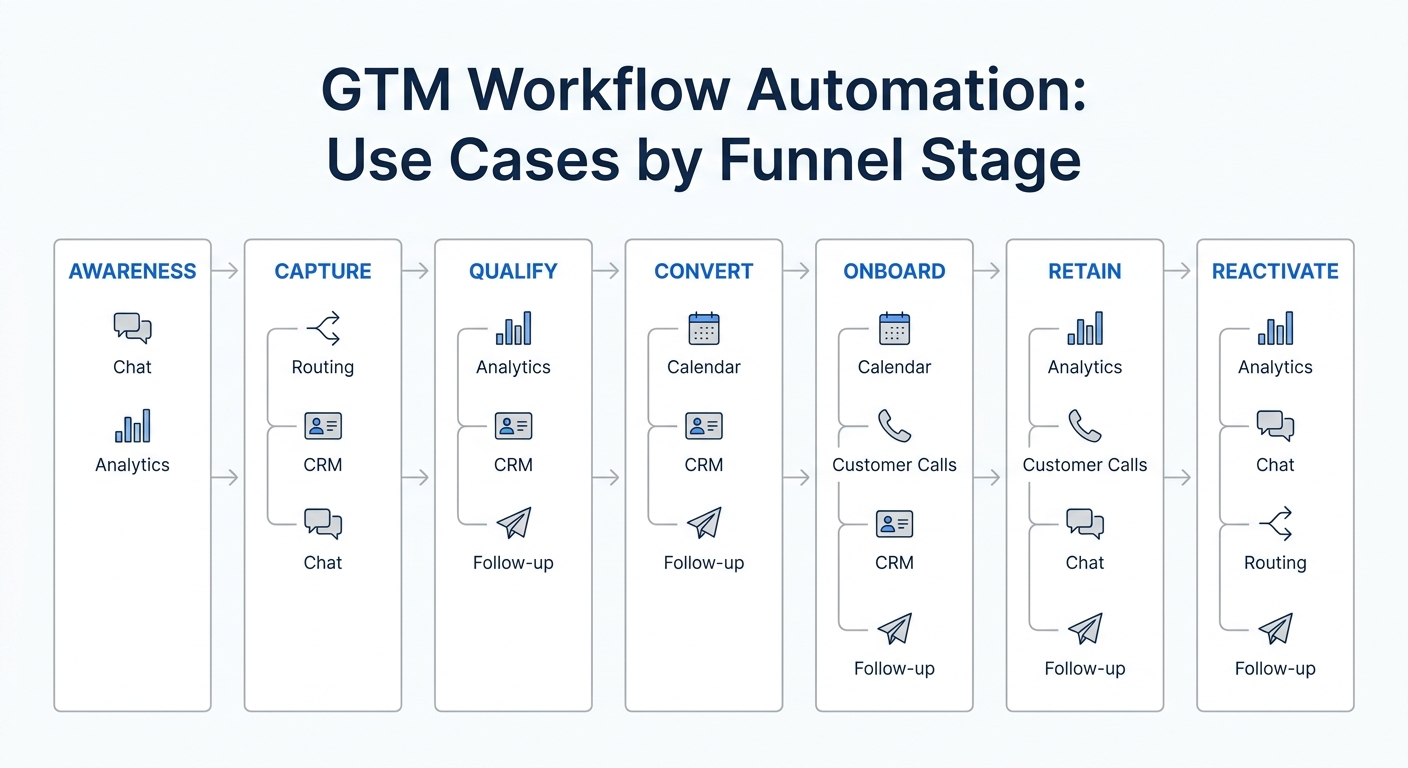
Use this map to decide where AI marketing agents belong.
Capture: remove the delay at the front door
Capture agents are the best first pilot when customer demand arrives faster than the team can respond.
They should collect:
- Who the person is.
- What they need.
- How urgent it is.
- Which location, service, account, or offer is involved.
- What next step the customer expects.
- Which teammate should own follow-up.
For SMB growth teams, this is often more valuable than an autonomous campaign-planning agent. The lead already has intent. The risk is losing it.
Qualify: turn raw interest into routed work
Qualification agents should ask structured questions and apply simple routing rules. Keep the first version narrow.
For example:
- Is this a new lead or existing customer?
- Does the request match the services offered?
- Is the timing urgent?
- Is the customer asking for booking, pricing, support, or a quote?
- Which owner or team should respond?
The agent should not invent qualification logic. Sales, operations, and customer support need to agree on the rules before the agent applies them.
Follow up: make the next step happen
Follow-up agents work best when the message can be templated and the reason for contact is clear.
Strong use cases include:
- Missed-call follow-up.
- Appointment reminders.
- Quote follow-up.
- No-show recovery.
- Post-service review requests.
- Dormant lead reactivation.
Keep consent and channel rules explicit. A follow-up agent that ignores opt-outs or message frequency can create more risk than value.
Content: speed up production without outsourcing judgment
Content agents can help growth teams turn strategy into briefs, outlines, first drafts, repurposed social posts, and campaign variants. This is useful, but it should stay human-reviewed when the content includes product claims, competitor comparisons, pricing, legal language, or customer-sensitive claims.
The best content-agent workflow is not "write more." It is:
- Convert a search or campaign opportunity into a brief.
- Pull approved product and proof points.
- Draft the asset.
- Flag unsupported claims.
- Prepare distribution variants.
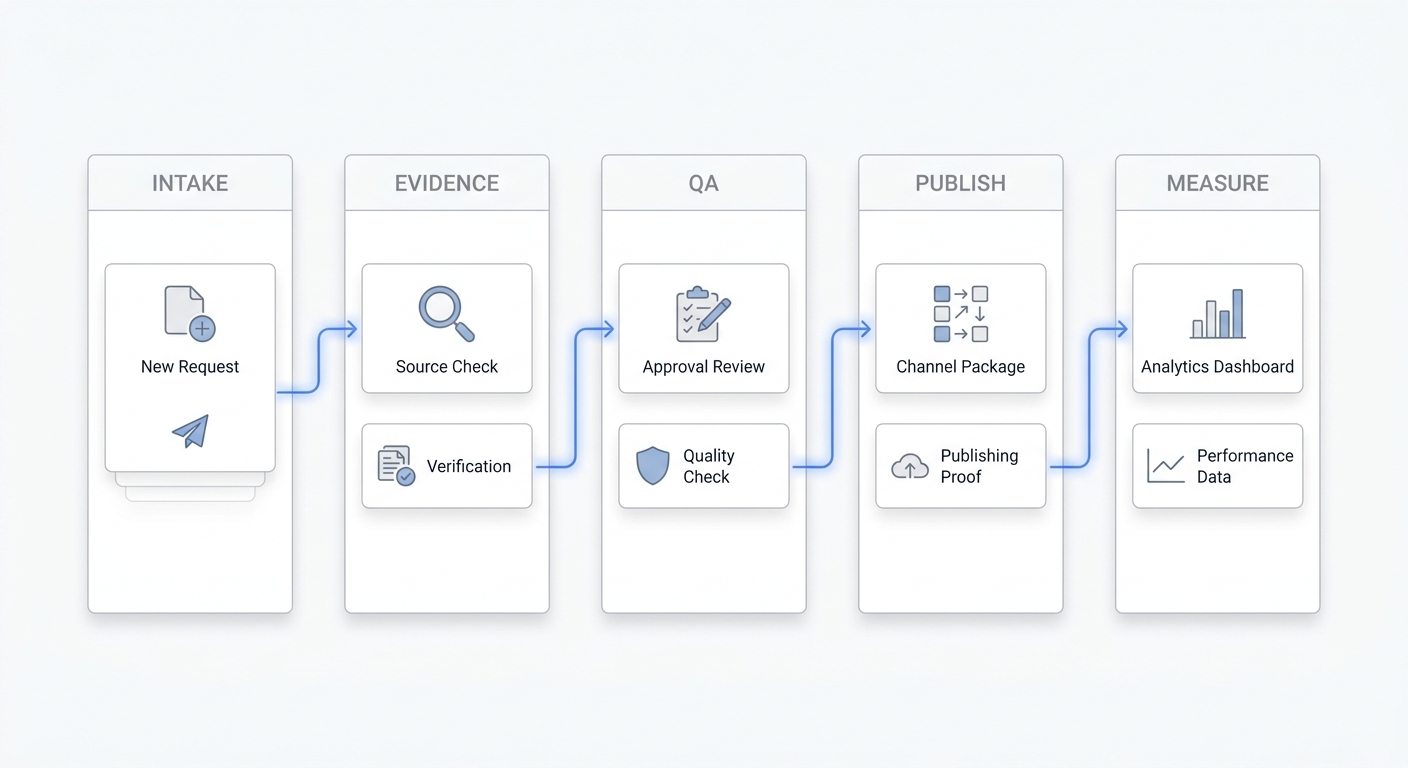
- Route the final version for human approval.
That turns AI marketing agents into an operating layer instead of an unreviewed content factory.
Journey: personalize only when the data is ready
Journey agents can assemble audiences, recommend next-best actions, or personalize messages based on behavior. Enterprise marketing platforms such as Salesforce Agentforce and Oracle Fusion Marketing describe this type of agentic marketing around customer signals, campaign setup, handoffs, and performance summaries.
For a lean growth team, the same principle applies at smaller scale: do not personalize from incomplete data. Start with a few trustworthy signals, such as source, service interest, customer status, appointment state, or recent reply. Add more signals only after the team can explain why each one changes the next action.
Reporting: turn dashboards into decisions
Reporting agents are useful when the team already has data but no regular synthesis habit.
They can:
- Summarize weekly channel changes.
- Compare campaign performance against targets.
- Highlight stuck leads or slow handoffs.
- Identify FAQs that should become knowledge-base entries.
- Recommend which workflow needs a test next.
The reporting agent should end with a decision prompt: keep, pause, change, expand, or investigate.
A 30-day rollout plan
Use this rollout when the team has chosen one AI marketing agents workflow.
Days 1-5: Define the pilot
Write the pilot in one sentence:
When [trigger] happens, the agent should [allowed action], unless [handoff condition] is true.
Example:
When a missed call arrives after hours, the agent should answer, capture intent, summarize urgency, and create a follow-up task, unless the caller asks for emergency help or pricing exceptions.
Then document the source of truth, owner, primary metric, and rollback step.
Days 6-10: Prepare the context
Collect the facts the agent needs:
- Business hours.
- Services and exclusions.
- Locations.
- Booking rules.
- Common customer questions.
- Escalation contacts.
- Brand tone.
- Approved response boundaries.
- Examples of good and bad handoffs.
This work matters more than prompt polish. AI marketing agents fail when the team never wrote down the rules.
Days 11-17: Run in review mode
Let the agent observe, recommend, or draft. Review every output.
Track:
- What it got right.
- What a human changed.
- Which missing context caused errors.
- Which handoffs were unnecessary.
- Which handoffs should have happened sooner.
Update the workflow after review. Do not expand scope yet.
Days 18-24: Allow limited action
Let the agent complete low-risk actions inside approved rules:
- Create a callback task.
- Tag a lead source.
- Send a confirmation.
- Draft a follow-up.
- Route a conversation to the correct owner.
Keep high-risk cases in review. This is where the team learns whether the agent can own a bounded step without creating downstream cleanup.
Days 25-30: Decide what changes
Compare the pilot against the baseline.
Choose one decision:
- Keep the workflow as-is.
- Narrow the allowed action.
- Expand to the next channel or use case.
- Add missing integrations or knowledge-base content.
- Stop and pick a simpler workflow.
The best result is not "the agent worked." The best result is a clear operating decision.
Where Solvea fits in an AI marketing agents stack
Solvea is not positioned as a full enterprise marketing cloud. It is a practical fit when AI marketing agents need to operate at the customer-response layer.
That includes:
- Answering calls when the team is busy or closed.
- Capturing and summarizing customer intent.
- Keeping customer conversations visible across mobile and PC workflows.
- Routing follow-up to the right person.
- Connecting response workflows to calendars, CRMs, support tools, ecommerce, messaging, and live chat.
- Giving nontechnical operators a way to configure agents through AI Agent Builder.
That makes Solvea a strong first system for growth teams whose biggest leak is response speed, missed inquiries, customer-message routing, or appointment follow-up. Teams comparing broader categories can also read the AI growth agents comparison and alternatives, the agentic marketing tools evaluation framework, or the GTM automation beginner guide. Teams that mainly need media buying automation, enterprise journey orchestration, or custom model engineering may need a different layer first.
Common mistakes with AI marketing agents
The first mistake is starting with the most impressive demo instead of the most measurable workflow.
The second mistake is giving the agent customer-facing authority before the knowledge base, source of truth, and escalation rules are ready.
The third mistake is measuring activity volume instead of lead response, booked follow-up, qualified opportunities, assisted conversions, or saved review time.
The fourth mistake is treating human review as a failure. Human checkpoints are part of the strategy. They show the team where autonomy is safe and where judgment still matters.
Your AI Receptionist, Live in Minutes.
Scale your front desk with an AI that never sleeps. Solvea handles unlimited multi-channel inquiries, books appointments into your calendar automatically, and ensures zero missed opportunities around the clock.
FAQ
What are AI marketing agents?
AI marketing agents are AI workflows that pursue a marketing or growth goal by using context, tools, and rules to recommend or complete next steps. They are different from basic AI assistants because they are tied to triggers, systems of record, allowed actions, and measurable outcomes.
How are AI marketing agents different from marketing automation?
Traditional marketing automation follows predefined rules. AI marketing agents can interpret context, choose among approved next steps, use connected tools, and escalate when a case falls outside the rules. The best strategy combines both: automation for predictable steps and agents for context-heavy decisions.
What should growth teams automate first with AI marketing agents?
Start with a frequent, high-intent, low-risk workflow. Missed-call capture, inbound lead routing, appointment intake, quote follow-up, and customer-message triage are often better first pilots than fully autonomous campaign management.
Are AI marketing agents safe for customer-facing workflows?
They can be safe when the scope is narrow, the agent uses approved facts, allowed actions are limited, and handoff rules are explicit. Sensitive topics, pricing exceptions, refunds, legal or medical details, complaints, and emergencies should route to a human unless exact approved rules exist.
How should a growth team measure AI marketing agents?
Measure one business outcome and one quality signal. Examples include response time plus handoff accuracy, booked callbacks plus correction rate, qualified leads routed plus false positives, or content shipped plus review-edit rate.
Final takeaway
AI marketing agents should make growth work easier to run, not harder to trust.
Pick one revenue moment. Give the agent a narrow job. Connect the source of truth. Limit the action rights. Review the evidence trail. Measure the handoff. Then expand only when the workflow is faster, clearer, and easier for the team to control.
That is the difference between using AI marketing agents as another tool and using them as a real growth operating strategy.