AI marketing agents are most useful when they own one bounded workflow, not an entire stack.
In 2026, the teams that get value from AI marketing agents are usually not trying to automate everything. They pick the repetitive moment that costs the most time or money, give the agent a clear job, set a handoff rule, and measure the result. That might be a missed call, a slow follow-up, a stale lead, a content brief, or a reporting task.
If your first question is "Should we add AI?", you are already asking too broadly. The better question is: which workflow should an AI marketing agent own first, and what proof will tell us it helped?
What AI marketing agents should do
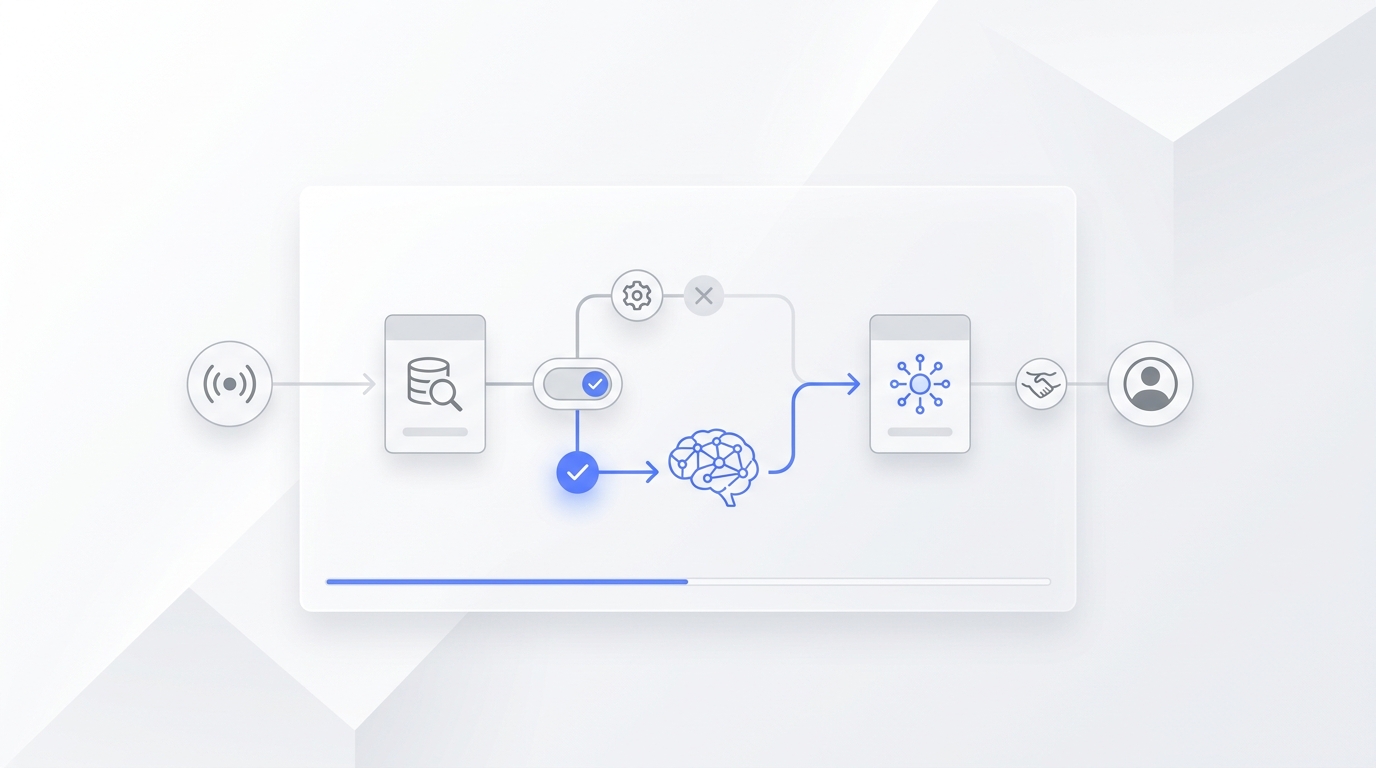
AI marketing agents should act on triggers, use approved context, take a limited action, and leave a record a human can review. IBM's framing of agentic AI is useful here: the point is goal-driven work with limited oversight, not open-ended autonomy.
That means an AI marketing agent should:
- watch for a clear trigger,
- use the right customer or campaign context,
- do one allowed task,
- hand off when the rule says to stop,
- and make the outcome visible in analytics.
Start with one workflow
The fastest way to use AI marketing agents well is to start where delay is already expensive.
| Workflow | Best when | What the agent does | First metric |
|---|---|---|---|
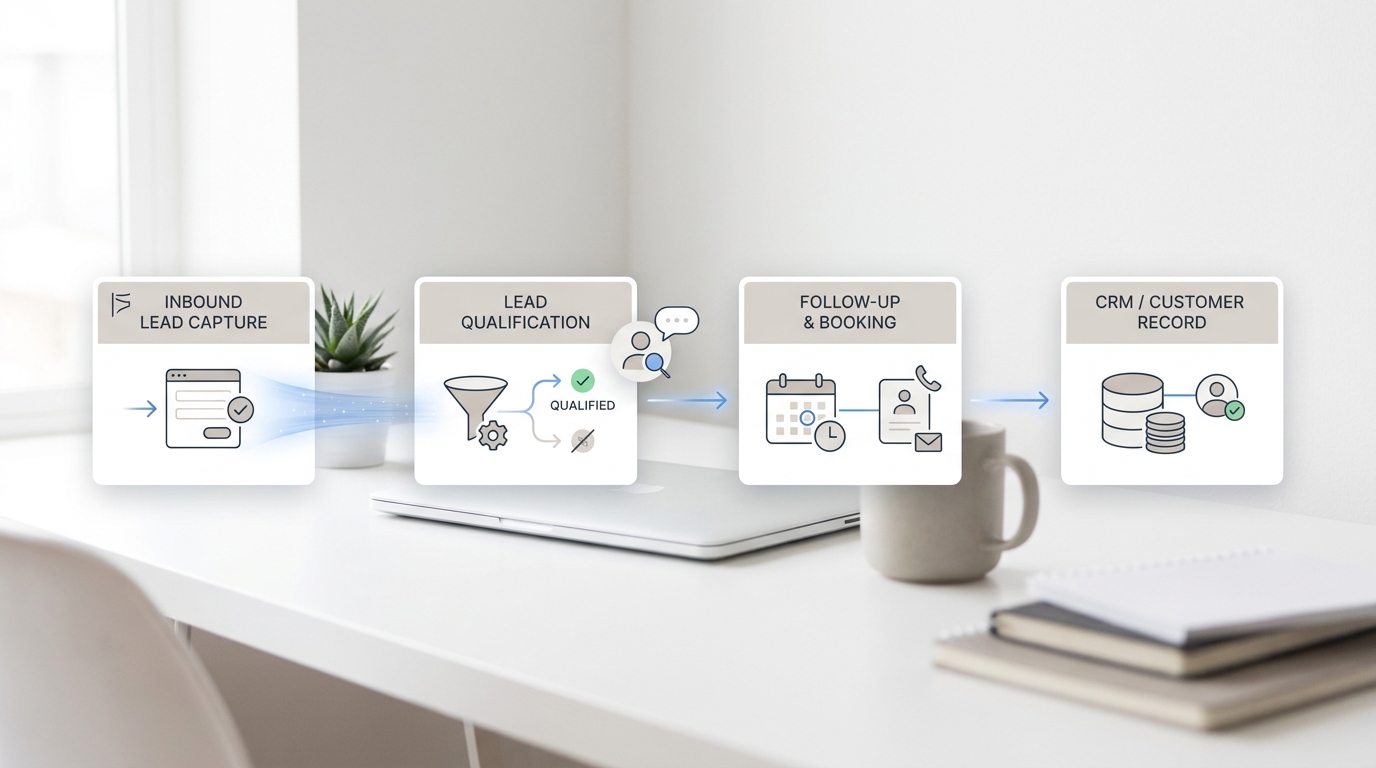
| Capture | Leads arrive by phone, form, chat, or email | Collects intent, contact details, and urgency | Response time |
| Qualification | Inbound volume is high enough to need triage | Asks structured questions and routes next steps | Qualified lead rate |
| Follow-up | Leads go cold after first contact | Sends approved reminders or drafts next-step messages | Follow-up completion |
| Content | You need drafts, outlines, or repurposing | Turns one brief into usable content assets | Time to first draft |
| Journeys | Segments and lifecycle rules are already clear | Recommends or assembles next-step journeys | Journey completion |
| Reporting | Data exists but nobody has time to synthesize it | Summarizes changes and flags what needs attention | Report turnaround |
If you are early, start with capture or follow-up. Those are usually the easiest AI marketing agents to observe and the fastest to verify.
Set the workflow up the right way
Use this rule for the first pilot:
When [trigger] happens, the AI marketing agent should [allowed action], unless [handoff condition] is true.
That one sentence forces the important decisions:
- What starts the workflow.
- What the agent is allowed to do.
- When a human must step in.
Then give the agent only the context it needs. For a capture or qualification workflow, that usually means service lines, business hours, pricing boundaries, escalation contacts, and a few good examples of what a correct handoff looks like.
The most common failure mode with AI marketing agents is not bad AI. It is vague instructions and missing rules.
A 30-day rollout that works
Treat the first month like a controlled rollout, not a launch.
| Days | Goal | Deliverable | Stop condition |
|---|---|---|---|
| 1-5 | Pick one workflow | One-sentence pilot scope | Scope still touches too many tasks |
| 6-10 | Load the context | Source of truth, rules, examples | Missing facts or unclear handoff rules |
| 11-17 | Review mode | Human-reviewed outputs | Error rate is not improving |
| 18-24 | Limited action | Agent can complete low-risk tasks | A rule is being violated |
| 25-30 | Decide next step | Keep, narrow, expand, or stop | No measurable improvement |
The goal is not "full autonomy." The goal is a workflow the team can trust.
How to measure AI marketing agents
Use one business metric and one control metric.
- Business metrics: response time, qualified leads, booked follow-ups, assisted conversions, or time to first draft.
- Control metrics: correction rate, handoff rate, false positives, and rule violations.
For SEO content or landing pages, measure clicks and index coverage in Search Console, then use GA4 key events and attribution reports to see whether the article helps with signups or assisted conversions.
Where Solvea fits
Solvea fits the customer-response layer of AI marketing agents.
That means the work that starts with a call, text, email, chat, or WhatsApp message, then needs a fast reply, a clean handoff, or a useful summary for the team. Solvea's AI Agent Builder lets you shape that workflow without code, and Analytics shows where people drop off and what to fix next.
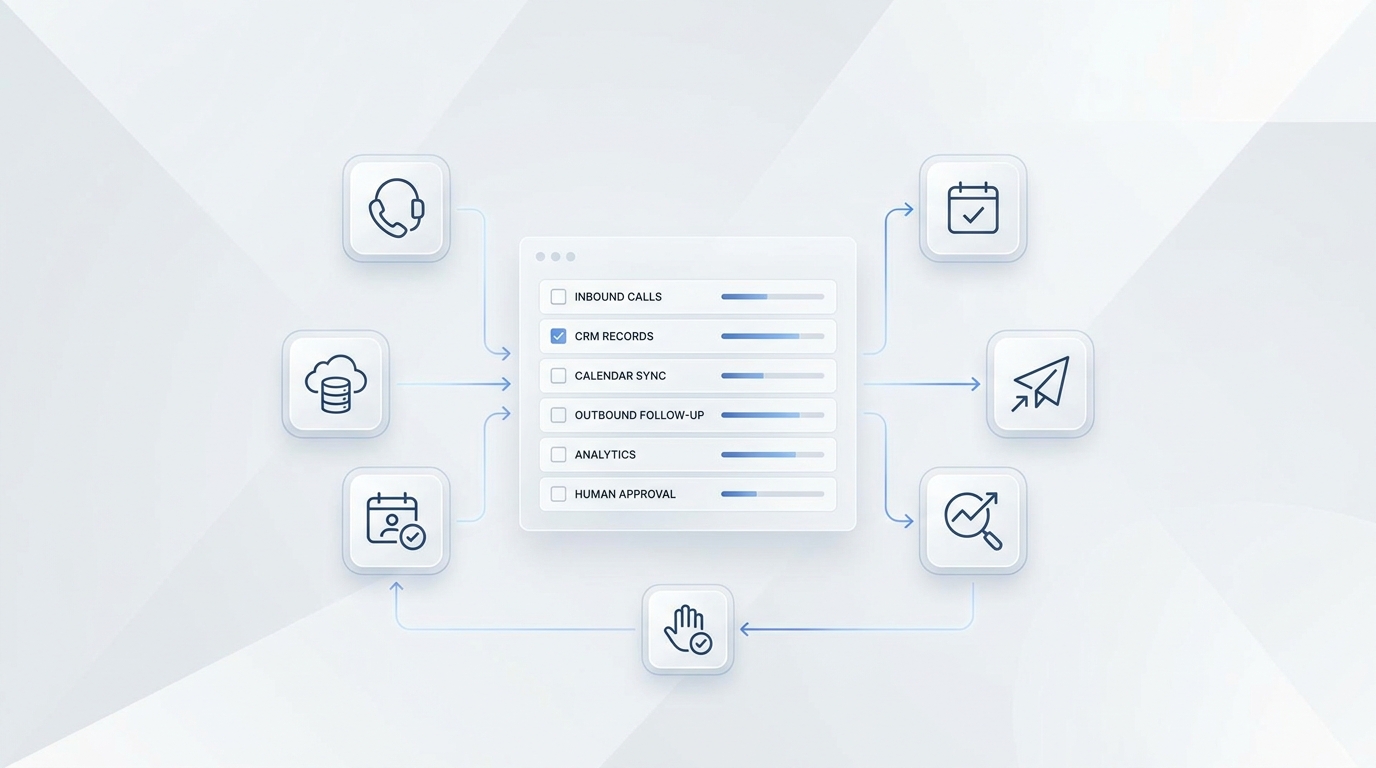
The current product overview shows the wider stack: phone, SMS, email, chat, WhatsApp, outbound calling, knowledge base, and integrations. The pricing guidance also matters for first-time users: the free tier is built to remove setup friction, with no card required and enough usage to test a real workflow.
If you want the broader strategy view, read AI marketing agents strategy for growth teams. If you want to compare tools and positioning first, use the agentic marketing tools evaluation framework.
Common mistakes
- Trying to automate the whole funnel on day one.
- Giving the agent too much authority before the rules are clear.
- Using AI marketing agents without one owner and one metric.
- Measuring volume instead of qualified outcomes.
- Hiding human review instead of designing for it.
Your AI Receptionist, Live in Minutes.
Scale your front desk with an AI that never sleeps. Solvea handles unlimited multi-channel inquiries, books appointments into your calendar automatically, and ensures zero missed opportunities around the clock.
FAQ
What are AI marketing agents?
AI marketing agents are workflows that use context, tools, and rules to complete a marketing or growth task. They are more useful than a generic assistant because they are tied to a trigger, an allowed action, and a measurable outcome.
How are AI marketing agents different from marketing automation?
Marketing automation follows fixed rules. AI marketing agents can interpret context, choose among approved actions, and escalate when the case is outside the rule. Most teams need both.
What should I automate first?
Start with a frequent, high-intent, low-risk workflow. Missed-call capture, inbound qualification, and follow-up are usually better first AI marketing agents than broad campaign management.
Are AI marketing agents safe for customer-facing work?
Yes, when the scope is narrow and the handoff rule is explicit. Sensitive topics, pricing exceptions, complaints, and emergencies should still route to a human unless you have exact approved rules.
Final takeaway
The best AI marketing agents make one workflow faster, clearer, and easier to trust.
Pick one job. Give it one owner. Set one rule set. Measure one business result and one control signal. Then expand only after the first workflow proves it can run with less friction than the old process.