Numa is a popular conversational AI platform mainly serving the automotive industry. It helps car dealerships handle missed calls by converting them into text conversations. Its unique advantage lies in its deep focus on dealership workflows, helping service centers recover lost revenue through automated scheduling and messaging.
However, some users find Numa's pricing structure high for smaller businesses and its customization options somewhat limited. There are also reports of integration friction with certain non-automotive CRM software. As customer expectations evolve, some businesses seek tools with more natural AI voices or broader multi-channel capabilities beyond basic text-back features.
We have deeply researched dozens of Numa alternatives and competitors, including hands-on testing of several top-rated platforms. After evaluating them against strict standards like integration, latency, and ease of setup, we selected the 9 best products, including Solvea for rapid deployment, Spyne for visual merchandising, and Drift for B2B pipeline growth.
TL;DR: Best Numa Alternatives at a Glance
The best Numa alternatives for 2026 focus on faster setup, higher conversion, and lower latency. Spyne is best for dealership vehicle merchandising, Toma for service center workflows, Car Wars for call tracking and staff accountability, Solvea for fast setup and CRM sync, Rosie AI for natural voice interactions, Drift for enterprise conversational marketing, Impel for omnichannel automotive follow-up, Retell AI for low-latency custom voice agents, and Smith.ai for hybrid AI-plus-human receptionist support.
Tool | Best for | Starting Price | Free Trial | Integrations | Ease of Setup | Latency | Conversion |
Spyne | Vehicle visual merchandising | Custom | No | Dealer workflows, Marketplace integrations, Auction platforms | Medium | Medium | Strong for VDP impact |
Toma | Service center automation | Custom | No | Dealership ops tools like CDK, Reynolds | Medium | Low | Strong for service booking |
Car Wars | Call tracking and accountability | Custom | No | Dealership CRM and phone systems like VinSolutions and Tekion | Medium | Medium | Strong for rep performance |
Solvea | Fast AI receptionist setup | $30/month | 1K credits/month 7-day free trial phone number | Google Calendar, Sheets, CRM, Shopify | Very easy | Low | Strong for appointment and lead capture |
Rosie AI | Natural voice interactions | $49/month | 7-day | Calendar, Appointlet, Acuity Scheduling | Easy | Low | Good for local service |
Drift | Enterprise conversational marketing | Custom | 21-day | HubSpot, Salesforce, and Salesloft | Medium | Low | Strong for B2B pipeline |
Impel | Automotive omnichannel follow-up | Custom | 14-day | Website and Dealer integrations like CDK, Tekion, Xtime | Medium | Medium | Strong for automotive leads |
Retell AI | Low-latency voice agents | Pay as you go $0.07-$0.31/min | $10 of free usage | Full API/SDK | Harder | Ultra low | Strong for voice handling |
Smith.ai | Hybrid AI and human reception | $95/month | No | CRMs, Scheduling, Workflow tools | Easy | Low | Strong for high-intent calls |
Why Do Businesses Look for Alternatives to Numa
While Numa is a strong player in the automotive space, shifting market dynamics and specific technical limitations are prompting many businesses to explore other options. According to real user feedback on G2 and Featured Customers, users often seek more flexibility, lower entry costs, and more "human-like" AI interactions that Numa may currently lack.
- Narrow industry focus. Numa is built for dealerships and service centers, so it is not a fit for most non-automotive businesses. That is a strength for the right buyer, but a real limit for companies in other fields.
- Language coverage can feel limited. Public commentary notes that English is the main language, with only basic Spanish support. For bilingual or multilingual teams, this can become a day-to-day constraint.
- Not every team wants dealership-only workflows. Some businesses want a broader AI receptionist that can cover texts, calls, bookings, routing, and custom tasks across many channels. Review and comparison pages show buyers often look for broader flexibility.
- Ease of use matters. Comparison pages for Numa repeatedly mention reliability and ease of use as factors people evaluate. That usually means teams want a simpler setup or faster adoption path.
- Different support models suit different teams. Some businesses prefer a hybrid human-plus-AI service, while others want a fully custom voice agent or a stronger CRM link. Numa is not always the best match for those needs.
How We Evaluated These Numa Alternatives
To build a guide that feels useful in the real world, we did more than compare feature lists. We looked at how each product performs in day-to-day business use, then cross-checked that against public reviews and customer stories to see whether the claims matched actual user experience.
Evaluation Standard | What we checked |
Industry fit | Whether the tool is strong for dealerships, service businesses, B2B, or general reception. |
Setup speed | How quickly can a non-technical team launch and test the product. |
Integrations | Native CRM, calendar, call, and workflow connections. |
Voice quality | Natural speech, response speed, and call handling. |
Pricing clarity | Whether pricing is public, easy to understand, and suitable for small teams. |
User reviews | Signals from G2, Trustpilot, Capterra, Reddit, and vendor case studies. |
Best Numa Alternatives for Car Dealerships
1. Spyne: Best AI Tool for Vehicle Visual Merchandising at Dealerships
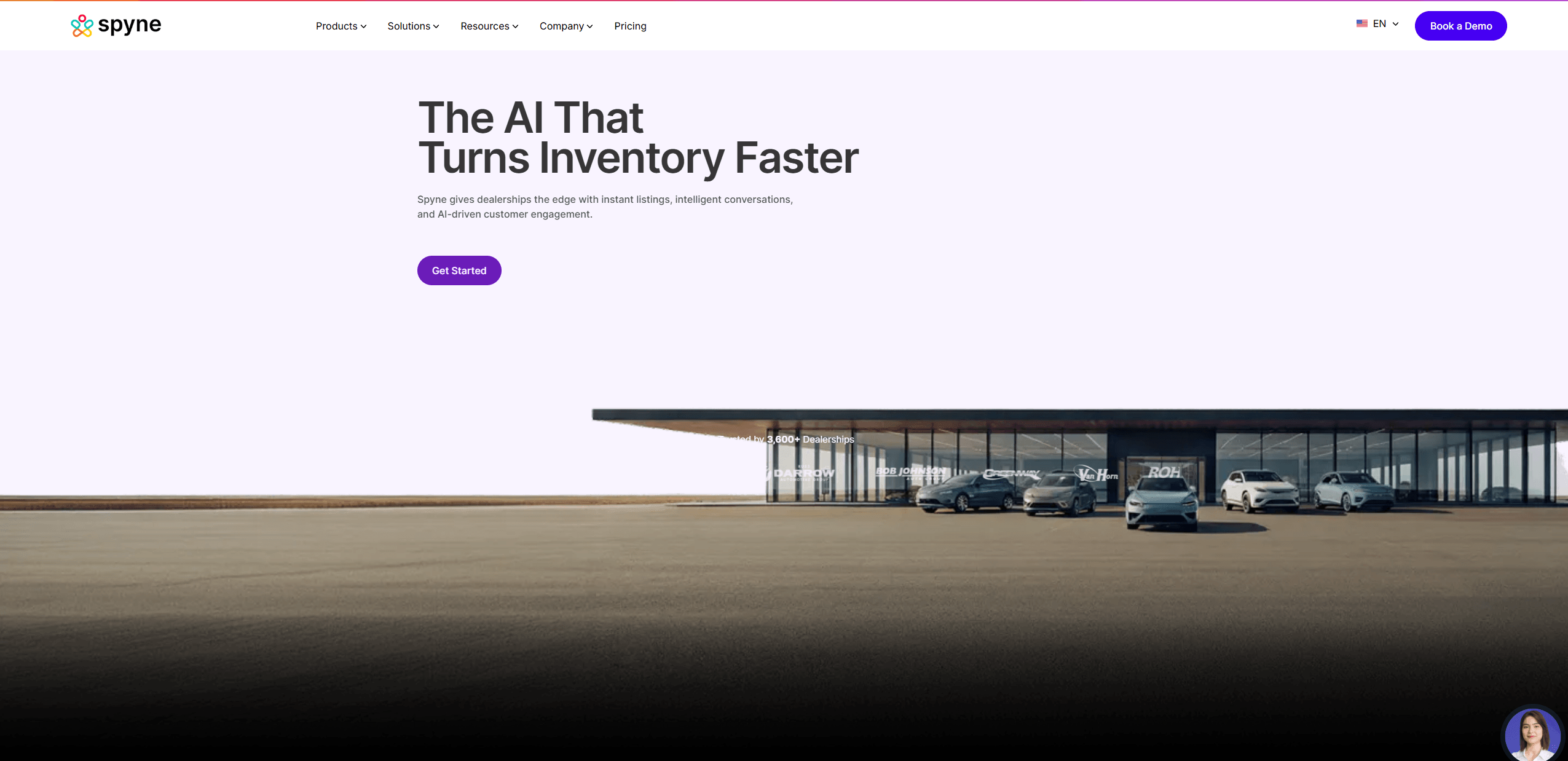
Who's it for: Spyne is a specialized AI platform that transforms how dealerships present their inventory online. It goes beyond simple messaging to provide an automated visual marketing suite, ensuring every car on your digital lot looks professional and showroom-ready instantly.
Best for: Dealerships that want better vehicle photos, stronger merchandising, and more inventory conversion.
How Spyne compares with Numa:
- Visual Focus: Unlike Numa’s text-heavy approach, Spyne automates vehicle image editing and 360-degree walkarounds.
- Sales Conversion: By improving Vehicle Detail Page (VDP) quality, Spyne directly increases "click-to-lead" rates that Numa only captures later.
- Automated Backgrounds: Spyne uses AI to replace cluttered dealership backgrounds with clean, branded virtual studios.
- Efficiency: Dealerships using Spyne report a 40% reduction in time-to-market for new inventory compared to manual photography.
- Integration: It integrates directly with inventory management systems to push updated photos to websites and marketplaces automatically.
Pros and Cons of Spyne:
Pros | Cons |
Dramatic improvement in VDP engagement | Higher learning curve for photography staff |
All-in-one visual and lead capture tool | Pricing can be complex for very small lots |
High-quality 360-degree virtual tours | |
Significant time savings on inventory listing |
2. Toma: Best for Automating Service Center Workflows and Appointments
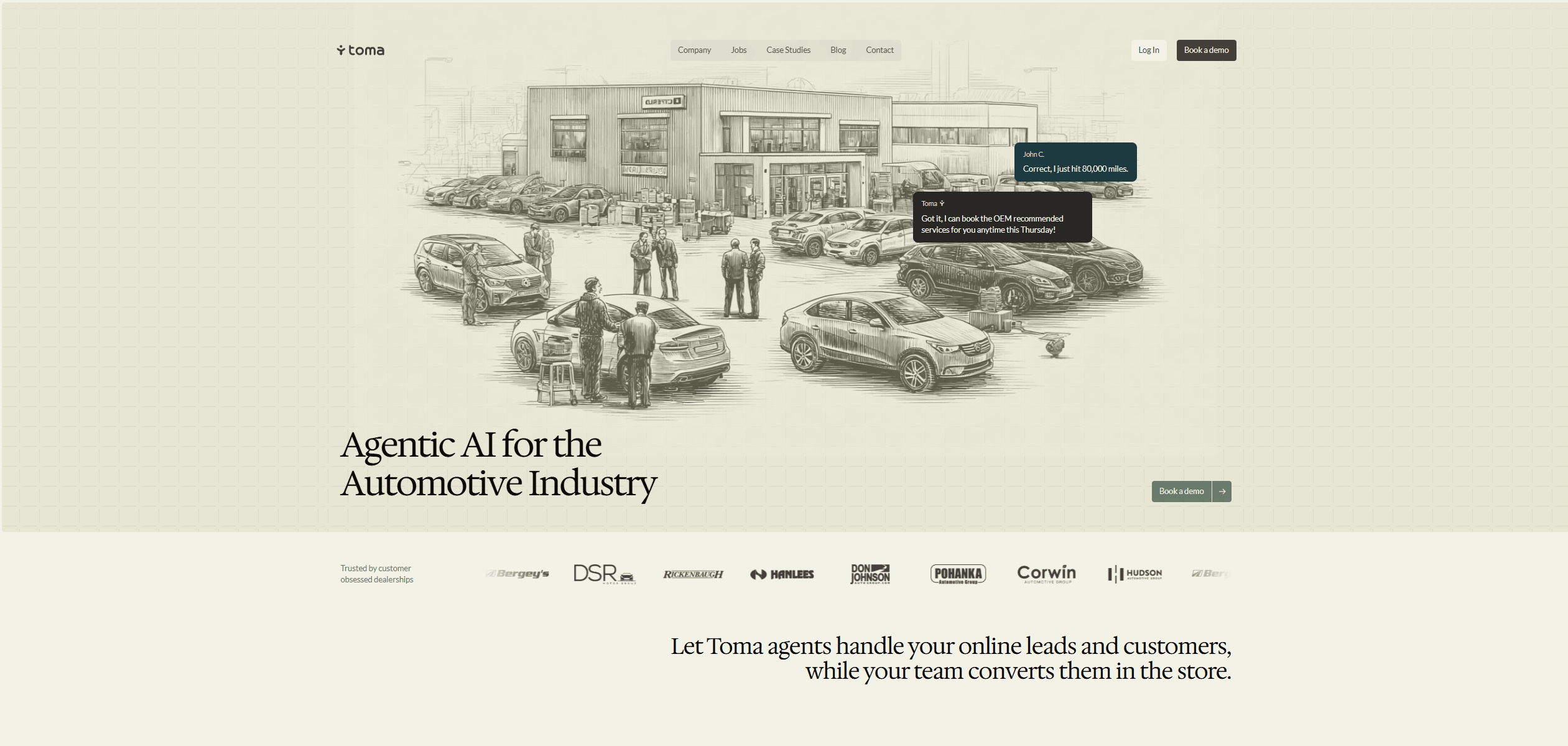
Who's it for: Toma is an advanced AI agent specifically engineered for the "Service Drive." It understands the complex nuances of automotive repair scheduling, parts availability, and shop capacity better than general-purpose receptionists.
Best for: Automating a complex service center that wants more automation in appointment and workflow handling.
How Toma compares with Numa:
- Deep Capacity Intelligence: Toma doesn't just book a time; it checks shop hours and bays availability to prevent overbooking.
- Service Specificity: It understands repair jargon (e.g., "30k mile service" vs. "brake squeak") to route jobs accurately.
- Margin Growth: According to Martin Management Group case studies, Toma helped double operational margins by optimizing service advisor time.
- DMS Integration: It offers deeper, more specialized integration with CDK Global and Reynolds & Reynolds than most generic tools.
- Proactive Reminders: Toma automates service reminders that are more conversational and less "robotic" than standard SMS alerts.
Pros and Cons of Toma:
Pros | Cons |
Industry-leading service bay logic | Mostly limited to the automotive sector |
Directly increases shop throughput | Requires deep DMS access for full power |
Reduces service advisor burnout | |
Proven ROI in large dealership groups |
3. Car Wars: Best for Call Tracking and Sales Staff Accountability
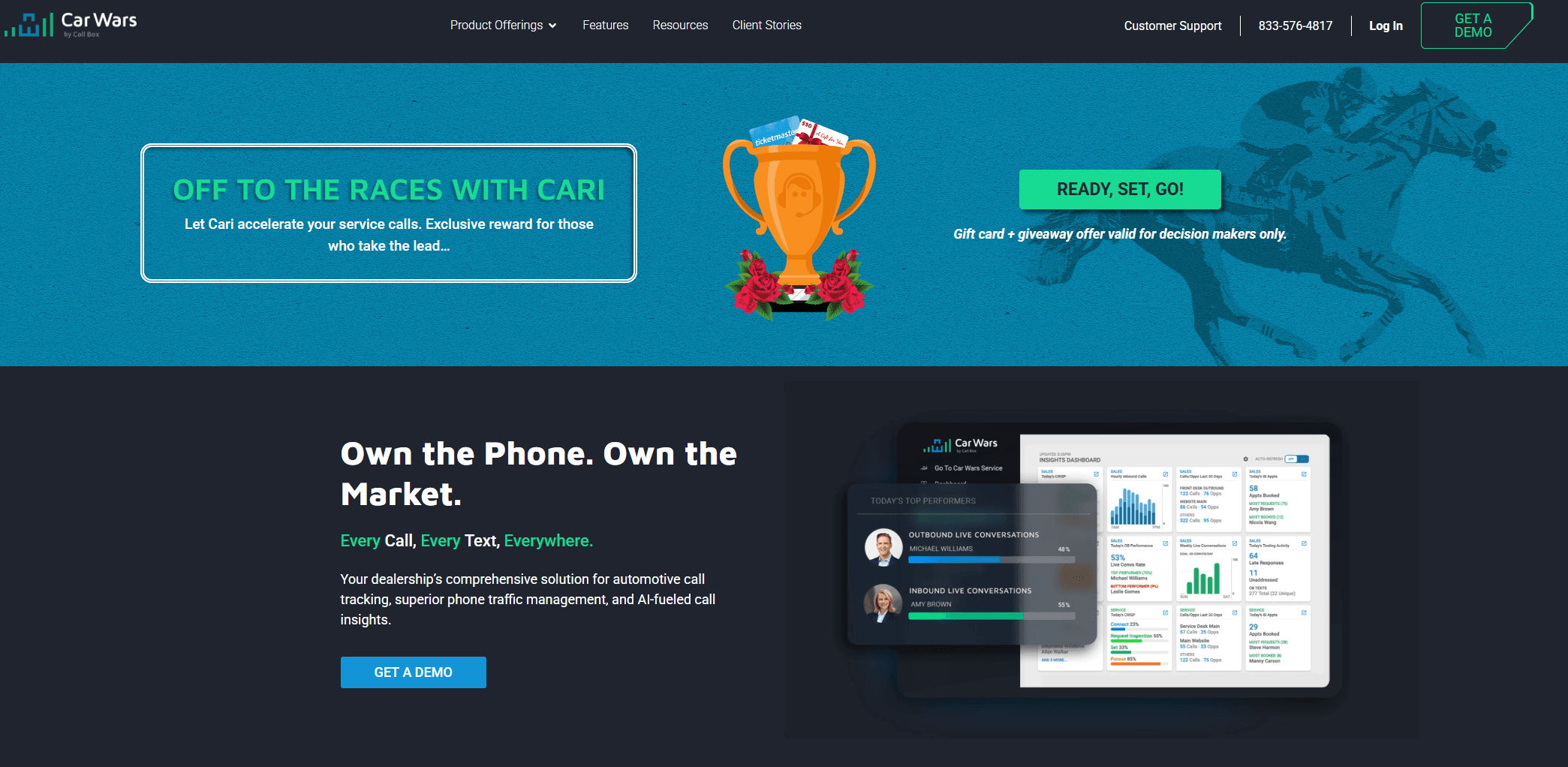
Who's it for: Car Wars is a call tracking and dealership performance platform for teams that care about instant lead response, phone accountability, and sales behavior. It is more about measuring call outcomes than replacing every front-desk task.
Best for: Stores that want clearer call tracking, sales accountability, and staff performance monitoring.
How Car Wars compares with Numa:
- Accountability Focus: Unlike Numa’s AI-first approach, Car Wars uses AI to grade human calls, identifying missed sales opportunities.
- Outbound Power: It excels at "calling the un-booked," providing detailed alerts when a lead hangs up without an appointment.
- Real-time Alerts: Managers receive "CRISP" alerts when a call goes poorly, allowing for immediate saves.
- Deep Analytics: Provides granular data on which marketing sources are actually driving "connected" sales calls.
- Inventory Integration: Car Wars client stories highlight its ability to link specific calls to vehicle sales in the CRM.
Pros and Cons of Car Wars:
Pros | Cons |
Unparalleled sales staff coaching data | AI is more "analytical" than "conversational." |
Comprehensive call recording and auditing | Can feel invasive to some staff members |
Integrated with virtually every Auto CRM | |
Focus on the "whole" phone experience |
Best Numa Alternatives for Ease of Use & CRM Integrations
4. Solvea: Best for Instant Deployment and Native CRM Sync
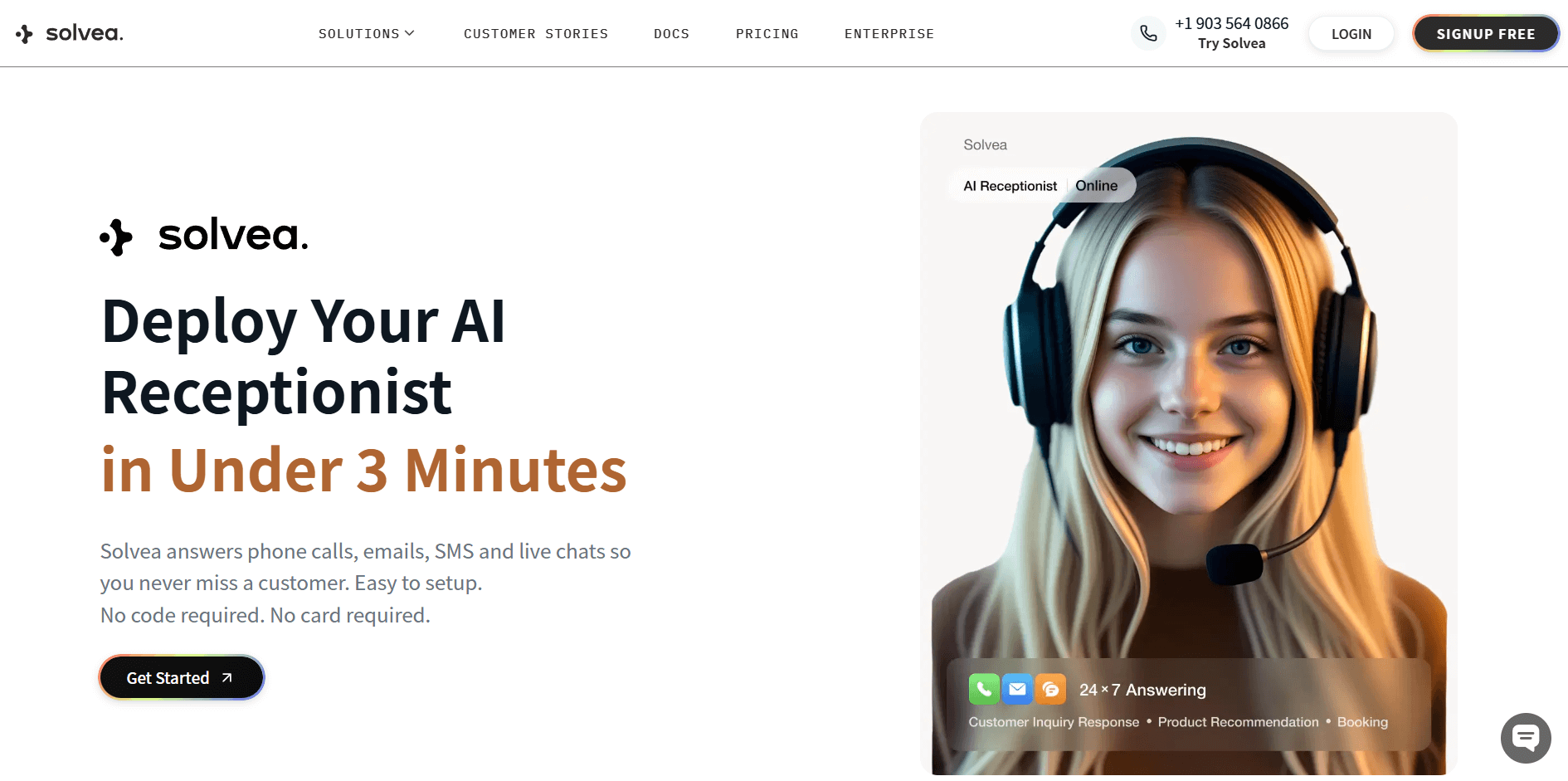
Who's it for? Solvea is a no-code AI receptionist designed for small and mid-sized businesses that need to deploy professional automation instantly. From managing multi-step workflows like appointment booking and order tracking to providing customer support and follow-up notifications, Solvea is the ultimate efficiency tool for scaling business growth and enhancing customer engagement.
Best for: SMBs needing rapid deployment, transparent pricing, and native CRM synchronization.
How Solvea compares with Numa:
- True No-Code Setup: You can deploy your AI receptionist in under 3 minutes without needing IT support.
- Transparent Pricing: At just $30/month, Solvea is significantly more accessible for small businesses and Shopify stores than Numa.
- Native Integration: Unlike Numa, Solvea offers "one-click" sync with Google Calendar, Sheets, and popular CRMs.
- Multi-Channel Support: It handles voice, text, and live chat natively, providing a consistent experience across all customer touchpoints.
- Natural Tone: The AI uses the latest neural models to ensure a warm, professional, and natural conversational flow.
See how it all comes together in practice:
Pros and Cons of Solvea:
Pros | Cons |
Extremely affordable $30/mo starting price | Newer brand compared to industry giants |
Native Shopify and Google integrations | Limited "automotive-specific" bay logic |
24/7 automated growth and lead qualification | |
Enterprise-level security and multi-language |
5. Rosie AI: Best for Natural Sounding Voice Interactions
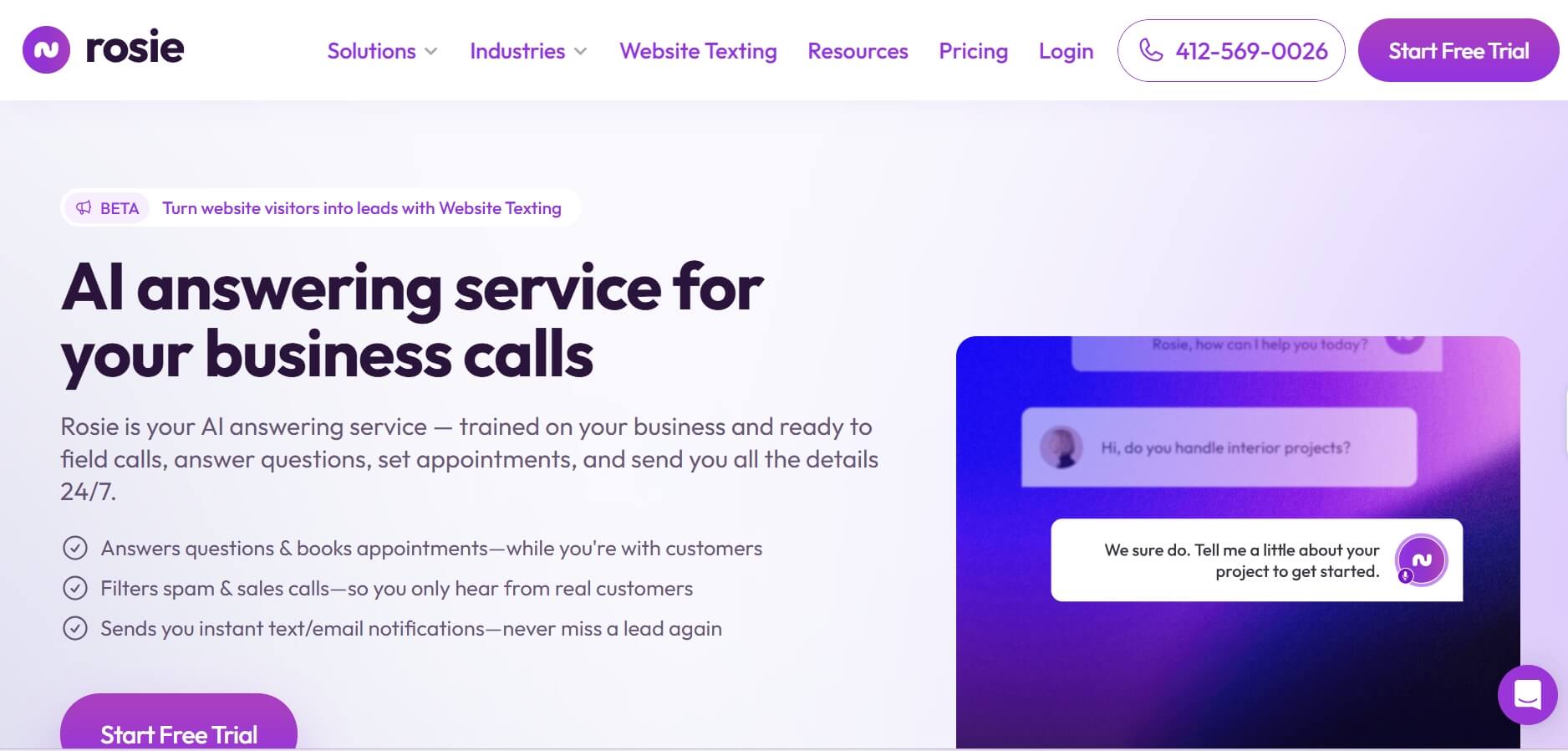
Who’s It: Rosie AI is an AI-powered voice assistant that prides itself on being the most "human" responder on the market. It’s designed to replace traditional answering services with a voice that is indistinguishable from a live receptionist. It focuses on the auditory experience to ensure customers never feel like they are talking to a machine.
Best for: Service-based businesses where trust and voice quality are paramount.
How Rosie AI compares with Numa:
- Superior Voice Quality: Rosie focuses on emotional inflection, making it sound more professional than Numa’s standard voice engine.
- Contextual Understanding: It handles "interruptions" and conversational tangents much better than scripted AI bots.
- Niche Versatility: While Numa is for cars, Rosie is widely trusted in construction and home services.
- Simple Pricing: Rosie offers clear, usage-based tiers that avoid the "hidden fees" often associated with enterprise software.
- Hands-Free Booking: It integrates with common booking tools to finalize appointments without human intervention.
Pros and Cons of Rosie AI:
Pros | Cons |
Best-in-class voice naturalness | Not as many native B2B integrations as Drift |
High trust from customers | Pricing can scale quickly with high call volume |
Easy setup for home service professionals | |
Reduces "hang-up" rates significantly |
Best Numa Alternatives for B2B & Lead Conversion
6. Drift: Best for Enterprise Conversational Marketing and Pipeline Acceleration

Who’s It? Drift is an AI-powered "Revenue Acceleration" platform and a prominent choice for B2B conversational marketing. Now, as a part of Salesloft, it combines chat, video, and email to identify high-intent website visitors. It is specifically designed for large-scale marketing and sales teams looking to accelerate their pipeline by connecting buyers with reps in real-time.
Best for: Mid-market and Enterprise B2B companies looking to accelerate their sales pipeline.
How Drift compares with Numa
·SDR Automation: Drift doesn't just answer questions; it acts as an AI Sales Development Rep (SDR) to book meetings for your team.
·Advanced Lead Routing: Unlike Numa’s simple relay, Drift uses complex logic to route leads to the correct account executive.
·Real-time Intent: It identifies "Target Accounts" (ABM) the moment they land on your site, alerting your team to jump in live.
·Massive Integration Library: Drift integrates with the entire Salesloft suite, Salesforce, Marketo, and Slack for enterprise-wide visibility.
·Case Study Results: Large firms like Emerson have seen massive pipeline growth by replacing static forms with Drift's AI.
Pros and Cons of Drift:
Pros | Cons |
Top-tier lead qualification and meeting booking | Very expensive for small businesses |
Powerful ABM (Account-Based Marketing) tools | Can take weeks to fully configure and train |
Seamless Salesloft ecosystem integration | |
Extensive library of B2B sales playbooks |
7. Impel: Best for Omnichannel Automotive Engagement and Lead Follow-up
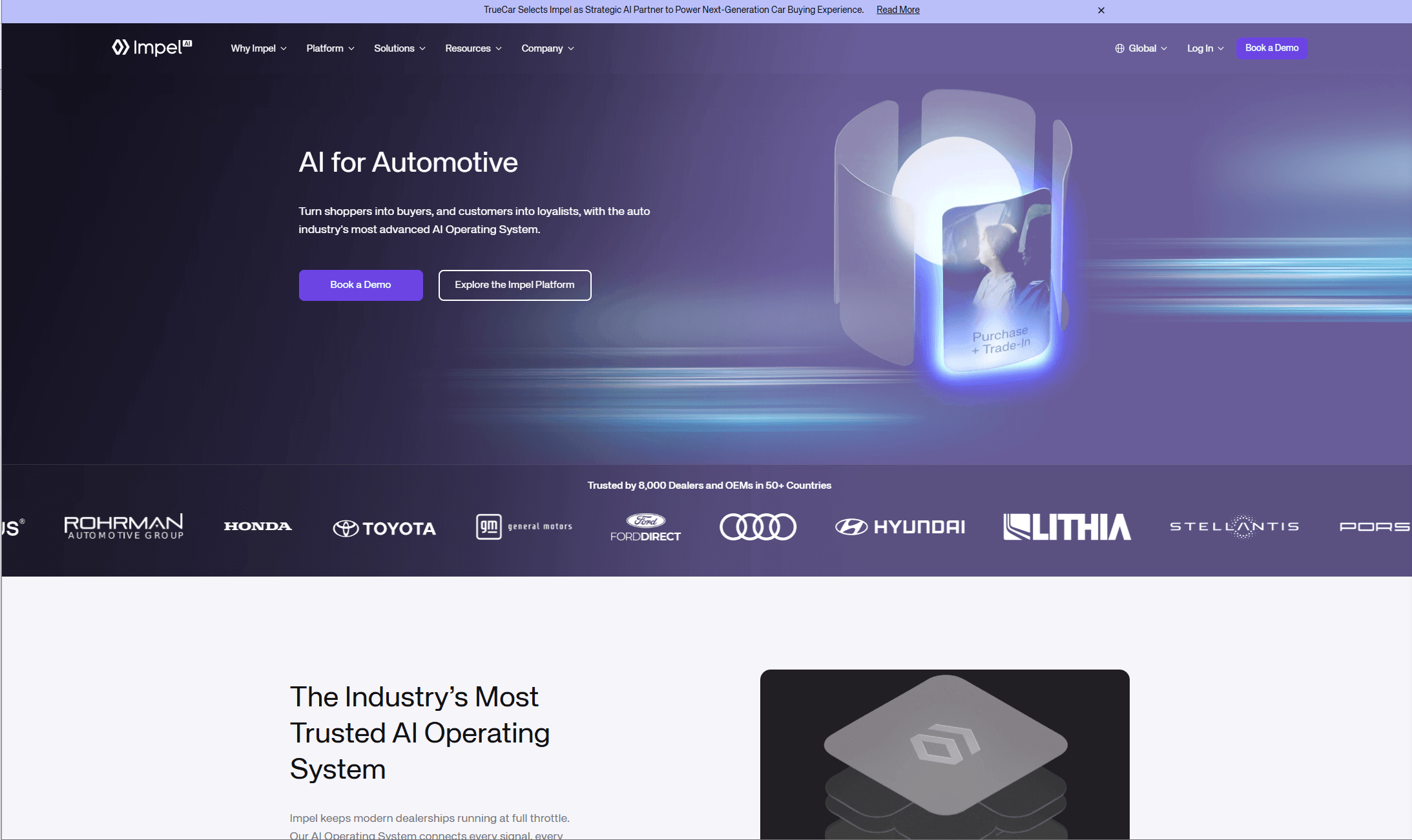
Who’s It: Impel (formerly SpinCar) is an omnichannel AI engagement platform designed for dealerships to nurture automotive leads throughout their entire lifecycle. By combining 360-degree photography with conversational AI, it proactively uses behavioral data to engage customers long after they leave the website, ensuring consistent follow-up from the first click to the final sale.
Best for: Dealerships wanting to automate the entire lead lifecycle from click to sale.
How Impel compares with Numa:
- Full Lifecycle Marketing: Impel handles pre-sale, in-sale, and service-cycle messaging, whereas Numa is primarily focused on the intake.
- Behavioral Triggers: It sends AI-powered texts or emails based on what cars a customer viewed on your site.
- Omnichannel Consistency: Impel ensures the message on your website chat matches the text the customer receives later.
- Inventory Integration: It natively understands your stock and can suggest "similar vehicles" if the one a customer wants are sold.
- Proven Scale: Trusted by thousands of dealers globally with a massive repository of customer success reviews.
Pros and Cons of Impel:
Pros | Cons |
Deeply integrated into the car buyer's journey | Focused almost exclusively on automotive |
Increases lead engagement through visual data | Higher price point than basic AI receptionists |
Automates long-term follow-up effortlessly | |
Highly professional "Sales AI" persona |
Best Numa Alternatives for Custom Needs & Human Touch
8. Retell AI: Best for Low-Latency, Fully Customizable Voice Agents
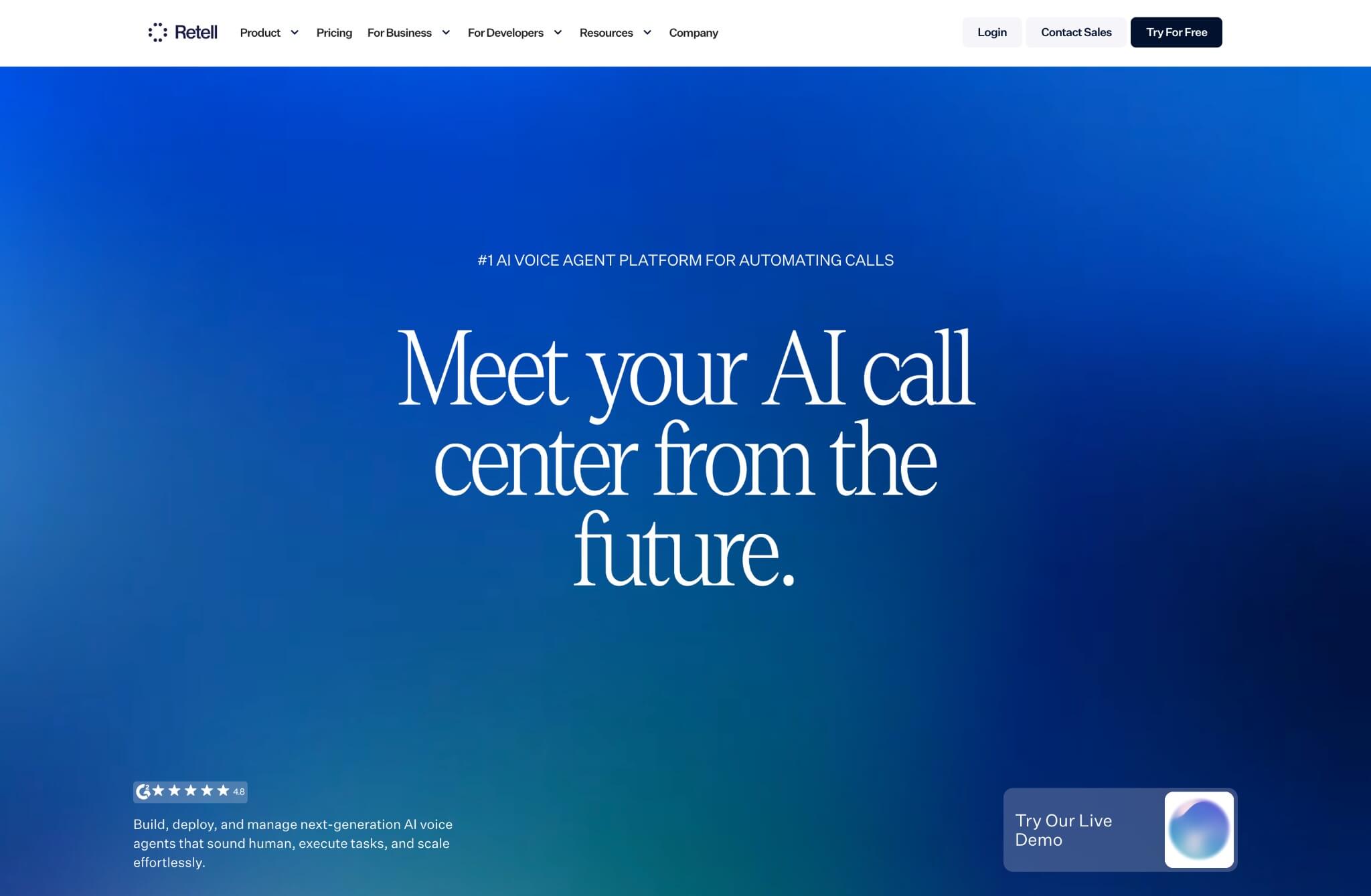
Who’s It: Retell AI is a developer-focused platform providing high-performance APIs to build unique, human-like voice agents. It serves as the technical "engine" for businesses that want total control over every aspect of the conversational experience, allowing teams to implement specific business logic and custom-tailored voices with ultra-low latency.
Best for: Tech-savvy teams and developers who need ultra-low latency and total customization.
How Retell AI compares with Numa:
- Ultra-Low Latency: Retell is built for speed, offering response times that feel much more natural than Numa’s enterprise engine.
- Total Logic Control: You define exactly how the AI handles complex questions, whereas Numa is more "templated."
- Voice Diversity: It allows you to use virtually any voice model (like ElevenLabs) to create a truly unique brand personality.
- Scalability: Usage-based pricing makes it much cheaper for high-volume users who have the technical skill to build it.
- Community Trust: Frequently highly rated on Reddit for its technical flexibility and developer support.
Pros and Cons of Retell AI:
Pros | Cons |
Most natural and fastest AI voice response | Requires technical knowledge/developers |
Completely customizable business logic | No "out-of-the-box" user interface |
Transparent, pay-as-you-go pricing | |
Supports high-volume call handling |
9. Smith.ai: Best for Hybrid AI and Human Receptionist Services
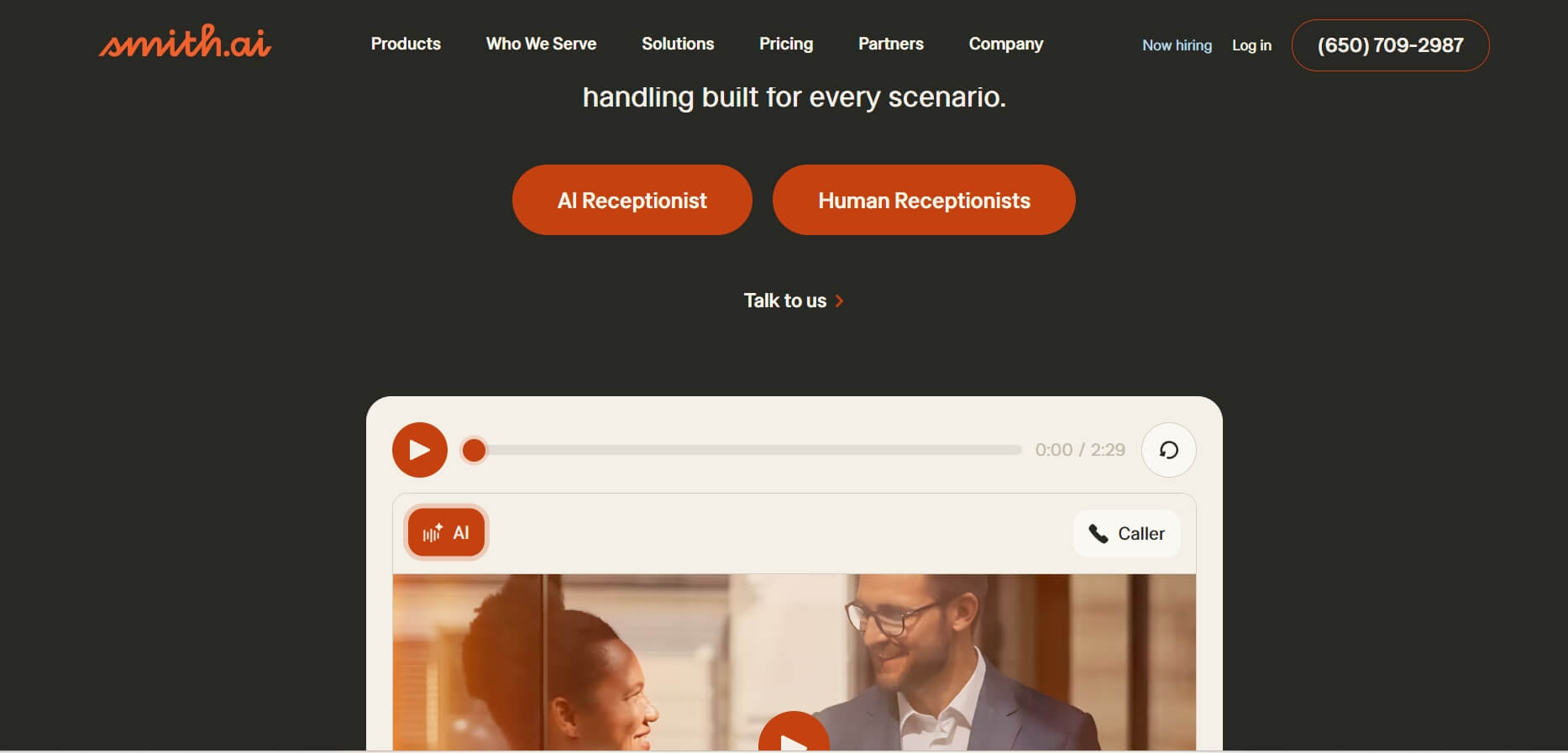
Who’s It: Smith.ai is a premium hybrid answering service that provides the ultimate "safety net" by combining AI efficiency with professional, North American-based human receptionists. It uses AI to screen calls and handle routine tasks while keeping real people on standby to take over high-value or complex conversations, ensuring a seamless and high-trust customer experience.
Best for: Law firms, high-end medical offices, and businesses where a human voice is a competitive advantage.
How Smith.ai compares with Numa:
- The Human Safety Net: Unlike Numa’s pure AI approach, Smith.ai can "hand off" a call to a real person instantly.
- Legal & Medical Specialization: They offer specialized intake services, such as qualifying legal cases or scheduling medical consults.
- CRM Integration King: It integrates with over 5,000 apps, including specialized legal software like Clio and MyCase.
- Outgoing Calls: Smith.ai can place outbound calls to follow up on leads, which Numa's AI is not designed for.
- Trusted Reputation: Consistently receives high marks on Trustpilot for professionalism and reliability.
Pros | Cons |
Unbeatable trust and professional image | Less automotive-specific |
Handles both inbound and outbound calls | Humans aren't available 24/7 at the lowest tiers |
AI-assisted human speed and accuracy | |
Deep specialization in high-stakes industries |
How to Choose the Right Numa Software Alternatives
The right choice depends on your workflow, not just the feature list. A dealership that needs service booking has different needs from a B2B team chasing demo requests or a local business that wants a natural-sounding receptionist.
Business need | Best fit | Why |
Dealership merchandising | Spyne | Improves vehicle presentation before the call happens. |
Service appointment automation | Toma | Built for dealership operations and workflow handling. |
Call tracking and coaching | Car Wars | Best when accountability and reporting matter most. |
Fast, simple launch | Solvea | Transparent pricing and quick setup are complete. |
Natural phone voice | Rosie AI | Focuses on sound and caller comfort. |
Enterprise B2B pipeline | Drift | Strong conversational marketing for sales teams. |
Automotive omnichannel follow-up | Impel | Good for multi-touch automotive engagement. |
Custom voice logic | Retell AI | Best when you need deep control and low latency. |
Human backup on calls | Smith.ai | Best when some calls need a person clutch. |
To move from Numa to a new platform, you need to export your contacts, call scripts, routing rules, and appointment logic first. Then map those items into the new system, run a short parallel test, and switch to live traffic only after your team confirms the handoff work.
Your AI Receptionist, Live in Minutes.
Scale your front desk with an AI that never sleeps. Solvea handles unlimited multi-channel inquiries, books appointments into your calendar automatically, and ensures zero missed opportunities around the clock.
FAQs
How much can switching from Numa to an alternative improve dealership lead conversion rates?
Switching to specialized automotive agents like Spyne or Impel can improve lead conversion by 20-35%. These tools don't just "rescue" calls; they provide visual inventory data and proactive follow-ups that Numa lacks, moving customers from "just asking" to "booking a test drive" much more effectively through behavioral targeting.
Which Numa alternatives support Spanish and multilingual customer conversations?
Platforms like Solvea and Smith.ai offer multilingual support. Solvea offers native multi-language AI capabilities that detect and respond in the customer's language automatically. Smith.ai provides North American-based human receptionists who are fluent in both English and Spanish, ensuring high-value bilingual customers are never turned away by a language barrier.
How do you migrate conversation history and contact data when leaving Numa?
Most Numa software alternatives, like Solvea allow for a seamless migration by importing Numa's CSV data exports. You can sync your contact lists directly into the new AI's knowledge base. For active conversations, it is best to set up your new service 24 hours before "turning off" Numa to ensure no active threads are lost during the switch.
How do these alternatives handle the automotive service drive workflow differently from Numa?
Specialized tools like Toma integrate directly with your DMS (CDK Global, Reynolds) to see actual bay capacity. While Numa primarily captures the request, Toma can verify parts availability and shop hours to finalize a repair appointment without human intervention. This reduces service advisor workload significantly compared to Numa's basic messaging relay.
Do Numa alternatives require IT support to set up CRM integrations, or can non-technical teams do it?
Tools like Solvea and Rosie AI are designed for non-technical users, offering "no-code" setups that take minutes. You simply authorize your CRM (like HubSpot or Shopify) with a few clicks. However, enterprise tools like Drift or developer-focused platforms like Retell AI may require specialized IT support for complex logic mapping.
What are the steps to switch from Numa to an alternative without losing active conversations or contacts? First, run both systems in parallel for 48 hours. Export your Numa contacts and import them into your new platform (e.g., Solvea). Set up call forwarding from your business line to the new AI agent. Once confirmed that calls are routing correctly, you can safely cancel your Numa subscription without any interruption in service.