Listing appointment booking is one of the highest-value front-desk moments in a real estate business. A homeowner may call after seeing a postcard, a neighborhood sale, a valuation page, or an agent's sign. The caller is not simply asking for a calendar slot. They are testing whether the team is responsive enough to trust with a sale.
The risk is delay. Seller intent cools quickly when the call goes to voicemail, the receptionist cannot answer basic questions, or the agent gets a message that only says, 'Owner wants to talk.' A good listing appointment workflow should preserve the seller's momentum while giving the agent enough context to prepare.
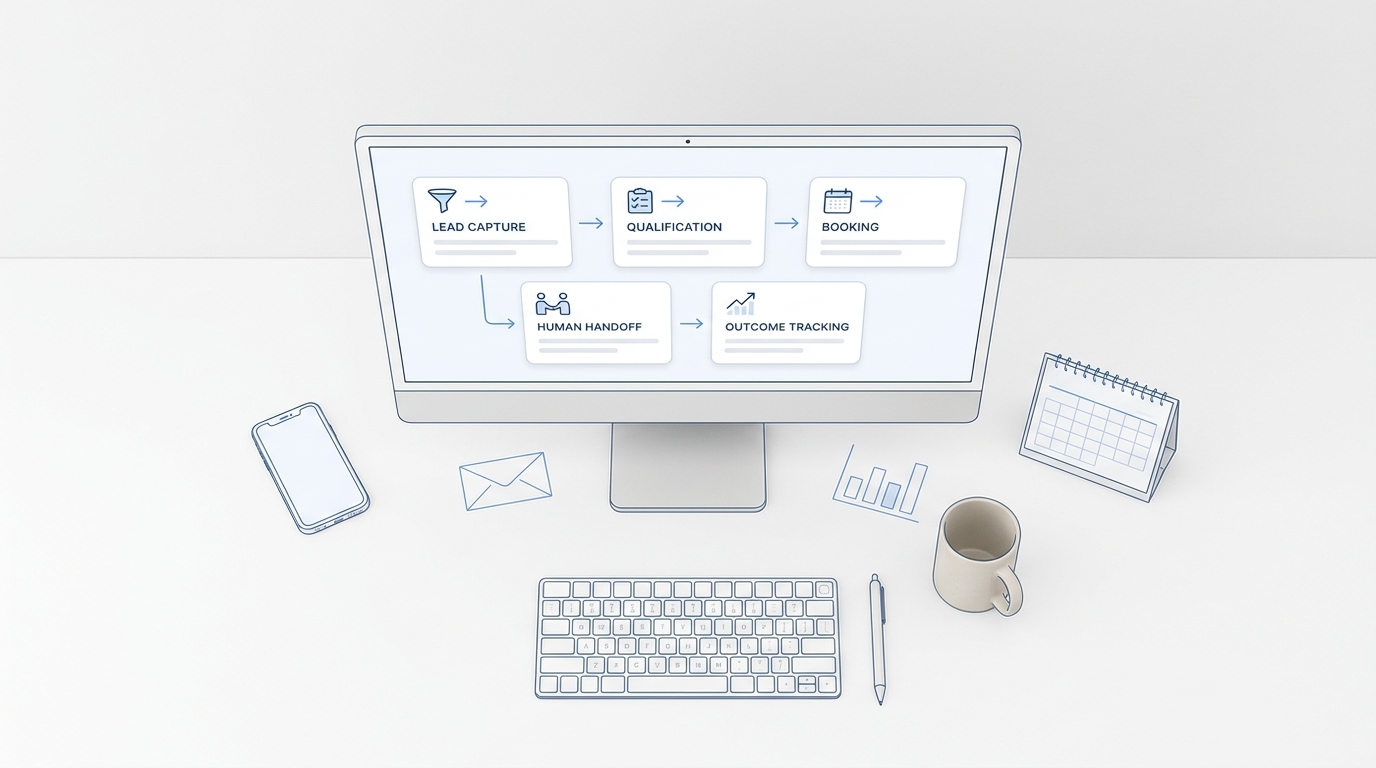
Solvea fits this as an AI receptionist for phone and front-desk coverage. It can answer seller calls, recognize listing intent, ask approved qualification questions, offer the right appointment path, and hand off sensitive cases to an agent. The goal is not to make every seller conversation automatic. The goal is to make sure no serious seller lead starts as a missed call.
What listing appointment booking needs to solve
| Decision | Practical rule |
|---|---|
| Best fit | Seller inquiries where the caller wants a valuation, consultation, listing presentation, or agent callback. |
| Book directly | Standard owner inquiry with clear property address, valid contact details, and approved appointment windows. |
| Escalate first | Luxury property, estate sale, legal complexity, investor portfolio, urgent price question, or unclear ownership. |
| Solvea role | Answer immediately, qualify seller intent, book clean appointments, and send agents a concise lead summary. |
A listing appointment is not the same as a buyer showing. The seller may be comparing agents, deciding whether to move, testing a price, or asking for advice before they are ready to sign. That means the intake must be respectful and useful, not a long qualification form disguised as a conversation.
The workflow should do three things. First, capture the opportunity before the seller calls another team. Second, identify whether this is a standard appointment or a sensitive lead that needs judgment. Third, make the booked appointment easy for the agent to prepare for.
Separate seller intent from general real estate questions
Seller calls often sound casual at the start. A homeowner might ask, 'What are houses selling for near me?' or 'Do you still work in this area?' A renter, buyer, vendor, or neighbor may use similar language. The receptionist needs to identify whether the caller owns or represents a property and whether they want a selling conversation.
The first branch can stay simple: are they calling about selling a property, buying or touring a property, renting, or something else? Once the seller path is clear, Solvea can ask for the property address, ownership relationship, and the kind of help the caller wants. That prevents a seller lead from being dropped into a generic contact queue.
This classification matters for agent routing. A listing appointment should usually go to the listing specialist, team lead, or assigned neighborhood agent. A general market question may be handled later. A buyer showing request belongs in a different workflow. Clear routing keeps the front desk from treating all real estate calls the same.
Build a phone intake path for homeowners
The intake should feel like a helpful receptionist, not a survey. Start with the caller's request, then collect the fields that make the next step possible: property address, best contact method, whether the caller is the owner or helping the owner, selling timeline, preferred meeting style, and available appointment windows.
A practical script is: 'I can help get a listing consultation set up. What property would you like to discuss, and are you the owner or helping the owner?' That question gives the agent essential context without making the caller feel screened out. If the seller is not ready for a full appointment, the workflow can offer a callback or valuation discussion.
Solvea can keep this conversation consistent across business hours, lunch breaks, weekends, and after-hours calls. That consistency is useful because seller inquiries often arrive when agents are unavailable. The caller still gets a live response and the team still gets structured information.
Use qualification questions that do not feel like a sales script
Listing qualification should be light enough to protect conversion. Asking too many questions before scheduling can make a homeowner feel like the team is interrogating them. Asking too few creates weak appointments that agents must rework. The right balance depends on the team's market and appointment model.
Useful questions include the sale timeline, whether the property is occupied, whether the seller has already spoken with an agent, and whether they prefer phone, video, or in-person consultation. For some teams, mortgage status, repairs, or target price may be relevant later, but those details do not need to block the first appointment.
The AI receptionist should also watch for sensitive signals. Estate situations, divorce, relocation deadlines, investor portfolios, and urgent price decisions may need a human faster. Solvea can collect the signal and route the lead with a note instead of trying to handle the nuance alone.
Offer appointment windows with the right person
A seller appointment is only useful when it lands with the right owner of the opportunity. Some teams book every seller to one listing coordinator. Others route by neighborhood, property type, language, price band, or existing relationship. The booking rules should reflect that structure before Solvea is allowed to confirm times.
Approved windows should be specific. A valuation call may be thirty minutes. A listing presentation may need an hour. An in-home visit may require travel time and property access notes. If the team treats all listing appointments as the same length, calendars get messy and sellers receive unclear expectations.
When a request does not fit the direct-booking rules, the experience should still feel responsive. Solvea can say that the team will confirm the best agent and time, then send a handoff with property, timeline, contact details, appointment preference, and the reason staff review is needed.
Decide what Solvea can book directly
Direct booking works best for clean, repeatable cases. For example, an owner wants a phone consultation about one local property, can provide the address, has a valid callback number, and chooses from approved listing consultation windows. That path can be fast and reliable.
Staff review is better when the caller asks for pricing advice, wants a same-day in-person valuation, has multiple properties, is not the owner, mentions legal or estate complexity, or asks for a specific agent whose availability is restricted. In those cases, automation should create a strong handoff rather than force a calendar outcome.
This is how Solvea keeps the workflow product-focused without overreaching. It handles the front-desk work that is structured and repeatable, then moves exceptions to the people who should own them. The caller gets a useful next step either way.
Make the confirmation prepare the seller
The confirmation should do more than repeat the time. It should state the appointment type, agent or team owner, meeting channel, property address, time zone if needed, expected duration, and what the seller should have ready. A seller who knows what to expect is more likely to attend and engage.
For phone or video appointments, include the contact path and backup option. For in-person appointments, include whether anyone else should attend and whether access notes are needed. If the team will call to confirm before an in-home visit, say that clearly so the seller does not assume everything is final.
Solvea can also help with reschedule calls. If a seller calls back because the time no longer works, the AI receptionist can collect new windows or move the request to staff review. This keeps appointment changes from becoming another voicemail thread.
Handle after-hours seller inquiries
Many homeowners research selling outside normal business hours. They may fill out a form or call after discussing the move with family. If the response waits until the next morning, the team loses the advantage of being present at the moment of intent.
After hours, Solvea can answer the call, confirm that the request was captured, collect the property and timeline details, and either offer approved next-day appointment windows or create a priority callback task. This gives the seller a clear path without pretending that every question can be answered instantly.
The after-hours script should avoid overpromising. It can explain that a team member will confirm any details that need agent review. That protects accuracy while still giving the homeowner a better experience than silence.
Track appointment quality after booking
A listing booking workflow should be measured by more than appointment count. Track booked consultations, attended consultations, reschedules, no-shows, agent corrections to intake summaries, speed to first response, and listings won. If the team books many appointments that do not attend, the script may be too broad.
Review the first twenty seller handoffs closely. Are agents getting enough property context? Are urgent leads marked clearly? Are simple calls being over-escalated? Are sellers confused about whether the meeting is a valuation call or a listing presentation? These details determine whether the AI receptionist is improving the front desk or just creating calendar events.
When the workflow is working, agents should spend less time chasing vague messages and more time preparing for real seller conversations. That is the practical value of listing appointment booking with Solvea: faster capture, cleaner intake, and fewer lost opportunities at the phone.
Keep the human agent in control
The safest listing appointment workflow keeps ownership clear. Solvea can handle the front-desk steps, but the agent or team still defines what qualifies as a good seller appointment, what language is allowed, and which situations require review. This prevents automation from making judgment calls that belong to licensed professionals.
A practical setup is to give agents a review loop for the first batch of calls. They can mark whether the appointment should have been booked directly, routed differently, or asked one more question. Those corrections become operating rules for the next round, so the AI receptionist becomes more useful without changing the team's selling strategy.
That control also builds trust inside the team. Agents are more likely to accept AI-booked seller appointments when they see the exact intake, route reason, and confidence level behind each handoff. The front desk gets faster, but the human still owns the relationship and the final listing conversation.
Your AI Receptionist, Live in Minutes.
Scale your front desk with an AI that never sleeps. Solvea handles unlimited multi-channel inquiries, books appointments into your calendar automatically, and ensures zero missed opportunities around the clock.
Frequently asked questions
What is listing appointment booking?
Listing appointment booking is the process of turning a seller inquiry into a scheduled consultation, valuation call, or listing presentation with the right real estate professional.
Can an AI receptionist book listing appointments?
Yes, when the team defines clear rules. An AI receptionist can answer the call, identify seller intent, collect property details, and either book an approved appointment or route the lead to an agent.
What should be collected before booking a listing appointment?
Collect the property address, seller contact information, ownership relationship, timeline, reason for selling, preferred meeting format, and any urgency or special constraints.
How does Solvea help with seller calls?
Solvea answers phone inquiries in real time, asks the front-desk questions your team approves, books qualified appointments, and sends agents structured handoffs instead of vague voicemails.
When should a seller lead be escalated instead of booked automatically?
Escalate estate, divorce, investor, luxury, multi-property, urgent pricing, or unclear ownership situations, along with any lead asking for advice the AI receptionist is not authorized to give.