If your medspa only answers calls when the front desk is fully staffed, you are probably losing demand in the hours that matter most. Prospects call after work, during lunch, between treatments, on weekends, and after seeing a social post or search result. When those calls land in voicemail or a generic callback queue, the lead often cools off before your team gets a real chance to respond.
That is where AI fits. For medspas, the strongest use case is not replacing every human interaction. It is handling nights, weekends, and overflow calls with enough structure that the next staff member can actually move the conversation forward.
This article is based on current Solvea pages reviewed on July 21, 2026:
- The live Medspa solution page says Solvea helps medspas automate front-desk operations with AI, answer FAQs, schedule appointments, and connect with CRM workflows.
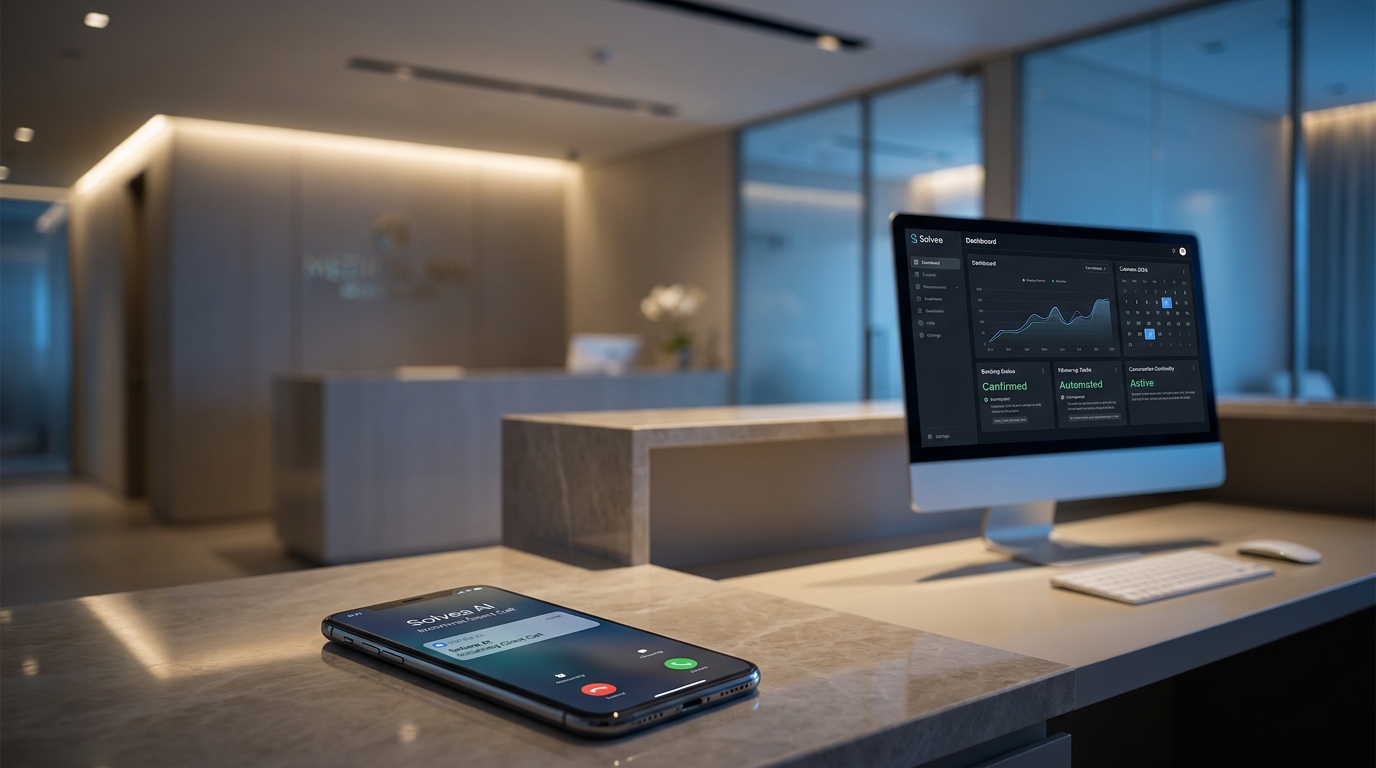
- The live AI Receptionist page says Solvea gives teams a second business number, missed-call answering, call summaries, and team follow-up in one inbox.
- The live AI Appointment Setter page says Solvea can answer calls 24/7, qualify leads, and book to your calendar automatically.
- The live Integrations page says Solvea connects with business tools including Google Calendar, HubSpot, Shopify, and Zendesk.
- The live Pricing page says one person can use Solvea free forever, while extra seats cost $19.90 per seat per month with a 7-day free trial.
Why medspa calls peak outside clean front-desk windows
Medspa demand does not arrive on a perfect schedule. The front desk may be tied up with check-in, check-out, treatment coordination, confirmations, and in-person questions while the phone keeps ringing.
That creates three common gaps:
| Coverage gap | What usually happens | Why it costs the medspa |
|---|---|---|
| Nights and after-hours | Calls hit voicemail or ring out | Consult requests cool down before follow-up |
| Weekends | Limited staff coverage creates callback backlogs | Monday starts with stale leads and reschedules |
| Overflow periods | The team is busy with live guests and cannot pick up | The caller gets a weak first impression or leaves incomplete information |
For a medspa, these are not low-value interruptions. They are often:
- consultation requests
- service or prep questions
- appointment changes
- package or membership questions
- repeat clients trying to book again quickly
The job of AI is to keep that demand alive until the right human takes over.
What medspas actually want AI to do
Most medspas do not want an AI system to improvise clinical advice or override staff judgment. They want it to handle the repeatable front-desk work that slows the team down or gets missed after hours.
In practice, that usually means:
| Caller need | Good AI handling | Human handoff trigger |
|---|---|---|
| New consult inquiry | Capture service interest, preferred timing, location, and callback details | Pricing exceptions, unclear fit, provider-specific questions |
| Basic service FAQ | Answer approved questions about hours, booking flow, deposits, prep, and policy | Anything clinical, medical-history-related, or unusually specific |
| Returning-client booking | Confirm the request type and route to the right next step | Treatment series, provider choice, or device/resource conflicts |
| Reschedule or cancellation | Capture the existing booking context and preferred new windows | Late-cancel disputes, package exceptions, or billing problems |
| Overflow call during busy hours | Take structured intake and keep the caller engaged | Escalations, complaints, urgent concerns, or VIP handling |
This is the same distinction that matters in the broader AI Receptionist for Med Spas article: AI should cover the repeatable lane, while humans keep the sensitive lane.
How medspas use AI at night
After-hours coverage is where many medspas feel the revenue leak most clearly. The clinic is closed, but the prospect has finally found time to call.
At night, AI works best when it does four things well:
- Answers immediately instead of pushing the caller into voicemail.
- Clarifies whether the caller wants a consult, a direct booking step, a reschedule, or a simple answer.
- Uses approved knowledge-base content for low-risk questions.
- Leaves the team a useful summary, not just a missed-call notification.
That last point matters. A callback task that says only "caller asked about Botox" is weak. A handoff that captures service interest, timing preference, location, new-vs-returning status, and whether the caller wants a consultation is actionable.
For medspas, that is the difference between passive coverage and a workflow that actually protects bookings.
How medspas use AI on weekends
Weekend demand has a different shape. Some medspas have limited staff coverage. Others are open for treatment but not staffed at the same front-desk level as peak weekday hours.
AI helps on weekends by reducing front-desk fragmentation:
- simple FAQ traffic does not interrupt in-clinic workflows
- consult leads can be captured consistently even when staff are busy
- reschedules and callback requests enter Monday with context already attached
- repeat callers do not feel ignored while the team is serving live guests
If your medspa runs promotions, event-based campaigns, or social pushes on Fridays and weekends, this matters even more. Weekend traffic is often high-intent traffic. Letting those calls fall into voicemail is a poor operating choice.
How medspas use AI during overflow hours
Overflow is not the same as after-hours coverage. It happens when the clinic is open but the team cannot answer every call in the moment.
This usually shows up when:
- multiple arrivals hit at once
- treatment rooms are turning over
- staff are confirming bookings and answering in-person questions
- one employee owns too much call volume
During those windows, AI functions as a pressure-release layer.
| Overflow problem | AI role | Outcome |
|---|---|---|
| Staff cannot pick up immediately | Answer first and identify intent | Fewer dropped calls |
| Repetitive FAQ load | Use approved answers from the knowledge base | Less interruption for staff |
| Incomplete intake from rushed callbacks | Capture booking-ready details during the first interaction | Better follow-up quality |
| Multiple channels splitting attention | Keep the call summary inside the shared workflow | Less context loss |
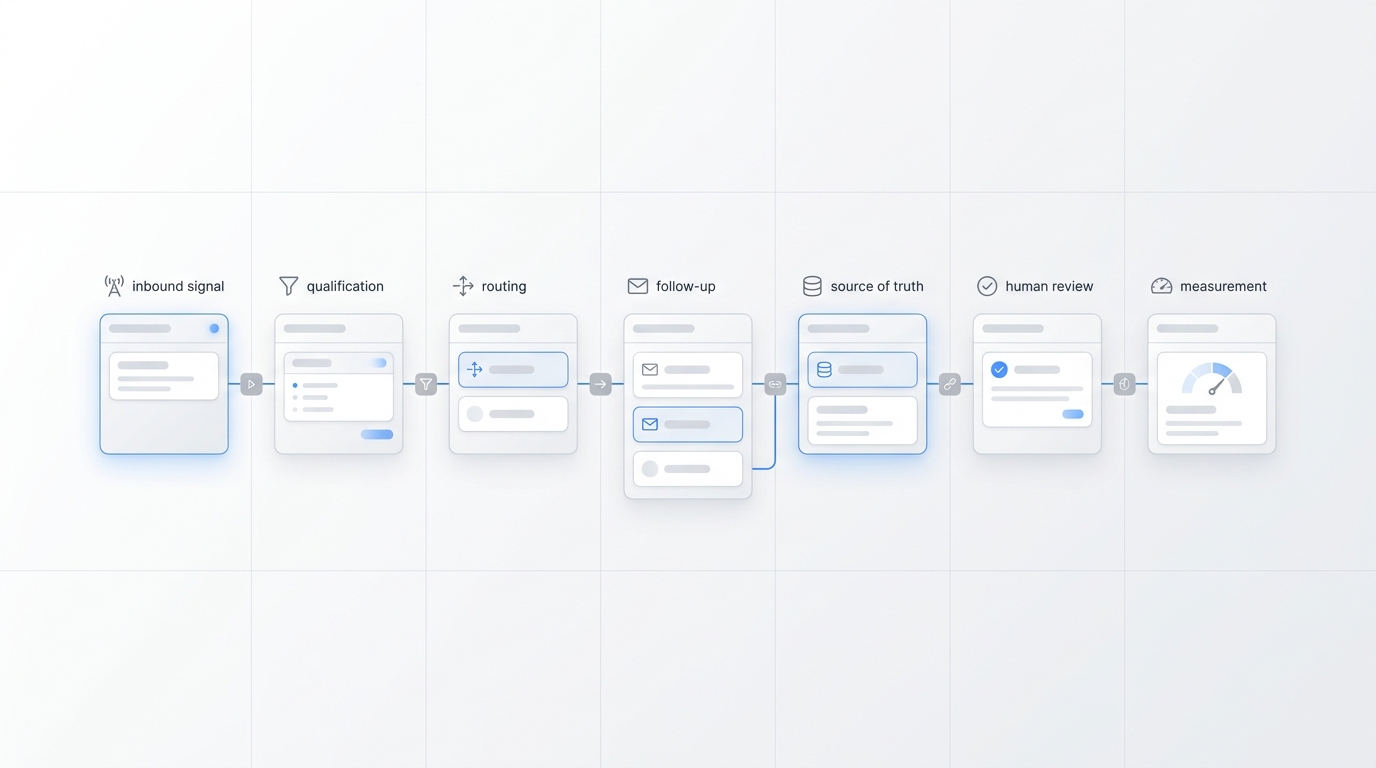
This is one reason the Solvea product story is relevant to medspas. The current site does not position the product as only a phone bot. It positions Solvea around AI answering first, then team follow-up with context across mobile and PC.
The safest medspa workflow for AI
The cleanest rollout is not "turn on AI for everything." It is a bounded workflow with clear rules.
Start with this pattern:
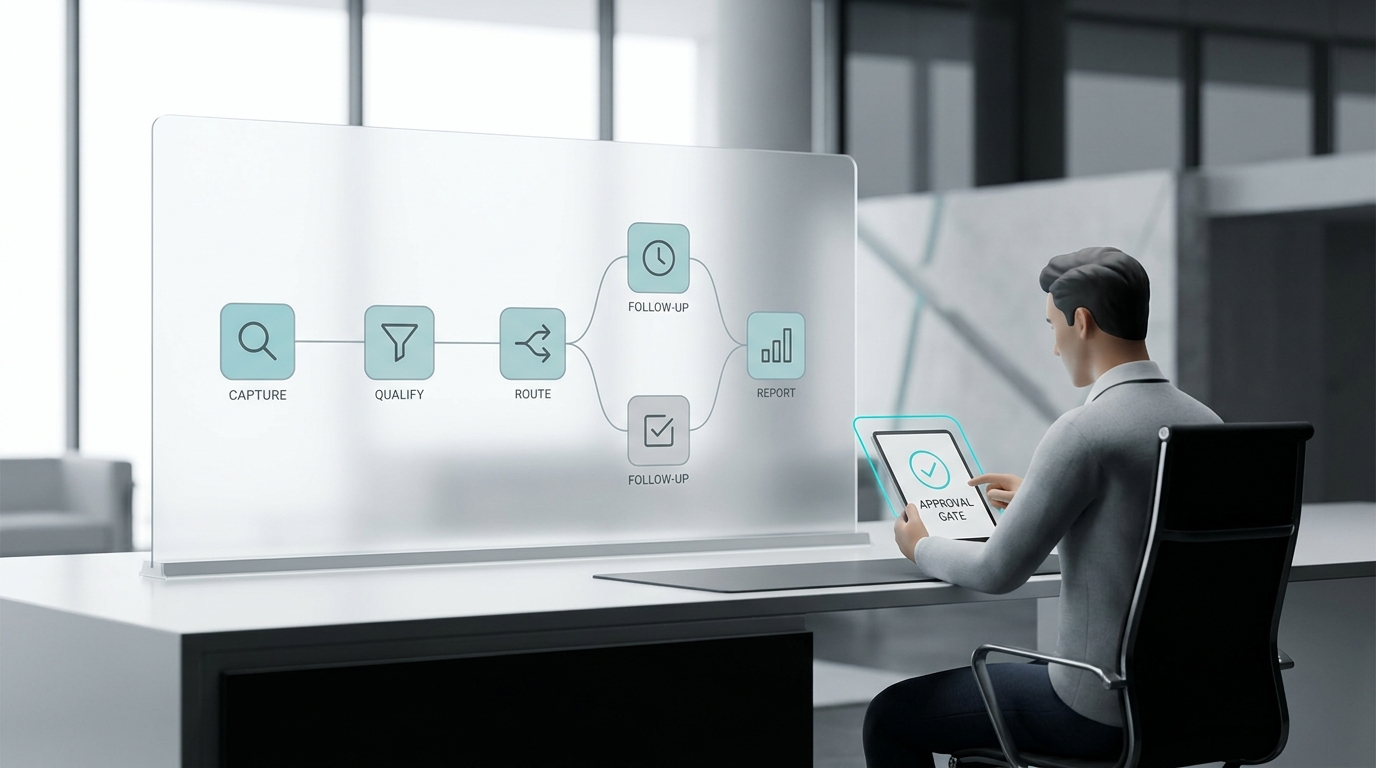
| Step | AI action | Rule to set before launch |
|---|---|---|
| 1. Answer | Use the approved clinic greeting | Keep tone aligned with your front desk |
| 2. Identify intent | Booking, FAQ, reschedule, callback, or concern | Do not use one script for every caller |
| 3. Check the safe lane | Answer only approved low-risk questions | No clinical improvisation |
| 4. Capture structured intake | Name, callback number, service interest, timing, location | Make the record usable for staff |
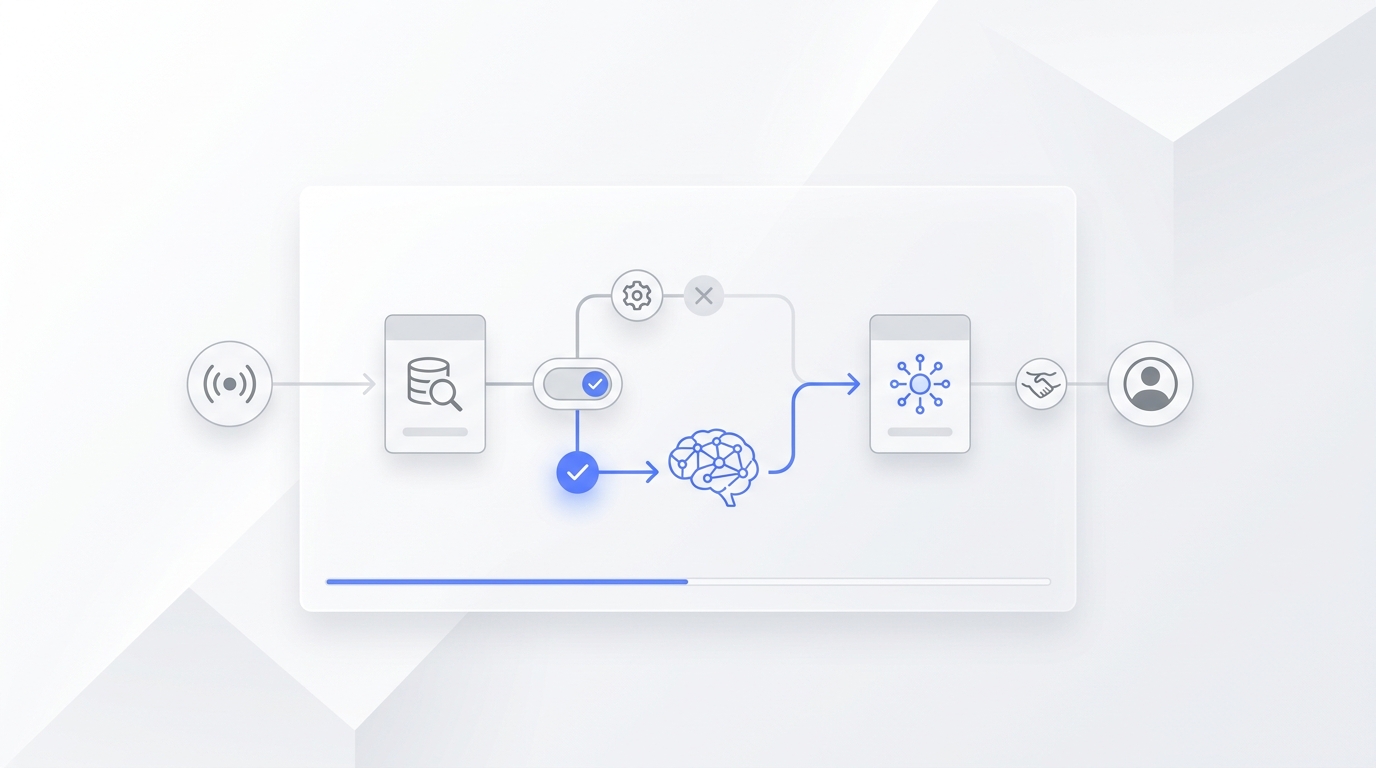
| 5. Route the next step | Consultation, booking path, callback queue, or escalation | Separate routine from exception-heavy cases |
| 6. Sync the handoff | Summary, owner, status, and next step | Avoid disconnected notes and missed-call drift |
This same logic also supports the decision framework in Medical Spa Appointment Scheduling Software vs AI Receptionist: calendar operations and conversational intake are different jobs, and medspas perform better when both are clearly assigned.
What must stay out of the AI lane
AI can help medspas move faster, but not everything should stay automated.
Keep these outside the AI lane unless a staff member takes over:
- clinical advice
- contraindication or medical-history questions
- adverse reactions or urgent post-treatment concerns
- refund and billing disputes
- unusual package exceptions
- emotionally sensitive complaints
- provider-specific judgment calls
This boundary protects both accuracy and brand trust. A medspa does not win by automating the wrong part of the conversation.
What to load into the knowledge base before go-live
The quality of medspa AI call handling depends heavily on the source material behind it. If the knowledge base is thin, the workflow will feel thin too.
Before launch, prepare:
- service names and plain-language descriptions
- consultation-first rules for treatments that need provider review
- hours, locations, and parking or arrival notes
- deposit, cancellation, and reschedule policy
- approved prep language and general aftercare language that is safe to share
- price-range or starting-price language if the team is comfortable exposing it
- escalation triggers for complaints, clinical issues, minors, refunds, and exceptions
The current Solvea positioning around Integrations, AI Appointment Setter, and Customer conversations in one place makes the most sense when those rules and answers are defined ahead of time.
How to measure whether it is working
Do not measure success only by answer rate. A medspa can answer more calls and still create cleanup work if the handoff is poor.
Track these instead:
| Metric | Why it matters |
|---|---|
| Captured consult requests outside staffed hours | Shows whether demand is being recovered |
| Weekend booking or callback volume | Measures whether coverage is protecting high-intent traffic |
| FAQ containment | Shows how much repetitive load leaves the front desk |
| Overflow-call capture quality | Tells you whether first-contact intake got more useful |
| Next-day follow-up speed | Shows whether the team can act faster from the handoff |
| Repeated-question rate | Reveals whether callers still have to explain themselves twice |
If those metrics improve, the AI layer is doing its job.
Where Solvea fits best for this use case
Solvea is a good fit for medspa nights, weekends, and overflow handling when the clinic wants more than voicemail coverage.
Based on the live site reviewed on July 21, 2026, the relevant fit is:
- AI answering for missed and after-hours calls
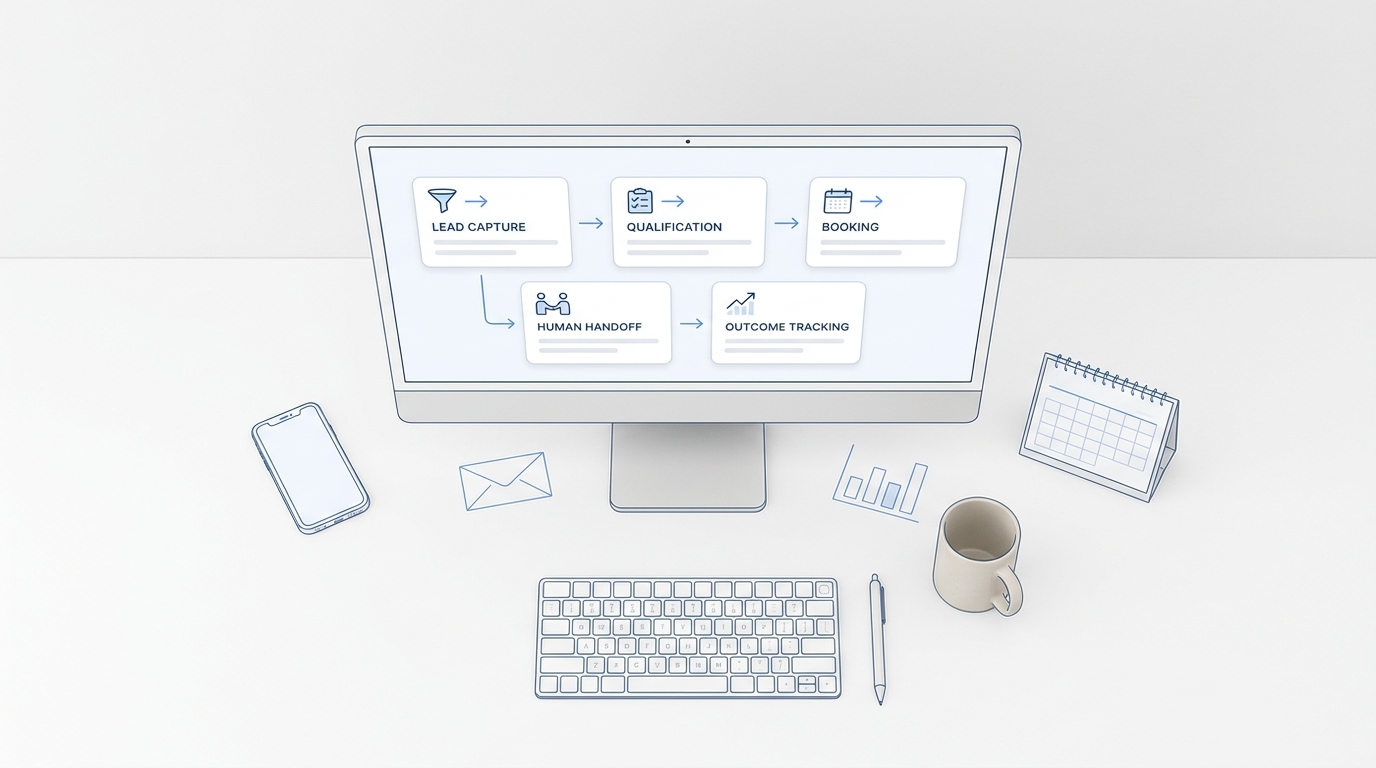
- appointment qualification and booking support
- one-click connections to business tools
- shared follow-up visibility after the call
- an AI receptionist workflow that stays with the team instead of one employee phone
That makes Solvea a practical option for medspas that want a cleaner operating system for call coverage, not just another message-taking layer.
For a broader after-hours framing beyond the medspa vertical, the live After-Hours Call Answering Service: The SMB Playbook is also a useful related resource.
Your AI Receptionist, Live in Minutes.
Scale your front desk with an AI that never sleeps. Solvea handles unlimited multi-channel inquiries, books appointments into your calendar automatically, and ensures zero missed opportunities around the clock.
FAQ
How do medspas use AI after hours without risking bad answers?
They keep AI inside the approved lane: answer quickly, capture structured intake, handle approved FAQ content, and escalate anything clinical, sensitive, or exception-heavy.
Can AI book medspa appointments directly on nights and weekends?
It can support booking when the clinic has clear rules, calendar connections, and consultation-first boundaries. For unclear-fit or higher-risk cases, a callback or consultation route is usually safer.
Is AI mainly useful when the clinic is closed?
No. It is useful both when the clinic is closed and when the clinic is open but overloaded. Overflow handling is often just as valuable as after-hours coverage.
What is the first medspa workflow to automate?
Most medspas should start with one revenue-critical lane: consult inquiries, repeat FAQ traffic, or after-hours callback capture. Start narrow, prove the handoff quality, then expand.
Final takeaway
Medspas use AI best when it protects the hours their front desk cannot fully cover. Nights, weekends, and overflow periods are where voicemail, missed calls, and fragmented follow-up create preventable revenue loss.
The right AI workflow does not try to replace every human conversation. It answers first, captures what matters, routes the next step correctly, and leaves the team with enough context to act fast. For medspas that want after-hours and overflow coverage without adding another staffing layer, that is the real operational win.