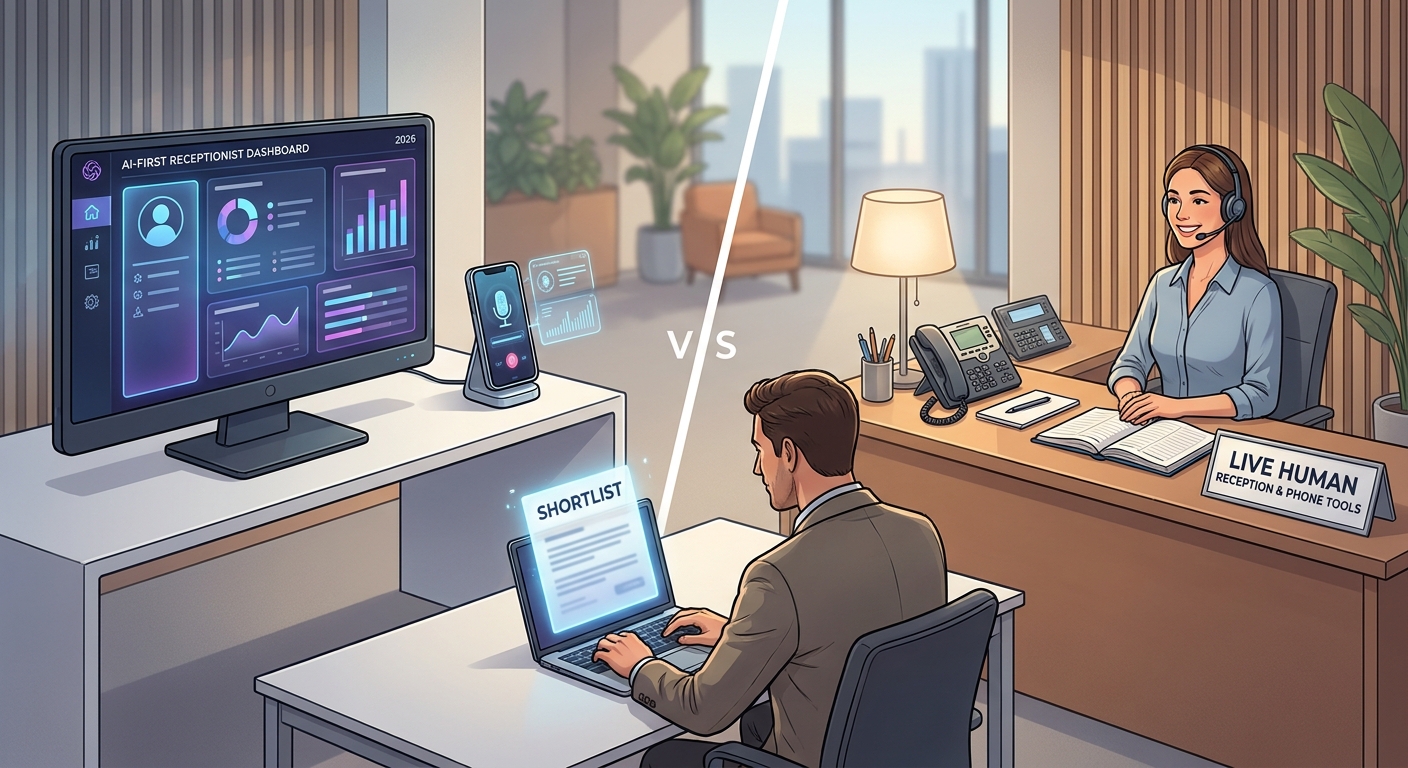
The real cost of a salon front desk is not just an hourly wage. It includes payroll taxes, recruiting, training, schedule coverage, interruptions, and the revenue impact of calls that still go unanswered when the desk is busy.
An AI receptionist has a different cost structure. The software expense is easier to see, but the return depends on whether it captures real booking demand, handles routine questions correctly, and gives staff a clean next step.
This guide gives salon owners a practical way to compare salon front desk cost vs AI receptionist ROI without pretending that every salon has the same staffing needs or booking value.
Quick answer: when does an AI receptionist produce ROI for a salon?
An AI receptionist is most likely to produce a positive return when it does at least one of these jobs well:
- answers calls that would otherwise be missed during services, breaks, or after hours
- captures enough booking information to move a client toward an appointment
- handles repeat questions about services, location, hours, preparation, and policies
- reduces repetitive call and message work for owners, managers, and stylists
- routes exceptions, complaints, and high-value consultations to the right person
It is not automatically a replacement for every front-desk responsibility. A salon may still need a person for in-store hospitality, checkout, retail sales, schedule judgment, and sensitive client situations.
The strongest business case is often a hybrid model: keep people where human presence creates value, while automation handles repetitive conversations and coverage gaps.
What does a salon receptionist cost in 2026?
The U.S. Bureau of Labor Statistics does not publish a separate national wage category for salon receptionists. The closest current national benchmark is receptionists and information clerks, with a median wage of $17.90 per hour in May 2024, the latest occupational wage figure available when this article was prepared.
Use that figure as a starting benchmark, not a hiring quote. Actual salon wages vary by city, experience, schedule, commission structure, and responsibilities.
Base wage benchmark
| Schedule | Benchmark wage | Annual base wages |
|---|---|---|
| 20 hours per week | $17.90/hour | about $18,616 |
| 40 hours per week | $17.90/hour | about $37,232 |
Those numbers only represent wages. They do not include employer payroll taxes, unemployment insurance, workers' compensation, paid time off, health benefits, recruiting, training, or management time.
Employer payroll tax floor
Employers generally pay a combined 7.65% Social Security and Medicare tax on covered wages, before other employment costs.
Adding only that federal payroll tax produces this minimum comparison:
| Schedule | Base wages | Wages plus 7.65% employer FICA |
|---|---|---|
| 20 hours per week | about $18,616 | about $20,040 |
| 40 hours per week | about $37,232 | about $40,080 |
This is still not a fully loaded employment cost. It is a conservative floor for planning.
A broader compensation sensitivity check
The Bureau of Labor Statistics reported that benefits represented 29.9% of private-industry employer compensation in March 2026. Applying a national cross-industry benefits share to a salon receptionist would not be a precise forecast, because many small salons offer a different benefits mix.
However, it is useful as a sensitivity check. If benefits represented roughly 29.9% of total compensation, a $37,232 wage budget would imply approximately $53,113 in total annual compensation.
For a realistic local estimate, replace the national benchmark with your actual wage, hours, payroll taxes, insurance, benefits, hiring cost, and manager time.
Costs salon owners often miss
1. Coverage gaps
A scheduled receptionist does not create 24/7 coverage. Lunches, sick days, vacations, opening and closing tasks, and simultaneous in-person clients still create gaps.
The important question is not, “Do we have a receptionist?” It is, “What happens to the phone and messages when that person cannot respond?”
2. Stylist interruption cost
When there is no dedicated desk coverage, phone work shifts to owners, managers, and stylists. The payroll cost may disappear from one line item, but the interruption remains.
Track how many times a service is paused for a call, how long it takes to recover context, and how often staff postpone follow-up until the end of the day.
3. Hiring and training
Salon reception requires more than answering a phone. A new hire may need to learn:
- the service menu and approximate durations
- which services require consultations or deposits
- stylist specialties and availability rules
- cancellation, late-arrival, and refund policies
- how to recognize complaints or safety concerns
- when not to promise a price or appointment
Turnover resets part of that investment.
4. Missed booking revenue
A front desk can be fully staffed and still miss calls during peak periods. The ROI calculation should include the bookings lost because callers reached voicemail, waited too long, or received an incomplete callback note.
For an operational guide to this leak, read how salons can capture after-hours booking requests without hiring a front desk.
What does an AI receptionist cost?
AI receptionist cost usually has several components:
- the software or seat subscription
- phone, message, or conversation usage
- a business number or telephony charges
- setup time for service menus, policies, and routing
- integration or workflow maintenance
- staff review for escalations and exceptions
Solvea's current pricing page says one person can use the helpdesk and mobile app free, while additional seats are listed at $19.90 per seat per month. AI answering and usage depend on the plan and credits, so use the current Solvea pricing page rather than treating the seat fee as the full operating cost.
An honest comparison uses your expected monthly conversation volume and your actual plan cost. Do not compare a receptionist's full annual compensation with a promotional software price that excludes usage.
The salon AI receptionist ROI formula
Use this formula:
Annual ROI = recovered booking contribution + labor capacity value + avoided staffing cost - annual AI workflow cost
Then calculate the ROI percentage:
ROI % = annual ROI ÷ annual AI workflow cost × 100
Each part should be based on your salon's numbers.
Recovered booking contribution
Do not use the full service price unless nearly all of it becomes profit. Use contribution after the variable costs associated with delivering the service.
Recovered booking contribution = additional completed appointments × average contribution per appointment
For example, if better call coverage produces six additional completed appointments per month and the average contribution is $65:
6 × $65 × 12 = $4,680 per year
This is an illustrative scenario, not a promised result.
Labor capacity value
Estimate the repetitive front-desk time that automation actually removes:
Labor capacity value = hours saved per week × loaded hourly labor cost × 52
If an owner or stylist saves four hours per week and values that capacity at $25 per hour:
4 × $25 × 52 = $5,200 per year
Only count time that is genuinely redeployed to clients, sales, management, or reduced payroll. Time saved but not used has less financial value.
Avoided staffing cost
Avoided staffing cost applies when the salon can defer a hire, reduce overtime, cover evenings without a second shift, or keep a part-time position focused on in-person work.
It should not be claimed when the salon plans to keep the same staffing and duties unchanged. In that case, the return should come from booking recovery and labor capacity instead.
Three realistic salon scenarios
Scenario 1: owner-operated salon with no receptionist
The owner and stylists currently answer calls between services.
The likely return comes from:
- fewer interruptions
- faster responses to missed calls
- after-hours booking capture
- better summaries for callbacks
The AI workflow does not replace a payroll position. It protects billable time and reduces demand leakage.
Scenario 2: salon with one daytime receptionist
The receptionist handles in-store guests, checkout, retail questions, and the phone.
The likely return comes from:
- overflow coverage during busy periods
- lunch, evening, and weekend coverage
- routine FAQ handling
- cleaner intake before the receptionist takes over
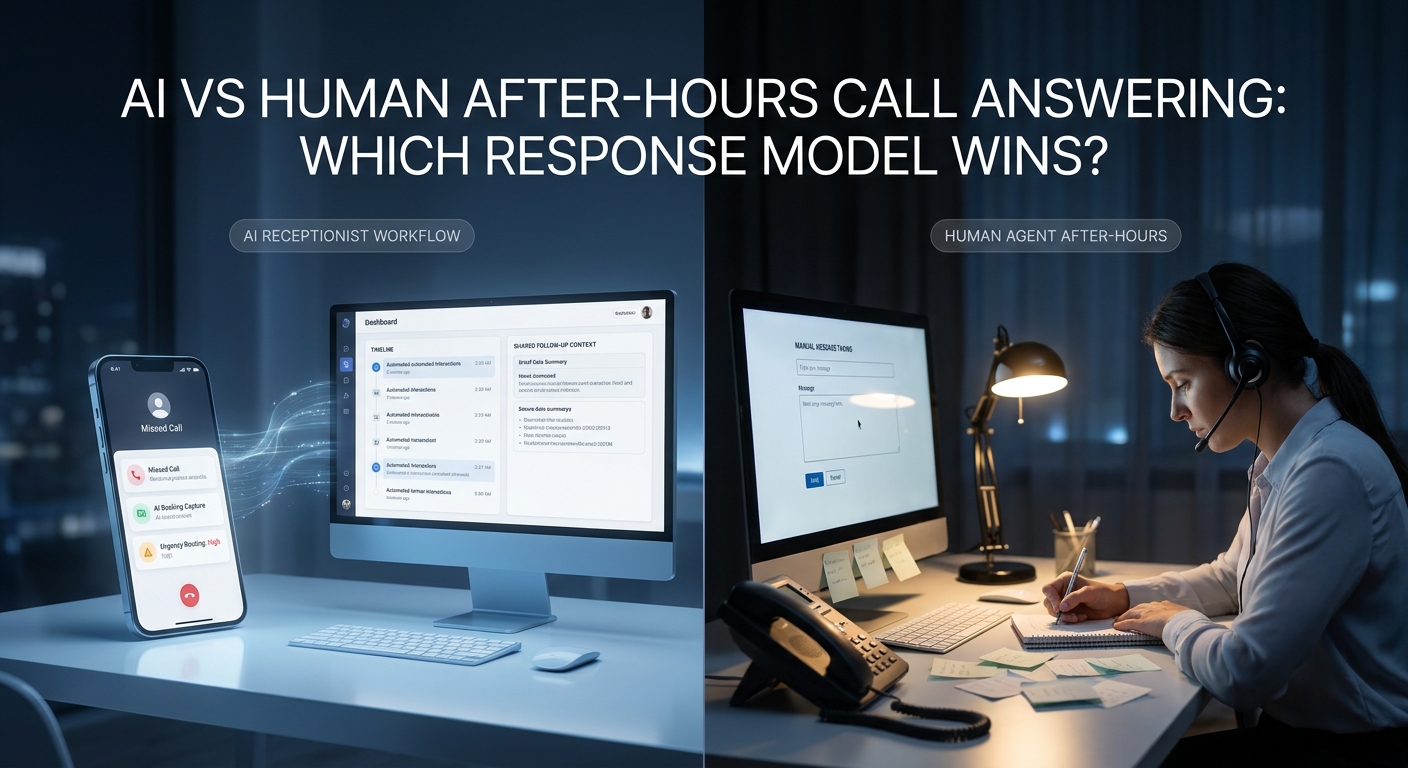
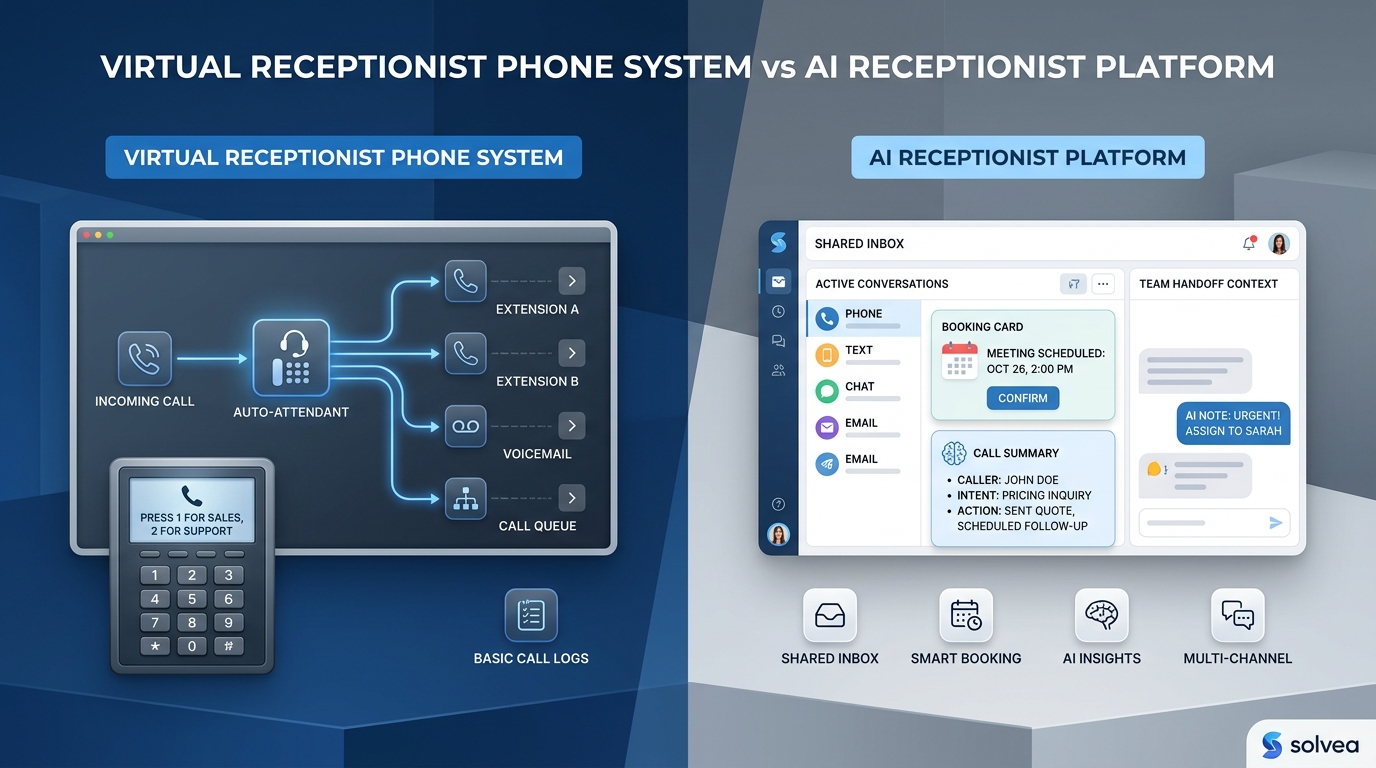
The best model may be augmentation rather than replacement. For a capability comparison, see hair salon answering service vs AI receptionist.
Scenario 3: multi-location salon or barbershop group
Each location has different staff, service menus, hours, and escalation rules.
The likely return comes from:
- consistent intake across locations
- centralized overflow coverage
- fewer repeated training tasks
- better routing by service and location
- easier review of unanswered demand
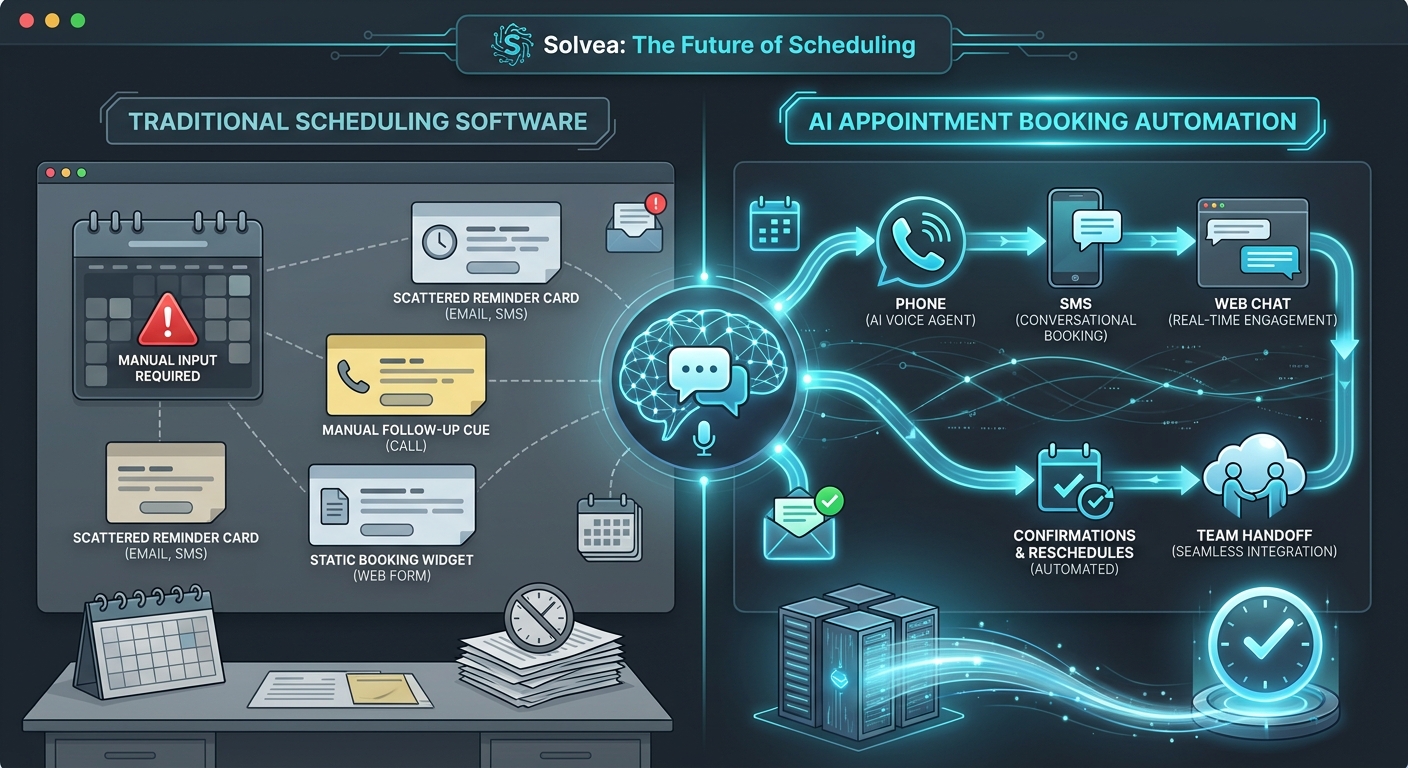
Multi-location operators should confirm that the system can separate knowledge and routing rules cleanly. The barbershop appointment booking workflow guide explains how AI support fits around an existing booking system.
What should a salon automate first?
Start with high-volume, low-risk conversations:
- Business hours, location, parking, and contact details
- Service menu questions that have approved answers
- New-versus-returning client identification
- Requested service, stylist preference, and time window
- Appointment confirmation, cancellation, and reschedule intake
- Missed-call follow-up and concise summaries
- Human handoff for complaints, corrections, premium services, and uncertain requests
Solvea's AI receptionist can handle calls and booking-oriented conversations, while an approved knowledge base helps keep routine answers aligned with salon policies.
Do not begin with the hardest edge cases. First prove that the system can reliably handle repeatable demand and escalate the rest.
A 30-day salon ROI test
Week 1: establish the baseline
Measure:
- inbound calls and messages
- missed and abandoned calls
- after-hours inquiries
- average response time
- calls that become appointments
- staff time spent on routine phone work
Week 2: launch one narrow workflow
Start with overflow and after-hours calls. Use a limited set of approved FAQs and a clear human handoff rule.
Week 3: review conversation outcomes
Sample calls and summaries. Look for:
- missing client information
- incorrect or overconfident answers
- unclear ownership after handoff
- services that require a different flow
- recurring questions that should be added to the knowledge base
Week 4: calculate the return
Compare the new period with the baseline:
| Metric | Baseline | After launch | Financial effect |
|---|---|---|---|
| Missed calls | |||
| Completed appointments from phone inquiries | |||
| After-hours bookings captured | |||
| Staff hours spent on routine calls | |||
| AI workflow cost |
Do not declare success based only on calls answered. A salon needs appointments completed, time returned to the team, or staffing costs avoided.
When a human front desk is still the better investment
A person may create more value when the role is primarily about:
- welcoming guests and managing the physical waiting area
- selling retail products in person
- handling complex schedule changes across multiple stylists
- resolving emotional complaints or service recovery
- coordinating walk-ins, color processing, and chair availability
- building a high-touch luxury experience
AI should not be forced into work where physical presence, judgment, or relationship depth is the main value.
Final decision checklist
Before choosing a staffing model, answer these questions:
- How many calls and messages go unanswered each week?
- What percentage arrive during services or after hours?
- How much contribution does a completed appointment create?
- How many staff hours are spent on repeat questions and booking intake?
- Which front-desk duties require physical presence?
- Can the AI workflow use approved service and policy information?
- Is there a clear human owner for escalations?
- What is the complete annual software and usage cost?
If most value comes from in-person hospitality, keep investing in people. If the largest leak is unanswered demand and repetitive phone work, an AI receptionist can create a measurable return without removing the human experience clients value.
The smartest comparison is not “person or AI.” It is which work should stay human, which work should be automated, and whether the combined workflow produces more completed bookings at a lower cost of service.
Estimate your salon workflow with Solvea using your real call volume, staffing cost, and booking contribution.
Your AI Receptionist, Live in Minutes.
Scale your front desk with an AI that never sleeps. Solvea handles unlimited multi-channel inquiries, books appointments into your calendar automatically, and ensures zero missed opportunities around the clock.
FAQ
How much does a salon receptionist cost per year?
Using the May 2024 BLS median wage for receptionists and information clerks, 40 hours per week equals about $37,232 in base annual wages. Adding only employer Social Security and Medicare taxes brings the benchmark to about $40,080 before benefits and other employment costs.
Is an AI receptionist cheaper than a salon receptionist?
The software cost is usually lower than a full-time wage, but that does not mean the roles are identical. Compare only the duties the AI can reliably handle, then include usage, setup, oversight, and remaining human work.
How do salons calculate AI receptionist ROI?
Add recovered booking contribution, useful labor capacity, and legitimately avoided staffing costs. Subtract the complete annual AI workflow cost. Track completed appointments and staff time, not just answered calls.
Should an AI receptionist replace the salon front desk?
Not necessarily. Many salons benefit more from using AI for overflow, after-hours coverage, routine FAQs, and booking intake while staff continue in-person hospitality, checkout, retail, and exception handling.
What is the fastest way to test salon AI receptionist ROI?
Run a 30-day test on overflow and after-hours calls. Record baseline missed calls, booking conversion, response time, and staff phone hours, then compare completed appointments and time saved after launch.