A buyer submits an inquiry about a listing at 9pm. If the agent calls within 5 minutes, they are 21 times more likely to qualify that lead than an agent who calls 30 minutes later — a finding from a 2007 lead response study by Dr. James Oldroyd at MIT in collaboration with InsideSales.com, analyzing over 1.25 million sales leads. StreetEasy's speed-to-lead best practices guide reports that calling within 1 minute increases conversion likelihood by 391%.
The gap between best practice and actual performance in real estate is stark. According to Zillow, the average response time for real estate agents to an online inquiry is over eight hours — yet 47% of online inquiries receive no human response at all, and 78% of buyers ultimately hire the first agent they speak with. The industry is collectively losing an enormous amount of business to simple response time lag.
This article covers the data on real estate lead response times, practical tips for improving yours, and how AI tools fill the gaps that manual processes can't.
TL;DR
Field | Details |
Average agent response time | 917 minutes (over 15 hours) — WAV Group/Weichert 2014 agent responsiveness study |
Target response time | Under 5 minutes for phone/platform leads |
Impact of 1-minute response | +391% conversion likelihood vs. delayed response (StreetEasy best practices guide, citing InsideSales research) |
Biggest gap | After-hours leads — no response path for most agents |
Who it's for | Solo agents, buyer's agents, listing agents, real estate teams |
AI receptionist handles after-hours and overflow calls automatically |
Why Real Estate Lead Response Time Matters So Much
Speed-to-lead is the single most predictive variable in real estate lead conversion. The research has been consistent across multiple studies and data sets spanning more than a decade.
The Numbers Are Not Close
According to MIT and InsideSales.com's Lead Response Management Study — one of the most-cited pieces of research on sales response speed — the conversion advantage of fast response is massive:
- Responding within 1 minute increases conversion likelihood by 391% compared to 30-minute response
- Responding within 5 minutes makes you 21x more likely to qualify the lead vs. 30-minute response
- 100x more likely to connect with the prospect if you respond within 5 minutes vs. waiting longer
StreetEasy's speed-to-lead best practices guide confirms the same pattern from platform data: every minute of delay reduces the probability that the lead is still in active search mode and willing to engage.
Most Agents Are Missing the Window
A 2024 nationwide "secret shopper" study conducted by industry analyst Mike DelPrete, involving over 100 inquiries across more than 25 brokerages including Redfin, RE/MAX, and Compass, found that 47 percent of online buyer inquiries received no human response at all. For those who did receive a response, the average response time was 8 hours and 17 minutes—though the median was a more reasonable 39 minutes, revealing that a small number of fast responders pull up the average while the majority still lag far behind. The research also tested open houses, finding that 42 percent of in-person attendees were never asked for their contact information, and of those who were, one-third never received a follow-up—meaning 62 percent of open house shoppers received no follow-up after their tour.
Any agent who builds a fast-response system is outperforming the majority of their market on the metric most predictive of conversion.
5 Tips to Improve Your Real Estate Lead Response Time
Tip 1: Connect All Lead Sources to One CRM
The first response time killer is fragmented inboxes. A lead from Zillow sits in one email account, a website form submission in another, and a direct text from a referral in your phone. No single notification surface means leads fall through the cracks.
Connect every lead source to a CRM that:- Creates a contact record automatically when any inbound inquiry arrives- Sends a single immediate notification to your phone regardless of lead source- Logs the timestamp so you can measure your actual response time
Popular options: Follow Up Boss, LionDesk, KvCore. Most integrate natively with Zillow, Realtor.com, and major website platforms.
Tip 2: Set Up Instant Auto-Responses
Even if you can't personally call back within 5 minutes, an instant auto-response keeps the lead engaged and sets an expectation. An effective auto-response:
- Arrives via the same channel the lead used (text for text, email for email)
- Acknowledges the specific property or area they inquired about
- Sets a specific timeline: "I'll call you within 15 minutes" — not "I'll be in touch soon"
- Is signed with your name and a direct phone number
A lead who receives an immediate acknowledgment is far less likely to submit the same inquiry to three other agents while waiting. The auto-response buys time without sacrificing the impression of responsiveness.
Tip 3: Prioritize After-Hours Coverage
Surveys consistently show that a significant percentage of real estate leads arrive outside normal business hours — evenings and weekends, when buyers are browsing after work. Agents without after-hours coverage are systematically missing the leads that come in during the hours most buyers are actually active.
Options for after-hours coverage:
Coverage Option | Response Quality | Cost | Best For |
Personal voicemail | Low — no engagement | Free | Unavoidable baseline |
Team rotation | High — human response | Staff cost | Teams with 3+ agents |
AI receptionist | High — qualifies and books | Low monthly | Solo agents and teams |
Virtual assistant | Medium — basic info only | Varies | Some operations |
An AI receptionist like Solvea handles after-hours calls and chat inquiries by engaging the lead, asking qualification questions, and confirming showing appointments — the same flow a human would handle, available 24/7.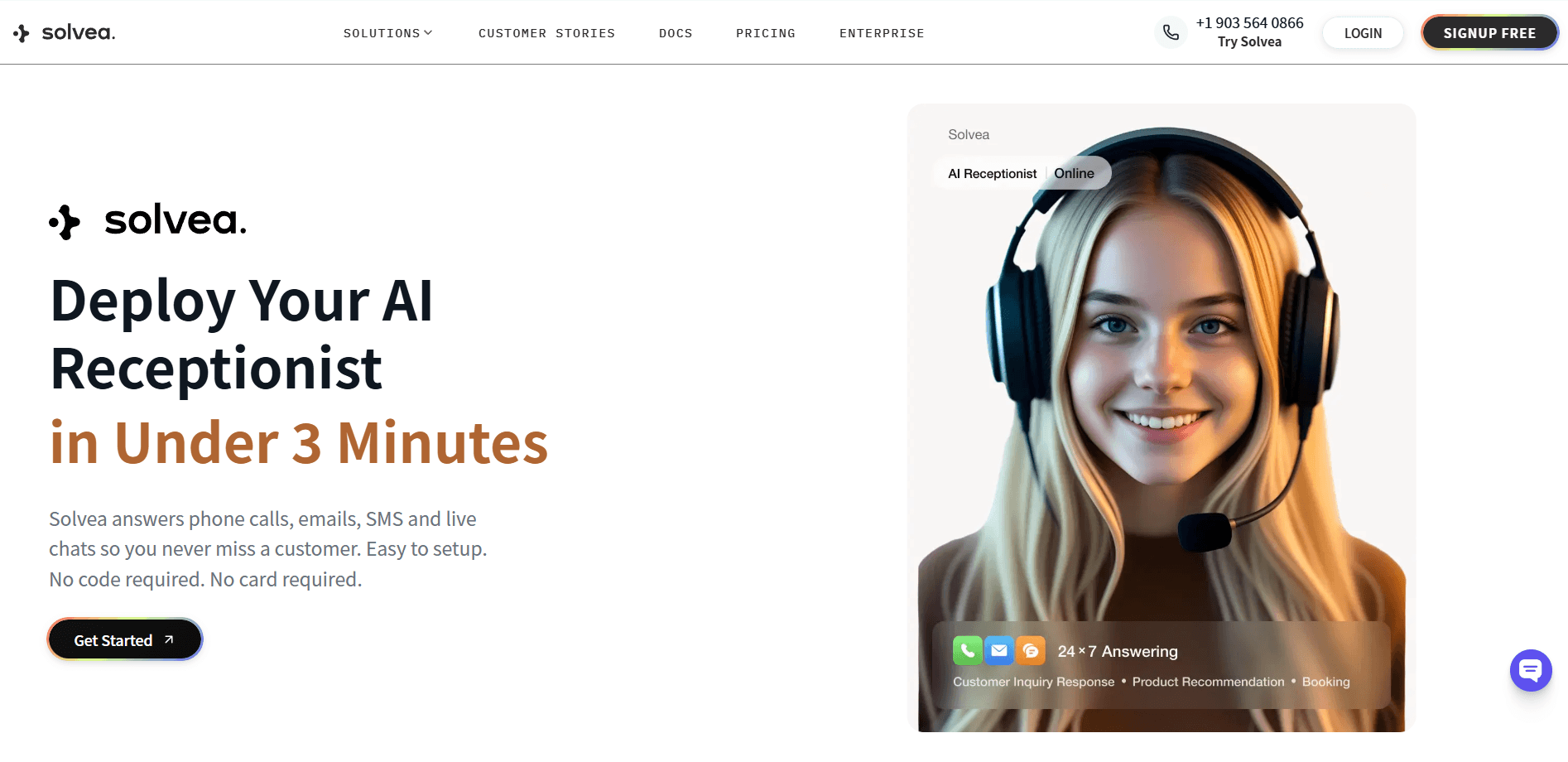
Tip 4: Remove Friction From Your Response Script
Long scripts slow response. For the first contact, the goal is one thing: get the prospect on a call or confirm a showing time. Everything else — buyer needs, budget details, neighborhood preferences — can come in that first call.
Effective first-contact text (3 lines maximum):
"Hi [Name] — this is [Agent] from [Brokerage]. I saw your inquiry about [property/area]. Are you free for a quick call in the next 15 minutes?"
Effective first-contact call opening:
"Hi, is this [Name]? Great — this is [Agent]. I got your inquiry about [property]. Are you able to talk for 5 minutes right now?"
Remove: your bio, your brokerage history, your "passion for real estate," the market update, the property description. All of that comes after they agree to a conversation.
Tip 5: Measure and Track Your Actual Response Time
Most agents who believe they respond quickly have never actually measured it. CRM reports and call logs tell a different story. Set up tracking for:
- Time to first response: timestamp of inquiry vs. timestamp of your first outbound contact
- Contact rate: what percentage of leads you actually reach
- Conversion rate by response time bucket: leads contacted within 5 min vs. 5–30 min vs. over 30 min
Reviewing these numbers weekly creates accountability and surfaces specific gaps — for instance, that after-hours leads have a contact rate of 15% vs. 60% for business-hours leads. That gap is the most direct signal that after-hours coverage needs improvement.
What After-Hours Lead Response Looks Like With AI
The after-hours coverage gap is where the largest response-time improvements are available. Agents who are manually handling leads can only respond while they're working. An AI can respond to every inquiry immediately, around the clock.
With Solvea, you configure your listing information, qualification criteria, and availability windows once. When a buyer calls or submits a chat inquiry at 10pm, the AI:
- Answers immediately
- Identifies which property or area they're asking about
- Asks qualification questions (timeline, financing, property criteria)
- Confirms a showing appointment if the buyer is ready to book
- Notifies you with a summary of the conversation and the booked appointment
You review the morning queue rather than calling back a pile of voicemails left by people who may have already booked elsewhere.
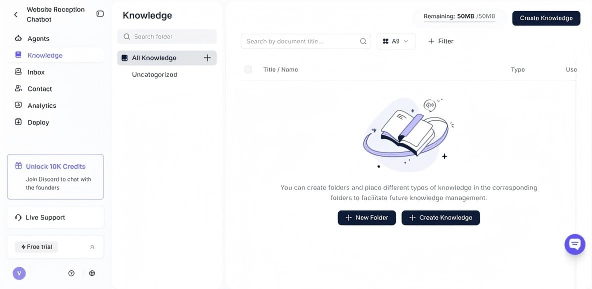
Agents using AI-assisted response systems to cover after-hours and overflow leads consistently report improved lead capture compared to manual-only workflows — consistent with the speed-to-lead research showing that faster response produces dramatically better conversion outcomes.
Your AI Receptionist, Live in Minutes.
Scale your front desk with an AI that never sleeps. Solvea handles unlimited multi-channel inquiries, books appointments into your calendar automatically, and ensures zero missed opportunities around the clock.
FAQ
What is the ideal real estate lead response time?Under 5 minutes for phone and third-party platform leads (Zillow, Realtor.com). Under 15 minutes for web form submissions. Under 1 hour for social media DMs. Calling back within 1 minute of a phone inquiry increases conversion likelihood by 391%, according to StreetEasy's speed-to-lead best practices guide — but any response within 5 minutes puts you well ahead of the documented industry average of 917 minutes (WAV Group/Weichert 2014).
How does response time affect lead conversion in real estate?Dramatically. The 2007 MIT/InsideSales.com Lead Response Management Study found that responding within 5 minutes makes an agent 21x more likely to qualify a lead compared to a 30-minute response. The WAV Group/Weichert 2014 study found that 48% of buyer inquiries to US brokers received no response at all — meaning any agent who responds quickly is already outperforming nearly half the market.
What percentage of real estate agents respond within 5 minutes?The research consistently shows that most agents are not responding within the 5-minute window where conversion rates are highest. The WAV Group/Weichert 2014 responsiveness study found that nearly half of all buyer inquiries received no response at all from brokers. Any agent who builds a reliable fast-response system is outperforming a significant share of their market on the metric most predictive of conversion.
How do you handle leads that come in after business hours?Three options work consistently: a team coverage rotation among agents, a virtual assistant trained to handle basic inquiries, or an AI receptionist that handles qualification and booking automatically. Of these, AI is the most scalable for solo agents because it requires no staffing cost and operates regardless of call volume. Tools like Solvea are purpose-built for this — qualifying and booking at any hour from your listing and FAQ knowledge base.
Does faster response time really make that big a difference?Yes. The data is unusually consistent across multiple independent studies spanning different markets and years. The conversion advantage of responding within 5 minutes vs. 30 minutes is not marginal — it's a factor of 21x in qualification rate. In a high-value transaction where a single additional closing covers months of marketing budget, the ROI of investing in faster response infrastructure is straightforward.