A potential customer calls after reading your service page. They ask whether your team works in their area, whether you can help this week, and what the next step costs. No one answers, so the call becomes a voicemail with just a name and number.
That was not a generic inquiry. It was a high-intent lead. The real question is not only which AI lead generation tools exist, but which tool can catch that moment before it disappears.
Start With the Call That Sales Never Saw
Many businesses think of lead generation as a marketing activity: ads, landing pages, forms, campaigns, and email follow-up. Those channels matter, but they do not cover every buying moment.
Some leads call first. A phone call can contain stronger intent than a form because the prospect is spending real time to ask a specific question. They may already know they need help. They may only need price, availability, service fit, or confirmation before taking the next step.
That is why inbound calls deserve a place in the lead generation strategy. If the business misses the call, the lead record may never exist. If an AI receptionist answers, asks the right questions, and creates a useful handoff, the opportunity becomes visible.
Define What Counts as a Lead Before Automating
Lead generation is the process of attracting potential customers and collecting enough information to start a sales or service conversation.
A lead can come from:
- A phone call
- A website form
- Live chat
- Paid search
- Organic search
- Referral traffic
- Social media
- Events
- Local listings
The key point is that a lead is not just a contact. A name and phone number are helpful, but they do not explain fit, urgency, need, or next step.
For an AI front desk, lead generation means turning a real conversation into structured context. The AI does not need to close the deal. It needs to capture enough signal so a person or workflow can act.
Treat Phone Calls as High-Intent Lead Sources
Phone calls often happen near the decision point. A prospect may call because they are comparing vendors, trying to book, checking eligibility, or asking whether the business can solve a specific problem.
The lead value is in the details:
- What problem do they have?
- How soon do they need help?
- Where are they located?
- Which service are they asking about?
- What concern is blocking the next step?
- Are they ready to book or request a quote?
If staff answer every call, those details can be captured manually. But many small teams are busy with current customers, field work, appointments, or after-hours demand. That is where AI lead capture becomes useful.
Solvea fits this moment as an AI receptionist across phone, email, and live chat. The product is not a generic lead database. Its relevance is at the front door: answering real inquiries, using business knowledge, and routing unresolved or qualified conversations to people.
Capture the Details While the Caller Is Ready
An AI receptionist captures a lead by turning the first conversation into a usable record.
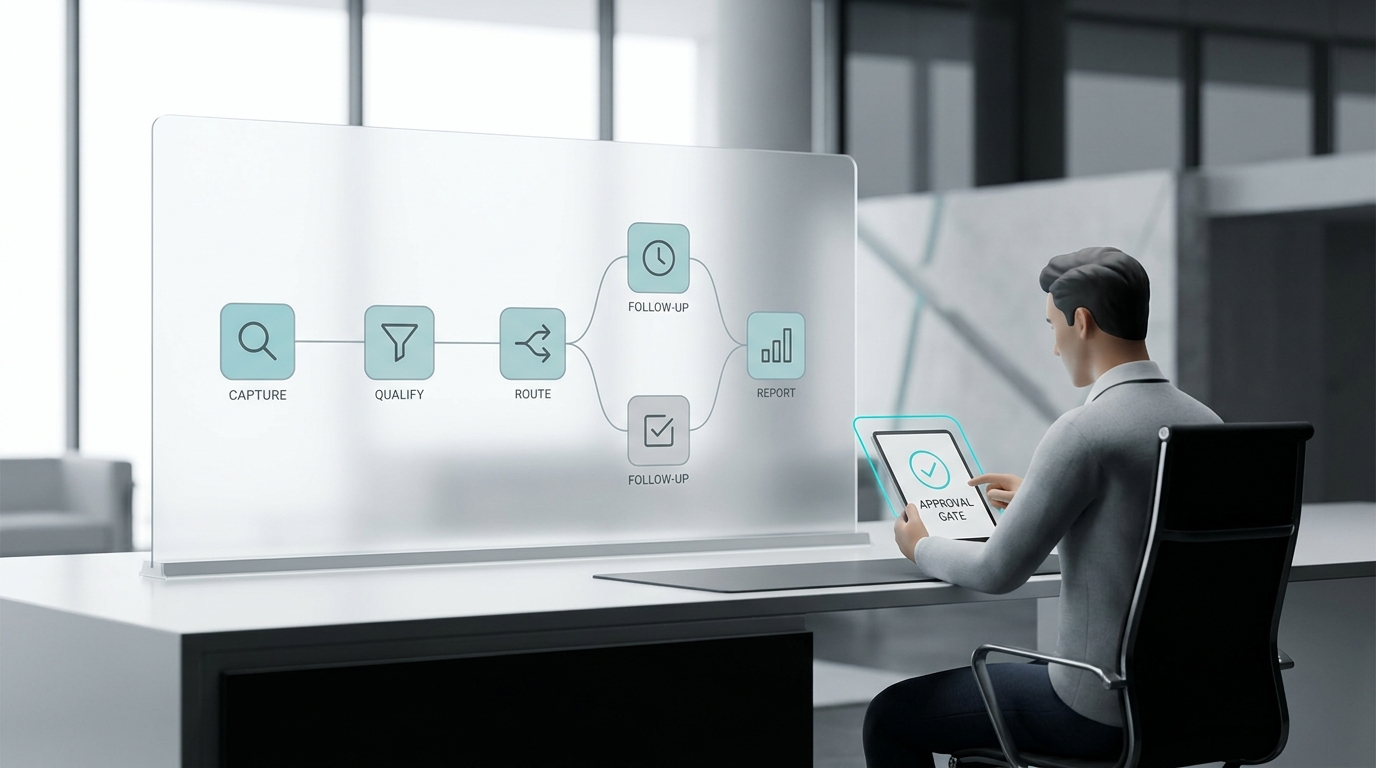
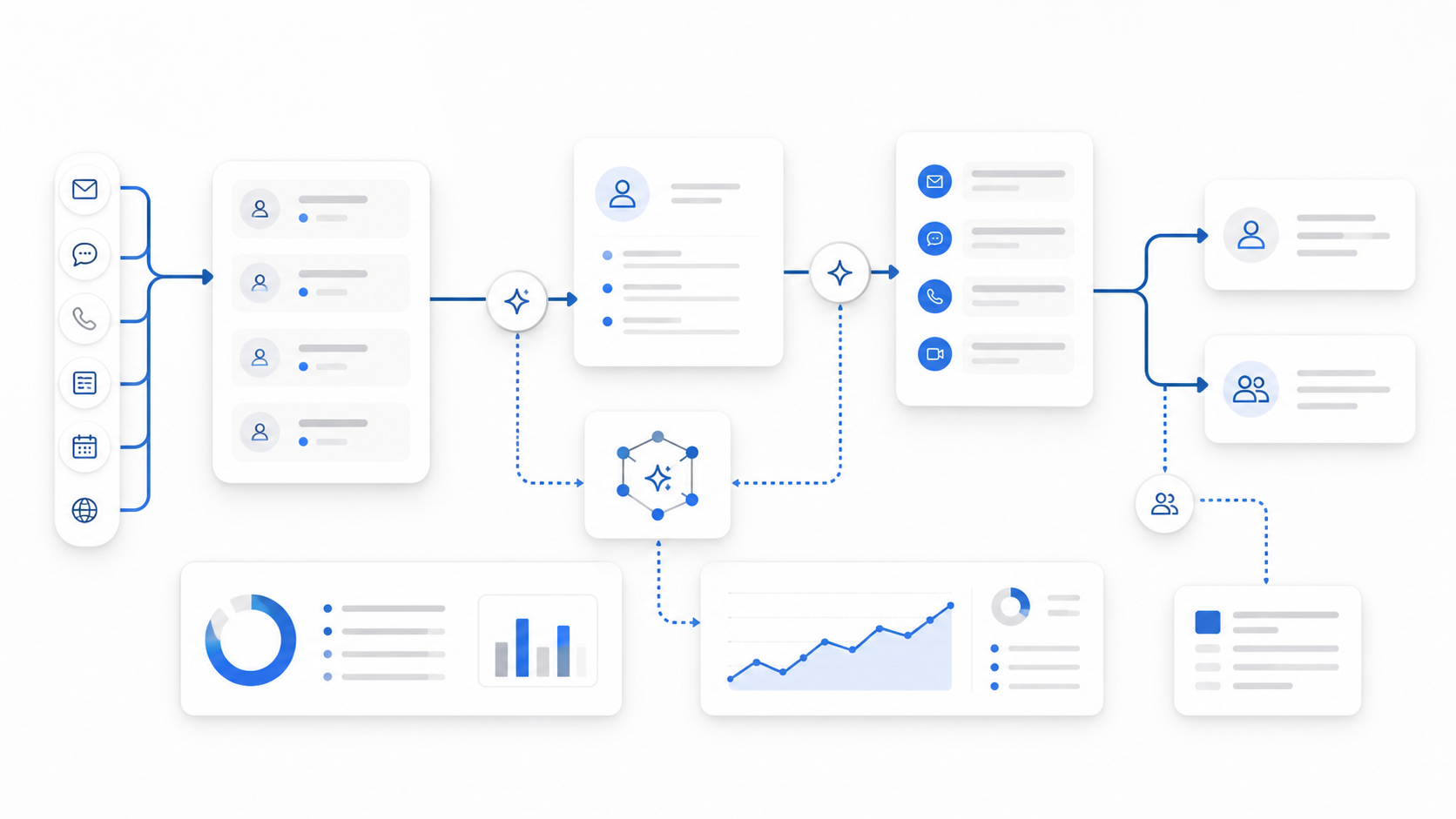
The flow is simple:
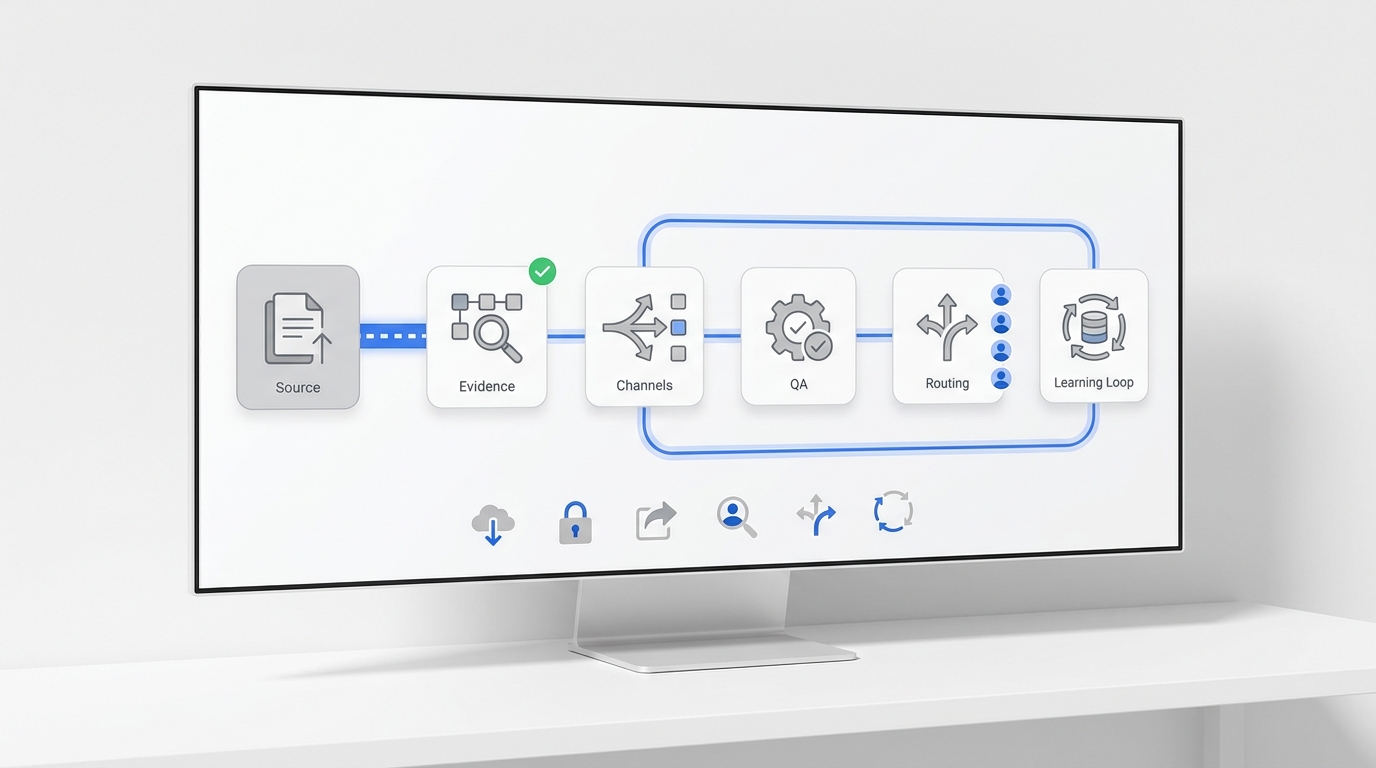
Inbound lead capture flow:
- The prospect calls
- The AI identifies the request
- The AI asks for missing details
- The AI records contact information
- The AI summarizes the need
- The AI marks urgency or fit
- The AI routes the lead for follow-up
The value is not that the AI talks. The value is that the business gets a structured lead instead of a vague message.
For example:
Lead summary:
The caller is looking for commercial cleaning for a 12,000-square-foot office in Austin. They want service twice per week and need a quote this week. They asked whether evening service is available. Route to sales for same-day follow-up.
That summary gives the sales team a starting point. It also helps the business understand what kind of demand is coming in through calls.
Ask Qualification Questions That Do Not Slow the Call
Lead qualification is the process of deciding whether a prospect is a good fit and what should happen next.
An AI receptionist should ask only the questions needed to move the conversation forward. Too many questions can make the caller feel screened out. Too few questions leave the sales team guessing.
Good qualification questions depend on the business:
Lead qualification examples:
- What service are you looking for?
- Where are you located?
- When do you need help?
- Is this for a home or a business?
- Have you worked with us before?
- What is the best way to follow up?
- Would you like to book a consultation?
For B2B lead generation, the AI may also ask about company size, current process, timeline, and decision stage. The goal is to identify fit, not to run a full sales discovery call.
Route Sales-Ready Leads Before They Go Cold
Not every lead should follow the same path. Some callers are ready for sales. Some need support. Some need booking. Some are not a fit. Some need a human because the request is sensitive or complex.
A clear routing model helps the AI receptionist decide what to do.
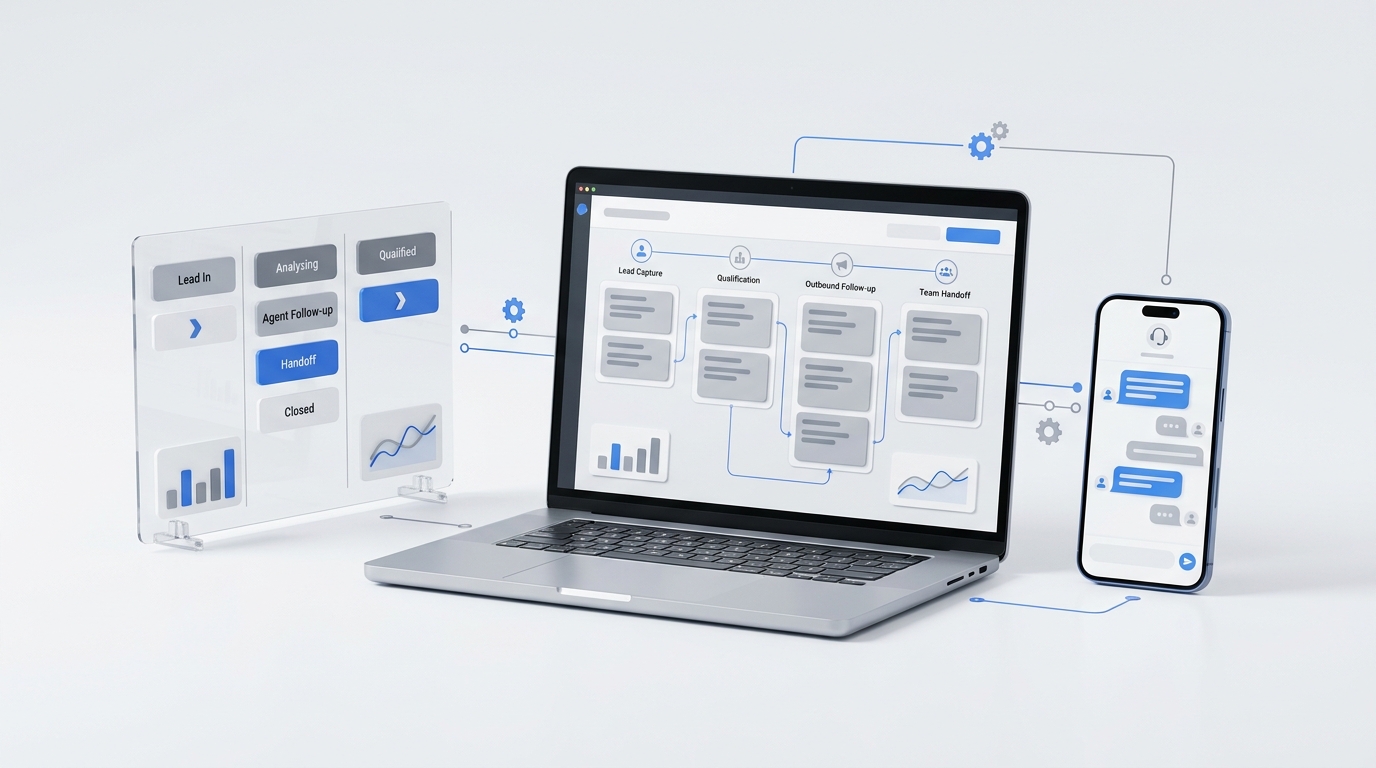
Lead routing rules:
- Send urgent quote requests to sales
- Send existing customer issues to support
- Send appointment requests to scheduling
- Send unclear requests to a human inbox
- Send low-fit requests to a polite follow-up path
- Send high-value leads to same-day callback
Solvea is relevant because it can route unresolved cases to human agents after the AI handles the first contact. That makes it easier to separate routine inquiries from conversations that deserve staff attention.
Choose Tools Based on Where Leads Start
The best AI lead generation tools should match the lead source. A company that buys outbound lists needs different software from a local service business that receives high-intent phone calls.
For inbound calls, look for tools that can:
- Answer quickly
- Understand the caller's request
- Ask qualifying questions
- Capture contact details
- Summarize the conversation
- Route the lead
- Connect with existing tools
- Support human review
- Track lead outcomes
McKinsey's report on the economic potential of generative AI discusses how generative AI can help identify and prioritize sales leads from structured and unstructured data. Inbound calls are a clear example of unstructured data. Until they are transcribed, summarized, and routed, they are difficult to use consistently.
Connect Lead Capture to the Systems Staff Already Use
Lead generation software is usually part of a stack. A business may use forms, CRM records, email tools, call tracking, live chat, calendar scheduling, and analytics.
The AI receptionist should fit into that stack. If it captures a lead but the team never sees it, the workflow fails. If it asks questions that sales does not care about, the lead record becomes noise. If it routes every caller to the same inbox, urgent opportunities may wait too long.
Solvea's quick start guide shows a workflow built around creating an AI agent, connecting tools, testing the agent, and going live across channels. That kind of setup matters for lead generation because a lead capture system needs both conversation ability and operational connection.
The practical question is:
Can the AI capture the lead and put it where the team already works?
If the answer is no, the tool may create another inbox instead of a better sales process.
Capture B2B Context Without Running a Full Discovery Call
B2B lead generation usually needs more context than a simple consumer inquiry. A B2B caller may represent a company, budget, timeline, buying committee, or operational problem.
An AI receptionist can capture early signals:
- Company name
- Role
- Business need
- Timeline
- Decision stage
- Current process
- Integration needs
- Follow-up preference
The AI should not pretend to complete complex B2B sales discovery on its own. It should prepare the conversation for the right person.
NIST's AI Risk Management Framework is useful here because lead routing and prioritization can affect how customers are treated. Teams should define when AI can qualify, when a human should review, and how customer data should be handled.
Align Sales Rules Before the AI Starts Qualifying
Sales lead generation works best when sales and marketing agree on what a good lead looks like.
If marketing counts every caller as a lead but sales only wants urgent, qualified prospects, the AI will produce records that one team values and another ignores. If sales wants context but the AI only captures contact information, follow-up becomes slow.
Harvard Business Review's article on sales and marketing alignment discusses the long-standing problem of coordination between sales and marketing teams. AI lead generation makes that coordination more important because the system needs shared definitions.
Before launching AI lead capture, define:
Sales lead definition:
- What problem indicates fit?
- What timeline counts as urgent?
- Which service lines matter most?
- Which locations are eligible?
- Which leads need same-day follow-up?
- Which leads should be routed elsewhere?
The clearer the definition, the more useful the AI receptionist becomes.
Turn Repeated Caller Questions Into Strategy
A good lead generation strategy connects attraction, capture, qualification, and follow-up.
For inbound calls, the strategy should answer:
- Which campaigns or pages drive calls?
- Which calls are sales leads?
- Which calls are support requests?
- Which questions should the AI answer?
- Which questions should trigger handoff?
- Which leads should be booked directly?
- Which leads need human review?
This is where AI front desk analytics can help. If many callers ask the same pre-sales question, that question may belong on the website. If many qualified leads call after hours, the team may need faster next-day follow-up. If many calls are routed to humans, the qualification script may need refinement.
The strategy should improve over time. AI lead generation is not only capture. It is a feedback loop.
Use Free AI Tools for Testing, Not the Whole Workflow
Free AI tools for lead generation can be useful for early experiments. A team might test AI-written follow-up emails, spreadsheet scoring, simple chat prompts, or manual lead summaries.
Free tools are less likely to solve the full inbound call workflow. They may not answer the phone, capture caller intent, route leads, connect with existing systems, or preserve a reliable conversation history.
Use free tools for learning. Use a connected workflow when missed leads have real cost.
For teams that depend on phone inquiries, an AI receptionist is often more relevant than a generic free AI writing tool. The problem is not only creating copy. The problem is answering a real prospect and turning the conversation into a follow-up-ready lead.
Review the Features That Will Matter in 2026
The best AI lead generation tools in 2026 will be judged by workflow quality, not just AI features.
For inbound lead capture, the strongest tools will help teams:
- Respond quickly
- Capture intent
- Qualify consistently
- Route accurately
- Preserve context
- Protect customer data
- Improve handoff
- Measure outcomes
The best tool is the one that matches the lead source. If leads come through forms, form qualification may be enough. If leads come through calls, the business needs voice-first capture. If leads come through multiple channels, the workflow needs a shared view.
For Solvea, the strongest fit is the front desk layer: helping businesses catch inbound conversations, qualify them, and route them to the right next step.
Your AI Receptionist, Live in Minutes.
Scale your front desk with an AI that never sleeps. Solvea handles unlimited multi-channel inquiries, books appointments into your calendar automatically, and ensures zero missed opportunities around the clock.
Frequently Asked Questions
What should AI lead generation tools capture?
AI lead generation tools should capture contact details, buyer intent, service interest, urgency, fit, objections, preferred follow-up method, and the next action. For inbound calls, they should also summarize the conversation.
How does an AI receptionist turn calls into leads?
An AI receptionist captures leads by answering inbound calls or messages, identifying buyer intent, asking qualifying questions, collecting contact details, summarizing the conversation, and routing the lead.
What counts as lead generation?
Lead generation is the process of attracting potential customers and collecting enough information to start a sales or service conversation.
When is a lead qualified?
A qualified lead has enough fit, intent, urgency, and contact information for the business to take the next step. The exact criteria depend on the business.
Where does Solvea fit in lead capture?
Solvea can support lead generation by handling first-contact conversations across phone, email, and live chat, capturing lead details, using business knowledge, and routing qualified or unresolved leads to human agents.
When are free AI tools enough?
Free AI tools can be enough for simple experiments such as drafting follow-up emails or testing qualification prompts. They are usually not enough for live phone capture, routing, conversation history, and human handoff.
What B2B details should the AI collect?
B2B lead generation should capture the company name, contact role, business need, timeline, decision stage, integration requirements, urgency, and preferred follow-up path.