No-shows don't announce themselves. One moment the slot is filled, the next your staff is standing idle and a block of revenue has simply evaporated. For any service business running on appointments — salons, clinics, home services, fitness studios, consulting practices — missed bookings are not occasional inconveniences. They are a recurring cost center that most owners never formally measure.
For a single practice or studio, even a moderate no-show rate adds up to the equivalent of one or more full days of forgone revenue every month — and the staff time and rebooking friction that come with it. The good news: the causes of no-shows are well understood, and the fixes are operational, not complicated.
Here are the 10 most effective strategies to reduce no-shows in a service business, ordered roughly by impact.
TL;DR – No-Show Reduction Strategies at a Glance
Strategy | Best For | Effort to Implement | Notes |
Automated multi-touch reminders | All businesses | Low (one-time setup) | Strongest meta-analytic evidence base |
Deposits or prepayment | Salons, fitness, consulting | Medium | Mixed research evidence; the mechanism is sound, the collection workflow is where most policies break down |
Clear cancellation policy | All businesses | Low | Reduces silent no-shows by giving clients a defined path |
Self-serve rescheduling | All businesses | Low | Converts potential no-shows to reschedules |
Online booking | All businesses | Medium | Stronger commitment signal than phone/walk-in |
Waitlist management | High-demand businesses | Low | Fills last-minute gaps |
Shortened booking windows | Appointment-heavy | Medium | Reduces forgetfulness from booking-to-visit drift |
Follow-up after no-shows | All businesses | Low | Recovers relationships |
Strike system for repeat offenders | Any | Low | Manages chronic no-shows |
AI-powered reminders + rescheduling | All businesses | Low | Combines reminders + instant reschedule |
Why No-Shows Happen in Service Businesses
Before implementing any strategy, it helps to know what you're actually fighting. A 2021 systematic review in the British Journal of General Practice pooling 26 primary-care studies — the closest thing the literature has to a comprehensive no-attendance taxonomy — found the most frequently cited patient-side reasons to be work and family obligations, forgetting, transportation, being too unwell, weather, and "felt better." On the clinic side, the most cited issues were doctor-patient relationship problems, booking-system failures, and miscommunication. The review reports a mean no-show rate of 15.2% across the included primary-care studies (median 12.9%); absolute rates don't transfer cleanly to salons or home services, but the underlying cause categories generalize.
The majority of these causes are addressable through communication, commitment mechanisms, and frictionless rescheduling.
10 Strategies to Reduce No-Show Appointments
1. Implement Multi-Touch Automated Reminders
The single highest-ROI intervention for most service businesses. Automated reminders sent at multiple intervals before an appointment address forgetfulness — one of the most consistently cited no-show causes — without adding any per-appointment labor.
Best-practice reminder sequence:
- At booking: Immediate confirmation with date, time, location, and what to bring
- 48 hours before: Reminder with a direct rescheduling link
- 24 hours before: Final confirmation prompt with response option ("Reply YES to confirm or NO to reschedule")
- 2 hours before (for same-day appointments): Last-chance nudge
Reminders are the most-studied no-show intervention in healthcare research and the meta-analytic evidence is consistent: in hospital outpatient settings, a 2026 meta-analysis of ten randomized controlled trials (Al-Turbag et al., J Hosp Manag Health Policy) found reminders lift appointment attendance by about 11% on average (risk ratio 1.11), with SMS and phone reminders performing roughly the same. The specific 11% figure is healthcare-scoped and shouldn't be transplanted directly to medspas, salons, or home services, but the underlying mechanism — multiple touchpoints reduce drop-off, channel matters less than cadence — generalizes.
SMS outperforms email for urgency. Phone calls reach voicemail. A text delivered directly to the client's lock screen takes 30 seconds to act on.
2. Require a Deposit or Prepayment at Booking
Financial commitment changes behavior. A client who has already paid a deposit has a concrete reason to show up — or at minimum, to cancel in advance to recover the deposit. Deposits also function as a natural screen: clients who aren't seriously committed often self-select out at the deposit step.
Worth a calibration check, though: the actual research on no-show fees and deposits is more mixed than the SaaS marketing copy suggests. A 2023 health-policy review (Leibner et al., Israel J Health Policy Res) summarized the evidence as "limited" and "mixed" — an older $30 mental-health-clinic fine reduced no-shows from 20.1% to 9.27% in high-risk patients, but a recent Danish randomized trial of 6,746 orthopedic patients found no measurable difference between a fine and no fine (both around 5%), and 79% of fines imposed went uncollected. The mechanism is sound; the implementation is where it usually breaks.
Implementation tips:
- State deposit terms at booking (refundable with X hours' notice)
- Don't surprise clients — include it in the booking confirmation
- For healthcare, a credit card on file (rather than a deposit) achieves similar accountability without requiring upfront payment
- Collect at booking time, not after the fact — the "79% uncollected" data point above is the canonical warning about post-no-show enforcement
3. Publish and Enforce a Clear Cancellation Policy
A written, visible cancellation policy does three things: it communicates that your time has value, it gives clients a defined path to cancel without embarrassment, and it creates a basis for enforcing fees when clients breach the terms.
A good cancellation policy specifies: the cancellation window, the fee or consequence for no-shows, which channels are accepted for cancellation, and any exceptions.
Display the policy:
- On your booking page (with a checkbox confirmation)
- In the booking confirmation message
- In the 48-hour reminder
4. Enable Self-Serve Rescheduling
Making it hard to cancel or reschedule increases no-shows — clients who can't easily reach you take the path of least resistance and simply don't show. Every reminder should include a one-click rescheduling link.
The mechanism is straightforward: a client who needs to change their appointment clicks the link, picks a new slot, and the calendar updates automatically. No phone tag, no staff intervention, no anxiety about "bothering" anyone.
5. Offer Online Booking
Clients who self-schedule tend to commit more reliably than those booked by phone or in person — the act of choosing a slot, seeing it confirmed, and receiving a digital record creates a stronger sense of commitment than a verbal reservation. The specific magnitude of this effect varies across reports, and most of the widely cited figures come from vendor self-reported data without published methodology — but the directional finding is consistent and the operational benefits are independent of the precise number.
Online booking also enables:
- Real-time slot availability (reduces double-bookings)
- Automatic waitlist filling when cancellations occur
- Deposit collection at the point of booking
6. Build and Manage a Waitlist
Every cancellation or no-show is a recoverable revenue event if another client can fill the gap quickly. A live waitlist — clients who have opted in to receive short-notice openings — turns last-minute cancellations into rebookings within minutes.
The mechanism: when an appointment cancels, the system automatically offers the open slot to the next person on the waitlist, filling gaps that would otherwise become revenue losses. For high-demand businesses (specialist clinics, popular salons, boutique fitness), a properly managed waitlist can maintain near-full slot utilization even with a meaningful cancellation rate.
7. Shorten the Booking Window
The longer the gap between booking and appointment, the higher the no-show risk. Life changes, priorities shift, and the sense of urgency fades. Limiting booking availability to a few weeks ahead for appointment-heavy businesses — close enough that clients remain aware and committed — is a common operational guideline.
This isn't appropriate for every service type (annual checkups, specialized consultations), but for recurring service businesses (salons, fitness, regular maintenance), reducing the advance window meaningfully reduces forgetfulness-driven no-shows.
8. Follow Up Promptly After a No-Show
A missed appointment is not necessarily a lost client. How you respond in the 24 hours after a no-show determines whether you recover the relationship or lose it permanently.
Best practice: reach out the same day with a neutral, low-pressure message — acknowledge the missed appointment, offer an easy path to rebook, and leave the door open without accusation. Most clients who no-show without canceling are embarrassed, not hostile. A simple "we missed you — want to find another time?" message recovers a meaningful percentage.
It's also worth documenting why clients didn't show up when you can — that information helps you refine your policy and identify systemic barriers over time.
9. Implement a Strike System for Repeat Offenders
Most businesses find that a small percentage of clients generate a disproportionate share of no-shows. A formal strike system manages chronic offenders without requiring case-by-case judgment calls.
A common escalation: first no-show, send a reminder of your policy. Second, require deposit for future bookings. Third, prepayment-only or booking ban for a defined period. This is consistent, defensible, and protects your schedule from repeat disruption.
10. Add an AI Layer to Capture and Confirm Bookings 24/7
Most service businesses still miss bookings that arrive outside business hours — calls that go to voicemail, texts that aren't answered until the next morning. Clients who can't get an immediate confirmation are more likely to book elsewhere or simply forget they tried.
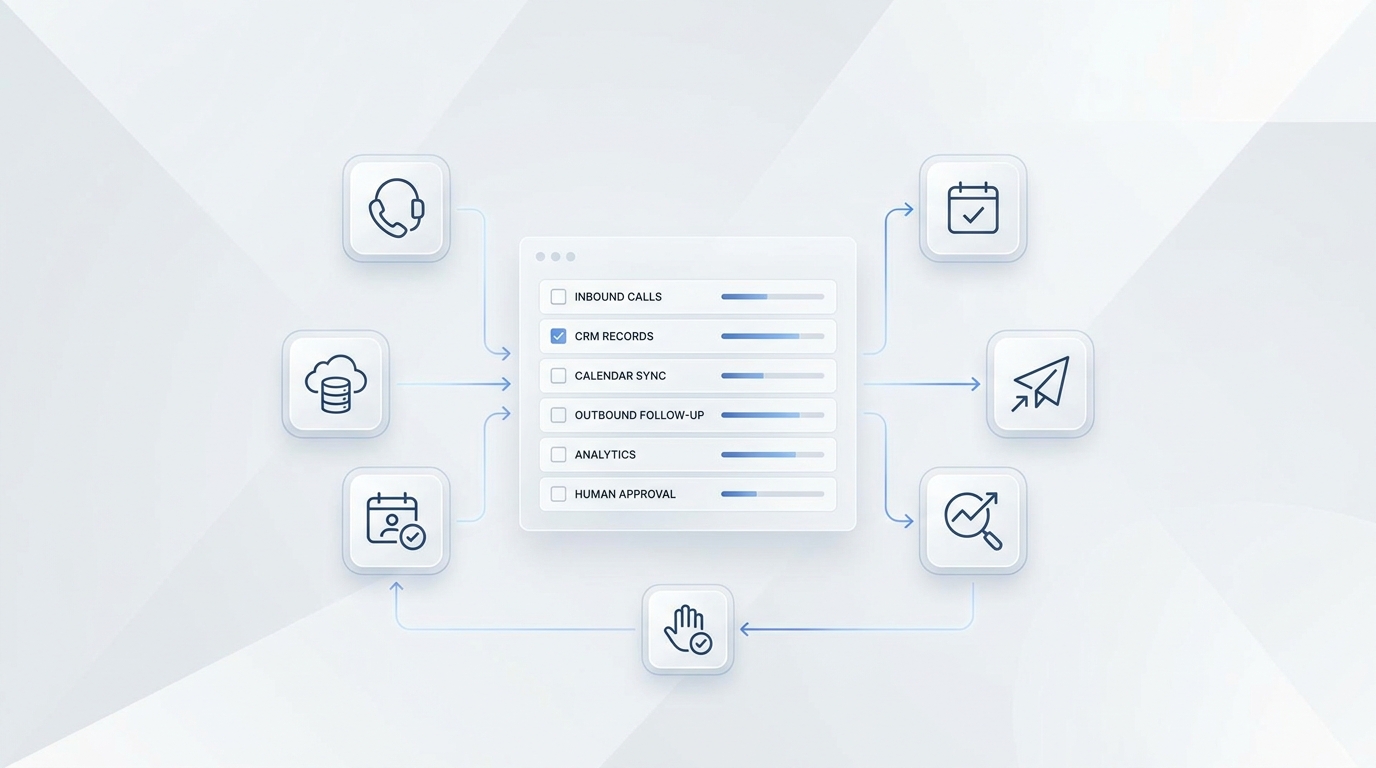
Solvea runs as an AI receptionist that handles inbound booking requests, sends confirmation and reminder messages, and manages rescheduling requests across phone, chat, and email — around the clock. When a client calls at 10 PM to confirm their appointment or reschedule for Thursday, Solvea handles it in real time without any staff involvement.
The compounded effect: every booking gets a confirmation immediately (reducing forgetfulness), every reminder goes out on schedule (reducing forgetfulness again), and every reschedule request gets resolved instantly (converting potential no-shows into kept bookings).
How These Strategies Work Together
The highest-performing no-show reduction systems don't rely on a single tactic. They layer commitment mechanisms (deposits, policies) with communication consistency (reminders at multiple touchpoints) with convenience (self-serve rescheduling, online booking) and recovery (post-no-show follow-up, waitlists).
Three phases worth thinking through: at booking (set expectations and capture commitment), through the interval (keep the appointment top of mind with reminders), and after a no-show occurs (re-engage quickly). Implementing the full stack typically moves a service business from a meaningful no-show problem to a managed one — the gap is worth a substantial share of profit for most appointment-based businesses.
Your AI Receptionist, Live in Minutes.
Scale your front desk with an AI that never sleeps. Solvea handles unlimited multi-channel inquiries, books appointments into your calendar automatically, and ensures zero missed opportunities around the clock.
Frequently Asked Questions
What is a realistic target no-show rate for a service business? It depends heavily on sector and on what reminder/deposit/policy workflows are in place. In US medical groups, MGMA's 2025 reporting showed single-specialty no-show rates rebounding to 6.81% in 2023. Salons and other personal-services businesses commonly run materially higher than that, especially without reminder systems in place, though the published figures vary widely. A more useful framing than chasing a fixed industry target: track your own no-show rate over time, and treat any sustained upward trend as a system problem to investigate, not a client problem.
Do no-show fees actually work? The research evidence is genuinely mixed. A 2023 health-policy review found that older studies showed double-digit reductions in high-risk patient populations, but a recent Danish randomized trial in orthopedic outpatients found no measurable difference between fining and not fining, and 79% of the fines imposed went uncollected. Fees work best when paired with a clearly communicated policy disclosed at booking, an easy cancellation path, and consistent enforcement. Many businesses find that deposits — collected upfront at booking time — are more practical to implement than post-no-show fees, because the collection problem is solved before the no-show happens rather than after.
How should I reach out after a no-show? Within the same business day. Keep the tone neutral and practical: acknowledge the missed appointment, offer an easy way to rebook, and keep it short. Most clients who no-show without canceling are embarrassed, not hostile — a non-accusatory message is more likely to recover the relationship than a firm reminder of your policy.
Is SMS or email better for appointment reminders? SMS for urgency, email for detail. The optimal approach uses both: email for the booking confirmation and 48-hour reminder (more space for details), SMS for the 24-hour and same-day reminders (delivered to the lock screen, faster response). In the strongest available meta-analytic evidence from hospital outpatient research, SMS and phone reminders perform roughly the same on attendance — channel mattered less than the existence of the reminder itself.
Does online booking really reduce no-shows? It tends to, though the specific magnitudes most widely cited in industry blogs come from vendor self-reports without published methodology. The mechanism is primarily psychological: the act of choosing a slot, confirming it, and receiving digital proof of booking creates a stronger commitment signal than a verbal phone reservation. Online booking also enables instant rescheduling and waitlist automation, which compounds the effect.
How does Solvea reduce no-shows specifically? Solvea sends automated confirmation and reminder messages at configured intervals, handles inbound rescheduling requests instantly (24/7), and fills the communication gap for businesses that receive booking inquiries outside staffed hours. The net effect is that every client gets a confirmed booking immediately, receives consistent reminders, and has an instant path to reschedule rather than no-show.