Multi agent marketing works best when different agents own different parts of the funnel. One agent should not try to research, qualify, book, report, and optimize all at once. The useful version is narrower: one agent pair for attract, another for capture, another for engage, another for convert, and another for optimize.
\nThat stage-based split is the part most articles skip. They explain what agents are, or they list tools, but they do not show how multi agent marketing changes as a buyer moves through the funnel. Qualified's agentic marketing funnel uses a similar five-stage shape: attract, capture, engage, convert, and optimize. This article adapts that idea into a practical operating map for growth teams.
\nThe multi agent marketing funnel map
\n\n\n\n\n\n\n\n\n\n\n\n\n\n\n\n\n\n\n\n\n\n\n\n\n\n\n\n\n\n\n\n\n\n\n\n\n\n\n\n\n\n\n\n\n\n\n\n\n\n\n\n\n\n| Funnel stage | Main job | Useful agent pair | Example trigger | Output | KPI |
|---|---|---|---|---|---|
| Attract | Create demand signals | Research agent + content agent | New topic, keyword, or trend | Brief, outline, variant, repurposed post | Qualified visits, CTR, topic coverage |
| Capture | Preserve intent before it goes cold | Intake agent + routing agent | Call, form, chat, missed call | Structured lead record, owner assigned | Response time, capture rate, completion rate |
| Engage | Answer, qualify, and move the conversation forward | Qualification agent + knowledge agent | Prospect asks questions | Answer, summary, next step | Qualified lead rate, handoff accuracy |
| Convert | Remove delay around the last step | Scheduling agent + follow-up agent | Booking intent, quote request, reminder need | Booked call, confirmation, reminder | Booking rate, no-show rate, conversion rate |
| Optimize | Improve the system from the evidence trail | Analytics agent + experiment agent | Drop-off, weak conversion, high correction rate | Insight, test backlog, refresh list | Assisted conversions, correction rate, cycle time |
Attract
\nThe attract stage is where multi agent marketing creates the raw demand signal.
\nThis is not just \"write more content.\" A better attract workflow uses one agent to monitor topics, competitors, and audience questions while another agent turns that signal into usable assets. That might mean:
\n- \n
- clustering topics around one intent; \n
- drafting a search brief; \n
- creating social variants from one source; \n
- spotting gaps in competitor coverage; \n
- turning one customer question into a content plan. \n
The failure mode here is obvious: teams optimize for output volume and end up with shallow traffic. The attract stage should earn attention from the right people, not just more impressions.
\nIf you want a tighter operating model for the broader strategy, see the AI marketing agents strategy and the Multi Agent Marketing Checklist for Faster Decisions.
\nCapture
\nCapture is where multi agent marketing protects intent.
\nThis is usually the highest-leverage stage for service teams because the customer already raised their hand. The main risk is losing the lead before anyone owns it. Good capture workflows include:
\n- \n
- missed-call text back; \n
- form enrichment; \n
- chat-to-lead handoff; \n
- calendar availability checks; \n
- location or service routing; \n
- duplicate record cleanup. \n
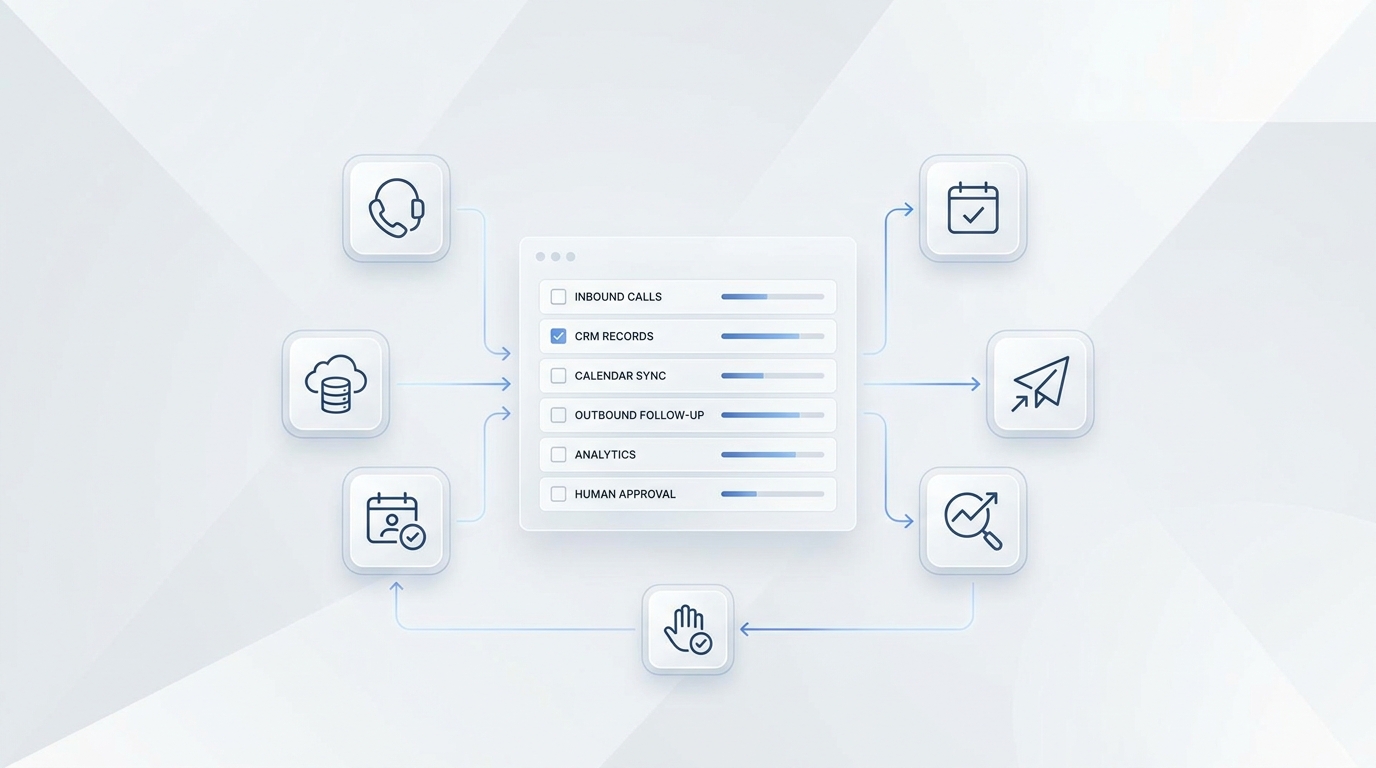
Solvea is strong here because its current public pages position the product around a business phone, AI receptionist, PC Desk, and one-click integrations. The current integrations page shows live connections for Shopify, HubSpot, Zendesk, Freshdesk, Google Calendar, Google Sheets, WhatsApp, and LINE, which is exactly the kind of live context capture workflows need.
\nEngage
\nEngage is where multi agent marketing stops being a lead bucket and starts becoming a conversation.
\nIn this stage, one agent can answer common questions from the knowledge base while another handles qualification or handoff. Useful engage workflows include:
\n- \n
- FAQ responses; \n
- qualification questions; \n
- objection routing; \n
- owner summaries; \n
- channel-specific follow-up; \n
- escalation to a human when the case is unclear. \n
The trap is over-qualifying good leads. If the agent asks too many questions before it answers the actual need, the buyer leaves. A strong engage workflow answers first, then collects the minimum information needed for the next step.
\nSolvea's AI Agent Builder and knowledge base fit this stage well because they let teams tune answers without a developer and keep responses grounded in connected business context.
\nConvert
\nConvert is where multi agent marketing pays off in missed minutes and cleaner handoffs.
\nThe work here is often smaller than teams expect:
\n- \n
- booking an appointment; \n
- confirming a callback; \n
- sending a reminder; \n
- following up on a quote; \n
- routing a hot lead to the right owner; \n
- recovering a no-show or stale request. \n
This stage is not about \"closing the deal\" in a dramatic sense. It is about removing delay from the last useful step. If a buyer is ready to book, the agent should book. If they need a reminder, the agent should send it. If a human must step in, the summary needs to be usable immediately.
\nSolvea's pricing and workflow design support that kind of conversion work: one person can use the helpdesk free, and Pro starts at $19.90 per seat per month with a 7-day free trial, 500 credits per seat, AI answering, SMS, and live translation.
\nOptimize
\nOptimize is where multi agent marketing learns from the funnel instead of just running through it.
\nAn analytics agent should not only show activity. It should show where the workflow leaked value. Good optimize workflows include:
\n- \n
- drop-off analysis; \n
- conversation quality review; \n
- knowledge gap detection; \n
- test recommendations; \n
- content refresh lists; \n
- stage-by-stage reporting. \n
Solvea's analytics page is useful here because it centers resolution rate, response time, CSAT, drop-offs, escalation rate, and AI-generated improvement recommendations. That is the right shape for the optimize stage: identify the failure, explain the pattern, and point to the next fix.
\nWhat makes the stages different
\nThe same agent should not own every stage.
\n\n\n\n\n\n\n\n\n\n\n\n\n\n\n\n\n\n\n\n\n\n\n\n\n\n\n\n\n\n\n\n\n\n\n\n| Stage | Best automation style | What not to overdo |
|---|---|---|
| Attract | Research, synthesis, content variants | Chasing volume without intent |
| Capture | Intake, routing, enrichment | Capturing data without ownership |
| Engage | Answering, qualification, handoff | Asking questions too early |
| Convert | Scheduling, reminders, follow-up | Delaying the final step |
| Optimize | Reporting, testing, refreshes | Measuring activity instead of improvement |
That is the real point of multi agent marketing: each stage deserves a different agent pair, a different trigger, and a different KPI.
\nWhere Solvea fits
\nSolvea fits the customer-response side of multi agent marketing.
\nIt is a good fit when the funnel begins with calls, texts, emails, chat, or booking requests and the team needs one shared place to answer, route, and follow up. The strongest fit is not broad campaign planning. It is the stage where live conversations and live data matter most.
\nUse Solvea when you need:
\n- \n
- missed-call capture; \n
- lead qualification; \n
- appointment booking; \n
- customer conversation routing; \n
- response history across channels; \n
- live-data integrations; \n
- basic optimization from conversation analytics. \n
That is also why related reading matters. If you are choosing between tools or building the operating model from scratch, start with AI GTM agents workflows and examples, Agentic Marketing Metrics That Actually Matter, GTM automation beginner guide, and Solvea's AI Agent Builder.
\nA simple selection rule
\nIf you are deciding where to start, use the leak rule.
\n- \n
- If attention is weak, start at attract. \n
- If leads disappear, start at capture. \n
- If replies stall, start at engage. \n
- If bookings lag, start at convert. \n
- If you are guessing, start at optimize. \n
That keeps multi agent marketing practical. The first win should be the stage that is already costing you time or revenue.
\nYour AI Receptionist, Live in Minutes.
Scale your front desk with an AI that never sleeps. Solvea handles unlimited multi-channel inquiries, books appointments into your calendar automatically, and ensures zero missed opportunities around the clock.
FAQ
\nWhat is multi agent marketing?
\nMulti agent marketing is a workflow design where different agents own different funnel stages or jobs instead of one agent trying to do everything.
\nWhich stage should most teams start with?
\nMost service teams should start with capture or engage, because that is where intent is already present and delay is most expensive.
\nDoes multi agent marketing require a developer?
\nNot for the first workflow. A narrow capture or engage setup can often be handled with no-code tools and approved business rules.
\nHow is this different from agentic marketing?
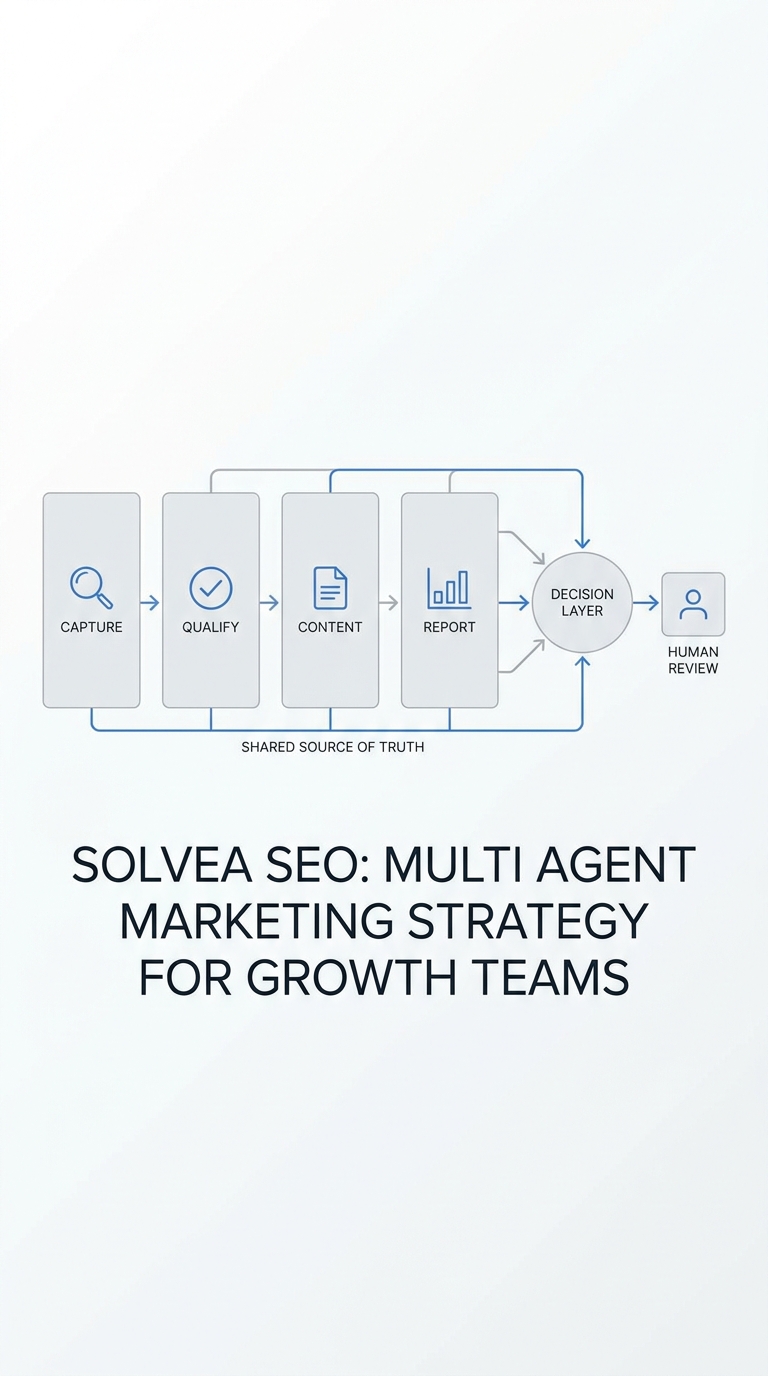
\nAgentic marketing is the broader idea. Multi agent marketing is the operating model: multiple specialists, stage-specific handoffs, and one shared record of what happened.
\nSources and further reading
\n- \n
- Qualified: The 5 stages of the agentic marketing funnel \n
- IBM: What are AI agents? \n
- Relevance AI: marketing use cases \n
- Google Search Central: Search Console and Analytics \n
Multi agent marketing works when each stage has one job, one owner, and one metric. Keep the stage map narrow, connect the live data, and let the next step be obvious.
\n