Multi Agent Marketing Strategy for Growth Teams
Multi agent marketing only works when the system is smaller than the problem it is trying to solve.
That sounds obvious, but most teams get it wrong in the same way: they buy or build several agents, give them broad instructions, then hope the tools will coordinate themselves. The result is usually duplicated work, conflicting actions, and a pile of outputs nobody fully trusts.
The better approach is simpler. Treat multi agent marketing as an operating model. Give each agent one job, one source of truth, one owner, and one metric. Then connect those agents with clear handoffs and a human review point where risk is highest.
If you want the broader category framing first, the companion AI marketing agents strategy explains what individual agents should do. This article is about the next layer: how to coordinate multiple agents so the workflow actually moves faster.
What multi agent marketing actually means
Multi agent marketing is not "more AI." It is a workflow design choice.
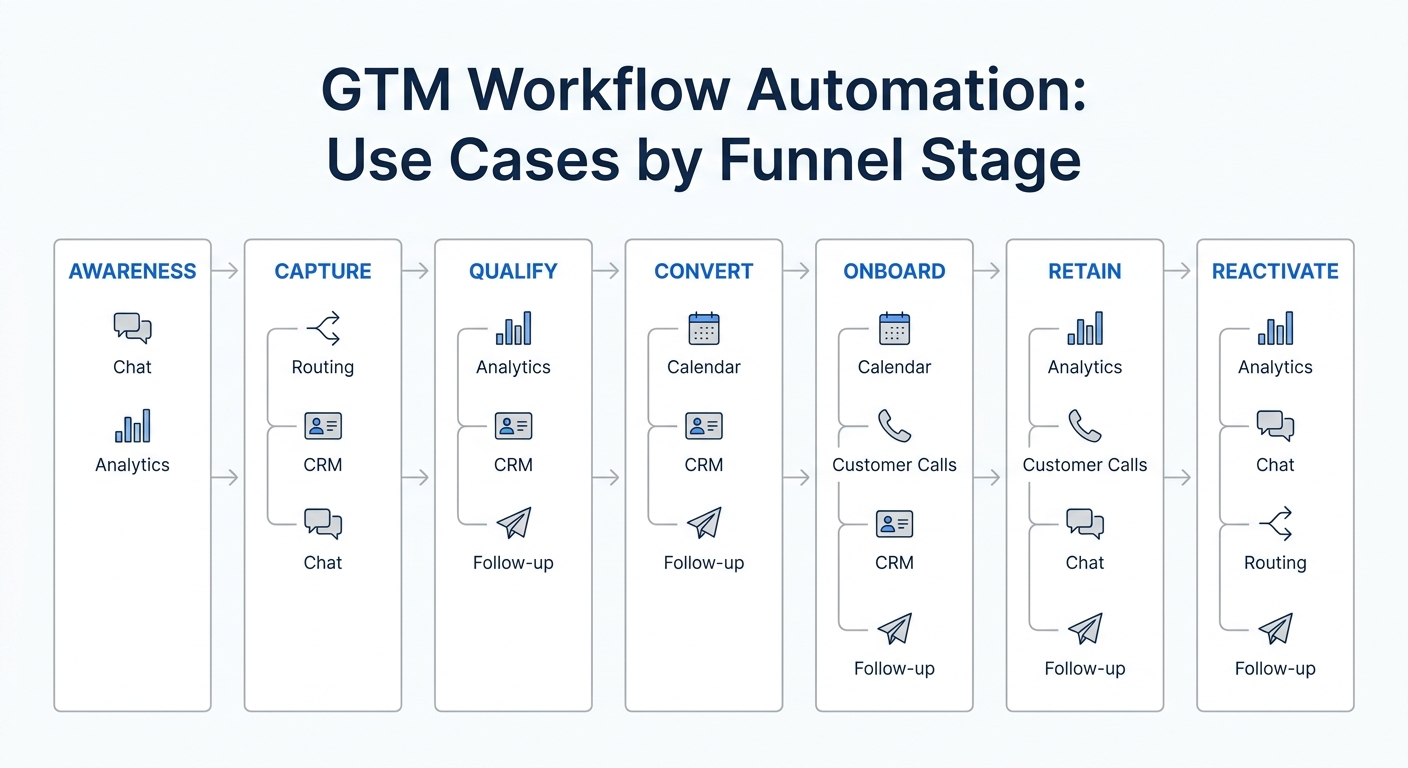
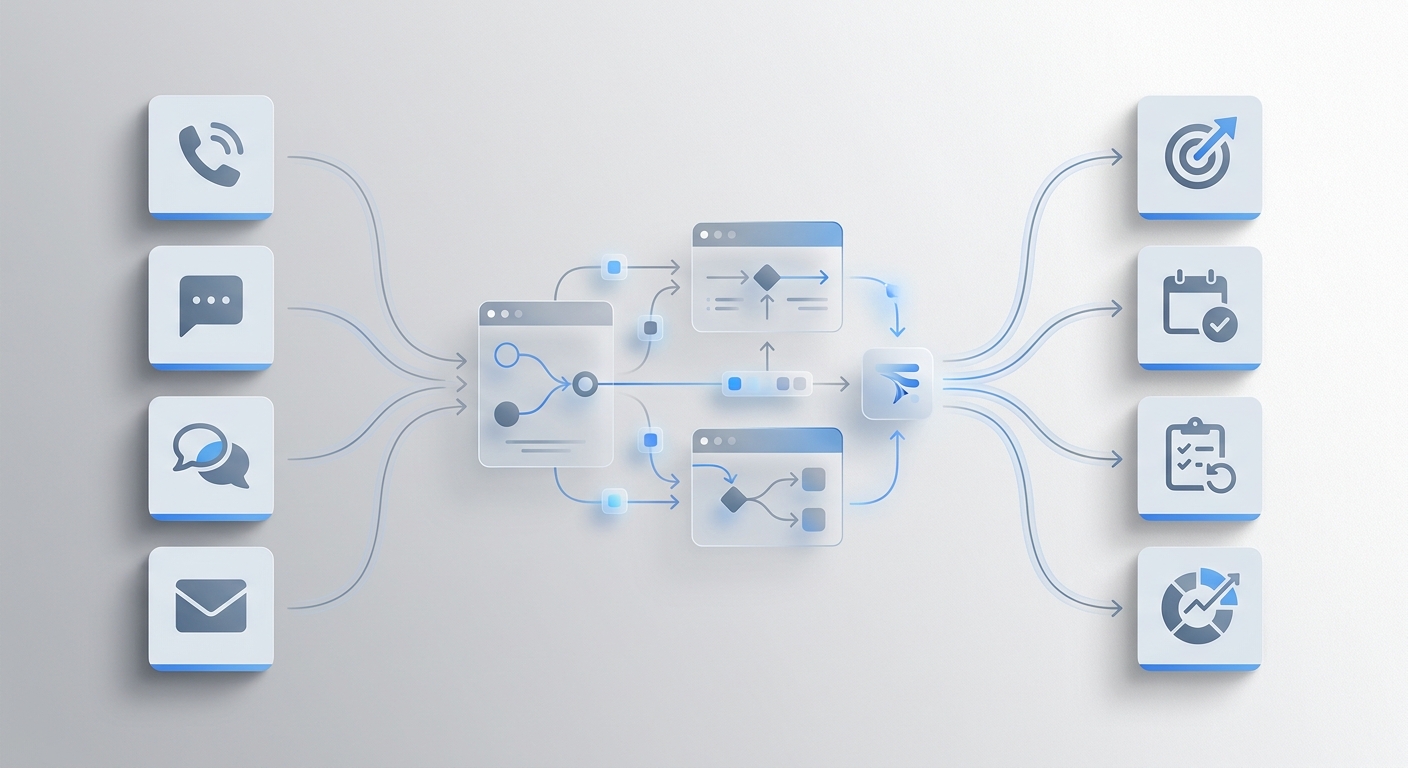
Instead of one general-purpose agent trying to do everything, the team uses specialist agents for narrow jobs:
- capture
- qualification
- content
- reporting
- follow-up
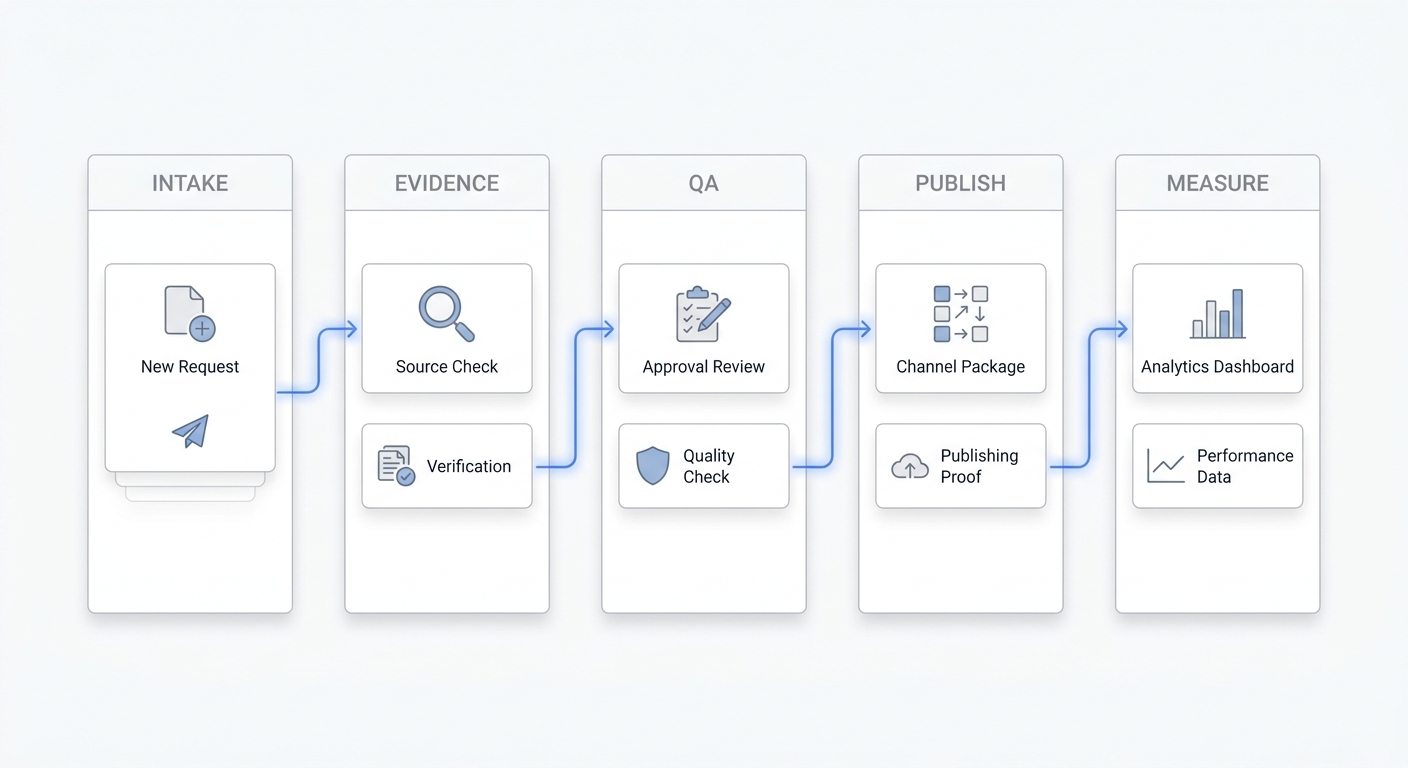
Each specialist agent should handle a bounded step and then hand the work to the next owner. That can be a human, another agent, or a queue with a strict rule.
The strategy fails when an agent has to guess too much. If the source of truth is unclear, the handoff is vague, or the success metric is fuzzy, the system will drift.
The operating model
The cleanest multi agent marketing stack has three layers.
| Layer | Role | Reads | Outputs | Human checkpoint |
|---|---|---|---|---|
| Orchestrator | Chooses the next step and keeps the workflow moving | Current state, rules, owner map, exception rules | Routes work, pauses work, escalates work | Yes |
| Specialist agents | Handle narrow tasks | Approved source data | Structured artifact, summary, draft, or task | Sometimes |
| Review layer | Verifies the result before risk increases | Draft, transcript, summary, report | Approve, edit, reject, or escalate | Yes |
That structure matters because marketing work is not one thing. The person who owns the lead response workflow does not need the same controls as the person who drafts content or the person who reports performance.
Where to start
Start where delay already costs money.
Good first workflows include:
- missed-call capture and follow-up
- lead qualification
- quote or demo request routing
- content brief to draft
- weekly reporting and decision summaries
Weak first workflows usually sound bigger than they are:
- "automate marketing"
- "run campaigns with AI"
- "personalize everything"
Those are categories, not rollout plans.
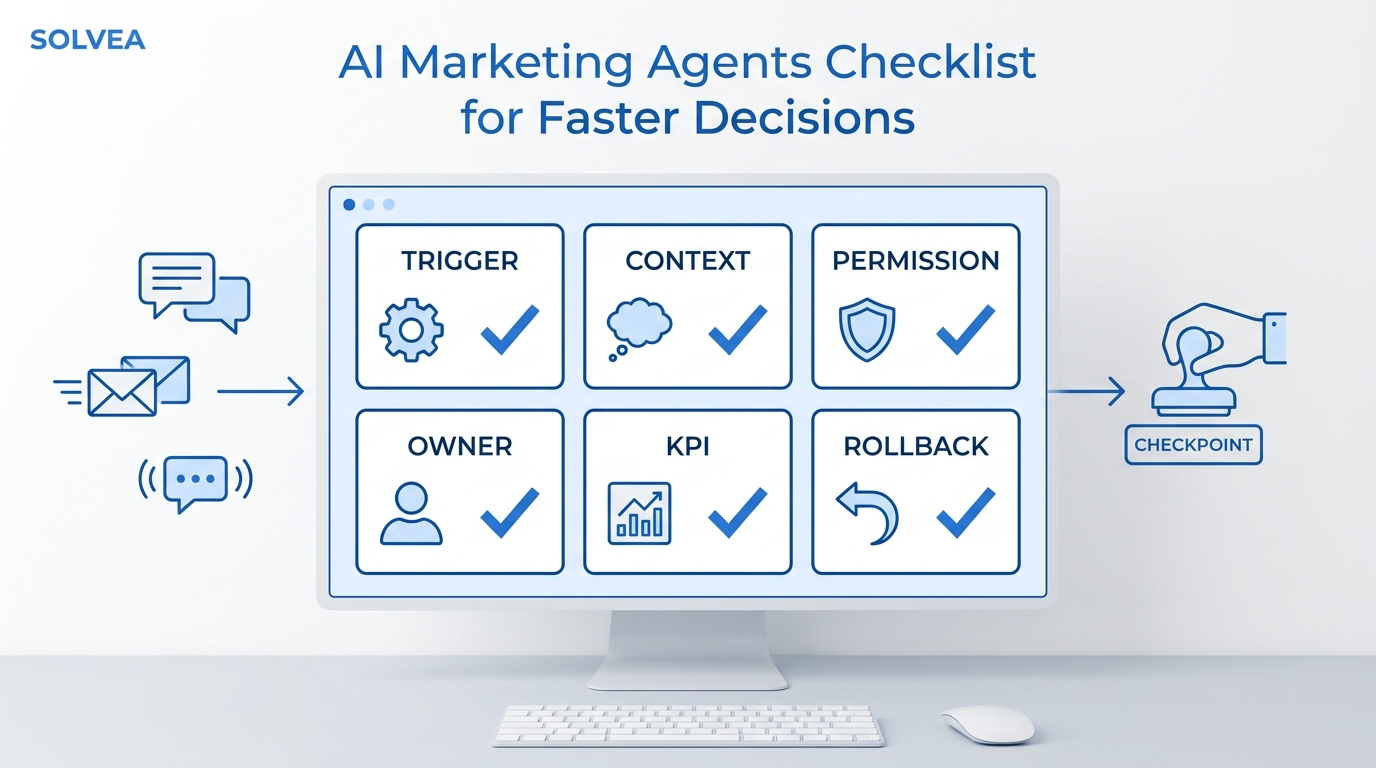
If the team cannot explain the trigger, the allowed action, and the rollback step in one sentence, the workflow is too broad for the first version.
What breaks multi agent systems
The common failure modes are predictable.
- Overlapping authority: Two agents think they own the same step. One tags the lead, the other rewrites the tag, and nobody can tell which state is current.
- Hidden shared state: Agents make decisions from different data snapshots. The content agent sees one version of the brief, the reporting agent sees another, and the human sees neither.
- Too many actions too soon: Teams let an agent act before the rules are stable. That creates cleanup work and erodes trust fast.
- No exception path: A good workflow needs a clean off-ramp for pricing questions, angry customers, compliance-sensitive requests, or missing data.
- No rollback rule: If the false-positive rate rises, the workflow should be easy to narrow or disable.
The rules that make it work
Use the same rules every time.
| Rule | Why it matters | Example |
|---|---|---|
| One source of truth | Stops agents from disagreeing | CRM or helpdesk owns lead status |
| One owner per state | Prevents duplicate action | One qualification owner for unassigned leads |
| One metric per workflow | Keeps the system honest | Booked callbacks, qualified leads, publish-ready briefs |
| One exception path | Limits risk | Human review for pricing, compliance, or upset customers |
| One rollback rule | Makes change reversible | Disable action if correction rate rises |
| One audit trail | Supports learning | Transcript, summary, owner, status, outcome |
This is the part most teams skip. They focus on prompt quality and ignore system design. In practice, the system design matters more.
How Solvea fits
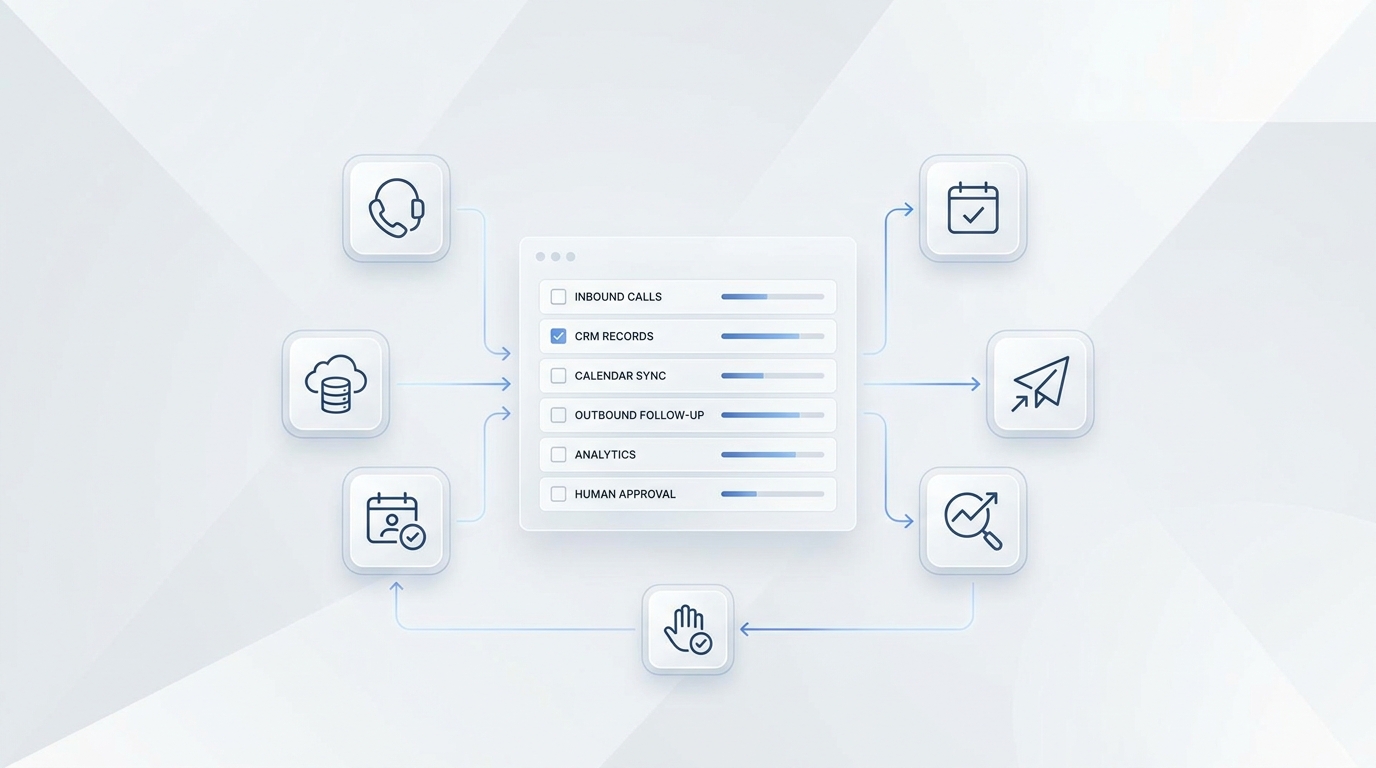
Solvea's current public pages position the product around a business phone, AI receptionist, PC Desk, AI Agent Builder, and one shared follow-up workflow across calls, texts, email, chat, and WhatsApp. The current integration set includes Shopify, HubSpot, Zendesk, Freshdesk, Google Calendar, Google Sheets, WhatsApp, and LINE.
That makes Solvea a strong fit for the customer-response side of multi agent marketing:
- capture the first response
- qualify the incoming need
- route the next step
- keep the conversation visible
- hand off to a human when the risk rises
It is a practical fit for customer-response, not a broad campaign-planning fantasy.
The current pricing page also makes the entry point straightforward: one person can use the helpdesk free, and Pro is priced at $19.90 per seat per month with a 7-day free trial. That matters because the first multi-agent workflow should be cheap enough to test before it is scaled.
A 30-day rollout
Use this sequence if you are launching a first workflow.
Days 1-5: Define the job
Write the workflow as one sentence:
When [trigger] happens, the agent should [allowed action], unless [handoff condition] is true.
Example:
When a missed call arrives after hours, the agent should answer, capture intent, summarize urgency, and create a follow-up task, unless the caller asks for a human or the request is out of policy.
Then name the source of truth, the owner, the primary metric, and the rollback rule.
Days 6-10: Connect the data
Give the workflow access only to the data it needs:
- customer identity
- channel source
- lead or ticket status
- business hours
- booking rules
- service rules
- approved answers
If the workflow needs more data than that, it is probably too broad for the first launch.
Days 11-17: Run in review mode
Let the agents observe, recommend, or draft.
Track:
- what they got right
- what a human changed
- what context was missing
- what handoff happened too late
- what handoff happened too early
This is the phase that shows whether the workflow is real or just a demo.
Days 18-24: Allow one bounded action
Let the system do one low-risk action inside a strict rule set:
- create a callback task
- tag a lead source
- send a confirmation
- draft a follow-up
- route a conversation to the right owner
Do not expand the scope until the team has seen the results.
Days 25-30: Decide the next move
Choose one:
- keep the workflow as-is
- narrow the allowed action
- expand to a second channel
- add missing integrations or knowledge
- stop and pick a simpler use case
The best result is not "the agents worked." The best result is a clear operating decision.
How to choose the next workflow
If your bottleneck is demand capture, start with capture and qualification.
If your bottleneck is production throughput, start with content and review.
If your bottleneck is visibility, start with reporting and decision support.
If your data is weak, do not start with personalization. Personalized multi agent marketing only works when the source data is already trustworthy.
That is why the strongest strategy is usually the narrowest one.
Internal link and CTA path
If you are building the system from the bottom up, the next useful reads are GTM workflow automation, AI growth agent, and the Multi Agent Marketing Checklist for Faster Decisions.
For product execution, start with AI Agent Builder, AI receptionist, integrations, and pricing.
Your AI Receptionist, Live in Minutes.
Scale your front desk with an AI that never sleeps. Solvea handles unlimited multi-channel inquiries, books appointments into your calendar automatically, and ensures zero missed opportunities around the clock.
FAQ
Is multi agent marketing the same as agentic marketing?
Not exactly. Agentic marketing is the broader idea of using agents in marketing work. Multi agent marketing is the system design version: multiple specialists, a shared source of truth, and a clear handoff chain.
How many agents should a growth team start with?
Usually two or three. More than that is often a sign the workflow has not been narrowed enough.
What metric matters most?
The metric should match the workflow. For capture, use response speed or recovered inquiries. For qualification, use qualified leads routed. For content, use publish-ready assets shipped. For reporting, use decision cycle time.
Do I need a developer to start?
Not for the first workflow. Start with a narrow use case, approved data, and a human review path. Add complexity only after the process is stable.
Final takeaway
Multi agent marketing works when the team treats it as operations, not magic.
Keep the agents narrow. Keep the source of truth shared. Keep the handoffs visible. Keep one owner accountable for the next step. If you do that, the system gets faster without getting sloppy.