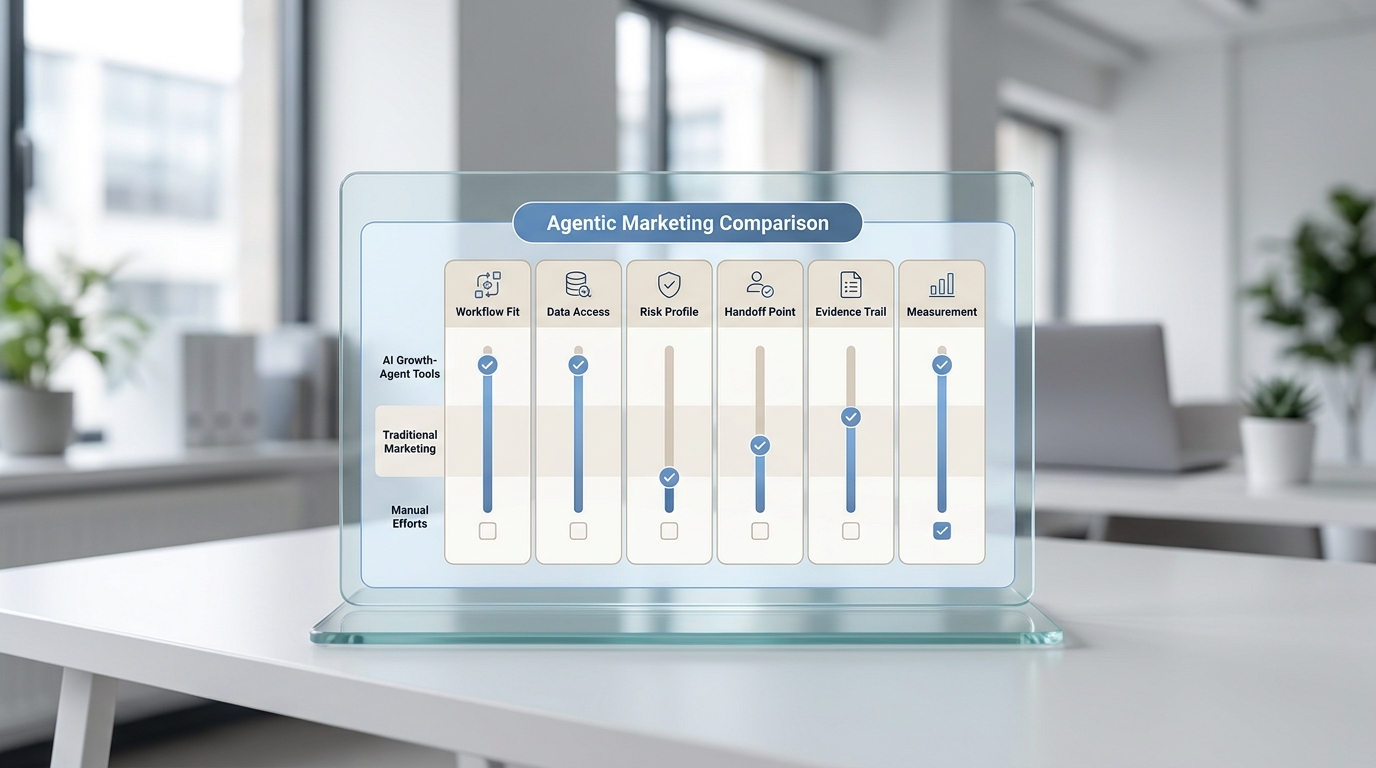
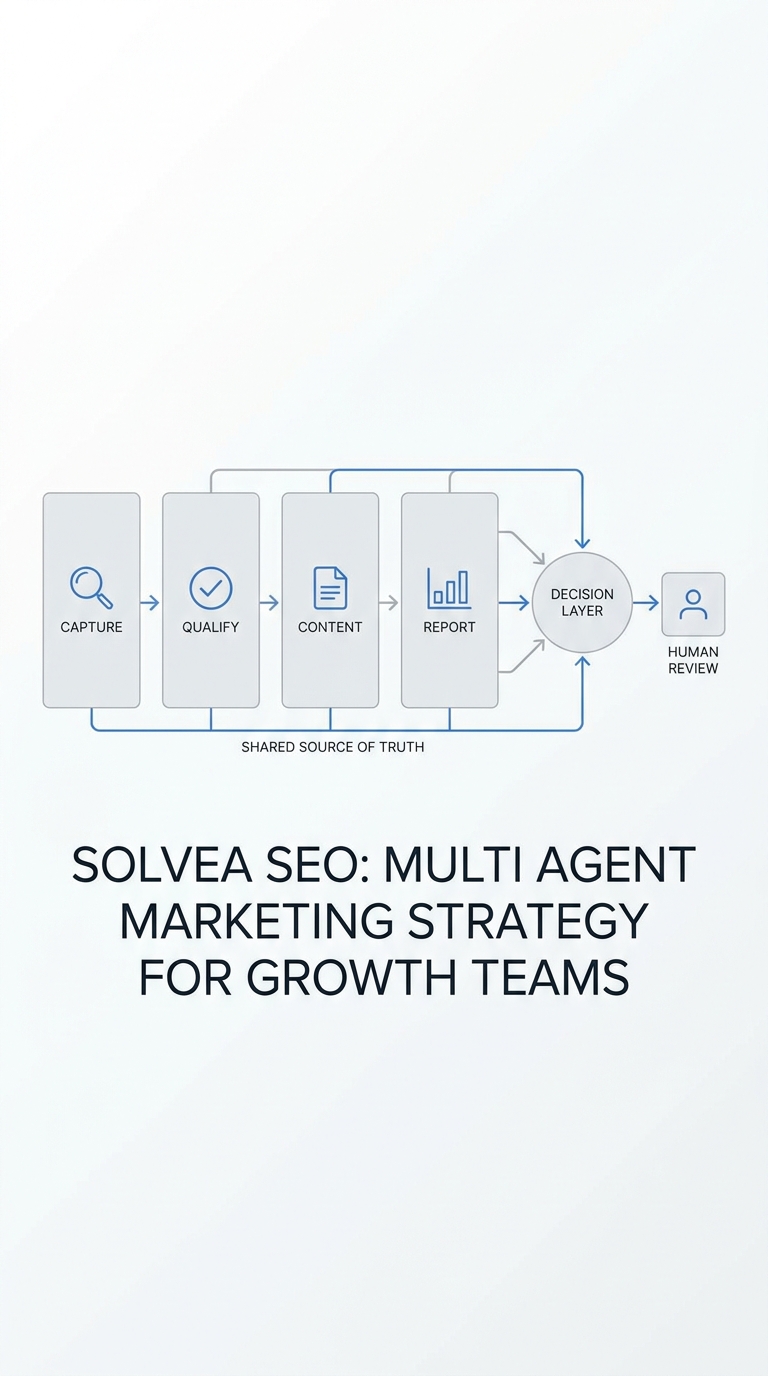
Agentic Marketing Metrics That Actually Matter
Agentic marketing only works when the agent is measured against the job it is supposed to own.
That sounds obvious, but many teams still evaluate agentic marketing with the wrong scorecard. They count prompts, generated assets, automated tasks, or campaign ideas. Those numbers can show activity, but they do not prove that an AI agent moved a customer closer to booking, buying, replying, or converting.
A better agentic marketing measurement model starts with the workflow. What did the agent observe? What decision did it make? What action did it take? What changed for the customer or the team? What evidence proves the next step happened?
This guide gives SMB growth teams a practical metric stack for agentic marketing. It is designed for teams evaluating agentic marketing tools, customer-conversation agents, AI receptionists, GTM workflow automation, and other AI systems that do more than draft copy.
What counts as agentic marketing?
IBM defines agentic AI around systems that can pursue a specific goal with limited supervision. In marketing, that means an AI agent can observe a trigger, use customer or workflow context, choose the next step, take a bounded action, and hand off when the situation needs a person.
That is different from a normal automation rule.
A rule might say: "When a form is submitted, send email A."
An agentic marketing workflow might say: "When a new lead calls after hours, capture the need, identify urgency, check whether the question can be answered from the knowledge base, summarize the conversation, route the lead to the owner, and send the next message."
The metrics need to match that difference. Agentic marketing should not be measured only by whether an automation fired. It should be measured by whether the agent improved speed, qualification, handoff quality, customer experience, and conversion visibility.
The mistake: counting activity as impact
The easiest agentic marketing metrics are usually the least useful.
| Easy metric | Why it is incomplete | Better question |
|---|---|---|
| Prompts run | Shows usage, not workflow value | Did the agent finish a meaningful step? |
| Messages generated | Shows output volume, not quality | Did customers reply or move forward? |
| Tasks automated | Shows automation count, not business impact | Which human work was removed or improved? |
| Campaigns launched | Shows production speed, not pipeline quality | Did the campaign create qualified demand? |
| Agent sessions | Shows adoption, not trust | Did users keep the agent in the workflow after review? |
These metrics are not useless. They help you see whether the system is being used. But they should sit at the bottom of the stack, not the top.
If a team says, "Our agent created 400 follow-up messages," the next question is, "How many created qualified replies, bookings, sales conversations, or recoverable handoffs?"
That is the difference between measuring agentic marketing activity and measuring agentic marketing performance.
The metric stack: five layers that matter
Use five layers for agentic marketing measurement:
- Activity metrics
- Speed metrics
- Quality metrics
- Outcome metrics
- Control metrics
Each layer answers a different question. Together, they tell you whether the agent should be expanded, adjusted, or stopped.
| Layer | What it proves | Example metrics |
|---|---|---|
| Activity | The workflow is running | Triggers handled, messages drafted, summaries created, tasks routed |
| Speed | The agent reduced delay | First response time, time to qualification, time to owner handoff |
| Quality | The work is accurate enough to trust | Qualification completeness, correction rate, escalation accuracy |
| Outcome | The workflow moved demand forward | Qualified signups, booked calls, recovered leads, assisted conversions |
| Control | The agent stayed inside safe limits | Human override rate, unresolved edge cases, complaint rate, risky-action blocks |
The order matters. Activity without quality is noise. Speed without control creates risk. Quality without outcomes may mean the workflow is tidy but not commercially useful.
For a middle-funnel agentic marketing pilot, the goal is not to maximize every number. The goal is to find a small set of metrics that show whether the agent is creating measurable business movement.
Layer 1: activity metrics
Activity metrics answer, "Did the agent run where it was supposed to run?"
Track these early:
- Eligible triggers
- Triggers handled by the agent
- Messages drafted or sent
- Customer records updated
- Summaries created
- Tasks routed
- Handoffs created
- Knowledge base lookups
- Workflow failures
Activity metrics are especially useful during setup. If eligible triggers are high but agent-handled triggers are low, the issue may be routing, permissions, channel coverage, or integration setup.
But do not stop here. In agentic marketing, activity is only the operating layer. It tells you the system is alive, not that it is valuable.
Layer 2: speed metrics
Speed is often the first real business benefit of agentic marketing.
For service SMBs, delay is expensive. A customer who calls after hours, texts during a job, or asks a booking question may not wait until the team is free. That makes speed a practical measurement layer, especially for customer-conversation workflows.
Track:
| Metric | Definition | Why it matters |
|---|---|---|
| First response time | Time from customer trigger to first useful response | Shows whether the agent reduced customer wait time |
| Time to qualification | Time from inquiry to enough information for the next step | Shows whether the agent helped the team decide faster |
| Time to handoff | Time from trigger to owner or staff assignment | Shows whether urgent work reached the right person |
| Time to booking option | Time from inquiry to proposed appointment or callback path | Shows whether the workflow removed scheduling delay |
Do not measure speed in isolation. A fast wrong answer is not progress. Pair every speed metric with at least one quality or control metric.
Layer 3: quality metrics
Quality metrics answer, "Was the agent's work good enough for the next step?"
This is where many agentic marketing pilots become real. The team stops asking whether the agent can generate output and starts asking whether the output can be trusted.
Useful quality metrics include:
- Qualification completeness: Did the agent capture the required fields?
- Routing accuracy: Did the conversation reach the right owner, location, or team?
- Knowledge accuracy: Did the answer match approved business information?
- Correction rate: How often did a human edit or reverse the agent's work?
- Escalation precision: Did the agent escalate urgent, sensitive, or unclear cases?
- Duplicate-work rate: Did staff have to ask the customer for information already collected?
- Customer reply quality: Did the customer respond with useful next-step information?
For example, an agent that qualifies 80 inquiries but leaves out location, urgency, or service type may create more work for the team. A smaller number of complete, correctly routed conversations can be more valuable than a larger number of shallow automations.
Quality is also where the evidence trail matters. The team should be able to review transcripts, summaries, tags, owners, statuses, and source information. Solvea's product surface is built around this kind of customer-conversation context: AI receptionist, shared inbox, contact history, analytics, knowledge base, integrations, and no-code AI Agent Builder.
Layer 4: outcome metrics
Outcome metrics answer, "Did agentic marketing change a business result?"
This is the layer that should decide whether the workflow expands.
Track outcomes close to the workflow first:
| Workflow | Primary outcome metric | Supporting metric |
|---|---|---|
| Missed-call response | Recovered qualified inquiries | First response time, owner handoff completion |
| Booking requests | Bookings or callback requests created | Qualification completeness, time to booking option |
| Lead qualification | Qualified signups or qualified leads | Disqualified-fit reasons, human correction rate |
| Follow-up | Replies or next-step confirmations | Message acceptance, response quality |
| Content-to-lead path | Assisted conversions from article URL | Organic clicks, engaged sessions, key events |
| Reactivation | Dormant leads re-engaged | Reply rate, booked callback rate |
Google Analytics key events are useful here because they mark actions that matter to the business. For an agentic marketing article or campaign, a key event might be a trial signup, demo request, app install click, pricing page view, or qualified lead submission.
If the workflow touches search, pair GA4 outcome data with Google Search Console performance metrics such as clicks, impressions, CTR, and average position. Those metrics show whether the page is earning organic visibility before you judge conversion performance.
The practical rule: do not ask an article to prove revenue before it earns impressions and clicks. Do not ask an agent to prove revenue before it has enough qualified workflow volume. Measure the chain.
Layer 5: control metrics
Control metrics answer, "Did the agent stay inside the limits we set?"
Agentic marketing is not better just because the agent can do more. It is better when the agent takes the right amount of action for the risk of the workflow.
Track:
- Human override rate
- Escalation rate
- Escalation misses
- Sensitive-topic blocks
- Customer complaint rate
- Unanswered edge cases
- Hallucinated or unsupported answers
- Wrong owner or wrong location routing
- Actions taken outside approved policy
These metrics are not negative by default. A healthy escalation rate can mean the agent is recognizing uncertainty. A high override rate, however, means the agent is not ready for more autonomy.
Use control metrics to decide where the agent belongs on the autonomy ladder:
| Autonomy level | Agent can do | Metric requirement before expanding |
|---|---|---|
| Draft | Create summaries, replies, or tasks for review | Low correction rate |
| Recommend | Suggest next action or owner | High routing accuracy |
| Act within rules | Send approved replies or assign routine tasks | Low complaint and override rate |
| Act with exceptions | Handle normal cases and escalate edge cases | Strong escalation precision |
| Expand | Own adjacent workflow steps | Outcome lift without control deterioration |
This protects the customer experience while still letting the agent become more useful over time.
A practical dashboard for agentic marketing
Do not build a dashboard with 40 metrics. Start with 10.
For most SMB agentic marketing pilots, use this dashboard:
| Metric | Layer | Target question |
|---|---|---|
| Eligible triggers | Activity | How much workflow volume could the agent handle? |
| Agent-handled triggers | Activity | Is the workflow actually running? |
| First response time | Speed | Did customer wait time improve? |
| Qualification completeness | Quality | Did the agent collect what the team needs? |
| Routing accuracy | Quality | Did work reach the right person? |
| Correction rate | Quality | How much cleanup did humans need? |
| Qualified signups or leads | Outcome | Did the agent create usable demand? |
| Bookings, callbacks, or next-step confirmations | Outcome | Did customers move forward? |
| Assisted conversions | Outcome | Did the page, agent, or workflow contribute to conversion paths? |
| Override or escalation miss rate | Control | Is the autonomy level still appropriate? |
If the workflow is content-led, add:
- Indexed URL count
- Organic clicks
- Article URL key events
- Assisted conversions from the article URL
- Internal-link assisted sessions
Those metrics connect SEO execution to agentic marketing outcomes. The article may create the first touch, but the agentic workflow still needs to qualify, route, and follow up.
How to measure assisted conversions without fooling yourself
Agentic marketing often influences the journey before the final conversion. A customer may read a guide, return later through branded search, ask a question by chat, book by phone, and convert after a human follow-up.
That is why assisted conversion measurement matters.
Google's attribution documentation frames attribution around understanding how ads and touchpoints contribute before meaningful actions happen. For agentic marketing, apply the same discipline even when the touchpoints are not ads.
Ask:
- Did the article URL or campaign URL appear before a key event?
- Did the agent capture or qualify the customer after that visit?
- Did a human handoff complete?
- Did the customer book, sign up, or request a follow-up?
- Which channel gets last-click credit, and which touchpoints assisted?
Do not overclaim. Assisted does not mean caused. It means the touchpoint was part of the path and deserves review.
The safest reporting language is specific: "The article URL assisted 12 key-event paths this month" is better than "The article generated 12 customers" unless you have a clean attribution model and sales validation.
The 14-day pilot scorecard
Use a short pilot before expanding an agentic marketing workflow.
Days 1-2: define the workflow
Write one workflow sentence:
"When [trigger] happens, the agent should [action], using [context], then [handoff or outcome]."
Example:
"When a new customer calls after hours, the agent should capture need, urgency, location, and contact details, using the knowledge base and conversation history, then create an owner handoff and send an approved follow-up."
Days 3-5: set baseline metrics
Record the current baseline before the agent takes over:
- Weekly inquiry volume
- Missed inquiries
- Average first response time
- Qualified lead count
- Booking or callback count
- Owner follow-up time
- Customer complaints or unresolved issues
Days 6-10: run with review
Let the agent handle normal cases, but review evidence daily.
Watch for:
- Missing fields
- Weak summaries
- Wrong routing
- Unsupported answers
- Edge cases that need clearer handoff rules
- Customers who reply but do not move forward
Days 11-14: decide what to do next
Use this decision rule:
| Result | Decision |
|---|---|
| Activity up, quality weak | Fix context, prompts, routing, or knowledge base before expanding |
| Speed up, control weak | Reduce autonomy and add review gates |
| Quality strong, outcomes flat | Recheck whether the workflow is close enough to revenue |
| Outcomes up, controls stable | Expand to one adjacent workflow |
| Metrics unclear | Keep the pilot narrow and improve instrumentation |
This keeps the pilot practical. The goal is not to prove that agentic marketing is exciting. The goal is to decide whether this agent should own more of the workflow.
Where Solvea fits
Solvea fits agentic marketing when the growth problem starts with customer conversations.
If customers call, text, email, chat, or ask booking questions across channels, the most useful first metric is usually not content volume. It is whether more customer intent turns into qualified follow-up. Solvea combines a business phone, AI receptionist, shared PC Desk inbox, customer context, analytics, knowledge base, integrations, outbound follow-up, and no-code agent configuration for service teams.
That makes the measurement stack concrete:
- Did Solvea answer or capture the inquiry?
- Did the agent qualify it with the right fields?
- Did the conversation get summarized and routed?
- Did the team or customer take the next step?
- Did analytics show the workflow is improving?
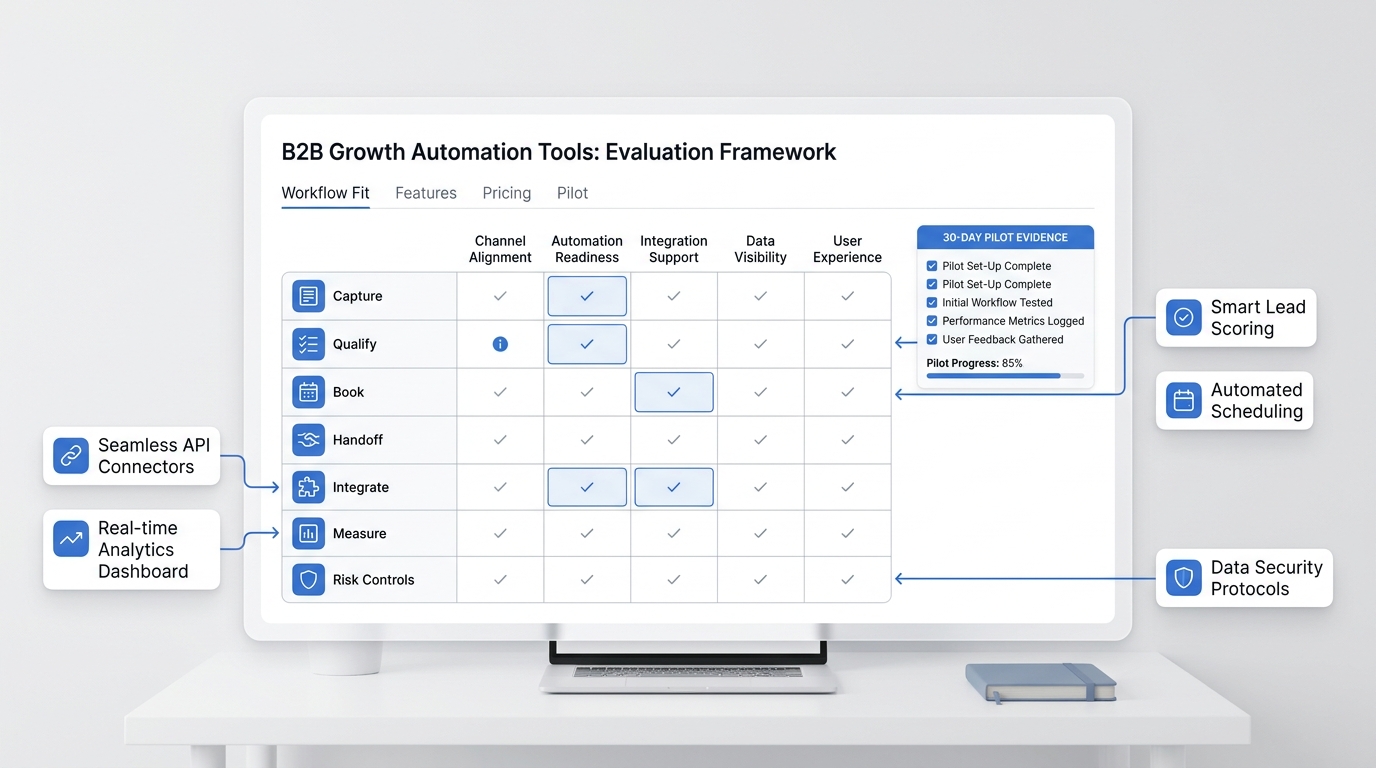
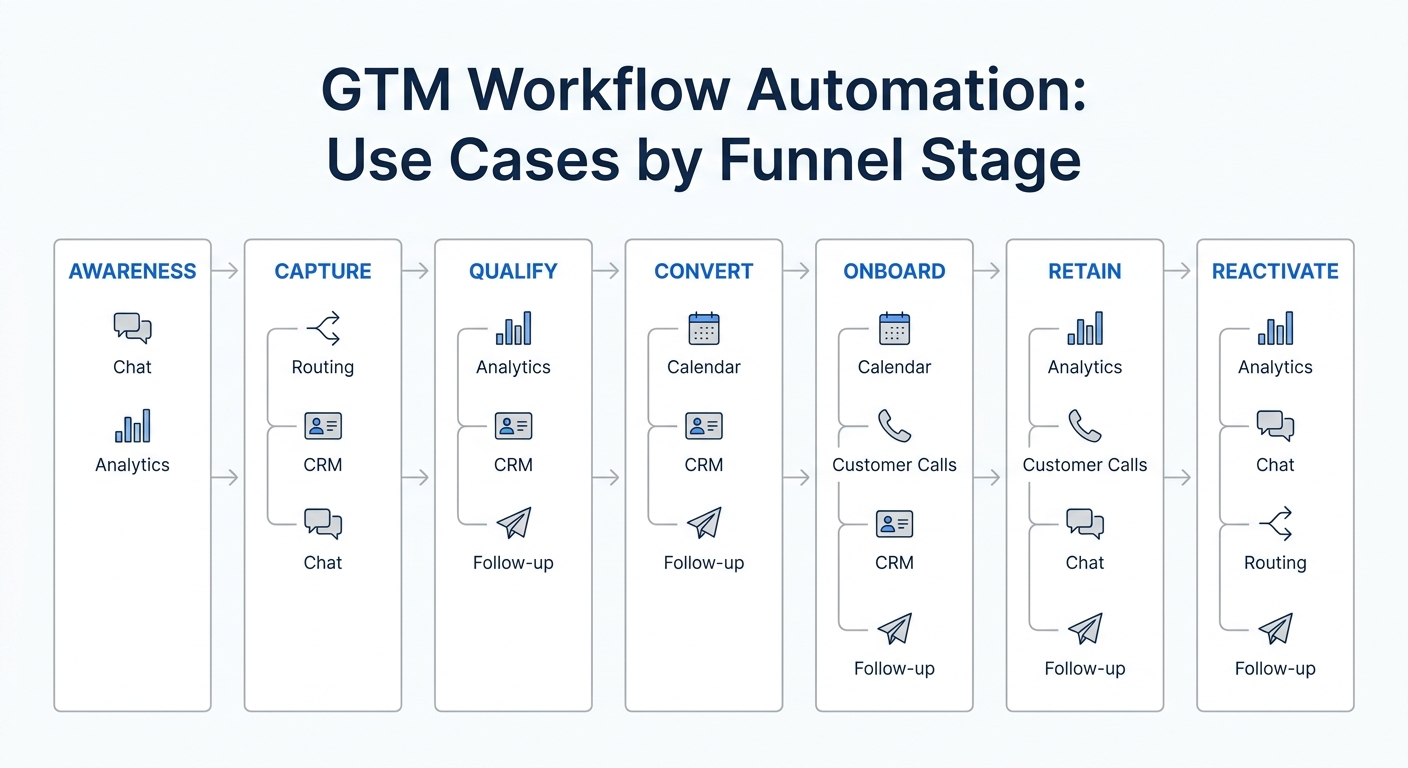
Teams comparing broader automation should also read Solvea's GTM workflow automation use cases, AI marketing agents strategy, and B2B growth automation tools guides.
Final checklist
Before you call an agentic marketing pilot successful, answer these questions:
- What exact workflow did the agent own?
- Which activity metrics prove the workflow ran?
- Which speed metrics prove delay improved?
- Which quality metrics prove the work was usable?
- Which outcome metrics prove demand moved forward?
- Which control metrics prove the autonomy level is safe?
- Which key events or conversions are tied to the workflow?
- Which assisted conversions include the article, page, or agent interaction?
- What will you expand, fix, or stop next?
The agentic marketing metric that matters most is the one that connects a customer trigger to a better next step. Start there, then let the dashboard grow only when the workflow earns it.
Your AI Receptionist, Live in Minutes.
Scale your front desk with an AI that never sleeps. Solvea handles unlimited multi-channel inquiries, books appointments into your calendar automatically, and ensures zero missed opportunities around the clock.
FAQ
What is the most important agentic marketing metric?
The most important agentic marketing metric is the outcome closest to the workflow, such as qualified leads, bookings, recovered inquiries, completed handoffs, qualified signups, or assisted conversions. Activity metrics should support that outcome, not replace it.
How should SMBs measure agentic marketing tools?
SMBs should measure agentic marketing tools across five layers: activity, speed, quality, outcomes, and control. A tool that produces more messages but creates poor handoffs or no qualified demand is not improving the workflow.
Are assisted conversions enough to prove agentic marketing ROI?
No. Assisted conversions show that a page, campaign, or agent interaction contributed to a path. They should be paired with key events, qualified lead review, booking data, and human validation before making ROI claims.
What metrics should an AI receptionist report?
An AI receptionist should report first response time, missed inquiries recovered, qualification completeness, routing accuracy, summaries created, owner handoffs, bookings or callbacks created, correction rate, escalation quality, and assisted conversions where tracking is available.
How long should an agentic marketing pilot run?
A 14-day pilot is enough to test setup quality and early workflow value for many SMB use cases. Higher-volume or longer-cycle workflows may need 30 days or more before outcome metrics are stable.