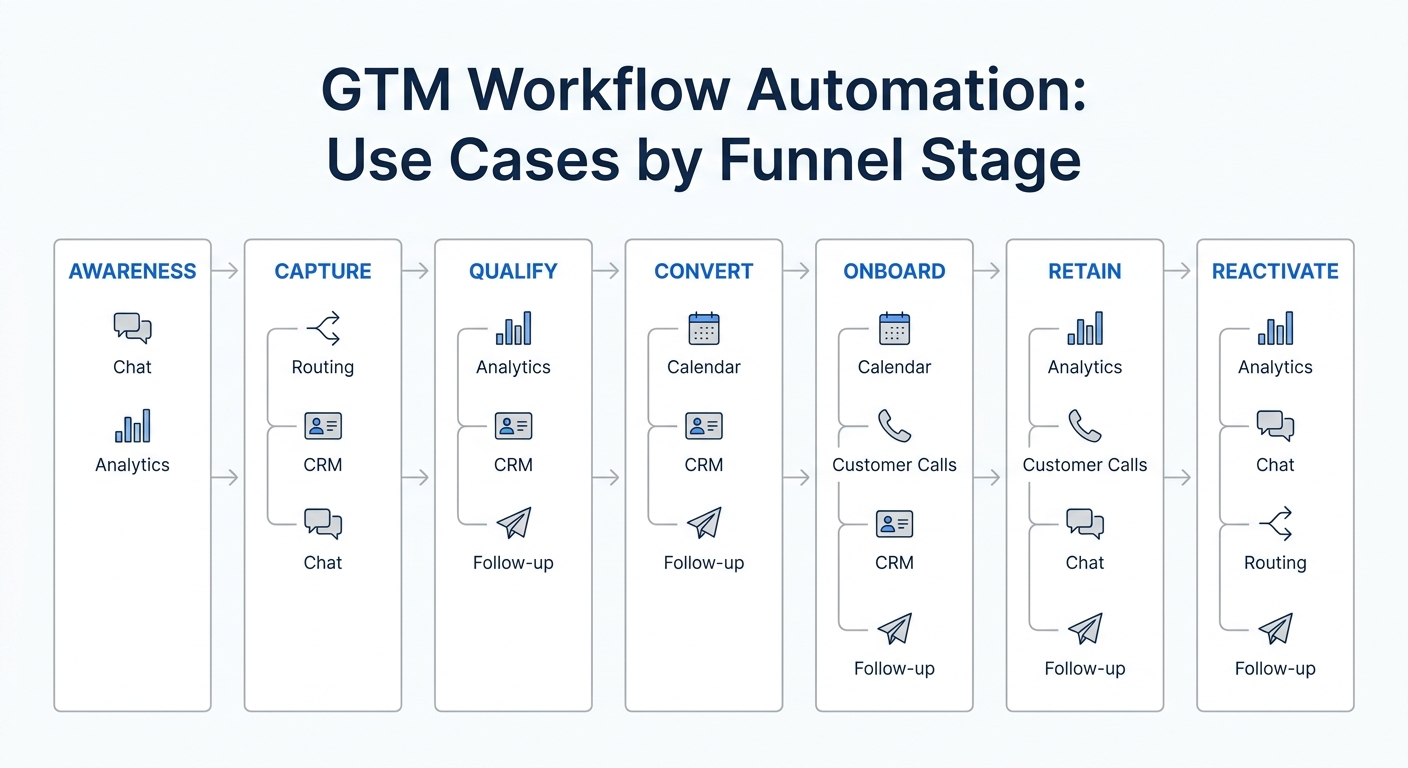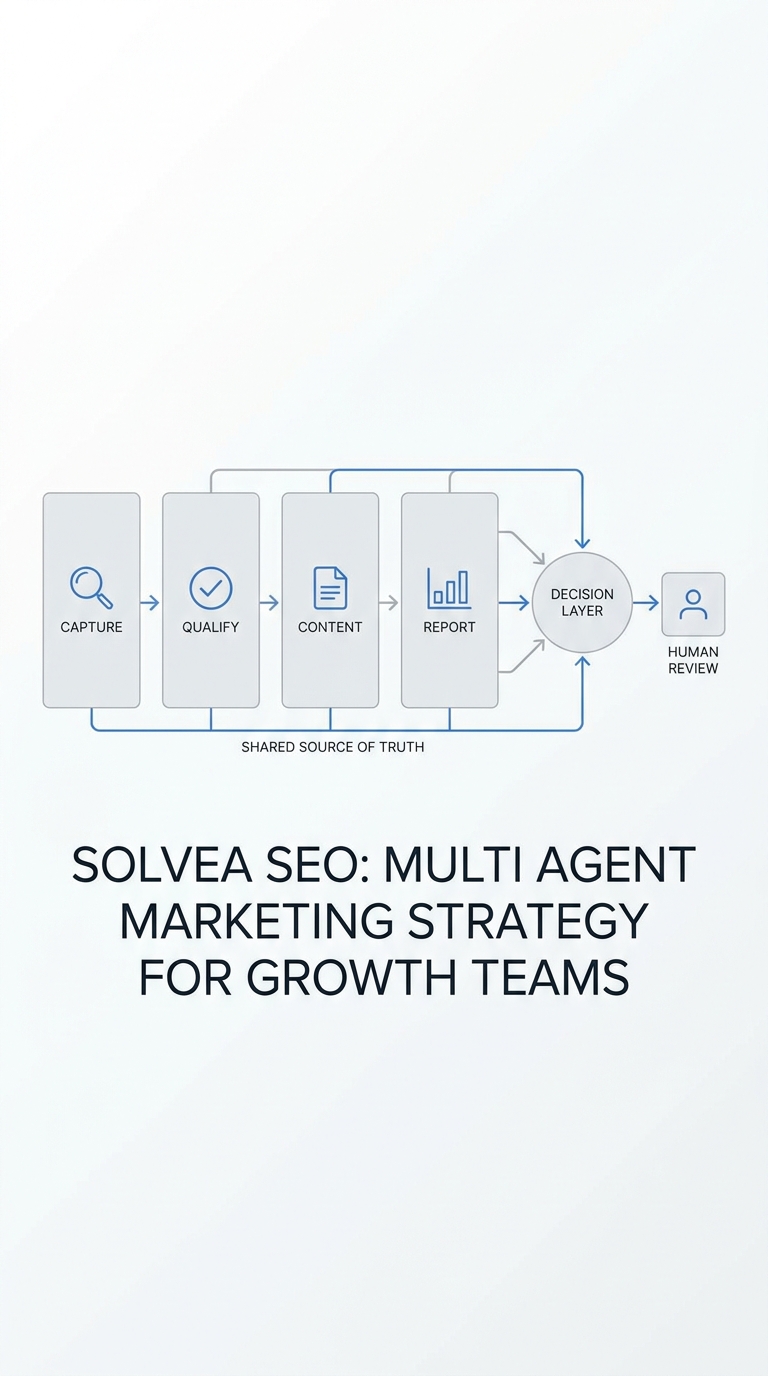
Agentic marketing is useful when a team wants an AI agent to own one narrow growth workflow, not the whole marketing stack.
That is the practical distinction. A team does not need an AI system to make every decision. It needs one workflow that can respond faster, keep better context, take a bounded action, and hand off when the case is outside policy.
This guide shows how teams can use agentic marketing without turning the job into a vague AI experiment. The goal is simple: assign ownership, set guardrails, launch one workflow, and measure whether the team is actually better off.
What agentic marketing is for
Use agentic marketing when the workflow has a repeated trigger, depends on context, and has a clear next step.
| Good first workflow | Why it fits | What to measure |
|---|---|---|
| Missed-call response | Speed matters and the same questions repeat | First response time, qualified follow-up tasks |
| Appointment qualification | The next step depends on customer details | Booking rate, qualification completeness |
| Quote follow-up | Delay costs replies and revenue | Reply rate, callback rate |
| Cross-channel triage | Context gets lost across inboxes | Routing accuracy, handoff completion |
| Content QA before publish | Claims need review before launch | Unsupported claims caught, review time |
If the workflow is one fixed rule, normal automation is enough. If the next step depends on customer context, urgency, or channel history, agentic marketing can help.
Who owns the workflow
Agentic marketing fails when nobody owns the result. A team needs clear roles before it needs more software.
| Role | Owns | Fails when missing |
|---|---|---|
| Outcome owner | The business result | The workflow runs, but nobody knows what success means |
| Workflow operator | Setup and day-to-day tuning | The agent keeps drifting from the real process |
| Reviewer | Quality control and evidence review | Bad outputs go uncorrected |
| Data steward | Knowledge base, CRM, calendar, and integration hygiene | The agent works from stale or incomplete context |
| Escalation owner | Sensitive or unclear cases | Edge cases get stuck or handled badly |
If a team cannot name these five people or roles, it is not ready for agentic marketing yet.
Write the workflow in one sentence
When
[trigger]happens, the agent should[allowed action]using[approved context], unless[handoff rule]is true. Success is[metric].
Examples:
- When a customer calls after hours, the agent should answer, capture the need, and create a follow-up summary using business hours and service rules, unless the request is urgent or unclear. Success is first response time and qualified follow-up tasks.
- When a booking request arrives, the agent should collect the missing details and route the lead using approved intake questions, unless the topic is sensitive. Success is booking completion.
- When an article is ready to publish, the agent should check claims, links, metadata, and schema using the source checklist, unless a claim lacks evidence. Success is unsupported claims caught before launch.
That sentence is the boundary. If you cannot write it, the workflow is not ready.
Build the first workflow
- Pick one trigger with real volume.
- List the approved context the agent can use.
- Define the exact actions the agent may take.
- Write the handoff rule for edge cases.
- Decide what evidence the team needs to review.
- Run the workflow with human review before expanding autonomy.
For most teams, the first useful workflow is customer intake: missed calls, booking requests, quote follow-up, or message routing. That is where delay and context loss are easiest to measure.
Guardrails that keep the team in control
Agentic marketing needs limits, or it becomes guesswork with a better interface.
| Guardrail | Why it matters | Example |
|---|---|---|
| Reversible actions first | Lower risk during the pilot | Draft, tag, route, summarize |
| Approved context only | Keeps answers consistent | CRM notes, calendar, knowledge base |
| Template-based outbound messages | Prevents free-form drift | Standard follow-up copy |
| Sensitive-topic blocks | Keeps people in the loop | Billing disputes, legal, medical, refunds |
| Evidence trail | Makes review possible | Transcript, summary, owner, status |
NIST's AI Risk Management Framework is a useful reminder here: more autonomy should come with clearer controls, not fewer.
What to measure in the first two weeks
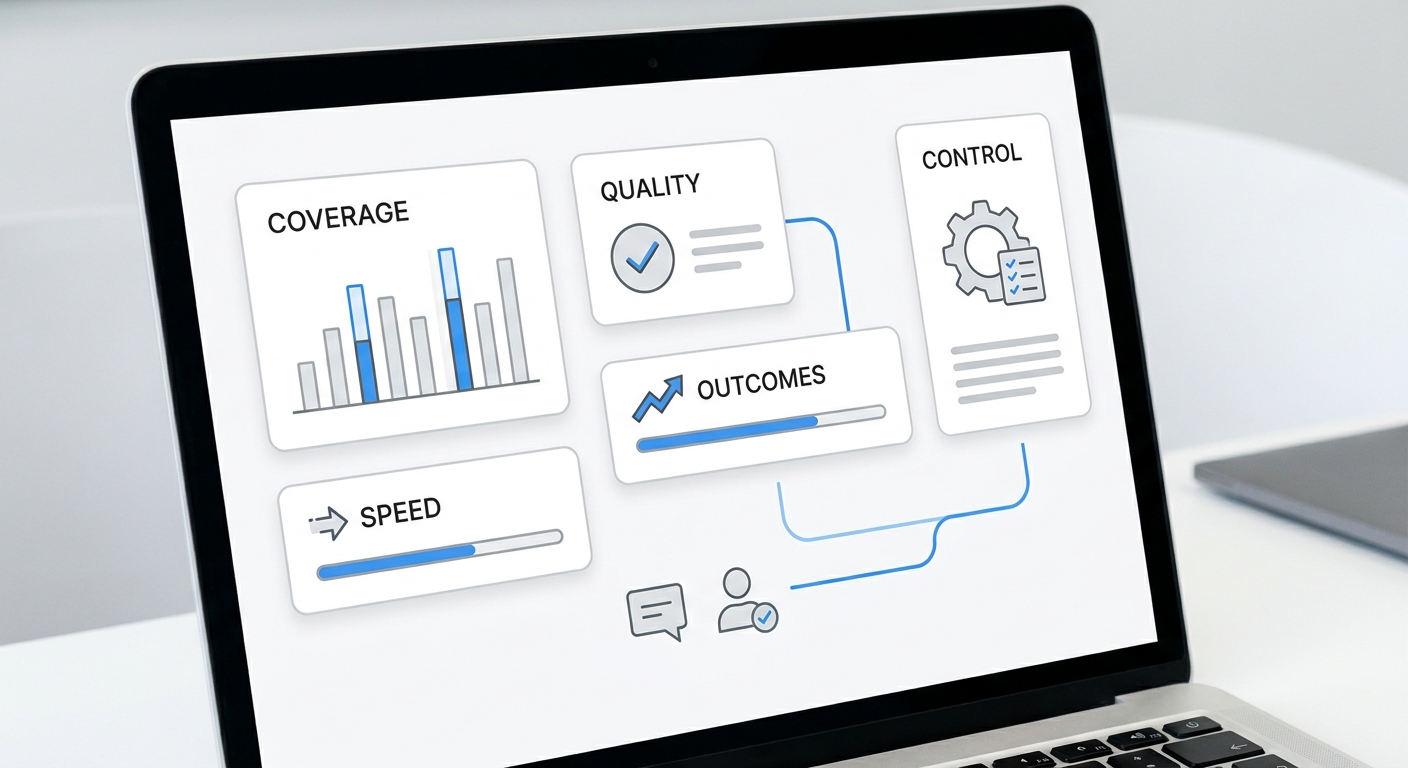
Do not measure agentic marketing by prompts or task counts alone. Measure whether the workflow moved faster, stayed accurate, and created a better business outcome.
| Layer | Metrics |
|---|---|
| Speed | First response time, time to qualification, time to handoff |
| Quality | Qualification completeness, routing accuracy, correction rate |
| Outcome | Qualified signups, bookings, follow-up completion, assisted conversions |
| Control | Override rate, escalation misses, unsupported answers |
If the workflow is content-led, use Google Search Console performance data for clicks and impressions, and Google Analytics key events for downstream actions. If the workflow is not content-led, keep the measurement close to the workflow itself.
The rule is simple: do not ask a pilot to prove revenue before it has enough volume to prove speed and quality.
A 14-day rollout plan
| Days | What to do |
|---|---|
| 1-2 | Pick one workflow and name the owner |
| 3-5 | Connect context, write rules, and define the handoff |
| 6-10 | Run with review and collect evidence |
| 11-14 | Decide whether to keep, adjust, or stop |
During the review period, check for missing context, wrong routing, weak summaries, and repeated questions the knowledge base should already answer. Do not widen autonomy until the basic cases are working.
Where Solvea fits
Solvea is a practical fit when the first workflow starts with customer conversations.
Its AI Receptionist is built around missed calls and follow-up. Its omnichannel inbox keeps voice, SMS, email, WhatsApp, LINE, and live chat in one place. Its AI Agent Builder lets teams configure agents without code, and analytics shows resolution, response time, CSAT, drop-offs, and escalation.
Solvea also connects to the tools many teams already use through integrations, including Shopify, HubSpot, Zendesk, Freshdesk, Google Calendar, Google Sheets, email, WhatsApp, LINE, and live chat. The current pricing model includes a free plan for one person and a 7-day Pro trial; Pro seats are $19.90 per seat per month.
That makes it easier to start with one workflow instead of a platform migration.
Related reading
Your AI Receptionist, Live in Minutes.
Scale your front desk with an AI that never sleeps. Solvea handles unlimited multi-channel inquiries, books appointments into your calendar automatically, and ensures zero missed opportunities around the clock.
FAQ
What is agentic marketing?
Agentic marketing is the use of AI agents to own a bounded workflow such as intake, routing, follow-up, or QA. It is not the same as letting AI run the entire marketing function.
What workflow should a team start with?
Start with the workflow where delay hurts most: missed calls, booking requests, quote follow-up, or customer message routing.
Who should own the first pilot?
The outcome owner should own it, with a workflow operator, reviewer, data steward, and escalation owner supporting the pilot.
How do you know it worked?
It worked if the workflow got faster, stayed accurate, and moved a real business metric such as qualified follow-up, bookings, or assisted conversions.