AI Receptionist for Ecommerce: Product Q&A, Checkout Help, and Returns
An ecommerce customer rarely asks one clean question in one clean channel. The same shopper might compare two products in chat, call because a discount code failed, come back after checkout with an order number, and ask for a return when the item arrives.
An AI receptionist for ecommerce is the front-line agent that can handle those moments across voice and chat. It answers common questions, uses approved store knowledge, pulls structured Shopify order information when available, and hands off to a human when the answer needs judgment.
The practical goal is simple: remove repetitive support work without turning the customer experience into a dead-end bot. For retail teams, that means faster product answers, fewer abandoned carts, cleaner post-purchase support, and fewer tickets that start with "where is my order?"
Solvea's retail AI receptionist is built for that full customer journey. The retail page positions Solvea for pre-purchase questions, post-purchase support, product recommendations, order and shipping data, returns, and support across voice, chat, and email.
What is an AI receptionist for ecommerce?
An AI receptionist for ecommerce is an AI agent that answers customer questions across channels such as phone and live chat using the store's product information, policies, and support workflows.
For an online store, that usually includes:
- Product Q&A: sizing, fit, dimensions, compatibility, variants, bundles, materials, and recommended alternatives.
- Checkout help: coupon questions, shipping thresholds, delivery timing, cart confusion, address changes, and payment friction that does not require collecting sensitive payment details.
- Order status: tracking numbers, product details, purchase time, and shipping destination information when the store system makes those details available.
- Returns and exchanges: policy explanations, eligibility checks, next steps, and handoff rules for exceptions.
- Escalation: routing unclear, emotional, high-value, fraud-sensitive, or policy-exception cases to a person with context.
The difference between an AI receptionist and a basic chatbot is channel coverage and workflow depth. A chatbot usually sits inside a widget and answers a small FAQ set. An AI receptionist should also answer phone calls, understand spoken questions, use store knowledge, and route the conversation when the approved answer is not enough.
The ecommerce moments an AI receptionist should cover
The fastest way to plan an ecommerce AI receptionist is to map the customer moment to the data source, answer pattern, and escalation rule.
| Customer Moment | What the AI Needs | Good Answer Pattern | Escalate When |
|---|---|---|---|
| Product fit or sizing | Product description, size chart, variant notes, return policy | Answer with the specific size, fit detail, caveat, and next step | The answer depends on safety, installation, medical, legal, or personal judgment |
| Product comparison | Product catalog, SKU details, recommendation rules | Compare the two options by customer need, not by generic feature list | The recommendation is uncertain or inventory is changing quickly |
| Availability | Shopify product data or approved product feed | State the current availability or offer an approved substitute | The item is low-stock, backordered, reserved, or tied to a promise your team must confirm |
| Checkout objection | Promotion rules, shipping policy, delivery timing, payment guidance | Explain the rule, reduce uncertainty, and keep the shopper moving | The customer needs billing help, repeated payment failures, or an account-specific exception |
| Order status | Shopify order lookup, tracking number, product details, purchase time | Ask for the order number, retrieve the available order details, and summarize the next step | Tracking is missing, delayed, disputed, or tied to a high-value order |
| Returns or exchange | Return policy, product category rules, order details | Explain eligibility and the next action in plain language | The order is outside policy, damaged, fraudulent, or needs a manager exception |
This matrix is the control layer. It keeps the receptionist useful without letting it improvise beyond approved product, policy, or order knowledge.
Product Q&A: answer the question that blocks the purchase
Product questions often happen at the exact moment a shopper is deciding whether to buy. If the answer is slow or vague, the shopper does not always wait. They compare elsewhere, abandon the cart, or call support.
Common questions include:
- "Will this fit a 30-inch doorway?"
- "Does this model work with my older version?"
- "Is the blue medium in stock?"
- "Which one is better for a small apartment?"
- "Can I return it if I open the box?"
- "Can you compare these two products?"
The receptionist should not answer these from memory. It should use approved product knowledge, size charts, policies, and catalog data.
Solvea's Shopify setup docs describe product knowledge sync from Shopify into the knowledge base. The docs also note that optional automatic knowledge sync can update Shopify product data once per day. For ecommerce teams, that matters because product names, variants, descriptions, prices, and availability can change often.
Product Q&A script for voice
Customer: I am looking at the [product]. Will it work for [use case]?

AI receptionist:
I can help with that. Can you tell me the size, model, or situation you need it for?

Customer: [Provides detail.]

AI receptionist:
Based on the product details, [answer]. The important caveat is [specific caveat].
If you want, I can send the product link or compare it with another option.

If the answer is uncertain:
I do not want to guess on that. I can collect the details and send this to our team so they can confirm the right answer.
The last line is important. Product Q&A is valuable only when the receptionist knows when to stop.
Checkout help: remove friction without taking risks
Checkout questions are not always support tickets. They are often purchase objections.
An ecommerce AI receptionist can help when a shopper asks:
- "Why is my discount code not working?"
- "How fast can this arrive?"
- "Can I ship this to a different country?"
- "Is the shipping free if I add another item?"
- "Can I change the address after checkout?"
- "What happens if the item does not fit?"
For checkout help, the best answer pattern is short, specific, and policy-grounded. The receptionist should explain the rule, offer the next step, and avoid collecting payment information or making promises the store cannot honor.
Checkout chat template
When a shopper asks a checkout question:
1. Identify the product, cart, coupon, or shipping question.
2. Check the approved shipping, promotion, payment, and returns policy.
3. Answer with the exact rule and one next step.
4. Offer a product, policy, or checkout link when useful.
5. Escalate billing, payment failure, fraud, or account-specific cases.
Example:
That code applies only to full-price items, so it will not work on this sale item.
If you want to keep the discount, I can show you similar full-price products that qualify.
This keeps the answer helpful without pretending the AI can override store policy.
Order status and returns: support after the sale
Post-purchase support is where ecommerce teams often lose time. Customers ask for tracking updates, delivery timing, return eligibility, exchange steps, refund status, and product details from the order.
Solvea's Shopify docs describe an order query workflow that retrieves Shopify order information by order number. The documented order details include tracking numbers, product details such as name, SKU, quantity, price, and status, purchase time, and shipping destination country.
That gives the receptionist a structured way to answer "where is my order?" without asking the customer to wait for a manual lookup.
Order-status voice script
AI receptionist:
I can check that. Please share your order number.

Customer: [Provides order number.]

AI receptionist:
Thanks. I found the order for [product name]. The available tracking number is [tracking number].
The order was purchased on [purchase time] and is shipping to [destination country].
Would you like me to send the tracking details or connect you with support?

If tracking is missing or delayed:
I do not see a reliable tracking update yet. I can send this to our team with your order number so they can check the carrier details.
Returns and exchanges workflow
When a customer asks about a return:
1. Confirm the order number or product.
2. Check the return policy and any product category rules.
3. Explain whether the standard policy appears to apply.
4. Give the next step: start return, exchange, wait for team review, or contact support.
5. Escalate damaged items, exceptions, fraud signals, high-value orders, and anything outside the policy.
Returns are emotional. The receptionist should be fast and clear, but not overly rigid. The handoff rule matters as much as the answer.
How voice and chat should work together
Voice and chat should use the same approved knowledge, but the answer style should change by channel.
In chat, the receptionist can include links, product names, comparisons, and next-step prompts. Chat is useful for product details, side-by-side comparisons, size charts, policy links, and checkout guidance.
On a phone call, the receptionist should confirm the question, answer in one or two sentences, and offer a next step. Voice is useful for anxious customers, urgent order questions, high-intent pre-purchase calls, and shoppers who do not want to dig through a help center.
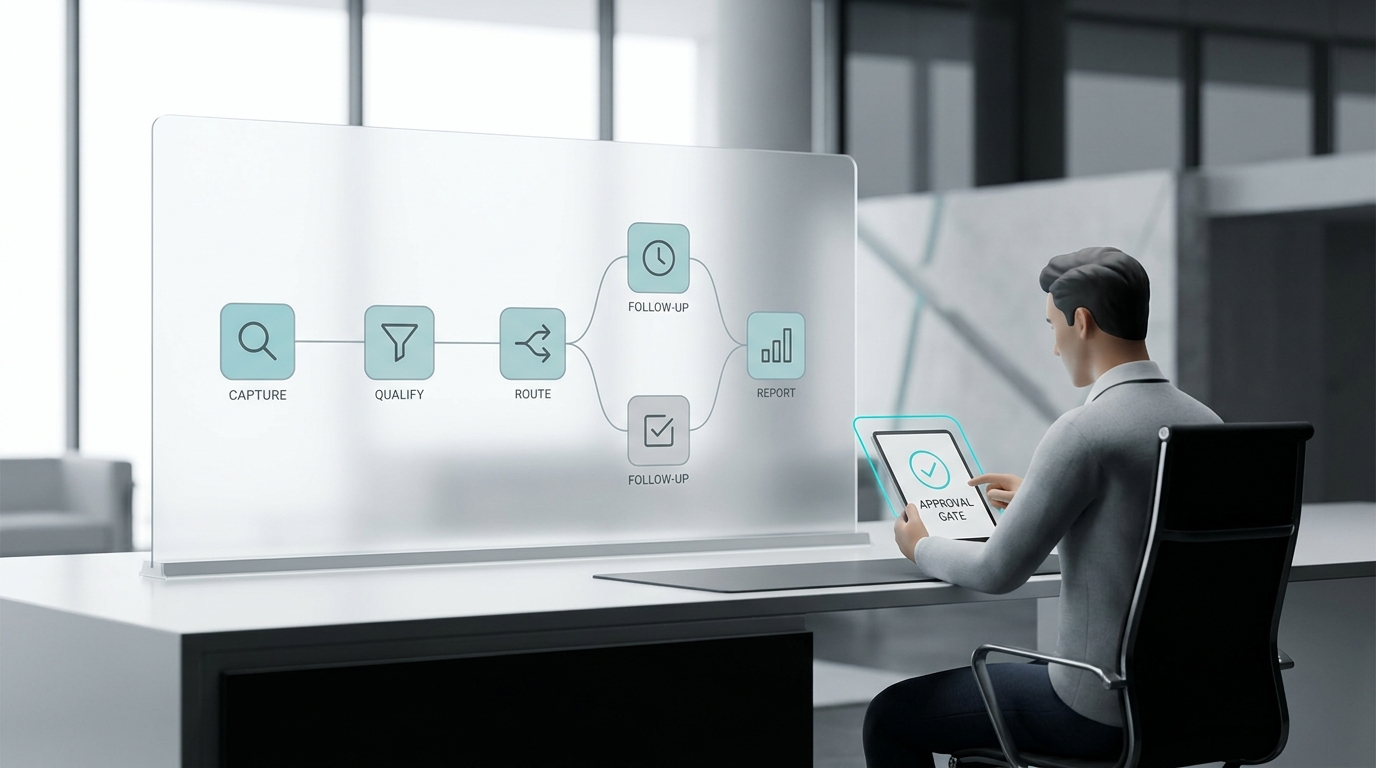
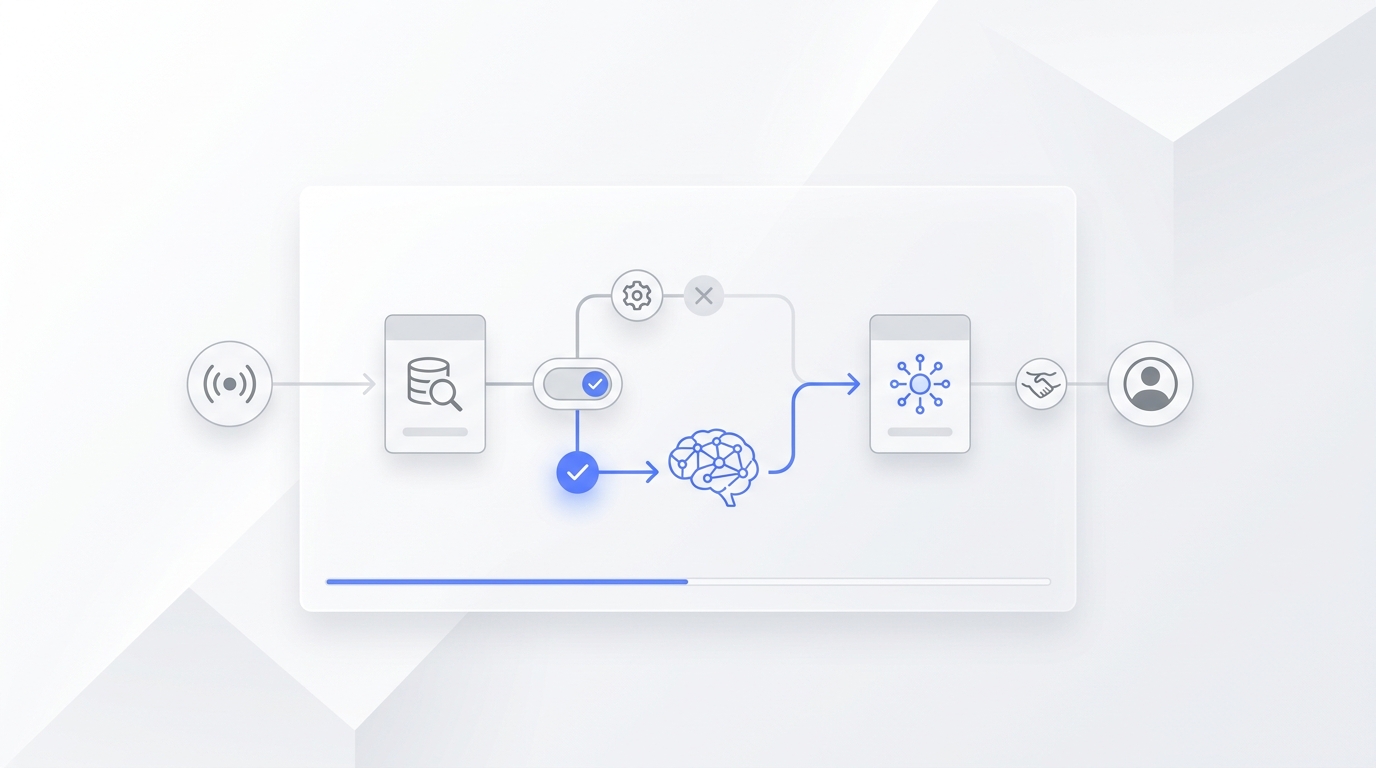
The underlying workflow should be the same:
- Understand the customer's intent.
- Identify the product, order, policy, or checkout rule.
- Use the approved source.
- Answer in the right format for the channel.
- Escalate when the source is missing or the case requires judgment.
How to set up Solvea for ecommerce support
Start with the smallest set of workflows that create the most relief for your team.
- Connect Shopify. Use Solvea's Shopify authorization flow so the agent can support store workflows.
- Enable Livechat. The Shopify docs describe embedding Livechat through the Shopify theme app embeds flow.
- Sync Product Knowledge. Sync Shopify product data into the knowledge base so product Q&A and recommendations use store data.
- Add policy knowledge. Upload or import shipping, returns, exchanges, warranty, discount, and cancellation policies.
- Write escalation rules. Define when the AI should transfer, create a ticket, or collect details for a human.
- Test by channel. Run the same product, checkout, order, and return scenarios in chat and voice.
- Review conversation history. Tune unclear answers, missing policy edges, and cases where the AI should have escalated sooner.
Solvea's docs are the best place to confirm current setup steps before launch.
Trial tests before you roll it out
Use a test set that mirrors real customer questions. Do not test only perfect prompts.
| Test Prompt | What to Inspect |
|---|---|
| "Will this fit through a 30-inch doorway?" | Does the answer use product dimensions and ask a clarifying question if needed? |
| "Compare these two products for a small apartment." | Does the answer recommend based on customer need instead of vague benefits? |
| "Is the blue medium in stock?" | Does the answer use approved product or variant data? |
| "My coupon code does not work." | Does the answer explain the rule without collecting payment details? |
| "Can this arrive by Friday?" | Does the answer stay grounded in shipping policy and avoid false guarantees? |
| "Where is order 12345?" | Does the receptionist ask for and use the order number correctly? |
| "I want to return this, but I opened the box." | Does it check the return policy and escalate edge cases? |
| "I am angry because my order is late." | Does it acknowledge the issue and hand off when the case is sensitive? |
| "Can I get a refund outside the policy?" | Does it avoid approving exceptions by itself? |
| "Can I talk to a person?" | Does it route cleanly and preserve context? |
If the AI fails any of these tests, the fix is usually one of three things: add missing knowledge, tighten the prompt rule, or escalate sooner.
Why Solvea fits ecommerce teams
Ecommerce support is no longer just email and tickets. Customers call, chat, reply to messages, ask after hours, and expect the store to remember product and order context.
Solvea is designed as a multi-channel AI receptionist for this kind of workflow. It supports retail and ecommerce teams across the customer journey, including pre-purchase questions, product recommendations, order tracking, delivery updates, returns, and common support issues.
The retail solution page cites 87% time saved, 24/7 on-brand service, 40+% sales lift, and use by 100+ leading retailers. The customer stories hub also includes retail brands such as Anker, Dreame, and Zeelool.
For teams that want to test before committing, the current plans and pricing docs list the default Free Plan with 1,000 credits per month, 3 agents, 50MB Knowledge Base, a 7-day free trial phone number, Email, Livechat, Shopify Integration, and Google Calendar and Sheets.
What should not be automated?
An ecommerce AI receptionist should not approve every exception. It should route or collect context for cases such as:
- Safety, installation, health, or legal-sensitive product advice.
- Fraud, chargebacks, payment disputes, and high-value account issues.
- Damaged goods, missing packages, carrier disputes, and refund exceptions.
- VIP customers or escalations with strong emotion.
- Any answer that is not covered by approved product, policy, or order knowledge.
Automation works best when customers get fast help on routine issues and humans get cleaner handoffs on judgment-heavy ones.
Your AI Receptionist, Live in Minutes.
Scale your front desk with an AI that never sleeps. Solvea handles unlimited multi-channel inquiries, books appointments into your calendar automatically, and ensures zero missed opportunities around the clock.
FAQ
Can an AI receptionist answer ecommerce product questions by phone?
Yes, if the product information is available in the approved knowledge base or connected store data. For Shopify stores, Solvea's docs describe syncing product knowledge so the agent can answer product Q&A and recommendation questions.
Can it help during checkout?
Yes. It can answer policy-grounded questions about coupons, shipping, returns, delivery timing, and product fit. It should not collect sensitive payment details or override billing rules.
Can it answer order-status questions?
Yes, when Shopify is connected and the customer provides an order number. Solvea's Shopify docs describe an order query tool that can retrieve tracking numbers, product details, purchase time, and shipping destination country.
Is an AI receptionist different from an ecommerce chatbot?
Yes. A chatbot usually lives in one widget and answers a limited FAQ set. An AI receptionist can support voice and chat, use store knowledge, retrieve structured order information, and escalate with context.
How should an ecommerce team start?
Start with product Q&A, checkout objections, order status, and returns. Those workflows are common, repeatable, and easy to test. Use Solvea's retail page and Shopify docs to map the first setup, then send trial traffic to Solvea pricing.