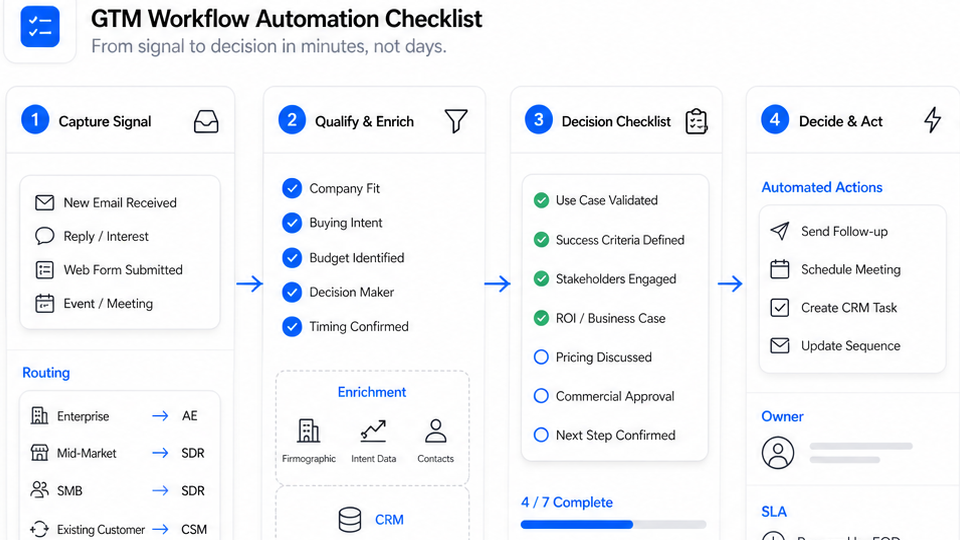
For businesses that handle a large volume of inbound communication, the biggest challenge is rarely just answering the phone. The harder problem is figuring out how to direct each caller quickly, accurately, and consistently without increasing labor costs at the same speed as call volume. That is where the Vonage AI receptionist becomes attractive.
Rather than acting like a basic phone menu, an AI receptionist in the Vonage ecosystem can serve as a conversational routing layer. It can identify the caller’s intent, handle common requests, and connect the interaction to broader business workflows. For companies already interested in API-driven communications, that flexibility is often the main differentiator.
TL;DR
The Vonage AI receptionist is best understood as a programmable conversational entry point for business calls. It is especially useful for companies that want more than simple auto-attendant logic and need voice interactions to connect with downstream systems, customer records, or custom workflows.
Why Businesses Look at Vonage for AI Reception
Vonage has long been attractive to companies that want communications infrastructure with strong API and integration potential. That matters because AI receptionist value increases when the system can do more than route based on keywords. The more it can connect to internal systems, the more useful it becomes during intake.
For example, a caller asking about account status, appointment details, or support routing can potentially be handled with more context than a static menu could ever provide. That is one reason many teams evaluate Vonage AI Studio when they want to design more flexible conversational voice flows.
What the Vonage AI Receptionist Can Do Well
The strongest use cases are usually high-volume, repeatable workflows. Think qualification, simple account lookup prompts, support triage, order-related routing, after-hours intake, and first-contact classification. In those cases, the AI does not need to be magical. It just needs to reduce misrouting and collect the right information before the handoff happens.
This is where the receptionist concept becomes broader than a front-desk assistant. In a programmable environment, the voice layer can become part of the business operations stack. That is powerful for companies that already think in terms of workflows and automation, not just phone hardware.
Where It Fits Best
The Vonage AI receptionist tends to make the most sense for mid-market teams, technical operations teams, or companies with enough inbound complexity that basic phone menus have become a bottleneck. If your call handling logic depends on multiple departments, variable routing, and system-level integrations, the platform is a stronger match than a simpler small-business PBX.
It is also useful when the business wants to unify communication behavior across channels. A company that already treats messaging, support, and telephony as connected workflow layers may get more value from Vonage’s programmable approach than from a closed, preset receptionist tool.
What to Watch Out For
The tradeoff is operational complexity. Flexibility can be a strength, but it also means more design responsibility falls on the business. If the team has not clearly defined the intended routing logic, escalation criteria, and fallback behavior, a sophisticated platform can still produce a messy experience.
That is why businesses should not judge the system only by its voice demo. They should ask whether the AI captures the right data, whether it hands off smoothly to humans, and whether it reduces repeated manual work after the call. According to the HubSpot State of Customer Service & CX report, resolution quality matters as much as responsiveness. A fast interaction is not enough if the caller still ends up repeating themselves later.
How It Compares to Simpler AI Reception Tools
Compared with lightweight business phone systems, the Vonage AI receptionist is usually more capable when integrations matter. Compared with traditional call center scripting, it can feel more conversational and flexible. But compared with simpler small-business solutions, it may require more implementation effort up front.
That makes it best for teams that want control and extensibility rather than the fastest possible out-of-the-box setup. If the business just wants a more polished front-door answering layer with minimal setup, a lighter-weight platform might be a better first step.
Want AI answering that is easier to launch and easier to manage?
Solvea helps businesses automate intake, caller qualification, routing, and follow-up without requiring an enterprise-grade custom implementation first.
Your AI Receptionist, Live in Minutes.
Scale your front desk with an AI that never sleeps. Solvea handles unlimited multi-channel inquiries, books appointments into your calendar automatically, and ensures zero missed opportunities around the clock.
Frequently Asked Questions
Is the Vonage AI receptionist mainly for large companies?
It is often a stronger fit for businesses with more complex routing or integration needs, but smaller technical teams can also benefit if they want a programmable communications layer.
Can it integrate with CRMs and other systems?
That is one of the biggest reasons companies consider Vonage. Its API-oriented approach makes it attractive when the receptionist should connect to customer records or workflow systems.
Does it still need a human fallback?
Yes. Even advanced conversational systems should have clear escalation paths for urgent, unusual, or sensitive calls. The AI should reduce friction, not trap callers in automation.
Conclusion
The Vonage AI receptionist is most compelling for businesses that need voice interactions to behave like part of a larger operations system. If the team values extensibility and integration more than simplicity alone, it can be a strong option. The best results come when the business treats AI reception as workflow design, not just as a phone feature.