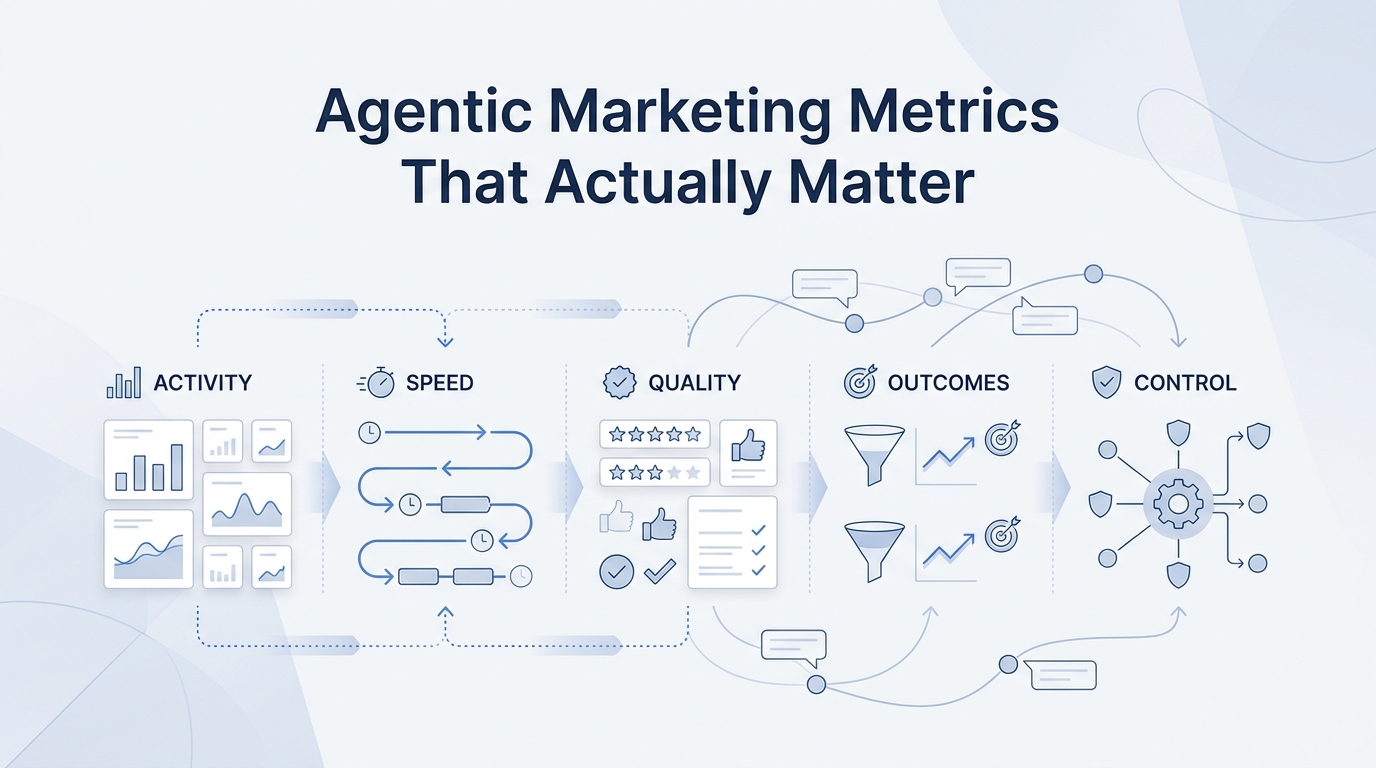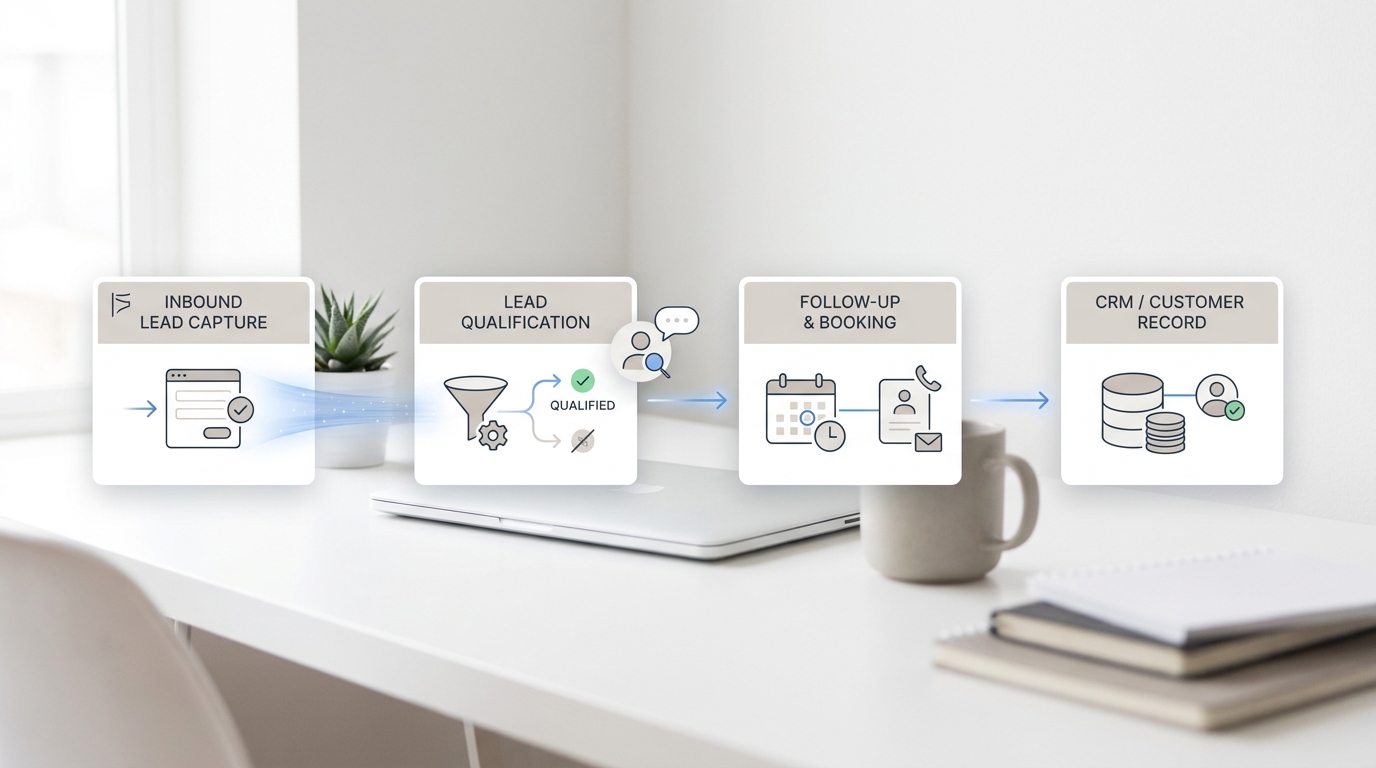
A knowledge base can look productive long before it creates business value. Your team may publish dozens of articles, organize categories, and add an AI support tool—yet still struggle to answer a simple question from leadership: What did this investment actually improve?
The answer is not article count or page views alone. The return comes from what better knowledge changes across the customer journey: fewer avoidable contacts, faster answers, more consistent responses, less agent effort, safer automation, and more completed bookings or purchases.
This guide shows how to measure those outcomes without giving the knowledge base credit for every improvement in support.
What knowledge base ROI means
Knowledge base ROI compares the measurable value created by trusted, reusable support knowledge with the cost of building and maintaining it.
A basic formula is:
Knowledge base ROI = (measured benefit - knowledge program cost) / knowledge program cost × 100
The formula is simple. Defining the inputs is the hard part.
For customer support automation, the benefit side can include:
- contacts avoided through successful self-service;
- conversations resolved automatically;
- lower handling time when a human takes over;
- fewer repeat contacts caused by incomplete or inconsistent answers;
- less time spent searching for information;
- fewer corrections, refunds, escalations, or missed appointments;
- more leads and bookings completed after a fast, accurate response.
The cost side should include:
- software and implementation costs;
- employee time used to create, approve, migrate, and maintain content;
- subject-matter expert review time;
- integration and analytics work;
- quality assurance and failed-answer review;
- ongoing governance, localization, and content retirement.
The goal is not to force every outcome into dollars on day one. Start with a credible chain from knowledge quality to operational change, then convert the most defensible changes into financial value.
Measure the chain, not one isolated metric
A knowledge base rarely produces value by itself. It affects how a customer, AI receptionist, or support agent finds and applies an answer.
Use this measurement chain:
- Knowledge quality: Is the content accurate, complete, current, and approved?
- Retrieval quality: Does the right answer appear for the language customers actually use?
- Answer quality: Does the response solve the problem without adding unsupported details?
- Operational outcome: Was the contact avoided, resolved, shortened, or transferred with useful context?
- Business outcome: Did the change reduce cost, protect revenue, or improve conversion and retention?
This chain prevents a common mistake: assuming high article traffic equals high ROI. An article may receive many views because customers are confused. A low-traffic policy article may create more value if it prevents costly mistakes during high-risk conversations.
Establish a baseline before changing the system
You need a comparison period. Capture at least two to four weeks of baseline data before a major knowledge launch, migration, or automation change when possible.
Record the baseline by intent, channel, and customer segment—not only as a company-wide average. At minimum, track:
| Metric | Baseline question |
|---|---|
| Contact volume | How many conversations arrive for each major intent? |
| First-response time | How long does the customer wait for a useful first reply? |
| Resolution time | How long does it take to reach a completed outcome? |
| First-contact resolution | How often is the issue completed without another contact? |
| Repeat-contact rate | How often does the same customer return for the same issue? |
| Escalation rate | How often does automation or a frontline agent need specialist help? |
| Average handling time | How much human time is spent on each handled conversation? |
| Search time | How long do agents spend finding approved information? |
| Automated resolution rate | What share of eligible conversations finishes without human work? |
| Conversion outcome | How many qualified conversations end in a booking, lead, or purchase? |
Segmentation matters because a knowledge base may improve appointment questions while having no effect on billing disputes. If you mix those intents together, the impact disappears inside an average.
The seven metrics that show knowledge base value
1. Successful self-service rate
Self-service success measures customers who found an answer and completed the intended task without opening a support conversation within a defined window.
Do not use page views as the numerator. Use a confirmed outcome, such as:
- an article view followed by no related contact within 24 or 48 hours;
- a completed troubleshooting flow;
- a booking, cancellation, or account action completed after guidance;
- an explicit “this solved my issue” signal.
One practical formula is:
Successful self-service rate = successful self-service sessions / eligible knowledge sessions
Keep the window and eligibility rules consistent. Exclude sessions that were never candidates for self-service, such as emergencies or cases requiring identity verification by a person.
2. Automated resolution rate by intent
For an AI receptionist or customer support automation system, measure the share of eligible conversations completed without human intervention.
Automated resolution rate = automatically completed eligible conversations / all eligible conversations
The phrase “eligible conversations” is essential. A transfer can be the correct outcome when the customer asks for a decision the AI should not make. Counting every transfer as a failure encourages unsafe automation.
Measure this by intent. A single overall rate can hide weak knowledge in one area and strong performance in another.
3. First-contact resolution and repeat-contact rate
A response can be fast and still be incomplete. First-contact resolution and repeat-contact rate help reveal whether the answer actually worked.
First-contact resolution = issues completed in one interaction / resolved issues
Repeat-contact rate = customers who recontact for the same intent / customers served for that intent
Tag repeat contacts by intent and reason. A rising repeat-contact rate after automation may indicate missing steps, unclear eligibility rules, stale policy content, or poor escalation instructions.
4. Time to useful answer
Traditional support dashboards often emphasize first-response time. For knowledge ROI, a better metric is time to useful answer: the time between the customer’s question and the first response that moves the issue toward completion.
An immediate greeting does not count. A useful answer might confirm availability, explain the required next step, provide an approved policy, or collect the information needed for a transfer.
Compare this metric before and after knowledge changes for the same intent and channel.
5. Human handling time and search effort
When automation cannot complete the conversation, good knowledge should still reduce human work.
Measure:
- average handling time for knowledge-assisted conversations;
- time spent searching or asking coworkers for information;
- time spent rewriting common answers;
- time spent correcting an automated response;
- after-call or after-chat documentation time.
You can estimate labor value with:
Monthly time value = hours saved × fully loaded hourly labor cost
Use actual payroll and overhead assumptions approved by finance. Do not use a generic industry wage if you can calculate your own cost.
6. Answer consistency and correction rate
Consistency is one of the most important benefits of a knowledge base for customer support, but teams often describe it without measuring it.
Create a quality review sample for high-volume and high-risk intents. Score each answer for:
- factual accuracy;
- completeness;
- policy compliance;
- correct next step;
- correct escalation behavior;
- brand and channel consistency;
- unsupported claims or invented details.
Then track:
Approved-answer rate = reviewed answers meeting the quality standard / total reviewed answers
Correction rate = conversations requiring a corrected answer / reviewed conversations
This metric applies across AI and human support. The purpose of governed knowledge is not only faster retrieval; it is a higher probability that every channel gives the same approved answer.
7. Knowledge-attributed business outcomes
Support knowledge can affect revenue when it helps a customer complete a commercially meaningful next step.
Examples include:
- a caller receives an accurate service answer and books an appointment;
- a lead gets availability and qualification questions answered after hours;
- a customer completes a purchase after a product or policy question;
- an existing customer avoids cancellation because the issue is resolved quickly;
- a missed-call workflow captures details and schedules follow-up.
Use conservative attribution. Credit the knowledge interaction only when you can connect it to the outcome through conversation IDs, booking records, CRM stages, or analytics events.
Turn operational improvements into financial value
Once you have reliable before-and-after metrics, calculate value in separate buckets.
Contact avoidance value
Avoided-contact value = successful incremental self-service resolutions × average cost per handled contact
Use the incremental improvement over baseline, not total self-service volume.
Automation value
Automation value = incremental automated resolutions × average human cost of an equivalent resolution
Subtract the cost of AI usage and the human review required to maintain quality.
Agent productivity value
Productivity value = handling hours saved × fully loaded labor cost
Do not automatically call productivity savings “cash savings.” If headcount does not change, describe the value as capacity recovered and show where that capacity went: shorter queues, more proactive follow-up, or higher-value cases.
Error reduction value
Error reduction value = reduction in corrected cases × average correction cost
Correction cost may include extra handling time, refunds, rework, rescheduling, supervisor review, or service recovery.
Conversion value
Incremental contribution = knowledge-assisted incremental conversions × average contribution margin
Use contribution margin rather than gross revenue when possible. Compare the same intent, traffic source, and time window to avoid overstating the effect.
A practical knowledge base ROI example
Consider an illustrative service business that improves its appointment and policy knowledge over one month.
Before the change, 2,000 eligible conversations required human support. After the change:
- 180 additional conversations are completed through self-service or automation;
- human handling time falls by 150 hours;
- 25 fewer conversations require correction or rescheduling;
- 12 additional qualified conversations become booked jobs.
Assume the company calculates:
- $6 average cost per handled contact;
- $32 fully loaded labor cost per hour;
- $35 average correction cost;
- $90 contribution margin per incremental booked job;
- $4,000 monthly knowledge software, content, review, and governance cost.
The estimated monthly benefit is:
| Value source | Calculation | Benefit |
|---|---|---|
| Contact avoidance | 180 × $6 | $1,080 |
| Recovered capacity | 150 × $32 | $4,800 |
| Fewer corrections | 25 × $35 | $875 |
| Incremental contribution | 12 × $90 | $1,080 |
| Total measured benefit | $7,835 |
The illustrative ROI is:
($7,835 - $4,000) / $4,000 × 100 = 95.9%
This is an example, not an industry benchmark. Your inputs should come from your own support, payroll, and conversion data.
Use a control method when possible
Before-and-after comparisons are useful, but they can give the knowledge base credit for seasonal demand, staffing changes, a product release, or a new channel.
Improve confidence with one of these approaches:
Intent-level rollout
Launch improved knowledge for selected intents first. Compare those intents with similar intents that have not changed.
Channel-level rollout
Apply the new knowledge workflow to one channel while keeping another stable for a short, controlled period.
Agent cohort comparison
Compare trained agents using the governed knowledge system with a similar cohort using the previous workflow.
Staggered location or team rollout
Introduce the program in phases, then compare results while controlling for volume and customer mix.
Perfect experimental design is rare in support operations. The goal is to document other changes and make the attribution more credible.
Build a weekly scorecard
A useful scorecard combines leading and lagging indicators.
| Layer | Weekly metrics | Why it matters |
|---|---|---|
| Knowledge health | review coverage, stale content, failed searches, content gaps | Shows whether the source is trustworthy |
| Retrieval | answer found rate, top failed queries, correct-source rate | Shows whether people and AI can find the right content |
| Quality | approved-answer rate, correction rate, escalation quality | Shows whether the answer is safe and complete |
| Operations | self-service success, automated resolution, handling time, repeat contacts | Shows workflow impact |
| Business | cost per resolved contact, bookings, conversions, retained revenue | Shows financial impact |
Review the scorecard by intent. Assign an owner to every metric and content gap. A dashboard without an operating rhythm becomes another report nobody acts on.
Avoid these ROI measurement mistakes
Counting every article view as deflection
An article view only proves exposure. Require a solved signal or the absence of a related contact within a defined window.
Treating every transfer as failure
A correct escalation protects the customer and the business. Measure unnecessary transfers separately from required transfers.
Using total automation instead of incremental automation
ROI comes from improvement over the baseline, not from all automated conversations after launch.
Ignoring maintenance cost
Knowledge loses value when policies, pricing, hours, service areas, or integrations change. Include review and retirement work in the cost model.
Measuring only speed
Faster wrong answers create rework. Pair speed metrics with approved-answer rate, repeat contacts, and corrections.
Mixing unrelated intents
Measure the workflows affected by the knowledge change. Do not expect a stronger appointment article to improve a billing dispute.
Claiming labor savings that never occurred
Recovered hours are valuable, but distinguish capacity from cash. Show whether the team reduced overtime, avoided hiring, shortened queues, or redirected time.
How Solvea supports the measurement loop
Solvea connects a governed knowledge base with customer conversations across channels. That makes it possible to improve both sides of the ROI equation: the quality of the source answer and the efficiency of delivering it.
Teams can use a unified inbox and knowledge base to connect conversation context with approved information, then compare outcomes such as resolution speed, repeat questions, escalations, and conversions.
If your source content is still fragmented, start with this guide to build a customer support knowledge base. If your team is deciding what belongs in operational knowledge, review the difference between a knowledge base and an FAQ page.
The best measurement program starts small:
- Choose three high-volume intents.
- Record baseline quality, workload, and outcome metrics.
- Improve and approve the source knowledge.
- Deploy it across the relevant support channels.
- Review failed answers and repeat contacts every week.
- Convert verified improvements into cost, capacity, or contribution value.
That gives leadership a business case and gives the support team a practical improvement loop.
Your AI Receptionist, Live in Minutes.
Scale your front desk with an AI that never sleeps. Solvea handles unlimited multi-channel inquiries, books appointments into your calendar automatically, and ensures zero missed opportunities around the clock.
Frequently asked questions
How long does it take to measure knowledge base ROI?
You can see early retrieval and answer-quality signals within days. Operational metrics usually need several weeks of stable volume. Financial ROI may require one to three months, especially when conversion, retention, or avoided hiring is part of the case.
What is the most important knowledge base metric?
There is no single universal metric. For self-service, use successful self-service rate. For AI support, use automated resolution by eligible intent. Pair either metric with repeat-contact rate and approved-answer rate so speed or deflection does not hide poor quality.
How do you calculate ticket deflection?
Measure the incremental number of eligible issues completed through self-service without a related support contact in a defined window. Multiply that incremental volume by the average cost of handling the equivalent contact.
Should agent time savings count as ROI?
Yes, but label it correctly. If payroll cost does not fall, report recovered capacity rather than cash savings. Document how the capacity improved service, reduced overtime, avoided hiring, or supported revenue-generating work.
Can a knowledge base improve revenue?
Yes, when accurate answers help customers complete bookings, purchases, renewals, or qualified next steps. Use conversation and CRM identifiers to connect the knowledge-assisted interaction to the outcome, and calculate incremental contribution rather than claiming all related revenue.
Start with outcomes, then improve the content
Knowledge base ROI is not a content-volume contest. It is the measurable difference between support with scattered, uncertain information and support built on trusted answers.
Track the chain from knowledge health to retrieval, answer quality, operational outcomes, and financial value. Keep attribution conservative. Review results by intent. Then use failed searches, corrections, repeat contacts, and escalations to decide what to improve next.
Track support consistency improvements with Solvea. Start free and build a measurable knowledge-to-resolution workflow across your customer channels.