A content distribution system can look organized while still leaking opportunities. Posts go out on schedule, links are added, and a dashboard shows traffic—but nobody owns replies, campaign tags are inconsistent, and after-hours inquiries sit untouched.
That is why implementation needs a quality-assurance step before scale.
This content distribution system implementation checklist is built for service businesses that already have a basic workflow and want to test whether it is operationally ready. Use the 25 checks below before adding more channels, publishing more often, or handing the process to a larger team.
If you are still designing the system, start with the five-step content distribution checklist. If the model is defined but not yet operational, use the 30-day rollout plan. This guide covers the next stage: verifying that the system works end to end.
What this QA checklist tests
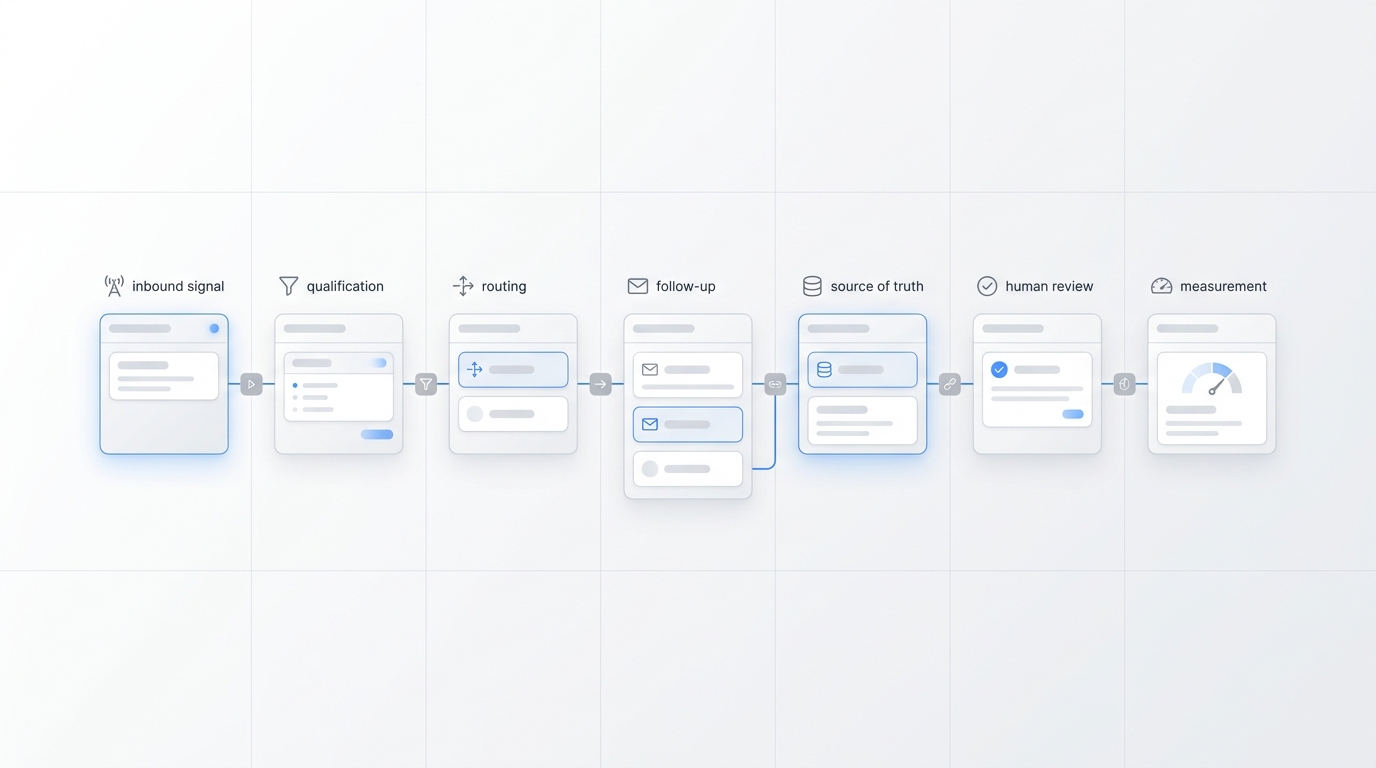
The checklist examines five operating layers:
- Source integrity: Is there one clear, useful destination for the campaign?
- Channel execution: Is each channel version complete and appropriate?
- Response ownership: Does a named person or system handle every reply?
- Lead routing: Can an interested prospect reach the right next step quickly?
- Measurement: Can the team connect distribution activity to business outcomes?
The objective is not a perfect score on every campaign. It is to expose gaps before higher volume makes them harder and more expensive to fix.
How to score your content distribution system
Give each check one of three statuses:
| Status | Meaning | Action |
|---|---|---|
| Pass | The requirement works and has an owner | Keep it in the standard process |
| Needs work | The requirement exists but is inconsistent | Assign a fix before the next campaign |
| Blocked | The requirement is missing or cannot be verified | Do not scale this workflow yet |
A simple rule is enough: do not increase publishing volume while a blocked item affects conversion, customer response, or measurement. More reach will only send more people into a broken path.
Layer 1: source integrity
Every distributed asset should point back to a stable source of truth. Without one, teams create competing pages, update the wrong version, and split internal links across several destinations.
1. One canonical destination is approved
Confirm that the campaign has one primary public URL. Supporting posts may summarize or adapt the idea, but they should not create several nearly identical pages for the same search intent.
2. The source matches the promise
Open the destination as a visitor. The title, opening section, and call to action should match what the social post, email, video, directory listing, or community answer promised.
3. The page is useful without the channel post
The source should stand on its own. A visitor who arrives through search or a forwarded link should understand the problem, the recommended next step, and who the guidance is for.
4. Links are crawlable and functional
Use standard links with valid destinations. Google recommends crawlable anchor elements with resolvable URLs, which makes ordinary link implementation the safest default for discovery and navigation. Review Google's guidance on crawlable links.
5. The conversion path works on mobile
Test the primary call to action from a phone. Confirm that forms load, phone links open the dialer, booking pages fit the screen, and confirmation messages are visible.
Layer 1 completion check
- [ ] One canonical URL is documented.
- [ ] Channel promise and page content match.
- [ ] The page is understandable on its own.
- [ ] Internal and external links work.
- [ ] The mobile conversion path completes successfully.
Layer 2: channel execution
Distribution is not copying the same paragraph everywhere. Each channel has a different context, format, and user expectation. The core message should remain consistent while the presentation changes.
6. Each channel has a defined job
Write one sentence describing what the channel should accomplish. Examples include introducing the problem, demonstrating the process, answering objections, or bringing high-intent visitors to a booking page.
7. The format fits the channel
A short video needs a visible hook and a clear spoken next step. An email needs a useful subject line and focused message. A community answer should solve the immediate question before linking anywhere.
8. The opening is specific
Replace generic openings such as “check out our latest post” with the customer problem, decision, or result the asset addresses.
9. The destination link is correct
Click the published link rather than trusting the draft. Check redirects, mobile behavior, language routing, and whether the URL lands on the intended page.
10. The channel has a response plan
Document whether the channel requires comment monitoring, direct-message follow-up, call handling, email replies, or no active response. “Publish and forget” should be an explicit choice, not an accident.
Layer 2 completion check
- [ ] Every channel has one job.
- [ ] Creative matches the native format.
- [ ] The opening addresses a real customer problem.
- [ ] The published link reaches the correct destination.
- [ ] Monitoring expectations are documented.
Layer 3: response ownership
Content creates questions before it creates conversions. If nobody owns those questions, the distribution system generates attention that the business cannot capture.
11. A named owner covers each response type
Assign ownership for public comments, direct messages, emails, form submissions, phone calls, and booking requests. A role is better than “the team,” and a named person is better than an undefined role.
12. The expected response window is documented
Set a practical service level for each response type. A booking request may need faster handling than a general comment. The important point is that the team knows what “on time” means.
13. Answers use approved source information
Prepare a short response library for recurring questions. It should cover service area, hours, pricing boundaries, booking steps, escalation rules, and topics the team should not answer without review.
14. Handoffs preserve context
When a conversation moves from a comment to a direct message, email, phone call, or booking form, the next owner should be able to see what the prospect already asked.
15. Nights, weekends, and overflow have coverage
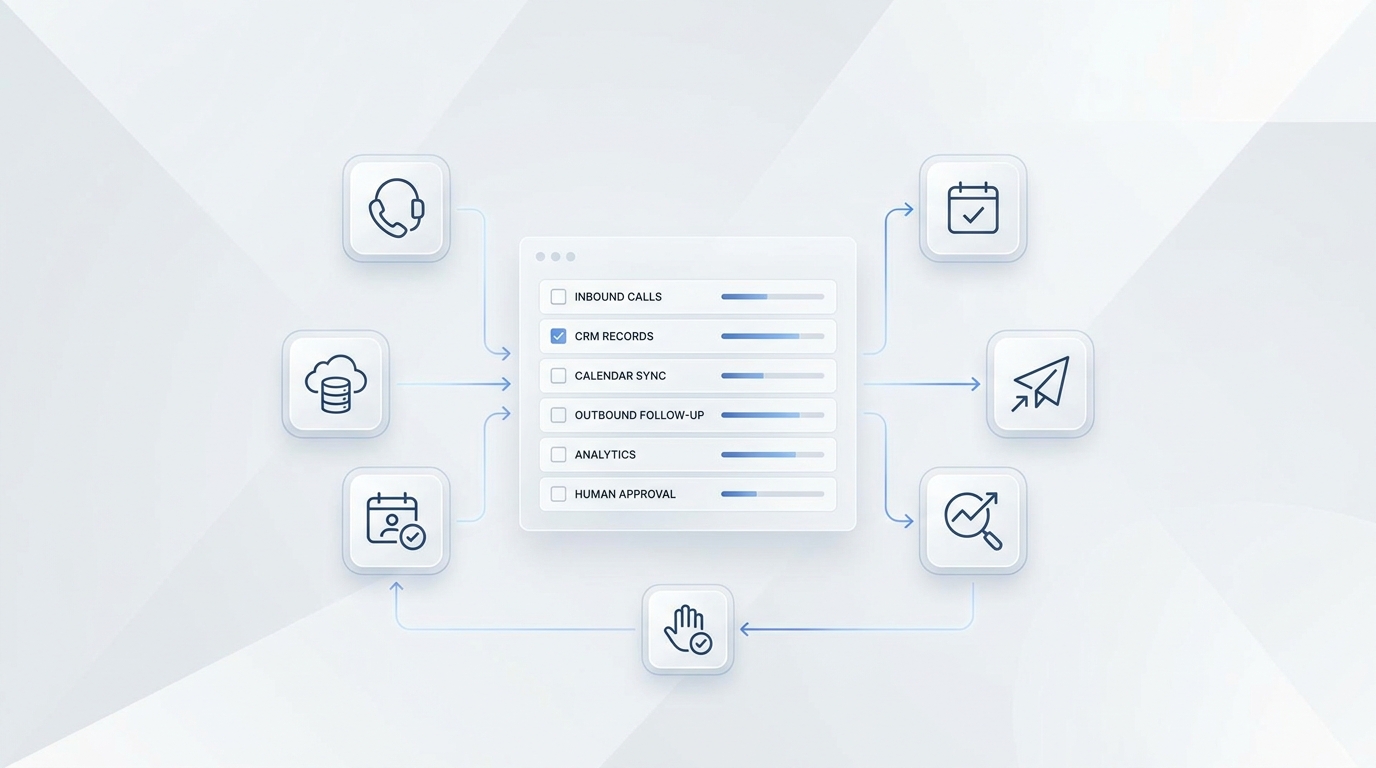
Document what happens when interest arrives outside normal hours or while the team is busy. Options may include an on-call owner, an answering workflow, an automated acknowledgment, or an AI receptionist configured with approved business information.
For businesses that depend on calls, Solvea's AI receptionist can provide a response layer for missed and after-hours inquiries. The workflow still needs clear escalation rules and an owner for qualified follow-up.
Layer 3 completion check
- [ ] Every response type has an owner.
- [ ] Response windows are defined.
- [ ] Common answers use approved information.
- [ ] Handoffs retain customer context.
- [ ] After-hours and overflow coverage are active.
Layer 4: lead routing
A successful distribution system does not end at a click. It routes interest into a next step that matches the customer's intent.
16. Every campaign has one primary conversion
Choose the main action: call, book, request a quote, start a trial, download a resource, or reply. Secondary actions can exist, but the team should agree on the primary outcome.
17. Routing matches intent
A person asking an urgent service question should not enter the same path as someone downloading a general guide. Route high-intent requests to a person or booking flow; route educational interest to an appropriate follow-up sequence.
18. Required lead details are captured
Collect only the information needed for the next step. For a service request, that may include name, contact method, location, service type, preferred time, and urgency.
19. Failed contact attempts have a recovery path
If a call is missed or a form submission cannot be reached, define the next action. A quick acknowledgment or text-back can confirm receipt and keep the conversation moving. Solvea's free missed-call text-back tool can help teams draft a practical recovery message.
20. Qualified leads reach the correct queue
Test the final destination. Confirm that sales inquiries, booking requests, support questions, and urgent cases do not land in the same undifferentiated inbox.
Layer 4 completion check
- [ ] The primary conversion is explicit.
- [ ] Routing changes with customer intent.
- [ ] Forms and scripts capture required details.
- [ ] Missed contacts trigger a recovery action.
- [ ] Qualified leads reach the correct owner or queue.
Layer 5: measurement and decisions
Measurement should help the team decide what to repeat, revise, or retire. It should not become a reporting exercise disconnected from customer outcomes.
21. Campaign naming is consistent
Use a documented naming pattern for campaign, source, medium, and content variation. Google Analytics supports campaign URL parameters for identifying campaign traffic; review the current guidance on custom campaign URLs.
22. Tagged links resolve correctly
Open every tagged URL before publication. Confirm that the destination loads and that the parameters do not break redirects, language selection, or booking flows.
23. Business outcomes are tracked separately from traffic
Record distribution activity such as posts and sends, attention metrics such as visits and engagement, and business outcomes such as qualified calls, bookings, trials, or purchases. Do not treat these as interchangeable.
24. Search and onsite behavior can be reviewed together
Search Console and Google Analytics answer different questions. Search Console shows how a page performs in Google Search, while Analytics shows what visitors do on the site. Google's documentation explains how the tools can be used together for a broader view of discovery and behavior. See Search Console and Google Analytics data.
25. A decision owner runs the weekly review
Choose one person to lead a short review. For each channel and asset, make one decision:
- Repeat: the workflow produced useful attention or business outcomes;
- Revise: the topic or channel has potential, but the message, route, or response process needs improvement;
- Retire: the channel repeatedly consumes effort without producing a useful signal.
Layer 5 completion check
- [ ] Campaign names and tags follow one standard.
- [ ] Tagged links were tested after publication.
- [ ] Traffic and business outcomes are reported separately.
- [ ] Search and onsite behavior have defined review sources.
- [ ] A named owner makes weekly decisions.
Copyable content distribution QA scorecard
Use this compact scorecard in a spreadsheet or project board:
| Layer | Checks | Pass | Needs work | Blocked | Owner | Fix date |
|---|---|---|---|---|---|---|
| Source integrity | 5 | |||||
| Channel execution | 5 | |||||
| Response ownership | 5 | |||||
| Lead routing | 5 | |||||
| Measurement | 5 | |||||
| Total | 25 |
Add one evidence link beside each pass—for example, the live URL, routing screenshot, campaign record, response guide, or analytics report. Evidence keeps the scorecard operational and makes future handoffs easier.
Three failure patterns to fix before scaling
Distribution without response capacity
The team increases reach but has no coverage for comments, messages, or calls. Fix ownership and after-hours handling before increasing volume.
Traffic without a routed next step
Visitors arrive, but the page has several competing calls to action or sends every inquiry to a shared inbox. Choose a primary conversion and route by intent.
Reporting without decisions
The dashboard grows, but nobody changes the plan. End every review with a repeat, revise, or retire decision and a named owner.
Your AI Receptionist, Live in Minutes.
Scale your front desk with an AI that never sleeps. Solvea handles unlimited multi-channel inquiries, books appointments into your calendar automatically, and ensures zero missed opportunities around the clock.
Your next step
Run this checklist against one live campaign, not a hypothetical workflow. Mark every item pass, needs work, or blocked. Fix the blocked conversion and response items first, then run the same test again before adding channels or publishing volume.
If missed and after-hours calls are the weakest part of the system, test Solvea with a live AI receptionist demo and evaluate whether the configured workflow can answer common questions, collect the right details, and route the next step.
A reliable content distribution system is not defined by how many places receive the content. It is defined by whether the right customer can discover it, respond, reach the correct next step, and receive timely follow-up—and whether your team can learn from the result.