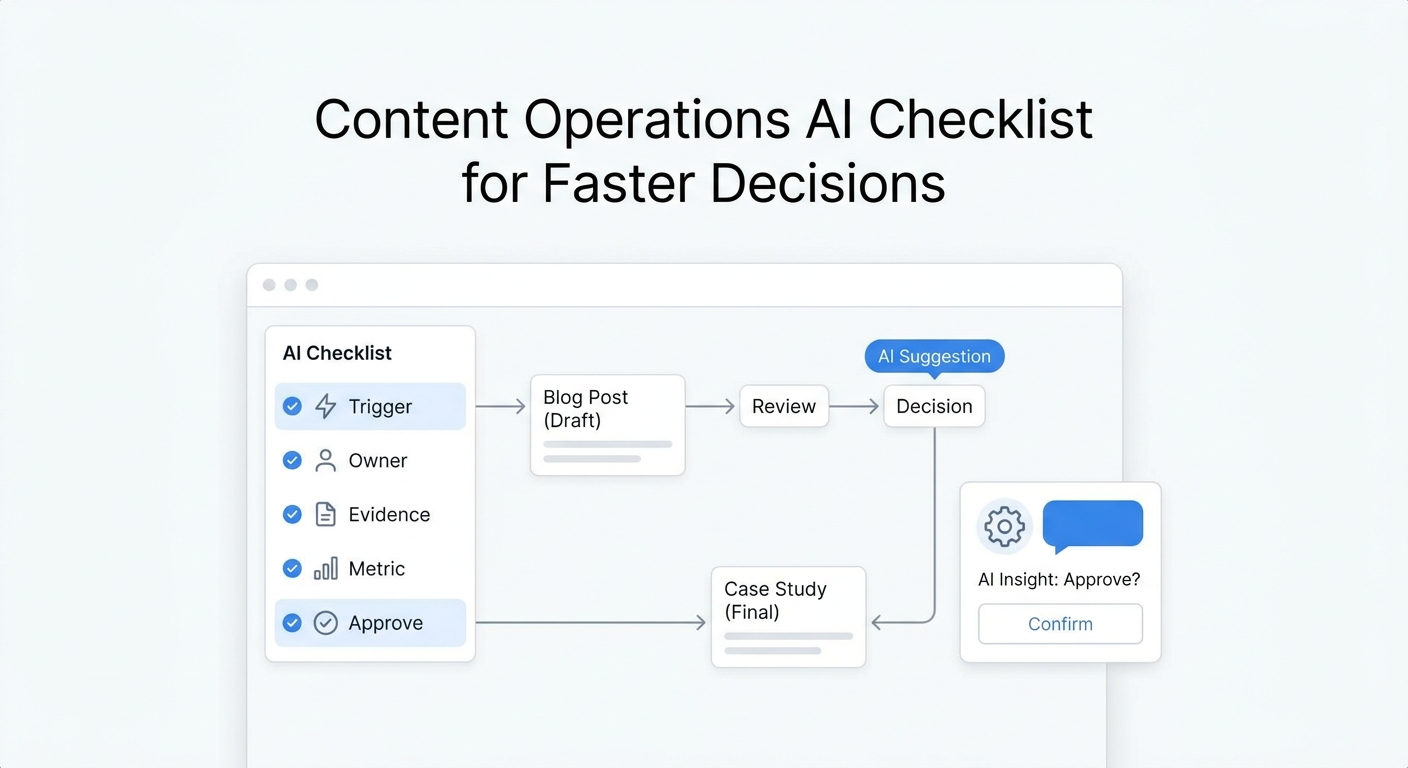
B2B growth automation is the practice of using software, data, and AI agents to move qualified business prospects through repeatable growth workflows with less manual delay. It usually connects several jobs that used to sit in separate tools: lead capture, qualification, routing, follow-up, booking, CRM updates, handoff reminders, and performance review.
That definition matters because most teams do not fail at growth because one form is missing or one email is late. They fail because the handoffs between demand, sales, service, and customer records are inconsistent. A prospect fills out a form, calls after hours, replies to an SMS, asks a pricing question, or requests a booking. If the team has to notice, interpret, assign, chase, and log every step manually, good leads leak out of the system.
This guide explains what B2B growth automation includes, when it matters, when it creates risk, and how to choose the first workflow without turning your go-to-market process into a fragile stack of disconnected triggers.
B2B growth automation in plain English
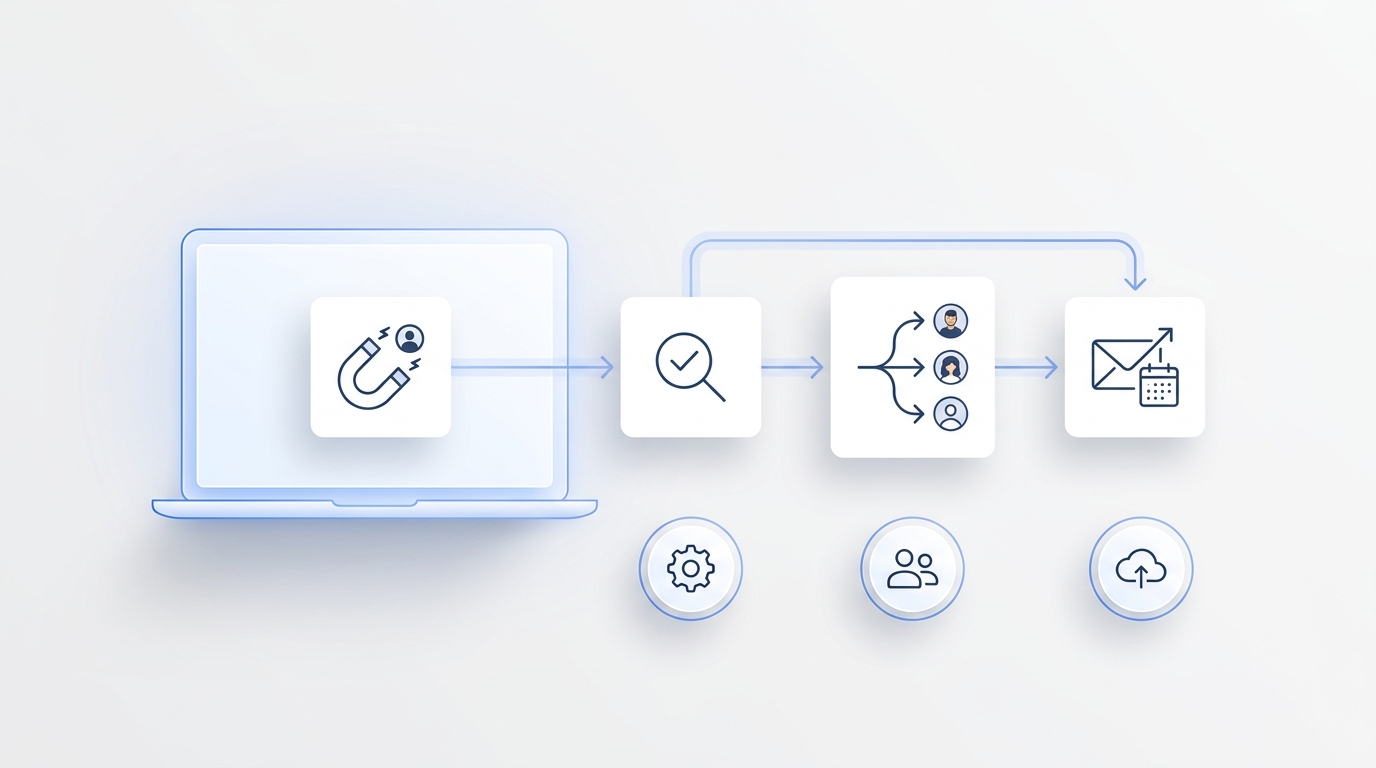
At its best, B2B growth automation turns a clear growth process into a reliable operating loop.
The loop looks like this:
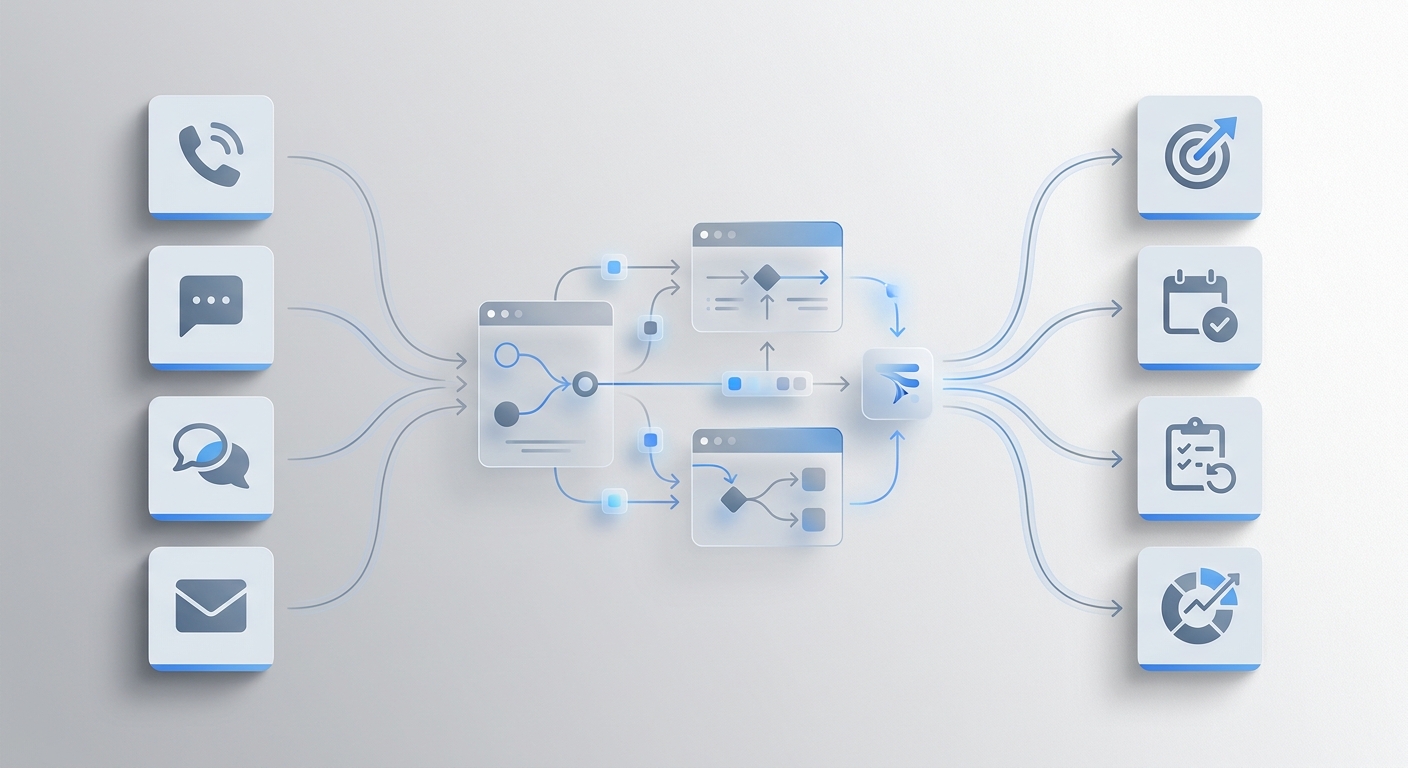
- A prospect enters through a call, form, chat, email, SMS, ad, marketplace listing, referral, or outbound reply.
- The system captures the context: source, company, need, urgency, contact details, conversation history, and next best action.
- Automation or an AI agent asks the right questions, scores the lead, books the next step, or routes the request.
- The record is updated in the CRM, calendar, inbox, or customer system.
- A human receives a clean handoff when judgment, negotiation, approval, or relationship context is needed.
- The team reviews outcomes and improves the workflow.
The important word is "workflow." A single autoresponder is not enough. A spreadsheet zap is not enough. B2B growth automation matters when the work spans several steps and the business outcome depends on all of them happening in the right order.
For a more basic first-workflow setup, read the GTM automation beginner guide. This article focuses on the broader question: when is the business ready for B2B growth automation, and where should it start?
What B2B growth automation usually includes
Most growth automation systems combine pieces from four familiar categories.
| Layer | What it does | Example workflow |
|---|---|---|
| Lead capture | Collects inbound demand from calls, forms, chat, email, SMS, events, directories, or campaigns | A service inquiry becomes a contact with source, message, and requested service |
| Qualification | Screens for fit, urgency, budget, location, company type, service need, or buying stage | A lead is scored and routed only if it matches the team's criteria |
| Follow-up and booking | Sends the next message, books a meeting, confirms a time, or asks for missing information | A qualified prospect is offered available appointment times during the same conversation |
| System updates | Writes the result to the CRM, calendar, helpdesk, spreadsheet, or inbox | The team sees the full conversation and the next owner without retyping notes |
Marketing automation, sales automation, CRM automation, and business process automation all overlap here. Public software categories often describe these pieces separately, but the operational problem is usually connected: the business needs a lead-to-outcome workflow that does not depend on a person remembering every next step.
That is why B2B growth automation is especially useful for teams with high-intent inbound demand. When someone calls, texts, chats, or asks to book, speed and context matter more than a generic nurture sequence.
When B2B growth automation matters
B2B growth automation matters when manual work is slowing down a measurable growth outcome. Use these signals before buying a tool.
| Signal | What it means | Automation opportunity |
|---|---|---|
| Leads arrive through several channels | Calls, forms, email, chat, SMS, and social messages are handled in different places | Centralize capture and create one owner path |
| Good leads wait too long | The prospect is ready now, but the team responds later | Use instant qualification, booking, or routing |
| Reps spend time on poor-fit inquiries | Discovery calls repeat basic screening questions | Automate budget, need, location, and timing checks |
| Customer records are incomplete | Conversations happen, but the CRM does not reflect what was said | Log summaries, outcomes, and next steps automatically |
| Follow-up quality depends on one person | Leads get different answers based on who notices the message | Standardize scripts, handoffs, and reminders |
| After-hours demand is meaningful | Prospects contact the business when the team is offline | Capture, qualify, and schedule before the next business day |
| Growth work cannot be measured | The team sees activity but not qualified outcomes | Track completion, conversion, handoff quality, and cost per outcome |
The common pattern is not "we want AI." It is "we have a repeatable growth motion, and manual coordination is now the bottleneck."
When it does not matter yet
Automation is not a cure for an unclear growth process. It can make a confused process faster, louder, and harder to repair.
Wait before investing in B2B growth automation when:
- the team cannot describe what makes a lead qualified;
- the offer, market, or target account profile changes every week;
- there is not enough lead volume to justify workflow setup;
- no one owns the CRM, inbox, calendar, or customer record;
- the next step after qualification is still unclear;
- the team has no baseline for response time, lead quality, booking rate, or conversion;
- every case requires human judgment, negotiation, or custom scoping.
In those cases, start with process clarity. Map the current path from first contact to booked meeting, quote, demo, or paid customer. Name the owner, decision rules, required data, and handoff points. Once the team can describe the workflow, automation has something solid to run.
The first workflow should be narrow
The best first B2B growth automation workflow is not the broadest one. It is the one with high volume, clear rules, visible leakage, and a measurable outcome.
Good first workflows include:
- missed-call text-back and lead capture;
- inbound lead qualification;
- appointment booking for qualified prospects;
- demo request routing;
- post-inquiry follow-up;
- quote-request intake;
- event or webinar lead routing;
- abandoned booking recovery;
- CRM cleanup after customer conversations.
Avoid starting with a workflow that touches every team, every product line, and every exception. A narrow workflow gives you a clean pilot. It also makes it easier to see whether the automation improved a business result instead of only creating more activity.
If your first bottleneck is inbound qualification, Solvea's AI lead qualification workflow is a useful model: define the qualification criteria, connect CRM and booking tools, screen inbound calls and SMS, route qualified leads, and log the outcome. That is B2B growth automation at the workflow level, not just at the message level.
A practical readiness checklist
Before you automate, answer these questions.
| Question | Ready signal | Risk signal |
|---|---|---|
| What is the trigger? | A clear event starts the workflow | The workflow starts whenever someone remembers |
| What is the desired outcome? | A qualified meeting, booked appointment, routed request, or clean CRM update | The goal is "more automation" or "faster responses" without a business result |
| What data is required? | The fields and systems are known | The team discovers missing data during handoff |
| What should the system ask? | Qualification criteria are written down | Every rep screens differently |
| What can be automated safely? | Routine actions and low-risk decisions are defined | The agent is expected to handle sensitive or ambiguous cases alone |
| When does a human take over? | Escalation rules, owner, and response expectation are clear | Exceptions go to a shared inbox nobody monitors |
| How will success be measured? | Baseline and weekly scorecard exist | The team only counts messages sent or tasks completed |
If you cannot complete the checklist, do not start by comparing B2B growth automation tools. Start by tightening the process.
The operating model: agent, automation, and human
Most teams need three kinds of work in the same system.
Simple automation handles predictable steps: create a record, send a reminder, update a field, assign a task, notify an owner.
An AI agent handles flexible conversation: ask qualifying questions, summarize a call, interpret a request, adapt a response, or guide a prospect through scheduling.
A human handles judgment: sensitive complaints, unusual pricing, complex negotiations, exceptions, approvals, and relationship-heavy moments.
The strongest B2B growth automation designs do not try to remove people from every step. They make the human handoff cleaner. The agent or automation gathers context, completes routine work, and escalates the moments that deserve attention.
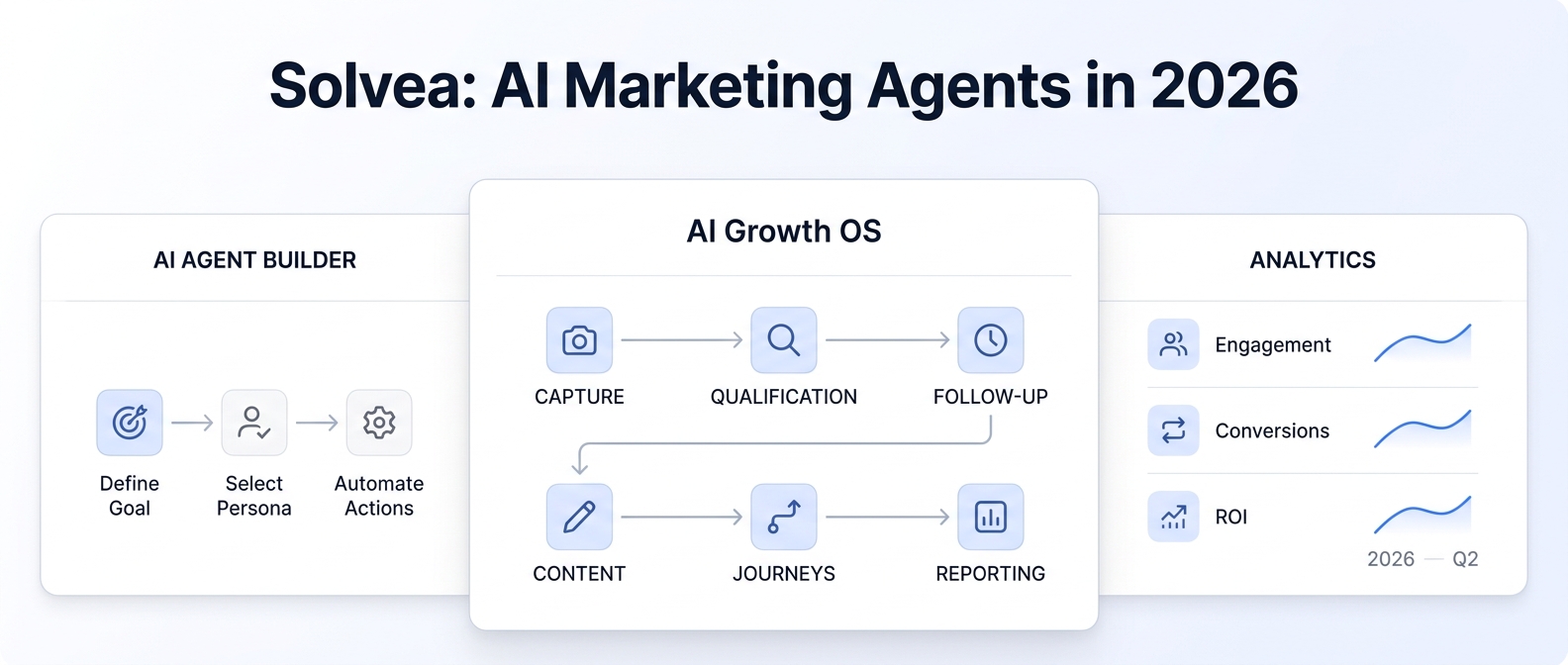
For customer-facing workflows, this is where Solvea's product direction is relevant. Solvea combines AI answering, calls, SMS, email, live chat, customer history, and team follow-up across mobile and PC. Its AI Agent Builder is designed around plain-language setup, industry templates, live preview, tone controls, business hours, after-hours behavior, and escalation rules. Its integrations connect calendars, CRMs, support tools, Shopify, Google Sheets, WhatsApp, LINE, email, and live chat so the agent can work from current business context instead of isolated scripts.
What to measure after launch
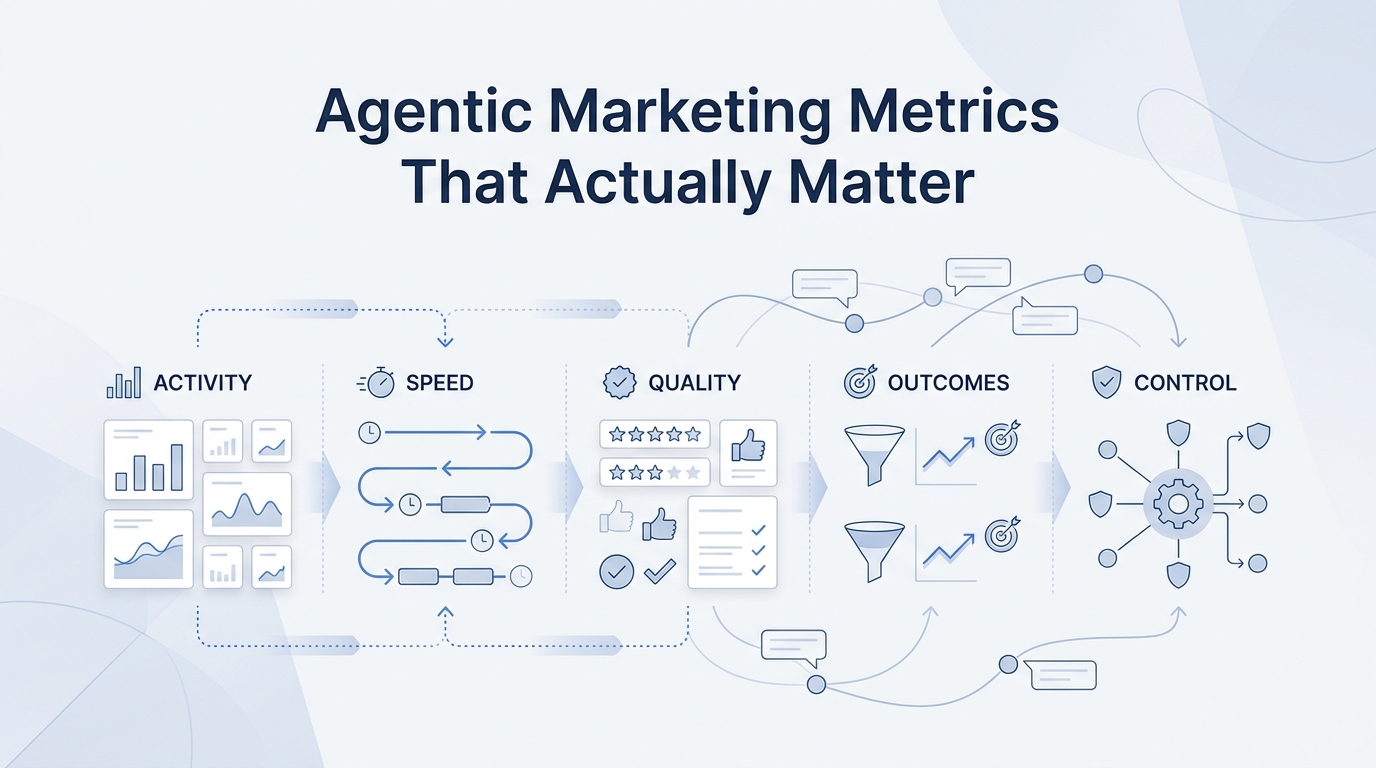
Do not judge B2B growth automation by automation rate alone. A workflow can automate many steps and still create poor outcomes if it qualifies the wrong leads, books the wrong meetings, or loses context during handoff.
Track these metrics weekly during the first 30 to 90 days:
| Metric | Why it matters |
|---|---|
| Eligible volume | Shows whether the workflow has enough demand to matter |
| Response speed | Shows whether the first delay was actually removed |
| Qualification completion rate | Shows whether prospects finish the screening path |
| Qualified outcome count | Measures meetings, bookings, routed leads, or accepted opportunities |
| Human touches per outcome | Reveals hidden cleanup work |
| Failed handoffs | Shows whether ownership is clear |
| CRM or system update accuracy | Shows whether records can be trusted |
| Cost per qualified outcome | Connects automation spend to business value |
| Exception categories | Shows what to fix before scaling |
This connects directly to the operating discipline in the agent workflow management cost and ROI guide: a workflow has to prove its value with completed outcomes, cost, human effort, and risk controls.
Common mistakes
Automating before defining qualification
If the team cannot explain what makes a lead worth pursuing, the workflow will route too many bad leads or reject good ones. Write the qualification rules first.
Optimizing for activity instead of outcomes
More emails, calls, tasks, or chatbot conversations are not the goal. The goal is more qualified meetings, cleaner handoffs, faster bookings, or better conversion at an acceptable cost.
Letting every tool own part of the truth
Growth automation breaks when the CRM, inbox, calendar, spreadsheet, and support tool disagree. Name the source of truth before launch.
Forgetting the human review path
The system should know when to stop. A clear escalation rule protects customers, prospects, and the team.
Scaling the pilot too early
Do not add channels, locations, products, or languages before the first workflow is stable. Fix handoffs, knowledge gaps, and measurement first.
B2B growth automation tools: what to compare
When you evaluate B2B growth automation tools, compare the workflow rather than the feature list.
Ask every vendor:
- Which trigger starts the workflow?
- Which channels can the system capture?
- What data can the system read and write?
- How does lead qualification work?
- Can the system book, route, follow up, and update records in one flow?
- How are uncertain cases escalated?
- Can the team inspect conversations, decisions, and outcomes?
- What setup requires a developer or operations specialist?
- What happens when an integration fails?
- How does pricing change with volume, channels, messages, minutes, or seats?
- Which metrics are available without custom reporting?
- Can you run a narrow pilot before expanding?
If you are already comparing AI-first platforms, use the broader AI growth agents comparison and alternatives to understand different operating models. For this article, the key buying rule is simpler: choose the tool that can own the full first workflow you actually need, not the tool with the longest menu of possible automations.
A 30-day pilot plan
Use a short pilot to prove whether B2B growth automation matters for your business.
| Window | Work to complete | Decision |
|---|---|---|
| Days 1-5 | Pick one workflow, document the baseline, define the outcome, and assign an owner | Is the problem clear enough to automate? |
| Days 6-10 | Define qualification rules, handoffs, source of truth, and required integrations | Is the workflow safe enough to configure? |
| Days 11-15 | Build the flow, test common cases, test exceptions, and review transcripts or logs | Is the workflow ready for limited traffic? |
| Days 16-25 | Run on a narrow channel, location, or segment; review exceptions daily | Is the workflow improving completed outcomes? |
| Days 26-30 | Compare results against baseline: speed, qualified outcomes, human touches, errors, and cost | Stop, fix, hold, or expand |
The pilot should end with a decision, not a vague sense that the software is promising. If the workflow produced qualified outcomes with fewer delays and manageable handoffs, expand carefully. If it created cleanup work or unclear ownership, fix the workflow before adding more automation.
So, when does B2B growth automation matter?
B2B growth automation matters when growth demand already exists and the business is losing momentum in the handoffs: slow response, inconsistent qualification, missed after-hours inquiries, weak follow-up, incomplete records, or unclear ownership.
It matters less when the offer, audience, process, and success metrics are still unstable. In that stage, the best investment is process definition, not more automation.
Start with one workflow that has a clear trigger, a measurable outcome, a named owner, and a safe human handoff. Then use automation and AI agents to remove delay, capture context, and make the next step happen consistently.
If inbound calls, messages, lead qualification, and booking are where your growth process leaks, explore Solvea's AI receptionist, AI lead qualification, and AI Agent Builder. Those workflows show where B2B growth automation becomes practical: not as a slogan, but as a repeatable path from first contact to qualified follow-up.
Your AI Receptionist, Live in Minutes.
Scale your front desk with an AI that never sleeps. Solvea handles unlimited multi-channel inquiries, books appointments into your calendar automatically, and ensures zero missed opportunities around the clock.