Retail support automation case study research gets useful when it stops asking whether AI can answer customers and starts asking what happened inside real retail support teams.
For retail and ecommerce leaders, the proof has to be specific. Which questions did automation handle? Which channels were involved? What happened to agent workload, accuracy, response speed, customer satisfaction, and human handoff? A generic AI chatbot story is not enough when your team is dealing with warranty checks, order status, logistics issues, product questions, marketplace messages, and multilingual customers.
This retail support automation case study guide starts with Anker and Dreame because they show two different proof patterns: global electronics support at scale and multilingual smart-home service. Then it adds Z Gallerie, Amerlife, and Aosom so buyers can compare support automation by problem, channel, and metric before starting a Solvea pilot.
Quick Answer: What Do Anker and Dreame Prove?
Anker proves that retail support automation can reduce multi-system workload in a global electronics support operation. The current Solvea customer story reports that Solvea handles more than 70% of Anker's customer service work, saves 150+ agent hours per week, helped increase Net Promoter Score by 20 points, and supports a team that handles more than 2 million tickets per year.
Dreame proves that retail support automation can support multilingual, product-specific service. The current Dreame story reports a 43% AI involvement rate, an 80% AI accuracy rate, and coverage across 8+ languages.
That is the core buyer lesson: a retail support automation case study should not be judged by one headline number. It should show the customer context, the workflow, the channels, the AI role, the human role, and the metric type.
| Customer | Retail Pattern | Verified Proof To Inspect |
|---|---|---|
| Anker | Global consumer electronics support | 70%+ customer service work handled by Solvea, 150+ agent hours saved weekly, 20-point NPS increase, 92% of inquiries resolved within five message exchanges, 95% message response rate |
| Dreame | Multilingual smart-home support | 43% AI involvement rate, 80% AI accuracy rate, 8+ languages covered |
| Z Gallerie | Large-item furniture service | 63% AI response rate, 60% faster service efficiency, 40% higher customer satisfaction, accuracy above 85% |
| Amerlife | Marketplace-heavy furniture retail | 85%+ accuracy, 40% AI response rate, 3.6 FTE workload saved |
| Aosom | Ecommerce logistics support | 50%+ logistics inquiries resolved by AI, modular knowledge system |
Why Retail Support Automation Needs Better Proof
Retail support is not one workflow. A shopper may ask a pre-purchase sizing question in chat, send an order-status email, call about a warranty issue, ask for a return over a marketplace channel, then expect the next agent to know the full history.
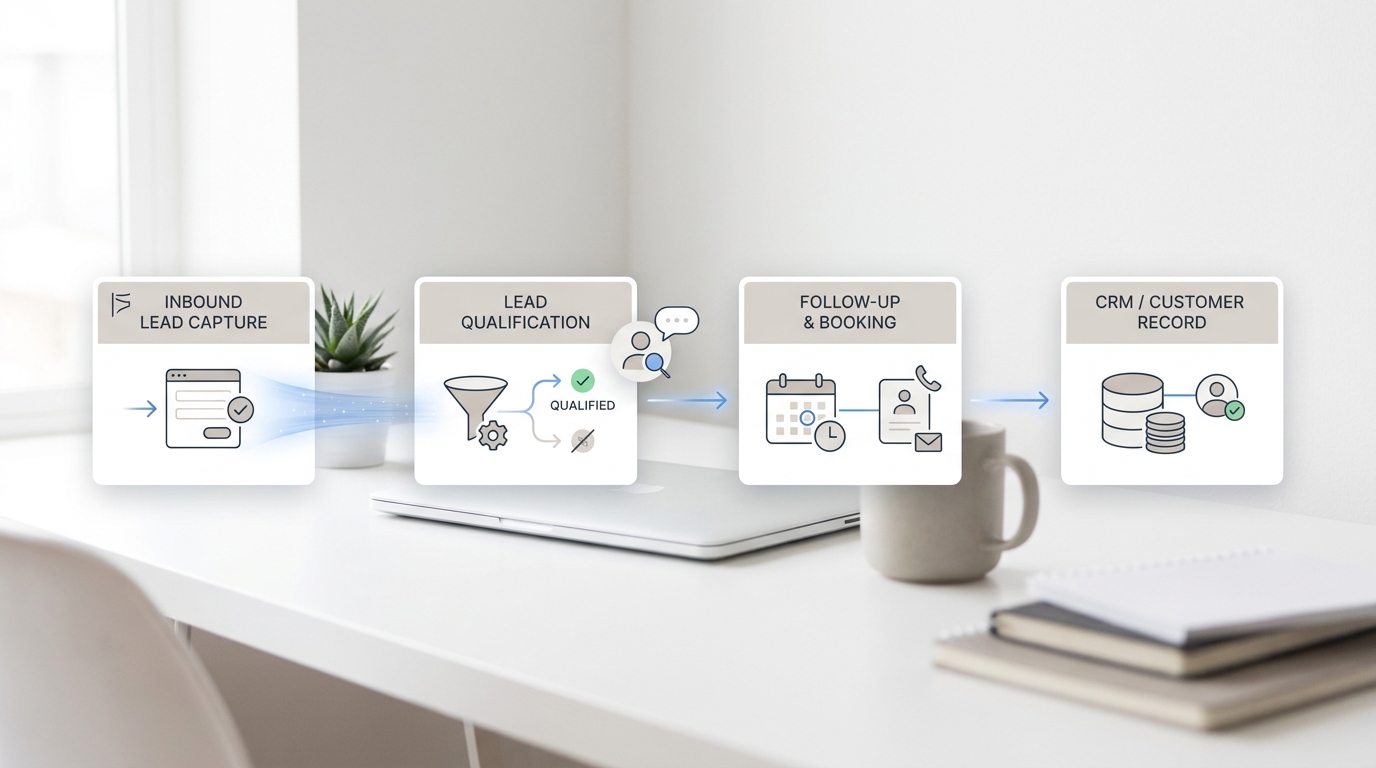
That is why retail support automation case study pages need to show operational detail. The buyer needs to know whether automation is only answering FAQs or whether it is part of a real support workflow: reading approved knowledge, recognizing intent, using connected tools, creating reviewable tickets, and escalating when a person is needed.
Solvea's current agent documentation describes AI agents that understand customer intent, retrieve knowledge from the Knowledge Base, use connected tools and channels, execute workflows, and escalate to a human agent when needed. Its inbox documentation describes tickets as structured records with conversation history, handling process, and final outcome. That combination matters in retail because the support problem is rarely just "answer faster." It is "answer accurately, keep context, and hand off cleanly."
Case Study 1: Anker and Global Support Scale
Anker is the strongest starting retail support automation case study when the buying team cares about global ticket volume, multi-system work, and agent workload.
The current Anker customer story describes a consumer electronics operation serving more than 100 million users across 100+ countries. It also describes a support team of more than 300 agents handling more than 2 million tickets per year. Before Solvea, a single inquiry could require checking order records, tags, warranty status, logistics data, financial documentation, after-sales processes, and quality investigations.
That problem matters because it is where many retail automation projects fail. If the AI only drafts a generic response while the agent still has to switch between every system, the workflow stays slow. Anker's story says Solvea integrated email, chat, marketplaces, and social media into a centralized interface and reduced average handling time from more than 30 minutes to 5 minutes.
The metric set is unusually useful for buyers:
| Anker Proof Point | What It Helps A Buyer Evaluate |
|---|---|
| 70%+ of customer service work handled by Solvea | Whether automation can take meaningful repetitive workload, not just assist agents |
| 150+ agent hours saved per week | Whether the workflow changes staffing pressure |
| 20-point NPS increase | Whether support changes were tied to customer experience, not only cost |
| 92% of inquiries resolved within five message exchanges | Whether resolution quality and speed improved together |
| 95% overall message response rates | Whether the team maintained coverage across high volume |
The practical lesson from Anker is that a retail support automation case study should show what happens after the first answer. Buyers should ask whether the AI can classify cases, draft or route replies, retrieve approved context, preserve a record, and know when staff should step in.
Case Study 2: Dreame and Multilingual Product Support
Dreame is a useful second retail support automation case study because its proof is not only about volume. It is about accuracy and multilingual service for smart-home products.
The current Solvea Dreame story reports a 43% AI involvement rate, 80% AI accuracy rate, and support across more than 8 languages. Those numbers help a buyer inspect a different question: can automation stay useful when product questions are detailed, customers are global, and answers need to be consistent across regions?
Dreame also helps clarify metric definitions. "AI involvement rate" is not the same as "AI response rate" or "resolution rate." In a retail evaluation, that distinction matters. A workflow may involve AI in drafting, classifying, routing, summarizing, or answering. Each role should be measured differently.
Use Dreame's proof if your support operation has:
- Product-specific questions that require approved knowledge.
- Customers across languages and time zones.
- A need to scale coverage without letting answer quality drift.
- A human support team that still needs visibility into AI-handled conversations.
The lesson from Dreame is that retail support automation should be reviewed for accuracy and coverage, not just deflection. A fast wrong answer creates more work than no automation at all.
What Z Gallerie, Amerlife, and Aosom Add
Anker and Dreame are enough to prove that retail support automation can work in electronics and smart-home contexts. But retail leaders often need a closer match to their own queue. That is where Z Gallerie, Amerlife, and Aosom help.
Z Gallerie: Large-Item Retail And After-Sales Pressure
Z Gallerie's current customer story is relevant when logistics, damaged goods, returns, installation, and after-sales support dominate the queue. The story reports a 63% AI response rate, accuracy above 85%, a 60% improvement in service efficiency, and a 40% increase in customer satisfaction within six months of launch.
This proof is useful because large-item retail is not a simple FAQ environment. Customers need help with delivery timing, missing parts, damaged items, return coordination, and policy questions. The retail support automation case study value is not only that AI answered more questions. It is that standardized questions were automated while agents could move toward exceptions and high-value cases.
Amerlife: Marketplace Support And After-Hours Coverage
Amerlife's current customer story reports more than 85% accuracy, a 40% AI response rate, and more than 3.6 full-time-agent workload saved. The story also emphasizes after-hours and multilingual scenarios.
This is useful for retail teams selling through multiple marketplaces or regions. Those teams often need support coverage when staff are not available, but they cannot let automation invent policy answers. Amerlife's proof should push buyers to ask about approved knowledge, quality monitoring, and dashboard visibility.
Aosom: Logistics Tickets As The First Automation Wedge
Aosom is the most logistics-focused example. Its current story reports that more than half of logistics-related tickets were resolved automatically and that a modular knowledge system supported the workflow.
This matters because many retail teams should not start automation with every support category. They should start with the largest repeatable queue. For some teams that is order tracking. For others it is returns, warranty, appointment scheduling, product fit, or post-purchase setup. Aosom shows how a focused logistics workflow can be a practical first step.
The Buyer Scorecard For Any Retail Support Automation Case Study
Use this scorecard before you compare vendors or demos:
| Scorecard Field | What Good Proof Looks Like |
|---|---|
| Industry match | The story resembles your business model: electronics, smart home, furniture, marketplace, DTC, or large-item retail |
| Queue match | The bottleneck is named: logistics, warranty, order status, returns, product questions, multilingual support, or after-hours coverage |
| Channel match | The story says where customers contacted support: phone, email, live chat, marketplace, social, SMS, or helpdesk |
| AI role | The AI answers, drafts, routes, summarizes, retrieves data, or escalates in a defined way |
| Human role | The story shows what staff still review or resolve |
| Metric type | The metric is labeled as response rate, involvement rate, accuracy, resolution, hours saved, FTE saved, CSAT, or NPS |
| Source quality | The number appears on a current customer story, product page, report, screenshot, or approved source |
| Trust review | The workflow can be reviewed for data access, retention, integrations, human controls, and security scope |
This scorecard keeps the evaluation grounded. A high automation percentage is only useful if you know what was automated and what happened to the customer experience.
How Solvea Fits Retail And Ecommerce Workflows
Solvea's retail solution positions the product around pre-purchase questions, post-purchase support, product recommendations, order and shipping data, live chat, email, phone, and helpdesk connections. The current docs support the operational shape behind that positioning:
- Agents retrieve approved knowledge and execute workflows.
- The Knowledge Base acts as the agent's brain for accurate, context-aware responses.
- Inbox tickets preserve customer history, handling process, and outcome.
- Phone, live chat, and email can create or merge tickets.
- Staff can review AI-handled interactions and continue work that needs follow-up.
That matters for a retail support automation case study because the buyer is not purchasing isolated AI answers. The buyer is purchasing a support system that should turn customer contact into a traceable next step.
What To Ask In A Retail Automation Demo
Once a customer story looks relevant, use it to shape the demo agenda:
- Which exact customer questions did the AI handle?
- Which questions did the AI escalate to people?
- Which channels were live at launch?
- What knowledge sources were uploaded or synced?
- How are product, order, logistics, policy, and warranty answers kept current?
- What appears in the ticket record after an AI-handled interaction?
- Can staff see summaries, transcripts, recordings, owner, status, and next step?
- Which metric moved first: response rate, accuracy, resolution, hours saved, FTE saved, NPS, or satisfaction?
- How was answer quality audited after launch?
- Which proof can the vendor show from current customer-story pages, screenshots, or reports?
These questions turn a retail support automation case study into an implementation plan.
Trust And Pricing Guardrails
For any support automation workflow, review trust evidence before rollout. Customer conversations may include names, phone numbers, email addresses, order details, support history, call recordings, transcripts, internal notes, and connected workflow actions. Solvea's AI receptionist SOC 2 and ISO 27001 checklist is a useful companion because it frames security review around scope, data flows, integrations, retention, access controls, and AI risk controls rather than badge language alone.
Pricing should also be checked on current Solvea pricing and docs pages before buying. Current public pricing surfaces differ, so this article intentionally links to pricing instead of repeating plan, credit, or promotional claims that may change.
Which Story Should You Read First?
Start with the story closest to your queue:
- Read Anker if global volume, multi-system work, and agent hours are the core problem.
- Read Dreame if multilingual product support and accuracy are the core problem.
- Read Z Gallerie if large-item logistics and after-sales service are the core problem.
- Read Amerlife if marketplace coverage, after-hours support, and multilingual scenarios are the core problem.
- Read Aosom if logistics inquiries are the first automation target.
Then compare the relevant story with the customer stories hub, the retail solution, the Customer Success blog, and current pricing.
See the retail proof, then start free with the support problem you want Solvea to handle first.
Your AI Receptionist, Live in Minutes.
Scale your front desk with an AI that never sleeps. Solvea handles unlimited multi-channel inquiries, books appointments into your calendar automatically, and ensures zero missed opportunities around the clock.
FAQ
What is a retail support automation case study?
A retail support automation case study is a customer story that shows how automation handled retail or ecommerce support work. A useful case study names the customer context, support problem, channels, AI role, human handoff, and verified metrics.
Which Solvea retail support automation case study should I read first?
Read Anker first if your team has global ticket volume and multi-system support work. Read Dreame first if multilingual product support and answer accuracy are your main concerns. Read Z Gallerie, Amerlife, or Aosom if your queue is closer to furniture, marketplace, or logistics support.
What metrics matter in a retail support automation case study?
The most useful metrics are response rate, involvement rate, accuracy rate, resolution rate, time saved, agent hours saved, FTE workload saved, NPS, and customer satisfaction. The metric should be labeled clearly because these numbers do not mean the same thing.
How should ecommerce teams evaluate support automation proof?
Ecommerce teams should map each proof point to their own queue. Check whether the case covers order status, logistics, returns, warranty, product questions, marketplace messages, live chat, email, phone, and human escalation.
Why does human handoff matter in retail automation?
Human handoff matters because retail support includes exceptions: damaged items, warranty disputes, policy exceptions, payment-adjacent requests, and complex complaints. Automation should answer from approved knowledge and route anything that needs judgment.
Does this article include current Solvea pricing claims?
No. Current public pricing surfaces differ, so this article links to the pricing page and docs rather than repeating detailed plan, credit, or promotional claims.