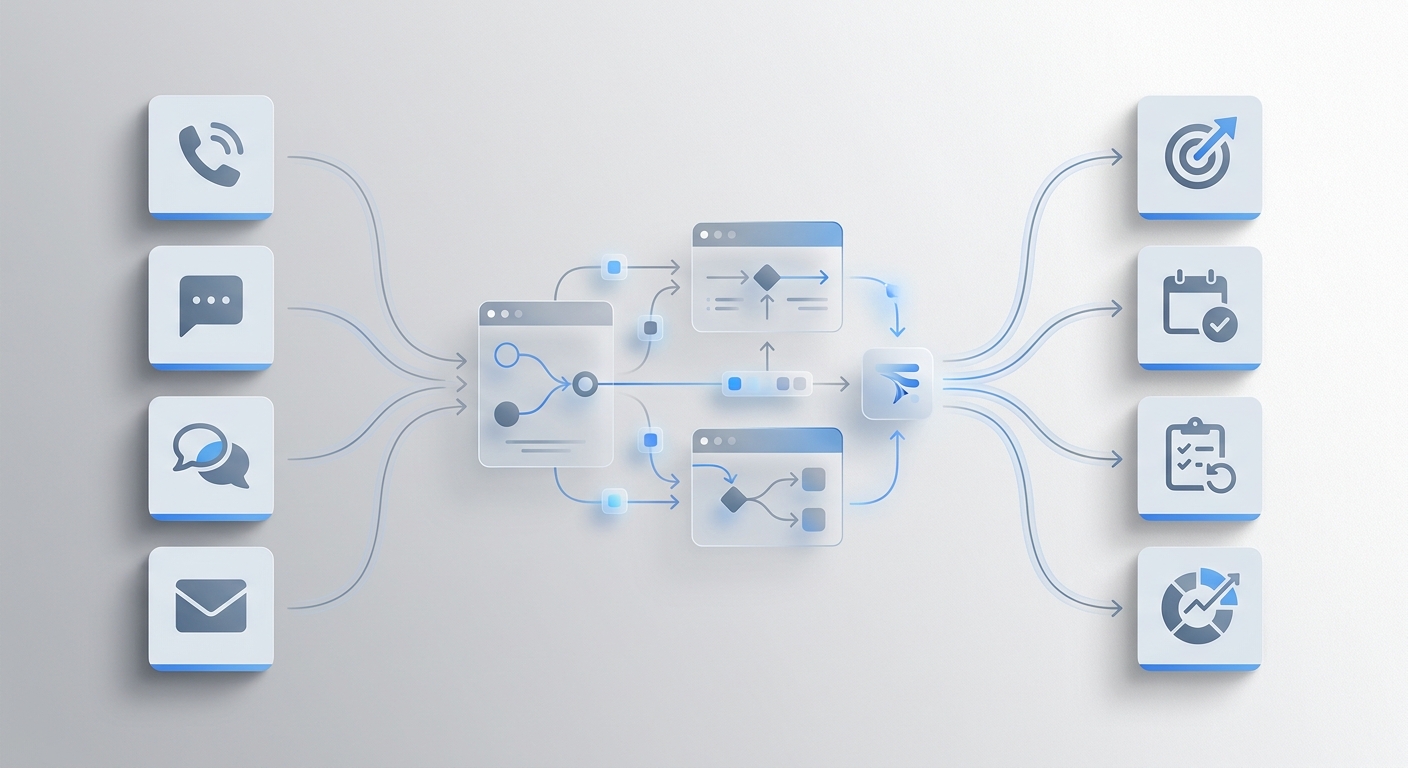
A customer calls your business and starts in Spanish. Later, they send a photo by text, confirm the appointment by email, and ask one last question through website chat. A voice-only bot may handle the first interaction. A multilingual AI receptionist should help your team manage the whole conversation.
That difference matters for service businesses. Customers do not organize their needs around one channel, one language, or one perfectly scripted call. They move between voice and messaging. They repeat themselves when context gets lost. They ask detailed questions that require approved business information. And sometimes they need a person immediately.
A useful multilingual AI receptionist therefore needs more than speech recognition and a translated voice. It needs a connected operating model for language detection, call translation, business knowledge, cross-channel context, booking, escalation, and team ownership.
This guide explains what to evaluate and how to design the workflow.
What Is a Multilingual AI Receptionist?
A multilingual AI receptionist is a customer-facing system that can receive and manage conversations in more than one language while completing front-desk tasks such as:
- answering routine questions;
- capturing caller details;
- qualifying the reason for contact;
- booking or requesting appointments;
- routing urgent or sensitive requests;
- sending confirmations and follow-up messages;
- preserving conversation history for the team.
The key phrase is manage conversations, not simply speak multiple languages.
A voice bot can generate speech in several languages and still create a poor customer experience. If it cannot use your current hours, service area, availability rules, pricing guidance, escalation policy, or prior conversation context, multilingual speech only makes the same operational gaps available in more languages.
The stronger model combines language capability with a knowledge base, a shared omnichannel inbox, configurable actions, and clear human handoffs.
Why a Multilingual Voice Bot Is Not Enough
Voice is important, but it is only one layer of the customer journey. A service team typically needs to solve five additional problems.
1. The Customer May Change Channels
A caller may not be able to describe a repair issue clearly over the phone. They may need to send a photo. A real-estate lead may call about a listing, then prefer text for the address and available viewing times. A hotel guest may ask a question by phone and expect the confirmation by email.
If each channel runs as a separate interaction, the customer has to start over. The receptionist needs access to the same conversation record across voice, SMS, email, chat, and supported messaging channels.
This is why an omnichannel inbox is not an optional add-on to multilingual service. It is how the business keeps language, intent, contact details, prior answers, and ownership together after the call ends.
2. Translation Does Not Supply Business Knowledge
Language fluency does not tell the receptionist whether your technician serves a particular ZIP code, whether a consultation requires a deposit, or whether an appointment can be moved without a fee.
Those answers should come from approved business knowledge, not improvisation. The system needs a maintained source for:
- business hours and holiday exceptions;
- locations and service areas;
- services, exclusions, and prerequisites;
- booking and cancellation rules;
- escalation instructions;
- approved pricing language;
- answers to common questions.
The receptionist should use the same source regardless of the customer’s language. That gives your team one place to update the underlying answer instead of maintaining disconnected scripts for every channel and language.
3. Some Requests Need Live Human Help
Automation should not trap a customer in a loop. Urgent calls, complaints, sensitive account questions, unclear requests, and customers who explicitly ask for a person need a defined handoff.
A practical handoff includes more than transferring the call. The teammate should receive a concise summary containing:
- the customer’s name and contact information;
- detected or selected language;
- the reason for contact;
- answers already provided;
- details collected;
- requested next step;
- urgency or escalation reason.
Without that context, the human begins the conversation by asking the customer to repeat everything. That undermines the purpose of both translation and automation.
4. The Workflow Must Complete a Next Step
A multilingual AI receptionist should do more than answer a question politely. It should help the customer reach an appropriate next step.
Depending on the business, that might be:
- booking an available appointment;
- requesting a callback window;
- collecting a property or service address;
- recording the product, room, vehicle, or service involved;
- sending directions or preparation instructions;
- creating a follow-up task for a named teammate.
This requires connections to the tools that control availability, customer records, and team follow-up. When evaluating platforms, check whether the system can connect to your calendars, CRM, spreadsheets, ecommerce tools, or other operating systems through supported integrations.
5. The Team Needs Visibility After the Conversation
Managers need to know what customers are asking, where conversations fail, which requests require human help, and whether the handoff was completed.
A voice bot that produces audio but no usable operational record creates a blind spot. A stronger receptionist keeps calls, messages, notes, summaries, and owners visible in the customer conversation history. This allows teams to review outcomes without listening to every call from beginning to end.
The Seven Capabilities to Evaluate
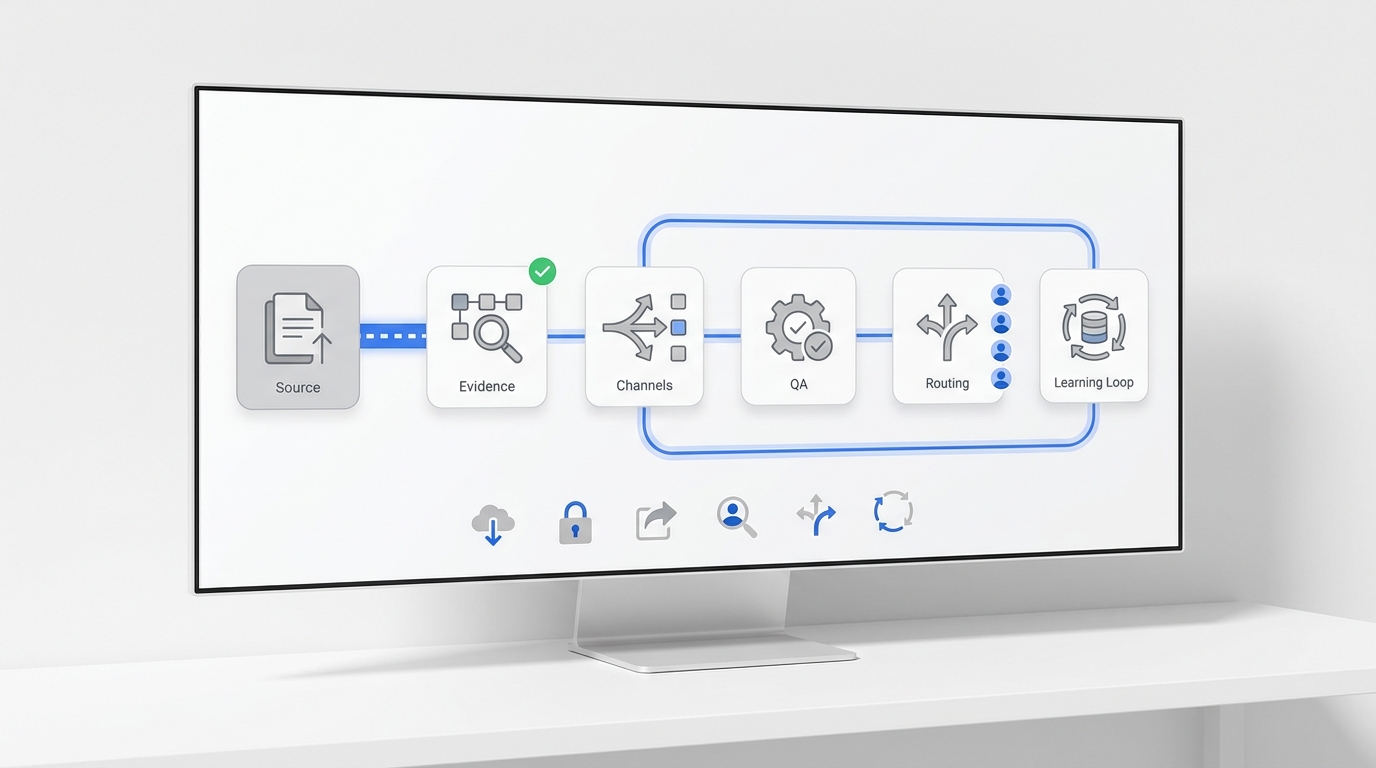
Use the following framework when comparing multilingual answering services or AI receptionist platforms.
| Capability | What to Check | Why It Matters |
|---|---|---|
| Language entry | Can the customer choose a language, or can the system detect and confirm it? | Prevents the conversation from continuing in the wrong language. |
| Call translation | Can customers and staff communicate when they do not share a language? | Supports live conversations that require human participation. |
| Knowledge grounding | Does the receptionist answer from approved business information? | Keeps answers aligned with actual policies and services. |
| Cross-channel context | Does the record continue across voice, SMS, email, chat, and messaging? | Reduces repetition and lost details. |
| Action completion | Can it book, route, collect details, and trigger follow-up? | Turns conversations into operational next steps. |
| Human handoff | Can it escalate with a useful summary and clear owner? | Protects the customer experience when automation should stop. |
| Review and analytics | Can the team inspect conversations, outcomes, and unresolved requests? | Helps improve knowledge, routing, and coverage over time. |
Do not accept a language list as proof that all seven capabilities work together. Ask for an end-to-end demonstration using a realistic customer scenario.
A Better Multilingual Reception Workflow
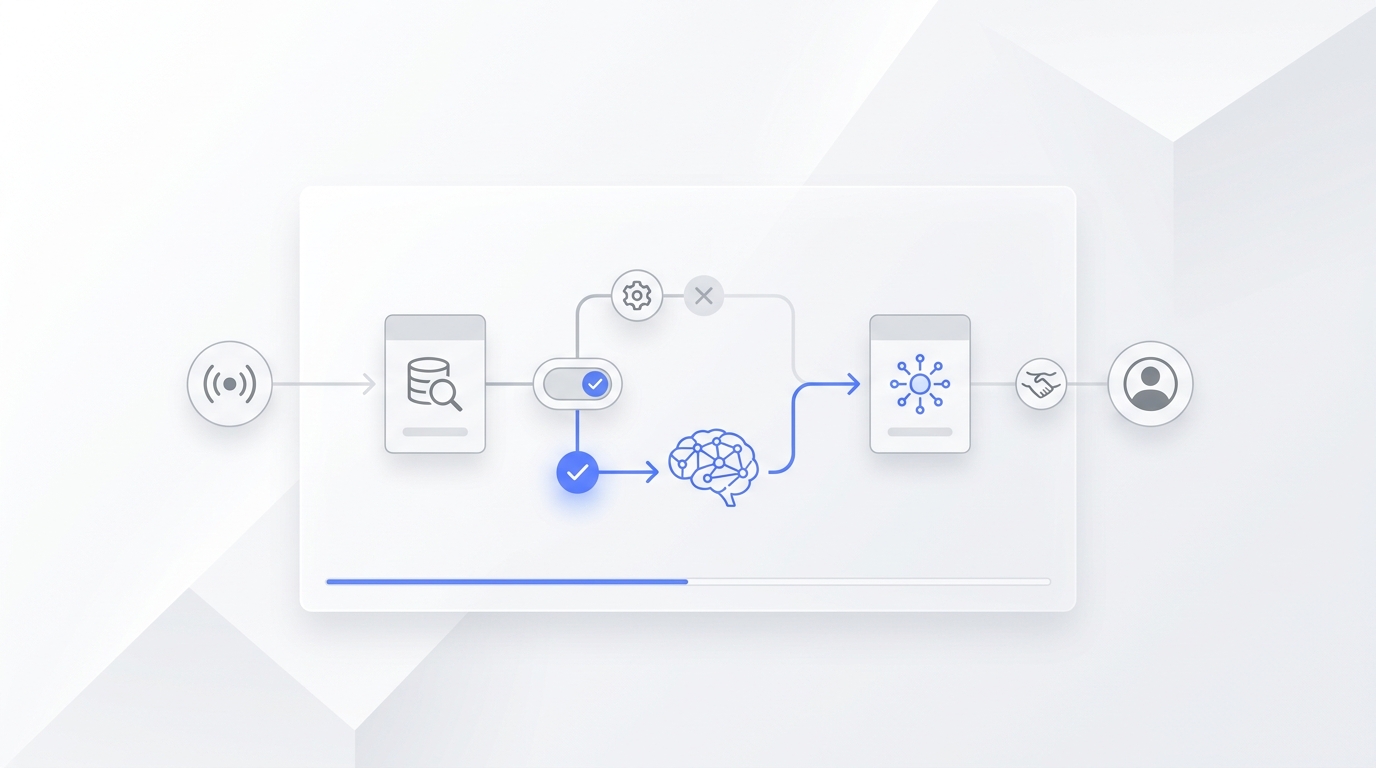
The best workflow is simple for the customer and explicit behind the scenes.
Step 1: Identify and Confirm the Language
The receptionist detects the language or offers a short choice, then confirms before collecting important details. Customers should also be able to change languages or request a person.
Step 2: Identify the Customer and Intent
Collect the minimum information required to understand the request. This may include the customer’s name, callback number, location, service needed, preferred time, or existing appointment details.
Avoid turning the opening into a long questionnaire. The system should ask only what is relevant to the current intent.
Step 3: Answer From Approved Knowledge
The receptionist retrieves the relevant business information and gives a direct answer. If the answer is unavailable or ambiguous, it should say so and move to a safe next step instead of inventing a response.
Step 4: Complete the Action
Book an available slot, capture a callback request, route the customer, or send the required information. Confirm names, dates, times, addresses, and numbers carefully because these details are easy to mishear in any language.
Step 5: Continue on the Customer’s Preferred Channel
If the next step is easier by text or email, continue there without discarding the call context. The follow-up should match the customer’s chosen language when supported and should clearly summarize the agreed next step.
Step 6: Escalate With Context When Needed
Transfer or assign the conversation with a structured summary. The human should be able to see what happened and continue rather than restart.
Step 7: Review Gaps and Improve the System
Review unanswered questions, repeated escalations, misunderstood intents, and incorrect routing. Update the knowledge base and agent instructions so the workflow improves from actual customer conversations.
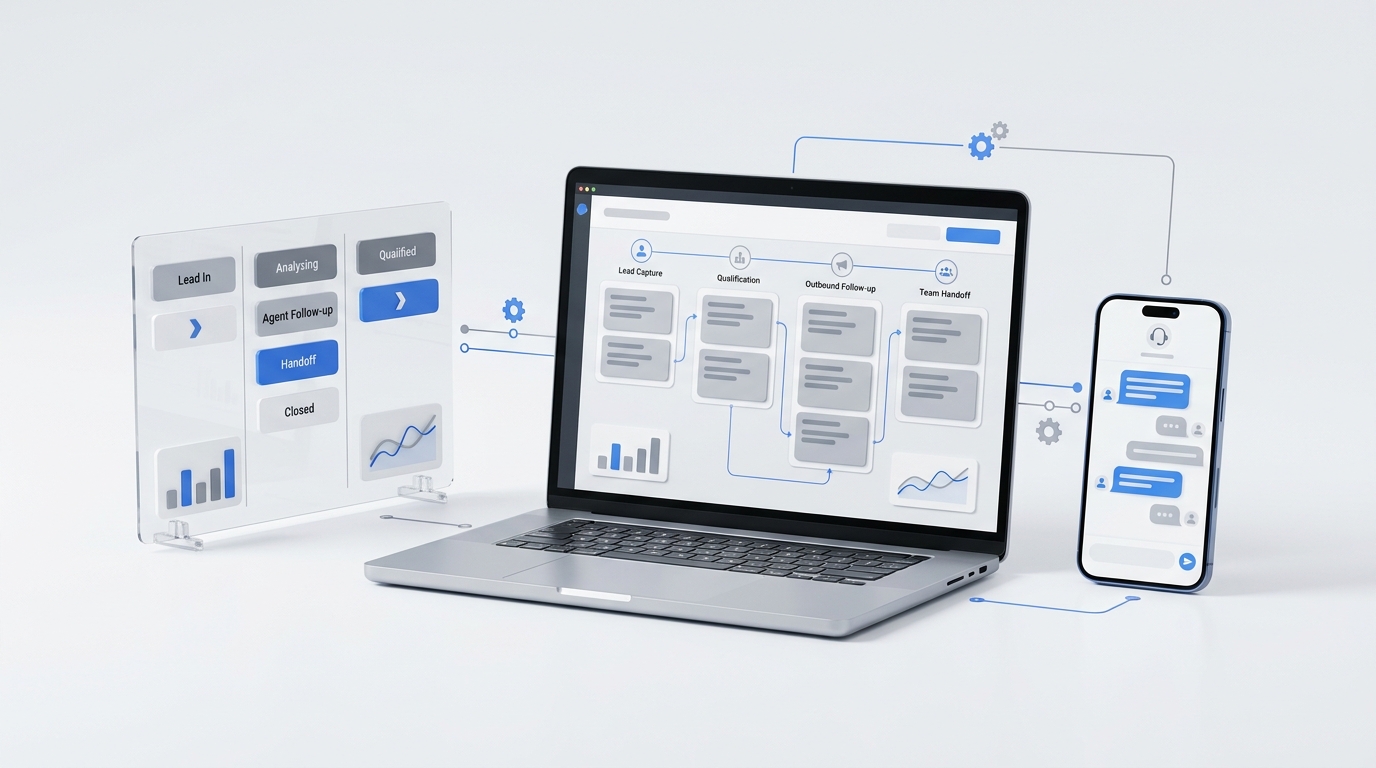
Solvea’s AI Agent Builder is designed to let teams configure how the receptionist responds without building the workflow from code, while call translation supports conversations when customers and staff speak different languages.
Questions to Ask in a Product Demo
Use one scenario that forces the platform to prove more than multilingual speech.
For example:
A Spanish-speaking customer calls after hours about an urgent plumbing problem, asks whether the company serves their address, sends a photo by text, and requests the first available appointment. The issue then needs to be handed to the on-call manager.
Ask the vendor to demonstrate the full flow, then check:
- Did the system identify and confirm the language correctly?
- Did it answer the service-area question from approved information?
- Did the photo and text appear in the same customer conversation?
- Did it collect the address and callback number accurately?
- Did it offer a valid next step rather than a generic promise?
- Did the manager receive a useful summary and ownership notification?
- Could the customer continue in the same language after the call?
- Could an administrator review the interaction and improve the workflow?
This test quickly separates a multilingual voice demo from a practical receptionist system.
Common Implementation Mistakes
Publishing an Unmaintained Language Script
Static scripts drift when hours, policies, services, or prices change. Maintain the business facts centrally and review translated customer-facing phrasing for high-risk or high-value workflows.
Automating Every Request
The goal is not to prevent human contact. The goal is to handle routine work reliably and route the rest with context. Define escalation triggers before launch.
Ignoring Names, Addresses, and Numbers
Proper nouns and structured details deserve confirmation. Build explicit read-back steps for appointment times, email addresses, phone numbers, street addresses, model numbers, and reference numbers.
Splitting Channels Into Separate Queues
If the call, text, and email land in different systems, multilingual coverage can increase rather than reduce operational complexity. Decide where the authoritative customer conversation will live.
Launching Too Many Languages at Once
Start with the languages your customers actually use most. Test the top intents, edge cases, and handoffs thoroughly. Expand after the first workflows are stable and your team has a review process.
A Practical Launch Checklist
Before going live, confirm that your team has:
- selected the first languages based on real customer demand;
- documented the top call and message intents;
- created one approved source of business knowledge;
- defined what the receptionist may answer and do;
- connected calendars and other required tools;
- created urgent, sensitive, and low-confidence escalation rules;
- decided which team owns each handoff type;
- tested names, numbers, dates, addresses, and industry terms;
- tested the same customer moving from call to text or email;
- created a weekly review for unanswered questions and failed actions.
Multilingual Service Is an Operations Problem, Not Just a Language Feature
Customers experience your business as one continuous relationship. They do not care whether the phone system, inbox, translation layer, booking calendar, and knowledge base come from separate technical components. They care whether they are understood, whether the answer is accurate, and whether the promised next step happens.
That is why service teams need more than a multilingual voice bot. They need an AI receptionist that connects language support to business knowledge, channels, actions, customer context, and human ownership.
Solvea brings customer conversations into one place across voice and digital channels, with an AI receptionist, knowledge base, integrations, call translation, and team follow-up. You can start with Solvea without a credit card and test a multilingual receptionist workflow using your own customer scenarios.
Your AI Receptionist, Live in Minutes.
Scale your front desk with an AI that never sleeps. Solvea handles unlimited multi-channel inquiries, books appointments into your calendar automatically, and ensures zero missed opportunities around the clock.
Frequently Asked Questions
What is the difference between a multilingual AI receptionist and a bilingual answering service?
A bilingual answering service usually refers to human or automated phone coverage in two languages. A multilingual AI receptionist can support more languages and may also connect calls with messaging, business knowledge, booking, routing, and customer history. The actual capabilities depend on the platform, so evaluate the full workflow rather than the label.
Can an AI receptionist translate calls between a customer and an employee?
Some platforms offer live call translation that helps participants communicate across languages. Ask how the translation is activated, which languages and call types are supported, what the delay is, and how the transcript or summary appears for the team.
Does a multilingual AI receptionist replace human staff?
It can handle routine reception tasks and extend coverage, but teams should keep human escalation for sensitive, urgent, complex, or unclear requests. The best design makes the handoff fast and preserves context.
How many languages should a small business launch first?
Start with the smallest set that covers meaningful customer demand. One or two well-tested additional languages are usually more useful than a long list with weak knowledge, booking, and escalation workflows.
What should a multilingual AI receptionist connect to?
Common connections include calendars, CRM or customer records, spreadsheets, ecommerce tools, and the shared inbox used for follow-up. Prioritize the systems required to complete the customer’s next step.