A caller asking, “How much do you charge to clean a house?” has not given your team enough information to quote, schedule, or even confirm that the job fits your service area. The person answering still needs to identify the property, the cleaning type, the condition, the timing, access requirements, pets, parking, special surfaces, and anything that may require manager review.
This cleaning company answering service script gives residential and commercial cleaning businesses a practical framework for new estimates, recurring-service inquiries, move-in and move-out cleaning, deep cleaning, post-construction work, schedule changes, complaints, and after-hours calls. Replace every bracketed field with your approved policies before your staff or an AI receptionist uses it.
Important: This is an operations template, not safety or legal advice. Your script should never authorize employees to handle unknown chemicals, bodily fluids, needles, mold, asbestos, lead dust, pest waste, or other potentially hazardous materials unless your company is trained, equipped, insured, and approved for that work.
Quick-start cleaning company call script
Use this short version when you need a reliable baseline today:
“Thank you for calling [Company Name]. This is [Name]. Are you looking for a new cleaning estimate, help with an existing appointment, or something else?”
“Great. May I get your name, phone number, email address, and the full service address?”
“Is this a home, apartment, short-term rental, office, or another type of property?”
“Which service are you looking for: recurring cleaning, a one-time standard clean, deep cleaning, move-in or move-out cleaning, post-construction cleaning, or commercial service?”
“About how large is the space, and how many bedrooms and bathrooms does it have?”
“When was it last professionally cleaned, and are there any areas with heavy buildup or conditions our estimator should review?”
“Are there pets, access instructions, parking restrictions, alarms, special surfaces, or products you do not want used?”
“What date or service window do you prefer?”
“Thank you. I’ve recorded this as a [quote request / booking request / manager review]. [Approved next step and response-time language].”
The goal is not to make every call long. The goal is to collect the minimum information needed for the correct next action without inventing availability, scope, or price.
Cleaning service call intake checklist
Every cleaning company answering service script should capture these fields in a consistent order.
Contact and property details
- Caller’s full name
- Best callback number
- Email address
- Service address
- Billing contact, if different
- Property type: house, apartment, condominium, office, retail space, short-term rental, or other
- Approximate square footage
- Number of bedrooms and bathrooms for residential work
- Number of rooms, floors, restrooms, or work areas for commercial work
- Occupied, vacant, tenant-occupied, or under construction
Service details
- Requested service type
- One-time or recurring service
- Preferred date and time window
- Desired recurring frequency: weekly, biweekly, monthly, or custom
- Last professional cleaning date
- General condition and areas needing extra attention
- Add-ons requested, such as inside oven, inside refrigerator, interior windows, laundry, dishes, cabinets, or baseboards
- Special surfaces or finishes
- Customer-supplied products or fragrance preferences
- Areas that are out of scope
Access and visit logistics
- Who will meet the cleaner
- Lockbox, key, front desk, gate, or building-access instructions
- Alarm instructions, recorded only in the company’s approved secure system
- Parking availability, permits, loading zones, or elevator reservations
- Pets and containment instructions
- Children, tenants, guests, employees, or contractors expected on site
- Water and electricity availability for vacant properties
- Photos or a walkthrough required before quoting
Risk and manager-review flags
- Unknown chemical spill or strong fumes
- Needles, drug paraphernalia, or sharp objects
- Blood, bodily fluids, animal waste, or extensive pest waste
- Visible mold or suspected asbestos or lead dust
- Fire, flood, sewage, or trauma-scene conditions
- Aggressive or unsecured animal
- Unsafe access, active construction, exposed wiring, or unstable surfaces
- Customer asking the cleaner to mix or use unapproved chemicals
- Scope that differs substantially from the original booking
Do not ask a receptionist to diagnose a hazard. The script should identify warning signs and route the request to a trained manager.
Script 1: New residential cleaning estimate
Receptionist: “Thank you for calling [Company Name]. Are you looking for recurring cleaning or a one-time service?”
Caller: “I need someone to clean my house.”
Receptionist: “I can help gather the details for an estimate. May I start with your name, callback number, email, and service address?”
Receptionist: “Is the property a house, apartment, or condominium? About how many square feet is it, and how many bedrooms and bathrooms are there?”
Receptionist: “Is the home currently occupied? When was it last professionally cleaned?”
Receptionist: “Would you describe the request as standard maintenance cleaning, deep cleaning, move-related cleaning, or something else?”
Receptionist: “Are there particular rooms or types of buildup that need extra attention?”
Receptionist: “Do you want any add-ons such as the inside of the oven or refrigerator, interior windows, cabinets, or laundry?”
Receptionist: “Are there pets, parking instructions, gate codes, stairs, elevators, delicate surfaces, or product restrictions we should note?”
Receptionist: “What date or service window works best?”
Close: “Thank you. I’ve recorded your request for [service type]. [Estimator/manager] will [review the details / arrange a walkthrough / confirm the quote and availability]. The appointment is not confirmed until you receive [approved confirmation method].”
Why this residential cleaning call script works
It separates four decisions that callers often combine: what they want cleaned, what the property requires, whether the business can perform the work, and whether a price or appointment can be confirmed. That protects the schedule from vague bookings and gives the estimator a usable record.
Script 2: Recurring cleaning inquiry
The recurring-service branch of your cleaning company answering service script should qualify fit and expectations before promising a standing time slot.
“Are you interested in weekly, biweekly, monthly, or another frequency?”
“Would the first visit need to be a deeper initial cleaning before maintenance service begins?”
“Which rooms should be included every visit, and are there rotating tasks you want completed less frequently?”
“Are there preferred days, arrival windows, or dates that never work?”
“Will someone be home, or will the team use an approved access method?”
“Are there pets or recurring household conditions the crew should prepare for?”
“I’ll submit this for a recurring-service review. The team will confirm the initial scope, frequency, price, and available schedule before the first appointment is finalized.”
Do not describe “standard cleaning” as if every customer understands the same scope. Link the call record to your actual service checklist.
Script 3: Deep cleaning request
The phrase “deep cleaning” can mean anything from detailed baseboard work to severe buildup. This part of the cleaning company answering service script should reveal the expected labor without judging the caller.
Receptionist: “Which areas are the highest priority?”
Receptionist: “Are you requesting inside appliances, inside cabinets, walls, blinds, interior windows, or other detailed work?”
Receptionist: “Is there heavy grease, soap buildup, pet hair, smoke residue, clutter, or another condition the estimator should know about?”
Receptionist: “Are all surfaces accessible, or will items need to be moved before the team arrives?”
Receptionist: “Are there any unknown substances, strong odors, visible mold, bodily fluids, needles, pest waste, or other conditions that may require specialist review?”
Close: “Thank you for explaining the scope. Because deep-cleaning needs vary, this request requires [photos / a walkthrough / manager review] before we confirm price and duration.”
The script should use neutral language. Record observable conditions rather than labels such as “filthy” or “unsafe.”
Script 4: Move-in or move-out cleaning
Move-related jobs depend on vacancy, utilities, access, deadlines, and whether movers or contractors will still be on site. Add these questions to the cleaning company answering service script rather than treating every vacant property as the same job.
“Is this a move-in clean, move-out clean, or turnover between tenants?”
“Will the property be completely empty when the cleaning begins?”
“Will water and electricity be available?”
“Are movers, painters, maintenance workers, or other contractors scheduled at the same time?”
“What is the hard deadline for inspection, key handoff, listing photos, or occupancy?”
“Do you need the inside of cabinets, closets, appliances, or windows included?”
“Are there abandoned items, adhesive residue, construction dust, pest waste, or damage that needs review?”
“How will the team enter, and where can they park?”
Close: “I’ve noted the deadline and requested scope. We will confirm whether the property must be fully vacant and whether any remaining items or contractor activity change the quote or schedule.”
Script 5: Post-construction cleaning
Post-construction requests should never be treated as ordinary dusting. The receptionist needs to identify the stage of work and route hazards for review.
Receptionist: “Is construction fully complete, or are trades still working on the property?”
Receptionist: “What work was performed, and which areas are affected?”
Receptionist: “Is the request for rough cleaning, final cleaning, touch-up cleaning, or preparation for inspection or occupancy?”
Receptionist: “Are there paint, adhesive, grout haze, drywall dust, sharp debris, exposed wiring, or other materials on site?”
Receptionist: “Has the contractor confirmed whether lead, asbestos, silica, mold, or another regulated material may be present?”
Receptionist: “Are utilities, restrooms, elevators, and safe parking or loading access available?”
Close: “Post-construction work requires review before acceptance. I’ll send these details to [manager/estimator], who may request site photos, safety documentation, or a walkthrough.”
Script 6: Commercial cleaning or janitorial inquiry
Commercial callers care about reliability, access, scope, documentation, and operating hours, so the commercial branch of the cleaning company answering service script needs facility-specific questions.
“What type of facility needs service, and what is the full address?”
“Approximately how many square feet, floors, restrooms, kitchens, and high-traffic areas are included?”
“What cleaning frequency and service hours do you prefer?”
“Is the facility open to customers or employees while cleaning occurs?”
“Are there secure areas, keys, badges, alarm procedures, loading docks, elevators, or parking rules?”
“Does the location have approved products, Safety Data Sheets, infection-control procedures, or site-specific training requirements?”
“Are there regulated, medical, industrial, laboratory, food-service, or hazardous areas that require specialist handling?”
“Who approves the scope and signs the service agreement?”
Close: “Thank you. I’ll route this to our commercial-services team to confirm fit and arrange a walkthrough. We will not finalize scope or price until the site requirements have been reviewed.”
Script 7: Same-day or urgent cleaning request
Urgency should change routing, not accuracy.
Receptionist: “What happened, and what needs to be cleaned?”
Receptionist: “Is anyone in immediate danger, or are there strong fumes, a chemical spill, sewage, blood, needles, fire damage, or an active leak?”
If there is immediate danger, instruct the caller to contact emergency services or the appropriate local emergency resource. Do not keep the caller on a sales script.
If there is no immediate danger:
“What is the service address and deadline?”
“Is the property accessible now?”
“Can you send photos through [approved channel]?”
“I can record this as an urgent request, but I cannot promise availability or a final price until the on-call manager reviews the scope.”
Script 8: Existing appointment change or cancellation
“May I have the name, service address, and phone number on the booking?”
“Are you rescheduling, changing the scope, updating access instructions, or canceling?”
“What new date or time window would you prefer?”
“Has anything about the property, service, pets, access, or requested add-ons changed?”
“I’ve submitted the request. Any fee or schedule change will follow the policy in your booking confirmation. The change is final when you receive an updated confirmation.”
Never promise that a fee will be waived unless the receptionist is authorized to do so.
Script 9: Quality complaint or missed item
A complaint script should lower tension, preserve facts, and create a clear follow-up.
Receptionist: “I’m sorry the service did not meet your expectations. I’ll document the details so the right person can respond.”
Receptionist: “May I confirm the name, address, service date, and best callback number?”
Receptionist: “Which room, surface, or task is affected?”
Receptionist: “When did you notice the issue, and has anyone changed or cleaned the area since the visit?”
Receptionist: “Were there any access, timing, or scope changes during the appointment?”
Receptionist: “Can you send photos through [approved channel], if relevant?”
Close: “Thank you. I’ve created a service-review request. [Manager/team] will respond according to our service policy. I can document the concern, but I cannot promise a refund, free service, or specific resolution before review.”
Avoid debating the caller or blaming a cleaner. The call record should distinguish what the customer reports from what the company has verified.
Script 10: After-hours cleaning company answering service
An after-hours cleaning answering service should classify the call into one of four routes:
- New quote request for the next business day
- Existing-customer schedule or access issue
- Time-sensitive next-day service problem
- Immediate safety or property emergency that requires an outside emergency resource
Use this template:
“You’ve reached [Company Name] after hours. I can collect the details and route your request. Is this about a new cleaning estimate, an appointment already scheduled, or an urgent property or safety issue?”
For a new lead, complete the standard intake and give only the approved follow-up window.
For an appointment issue, verify the customer and record the service date, address, problem, access implications, and callback number.
For a possible emergency, ask only enough to identify the correct escalation. A cleaning company is not a substitute for emergency services, poison control, a utility, a plumber, a restoration company, or a hazardous-material contractor.
Pricing language that avoids accidental promises
Many cleaning calls begin with price. Your cleaning service phone script needs a consistent boundary between an estimate and a confirmed quote.
When a published starting price applies
“Our pricing starts at [approved amount] for [defined scope], but the final price depends on property size, condition, service type, add-ons, access, and frequency. I can collect the details for an exact quote.”
When a pricing calculator applies
“I can enter the property and service details into our approved pricing process. The result is subject to confirmation if the scope or condition changes.”
When manager review is required
“This request needs photos, a walkthrough, or manager review before we can quote it accurately. I do not want to give you a price that may not match the work.”
When the customer asks for a discount
“I can note the request and check whether any approved offer applies. I cannot create or promise a discount outside our current policy.”
Safety boundaries for the call script
Receptionists do not need to become chemical-safety experts, but the workflow must recognize when ordinary cleaning has become a safety review.
The U.S. Occupational Safety and Health Administration’s Hazard Communication Standard requires covered employers to communicate chemical hazards through elements such as labels, Safety Data Sheets, and worker training. If a commercial site expects cleaners to use or encounter specific chemicals, capture that requirement for management instead of casually accepting it on the phone.
For disinfectants regulated as pesticides, the U.S. Environmental Protection Agency explains that the product label contains legally enforceable directions and precautions. The receptionist should never promise an unapproved product use, mixture, concentration, surface, or contact time. Refer operational decisions to the product label and your trained supervisor. See the EPA’s introduction to pesticide labels and List N disinfectant information.
Build these rules into the script:
- Never tell a customer that two cleaning chemicals can be mixed.
- Never tell a caller that an odor, residue, or visible growth is harmless.
- Never promise biohazard, trauma, mold, asbestos, lead, sewage, or sharps cleanup unless that service is explicitly approved.
- Never ask a cleaner to enter a property with an active threat, aggressive animal, unsafe structure, or uncontrolled fumes.
- Never store gate, alarm, key, or payment information in an unapproved free-text field.
What your AI receptionist needs to know
An AI receptionist can answer consistently only when the knowledge behind the cleaning company answering service script is specific.
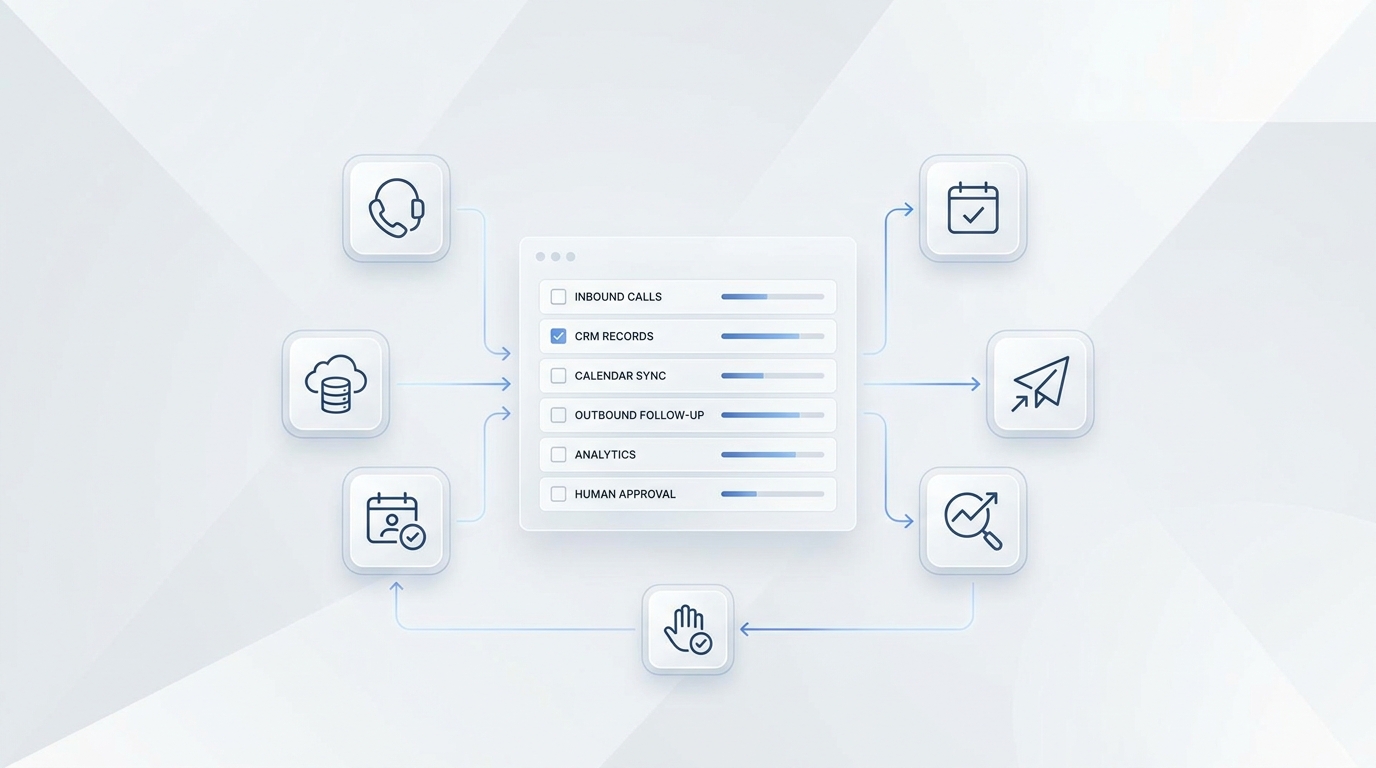
Configure these items before automation goes live:
- Service area by ZIP code, city, or drive-time rule
- Residential, commercial, and specialty services offered
- Explicit exclusions and manager-review conditions
- Standard, deep-clean, move-related, and recurring-cleaning checklists
- Add-ons and how they affect quoting
- Minimum visit rules, if any
- Hours, holiday coverage, and after-hours escalation
- Booking windows and who can approve exceptions
- Access, key, lockbox, alarm, parking, and pet policies
- Quote versus estimate language
- Cancellation, rescheduling, lockout, and satisfaction policies
- Approved emergency and hazard responses
- CRM, calendar, and notification destinations
If you need more than call answering, connect the script to an AI phone answering system that records structured intake and routes the conversation. Teams that manage calls, texts, and follow-up together can also use a customer conversation workspace so the field team sees the same context.
Cleaning call QA scorecard
Use this scorecard to test whether the cleaning company answering service script works in real conversations. Score ten recent calls each week. Use 0 for missed, 1 for partial, and 2 for complete.
| QA item | 0 | 1 | 2 |
|---|---|---|---|
| Correctly identified the call reason | Missed | Inferred but unclear | Explicitly confirmed |
| Captured contact and service address | Missing | Partial | Complete |
| Identified property type and size | Missing | Partial | Complete |
| Identified service type and frequency | Missing | Partial | Complete |
| Captured condition and priority areas | Missing | Vague | Actionable detail |
| Captured add-ons and exclusions | Missing | Partial | Complete |
| Captured access, parking, pets, and timing | Missing | Partial | Complete |
| Screened for manager-review or hazard flags | Missed | Incomplete | Correctly routed |
| Avoided unapproved price or availability promises | Incorrect promise | Ambiguous | Correct boundary |
| Confirmed the next step | Missing | Vague | Owner and timing clear |
A score below your internal threshold should trigger coaching or a knowledge-base update. Repeated misses usually indicate a workflow problem, not just an individual call problem.
Your AI Receptionist, Live in Minutes.
Scale your front desk with an AI that never sleeps. Solvea handles unlimited multi-channel inquiries, books appointments into your calendar automatically, and ensures zero missed opportunities around the clock.
Frequently asked questions
What should a cleaning company answering service ask every new caller?
At minimum, ask for contact details, service address, property type and size, requested service, frequency, condition, add-ons, preferred timing, access, pets, parking, special surfaces, and any issue requiring manager review.
Should the receptionist quote a cleaning job on the first call?
Only when your approved pricing method has all required inputs and the receptionist is authorized to use it. Deep cleaning, unusual conditions, commercial sites, post-construction work, and hazardous-material concerns often need photos, a walkthrough, or manager review.
How should a cleaning company handle same-day calls?
Collect the normal intake, clarify the actual deadline, identify safety flags, and route the request as urgent. Do not promise same-day availability until the schedule and scope are confirmed.
What should an after-hours cleaning answering service do?
It should capture new leads, handle approved appointment messages, flag next-day issues, and escalate genuine emergencies to the correct resource. It should not improvise discounts, chemical instructions, or safety advice.
Can an AI receptionist book recurring cleaning automatically?
Yes, when service-area rules, first-visit requirements, scope, frequency, duration, team capacity, access, and pricing logic are defined. If any of those inputs are uncertain, the safer next step is a quote or manager-review request rather than a confirmed appointment.
How long should a cleaning company call script be?
The caller should hear only the questions relevant to the request. Keep the master workflow comprehensive, then use branching logic so a recurring residential lead does not hear commercial or post-construction questions.
Put the script into operation
A useful cleaning company answering service script is more than a greeting. It is a routing system that turns an interruption into a qualified estimate, a clean booking request, or a properly escalated issue.
Start with the quick script, replace every bracket with approved company policy, connect each call type to an owner and next step, and score real calls every week. When your process is stable, Solvea can help your cleaning business answer calls around the clock, collect structured details, and keep follow-up in one place without asking the field team to stop work for every ringing phone.