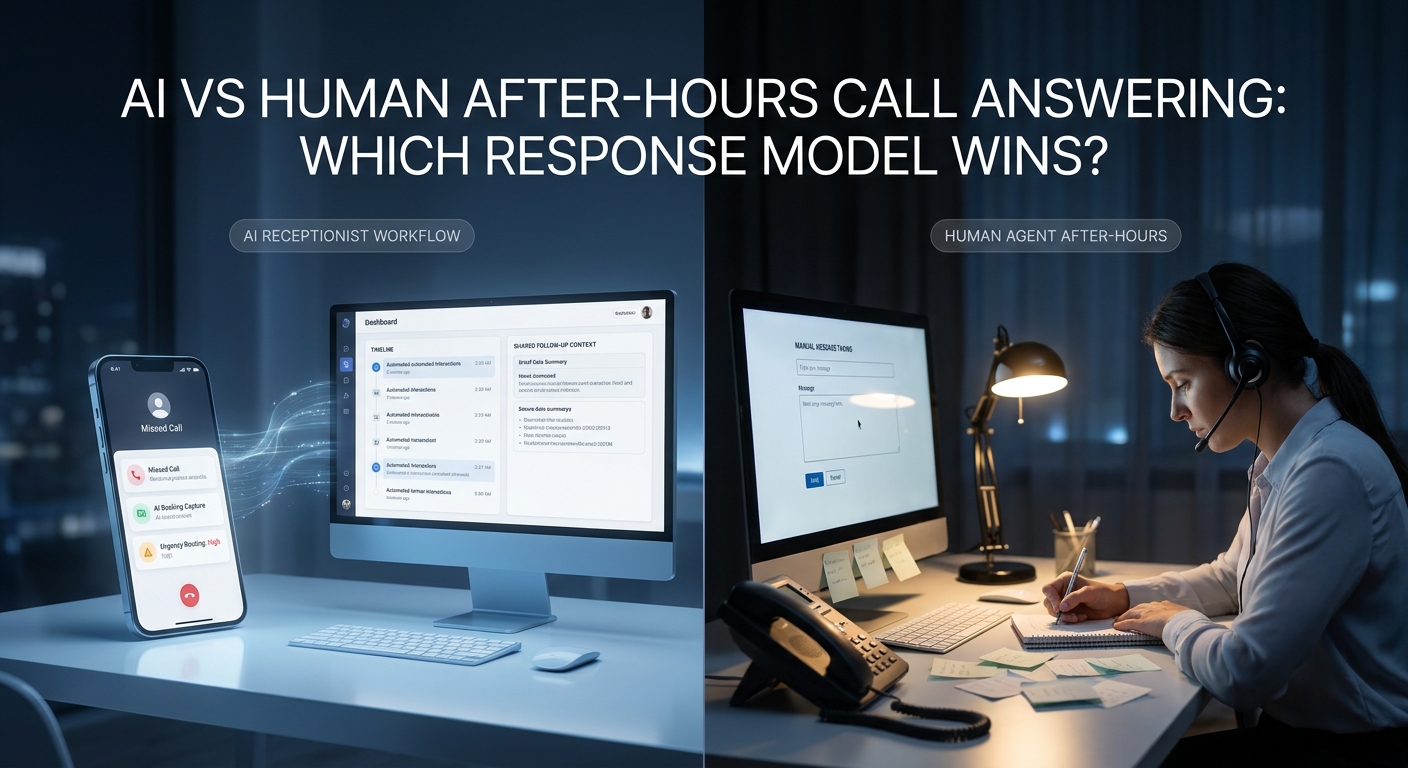
If your firm is comparing an answering service with legal intake against an AI receptionist for law firms, the real decision is not just who picks up the phone first. It is which workflow gives your team a cleaner intake record, faster follow-up, and less context loss after the call.
That distinction matters because many firms do not actually lose leads at the answering step. They lose them in the gap between the first call and the callback. Notes are thin. Ownership is unclear. The caller has to repeat the story. Or the inquiry sits in voicemail until another firm responds first.
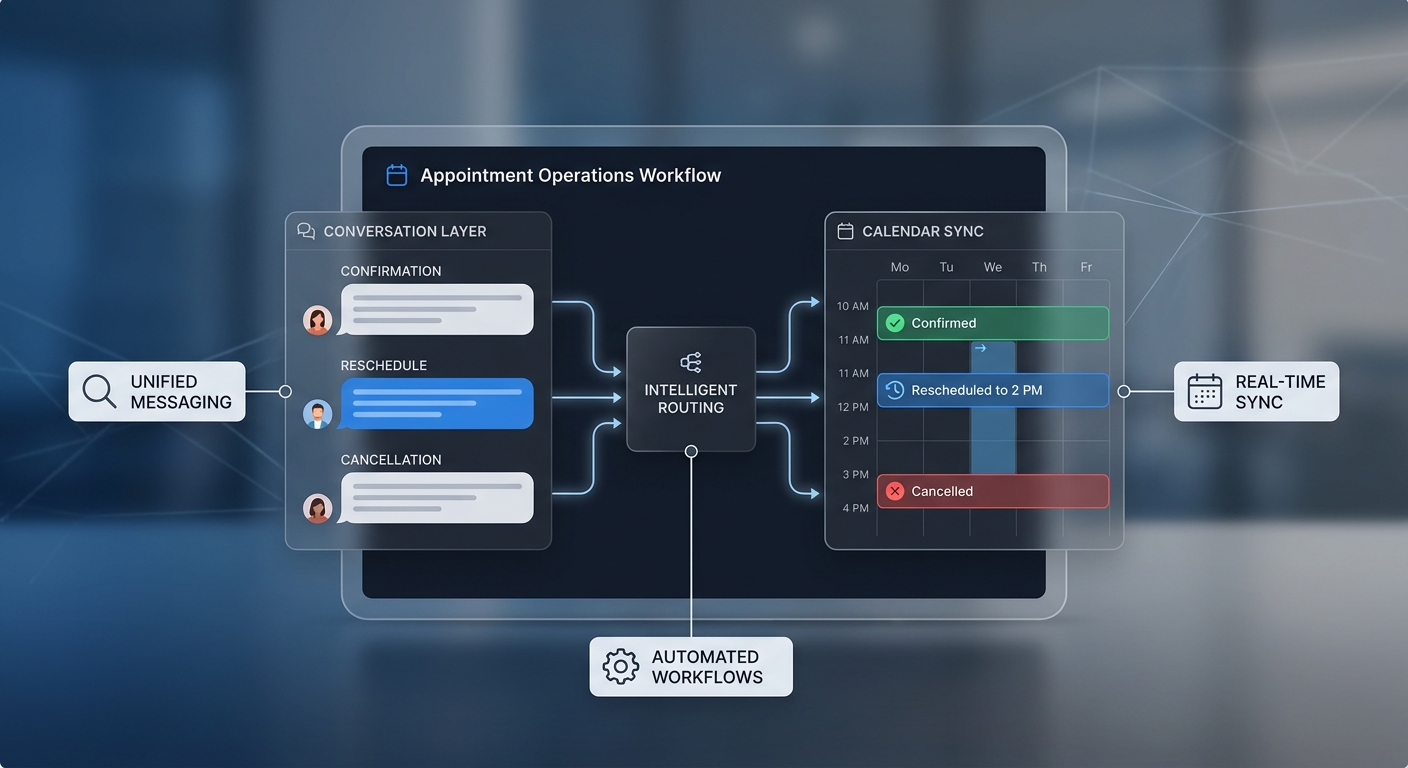
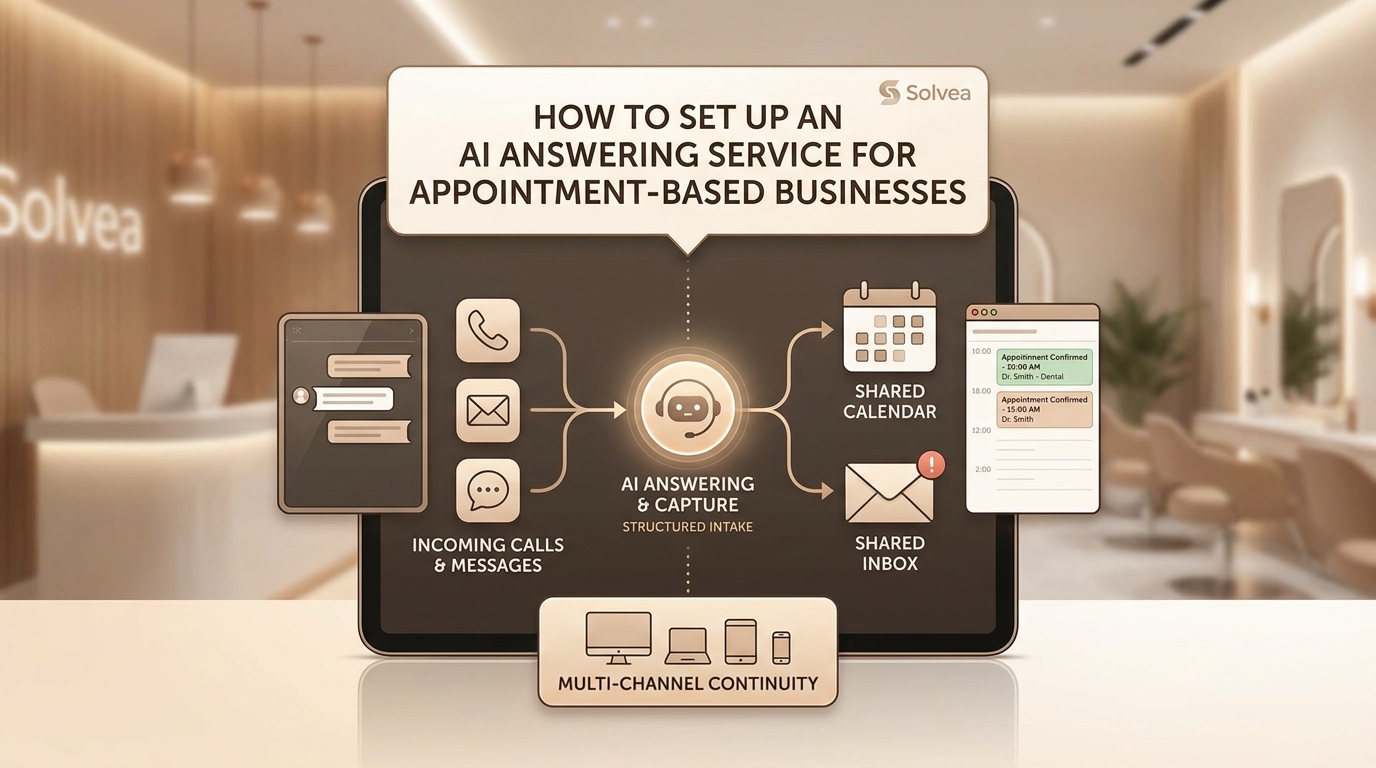
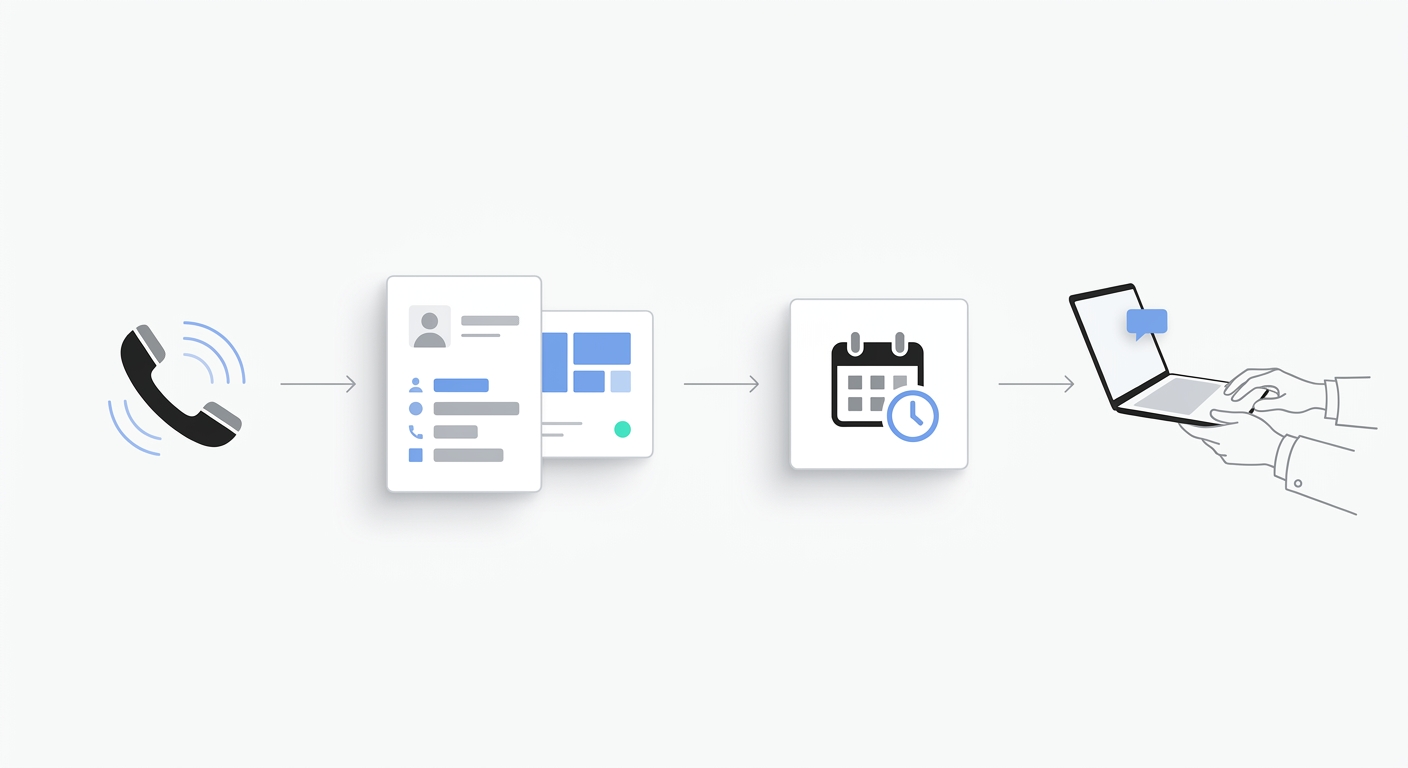
Solvea's current law-firm and product pages reviewed on Monday, July 20, 2026 consistently position the platform around that handoff problem: AI answers first, summaries and transcripts stay with the business, staff can see owners and statuses in PC Desk, and follow-up can continue across phone, SMS, email, WhatsApp, LINE, and live chat. That makes this a workflow comparison, not just a coverage comparison.
What law firms are really buying
When buyers search for an AI receptionist for law firms, they are usually trying to solve one of four operational problems:
| Problem | What breaks today |
|---|---|
| Missed first response | Calls hit voicemail, ring out after hours, or wait behind other front-desk work. |
| Weak intake capture | Staff get a name and number, but not enough structured context to call back confidently. |
| Invisible handoff | The intake note lives in one inbox, one email thread, or one employee's phone. |
| Slow follow-up | No clear owner, no summary, and no shared timeline for the next step. |
That is why a firm should compare systems based on intake quality and follow-up continuity, not only on whether someone says hello.
Answering service with legal intake vs AI receptionist for law firms
Here is the practical difference between the two models:
| Category | Answering service with legal intake | AI receptionist for law firms |
|---|---|---|
| Coverage model | Human operators or live agents take the call. | AI answers missed or inbound calls automatically using approved rules. |
| Intake consistency | Depends on operator training, scripts, and handoff discipline. | Depends on prompt/rule design, knowledge base quality, and escalation logic. |
| Cost model | Often scales with minutes, call volume, or staffing tiers. | More software-like pricing with workflow configuration up front. |
| Follow-up visibility | Can be limited if notes are passed by message or email only. | Stronger when summaries, owners, statuses, and cross-channel follow-up live in one desk. |
| After-hours coverage | Strong if staffed correctly. | Strong by default if the workflow is configured well. |
| Handling nuance | Better for emotionally sensitive or judgment-heavy calls. | Better for repeatable intake, FAQs, routing, and structured call capture. |
| Best fit | Firms that want a human to triage first and can absorb service cost. | Firms that want faster first response, consistent intake capture, and shared workflow memory. |
The strongest AI receptionist for law firms is not trying to imitate a full legal intake staff. It is trying to make the first-response and handoff workflow cleaner than voicemail, message taking, or a disconnected answering log.
Where an answering service still fits
An answering service with legal intake can still be the better fit in some situations.
It is usually stronger when:
- callers are frequently distressed, emotional, or highly case-specific from the first minute
- the firm wants a live human to de-escalate before any structured intake begins
- intake depends on nuanced judgment that is hard to reduce to clear questions and routing rules
- the firm already has a service partner and is satisfied with handoff quality
The limitation is that human coverage alone does not guarantee a strong workflow. If the operator takes a message but the callback owner is unclear, the summary is vague, or the note is trapped in a disconnected inbox, the firm still has the same commercial problem.
Where an AI receptionist for law firms pulls ahead
An AI receptionist for law firms usually becomes the better option when the firm wants repeatable intake capture and shared team visibility more than a traditional call-center handoff.
That is where Solvea's current positioning is relevant. Its first-party pages describe a workflow in which:
- AI answers missed calls first
- intake summaries and transcripts stay attached to the conversation
- owners and statuses remain visible inside PC Desk
- follow-up can continue across more than one channel
- approved answers can be maintained through a knowledge base instead of retraining live operators on every recurring question
For firms that already know their intake questions, escalation triggers, and callback process, that structure can be more useful than simply forwarding a message.
What law firms should test before choosing either model
Whether you choose an answering service or an AI receptionist for law firms, the buying test should be the same: can your team move from first call to next step without rework?
Use this checklist:
| Test question | Why it matters |
|---|---|
| Does the system answer immediately after hours or during peak hours? | Speed matters when prospects are calling multiple firms. |
| Does it capture matter type, urgency, and callback details in a usable structure? | Staff need more than a generic message. |
| Does the firm control the intake questions and approved wording? | Intake quality should not drift over time. |
| Is there a visible owner for follow-up? | Someone should clearly own the callback. |
| Can the same intake stay visible if the caller later texts or emails? | Follow-up often moves off the phone. |
| Are human escalation rules obvious? | Urgent, sensitive, or exception-heavy calls should not be guessed at. |
This is the frame where a workflow-first tool tends to outperform a message-taking tool.
A safer implementation boundary for legal teams
The safest operating model is simple: use AI for structured reception and intake capture, keep professional judgment with the firm.
That means the system can:
- answer common first-response questions
- capture names, callback details, matter category, and urgency signals
- summarize the request for staff review
- explain office hours, consultation expectations, or approved next-step instructions
- route the conversation to the right person or queue
It should not:
- give legal advice
- make representation decisions
- perform a final conflict determination
- promise legal outcomes
This boundary is also consistent with the American Bar Association materials firms often use as review prompts for confidentiality and supervision, including Rule 1.6 and Rule 5.3. In practice, the right question is not whether automation can replace legal judgment. It is whether your firm can use automation to collect cleaner facts and trigger faster staff review.
Where Solvea fits in this comparison
Solvea is worth shortlisting when the buyer problem is broader than phone pickup.
Based on current first-party sources reviewed on July 20, 2026, the strongest fit is for firms that want:
- an AI receptionist for law firms that answers first instead of relying on voicemail
- a structured summary and transcript rather than a one-line message
- a visible owner and next-step workflow in PC Desk
- one timeline for calls, texts, emails, and related follow-up
- knowledge-base control over approved FAQs and recurring intake language
That is different from a classic answering service. It shifts the value from "someone answered" to "the firm can act on the intake faster with less guesswork."
When an answering service may still win
An answering service may still be the better option if your highest-priority calls are consistently:
- emotionally charged from the first minute
- difficult to route without human judgment
- too varied to standardize in an initial rollout
- handled by a team that prefers a live human buffer before any automation
That does not mean AI is a bad fit. It usually means the first rollout should be narrower. A firm can still start with after-hours coverage, one practice area, or one intake queue before expanding.
Final verdict
If you are choosing between an answering service with legal intake and an AI receptionist for law firms, compare them on the quality of the intake handoff, not just the greeting.
An answering service can still make sense when your firm needs a human-first front line. But an AI receptionist usually wins when the bigger problem is missed calls, inconsistent notes, unclear ownership, and fragmented follow-up.
For firms that want faster first response plus a cleaner workflow after the call, Solvea is a strong option to evaluate. Its current law-firm and AI receptionist pages are already built around intake capture, summaries, callback ownership, and shared visibility rather than generic voice coverage alone.
Your AI Receptionist, Live in Minutes.
Scale your front desk with an AI that never sleeps. Solvea handles unlimited multi-channel inquiries, books appointments into your calendar automatically, and ensures zero missed opportunities around the clock.
FAQ
What should an AI receptionist for law firms actually do?
It should answer promptly, collect approved intake details, summarize the request, identify urgency signals, and hand the conversation to staff with a clear next step.
Is an answering service better than an AI receptionist for law firms?
It depends on the firm's workflow. Answering services can be stronger for emotionally sensitive or judgment-heavy calls. An AI receptionist is often stronger for repeatable intake capture, after-hours coverage, and shared follow-up visibility.
Can an AI receptionist for law firms replace intake staff?
Not fully. The safer model is to use AI for first response, structured intake capture, and routing, while legal staff keep control over judgment, conflicts, and representation decisions.
Why does shared follow-up matter so much?
Because the commercial risk is rarely the greeting itself. It is the lost context after the call. If summaries, owners, and statuses stay visible, staff can call back faster and with less guesswork.
What should a firm pilot first?
Start with one narrow workflow such as after-hours intake, one office location, or one practice-area call path. Review the summary quality, routing accuracy, and follow-up handoff before expanding.
Sources
- Solvea, Law Firm Answering Service with AI Intake: https://solvea.cx/industries/law-firm-answering-service
- Solvea, AI Receptionist for Law Firms: Intake, Screening, and Follow-Up: https://solvea.cx/blog/ai-receptionist-for-law-firms-intake-screening-and-follow-up
- Solvea, Pricing: https://solvea.cx/pricing
- American Bar Association, Rule 5.3: Responsibilities Regarding Nonlawyer Assistance: https://www.americanbar.org/groups/professional_responsibility/publications/model_rules_of_professional_conduct/rule_5_3_responsibilities_regarding_nonlawyer_assistant/
- American Bar Association, Rule 1.6 Comment on Confidentiality of Information: https://www.americanbar.org/groups/professional_responsibility/publications/model_rules_of_professional_conduct/rule_1_6_confidentiality_of_information/comment_on_rule_1_6/