If your business loses calls at night, on weekends, or during overflow periods, the real question is not whether you need coverage. It is which after hours call answering service model gives your team the best outcome once nobody can pick up live.
That is why the most useful comparison is not "AI versus people" in the abstract. It is a workflow comparison:
- Which model responds fastest?
- Which one captures cleaner intake?
- Which one routes urgent calls more reliably?
- Which one preserves context for the morning team?
- Which one stays cost-effective as volume grows?
For service-based SMBs, the winner depends on call type, urgency, and follow-up complexity. In many cases, AI is the stronger default for structured after-hours coverage. In some cases, a human still wins. And for a narrow set of businesses, a hybrid model is worth the extra complexity.
This guide breaks down where each model performs best and how to decide what your business should use.
What buyers are really choosing
An after hours call answering service is rarely just an answering layer. It becomes part of your lead capture, booking, triage, and next-day follow-up system.
That matters because most service SMB calls do not end when the phone stops ringing. They turn into:
- appointment requests
- estimate or quote inquiries
- urgent service issues
- intake questions
- reschedules or follow-up changes
So the model you choose has to do more than answer. It has to keep the conversation useful.
AI vs human after-hours call answering at a glance
| Decision area | AI after-hours model | Human after-hours model | Who usually wins |
|---|---|---|---|
| Response speed | instant, consistent, always on | depends on staffing and queue load | AI |
| Consistency | follows the same intake and routing rules every time | varies by training, fatigue, and turnover | AI |
| FAQ handling | strong when backed by an approved knowledge base | strong for common questions, but may drift from script | AI |
| Structured intake | excellent for repeatable booking or lead fields | good, but often less standardized | AI |
| Emotional nuance | weaker in sensitive or exception-heavy situations | stronger when empathy or judgment is required | Human |
| Edge cases | limited by rules, source data, and escalation design | more flexible in ambiguous situations | Human |
| Shared follow-up context | strong when tied to one inbox, summaries, and statuses | often depends on notes, CRM habits, or message quality | AI |
| Scale at higher volume | scales easily across nights, weekends, and overflow | requires more staffing or outsourcing cost | AI |
| Multilingual coverage | strong when language support is built into the workflow | depends on agent availability by language | AI |
| Best fit | repeatable after-hours workflows | high-emotion or high-judgment conversations | It depends |
Where AI wins
AI usually wins when the job is fast response plus structured workflow, not deep human judgment.
That includes:
- booking or consultation requests
- estimate intake
- basic qualification
- hours, service area, location, and policy questions
- reschedule requests
- non-urgent overnight follow-up capture
In those cases, the biggest advantage is consistency. An AI after-hours workflow can ask the same fields every time, tag urgency the same way every time, and send the morning team the same structured handoff every time.
That is especially important for small teams because after-hours failure is often not "nobody answered." It is "the caller left a vague message, the team saw it late, and nobody had enough context to act fast."
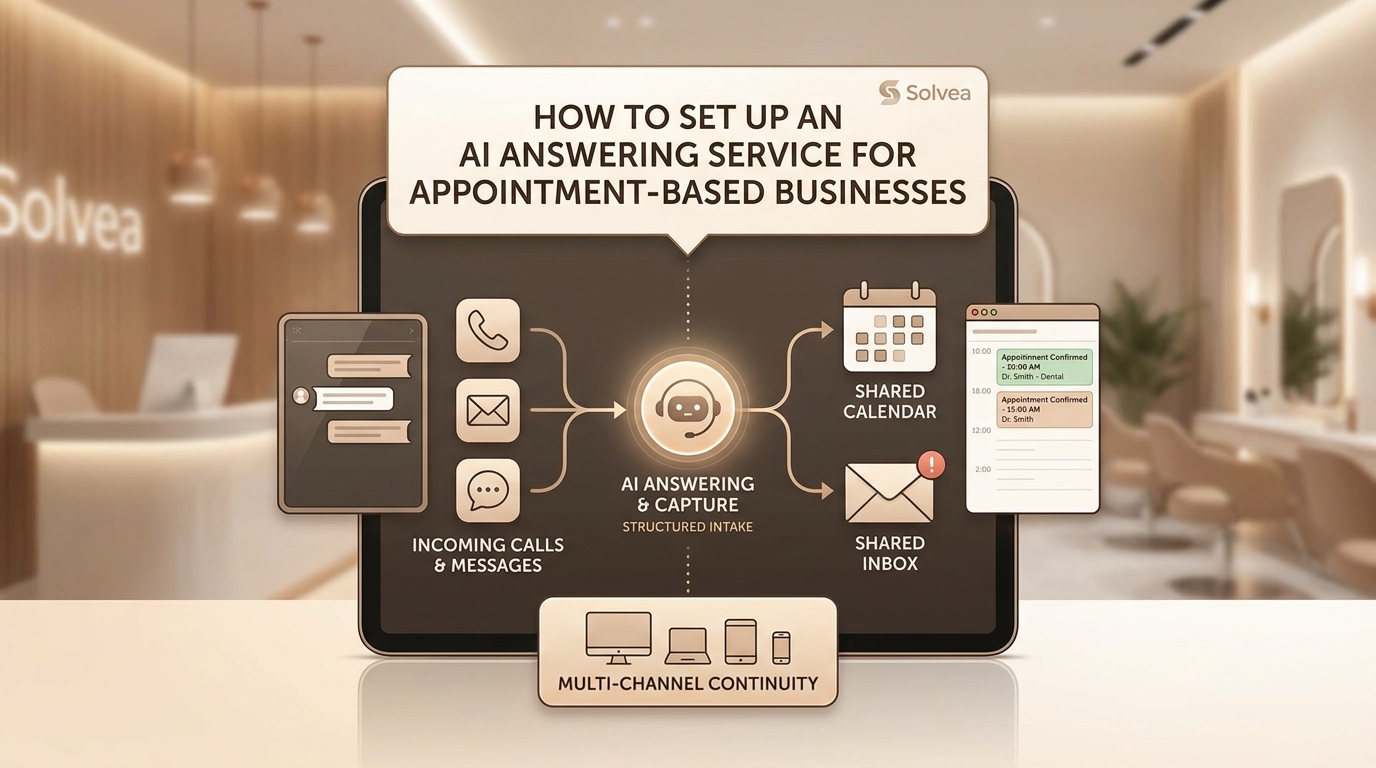
An AI-first after hours call answering service solves that problem best when it can:
- answer immediately
- capture name, need, urgency, and preferred callback channel
- route by rule
- summarize the interaction
- keep the interaction visible inside the team workflow
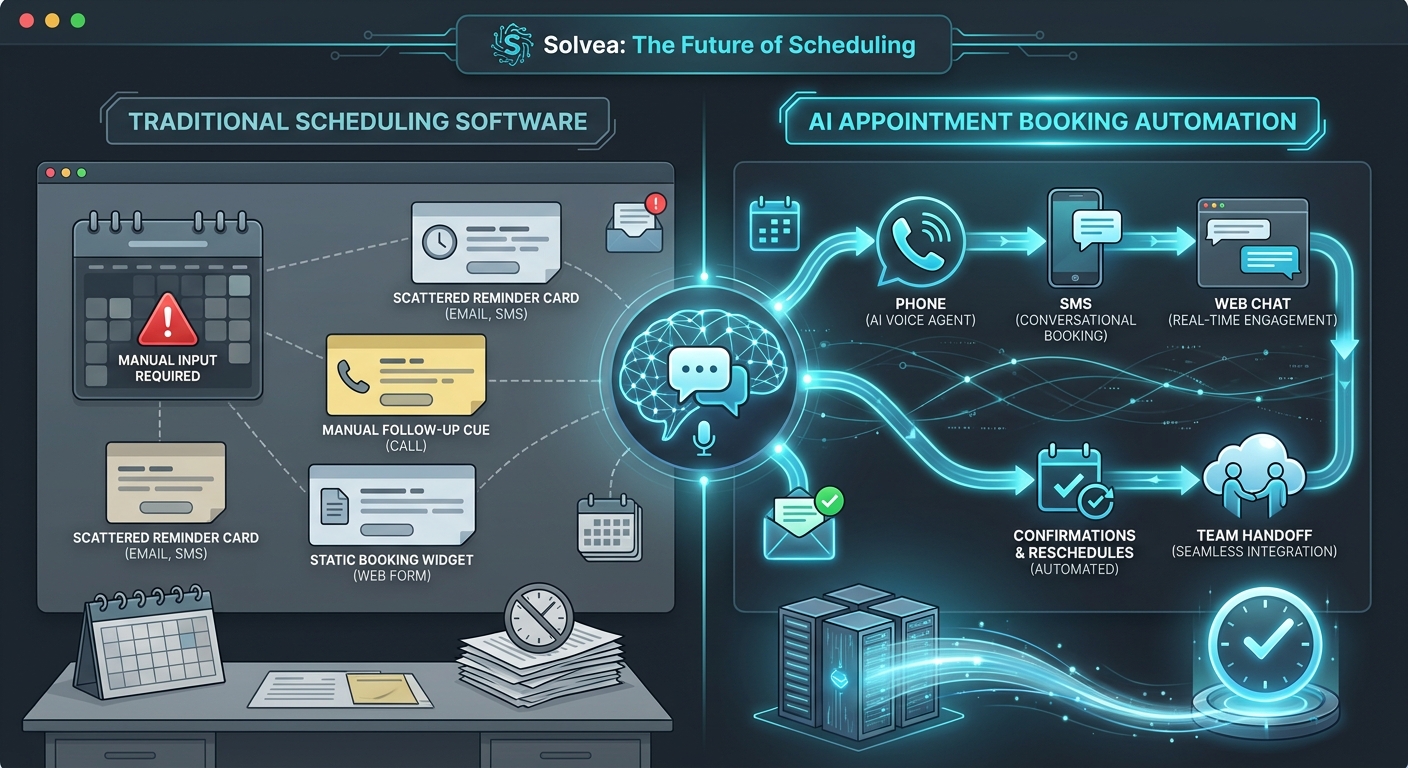
For Solvea's target segments, that is the main operating gain. The platform's first-party product materials position it around one business number, AI receptionist coverage, and one shared follow-up workflow across voice, SMS, email, WhatsApp, and live chat instead of one disconnected phone message at a time.
Where human answering still wins
Human after-hours coverage still has a real place.
It usually wins when the conversation requires:
- emotional reassurance
- sensitive judgment
- heavy exception handling
- legal, medical, or billing nuance
- high-stakes escalation where the caller needs a person now
If a caller is upset, confused, or describing a situation that does not fit a clean intake path, a trained human may protect the relationship better than automation.
That is why businesses should not turn the comparison into a slogan. AI is not automatically better because it is newer. A human is not automatically better because they are live. The better model is the one that matches the workflow risk.
For example:
- a late-night medspa consult request is often perfect for AI intake and callback scheduling
- a restaurant reservation overflow call may be fine for AI if policies and hours are clear
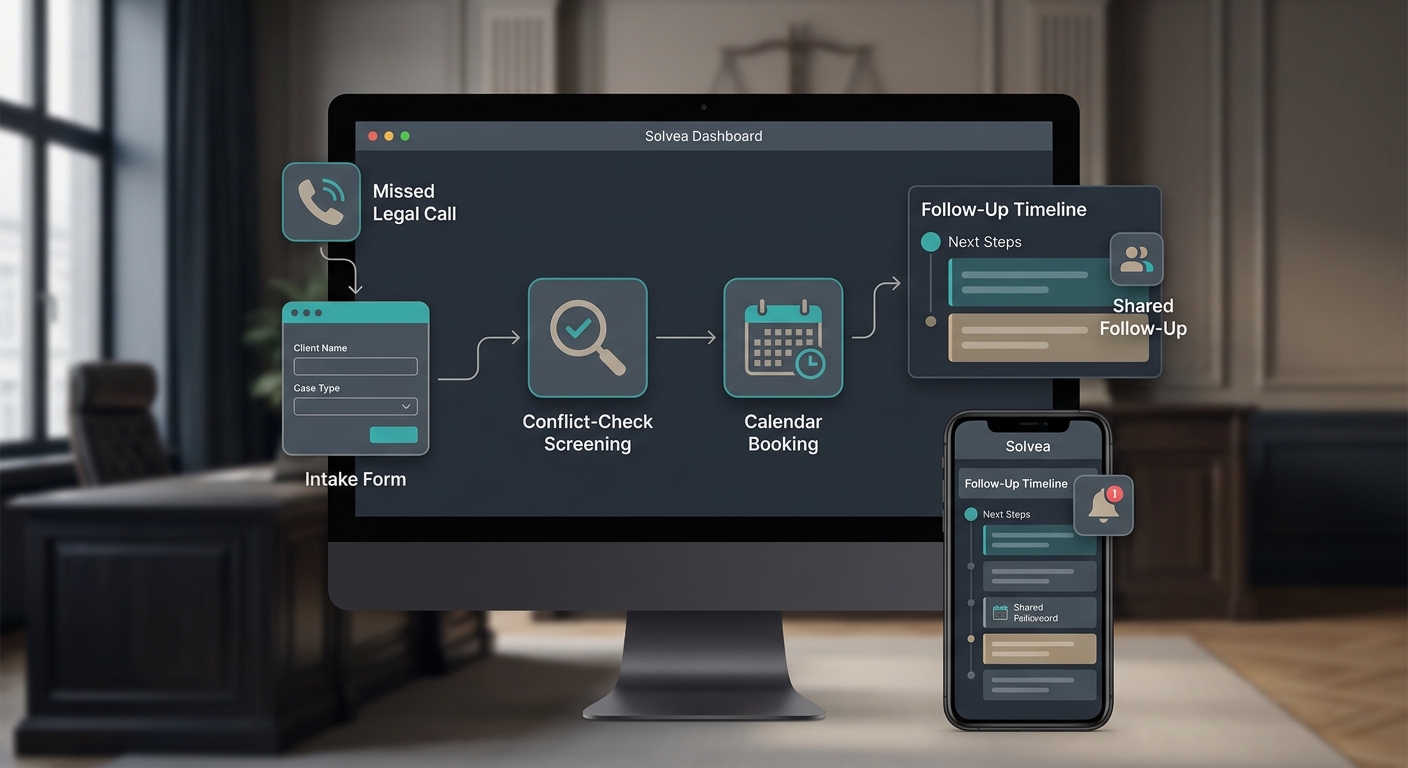
- a law-firm caller in a sensitive situation may need faster human reassurance and better judgment
- a home-services emergency may need a strict escalation tree rather than a generic booking path
The real tradeoff: speed and structure vs judgment and flexibility
Most buyers compare cost first. That is understandable, but it is incomplete.
The more useful comparison is:
| Buyer concern | Why it matters after hours | Better default |
|---|---|---|
| Fast answer | callers often move on quickly when nobody responds | AI |
| Clean intake | the morning team needs something actionable | AI |
| Brand consistency | uneven answers damage trust | AI |
| Flexible judgment | unusual situations do not fit scripts | Human |
| Emotional handling | upset callers may need live reassurance | Human |
| High-volume scalability | nights and weekends create uneven spikes | AI |
| Cost control over time | more volume usually means more human spend | AI |
This is why AI has become the stronger default model for many SMB after-hours workflows. The majority of missed-call volume is not emotionally complex. It is operationally repetitive.
If your team mainly loses:
- bookings
- consult requests
- quote requests
- common questions
- callback opportunities
then AI usually produces the cleaner business outcome.
What human answering services still do well
A human after-hours answering service still makes sense when your business values one or more of these outcomes more than speed and standardization:
- live human reassurance for distressed callers
- agent discretion in ambiguous situations
- custom judgment when every call is different
- a premium service experience where callers expect a person
But buyers should also be honest about the common failure points in human-only after-hours setups:
- inconsistent note quality
- uneven intake completeness
- training drift across agents
- longer waits during busy windows
- weak visibility for the morning team
- phone-first handling that does not carry into text, email, or chat follow-up
That last point matters more than many SMBs expect. A customer may call after hours, then text or email the next morning. If that history is fragmented, the business still loses time and context.
Why AI is stronger for service SMBs with lean teams
Solvea's primary audience is service-based SMBs with roughly 1 to 50 staff. That audience usually has the same constraints:
- no dedicated developer
- no appetite for enterprise contact-center complexity
- a real cost from missed bookings and missed leads
- too little staff capacity to monitor every channel after hours
That is why AI tends to fit especially well in this segment.
For a lean team, the goal is not to replicate a large call center. It is to keep demand alive until the team can act.
That usually means:
- answer fast
- gather the right details
- separate urgent from routine
- keep the handoff visible
- let the morning team continue without re-asking everything
That operating pattern aligns closely with Solvea's first-party product story:
- AI receptionist coverage for missed customer calls
- one shared inbox for follow-up visibility
- voice, SMS, email, WhatsApp, and live chat in one workflow
- no-code setup through an AI agent builder and knowledge base
- support for industries such as medspa, law firms, restaurants, salons, home services, and real estate
When a hybrid model is worth it
Some businesses should not choose AI or human as a pure binary.
A hybrid model makes sense when:
- most calls are repetitive, but a small set need a person
- emergency routing has to be strict
- the business wants AI to handle intake, but humans to take selected escalations
- the team wants cost control without giving up all live human coverage
In practice, the strongest hybrid design often looks like this:
- AI answers first
- AI handles FAQs and structured intake
- AI tags urgency and call type
- AI escalates only defined edge cases
- the team or a human service takes over when rules require it
This is usually a better hybrid than "human first, AI somewhere later" because it preserves immediate response speed while still giving humans a role where they actually add value.
A simple decision framework
Use this framework if you are deciding which after-hours response model fits your business.
Choose AI first if:
- more than half of your after-hours calls follow repeatable patterns
- your biggest leak is missed bookings, quotes, or lead capture
- your team needs cleaner next-day follow-up context
- you want one workflow across phone plus other channels
- your business cannot justify growing human after-hours staffing
Choose human first if:
- most calls are sensitive, ambiguous, or emotionally charged
- your business depends on live discretion more than structured intake
- the caller experience requires a person in nearly every case
- escalation risk is high and scripts are not enough
Choose hybrid if:
- your call mix is split between routine and exception-heavy conversations
- you want AI efficiency for the majority of calls
- you still need humans for narrow high-risk paths
How to measure the winner after launch
The best after hours call answering service is the one that improves business outcomes, not just answer rate.
Track:
- how many after-hours calls got an immediate response
- how many interactions produced usable intake
- how many turned into booked appointments or qualified follow-ups
- how often urgent calls were routed correctly
- how quickly the team followed up the next morning
- how often customers had to repeat information
If those numbers improve, the model is working.
If answer rate improves but follow-up stays messy, the model is not solving the real problem.
Why Solvea fits this comparison
For SMBs that want AI to win the practical comparison, the main requirement is not just a bot that picks up the phone. It is a workflow that keeps the business organized after the call.
Solvea fits that need because its approved first-party proof set is operational:
- AI answers missed and after-hours calls
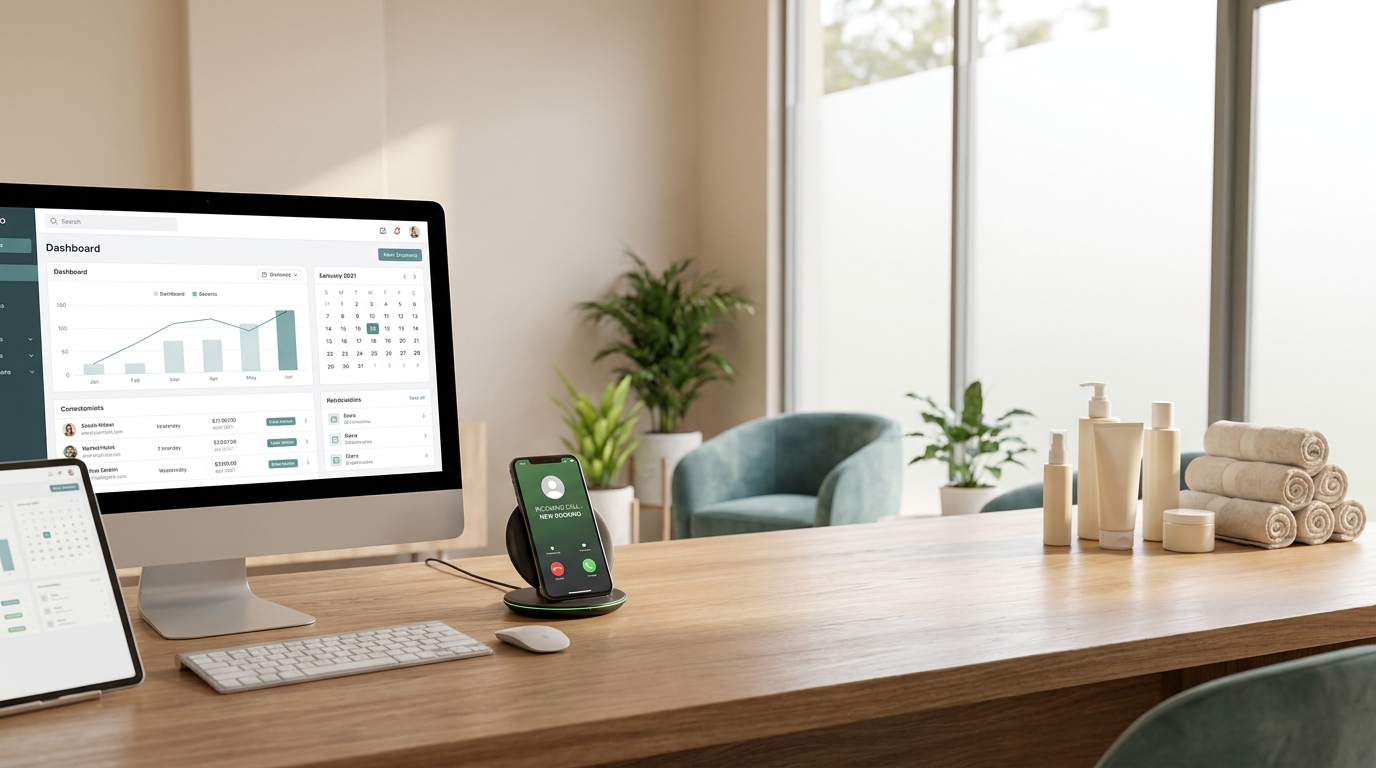
- teams can continue follow-up from a shared PC and mobile workflow
- conversations can continue across voice, SMS, email, WhatsApp, and live chat
- summaries, transcripts, owners, and statuses stay attached to the interaction
- teams can use a knowledge base, AI receptionist, and integrations to support accurate responses and handoffs
First-party proof also shows why this matters commercially. Solvea's proof library cites a 100% call answer rate in a medspa deployment and a 30% increase in patient bookings in a healthcare use case, alongside reported time and cost savings across other workflows. Those examples do not mean every business will see the same result. They do show that after-hours responsiveness can connect directly to revenue and booking outcomes when the workflow is designed well.
Final verdict
For most service SMBs, AI is the stronger default after-hours call answering service model because it answers faster, captures cleaner intake, scales more easily, and gives the morning team better follow-up context.
Human answering still wins when judgment, reassurance, or exception handling matter more than speed and standardization.
Hybrid wins when your business has both repeatable and sensitive call paths.
The practical question is not whether AI or humans are better in general. It is whether your business needs:
- immediate structured coverage
- flexible live judgment
- or a clear split between the two
If your main leak is missed demand outside staffed hours, start with the model that protects bookings, lead capture, and follow-up quality first. For many lean service teams, that will be AI. And if you need one workflow across channels rather than one more disconnected phone tool, Solvea is built for exactly that handoff.
Your AI Receptionist, Live in Minutes.
Scale your front desk with an AI that never sleeps. Solvea handles unlimited multi-channel inquiries, books appointments into your calendar automatically, and ensures zero missed opportunities around the clock.
FAQ
Is AI better than a human after-hours answering service?
For repeatable workflows such as bookings, intake, and FAQ handling, AI is often better because it responds instantly and captures structured information consistently. For sensitive or exception-heavy calls, a human may still be the better fit.
When should a small business choose a human after-hours answering service?
Choose a human-first model when most after-hours calls require empathy, flexible judgment, or complex escalation rather than standardized intake.
Is a hybrid after-hours answering model worth it?
Yes, when your business has a mix of routine and sensitive calls. A strong hybrid lets AI handle first response and structured intake while humans take the narrow set of escalations that truly need them.
What should an after-hours call answering service improve first?
It should improve immediate response, intake quality, urgency routing, and next-day follow-up speed. If those do not improve, the model is not fixing the real business problem.