If you are pricing an after hours call answering service, the real comparison is not vendor A versus vendor B.
It is this:
- do you extend receptionist staffing into nights and weekends,
- do you buy a live answering service,
- or do you use AI-led coverage that handles the after-hours workload without adding shift labor?
That distinction matters because these options bill in completely different ways.
Staffing cost is mostly driven by hours you need covered. AI and answering-service plans are mostly driven by calls or minutes actually handled. If you compare only headline plan prices, you miss the real budget tradeoff.
This guide benchmarks those models using public vendor pages reviewed on July 17, 2026 and labor data from the U.S. Bureau of Labor Statistics. The goal is simple: give buyers a fast, defensible way to decide whether after-hours coverage should be handled by staff, AI, or a hybrid setup.
Quick answer
For most service SMBs, adding dedicated after-hours staffing is the most expensive way to cover nights and weekends.
Using current public benchmarks checked on July 17, 2026:
- Solvea lists $19.90 per seat per month with 500 monthly credits per seat.
- RingCentral AI Receptionist starts at $39 per month.
- Smith.ai AI Receptionist publishes tiers at $150, $270, and $500 for 75, 150, and 300 included calls.
- Specialty Answering Service starts at $44 per month plus $1.54 per minute, with packaged plans at $159 for 100 minutes, $269 for 220 minutes, and $649 for 500 minutes.
By contrast, a labor benchmark built from BLS data puts a receptionist-style coverage extension at about $1,108.83 per month for 10 extra hours per week, $2,217.65 for 20 hours, and $4,435.31 for 40 hours, before you add scheduling complexity or overtime risk.
That does not mean AI is always the right answer. It means buyers should stop comparing after-hours tools only to each other and start comparing them to the real cost of buying availability from staff.
Why staffing and AI are often compared incorrectly
Most buyers ask, "What does an after-hours answering service cost?"
The better question is, "Am I paying for empty time coverage or for actual handled demand?"
That is the core difference:
| Model | What you buy | Why the math changes |
|---|---|---|
| Extended receptionist staffing | availability hours | you pay even when the phone is quiet |
| Live answering service | handled minutes or packaged usage | spend rises with usage, not with every empty hour |
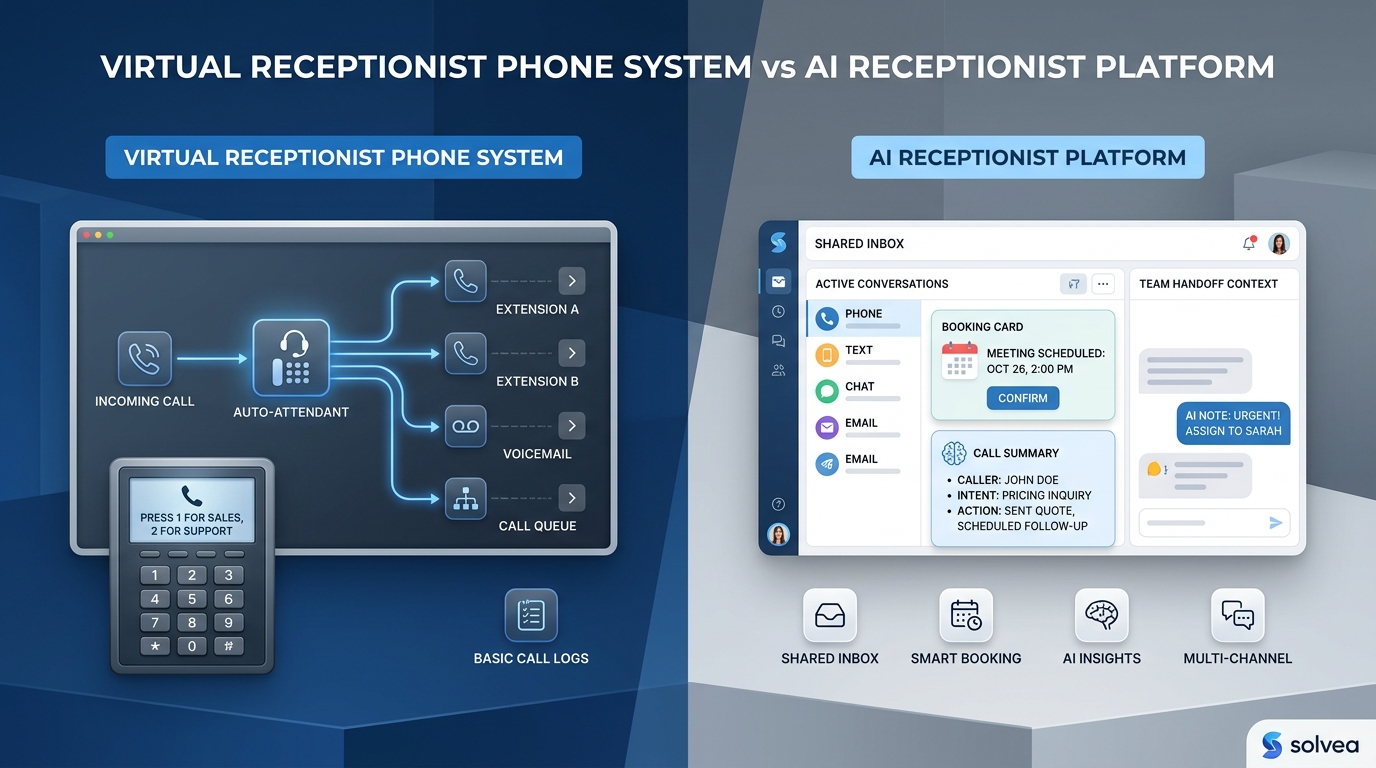
| AI answering platform | seat/platform fee plus usage | cost stays software-like until volume or add-ons expand |
This is why a business that only gets a modest number of evening or weekend calls can still spend a lot on staffing. You are paying for the schedule, not just the interactions.
The staffing benchmark buyers should use
The most conservative public labor benchmark comes from the U.S. Bureau of Labor Statistics.
- The BLS Occupational Outlook Handbook says the median hourly wage for receptionists and information clerks was $17.90 in May 2024.
- The BLS Employer Costs for Employee Compensation release says private-industry wages were 69.9% of compensation costs in March 2026, with benefits making up the remaining 30.1%.
Using those two sources together gives a modeled employer cost of about $25.61 per hour for receptionist-style coverage:
$17.90 / 0.699 = $25.61 loaded hourly cost
That produces this monthly benchmark:
| Coverage need | Weekly hours | Modeled monthly cost |
|---|---|---|
| Light after-hours extension | 10 | $1,108.83 |
| Moderate extension | 20 | $2,217.65 |
| Full evening/weekend block | 40 | $4,435.31 |
If the same employee is pushed into overtime instead of hiring separate coverage, the cost can move higher. At a time-and-a-half wage assumption, the modeled monthly cost rises to roughly $1,663.24 for 10 overtime hours per week and $3,326.48 for 20 overtime hours.
These are not exact payroll quotes. They are buyer-side benchmarks meant to answer a practical question: what is the order of magnitude cost of solving after-hours coverage with labor?
Current public AI and answering-service benchmarks
Here is the public market snapshot reviewed on July 17, 2026.
| Vendor | Public benchmark | Pricing model | Buyer note |
|---|---|---|---|
| Solvea | $19.90/seat/month; 500 monthly credits per seat | Seat-based AI platform | Best read as software plus usage, not outsourced labor |
| RingCentral AI Receptionist | Starts at $39/month | Platform add-on | Best fit for businesses already thinking in phone-system terms |
| Smith.ai AI Receptionist | $150 for 75 calls; $270 for 150; $500 for 300 | Per AI call | Easy to benchmark if you know expected monthly handled calls |
| Specialty Answering Service | $44/month + $1.54/minute; 100 minutes for $159; 220 for $269; 500 for $649 | Per minute / package | More like outsourced live coverage than software |
Even before you model overages, the main takeaway is clear: most public AI and answering-service entry points sit far below the cost of adding 10 to 20 staffed hours every week.
The budget question most buyers miss
An after hours call answering service is not just a phone expense. It is a response-system decision.
That means the cheapest-looking option is not automatically the best one. Buyers still need to ask:
- Are we trying to cover a quiet schedule with only a small number of actual after-hours calls?
- Are we buying phone pickup only, or do we need summaries, routing, and next-day follow-up context?
- Do we need a live human for emotionally sensitive or judgment-heavy calls?
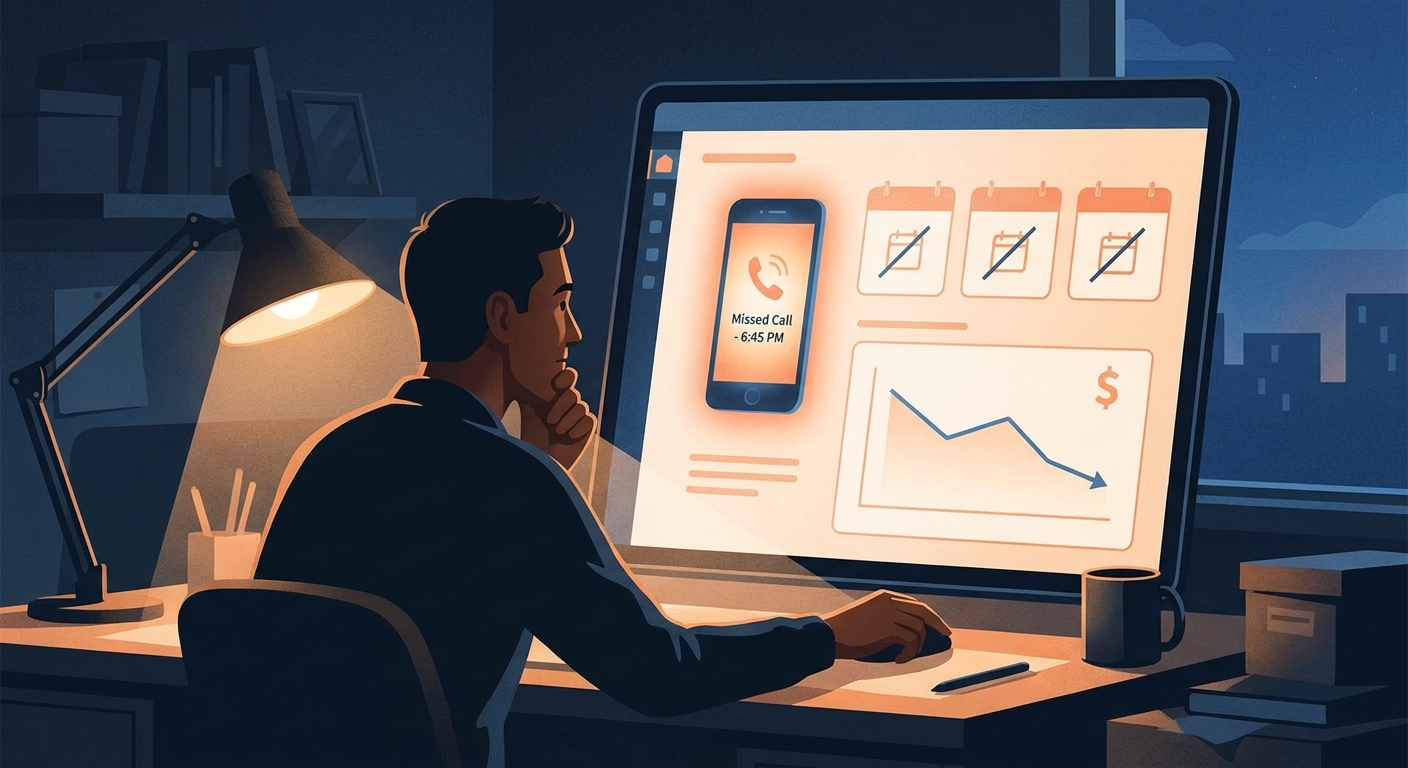
- Are we trying to prevent missed bookings, estimates, or qualified leads from dying in voicemail?
Those questions determine whether staffing, a live answering service, or AI is the right benchmark.
When staffing still makes sense
Staffing is still the best-fit model when most after-hours interactions need:
- nuanced human judgment
- emotional reassurance
- exception-heavy problem solving
- premium white-glove treatment
- complex escalation that cannot be safely standardized
But buyers should be honest about the tradeoff. If the call mix is mostly:
- booking requests
- estimate intake
- common questions
- reschedules
- basic urgency triage
then you are often paying labor rates to cover work that can be handled more cheaply by AI or by a narrower answering-service plan.
When AI-led coverage usually wins on cost
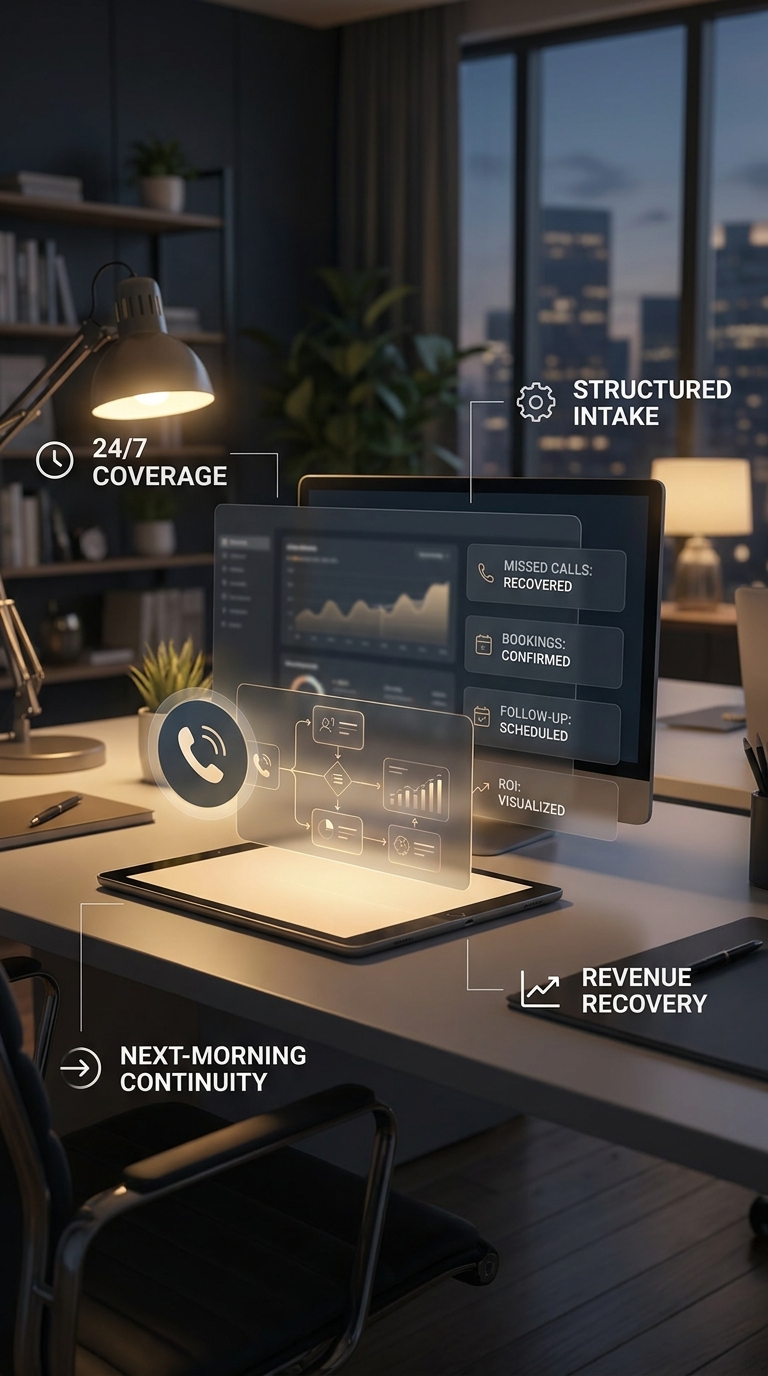
AI usually wins when the business problem is "we cannot afford empty after-hours hours, but we cannot afford missed calls either."
That is especially true for:
- medspas and salons
- restaurants and hospitality teams
- home-services companies
- real-estate teams
- law firms with routine intake paths
These businesses often need fast response and structured intake more than they need a live person on every call.
That is where Solvea's positioning is strongest. The company does not frame the product as just another phone-answering line. It frames it as software-led coverage with:
- AI receptionist support
- one shared business number
- cross-channel continuity across voice, SMS, email, WhatsApp, LINE, and live chat
- team workflow features such as summaries, transcripts, statuses, and ownership
That matters because the buyer is not only replacing voicemail. They are trying to avoid buying extra shift staffing just to keep basic after-hours demand from disappearing.
A simple way to decide which benchmark matters
Use this rule:
Compare against staffing first if:
- you are seriously considering adding evening or weekend front-desk hours,
- you need to know whether a software or service plan is cheaper than labor,
- or you are covering many empty hours with relatively few real calls.
Compare against live answering-service packages first if:
- you already know you want a human to answer,
- you mainly need phone coverage rather than a broader team workflow,
- and you want a minute-based or package-based outsourced model.
Compare against AI plans first if:
- most after-hours calls are repeatable,
- your team wants structured intake and follow-up context,
- and the main goal is coverage without adding another shift.
The hidden-cost checklist
Before you choose any after-hours model, ask:
| Question | Why it matters |
|---|---|
| Are we paying for hours covered or interactions handled? | This is the biggest budget difference in the whole category |
| What counts toward usage or overage? | Calls, minutes, transfers, and credits are not the same thing |
| Do we need voice only, or do we need cross-channel continuity too? | Voice-only tools can create follow-up gaps later |
| How often do we truly need a live human after hours? | This determines whether staffing cost is justified |
| What is the cost of one missed booking or estimate request? | Cheap coverage is still expensive if it loses revenue |
Where Solvea fits
Solvea is the strongest fit when the buyer wants to avoid paying staffing-level coverage costs for repeatable after-hours work.
On the public pricing page reviewed on July 17, 2026, Solvea lists:
- $19.90 per seat per month
- 500 monthly credits per seat
- one shared team business number
That does not make it a universal replacement for every human after-hours workflow. It does make it a much lower-cost starting point than extending receptionist staffing for most SMB teams that mainly need:
- after-hours lead capture
- booking intake
- FAQ handling
- structured follow-up context
If your buying question is, "Do I need another shift, or do I need better after-hours coverage?" this is the lens that matters.
Final takeaway
The most useful benchmark for after hours call answering service pricing is not an average vendor price. It is the cost of solving the same problem with labor.
As of Friday, July 17, 2026:
- public AI and answering-service options ranged from $19.90 per seat per month to usage-led plans in the $150 to $649+ per month range before overages,
- while a modeled receptionist-style labor benchmark started around $1,108.83 per month for only 10 extra coverage hours per week.
That is why Solvea's core positioning is strong for this query: it offers software-led after-hours coverage without forcing the buyer to add another shift.
If your team is comparing vendors because staffing feels expensive, start there. Price the labor alternative first, then compare whether AI or a live answering service gives you enough coverage, enough structure, and enough follow-up continuity at a lower cost.
See how Solvea compares on cost and coverage.
Your AI Receptionist, Live in Minutes.
Scale your front desk with an AI that never sleeps. Solvea handles unlimited multi-channel inquiries, books appointments into your calendar automatically, and ensures zero missed opportunities around the clock.
FAQ
Is hiring a receptionist for after-hours coverage usually more expensive than an AI answering service?
Often yes. Using BLS wage and compensation data checked on July 17, 2026, even 10 extra receptionist-style coverage hours per week model at about $1,108.83 per month, which is higher than many published AI or answering-service entry plans.
Why is staffing cost so much higher than answering-service pricing?
Because staffing pays for availability hours whether the phone rings or not. Many answering-service and AI plans charge mainly for calls, minutes, or usage instead.
When should I still choose live human after-hours coverage?
Choose live human coverage when most calls are emotionally sensitive, legally complex, medically sensitive, or highly exception-heavy. In those cases, judgment can matter more than the cost difference.
What is the best low-friction benchmark for SMB buyers?
Start by comparing your current after-hours need against a 10-hour or 20-hour weekly staffing extension. That usually makes the cost difference between labor and AI much easier to understand.
Source Links
- Solvea pricing: https://solvea.cx/pricing
- Smith.ai AI Receptionist pricing: https://smith.ai/pricing/ai-receptionist
- Specialty Answering Service pricing: https://www.specialtyansweringservice.net/pricing/
- RingCentral AI Receptionist pricing: https://www.ringcentral.com/pricing/ai-receptionist.html
- RingCentral AI Receptionist product page: https://www.ringcentral.com/ai-receptionist.html
- BLS receptionists overview: https://www.bls.gov/ooh/office-and-administrative-support/receptionists.htm
- BLS Employer Costs for Employee Compensation summary: https://www.bls.gov/news.release/ecec.nr0.htm