













The customer
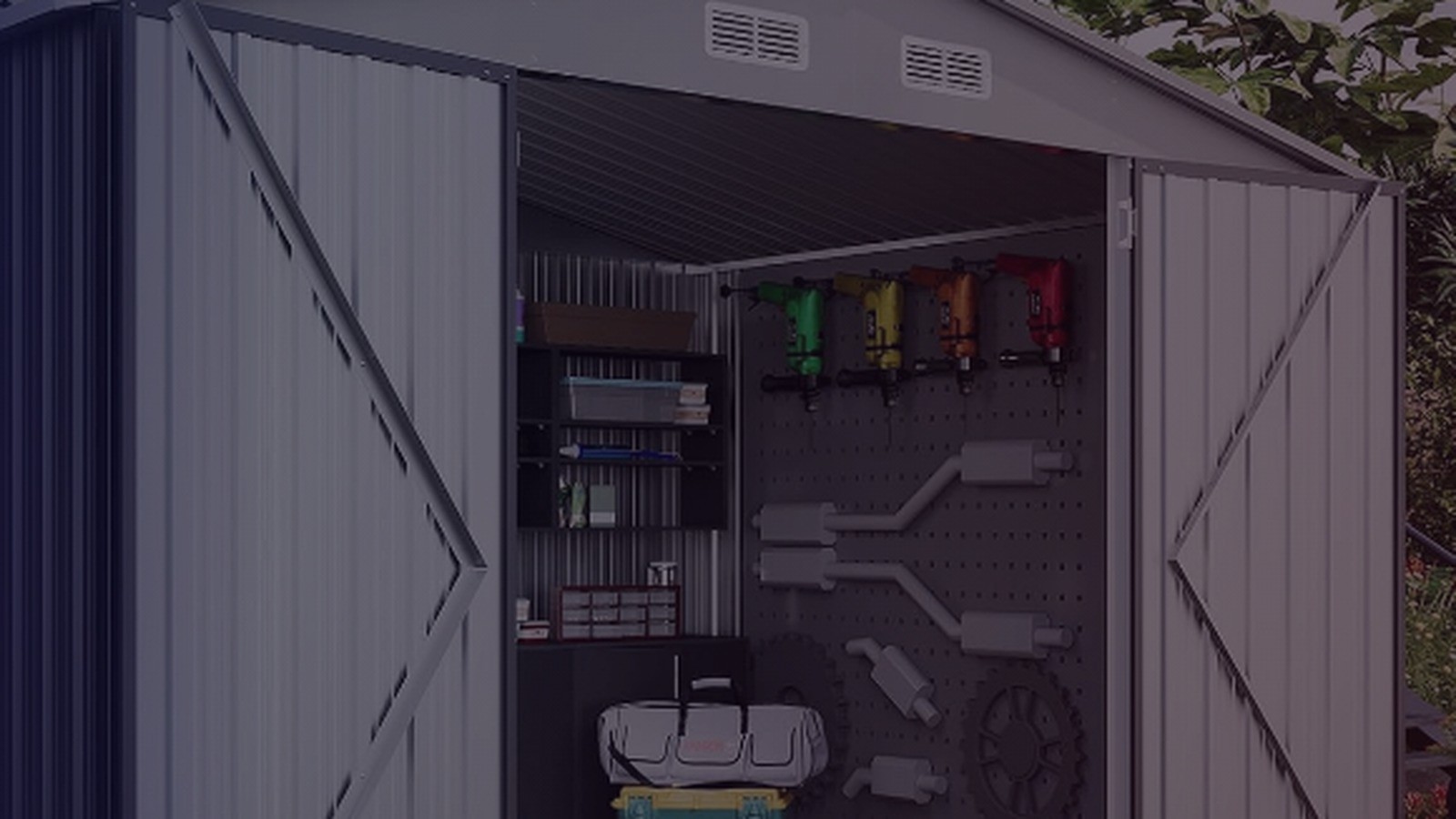
Ningbo Kaimeichen E-Commerce Co., Ltd. (Kaimeichen) is a cross-border home and furniture company selling into North America, Europe and Australia. Its large outdoor range includes gazebos, tool rooms and resin storage sheds. The public brand used on Shulex’s customer logo wall — and on the official case artwork — is ONEINMIL.
For this kind of assortment, after-sales pressure often starts after the first box arrives. One order may be split into several parcels. If any parcel’s status is left unexplained, a shopper can reasonably conclude that something was left out.
The problem
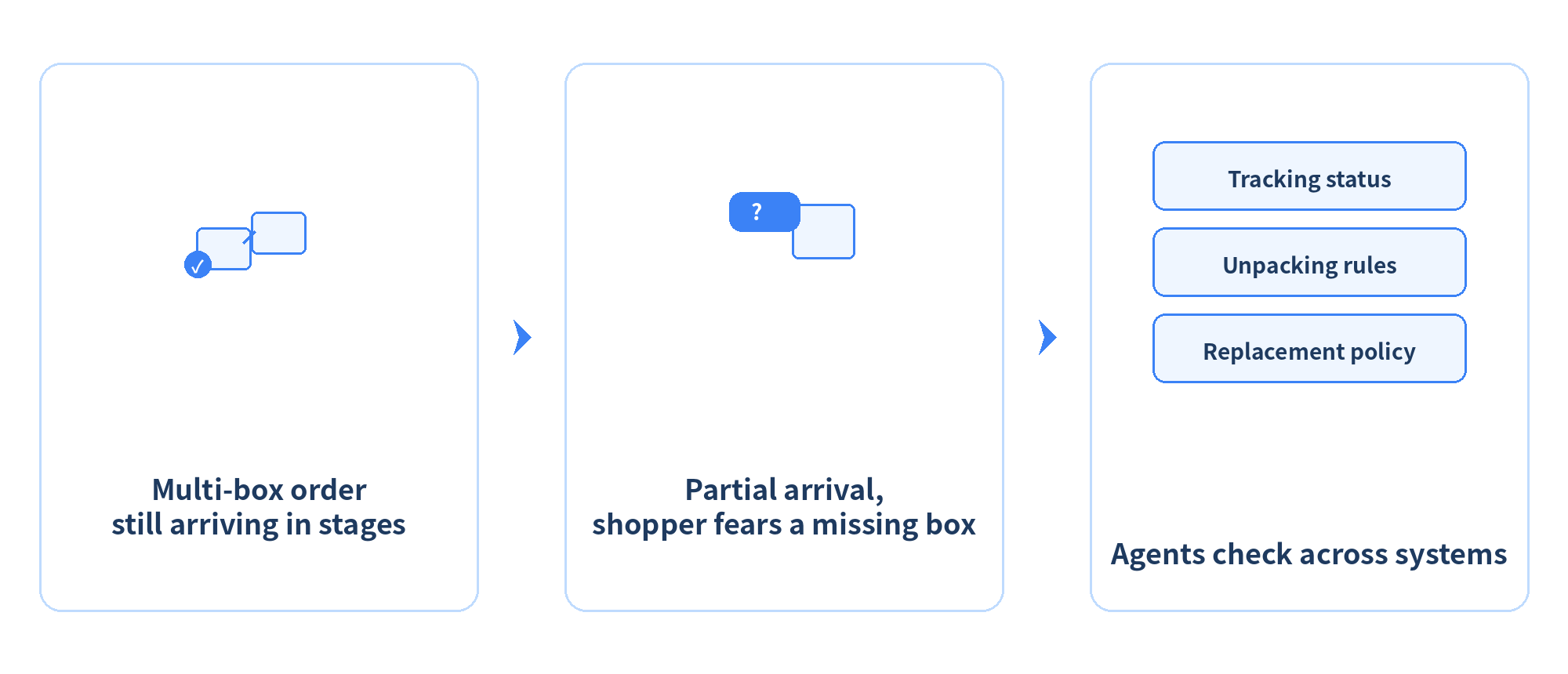
A short question — “is the rest of my order missing?” — can send an agent across several systems to check tracking, unpacking rules and replacement policy. The back office may know the remaining boxes are still in transit; the shopper only sees an incomplete delivery.
The strain grows in peak season, when orders arrive in a short window and delivery times become more uneven. A similar split-shipment problem appears in the BESTIER customer story. If a large-item case is left unclear, it can later touch returns costs, store ratings and conversion. This case does not include verified figures for those effects, so they are noted only as business risks, not as measured results.
Rather than adding temporary headcount for this peak, the team put Shulex AI staff in place beforehand to take the first line of parcel and logistics questions.
The answer is already in the order and tracking data
The hard part of these questions is not the script. It is the data. Once a shopper gives an order number or email address, the complete arrival picture for that order is usually already in the systems. What used to slow the team down was that the data sat in more than one place and had to be checked by hand.
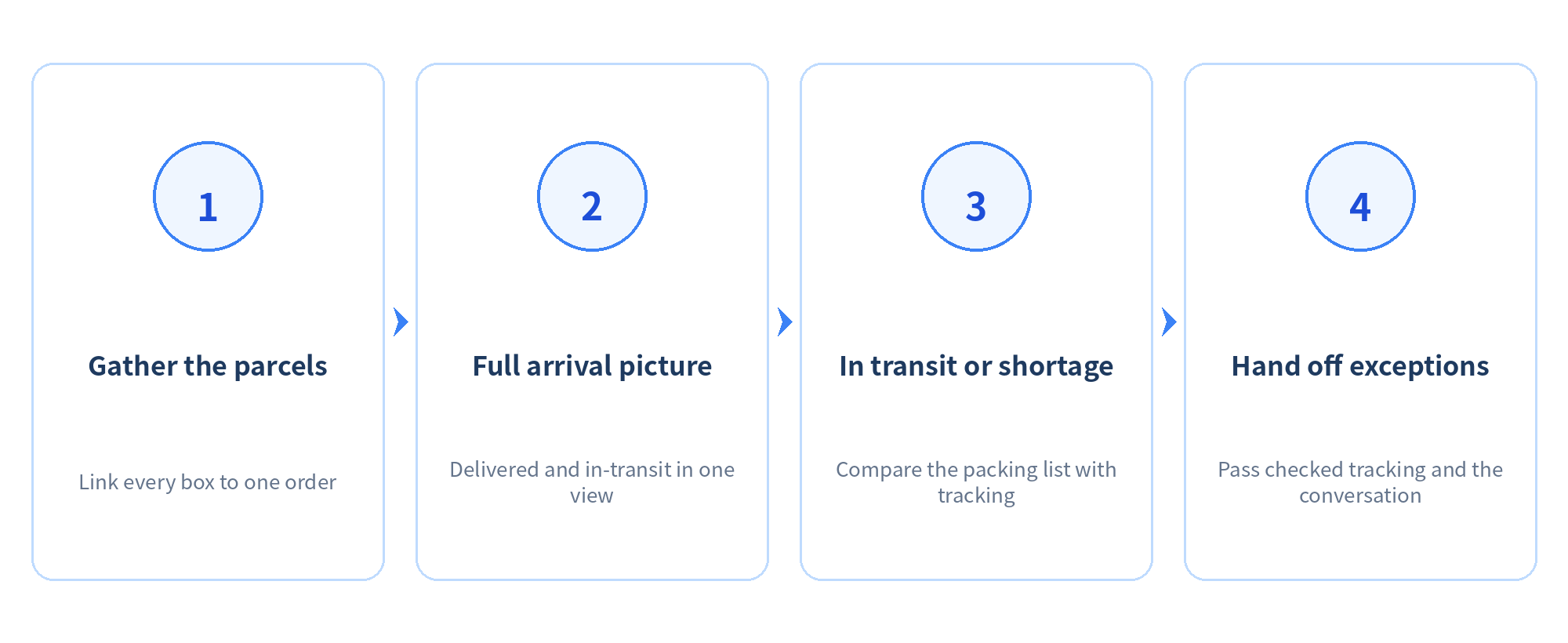
With Shulex AI staff, that step became four parts:
1. Gather the parcels. Multiple boxes that belong to the same order are grouped together. Shoppers only need an order number or email address, not every tracking number. 2. Show the full arrival picture. For each box, the reply can state whether it has been delivered, where it is in transit, and when it is expected. “Where are the other boxes?” gets a full view, not a fragment. 3. Tell in-transit shipments from true shortages. The team compares the expected packing list with tracking status. Boxes still on the way are explained with progress and timing; confirmed shortages follow the replacement process. 4. Hand off what needs a person, with context. Product fit, order disputes and other judgment calls go to a human agent, together with the tracking already checked and the conversation so far, so the shopper does not have to repeat the story.
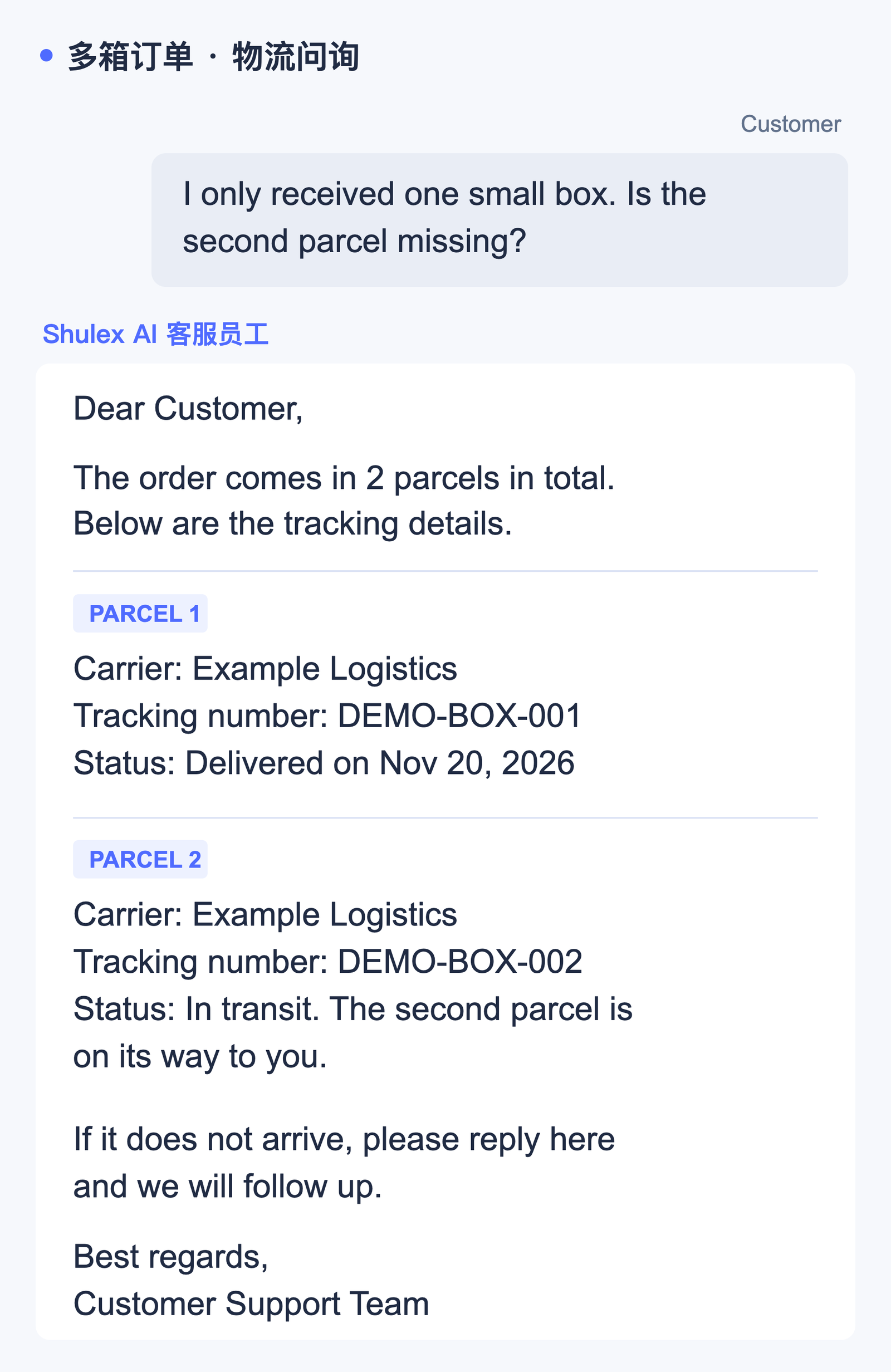
The conversation below is a product demonstration. Carrier names, tracking numbers and dates are sample data, not a real customer order or a service-level promise.
What changes for the support team
Once this flow is in place, agents spend less time repeating “where is my box?” answers and more time on the work that needs judgment: which cases need a replacement, which are in dispute, and which need careful communication. For shoppers, one question should come back with an answer that can be checked against the order, instead of being left hanging.
A few capabilities sit behind that shift:
- Channels stay together, and rules stay separate. Questions may arrive from Amazon, a brand site, TikTok Shop and from email, in-platform messages, live chat, phone or video. Shulex brings those inlets together with order and logistics data, and applies the after-sales rules for the right storefront, so agents are not jumping between consoles or mixing policies from different markets.
- A human handoff keeps the context. When a replacement, damage assessment or dispute needs a person, the ticket carries the order, the tracking already checked, part identifiers and the conversation, so a later shift can continue without asking the shopper to start again.
- Coverage across time zones and languages follows agreed rules. AI staff can respond to off-hours questions according to those rules, instead of leaving “is this missing?” unexplained until a peak-season shift is staffed.
- Tags from service work can feed warehouse and product teams. Judgments such as shortage, damage or delay can be aggregated by SKU or batch to help review packing, carriers or instructions. This is a capability, not a measured result in this case.
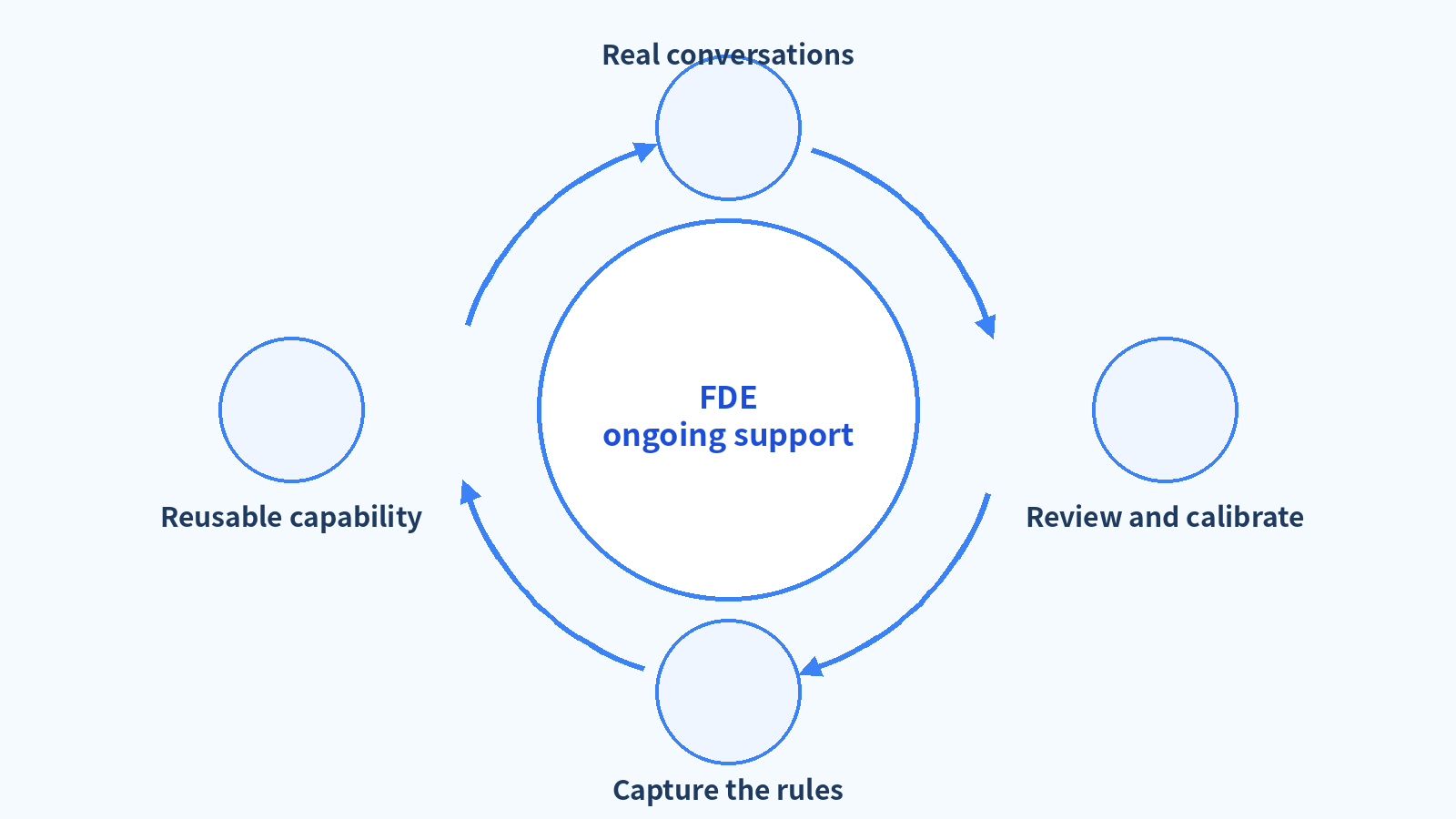
The Shulex FDE team stays involved from rule design and launch through in-season calibration, using real conversations and missed cases to adjust how the system decides and how exceptions are handled. What used to live mainly as individual experience can be maintained as a service capability the team can keep improving.
The point is not to replace people on every case. It is to let AI staff take the repetitive tracking questions, and to keep people on the decisions that need them.