












The customer
BESTIER is the core brand of 深圳市舒适空间家居有限公司. It is known for modular, highly customizable gaming desks and living-room furniture with RGB ambient lighting, and it serves hundreds of thousands of households overseas.
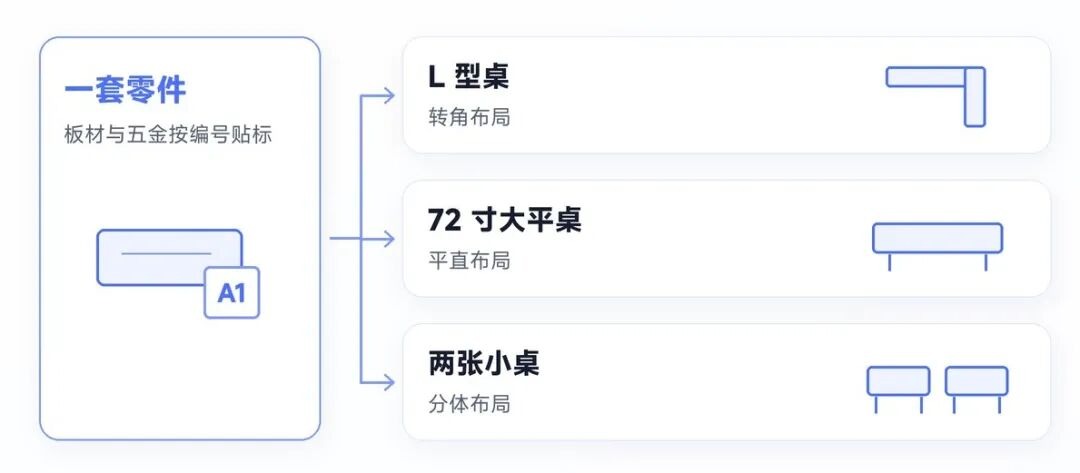
Unlike many traditional “large and simple” furniture brands, a 55-inch multifunctional gaming desk can be built as an L-shaped desk, a 72-inch straight desk, or two smaller desks. Boards and hardware kits are labeled by part number. That flexibility is popular with buyers, but it also makes after-sales support harder: questions are specific, assembly options multiply, and a full-item return is expensive.
The challenge
The real pressure often starts when a buyer opens the boxes and picks up a screwdriver.
Questions such as “why isn’t the LED strip lighting up?” or “where does this part go?” depend on the chosen desk configuration and wiring. Many overseas buyers assemble furniture on local evenings and weekends, which is late at night in China. Agents cannot realistically leaf through a thick manual in time.
Return costs are also high. Industry figures cited in the source case indicate that bulky-furniture returns often cost 40%–50% of the order value. Once a buyer starts a refund on a desk that weighs tens of kilograms, pickup, trucking and warehouse damage can run to 80–200 US dollars, enough to wipe out several days of profit. Opened bulky items are often marked down or scrapped.
The answers usually already exist in the order system, tracking records and the manual. The difficulty is getting an accurate answer to the buyer at the moment of unboxing.
Three frequent scenarios at unboxing
Damage and missing parts: AI collects evidence, people make the decision
If a board is damaged in transit, or screws or parts are missing, agents previously had to go back and forth for carton barcodes, photos and part numbers, often over two or three days of email.
The AI agent now guides the buyer to photograph the shipping label and the damaged area, helps identify the tracking number and damage location, asks the buyer to point out or circle missing part numbers against the packed manual, and compiles the evidence, photos and order data into a structured ticket for a human agent.
The aim is to turn a costly full-item return into a lower-cost part replacement or a documented damage assessment. Decisions such as replacement or compensation stay with a person.
Split shipments: clear each carton’s tracking
Because of size and weight, a desk is often shipped in more than one parcel. After the first box arrives, some buyers assume items are missing. Agents previously had to search shipments and check each carton in the backend.
Once order and logistics data are connected to Shulex, a buyer can provide an order number or email address, and the AI agent can retrieve each parcel’s tracking and explain the delivery status, reducing disputes and returns caused by a mistaken “missing shipment” report.
Assembly and accessories: step-by-step guidance by model and desk type
For the most labor-intensive assembly and LED-strip issues, Shulex helped the brand turn manuals, parts lists and troubleshooting steps into a structured knowledge base. When a buyer asks where a part belongs, the AI agent first confirms the exact model and the intended desk configuration, then shows the matching one-page diagram and steps, instead of handing over the full manual.
Early checks of this kind can resolve many “it looks damaged” LED-strip issues and avoid unnecessary replacement parts.
The result
After BESTIER connected Shulex AI support, the team could spend less time searching the ERP, flipping through manuals and repeatedly asking buyers for photos, and more time on review and key decisions, especially during overseas peak season.
On the returns side, timely explanations of split shipments and precise part replacements have intercepted many full-item returns that used to start when buyers could not wait or could not work out the assembly. Costly bulky-furniture return losses are more often resolved at unboxing.