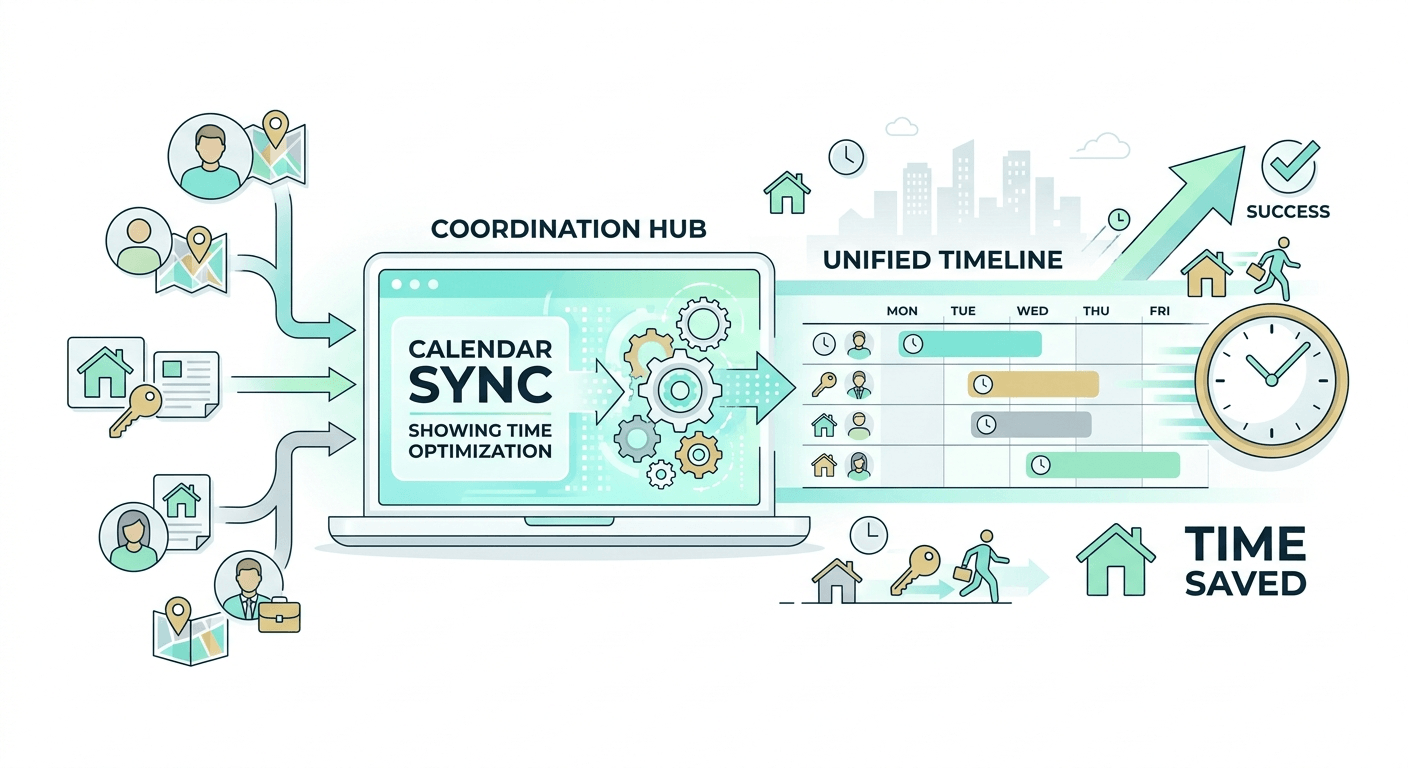
A customer calls while your team is helping someone else. They ask about availability, pricing, and whether a callback is possible before noon. If that call only ends as a voicemail, the business has a task to chase. If it becomes a structured call record, the business has context.
What Is Speech Analytics in an AI Front Desk
Speech analytics is the process of turning spoken conversations into usable business information. In an AI front desk workflow, that usually means converting phone calls into transcripts, summaries, customer intent labels, unresolved topics, call outcomes, and follow-up tasks.
The important detail is where speech analytics sits in the workflow. It is not only a reporting dashboard that managers open once a month. It should be close to the daily front desk process:
- A customer calls.
- The AI receptionist answers.
- The caller's intent is identified.
- The request is resolved or routed.
- The call record becomes searchable.
- Repeated topics improve the knowledge base.
Solvea fits this workflow as an AI receptionist for phone, email, and live chat. Its role is to handle first-contact customer conversations, use business knowledge, complete connected actions, and route harder cases to human agents. Speech analytics becomes useful because those conversations can feed the same improvement loop instead of staying as isolated phone events.
Speech Analytics Call Center Workflow
The phrase speech analytics call center often sounds like an enterprise contact center project. For an AI front desk, the same idea can be simpler: every call should leave behind a useful record that helps the next person or system act correctly.
A practical workflow looks like this:
Front desk speech analytics workflow:
- Capture the inbound call
- Generate a transcript
- Summarize the caller's request
- Identify customer intent
- Mark the outcome
- Trigger human handoff when needed
- Group unresolved topics
- Update the knowledge base
This is the logic that was missing from the earlier draft. The center of the article is not "speech analytics as a generic category." The center is "what happens after an AI receptionist answers the phone."
For a small business, this can replace a loose chain of sticky notes, missed voicemails, and partial memory. For a larger service team, it creates a lightweight contact center speech analytics layer that connects calls to follow-up work.
Call Center Speech Analytics for Missed Calls
Missed calls are often treated as a staffing problem. They are also a data problem. When a business misses a call, it loses the chance to know what the customer wanted, whether the request was urgent, and whether the same question is coming up again and again.
An AI receptionist changes that first step. If the call is answered, the customer can explain the request. If the AI can resolve it, the call ends cleanly. If the request needs a person, the call record can move into an inbox or handoff workflow with context attached.
That makes call center speech analytics relevant even for teams that do not think of themselves as call centers. A salon, real estate office, clinic reception desk, home service business, or ecommerce support team may not run a formal call center, but they still need to know:
- Which calls were answered
- Which calls were resolved by AI
- Which calls needed staff
- Which topics created the most friction
- Which follow-ups are still open
In Solvea analytics, conversation volume and AI resolution performance are treated as part of monitoring the AI agent. That matters because a front desk AI should not be judged only by whether it talks. It should be judged by whether real customer conversations move forward.
Contact Center Speech Analytics for Customer Intent
Contact center speech analytics is most useful when it explains why customers are calling. Intent is the bridge between a raw transcript and an operational decision.
Common front desk intents include:
- Booking an appointment
- Changing a reservation
- Asking about price
- Checking availability
- Requesting order status
- Reporting a problem
- Asking for a human
Once these intents are visible, the business can make better decisions. A spike in price questions may mean the website is unclear. Frequent availability calls may mean inventory information is hard to find. Repeated handoff requests may mean the AI needs better routing rules or a clearer boundary.
McKinsey's customer care research notes that contact centers are a strong early use case for generative AI because they contain transcripts, contact logs, and customer feedback. That point applies neatly to AI front desk calls: the conversation itself is a source of customer intelligence.
For Solvea users, this is where phone, live chat, and email should not be reviewed as separate worlds. If customers call and chat about the same unresolved issue, the insight is stronger than either channel alone.
Real Time Speech Analytics for Human Handoff
Real time speech analytics should help decide when a call needs a person. It does not need to be dramatic. The best version is practical: detect that the caller has a complex request, collect the right details, and pass the case to a human with enough context.
A strong handoff note should answer four questions:
Human handoff note:
- Who called?
- What did they ask?
- What did the AI already do?
- What still needs human attention?
This matters because bad handoff creates repetition. The customer explains the issue to the AI, then explains it again to a staff member. Good speech analytics reduces that friction by turning the call into a short, usable summary.
Solvea's workflow includes AI handling, human takeover, and follow-up through an inbox. That is the right place to use call summaries and unresolved topic labels. The goal is not to make the AI sound more impressive. The goal is to make the next human action clearer.
Speech Analytics Software for Call Transcripts
Speech analytics software starts with transcription, but the transcript is only useful if people can act on it. A long block of text is better than no record, yet it still requires time to read. A useful AI front desk call record should include several layers:
- Full transcript
- Short summary
- Customer intent
- Key details
- Call outcome
- Handoff status
- Related topic
- Follow-up owner
The transcript is the evidence layer. The summary is the speed layer. The topic is the learning layer.
This structure also protects against overtrusting AI output. Transcripts can contain errors when audio quality is poor, speakers overlap, or names are unusual. A summary can miss nuance. When a decision matters, staff should be able to review the original call record before acting.
NIST's AI Risk Management Framework is useful for this kind of workflow because it encourages organizations to manage AI risks across design, deployment, measurement, and operation. For call transcripts, that means teams should know what the AI is summarizing, where uncertainty may appear, and who reviews sensitive cases.
AI Speech Analytics for Topic Insights
AI speech analytics becomes more valuable when it improves the front desk over time. One unresolved call is a task. Fifty unresolved calls about the same issue are a roadmap.
Solvea Topic Insights groups conversations transferred to human agents by topic. Teams can use those repeated unresolved themes to improve the knowledge base. That is a direct connection between speech analytics and AI receptionist quality: real calls reveal what the AI needs to learn next.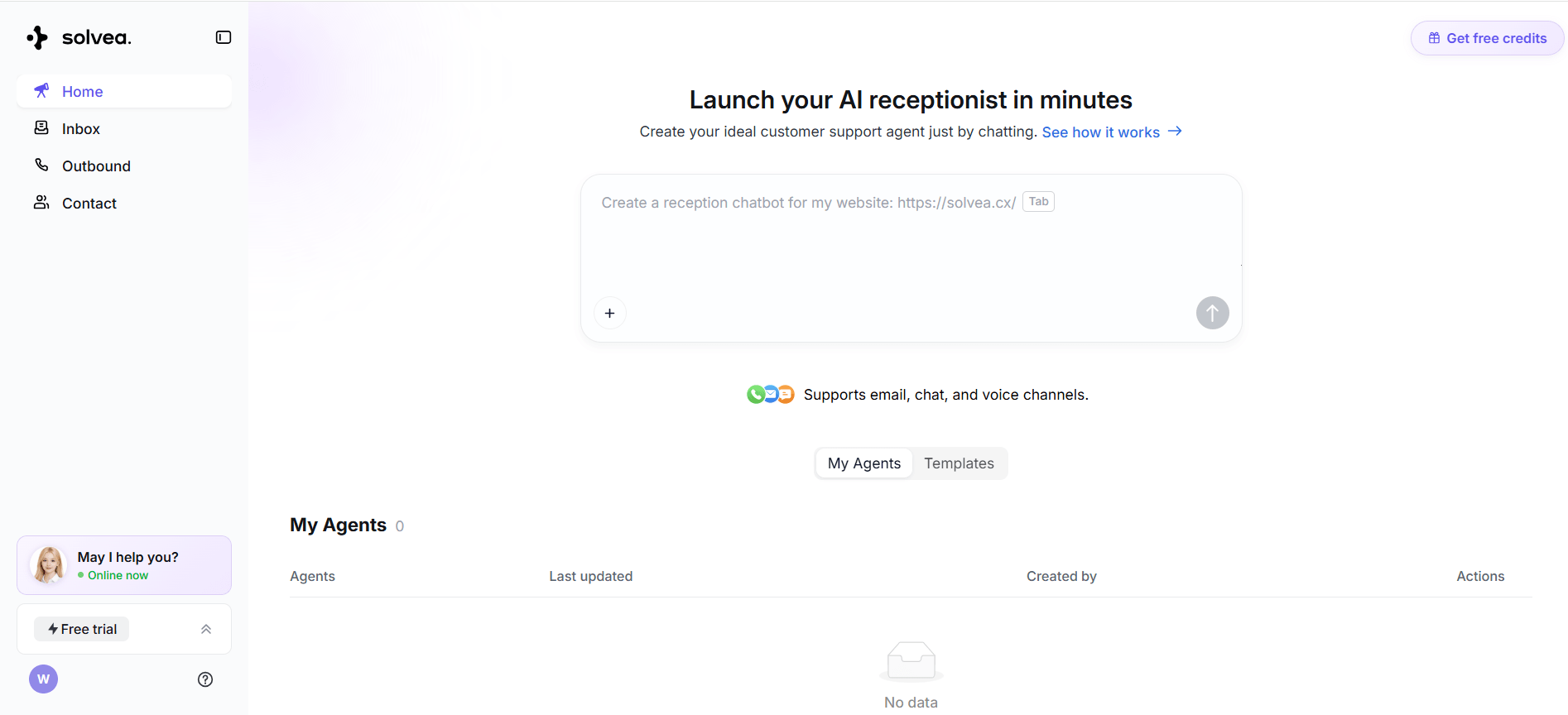
Good topic insight is specific. "Booking" is too broad. "Same-day appointment rescheduling" is useful. "Product question" is too broad. "Warranty coverage for refurbished items" is useful.
Use topic insights to answer:
- Which questions did the AI fail to resolve?
- Which topics created the most handoffs?
- Which answer should be added to the knowledge base?
- Which process should be changed outside the AI?
This is also where Solvea belongs naturally in the article. It is not being positioned as a generic enterprise call center speech analytics platform. It is relevant because its AI receptionist workflow includes conversations, handoff, analytics, and knowledge improvement in one loop.
Cloud Based Speech Analytics for Omnichannel Teams
Cloud based speech analytics matters when customer conversations happen across more than one channel. A caller may ask about availability by phone, send a follow-up email, and return through live chat. If each channel is reviewed separately, the team sees fragments.
An AI receptionist workflow should connect the fragments:
- Phone calls show spoken urgency.
- Email shows detail and attachments.
- Live chat shows real-time website friction.
- Inbox records show what staff had to resolve.
- Analytics show what repeated over time.
Solvea's product structure across phone, email, and live chat makes this connection relevant. The speech analytics angle is strongest when phone call records can be reviewed alongside other customer conversations, not when call recordings sit in a separate archive.
Cloud based tools also make review easier for distributed teams. Managers can check resolution patterns, staff can handle handoff tickets, and knowledge owners can update answers without passing recordings around manually.
Speech Analytics Solution for Better Knowledge
A speech analytics solution should not end at a chart. The next step should be a better answer, a better workflow, or a better handoff rule.
For an AI front desk, the most useful improvement loop is:
Knowledge improvement loop:
- Review unresolved call topics
- Pick the highest-frequency topic
- Check a few transcripts
- Write the correct answer
- Add it to the knowledge base
- Test a similar call
- Monitor whether handoffs decrease
This loop keeps speech analytics grounded in customer experience. The team is not optimizing for a dashboard metric in isolation. It is removing the reason customers had to wait for a human.
McKinsey has also written about contact analytics as a revenue tool, including the value of finding buying triggers and understanding customer journeys from conversations. For AI front desk teams, the same principle can be applied at a smaller scale: repeated call topics can reveal purchase intent, confusion, or service friction.
Benefits of Speech Analytics for Front Desk Teams
The benefits of speech analytics are clearest when tied to daily front desk work.
First, it reduces memory loss. Staff do not have to rely on partial notes or vague callbacks.
Second, it improves handoff. A human agent can see the caller's issue, the AI's response, and the next step.
Third, it reveals repeated demand. Managers can see which topics create the most calls or escalations.
Fourth, it improves the AI receptionist. Real unresolved conversations show where the knowledge base or routing logic needs work.
Fifth, it supports quality review. Teams can check whether calls were handled accurately, politely, and within business rules.
These benefits are not automatic. They depend on the call record being structured enough to use. A recording archive alone is passive. A transcript, summary, intent label, topic insight, and handoff record create a workflow.
Speech Analytics Use Cases
Speech analytics use cases for an AI front desk should stay close to real customer requests. The strongest use cases include:
- After-hours call capture
- Appointment booking review
- Product availability questions
- Pricing question analysis
- Order status follow-up
- Lead qualification calls
- Human handoff quality review
- Knowledge base improvement
- Repeated complaint detection
- Channel performance comparison
These use cases work because they connect call analysis to a next action. A pricing question can become a clearer pricing page. A repeated booking issue can become a better scheduling rule. A common support request can become a new knowledge entry.
For Solvea, this is the right level of connection. The product handles customer conversations and routes unresolved cases. Speech analytics helps explain what those conversations mean and how the AI receptionist can improve.
Privacy for AI Speech Analytics
Call recording and AI speech analytics involve sensitive customer information. Businesses should define consent, disclosure, retention, access, and deletion rules before recording or analyzing calls.
The exact legal requirements depend on location and context, so this is not legal advice. A practical review should include:
- Caller notice for recorded calls
- Consent rules for relevant regions
- Retention period for recordings
- Access controls for transcripts
- Review rules for sensitive cases
- Deletion process when appropriate
- Vendor security review
Outbound AI voice calls need extra care. The FCC's 2024 ruling on AI-generated voice calls confirmed that TCPA restrictions on artificial or prerecorded voice apply to AI-generated voices in robocalls. Inbound AI receptionist calls and outbound AI campaigns are different situations, but the trust principle is similar: customers should understand when automated voice technology is involved.
Privacy is not a separate footnote. It is part of making speech analytics usable in the long term.
Your AI Receptionist, Live in Minutes.
Scale your front desk with an AI that never sleeps. Solvea handles unlimited multi-channel inquiries, books appointments into your calendar automatically, and ensures zero missed opportunities around the clock.
FAQ
What is contact center speech analytics?
Contact center speech analytics turns spoken customer conversations into transcripts, summaries, intent labels, topic trends, and performance signals. In an AI front desk workflow, it helps teams understand why customers call and which requests need better answers.
How does speech analytics help an AI receptionist?
Speech analytics helps an AI receptionist by turning each call into a usable record. The team can review what the caller wanted, what the AI handled, which cases needed human handoff, and which topics should improve the knowledge base.
What should call transcripts include?
Call transcripts should include the spoken conversation, a short summary, customer intent, key details, call outcome, handoff status, and follow-up notes. The original recording should remain available when exact wording matters.
When is real time speech analytics useful?
Real time speech analytics is useful when a call may need fast routing. It can help identify urgency, human handoff requests, unresolved intent, or complex customer situations while the conversation is still actionable.
What are the benefits of speech analytics?
The main benefits of speech analytics are better call records, faster handoff, clearer customer intent, improved knowledge base content, stronger quality review, and better visibility into repeated front desk questions.
Is cloud based speech analytics better for small teams?
Cloud based speech analytics can be useful for small teams because managers and staff can review call records, handoff tickets, analytics, and knowledge updates from the same workflow instead of managing recordings manually.
What privacy rules matter for AI speech analytics?
Important privacy considerations include caller notice, consent, retention, access control, transcript handling, deletion requests, and disclosure for automated voice use. Legal requirements vary by region, so businesses should review the rules that apply to their calls.