














The customer
浙江亿色科技有限公司 (ESR) has, since its founding in 2009, focused on accessories for phones, tablets and a range of smart devices. Its business reaches 180 countries and more than 20 ecommerce platforms, with more than 1,500 offline stores and more than 70 million users.
For a 3C accessories brand, inquiry volume rises sharply in a short time around Apple’s new-device launch seasons and overseas promotions such as Prime Day, Black Friday and Cyber Monday. Adding people alone is hard to sustain through those peaks, and it is also hard to keep the service experience consistent across channels.
The challenge
After receiving a product, customers often ask about the experience of using it, its appearance, its functions, how to install it, and gaps against their expectations. These questions are not like a standard FAQ that can be answered with a single correct sentence. Customers care more about whether the current situation is a product-quality issue, whether troubleshooting, resending a part, an exchange or a refund is more appropriate, whether the existing description is enough to support the next decision, and what key information is still missing.
If the first reply is slow, customer frustration can grow. If judgments are inconsistent, more cases are handed to people, and after-sales costs may rise. Another pressure comes from pace. Compatibility, product details, campaign rules and after-sales boundaries all have to be updated in time. A new product is launched, but the knowledge is not yet updated. Campaign rules change, but the wording is not synced. A frequent issue appears, and the front line knows how to adjust, but the maintenance path is not in their hands. The organization can easily fall into a loop of being busier, depending more on people, and finding it harder to scale.
Handle high-frequency inquiries first, then put decision rules into a callable knowledge base
ESR introduced Shulex AI support agents to take on high-frequency after-sales inquiries that are relatively standardized, so repeated questions can be answered by AI first, and people can focus on complex cases and escalations.
When a customer sends a related question, AI first identifies whether it belongs to a product-quality scenario and which type of issue it is, then uses after-sales policy, previous handling guidance, product information and the customer’s description to break it down. If the information is incomplete, it collects the necessary materials first, instead of immediately passing every question to a person.
In launch seasons and promotion peaks, this first layer of coverage depends on whether knowledge and processes can keep up. Existing product materials, the Help Center, FAQs, historical tickets, after-sales rules and campaign guidance can be written into an enterprise knowledge base and turned into service rules that AI can call and follow. During a peak, AI first handles a large volume of clearly defined inquiries and judgments. When more complex information is involved, it can also complete a first pass of organizing the case before the process moves on.
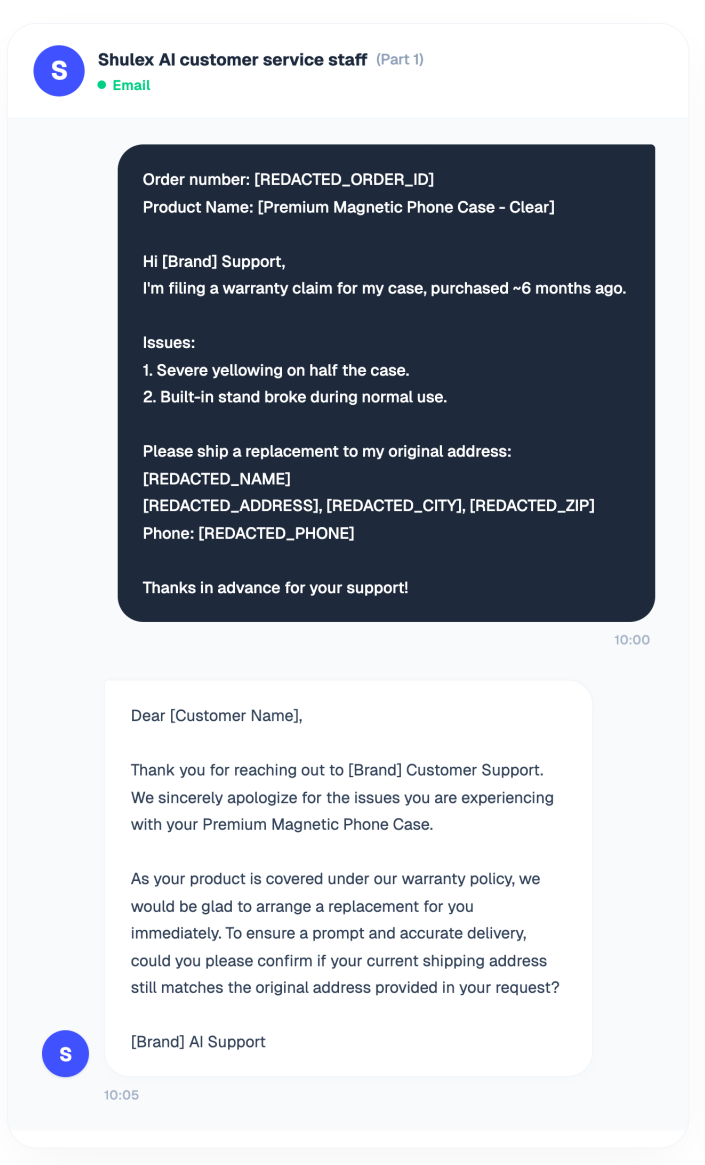
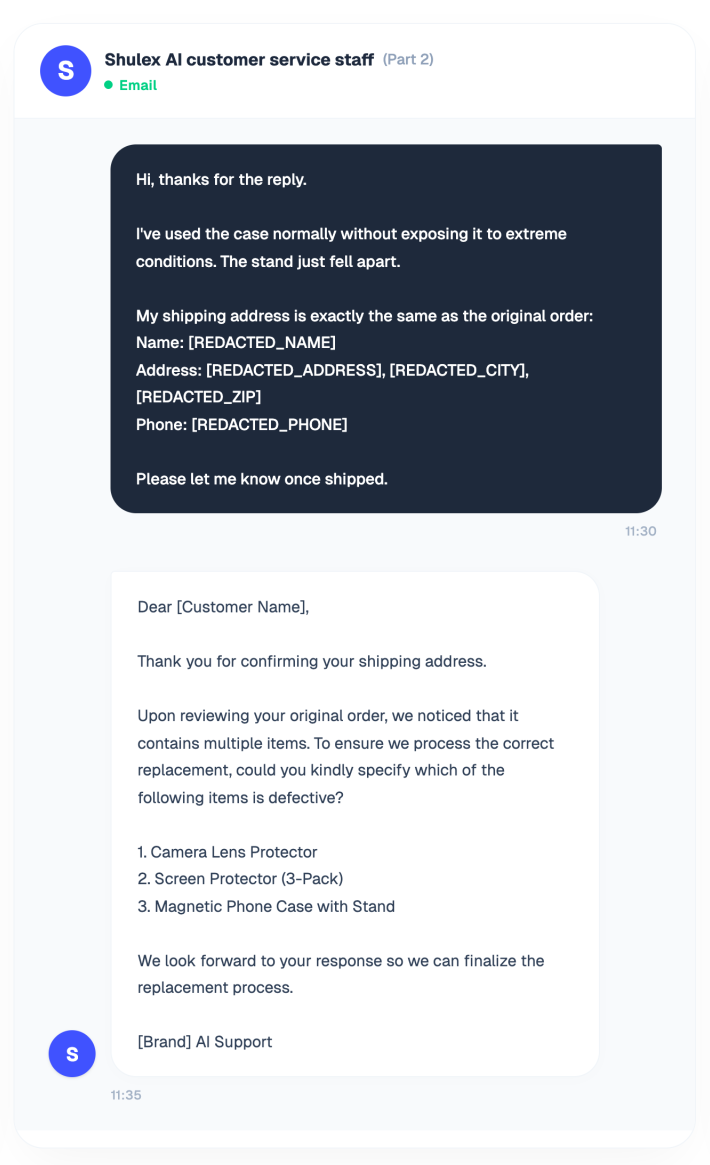
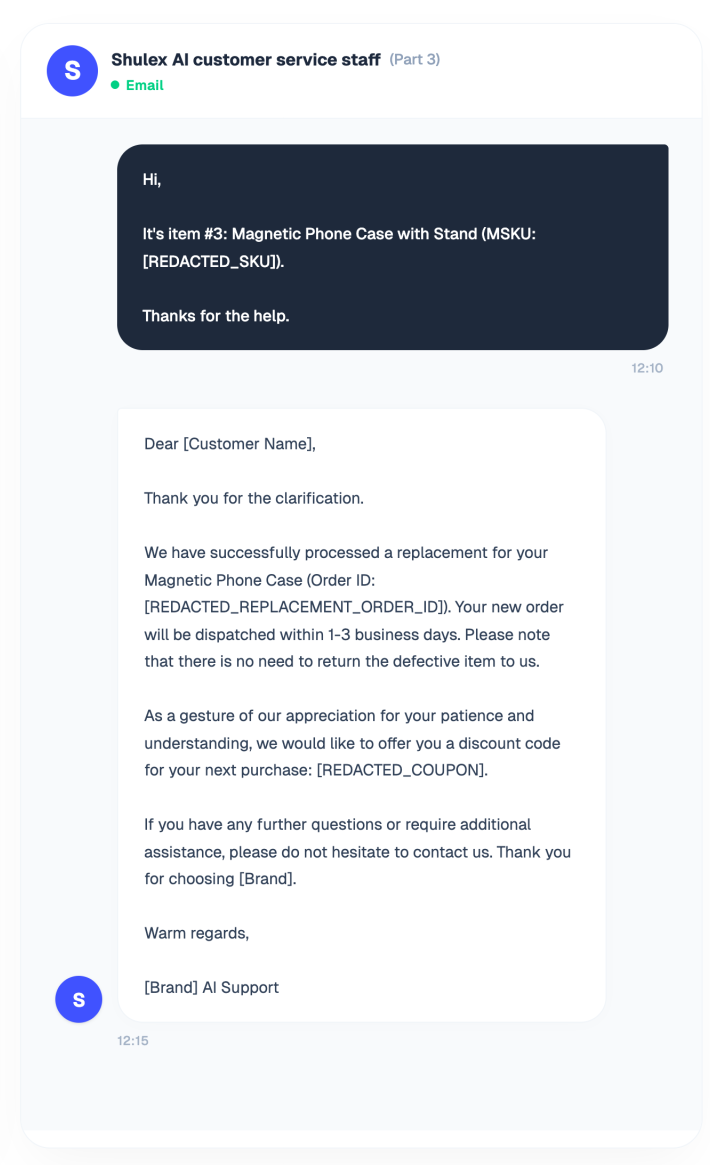
AI trainers turn frontline experience into updatable organizational capability
For many brands trying AI support, the real difficulty is not going live, but keeping up with business change after going live. That is especially true for accessories brands with many SKUs and fast iteration. If every detail change has to wait for someone else to step in, the front line cannot adjust in time.
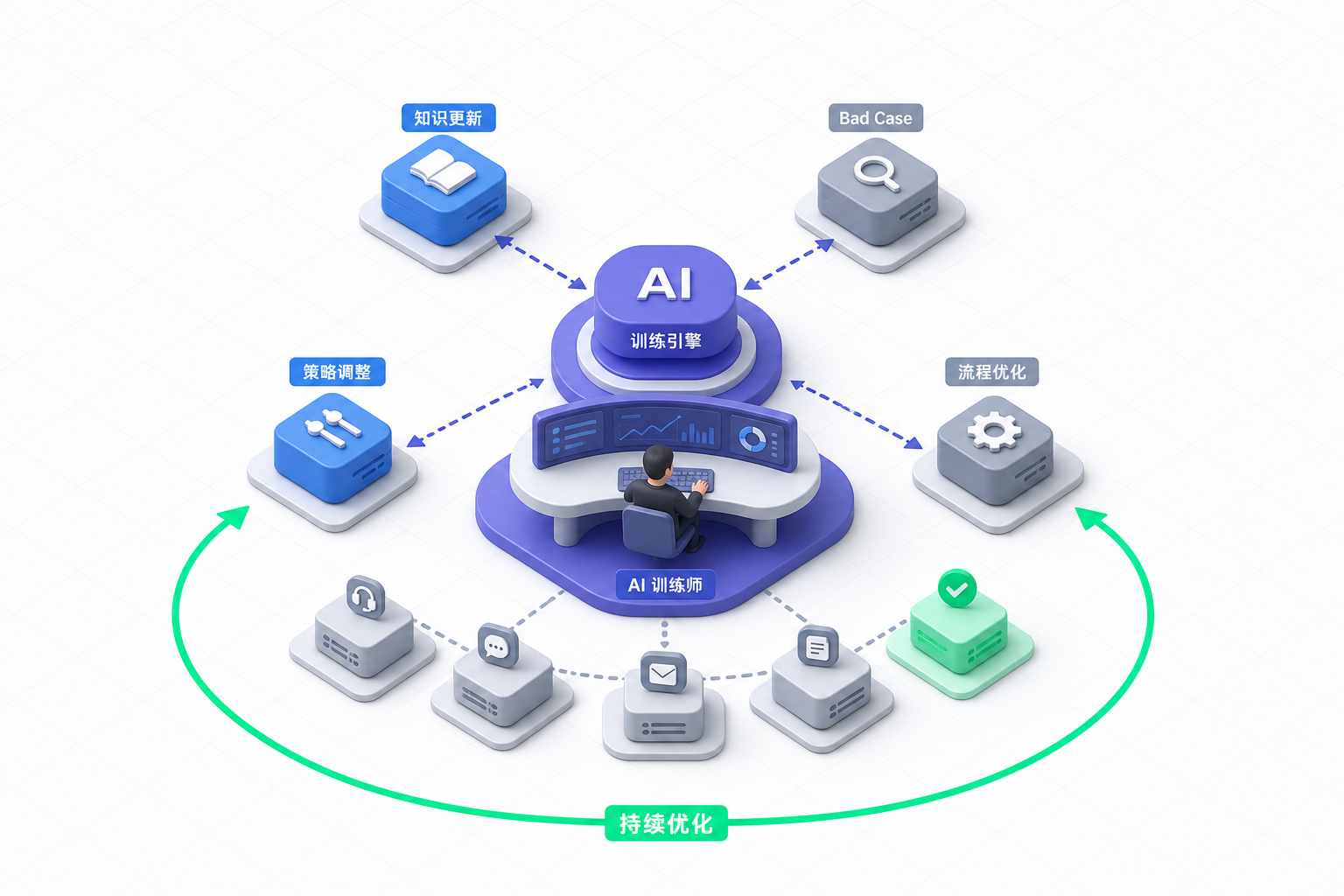
Through project side-by-side support and AI-trainer training, the frontline team began to gain the ability to train and adjust AI directly. In ESR’s rollout, AI trainers are not a side task done in someone’s spare time. They hold a key operations role: they monitor metrics such as the human-handoff rate and identify unusual fluctuations; they review frequent inquiries and bad cases, and decide which processes can stay with AI; they adjust knowledge, variables and strategies when products, campaigns and service rules change; and they write the optimization experience into an internal training manual, lowering the barrier for new colleagues.
The result
The visible change is in how the service is organized. High-frequency, clearly defined inquiries are handled by AI first, and people focus on complex cases. At the same time, AI trainers write frontline experience into service capability that can be reused and updated, so the team can support the inquiry peaks that come with launch seasons and overseas promotions.