












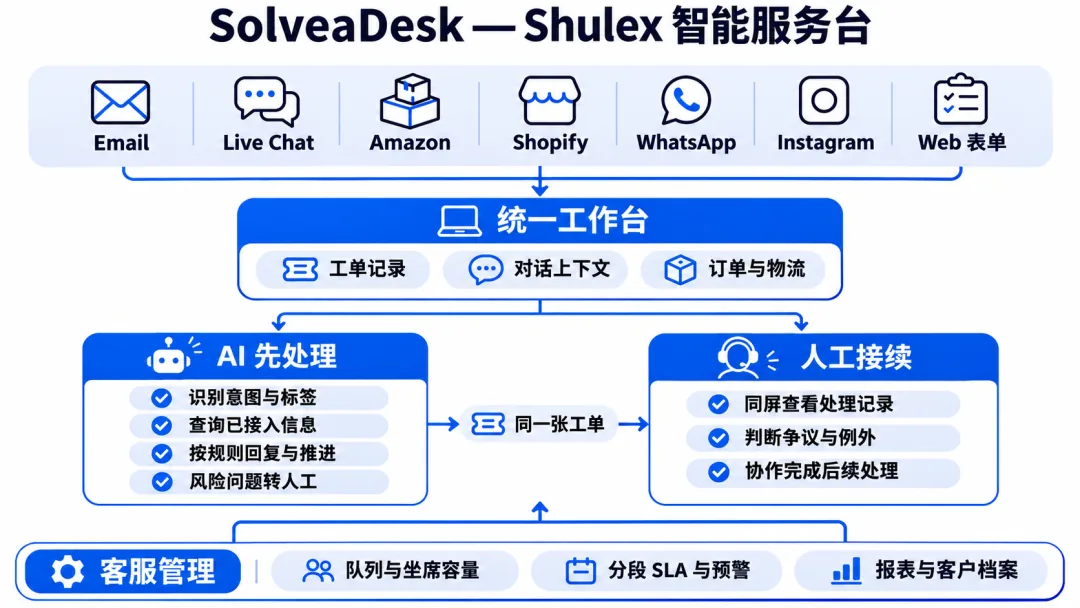
Global support teams work across time zones, channels and countries, and much of the daily friction still comes from fragmented information. Email, marketplace inboxes, live chat, phone, WhatsApp and Instagram can all carry the same customer issue, in different languages, with different order statuses. If agents have to jump between systems, re-confirm the order and assign tickets by hand, a case that stalls in one step is hard to recover.
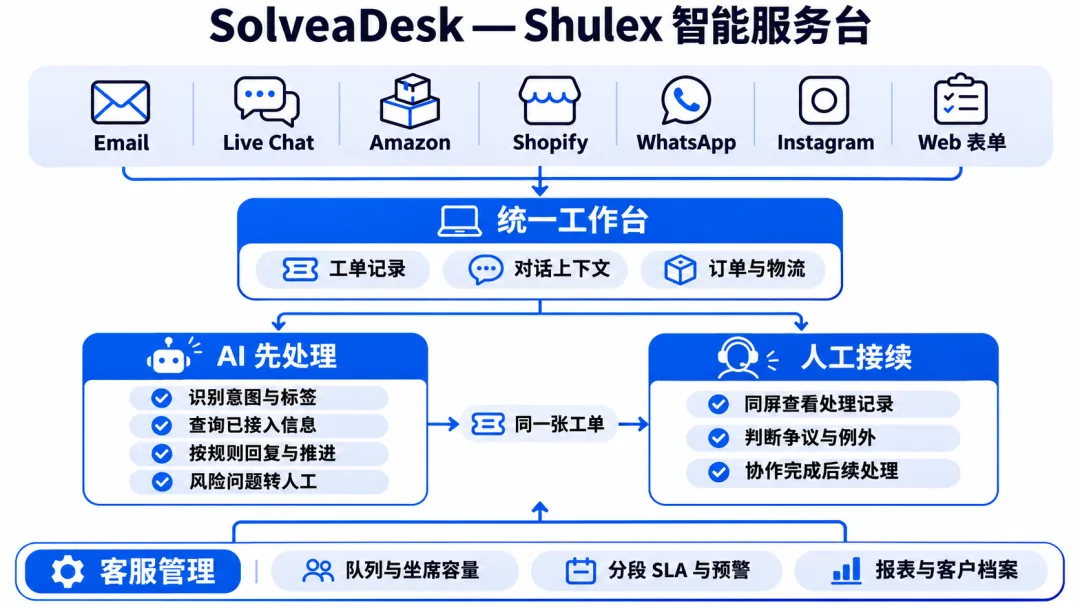
SolveaDesk is Shulex’s AI-first helpdesk and ticketing system for teams that serve customers across markets. Unlike a traditional ticketing tool that mainly logs and routes issues, it brings conversations into one workspace where AI first identifies, routes and progresses a case, and people step in at the points that need judgment. This article explains how that workflow is meant to work. It is not a substitute for the product page; the full product description is on Solvea Smart Helpdesk.
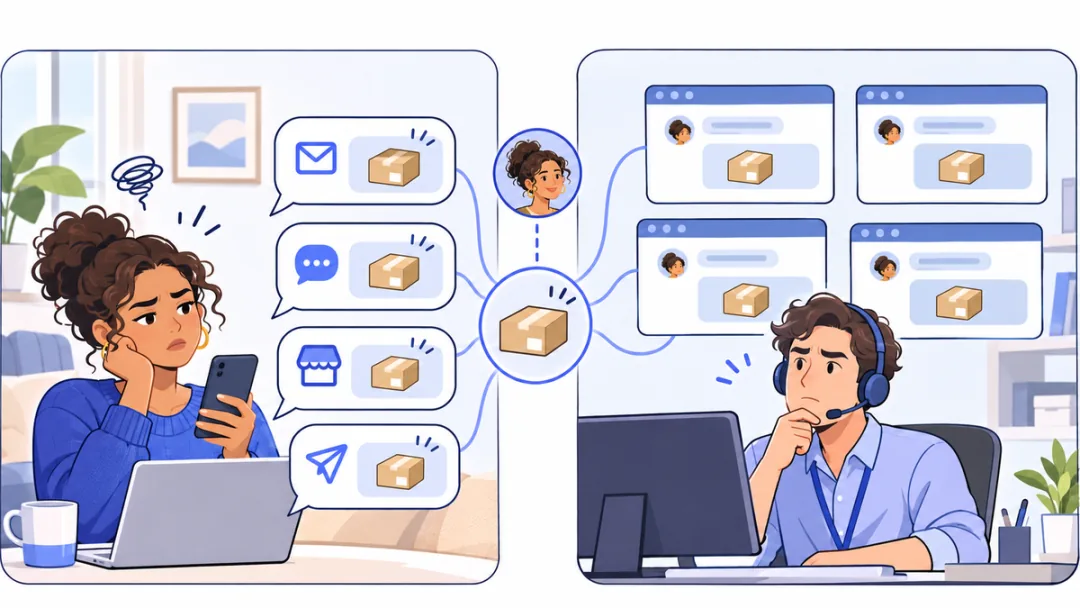
One workspace for incoming messages, so channels are no longer separate piles
Customers often describe the same issue in more than one place, while the records stay scattered. Agents hunt for context across screens; customers repeat an order number. Time is spent aligning information rather than resolving the problem.
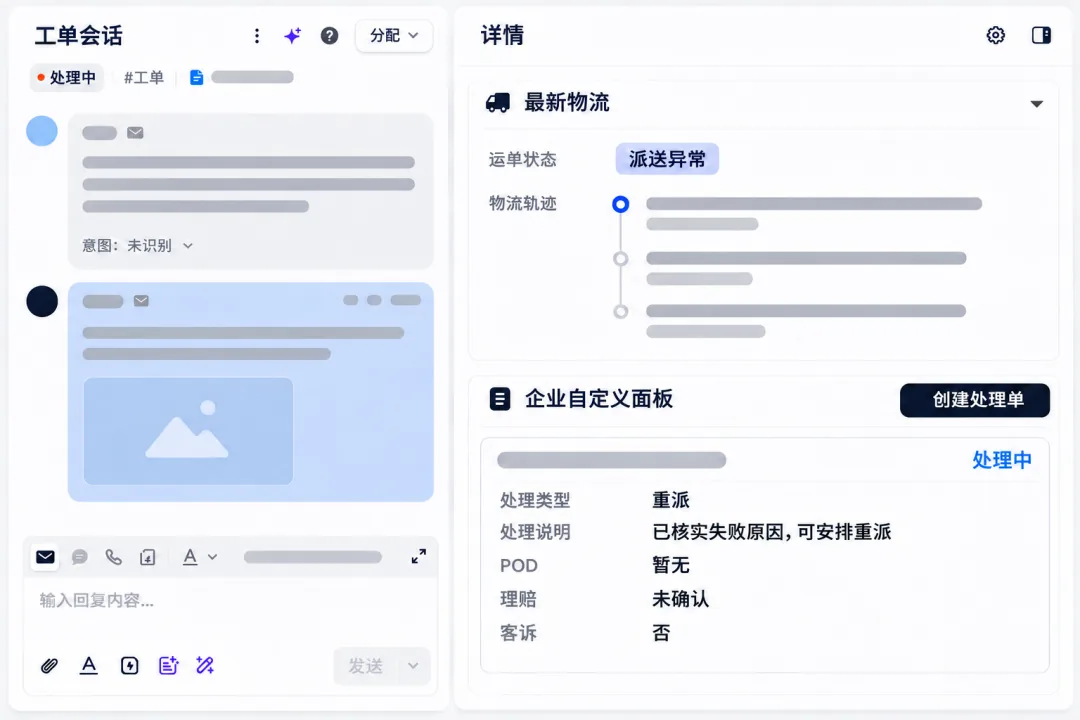
SolveaDesk collects connected channels and business context in a single workspace.
Depending on the integration, overseas email, website or in-app live chat, phone, Amazon, Shopify, WhatsApp, Instagram, web forms and other social messages can be turned into standard tickets. Repeated contacts from the same customer about the same issue can be merged into one ticket. Which channels can actually be connected depends on current integrations and each platform’s data policy, and should be scoped against the systems a company already uses.
After store, ERP and logistics access is granted, related orders, products and shipping information can appear in the ticket view. An order panel shows the linked order and items; a tracking panel shows the parcel path and exceptions; a company can also add a custom panel for the fields and actions its teams use most, so they switch tools less often.
The helpdesk can sync both ways with email, so read, replied and archived states stay aligned. For overseas email, domain authentication can be used to improve delivery reliability.
One unnamed U.S. last-mile delivery company, which Shulex works with closely, received frequent questions about parcel location and delivery progress, and exception cases also required identity checks and coordination with the delivery team. Shipping traces and the company’s own exception-handling panel were connected to SolveaDesk. AI took the high-frequency tracking questions first; people reviewed traces, returned forms and coordinated in the same workspace, without moving between several systems.
Ticket flow: AI works first, and people appear at the decisive points
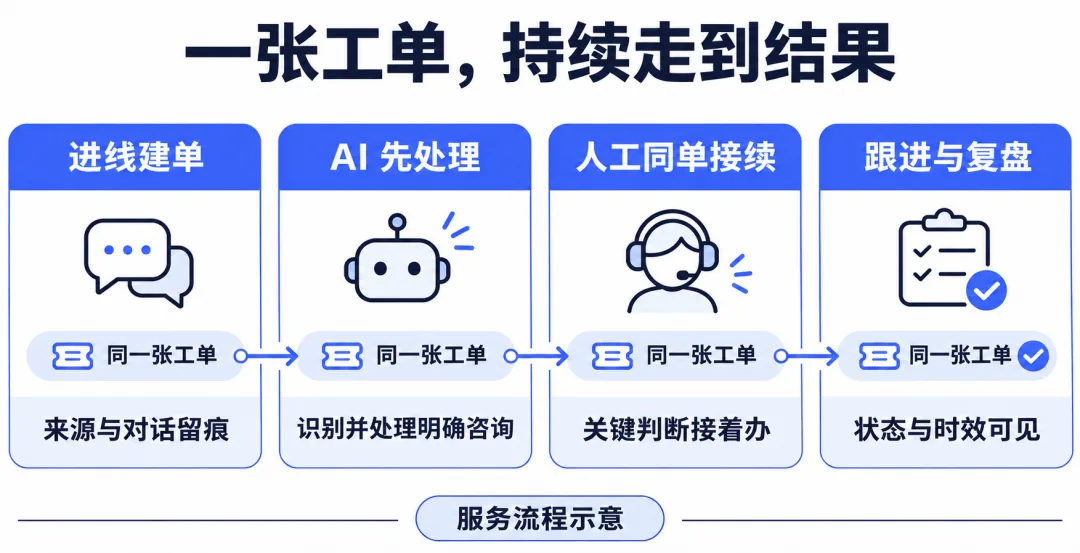
A traditional ticket often waits to be created, claimed and then processed by a person. SolveaDesk is designed the other way around: AI takes the case first, and people appear where a decision is required.
After intent is recognized, tickets can be routed by issue type, team responsibility and agent load. Concurrent capacity can be set per agent, and queues can show backlog and remaining capacity, so teams can see service load during a spike.
Status is not meant to depend only on someone remembering to update a field. New contacts are taken by AI first, and resolved cases can be closed in the same flow, which reduces the need to handle the customer and update the ticket as two separate jobs. A list view should show who currently owns a ticket and how far it has progressed.
When a person takes over, AI can still help: auto-tagging that agents can correct, translation so agents need fewer extra tools, summaries of the issue and prior conversation, wording help on a draft already written by the agent, and suggested replies that must still be checked against the order and the company’s rules before they are sent. The aim is to spend human time on judgment and conversation, not on assembling context from scratch. An earlier Chinese heading used the phrase “satisfaction doubled,” but the source article did not provide a figure for that claim, so it is not used here.
For service levels, different stages can have their own response and handling time limits, with warnings before a deadline and marks after a breach. Managers can see AI-handled time and human-handled time separately, instead of one blurred clock for the whole ticket.
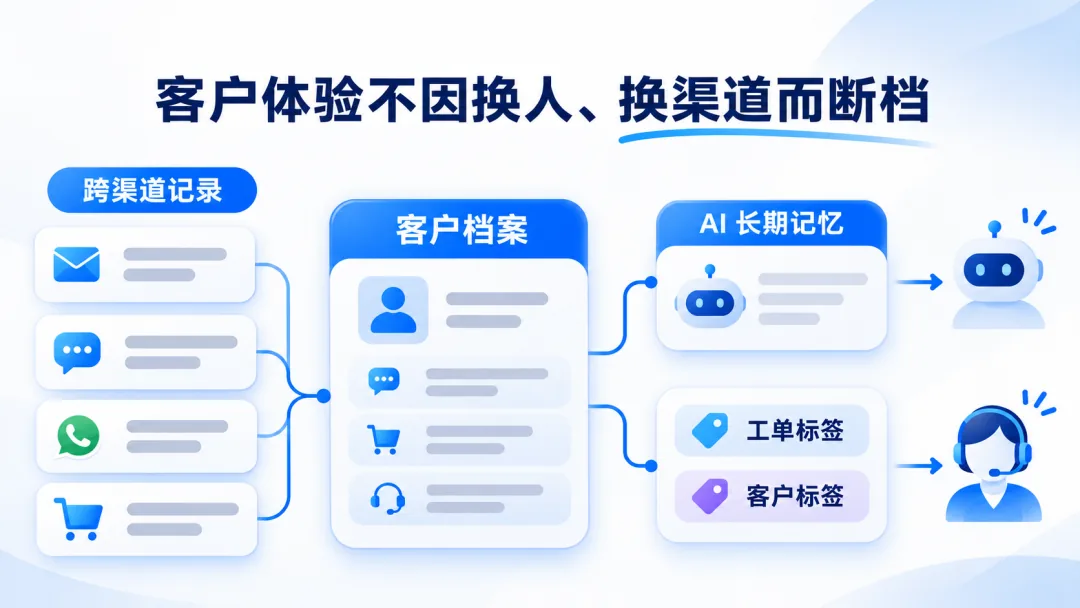
A customer profile so service does not break when the agent or the channel changes
In many ticketing systems, context fades when a ticket is closed. The next contact starts with the current question only, and the customer has to explain the product and the history again.
SolveaDesk treats customer information as something that can be reused. Using an email address or other contact details, it can connect interactions, orders and after-sales records from different channels and times. When agents rotate or teams work across time zones, the ticket can open with that background already visible. Purchase history and previous outcomes can also feed long-term memory for AI, so replies do not ask the customer to repeat themselves. For a broader explanation of long-term memory, see Solvea’s AI memory article.
Ticket tags describe the current issue, such as urgent or damaged. Customer tags capture longer-term attributes, such as VIP or a higher refund tendency, which can support routing and risk alerts. The work is then not only to close one ticket, but to keep a view of where the customer is in their relationship with the brand.
A leading Chinese cross-border home and outdoor brand, also unnamed in the source article, operates across countries and platforms, with service rules that differ by market. Shulex helped organize knowledge by country and category, and brought platform requests into one ticketing system so AI and human agents could work in parallel, keep a consistent service line, and keep building the customer record.
Operations: live warnings, human-AI reporting and a compliance baseline
Support management often lags the work itself. Breaches and backlogs are noticed after they escalate; reports are assembled by hand and are hard to drill into; the way a strong agent solves a recurring issue is rarely turned into a shared asset.
SolveaDesk keeps live monitoring and later review in the same loop. Overdue, soon-due and backlogged tickets can raise warnings, so managers can see capacity and intervene while a case is still moving. Reports can separate AI and human reply share, resolution, response time and satisfaction, and show stage-level response time, resolution rate and CSAT, which can inform staffing, training and automation decisions. Quality review can combine automatic checks with human sampling, covering reply standards, completeness and customer satisfaction.
For global brands, security and compliance are a baseline. Shulex has obtained ISO 27001 and SOC 2, and follows GDPR requirements. That is not the same as automatic compliance in every deployment; European privacy requirements and North American security reviews still have to be assessed against the actual setup and contract.
A ticketing system in an AI-era support team should be more than a ledger of problems. It should be the place where standard work can be handled by AI, customer knowledge stays with the company, and people keep the conversations that need judgment. If you are evaluating an AI-first helpdesk, or dealing with overnight coverage gaps, tool-switching and human-AI handoff, you can compare your current process with the helpdesk product page and book a walkthrough.