












If you employ people in Japan, a defined workplace duty is already in effect. Prevention measures are not a reason to close the door on genuine complaints.
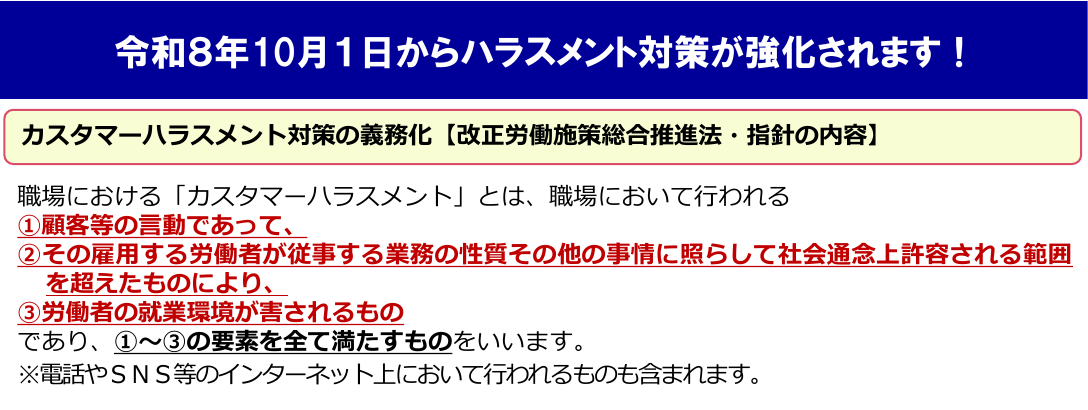
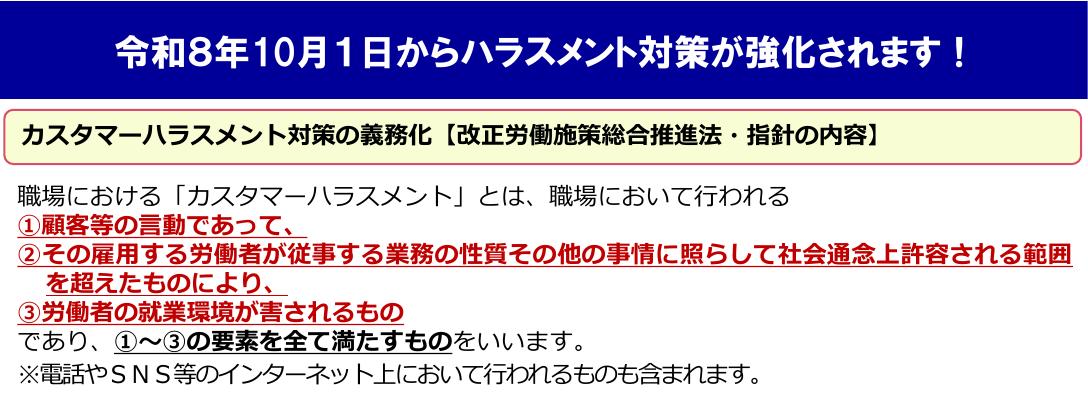
On 1 October 2026, amended provisions of Japan’s Act on Comprehensively Advancing Labor Measures, and Stabilizing the Employment of Workers, and Enriching Workers’ Vocational Lives (労働施策総合推進法) took effect. Every employer that employs workers in Japan must take measures to prevent customer harassment in the workplace.
In Japanese this is usually called カスタマーハラスメント, often shortened to カスハラ (kasuhara). Under the official definition, all three of the following must be present: remarks or conduct by a customer or similar party; conduct that, given the nature of the worker’s duties and other circumstances, goes beyond what is acceptable by social norms; and harm to the worker’s working environment. Conduct on the phone or on social media and other internet channels is included.
A legitimate complaint is not harassment. Reasonable customer requests should still be accepted and processed in the normal way.
The practical problem for a support organization is more specific than a slogan about “protecting staff or pleasing customers.” A single message can contain a valid product issue, a request that exceeds policy, and language that the team needs to take seriously. How do you keep the service moving, without leaving a frontline agent to absorb the pressure and make out-of-policy decisions alone?
The issue shows up in everyday Japan-facing support
Solvea provides AI customer service for brands that serve Japan and other markets, including Japanese-language support and day-to-day after-sales work. Accurate, appropriate policy explanations are only the starting point. Agents also have to avoid making unconfirmed promises about refunds, compensation, or deadlines while trying to calm a customer down.
When a valid request and heated language arrive in the same thread, the person on duty may be asked to fix the product issue, manage the conversation, and decide something beyond their authority. That is not a problem a single agent should have to resolve by instinct. Employers need a clear split: which requests follow existing policy, when a person should step in, and who is allowed to approve an exception.
The duty does not require a company to use AI. The sections that follow describe how to separate the different issues inside one inquiry, hand off with context, and leave cost or exception decisions with a person.
Tag the signals so the team can see what is in the same message
The following is a worked scenario, not a real customer case.
A customer writes that an item arrived damaged, attaches photos, and also asks for extra compensation. During the exchange, the tone becomes more agitated, and the language goes beyond a normal complaint.
In that one message, the damage still has to be accepted as a service issue, the extra compensation still needs a decision, and the change in tone needs to be visible to the team. If the thread is filed only as “complaint” or “return inquiry,” it is hard to see why the customer wrote, what they asked for, and where the conversation deteriorated.
In practice, the same message can be split into three tracks: continue handling the damaged item, send the extra-compensation request to a person for confirmation, and flag the heated language so the team can see it.
Solvea AI Tags can apply more than one business label to the same conversation, based on rules the company sets, and extract signals such as a product-damage complaint, a compensation request, or rising frustration. Teams can review and correct the labels.
A tag is a prompt for attention, not a legal finding. It does not determine that customer harassment has occurred, and it does not approve a payment.
When similar labels accumulate, a team can also look back: whether damage reports keep appearing on the same products, or whether compensation disputes often stem from confusion about policy or waiting time. The point is to fix the case in front of you, and to reduce repeat strain on customers and agents.
When a person needs to take over, pass the context with the ticket
If the AI assistant cannot continue with a reliable basis, the customer’s tone has clearly escalated, or the customer asks for a human—and those conditions match the company’s rules—the conversation should be handed to a person. A human can also take over at any time.
Handoff is more than switching the name on the reply. History, information already collected, photo attachments, and steps already taken should stay on the same ticket. The person who picks it up should be able to see what the customer asked, what has already been done, and what is still waiting for a decision, so the customer is not asked to start again.
The company still has to define who receives the ticket and what they are allowed to decide. Solvea Smart Helpdesk is built so AI and human agents can work from the same record, rather than bouncing a difficult case from one frontline agent to another without a change in authority.
Separately, for product-safety issues, reply quality, and Amazon messaging rules, AI Quality Assurance can check a draft before it is sent—for example, review solicitation or off-platform diversion—and pause a high-risk reply for human review, leaving an inspection record. A customer reporting a melted charging cable, or a draft that asks a buyer to change a review, is a quality and platform-risk issue, not a determination that customer harassment has occurred.
A person confirms the critical step; AI can continue the work
A human intervention does not have to mean the entire case leaves automation.
Return to the scenario: the customer wants a full refund plus extra compensation. The AI assistant can gather the order, damage photos, and prior correspondence, and pass the refund or compensation question to someone with authority. That person does not have to reconstruct the file from scratch. After they decide whether to refund, and how much, the assistant can explain the outcome and follow the case through.
Without that confirmation, the assistant should not approve an out-of-policy payment on its own. If the conversation itself needs a human, the thread should still be handed over.
Human–AI collaboration is designed for this split: approvals, confirmations, and missing information sit at a node in the same workflow. After a person completes that step, AI stays on the ticket and continues the customer conversation.
A different after-sales example—not the damaged-item scenario above—shows the same split. In a desensitized walkthrough used in product materials, a customer reports poor earphone battery life and wants a replacement. The assistant first collects the order number. Because the order is flagged as having risk, an Approval step is raised (approve or reject the current action). Later, when a refund amount has to be entered, a person completes a Submission step, and the assistant continues the conversation.
Escalate the contested decision; keep legitimate service moving
Japanese guidance is explicit that preventing customer harassment must not become a reason to refuse legitimate complaints. Different issues in the same message have to be handled on their own terms.
Protecting employees and resolving a valid request should not be treated as a choice of one or the other. In-policy after-sales work should continue. Decisions that exceed an agent’s authority should be escalated. Even if extra compensation is declined, the standard remedy that policy already allows should still be carried out.
These workflows help organize the work; they do not replace the prevention measures an employer still has to set. Whether particular conduct crosses the line, and how employees are protected, remains a decision for the employer under the applicable rules. The obligation applies to employers that employ workers in Japan.
The harder test is not a single polished reply. It is whether the organization can keep legitimate work moving and put judgment where authority already exists. Solvea’s AI customer service agent is built to take on information-gathering and in-policy execution, and to leave the decisions that change cost or customer rights with a person.
To see how this would work on your own inquiries, book a demo. A session is typically about 30 minutes and is scheduled with an advisor.
Sources
- Ministry of Health, Labour and Welfare (Japan): harassment measures strengthened from 1 October 2026
- MHLW pamphlet on the customer-harassment prevention duty (PDF, Japanese)
- Japanese Law Translation: official English title of the Act
- Solvea AI Tags
- Solvea human–AI collaboration
- Solvea AI Quality Assurance
- Book a demo