Both handle customer phone calls. Both cost money. Beyond that, an answering service and a call center are fundamentally different in scale, staffing, cost structure, and what they can actually accomplish — and choosing the wrong one is an expensive mistake in either direction.
Use a call center when you needed an answering service and you're paying enterprise overhead for SMB volume. Use an answering service when you needed a call center and your customers hit a ceiling: messages taken, problems unresolved, calls dropped without resolution. Here's a clear-eyed breakdown of how each works, what each costs, and which one your business actually needs.
TL;DR
Answering Service | Call Center | |
What it does | Answers calls, takes messages, handles basic routing | High-volume call handling with dedicated agents for resolution |
Staff model | Shared agents across multiple clients | Dedicated agents (in-house or outsourced) |
Cost | $50–$500+/month | $20–$65/agent/hour; $5,000–$50,000+/month for a team |
Call volume | Low to medium (dozens to hundreds/month) | High volume (hundreds to thousands/day) |
Setup time | Days to one week | Four to eight weeks |
Resolution depth | Message-taking, basic FAQ, appointment booking | Complex issues, system access, returns, multi-step resolution |
Who it's for | Solo practices, SMBs, after-hours coverage | Enterprises, high-volume retailers, dedicated CS operations |
What Is an Answering Service?
An answering service receives inbound calls on your behalf — typically when you're unavailable, after hours, or at capacity. The defining feature is shared staffing: agents at the answering service handle calls for many different client businesses simultaneously, working from scripts you provide.
Traditional answering services take messages and relay them to you. More capable versions answer FAQs, book appointments, follow intake scripts for medical or legal offices, and do basic call routing. What they generally don't do is resolve complex customer issues — that's outside the shared-agent model by design.
The business model reflects this. You pay for minutes used or a monthly plan tier, and you share agent capacity with other clients. That keeps costs low for low-volume businesses but creates a hard ceiling on what each call can accomplish. For a deeper look at how these services are structured, see our guide to what an answering service is and how the four types compare.
What Is a Call Center?
A call center is a dedicated operation — in-house or outsourced — specifically built to handle high volumes of customer calls. Agents work exclusively for one company (or are dedicated to one account at an outsourced provider), trained on that company's products, policies, and escalation processes.
Call centers are staffed for resolution. Agents have access to order systems, CRM records, return portals, and escalation paths. When a customer calls about a complex return, a billing dispute, or a multi-step issue, a call center agent can stay on the line, access the relevant systems, and resolve it end-to-end.
The trade-off is cost and ramp-up time. A properly staffed call center — even a modest outsourced one — runs significantly more than an answering service, and setting one up takes weeks of training, scripting, and system integration. For businesses where the majority of calls require real resolution rather than message-taking, that investment can pay for itself. For businesses where it doesn't, it's overhead.
Answering Service vs Call Center: Detailed Comparison
Cost Structure
Answering services charge by the minute or by plan tier. A basic package runs $50–$150/month for low call volumes. A full-featured service with 24/7 availability, appointment booking, and bilingual agents can reach $300–$500+/month at higher usage.
Call centers price very differently. An outsourced call center typically charges $20–$35 per agent hour for offshore operations, $45–$65+ for domestic agents. A dedicated team of five agents running business-hours shifts costs roughly $15,000–$30,000 per month before management overhead, QA, and technology fees. According to the U.S. Bureau of Labor Statistics, the median annual wage for customer service representatives is $38,010 — and fully loaded employment costs typically run 1.3–1.5× base salary when benefits, training, and management are included.
For most SMBs, the question isn't which is better in absolute terms — it's which cost structure matches the actual call volume and resolution complexity the business is running.
Staffing Model and Availability
Answering services use shared agents. The person answering your calls may also be answering calls for a dental office, a law firm, and a plumbing company within the same hour. They follow your script professionally, but they're not dedicated to your account, and they have no access to your systems.
Call centers assign agents to specific accounts or products. That dedicated training is the core advantage: an agent who handles only your returns knows your policies, your edge cases, and your exceptions. When a customer calls with an unusual situation — a partial refund, a warranty escalation, a custom order — a call center agent has the depth to navigate it. A shared answering service agent is limited to your script.
Both can offer 24/7 coverage, but the economics are different. A 24/7 answering service is a plan upgrade. A 24/7 call center requires three shifts of dedicated staffing.
Call Volume Capacity
Answering services are designed for businesses receiving dozens to a few hundred calls per month. At that scale, shared agents work well — the economics hold up and wait times stay manageable.
Call centers are built for volume. Operations handling hundreds to thousands of calls per day need dedicated queue management, real-time monitoring, supervisor escalation paths, and workforce management software. An answering service routed through that volume would create wait times and overflow that undermine the purpose of having a service at all.
The practical inflection point for most businesses: if you're receiving more than 500 inbound calls per month and a significant portion require actual resolution rather than message-taking, you've likely outgrown what a traditional answering service is designed to handle.
What They Can Actually Resolve
This is the most practically important distinction — and the one most businesses underestimate when choosing between the two.
An answering service can:
- Answer calls professionally using your provided script
- Take detailed messages and relay them via email, SMS, or app
- Answer a defined set of FAQs from your knowledge base
- Book appointments when connected to your calendar
- Route urgent calls to an on-call number
- Perform intake for medical, legal, or field service businesses
An answering service generally cannot:
- Access your internal systems to check order status or account history
- Handle unscripted situations that require judgment
- Process returns, refunds, or account changes in real time
- Provide resolution on issues that go beyond the script
A call center can do all of the above — and is staffed specifically for complex, multi-step situations. Effective call handling at this level requires agents with real system access and deep product knowledge, not just a script and a message pad.
According to Harvard Business Review research on customer effort, the single strongest predictor of customer loyalty is low effort — customers who have to call back, repeat their issue, or escalate manually are far more likely to churn than those whose issue was resolved on first contact. That finding has direct implications for which type of service actually serves retention goals.
Setup Time and Contract Terms
Answering services move fast. Most are operational within days — you provide a script, configure call forwarding, and you're live. Month-to-month pricing is common, and switching services carries low switching cost.
Call centers require significantly more lead time. Onboarding an outsourced call center typically takes four to eight weeks for training, system integration, QA calibration, and script development. Contracts often run six to twelve months with volume minimums. In-house call centers require even longer ramp-up: hiring, training, technology setup, and facility costs.
Which One Does Your Business Actually Need?
The answer comes down to three variables: call volume, resolution complexity, and budget.
Choose an answering service if:
- You receive fewer than 500 calls/month
- Most calls are appointment bookings, basic FAQs, or message-taking
- You need after-hours or overflow coverage without staffing a night shift
- You need to be operational quickly without a multi-week onboarding
- Budget is $50–$500/month
Choose a call center if:
- You receive hundreds of calls per day
- A significant portion of calls require system access, issue resolution, or escalation
- You have a customer service team that needs dedicated overflow or extended coverage
- You can commit to a multi-month contract and a full onboarding process
- Budget is $5,000–$50,000+/month
The gap in the middle: Most small and mid-size businesses fall between these two. They've outgrown a basic answering service — callers want real resolution, not message relay — but a dedicated call center is more infrastructure than they need or can afford. That gap is where AI-powered answering has become a practical third option.
Where AI Answering Fits In
Traditional answering services and call centers sit at opposite ends of the cost-and-capability spectrum. Between them sits a category that neither fully occupies: automated answering that resolves, not just routes.
An AI receptionist handles calls the way a call center agent handles standard requests — understanding intent, taking action, and resolving end-to-end — without the staffing overhead of a call center or the message-relay ceiling of a traditional answering service. It scales to call volume without per-minute pricing spikes, and is available 24/7 without shift scheduling.
Salesforce's State of Service research consistently finds that the experience a company provides is as important to customers as its products and services. For a business receiving 200–1,000 calls per month, meeting that expectation isn't necessarily a headcount problem — it's a resolution-architecture problem.
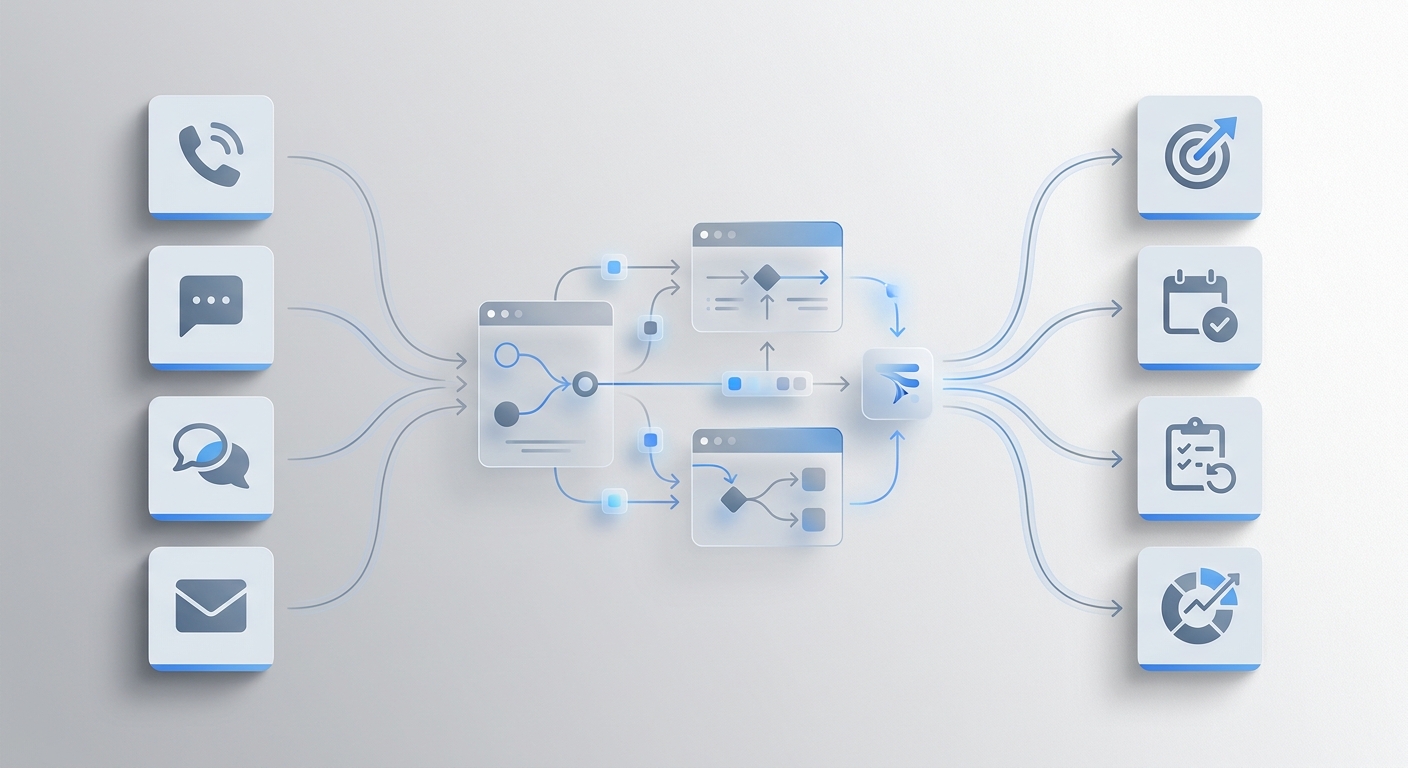
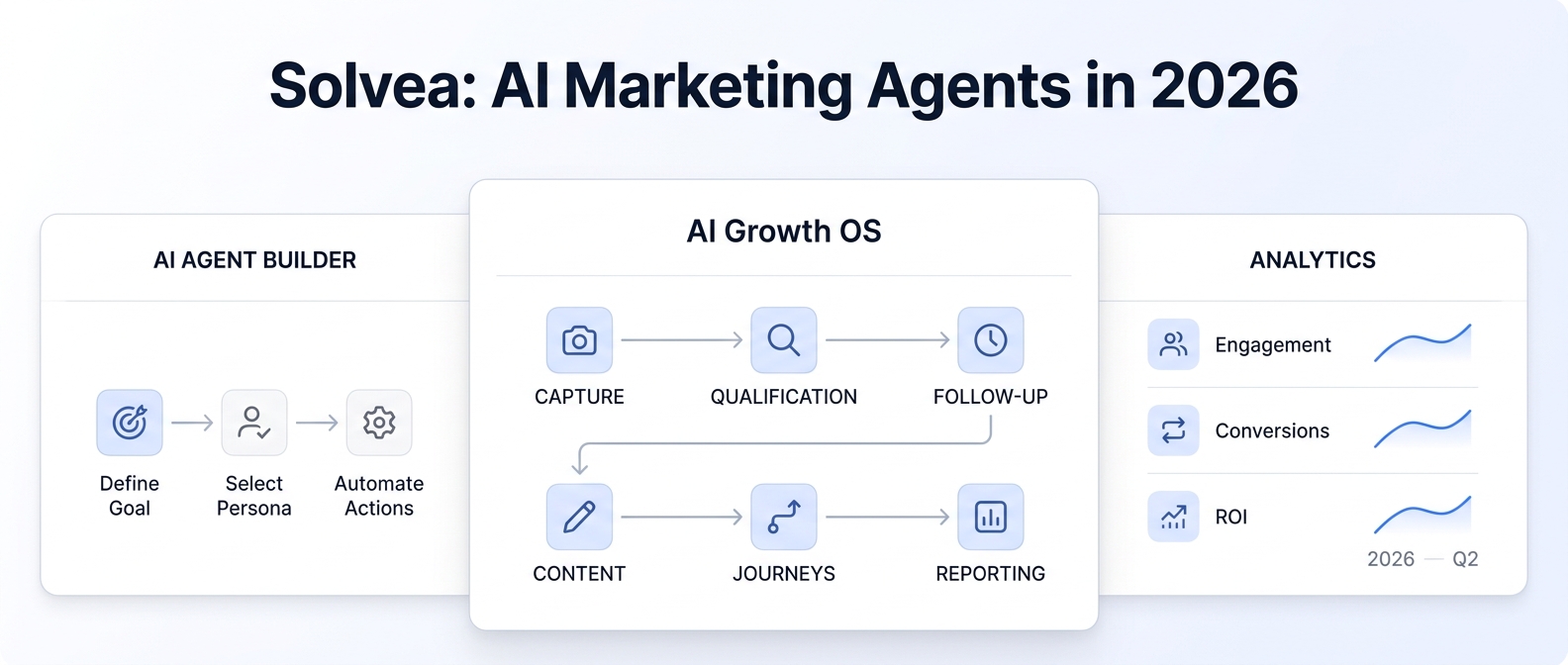
Solvea handles phone calls, live chat, and email in a single platform. It picks up where answering services stop — booking appointments, resolving FAQs, checking order status, and escalating to a human only when the situation genuinely requires it. No per-minute billing. No long-term contracts. Pricing starts free, with paid plans from $30/month.
Your AI Receptionist, Live in Minutes.
Scale your front desk with an AI that never sleeps. Solvea handles unlimited multi-channel inquiries, books appointments into your calendar automatically, and ensures zero missed opportunities around the clock.
Frequently Asked Questions
Is an answering service the same as a call center?
No. An answering service uses shared agents who handle calls for multiple client businesses simultaneously, following scripts to take messages and answer basic FAQs. A call center uses dedicated agents trained on one company's products and systems, built for high call volumes and complex resolution. The difference is staffing model, resolution depth, and cost structure.
How much does an answering service cost compared to a call center?
Answering services typically run $50–$500+/month depending on volume and features. Call centers — even outsourced — cost $20–$65 per agent hour, which adds up to $5,000–$50,000+/month for a staffed operation. The cost gap is significant; the right choice depends on what your callers actually need the service to resolve.
When should a small business switch from an answering service to a call center?
The clearest signal is when callers consistently need something the answering service can't provide — real-time system access, issue resolution, or multi-step problem-solving — and that gap is costing you customers or repeat calls. If you're receiving hundreds of calls per day and message-taking no longer resolves the underlying issue, a call center or AI-powered answering becomes a better fit.
Can an answering service handle complex customer issues?
Not reliably. Answering services work from scripts you provide and have no access to your internal systems. Anything beyond appointment booking, standard FAQs, or message-taking typically needs to be routed to someone who can actually resolve it. That's a structural limitation of the shared-agent model, not a flaw in any particular service.
What's the difference between a call center, an answering service, and a virtual receptionist?
A call center is a high-volume, dedicated staffing operation. An answering service is a lower-cost shared-agent service for basic call handling. A virtual receptionist — particularly an AI-powered one — can answer, understand intent, and resolve calls across channels (phone, chat, email) without human staffing at either price point. Each sits at a different point on the cost-resolution spectrum.
Does Solvea replace an answering service or a call center?
Solvea can replace a traditional answering service for businesses that need more than message-taking but don't want call center overhead. For businesses already running a call center, Solvea works as a front-line layer — handling the routine 60–80% of inquiries automatically so human agents focus on genuinely complex cases.