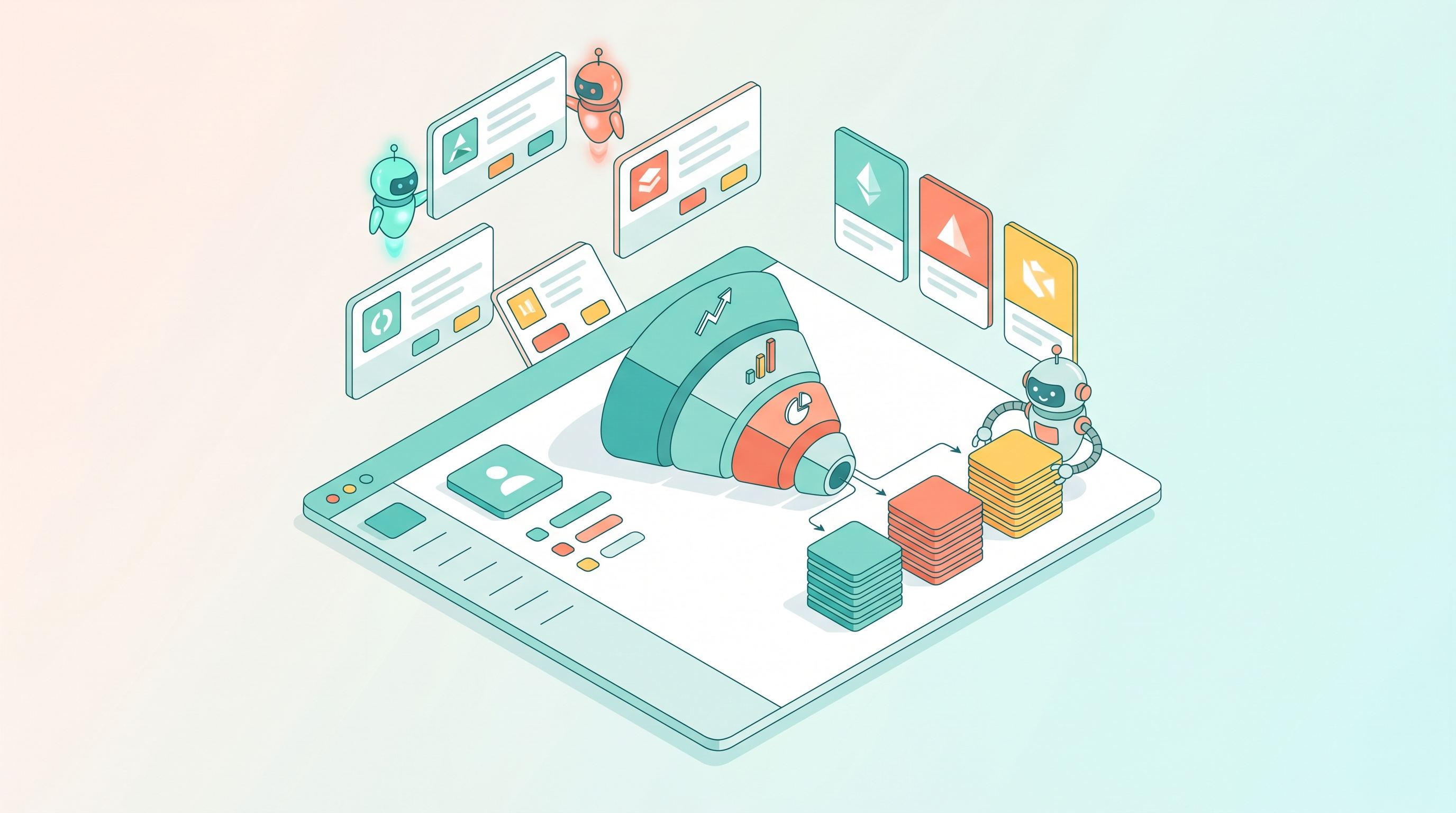
Hiring has changed dramatically with the rise of AI recruiting tools. Beyond simple resume screening, they are now autonomous agents capable of uncovering passive candidates, automating outreach, running conversational interviews, forecasting talent gaps, and even coaching interviewers in real-time.
How did we choose the top AI recruiting software?
To cut through the marketing noise, we focused on the actual "pain points" of modern hiring teams. We didn't just look for "all-in-one" giants; we prioritized tools with specific "superpowers." For example, while Workable is our top pick for growing teams that need a powerful "all-rounder" to find passive candidates, we also recommended Paradox for high-volume industries where an AI agent needs to handle thousands of applicants instantly.
We also analyzed thousands of verified reviews on G2 and dove into Reddit communities like r/recruiting and r/humanresources to look for leading AI staffing software that users actually enjoy using. The shortlist below highlights the top 10 use case-specific tools for 2026. Let's keep exploring.
TL;DR: What are the Best AI Recruiting Tools
For businesses, the best AI recruiting tool is the one that actually solve their specific bottleneck. For example, Workable and HireEZ stand out for proactive sourcing, Manatal offers affordable automation for SMBs, Paradox excels at conversational high-volume hiring, and Eightfold AI focuses on enterprise talent intelligence.
Whether you're a small business, an enterprise, or a team with unique hiring pain point, there is a specialized solution for you.
Product | Best For | Key Strengths | Starting Price | Free Trial |
Passive Sourcing | Multi-channel talent discovery | $299/month (billed annually) | 14 days | |
Recruitment automation for SMBs | Affordable AI ATS | $15/month/user | 14 days | |
Outbound Sourcing | Talent rediscovery engine | $169/month/user | 15 days | |
Tech recruiting | Deep GitHub & diversity filters | Custom | Demo only | |
High-volume hiring | Conversational SMS/Chat AI (Olivia) | Custom | No | |
Recruiting CRM & analytics | CRM + sourcing data | $135/month (billed annually) | No | |
Data-driven sourcing analytics | Automatic, structured interview summaries | $50/month (billed annually) | 14 days | |
Video interview & assessments | Scalable video interviews | Custom | No | |
Enterprise internal mobility | Skills-based talent intelligence | Custom | Requires demo | |
GPT-powered search | Natural language candidate discovery | $99/month/seat (billed annually) | 14 days |
Use Cases of AI Recruiting Tools
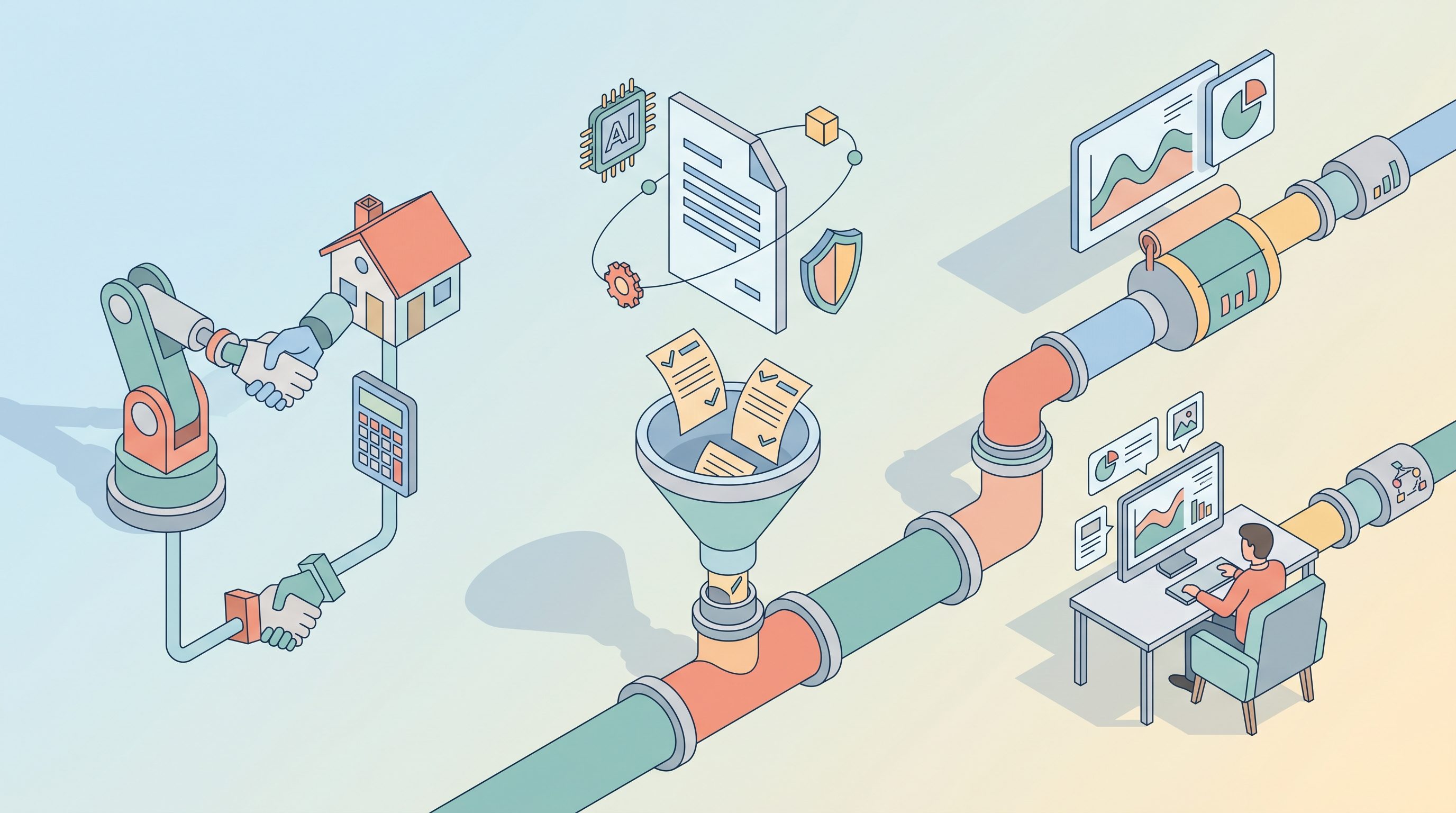
AI recruiting tools have now moved from the "back office" to every stage of the hiring funnel, from candidate sourcing to automated screening, smart interviews, and remote hiring. By 2026, these tools will be primarily utilized in five key ways:
- Passive Candidate Sourcing: This type of AI tool hunts for talent who aren't actively looking by scraping web footprints. It's the AI recruiting software for tech companies and specialized headhunters searching for software engineers, data scientists, and senior executives.
- Automated Screening: These tools parse thousands of resumes to rank candidates based on objective skill sets. They are primarily used in Retail, Hospitality, and Manufacturing, where HR teams must filter massive application volumes daily.
- Interview Intelligence: By recording and analyzing interviews, these tools create summaries and ensure fairness. This is popular among remote-first startups and professional services where hiring managers need to sync across different time zones.
- Conversational Engagement: These AI chatbots handle 24/7 candidate Q&A and coordinate interview calendars. Commonly used by large logistics and service corporations prevent candidate drop-off in high-turnover industries where speed to hire is everything.
- Talent Intelligence & Internal Mobility: These platforms analyze the skills of the current workforce to predict who is ready for promotion or transfer. Large-scale enterprises use this to reduce turnover and identify internal talent before looking elsewhere.
10 Best AI Recruiting Software Shortlist in 2026
1. Workable: Best for sourcing qualified passive candidates
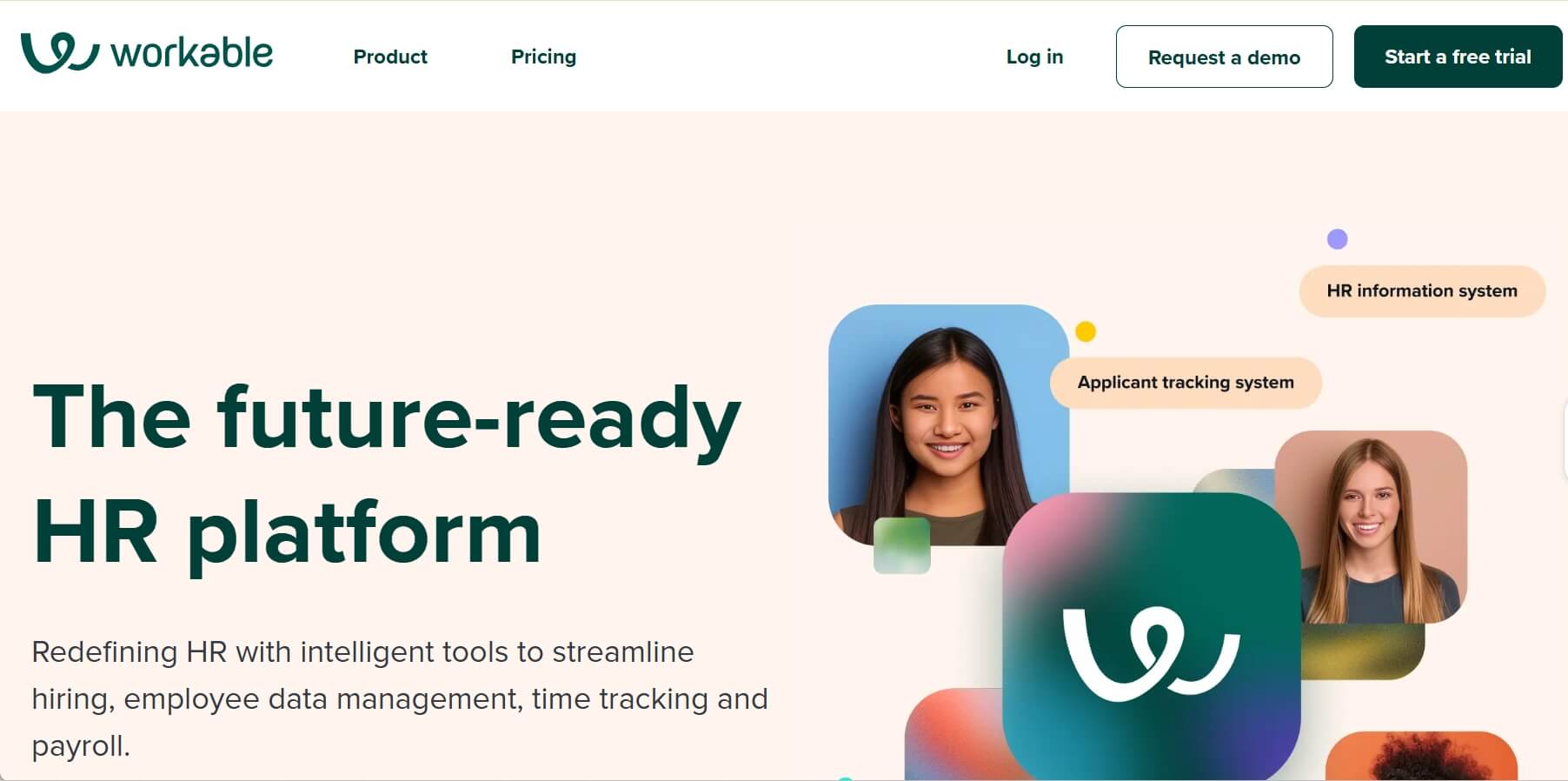
Why It Made the Shortlist: Workable is an all-in-one AI recruiting platform for sourcing high-volume candidates. It proactively scans a database of 400 million profiles to find people who match your job description. It feels like having an assistant who never sleeps, presenting you with a "recommended" list the moment you post a job. We've seen it surface top-tier talent for niche roles before a single ad was even clicked.
Who's it for? Growing SMBs and mid-market companies that need to hire specialized talent beyond just active job seekers.
Standout Features:
- One-click multi-posting: pushes your job to 200+ global and local job boards.
- AI Recruiter: proactively suggests passive candidates from a 400M+ global database.
- Automated Candidate Assessment: built-in cognitive and personality tests that auto-score applicants.
- E-Signatures Software: integrated digital signing to close candidates without leaving the platform.
Integrations: Native sync with Slack, Zoom, LinkedIn, Gmail, and 70+ other HR tools.
"Workable is intuitive, AI-powered, and scalable, which is great for long-term needs."-Salamander9356.
"I've used Workable in a past role, decent UI, plays well with execs, but yeah, it can get rigid as you scale."-SnooPoems3354.
Pros | Cons |
Incredible built-in passive sourcing. Highly intuitive, clean UI. 300+ integrations with third-party solutions. | Reporting can be limited for big teams. Video interview tools cost extra. |
2.Manatal: Best for Affordable AI recruitment automation for SMBs
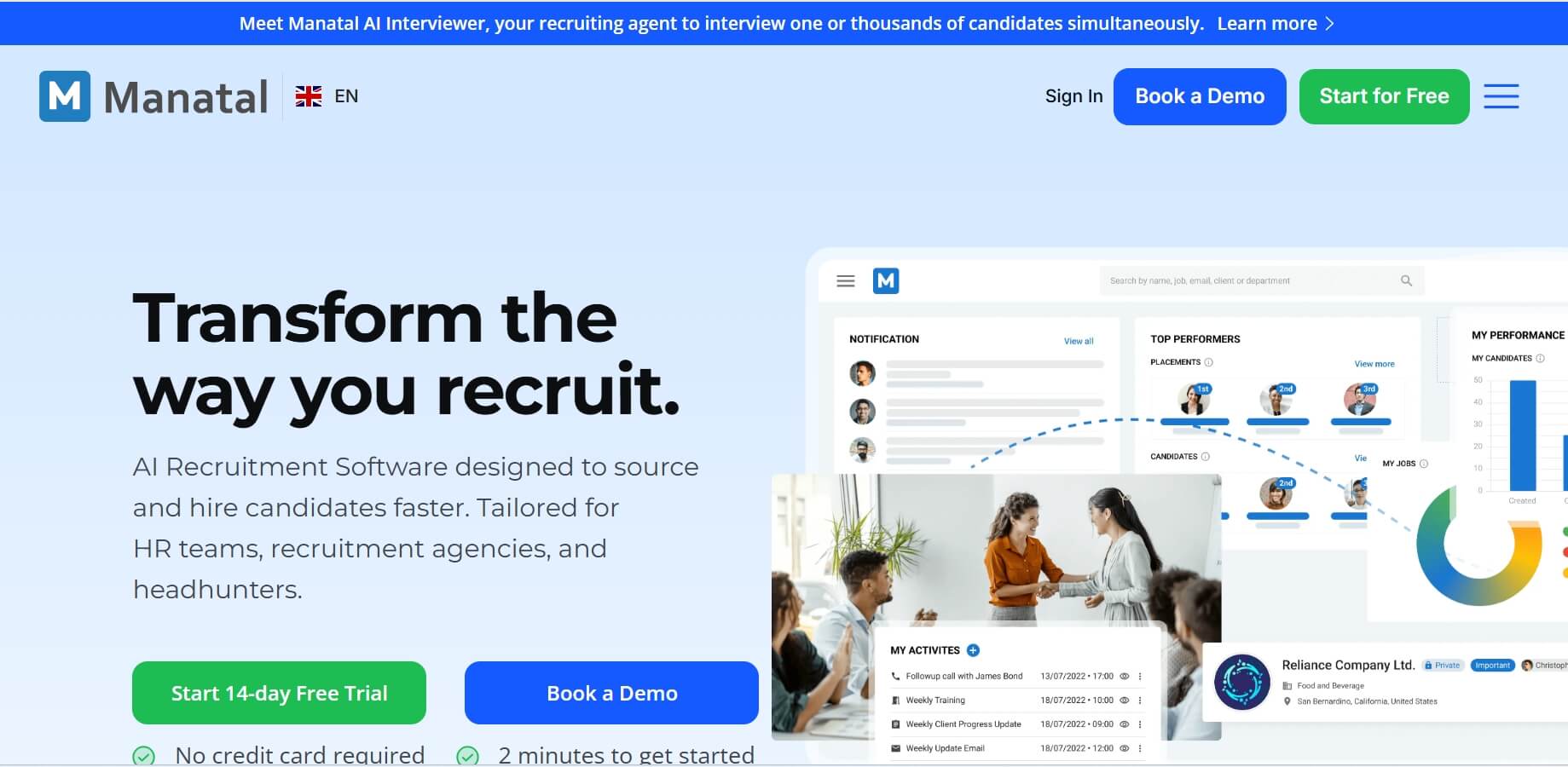
Why It Made the Shortlist: Manatal brings enterprise-level AI scoring to small businesses at a fraction of the cost. Its "AI Recommendation" engine can analyze your candidates and rank them against job requirements. It's remarkably fast, and the interface is so simple that you can train a new recruiter on it within an hour. It feels like the "budget-friendly AI staffing software" of the group.
Who's it for? Small to medium-sized businesses that want an AI-powered hiring tool without the "Enterprise" price tag.
Standout Features:
- AI Recommendation: Automatically matches the best candidates in your database to any new job opening.
- Social Media Enrichment: pulls candidate data from LinkedIn, Facebook, and Twitter to build full profiles.
- Career Page Builder: create professional-looking career sites without coding.
- Compliance Management: built-in tools for GDPR and CCPA to keep your data handling legal.
Integrations: Mailchimp, Gmail, Outlook, Zapier, and various job boards via open API.
Real User Comment:
"It's straightforward, affordable, and handles standard workflows well. That's pretty good for the price, I think. You can try their free trial before committing."-BaconInMyPocket0.
Pros | Cons |
Most affordable AI-ready ATS. Great social media enrichment. Fast setup and training. | Mobile app experience is limited. Lacks native video interviewing. |
3. HireEZ: Best for Outbound sourcing and talent rediscovery
Why It Made the Shortlist: HireEZ is one of the best AI recruiting tools as it doesn't just find people; it finds their personal emails and phone numbers with high accuracy. The "Talent Rediscovery" is a standout feature that scans your old database to see if a candidate you rejected two years ago is now perfect for a new role, which turns a dead database into a gold mine.
Who's it for? Hardcore sourcing teams or agencies that rely on cold outreach to find top-tier talent.
Standout Features:
- Talent Rediscovery: scans your existing ATS/CRM to find forgotten gems for new roles.
- AI-Powered Sourcing: searches across 45+ open web platforms simultaneously (GitHub, Kaggle, etc.).
- Contact Info Finder: retrieves personal emails and phone numbers with high accuracy.
- Outreach Sequences: automated, personalized email drip campaigns to engage passive talent.
Integrations: Sync with Workday, Greenhouse, Lever, Salesforce, and e-mail platforms.
Real User Comment:
"HireEZ is solid for outbound sourcing, especially if you're targeting certain candidates."-montaguelevi.
Pros | Cons |
Powerful talent rediscovery. Multi-channel outreach capability. AI profile enrichment. | The interface can feel cluttered. Steeper learning curves than competitors. |
4. SeekOut: Best for finding tech talents and diversity hiring
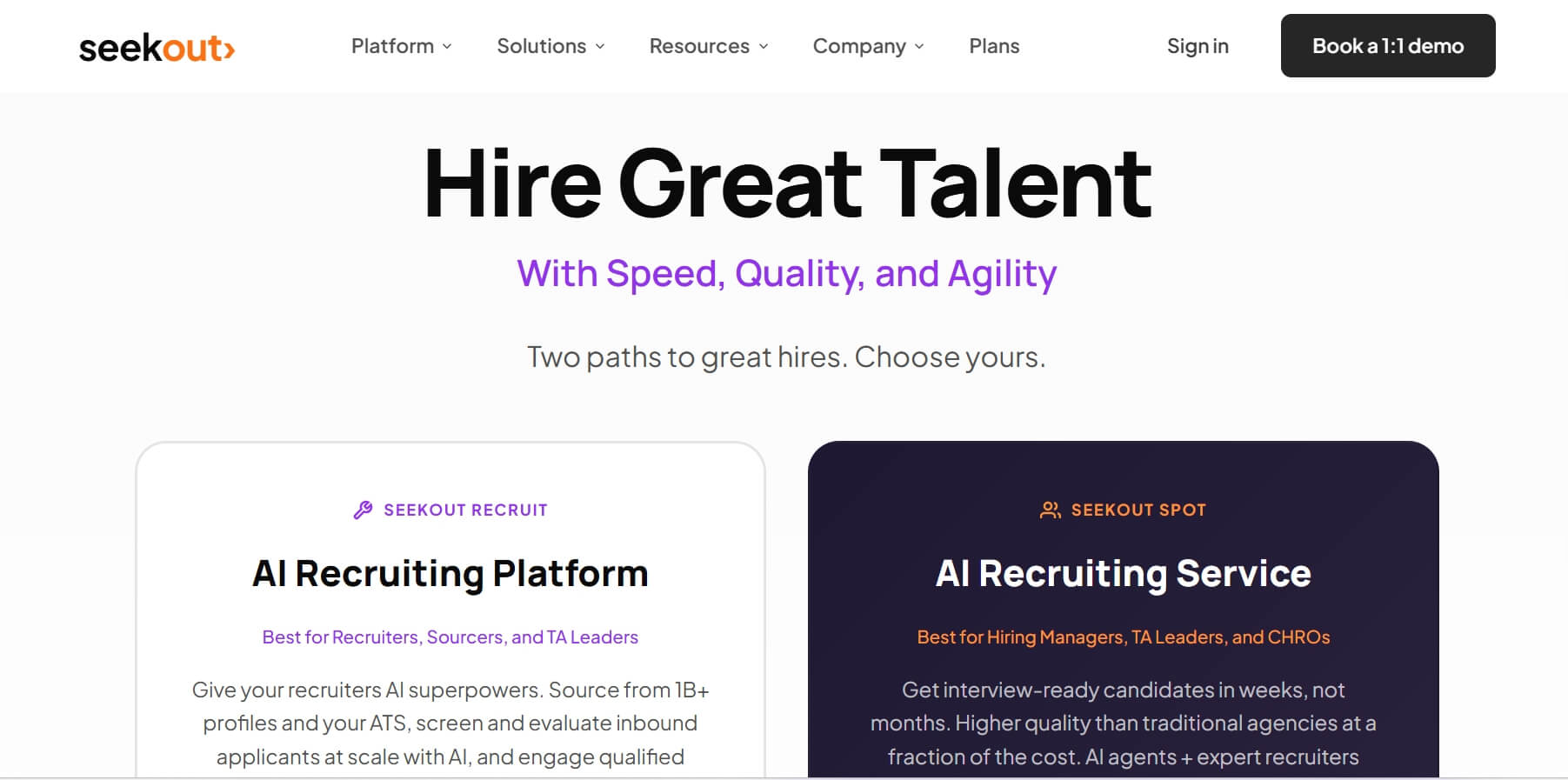
Why It Made the Shortlist: If you are sourcing hard-to-find talent, like engineers, SeekOut is non-negotiable. Its AI can understand "technical depth", filtering for developers who have specific GitHub contributions or those with security clearances. It is the most robust tool for finding talent that actively avoids LinkedIn. What's more, we found its ability to "clone" your top performers to find similar candidates. That's a game-changer for engineering leads.
Who's it for? Tech companies, aerospace, and government contractors are looking for "hard-to-fill" technical or cleared roles.
Standout Features:
- GitHub/Stack Overflow Integration: analyzes actual code contributions and technical reputation.
- SeekOut "Clone": input a top-performing employee's name to find candidates with identical career paths.
- Diversity Filters: advanced AI to identify underrepresented talent without sacrificing skill requirements.
- Clearance Sourcing: specialized search for candidates with active government security clearances.
Integrations: Seamlessly pushes data to Greenhouse, Oracle, SAP SuccessFactors, and Workday.
"I love the search capabilities within SeekOut. The Boolean function provides a lot of advanced searching techniques, and its pre-made Power Filters take out some of the extra work needed to identify candidates."-Eric P.
"SeekOut has improved our searches, we usually are assigned to niche roles, very complicated skills."-Vanessa G.
Pros | Cons |
Powerful diversity sourcing. Clone candidate feature. Skill-based search. | Very high price point. Complex onboarding process. |
5. Paradox: Best for high-volume conversational hiring
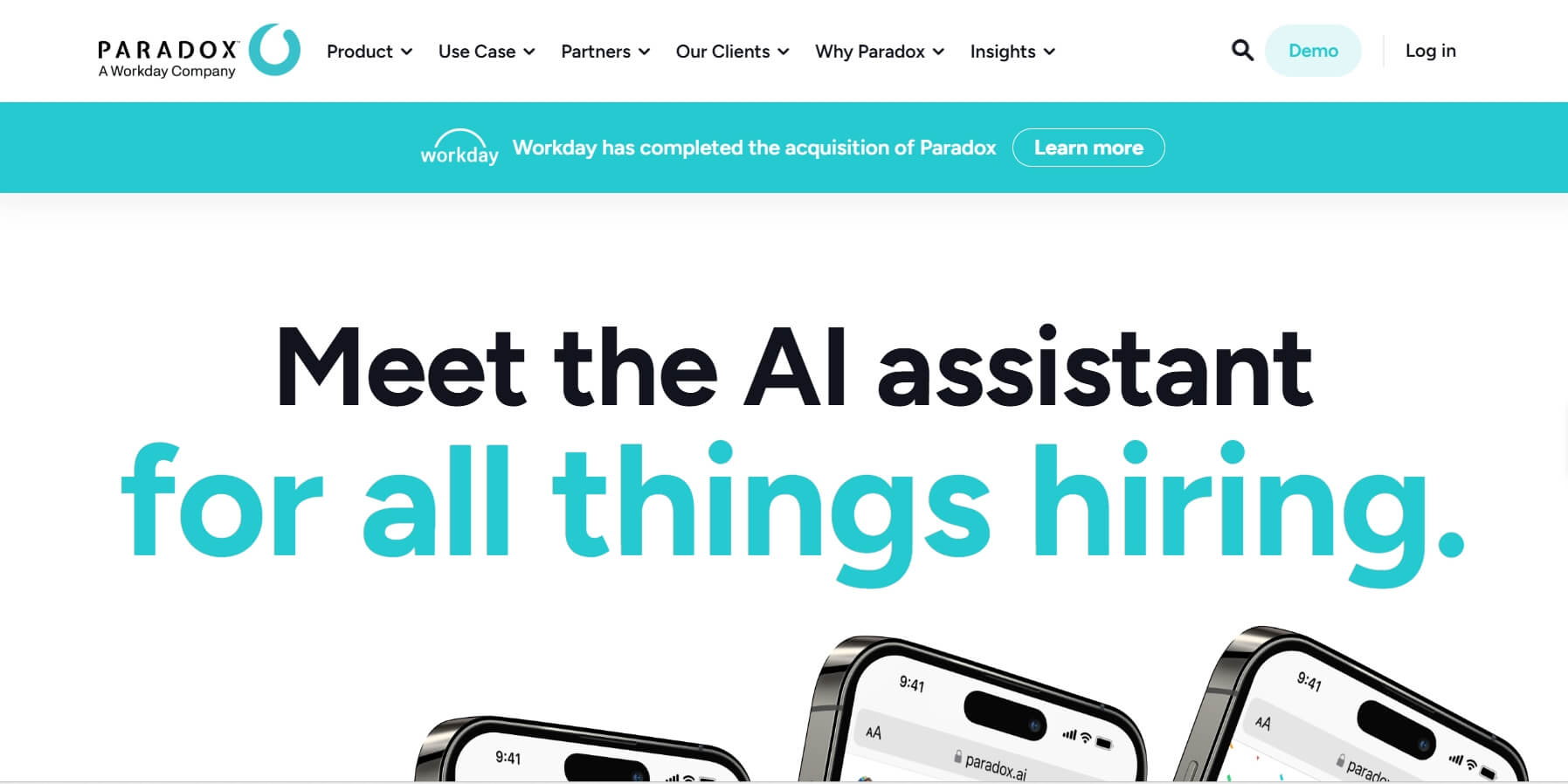
Why It Made the Shortlist: Paradox's AI assistant, Olivia, can interact with candidates via SMS or web chat. In high-volume settings (think 5,000 applicants for a warehouse), the agent can handle the screening, answer questions about benefits, and schedule the interview. It removes the "human" bottleneck from the early stages entirely. It's the closest thing to an autonomous recruiter for frontline roles.
Who's it for? Retailers, restaurants, and logistics companies are hiring on a massive scale.
Standout Features:
- Conversational AI (Olivia): 24/7 AI assistant that screens candidates via text or chat.
- Automated Scheduling: coordinates between the interviewer's calendars and the candidate's availability in seconds.
- Smart Interview Reminders: automated SMS reminders reduce interview "no-show" rates.
- Multi-Language Support: can screen and assist candidates in dozens of languages.
Integrations: Certified integrations with Workday, ADP, SAP SuccessFactors, and Greenhouse.
Real User Comment:
Pros | Cons |
Drastically reduces the early stages of time-to-hire. High candidate engagement rates. Automates 90% of scheduling. | Not suitable for executive research. Lack a clear security license or cybersecurity. |
6. Gem: Best for data-driven sourcing analytics and CRM
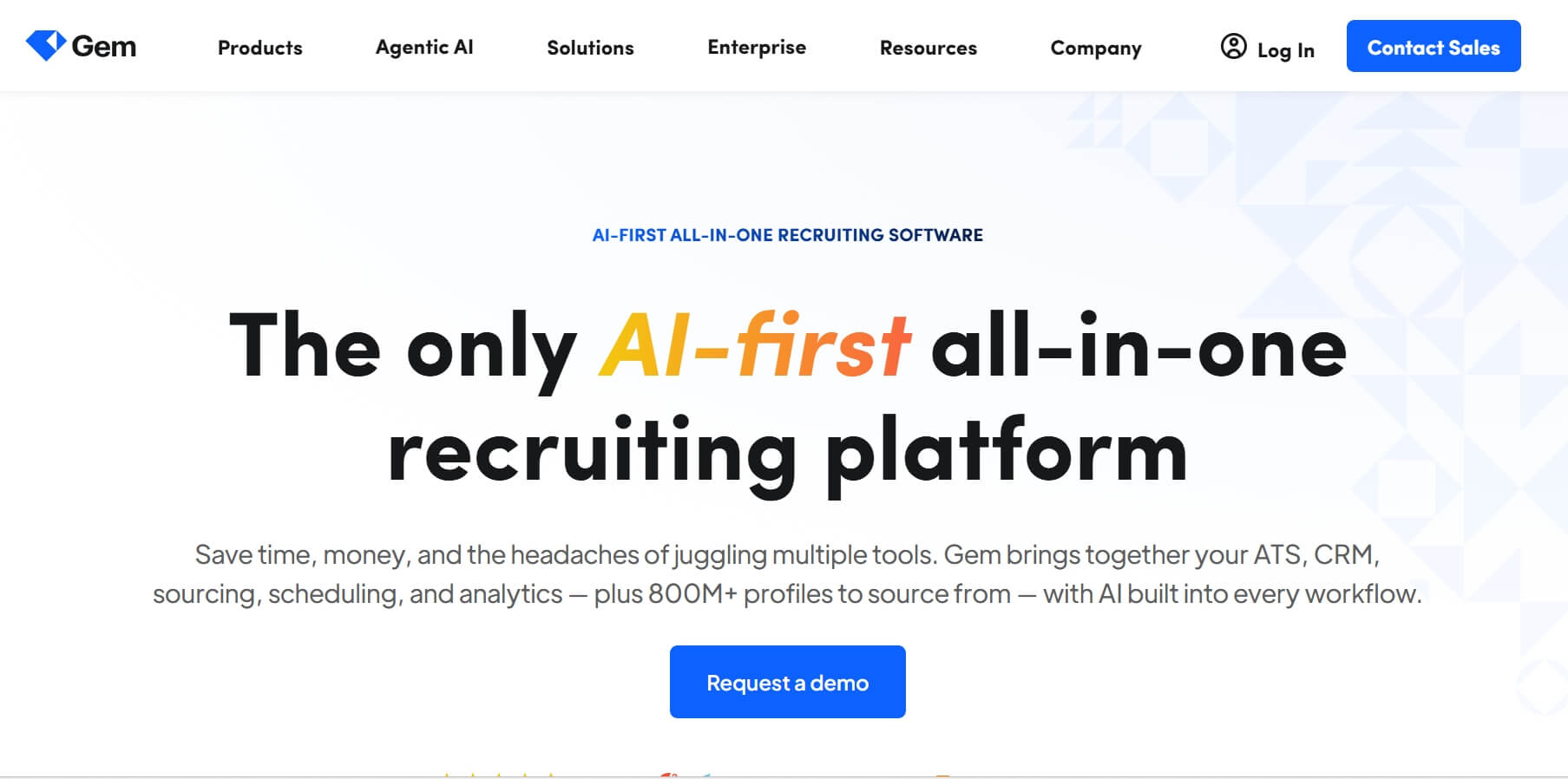
Why It Made the Shortlist: Gem isn't just an ATS (Applicant Tracking System); it's a "Talent Engagement" platform. It uses AI to track every single touchpoint with a candidate, working like a sourcing GPS that tells you exactly which email subject lines work and which recruiters are most efficient. It treats every candidate like a high-value sales lead.
Who's it for? High-growth tech companies that treat recruiting like a sales funnel and demand data for every decision.
Standout Features:
- Sourcing Analytics: deep-dive reports on which sourcing channels provide the best ROI.
- Talent CRM: a centralized database to manage relationships with passive talent over the years.
- Automated Outreach: multi-stage email campaigns that stop automatically once a candidate replies.
- One-Click Extension: pull LinkedIn profiles into your CRM with a browser extension.
Integrations: Gmail, Outlook, LinkedIn, and major ATS like Greenhouse or Lever.
Real User Comment:
"Gem is a great tool for sourcing and also great for presentation during weekly meetings with the hiring team. It is integrated with Greenhouse and provides solid back and forth between them."-Familiar-Range9014.
"Gem is great for building out Talent Communities or to send email campaigns to candidates, not really a tool for sourcing."-jimmyabomb.
Pros | Cons |
Combines ATS with sourcing, scheduling, and CRM tools. Smart calendar sync and Slack interview. Flexible integrations with several ATS platforms. | Premium pricing for smaller teams. Requires disciplined data entry. |
7. Metaview: Best for automated interview notes and structured summaries
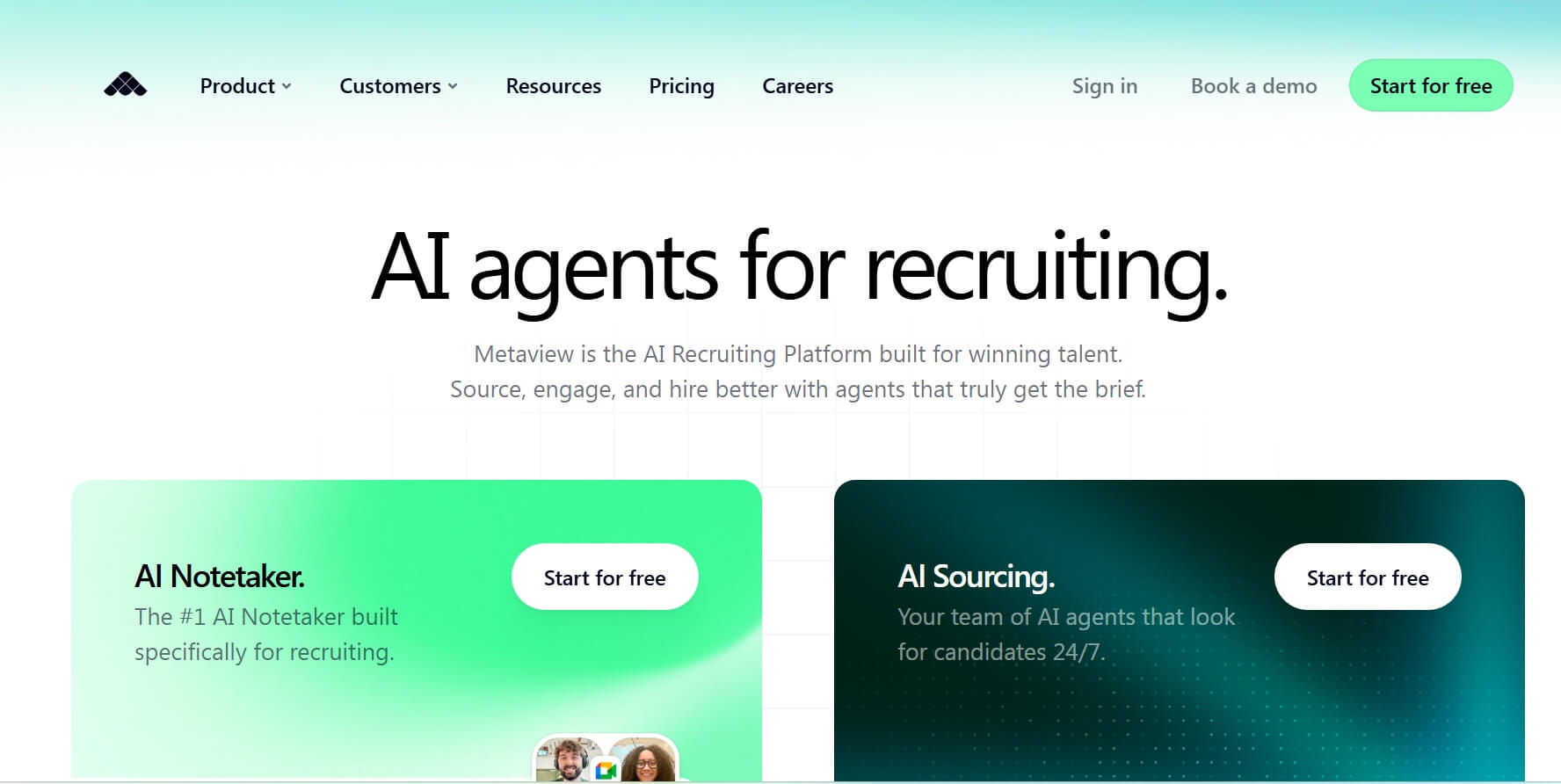
Why It Made the Shortlist: Metaview is like having a fly on the wall during interviews. It records your Zoom or Teams calls and uses AI to generate a structured summary of the candidate's answers. No more frantically drifting notes while trying to maintain eye contact. We found the summary quality to be shockingly human-like. Furthermore, it even flags if an interviewer is being biased or talking too much.
Who's it for? Interviewers who want to be more present and hire managers who need objective summaries of candidate performance.
Standout Features:
- Automated Summarization: instantly generates a report of the candidate's hard and soft skills.
- Interviewer Coaching: analyzes "Talk-to-Listen" ratios and flags leading questions.
- Hiring Manager Sync: automatically pushes interview notes into the candidate's ATS profile.
- Multi-Platform Recording: Works across Zoom, Google Meet, Microsoft Teams, and even dial-in phones.
Integrations: Zoom, Microsoft Teams, Google Meet, Greenhouse, Lever, and Workday.
"Metaview significantly reduces manual notetaking during interviews, allowing recruiters and hiring managers to stay fully engaged in the conversation."
"We used Metaview within the HR team and eventually rolled it out to the testing business users. Now, we offer the tool to everyone in our organization!"
Pros | Cons |
Saves time for post-interview admin. Improves interviewer focus. Offer hiring insights. | Potential privacy & safety concerns. High dependence on audio quality. |
8. HireVue: Best for unified video interviews and assessments
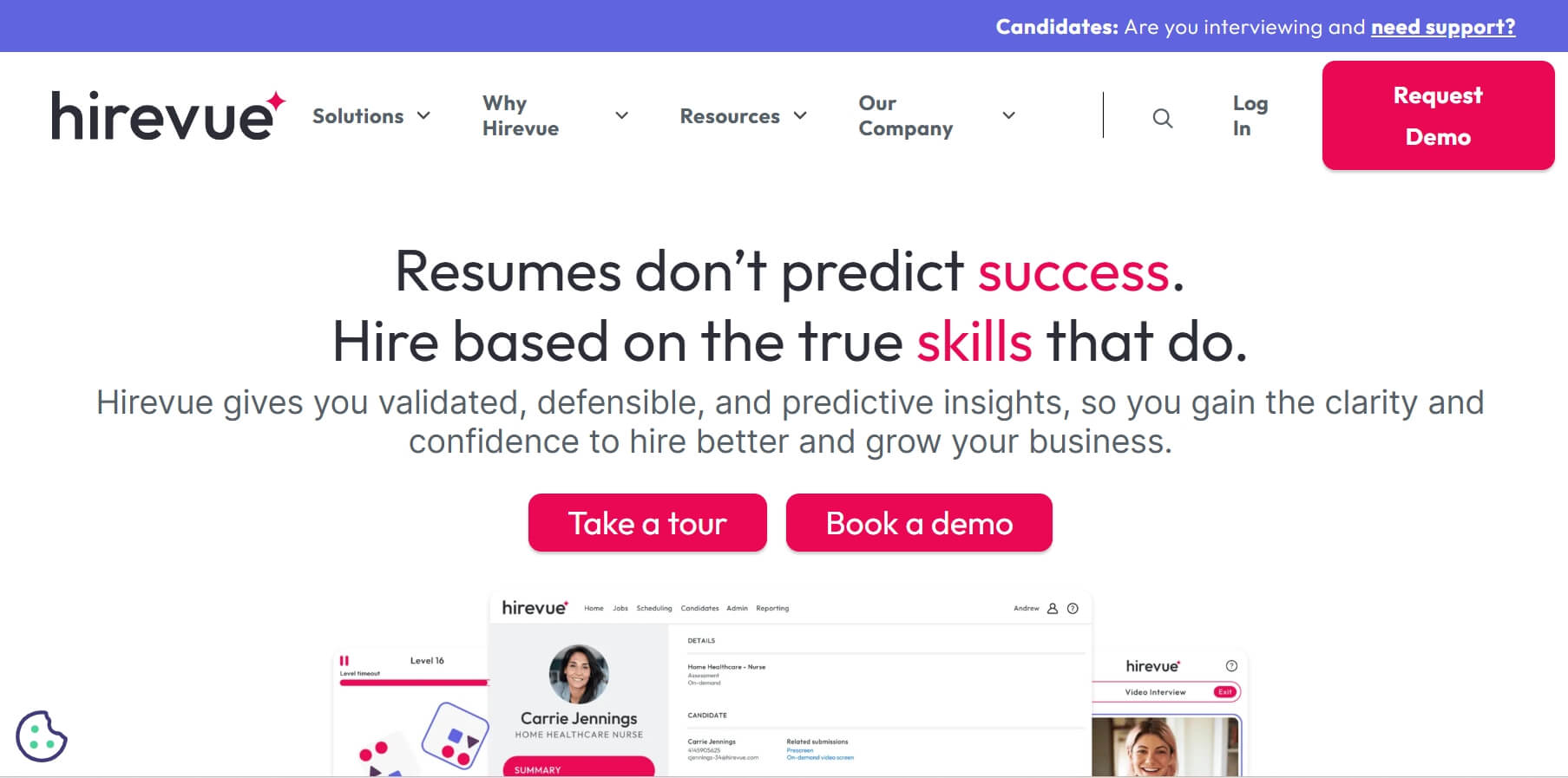
Why It Made the Shortlist: HireVue stands out as the leading AI video interviewing tool. It can analyze a candidate's verbal responses and game-based assessments to predict job performance. It's the ultimate tool for large organizations that need to process hundreds of thousands of applicants without sacrificing quality. It allows candidates to record their answers in their own time, and AI will highlight the best performers based on actual job skills, not just a good-looking resume.
Who's it for? Large organizations with high-volume entry-level roles or leadership development programs.
Standout Features:
- AI Video Interviews: candidates record responses on their own time, which AI pre-screens.
- AI Video Analysis: analyzes language patterns and logic to rank candidate suitability.
- Structured Interview Builder: AI suggests the best questions to ask based on the specific job competency.
- Live Video Interviewing: a collaborative platform for panel interviews with built-in digital evaluation forms.
Integrations: Oracle, Workday, SAP SuccessFactors, and Greenhouse.
"HireVue is generally user-friendly, both for recruiters and candidates. The interface is clean and intuitive, making it easy to set up interviews and review responses."-Vinay B.
"HireVue is a time saver when it involves a long and massive hiring process. It allows candidates to record their interviews at their own pace and helps recruiters to have all the information they need to move forward with the process."-Julián M.
Pros | Cons |
Combines testing and live video interviewing. Ease of scheduling and candidate management. Ideal for high-volume hiring. | Can feel impersonal to candidates. Needs a lot of setup for "fairness". |
9. Eightfold AI: Best for enterprise talent intelligence and internal mobility
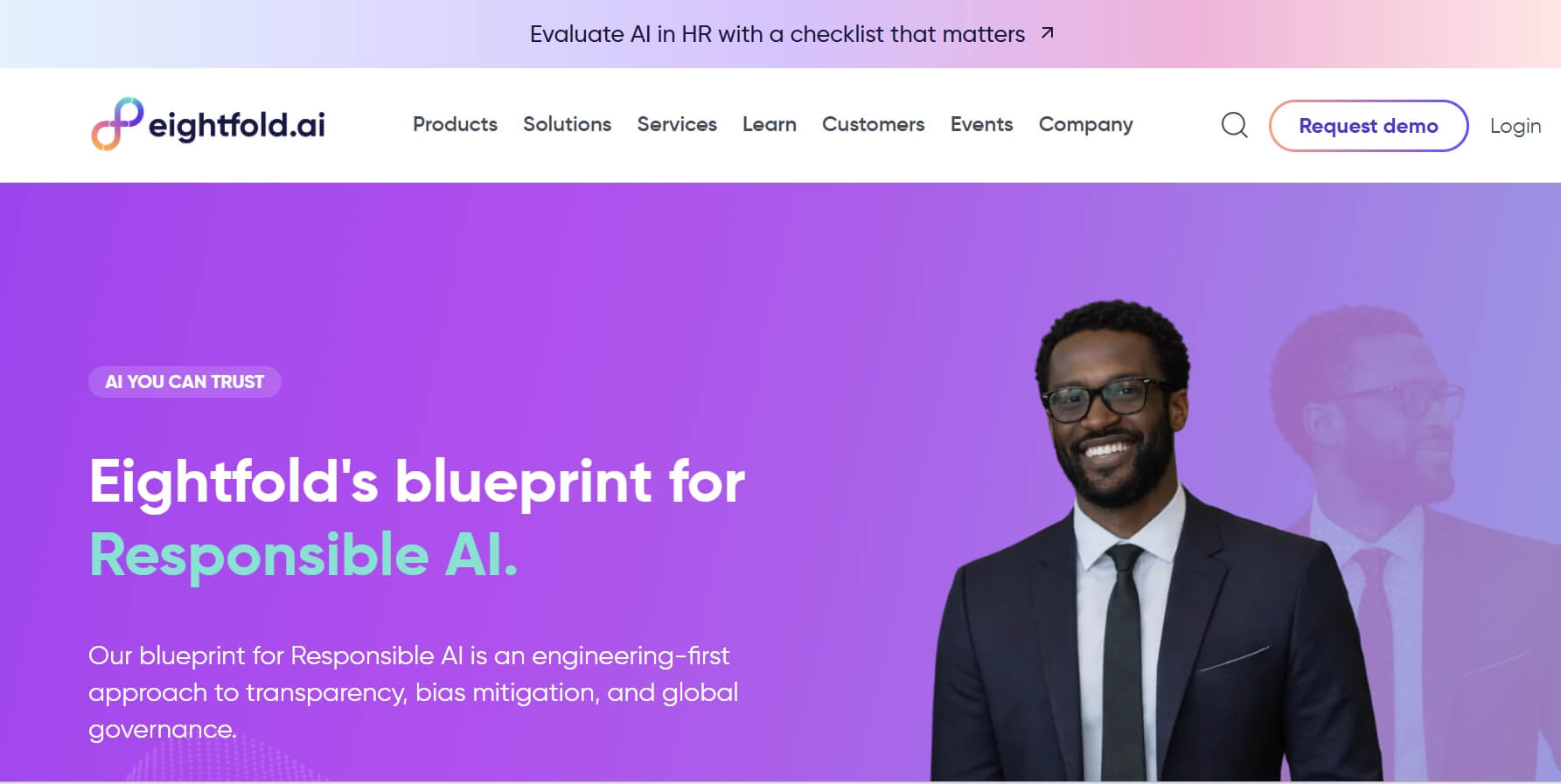
Why It Made the Shortlist: Eightfold AI is ideal for massive companies that have too many employees to keep track of manually. Its AI doesn't just look at who you should hire next; it looks at the thousands of people you already employ. It maps the skills of your entire workforce to find internal candidates for new roles, preventing turnover and reducing hiring costs.
Who's it for? Huge corporations, banks, and government agencies that handle a mountain of applications for graduate or frontline roles.
Standout Features:
- Skills-Based Matching: focuses on what people can do, not just their job titles.
- Internal Mobility Portal: suggests open internal roles to employees based on their career progression.
- Talent Rediscovery: Automatically matches previous applicants to new openings as they arise.
- Global Talent Insights: tells you where the talent you need is located and what they are being paid.
Integrations: SAP SuccessFactors, Workday, ServiceNow, and Oracle.
"I love how Eightfold AI seamlessly maps skills to employees, which is the best feature. I appreciate how it solves internal mobility by using skills."-Vikram B.
"I used this tool to refer candidates and found that it provides detailed information about the job roles."-Verified User in Financial Services.
Pros | Cons |
Best tool for internal promotions. Reduces turnover costs significantly. Comprehensive talent assessment. | Long time to set up. Expensive for smaller teams. |
10. Juicebox: Best for natural language talent search and GPT-powered discovery
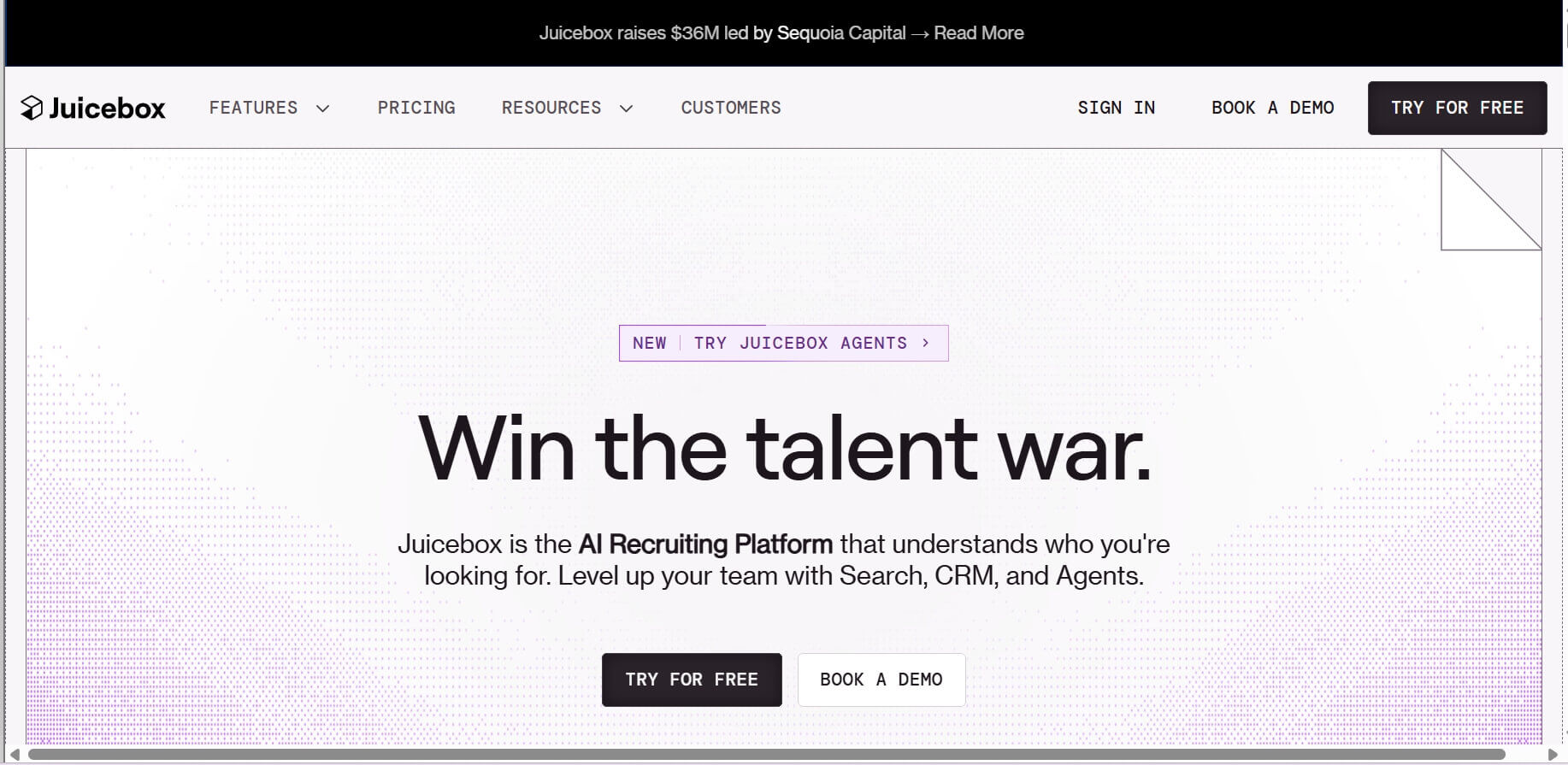
Why It Made the Shortlist: Juicebox uses its own PeopleGPT engine that makes talent sourcing feel like a conversation. Instead of a complex setup, you just type, for example, "Find me a Senior Sales Lead in Austin who worked at a unicorn startup," then it searches 800M+ profiles across 30+ data sources with PeopleGPT and explains why it picked each one. It's like having ChatGPT for your talent database.
Who's it for? Modern recruiters and founders who want a fast, "Google-like" search experience for the global talent market.
Standout Features:
l Natural Language Sourcing: utilizes GPT models to understand complex, descriptive hiring requests.
l Multi-Source Scraping: aggregates data from 30+ platforms, including LinkedIn, Twitter, and niche communities.
l Automated Email Outreach: write and send personalized intro emails to the discovered talent.
l AI Candidate Summaries: generate summaries of why a candidate is a fit for your specific role.
Integrations: Syncs seamlessly with Greenhouse, Lever, and Workday.
"I love juicebox! You can really test the limits of the AI features through autopilot. You can set some crazy parameters, and it can infer and predict a lot about profiles. Much better than basic filters."-help1billion.
"Juicebox/PeopleGPT is decent, but it's not always perfect, especially for super niche searches."-External_Barber6564.
Pros | Cons |
Extremely fast profile discovery. Natural-language searching. Multiple AI-assisted ways to filter candidates. | Outreach is mostly limited to email. Risk of scraping outdated data. |
Your AI Receptionist, Live in Minutes.
Scale your front desk with an AI that never sleeps. Solvea handles unlimited multi-channel inquiries, books appointments into your calendar automatically, and ensures zero missed opportunities around the clock.
FAQ
1. What features should I look for in AI recruiting software?
When choosing an AI recruiting software, you should look for automated sourcing, screening, AI matching (how well it ranks candidates), and integrations with your current ATS.
2. What are the benefits of using AI in recruitment?
The primary benefits of using AI in recruitment are reducing workload and saving time. AI can screen thousands of resumes at the same time a human reads one. It also helps rediscover talent already in your database and reduce administrative tasks like scheduling.
3. How can I choose the right AI recruiting software?
Start with your specific needs. If you have too many applicants, you can try Paradox or HireVue. If you can't find enough qualified candidates, look at SeekOut or Juicebox. If your internal team is disorganized, a CRM-focused tool like Gem is best.
4. What are the limitations of AI recruiting tools?
AI can sometimes "hallucinate" or miss the nuances of human personality. It is also only as good as the data it's fed. If your past hiring was biased, the AI might learn those same patterns.