An answering service handles inbound phone calls on your behalf — whether you're unavailable, after hours, or simply at capacity. At the basic level, it takes a message. At the advanced level, it books appointments, answers questions, and resolves the inquiry without a callback.
The category covers four very different types of services, from live human operators to fully automated AI — and they differ significantly in cost, capability, and what they can actually resolve. Knowing which type fits your business determines whether you're solving a problem or just delaying it.
TL;DR
Details | |
What it is | A third-party service that answers inbound calls on your behalf — routing, messaging, or resolving inquiries |
Types | Live agent, automated/IVR, AI-powered, industry-specific |
Cost range | Free–$800+/month depending on type and volume |
Who needs it | Any business that misses calls: solo practices, SMBs, after-hours coverage needs |
Core limitation | Traditional services take messages; only AI-powered services resolve inquiries end-to-end |
Modern solution | AI answering services that handle calls 24/7, book appointments, and escalate when needed |
What Is an Answering Service?
An answering service is a third-party solution that receives inbound phone calls on behalf of your business, either when you're unavailable or as a permanent part of your call handling setup.
Think of it as the professional version of having someone else pick up your phone — except that "someone" could be a trained human agent in a remote call center, a voice menu system, or an AI that answers, understands, and resolves the inquiry without any human involvement.
The term covers a wide range of services. At the most basic level, an answering service takes a message and sends you a notification. At the most advanced level, it answers every call 24/7, books appointments, handles FAQs, checks order status, and escalates complex cases to a human — all without you lifting a finger.
What separates a good answering service from a bad one isn't whether it picks up the phone. It's what happens after.
How Does an Answering Service Work?
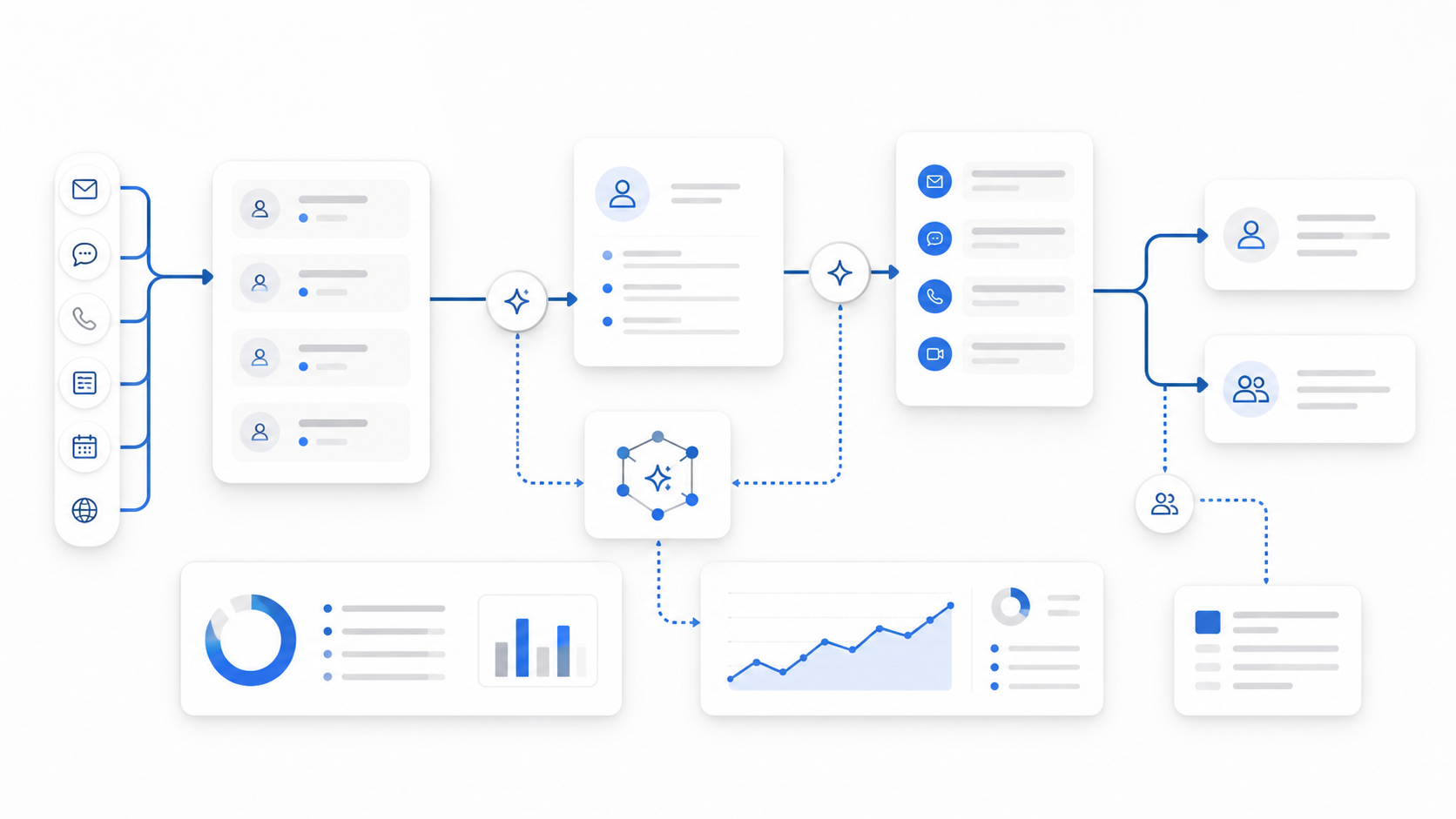
The mechanics depend on the type of service, but the general flow is consistent:
- Customer calls your business number — Your number either rings directly at the answering service, or calls are forwarded there based on rules you configure (after-hours, when busy, always).
- The service answers on your behalf — Using your business name, greeting, and script. To the caller, it sounds like they reached you.
- The inquiry is handled — Message taken, question answered, appointment booked, or the caller is routed to an on-call team member — depending on what your service offers.
- You receive a record — A message, notification, CRM entry, or transcript of what was discussed and resolved.
The quality of step 3 is everything. A service that only handles step 2 and step 4 well — answering politely, sending a message — hasn't solved your problem. It's just delayed it. Understanding the full call handling process helps clarify where most answering services fall short.
The 4 Types of Answering Services
Not all answering services work the same way. The right type depends on your call volume, budget, and how much you need the service to resolve versus simply route.
Type | How It Works | Availability | Starting Cost | Who It's For |
Live agent | Human operators answer, take messages, follow a script | Business hours or 24/7 | $50–$500+/mo | Medical, legal, high-stakes industries needing a human touch |
Automated / IVR | Pre-recorded menu routes callers by keypad input | 24/7 | $20–$100/mo | High-volume businesses with simple, predictable call types |
AI-powered | Conversational AI answers, understands intent, resolves end-to-end | 24/7 | Free–$30/mo | SMBs wanting full resolution without added headcount |
Industry-specific | Human agents trained in medical, legal, or real estate scripts and compliance | 24/7 | $100–$800+/mo | HIPAA-regulated practices, law firms, property managers |
Live Agent Answering Services
A human operator answers the call using your business name and a script you provide. They take messages, screen calls, and forward urgent ones to your cell or on-call team. The operator typically works from a shared pool — when you're not busy, they're handling other businesses' calls.
Strengths: Human tone, handles unexpected conversations, trusted in sensitive industries.
Limitations: Expensive to run 24/7, scripts can't cover every scenario, no ability to take real action (booking, status checks) without deep integrations that most services don't offer.
Automated / IVR Answering Services
A pre-recorded voice menu routes callers based on keypad input: "Press 1 for billing, press 2 for scheduling." Simple and scalable, but callers know immediately they're talking to a machine — and the moment their question doesn't fit a menu option, the experience breaks down.
Strengths: Low cost, handles high volume, always available.
Limitations: No conversational ability, frustrating for anything outside the predefined menu, abandonment rate spikes when options don't match the caller's need.
AI-Powered Answering Services
The most significant development in the answering service category in the past few years. AI-powered services answer in natural language, understand what the caller actually needs, access your knowledge base, and take real actions — booking an appointment, checking an order, answering a policy question — without routing to a human or scheduling a callback.
According to McKinsey Global Institute, generative AI can automate up to 60–70% of work activities in customer operations — tasks like answering routine inquiries, scheduling, and providing information that make up the bulk of what most answering services handle. Deloitte's research on AI-powered customer service similarly finds that automating routine customer interactions reduces service cost by 25–40% without sacrificing satisfaction scores.
Strengths: 24/7 availability, simultaneous call handling, end-to-end resolution, fraction of the cost of live agents.
Limitations: Complex or emotionally sensitive calls still benefit from human handling — good AI services manage this with a clean, context-preserving escalation.
Industry-Specific Answering Services
Human-operated services trained in the language and compliance requirements of specific industries. Medical answering services understand HIPAA. Legal answering services know intake procedures. Real estate answering services can qualify leads against property criteria.
Strengths: Deep domain expertise, compliance-aware, trusted in regulated environments.
Limitations: Most expensive category, still limited to message-taking and routing, no ability to take real action inside your systems.
What Can an Answering Service Do?
Capabilities vary significantly by type. Here's what's realistic across the range:
Capability | Live Agent | Automated / IVR | AI-Powered |
Answer calls in your business name | ✓ | ✓ | ✓ |
Take messages and notify you | ✓ | Limited | ✓ |
Answer FAQs from a knowledge base | ✓ (scripted) | ✗ | ✓ |
Book appointments in real time | ✓ (with integration) | ✗ | ✓ |
Handle simultaneous inbound calls | ✗ | ✓ | ✓ |
24/7 availability | ✓ (costs more) | ✓ | ✓ |
Access customer records / order status | ✗ (usually) | ✗ | ✓ |
Escalate with full conversation context | Partial | ✗ | ✓ |
Handle email and live chat | ✗ | ✗ | ✓ (some) |
The gap between "takes a message" and "resolves the inquiry" is where most businesses lose value. A caller who hears "I'll have someone call you back" and never gets that callback isn't just inconvenienced — they're a lost customer.
Answering Service Costs: What to Expect
Pricing models vary widely. The most common structures:
Per-minute billing (most common for live agent services): $0.75–$1.50 per minute of operator time. A business receiving 200 calls/month at an average 3-minute duration pays $450–$900/month before any plan fees.
Per-call billing: $0.80–$2.00 per call handled. Predictable for low-volume businesses, expensive as volume grows.
Monthly flat plan (most common for automated and AI services): Fixed monthly fee based on usage tier. AI-powered plans start as low as $0/month for low-volume use.
Service Type | Typical Monthly Cost | What's Included |
Basic live agent | $50–$150/mo | Message taking, basic call forwarding |
Full-service live agent | $200–$500+/mo | 24/7 coverage, scripted responses, call patching |
Automated / IVR | $20–$100/mo | Menu routing, voicemail, after-hours handling |
AI-powered (e.g. Solvea) | Free–$30/mo | 24/7 answering, appointment booking, FAQ resolution, multi-channel |
Industry-specific (medical/legal) | $100–$800+/mo | Compliance-trained human agents, HIPAA-ready |
The pricing gap between live agents and AI is substantial — and the capability gap increasingly favors AI for routine inquiries. The use case for live agents narrows to situations that genuinely require human judgment, empathy, or compliance-specific expertise.
How Solvea Works as an AI Answering Service
Solvea is a no-code AI receptionist platform designed for SMBs. Solvea AI receptionist answers inbound calls, responds to live chat, and handles email — from a single knowledge base you configure once. When a customer calls at 11 PM asking about appointment availability, Solvea answers, checks your calendar, and books the slot. No message, no callback, no missed opportunity.
IBM's Institute for Business Value research on AI in customer service finds that organizations deploying AI in customer-facing roles report measurable reductions in cost per interaction and improvements in first-contact resolution rates. Solvea's customers report consistent results across industries: Anker reduced manual customer service work by 70%; Radiance Medspa recovered the full cost of the service within its first week.
What sets Solvea apart from traditional answering services:
- Handles phone, live chat, and email from one platform — not phone only
- Books appointments, checks order status, answers FAQs without human involvement
- Escalates to a human agent with full conversation context when needed
- SOC 2 and ISO 27001 certified — enterprise-grade security at SMB pricing
- Setup in under 3 minutes, no code required
View pricing → — free plan available, no credit card required.
Your AI Receptionist, Live in Minutes.
Scale your front desk with an AI that never sleeps. Solvea handles unlimited multi-channel inquiries, books appointments into your calendar automatically, and ensures zero missed opportunities around the clock.
Frequently Asked Questions
What is the difference between an answering service and a call center?
An answering service typically handles overflow or after-hours calls for one or a few businesses, operating from a shared agent pool. A call center is a larger, dedicated operation handling high volumes for one organization — with more infrastructure, reporting, and specialist agents. The line has blurred with AI: an AI-powered answering service now handles call center-scale volume at a fraction of the cost, without the staffing overhead.
Is an answering service worth it for a small business?
For most small service businesses — medical practices, law firms, home services, salons, restaurants — yes. The question isn't whether you can afford an answering service. It's whether you can afford the missed calls you're currently losing. An AI answering service at $30/month that recovers two missed bookings per week typically pays for itself within the first day of the month.
What industries use answering services most?
Medical and dental practices, legal firms, real estate agencies, home service businesses (plumbers, HVAC, electricians), and hospitality (hotels, restaurants, spas) are the heaviest users. These industries share a trait: customers expect to reach someone quickly, and a missed call usually means a missed booking — not a delayed one.
Can an answering service book appointments?
Traditional live agent services can book appointments, but typically only with manual integration into your calendar — which most don't offer out of the box. Automated IVR systems generally can't. AI-powered answering services connect directly to your calendar (Google Calendar, Calendly, or your booking platform) and book in real time during the call, without any human involved.
What happens when the answering service can't handle a question?
With live agent services, the operator takes a message and you call back — and hope the customer is still available. With AI-powered services, the system escalates to a human agent with the full conversation history. The caller doesn't start over. How gracefully escalation is handled is one of the most important things to evaluate before choosing a service.
Do answering services work for outbound calls?
Answering services are primarily built for inbound. Some live agent services offer outbound campaigns (appointment reminders, follow-up calls), but this is a separate product from standard inbound answering service functionality. AI-powered services like Solvea focus on inbound resolution; SMS follow-ups after a call are supported on some plans.
How long does it take to set up an answering service?
Live agent services typically take 3–7 business days — scripts need to be written and reviewed, operators trained, call forwarding configured, and the setup tested. AI-powered services compress this dramatically. Solvea configures in under 3 minutes: connect your knowledge base, set business hours, and the AI goes live on your number.