RingCentral AI receptionist offers a reliable and professional interface that works well for large companies. The system provides a solid way to manage high call volumes. It is especially useful for businesses that already use RingCentral’s other office tools.
However, some users feel the system is too rigid for specific tasks. Feedback on Reddit and r/AI_Agents shows that small businesses often find it unaffordable compared to lighter AI receptionist tools, and the AI sometimes can also struggle with complex issues. In 2026, businesses need AI solutions that can handle bookings, sync with CRMs in real-time, capture leads, and drive revenue.
Over the past few weeks, our team subscribed to and tested a dozen AI receptionists — evaluating setup time, voice quality, integration depth, and real-world call handling. We also analyzed 300+ reviews from G2, Reddit, and Capterra to supplement our hands-on findings. Finally, we selected 8 standout RingCentral AI receptionist alternatives, such as Solvea for rapid deployment and Dialpad for real-time sales intelligence.
TL;DR: Best RingCentral AI Receptionist Alternatives (Quick Comparison)
If you want the fastest answer: choose Solvea for affordable multi-channel reception, Dialpad for sales call intelligence, Nextiva for larger teams, Vonage for API-heavy workflows, Retell AI for low-latency voice agents, Allo for mobile-first teams, Google Voice for simple virtual numbers, and PolyAI for enterprise-grade conversations. RingCentral still makes sense for teams that want one bundled phone system, but the alternatives below are better when cost, flexibility, or voice-agent depth matter more.
Tool | Best for | Starting price | Core strengths vs RingCentral | Integrations | Setup speed | Customization level |
Small businesses that want fast setup and native integrations | $30/month | Instant deployment, affordable price, industry-specific workflows | Google Calendar, Sheets, CRM, files/URLs stork | Very fast (3 minutes) | High | |
Sales teams needing AI call insights in real time | $39/month/user | Sales outbound, real-time AI coaching, post-call summaries | CRM and sales tools | Fast | Medium | |
Large teams needing scalable unified communications | $99/month | Unified platform, AI, real-time insights & summaries, smart handoff | Calendar & CRM integration | Medium | Medium | |
Businesses wanting API-driven workflows | Custom | Deep developer control and custom voice/SMS logic | APIs, custom systems | Medium | Very high | |
Tech teams building low-latency AI voice agents | $0.07/min/AI voice agent | Voice-agent control, 600ms low-latency, flexible builders | Webhooks and API access, LLM Integration | Fast | Very high | |
Startups that want a mobile-first AI phone system | $32/month/user | Mobile-first approach and simple AI receptionist | CRM sync and phone tools | Fast | Medium | |
Freelancers who need simple virtual numbers | $7/month/user | Simple, low-friction voice setup, lowest entry cost | Google Workspace apps | Very fast | Low | |
Brands needing natural enterprise customer conversations | Custom | Natural voice quality and enterprise call routing depth | Telephony systems, CRMs, Google Workplace | Slow | Very high |
Why People Look for RingCentral AI Receptionist Alternatives
While RingCentral is a powerhouse, it isn't a one-size-fits-all solution for every business model. Businesses often require more agility, lower costs, or deeper technical specialization that a broad, generalist platform cannot always provide. As the market shifts toward specialized AI, several key pain points have emerged that lead businesses to explore alternatives to RingCentral phone service.
Cost Management and Scalability: RingCentral can become quite expensive for small businesses or freelancers. When you begin adding multiple AI features or premium seats, the monthly bill climbs quickly. For those on a tight budget, platforms like Solvea offer a more predictable and budget-friendly pricing model that delivers high-end automation without the enterprise-level overhead.
Action vs. Simple Routing: Many users want an AI that actually resolves issues—such as processing a refund, checking order, or booking an appointment—rather than just routing calls to a human. This is where specialized "Resolution AI" outperforms traditional receptionists by interacting directly with your business data.
Complexity vs. Efficiency: Small teams often experience "feature bloat" with RingCentral, finding the interface too heavy for their daily needs. They frequently prefer the absolute simplicity of tools like Google Voice or Allo. These platforms strip away the complex corporate layers, allowing users to focus on basic communication without undergoing extensive technical training.
Voice Realism and Brand Identity: For high-end luxury brands or boutique services, the "robotic" tone of a standard AI can damage customer experience. These businesses often seek the natural, fluid prosody found in Poly.ai. Having an AI that sounds indistinguishable from a human help maintain a premium brand image that a generalist VoIP provider might struggle to match.
Deep Workflow Customization: Technical teams and developers often find themselves hitting a "glass ceiling" with pre-packaged SaaS products. They require deep API access and low-level control offered by Vonage or Retell AI. These platforms allow tech-savvy companies to build custom logic, unique triggers, and proprietary workflows that are impossible to execute within a closed system.
How We Evaluated These Alternatives
We used a practical review method, not a feature checklist written from marketing pages alone. We compared pricing pages, product docs, customer stories, and review signals from G2, Trustpilot, Reddit, and Capterra-style feedback where available, then looked for fit by use case instead of ranking everything on one score.
Evaluation factor | What we checked | Why it matters |
Pricing clarity | Public pricing, overages, and hidden fees | Many teams switch because of cost predictability. |
Setup time | How fast can a team go live | Small teams need speed, not long projects. |
Call handling depth | FAQ handling, booking, routing, and handoff | This shows whether the AI can do real work. |
Integrations | CRM, calendar, messaging, and APIs | Most businesses need AI to connect to other tools. |
Voice quality | Natural speech and conversation flow | A receptionist must sound credible on the phone. |
Real-world feedback | Reviews, complaints, and customer stories | User comments reveal friction that demos hide. |
Your AI Receptionist, Live in Minutes.
Scale your front desk with an AI that never sleeps. Solvea handles unlimited multi-channel inquiries, books appointments into your calendar automatically, and ensures zero missed opportunities around the clock.
8 Best RingCentral AI Receptionist Alternatives in 2026
1.Solvea: Best for small business that want fast setup and native integrations
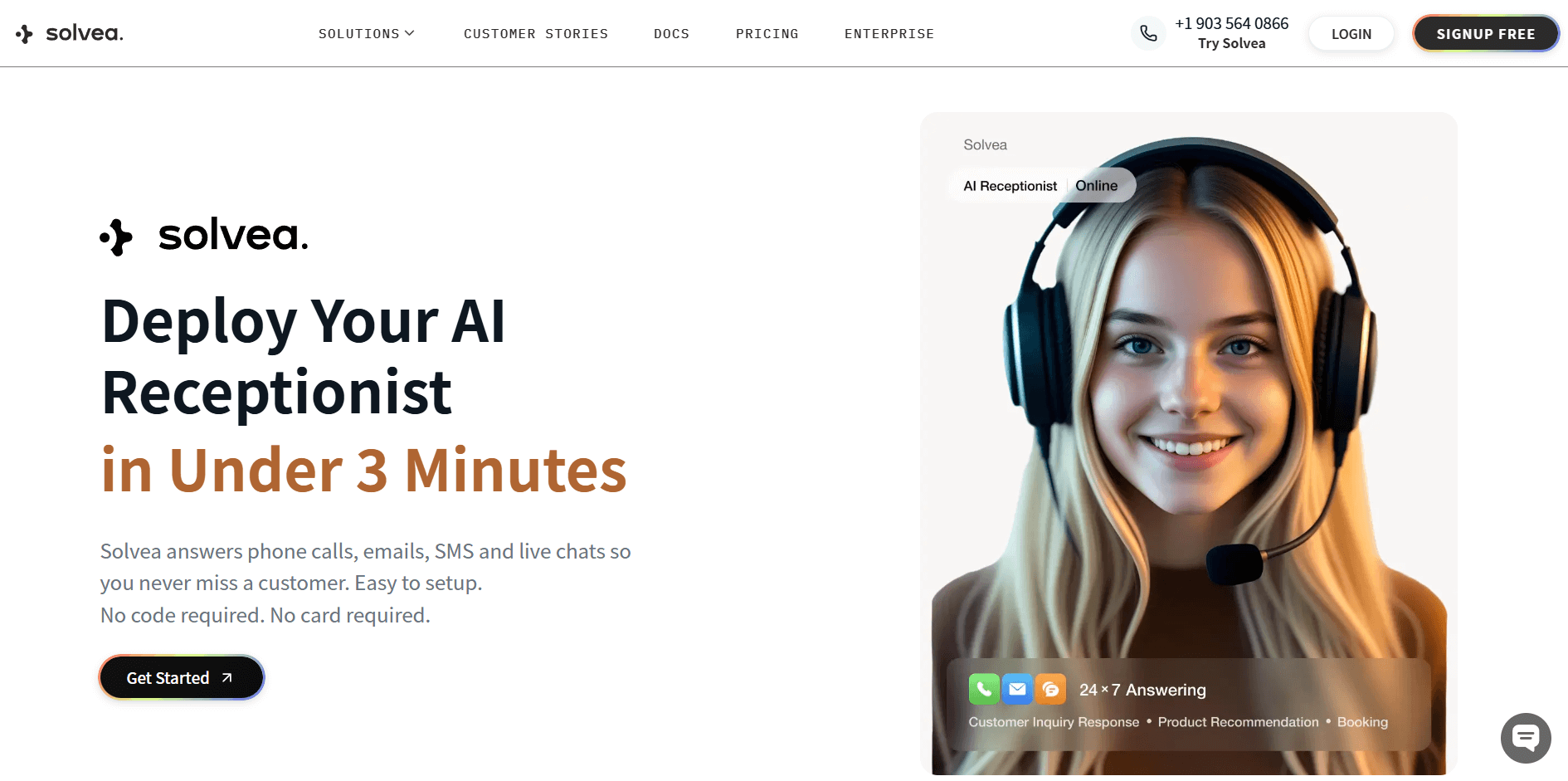
Who is Solvea best for? Perfect for budget-conscious SMBs in service industries (hotels, real estate, law, and home service) that need a no-code AI agent that executes business tasks.
How Solvea compares to RingCentral?
Solvea is more flexible for multi-channel support because it is built around voice, text, live chat, and cross-channel handling rather than a phone-system-first add-on. It allows you to set up your own AI receptionist in minutes using industry-specific templates or vibe coding.
Solvea's native integrations with Google Calendar and CRMs are also "plug-and-play," meaning you don't need a developer to sync your schedule. Beyond its ease of use, it offers enterprise-grade security but with the transparency and price point small businesses crave.
Pros & cons of Solvea:
Pros | Cons |
Ultra-fast setup with industry templates and vibe coding | Newer platform compared to giants |
Native CRM and Calendar integration | Focus is on service-based small businesses, not mega-enterprises |
Handles complex tasks (bookings, orders, follow-up) | |
Transparent, affordable pricing for SMBs |
Pricing Model:
- Free: 1K credits/month, 3 agents, 7-day free trial phone number, all channels, 50MB knowledge base.
- Basic: 30K credits/month, 10 agents, a 7-day free trial phone number, all channels, 500MB knowledge base.
See how it all comes together in practice:
2. Dialpad: Best for sales teams that need AI call insights in real time

Who is Dialpad best for? High-growth sales and support teams that rely on data to close deals and improve customer satisfaction.
How Dialpad compares to RingCentral?
Dialpad stands out by moving the AI from the "receptionist" role to a Live Coaching role. While RingCentral’s AI mostly handles the pre-call experience, Dialpad uses Real-Time Speech Recognition to help your sales reps navigate difficult conversations as they are happening on the line.
The data depth is significantly higher, offering Sentiment Analysis that helps managers identify which calls are going south instantly. According to Trustpilot, users find these Automated Post-Call Summaries far more accurate and actionable than the basic transcripts provided by RingCentral’s standard AI tier.
Pros & cons of Dialpad:
Pros | Cons |
Real-time AI sentiment analysis | Advanced features require higher tiers |
Built-in live coaching for reps | The interface can be busy for basic users |
Superior automated call summaries | |
Very reliable mobile app |
Pricing model:
- Essentials: $39/user/month, call recording, transcription, and seamless CRM integrations.
- Advanced: $95/user/month, everything in Essentials, real-time guidance, log specific moments in CRM, give reps time back with voicemail drop.
- Premium: $150/user/month, everything in Advanced, consistency with AI Playbooks, queue and route inbound calls, drive quality interactions with AI Scorecards.
3.Nextiva: Best for large teams that need a scalable unified communications platform
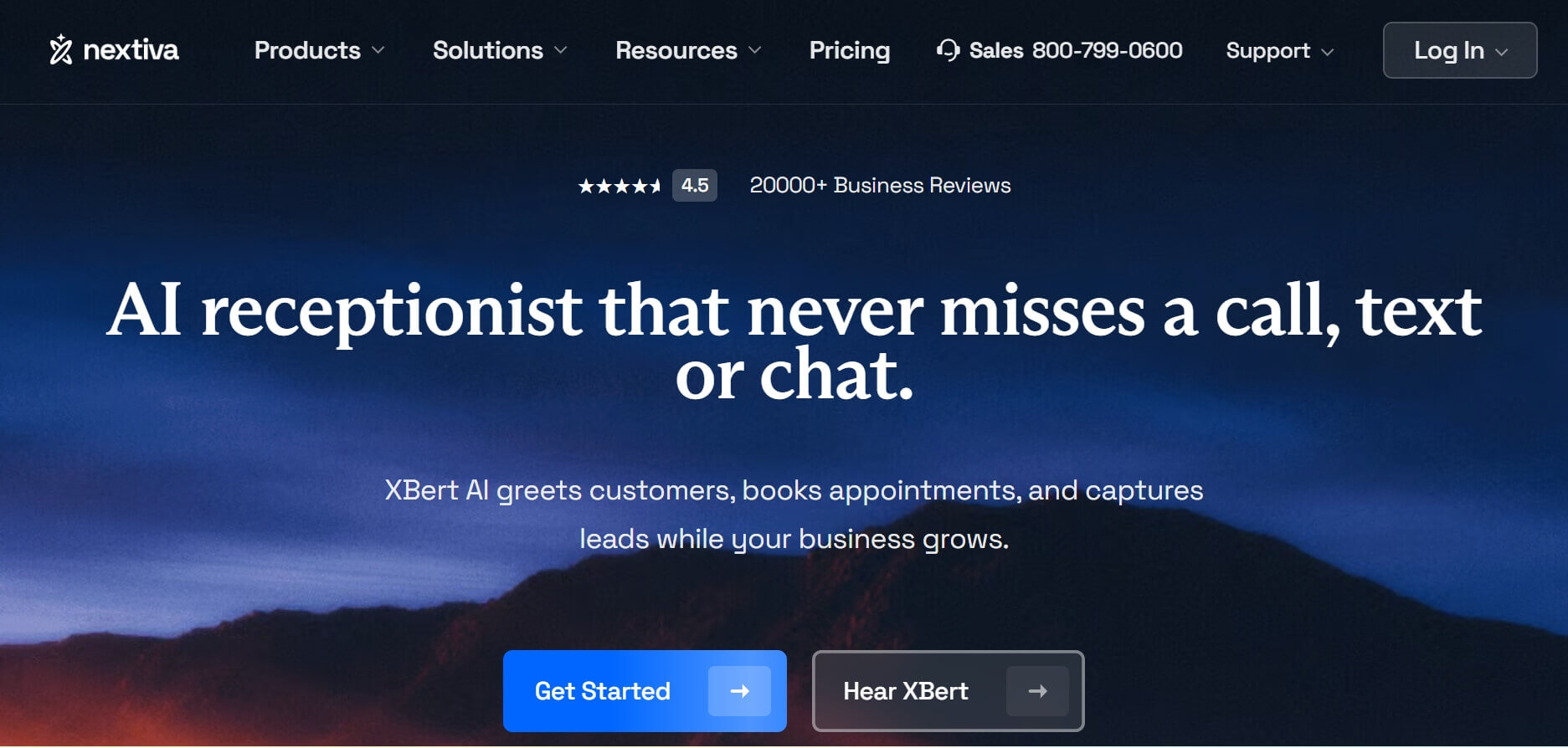
Who is Nextiva best for? Large organizations and mid-market companies that need a highly stable, all-in-one alternative to the RingCentral ecosystem.
How Nextiva compares to RingCentral?
Nextiva is often chosen for its Superior Customer Support and more intuitive "NextivaONE" interface. While RingCentral offers a massive feature set, Nextiva prioritizes a Streamlined User Experience that makes managing multi-channel communications—voice, video, and chat—much simpler for large administrative teams.
The system is built for enterprise-grade Reliability, matching RingCentral’s 99.999% uptime but with a more personalized onboarding process. The Shelby American case study shows how they manage High-Volume Interactions with a level of white-glove service that RingCentral’s larger, more automated support structure often misses.
Pros & cons of Nextiva:
Pros | Cons |
99.999% uptime reliability | Add on fees after 99 interactions |
Award-winning customer support | Setup may take longer than plug-and-play alternatives |
Powerful multi-location management | |
Extensive third-party integrations |
Pricing model:
- XBert AI: $99/month, 99 interactions included, then $0.99 per interaction after.
4.Vonage: Best for businesses that want highly customizable, API-driven workflows
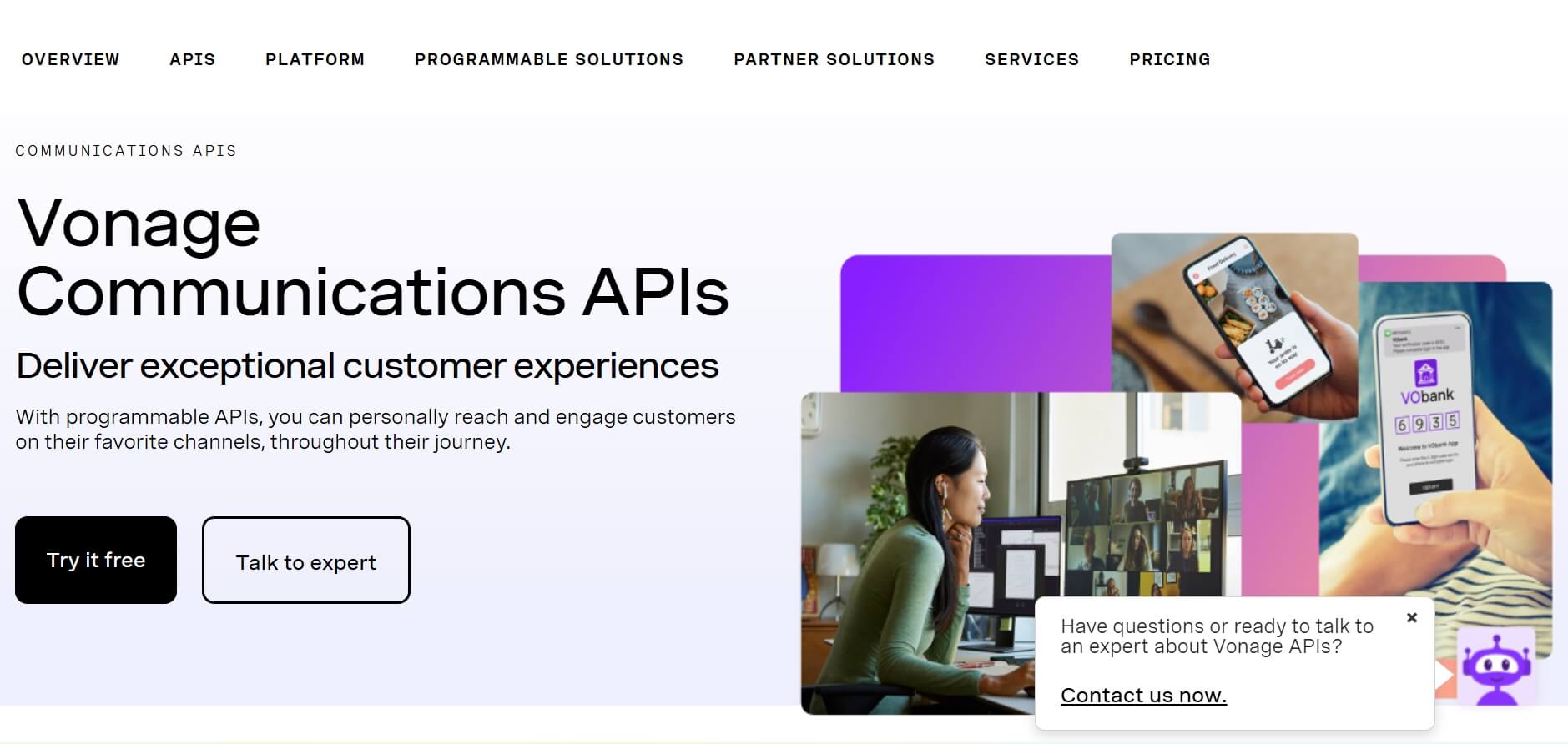
Who is Vonage best for? Tech companies with in-house developers who want to build a completely unique AI communication experience from scratch.
How Vonage compares to RingCentral?
Vonage offers a Developer-First Approach that is the polar opposite of RingCentral’s pre-packaged software. By using the Vonage Communications APIs, you can build a Fully Custom AI Agent that integrates directly into your custom mobile app or specialized proprietary hardware.
Additionally, Vonage utilizes a Pay-As-You-Go Pricing model, which is ideal for businesses with fluctuating call volumes. Unlike RingCentral’s fixed monthly seats, Vonage allows you to Scale Costs Precisely based on your actual API usage, making it a more efficient financial choice for high-tech startups.
Pros & cons of Vonage:
Pros | Cons |
Total control over the user experience | Requires technical knowledge to set up |
Global carrier connectivity | No "out of the box" app for non-techies |
Pay-as-you-go pricing model | |
Supports SMS, Voice, and Video APIs |
Pricing model:
- SMS API: €0.00735/$0.00809/message.
- Messages API: €0.00110/$0.00121/message.
- Voice API: €0.01314/$0.01446/minute
- Video API: €0.00373/$0.0041/minute
5.Retell AI: Best for tech teams building low-latency AI voice agents
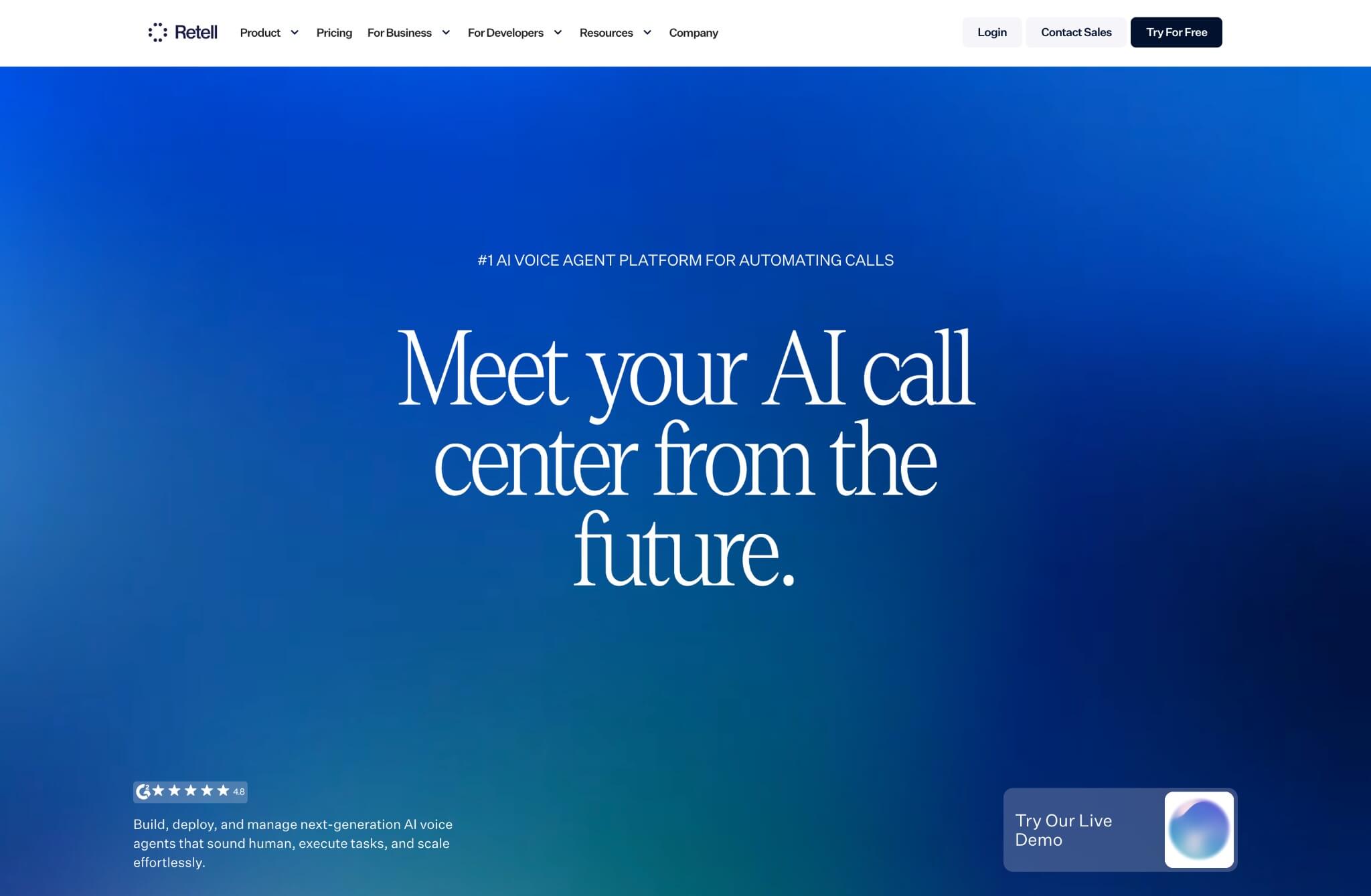
Who is Retell AI best for? Tech startups and SaaS companies building the next generation of conversational AI with a focus on speed and realism.
How Retell AI compares to RingCentral?
Retell AI focuses exclusively on Ultra-Low Latency, achieving response times under 600ms. While RingCentral’s AI Receptionist often suffers from the "awkward pause" during conversations, Retell provides a Natural Flow that allows for interruptions and back-and-forth dialogue that feels incredibly human.
It functions as a specialized voice engine rather than a general phone system. This allows developers to build complex decision trees for their AI agents, as seen in the Sunshine Loans case study, where the AI handles sensitive financial collections with a high level of empathy. Furthermore, Retell offers Deep LLM Integration, allowing you to plug in your own models like GPT-4.
Pros & cons of Retell AI:
Pros | Cons |
Industry-leading low latency (<600ms) | Requires more implementation work |
Extremely natural human-like prosody | Usage costs can scale quickly |
Deep developer documentation | |
Excellent handling of interruptions |
Pricing model:
- Pay as you go: $0.07-$0.31/ min for AI Voice Agents, 20 calls included, Shared server.
- Enterprise Plan: custom price, No Cap on Concurrent Calls, Dedicated stable server.
6.Allo: Best for startups that want a mobile-first AI phone system
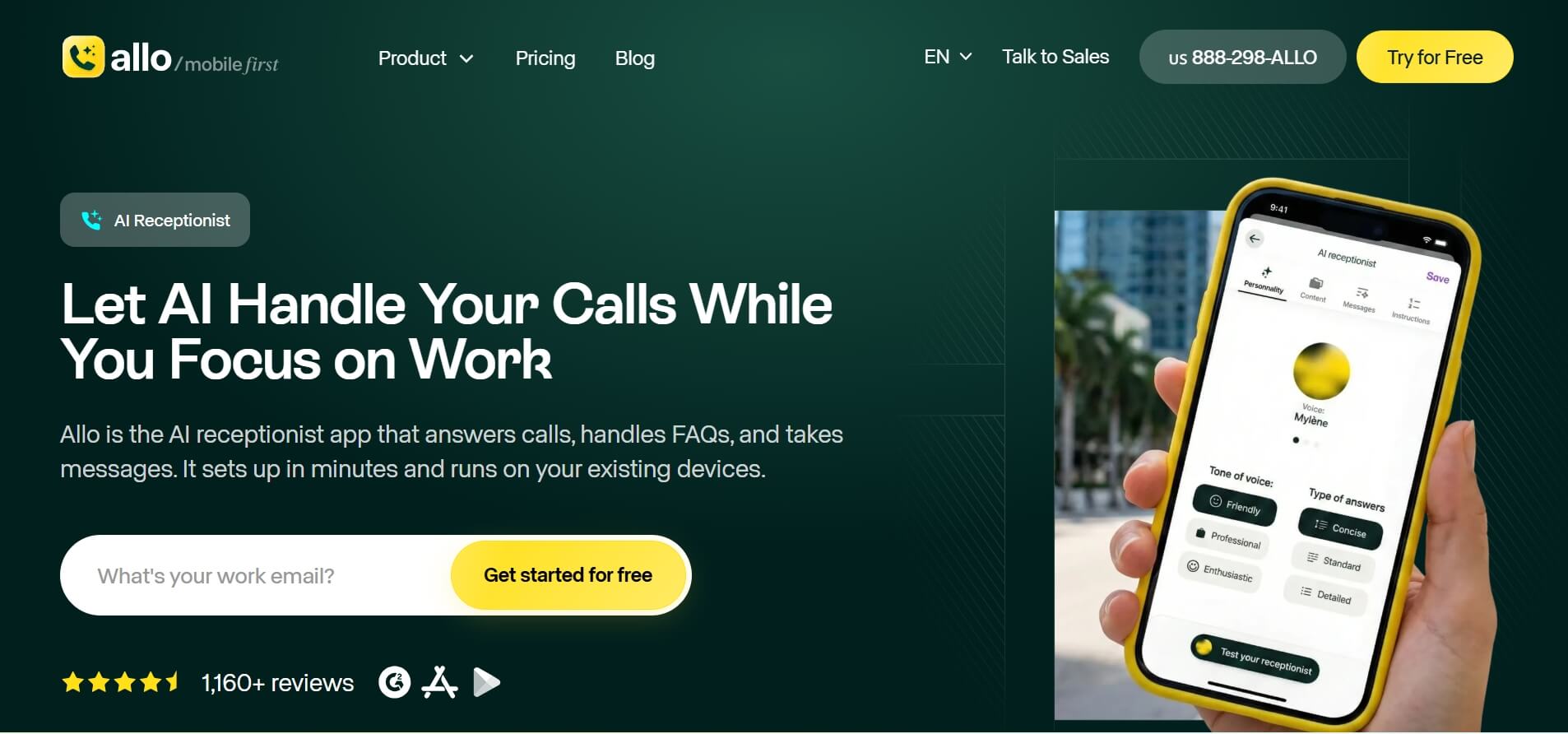
Who is Allo best for? Modern, remote-first startups that live on their smartphones and want a "cool," simple AI phone solution.
How Allo compares to RingCentral?
Allo is built for the mobile-first users, offering an experience that is significantly more agile than RingCentral’s desktop-heavy legacy. The AI Receptionist interface is optimized for Smartphone Productivity, allowing founders to manage business calls, texts, and AI summaries entirely from a sleek, intuitive mobile app.
The setup is designed for instant onboarding, removing the complex menus and administrative hurdles that define the RingCentral experience. Allo focuses on Async Communication, automatically transcribing voicemails and calls into searchable text blocks that fit perfectly into a fast-paced, Slack-like workflow.
Pros & cons of Allo:
Pros | Cons |
Beautiful, modern mobile interface | Less enterprise depth than RingCentral |
Simple "one-click" AI setup | Not suitable for heavy call centers |
Affordable price for small teams/startups | |
Great for remote/distributed work |
Pricing model:
- Starter: $32/user/month, 1 Business Number, limited call handling, AI Call Summaries.
- Business: Custom price, everything in Starter, 24/7 Call handling, 90 International Calls, AI Call Tags.
7.Google Voice: Best for freelancers who need simple virtual numbers
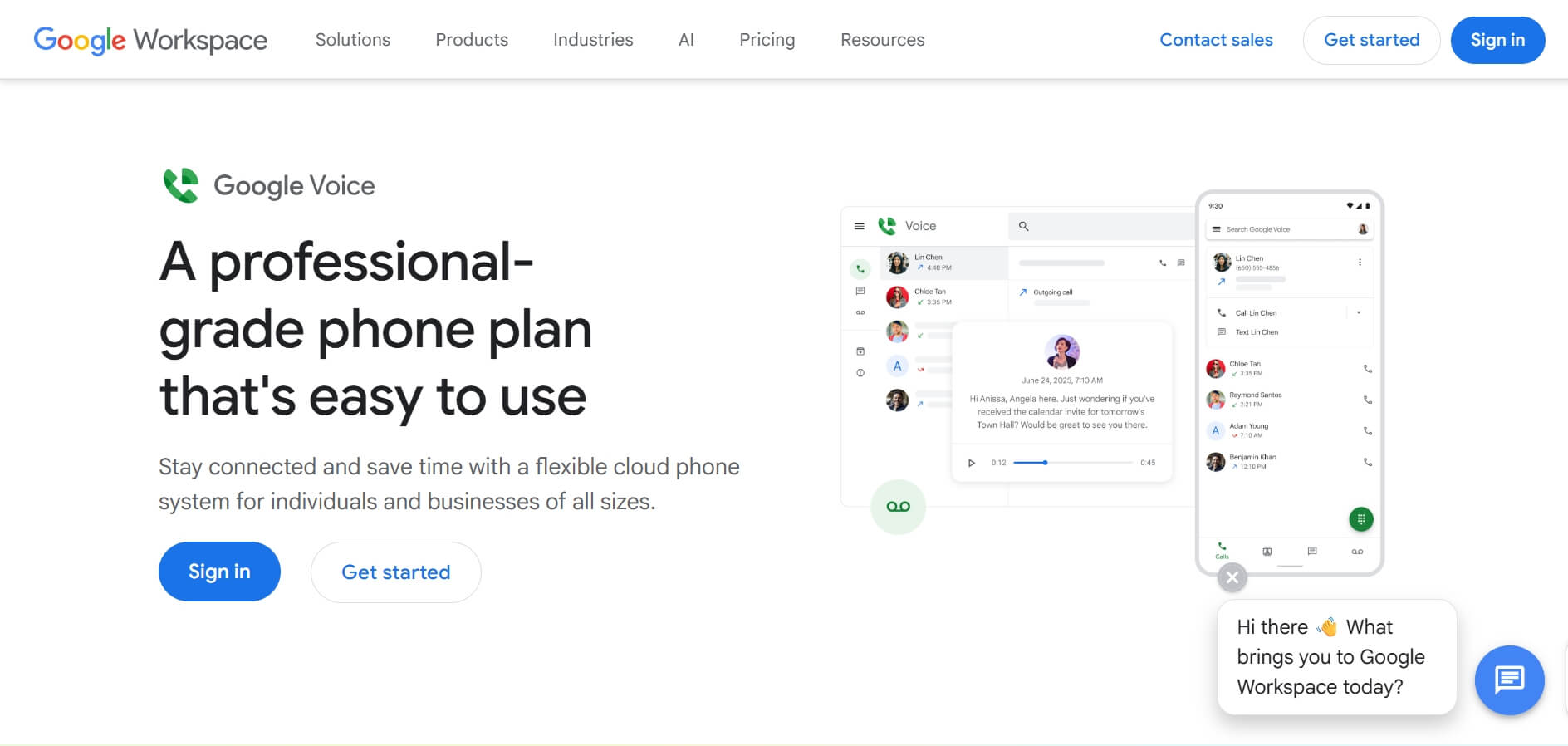
Who is Google Voice best for? Solo owners and freelancers who just need a separate business line without any complicated bells and whistles.
How Google Voice compares to RingCentral?
Google Voice is the ultimate minimalist alternative to RingCentral’s complex ecosystem. For a freelancer who only needs a professional number, Google Voice provides Seamless Workspace Integration that lets you manage calls directly within the Google apps you already use every day, like Gmail and Calendar.
It is the Most Budget-Friendly option on this list. For just $7 a month, you get a dedicated line with standard call handling features. For those who don't need AI agents or sales coaching, it is a far more sensible choice than paying for a bloated RingCentral subscription.
Pros & cons of Google Voice:
Pros | Cons |
Very simple setup | Very limited AI capabilities |
Low entry price for business use | No complex task automation |
Strong Google Workspace integrations | |
Good for virtual numbers and basic calling |
Pricing model:
- Starter: $7/month/user, 30 GB storage, Gemini AI assistant in Gmail, Video meetings, 100 participants.
- Standard: $9.80/month/user, 2 TB storage, Gemini AI assistant in Gmail, Video meetings, 150 participants, NotebookLM, Appointment booking pages, eSignature.
- Plus: $15.40/month/user, 5 TB storage, Gemini AI assistant in Gmail, Video meetings, 500 participants, Secure LDAP, Advanced endpoint management, Enhanced security.
8.Poly.ai: Best for brands that need natural, enterprise-grade customer conversations
Who is Poly.ai best for? Consumer brands, hotels, and large-scale retailers where every customer call is a chance to build brand equity.
How Poly.ai compares to RingCentral?
Poly.ai focuses on High-Fidelity Conversational Design, ensuring that the AI sounds and acts like a polished brand ambassador. While RingCentral’s AI can feel like a "standard robot," Poly.ai uses deep neural synthesis to create a voice that carries the warmth and nuance required for high-end hospitality and retail.
Poly.ai provides Industry-Specific Training that is much deeper than RingCentral’s generalist approach. Whether it’s booking a table or managing insurance claims, the AI is pre-trained on niche lexicons, ensuring it understands industry jargon and customer intent with a much higher degree of accuracy.
Pros & cons of Poly.ai:
Pros | Cons |
Exceptional natural language understanding | High-end pricing for large volumes |
Best-in-class voice synthesis | Long implementation time |
Handles complex, non-linear dialogue | |
Deep industry-specific training |
Pricing model: Need to contact sales for custom.
How We Choose the Right Alternative to RingCentral AI Receptionist
The right RingCentral AI receptionist alternative depends on the job you want the AI to do. A small shop or solo owners may need fast setup and affordability, while a larger operation may care more about routing depth, analytics, or API control.
Your situation | Best fit | Why |
Need fast launch and multi-channel support | Solvea | Quick to launch, easy to connect, and good for teams that want voice, text, and chat in one place. |
Want call insights for a sales team | Dialpad | Better for teams that want real-time transcription, call intelligence, and sales-focused AI. |
Need scalable unified communications | Nextiva | Stronger for broader team growth and platform consolidation. |
Need custom workflows and developer control | Vonage | Can build your own call logic, automation, or system integrations. |
Building voice agents as a product team | Retell AI | Low-latency, builder-friendly voice automation. |
Want a lighter startup phone system | Allo | Mobile-first and simpler to manage. |
Just need a basic virtual number | Google Voice | Provide basic calling, voicemail, and a low-cost business number. |
Need enterprise-grade natural conversations | PolyAI | Polished, high-volume customer conversations and advanced routing. |
FAQs
What is the best alternative to RingCentral for small businesses?
For most small businesses, Solvea is the strongest alternative because it balances cost with actual task execution. While RingCentral can be difficult to set up, Solvea allows SMBs to automate bookings and CRM entries natively without needing a technical team.
Are there more affordable alternatives to RingCentral AI Receptionist?
Yes. Google Voice is the most affordable at $7/month for basic needs. For those needing AI features, Allo and Solvea offer much more competitive pricing than RingCentral’s mid-to-high tier plans, which often require expensive add-ons for full AI functionality.
Is RingCentral AI Receptionist really $59/month, or are there hidden costs?
While the starting price for the AIR Everywhere plan is $59/month, this only includes a small buffer of 100 AI minutes. Additional minutes are typically billed at $0.50 each, which can quickly drive a monthly bill to $150–$200+ for active businesses. You must also factor in separate RingEX subscription costs to get a complete picture.
Can RingCentral AI receptionist alternatives handle channels like WhatsApp, Instagram, or web chat?
For businesses specifically requiring WhatsApp or Instagram integration, platforms like Vonage or Nextiva are often better suited. These tools offer broader social messaging support, ensuring you can reach customers with their preferred apps. When choosing an alternative, always verify which specific digital channels are supported to ensure the AI can sync data across your entire communication stack.
Can I keep my existing phone number if I switch from RingCentral?
In many cases, yes, but the process depends on the new provider and the country or carrier rules. Businesses usually need to verify number portability and complete a porting request before changing systems.
Will switching from RingCentral affect my current call workflows or CRM integrations?
It can, especially if your current setup relies on RingCentral-specific routing or native integrations. To avoid disruption, map your call flow first, list every connected tool, and test the new system in parallel before fully switching.