Artificial intelligence is rapidly becoming embedded in everyday business operations. What was once limited to experimental pilots is now being applied across customer service, sales, marketing, operations, and analytics. Companies are not adopting AI simply to follow a trend — they are using it to solve concrete problems such as slow response times, manual workloads, disconnected systems, and underutilized data.
The real challenge is no longer whether AI works, but how to use AI in business in a practical and scalable way. When integrated into workflows rather than deployed as isolated tools, AI can improve efficiency, enhance customer experience, and support smarter decision-making. This guide outlines clear, actionable ways businesses are applying AI today and how to approach implementation strategically.
6 Ways to Use AI in Business: TL;DR
Capability | What you actually do |
24/7 Customer Response | Deploy AI chatbots and call center automation to provide instant, round-the-clock support and intelligent routing. |
Lead Capture & Qualification | Implement conversational AI forms, real-time qualification, and automated scoring to identify and route high-intent leads. |
CRM Automation & Personalization | Integrate AI with CRM for automatic conversation logging, data enrichment, sentiment analysis, and next-best-action recommendations. |
Automated Follow-ups | Develop behavior-triggered email/SMS sequences and re-engagement campaigns for continuous customer nurturing. |
Sync & Scheduling | Leverage AI to automate meeting bookings, synchronize calendars, and integrate platforms for seamless coordination. |
Data Analytics & Insights | Utilize AI for conversion analysis, customer segmentation, predictive forecasting, and churn detection to drive strategic decisions. |
Why AI Can Benefit Your Business?
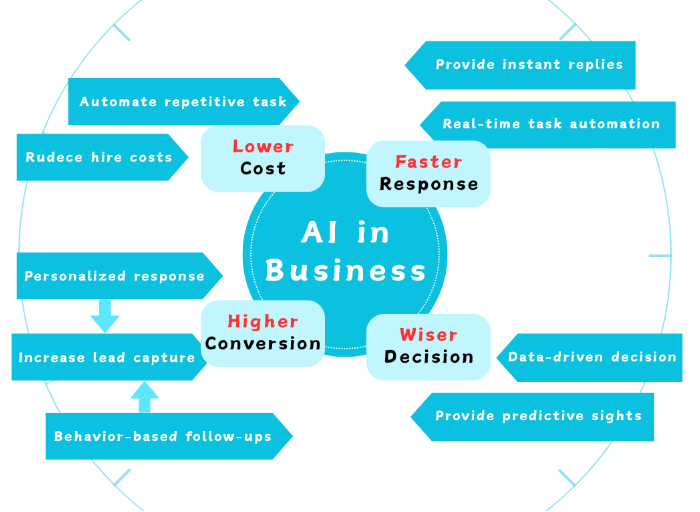
Integrating AI into business operations goes beyond adopting new technology—it strengthens efficiency, speed, and decision-making. By automating repetitive tasks and routine interactions, AI reduces operational costs and enables scalable growth without increasing headcount. It accelerates response times, improves lead conversion through personalized engagement, and provides real-time insights that support smarter, data-driven resource allocation.
How to Use AI in Business?
1. 24/7 AI-Powered Customer Response (Call Centers & Chatbots)
In today’s global economy, customers expect instant responses across all time zones. However, maintaining a 24/7 human support team is prohibitively expensive for most businesses, leading to missed opportunities and frustrated clients when inquiries go unanswered outside of standard office hours.
Implementing AI Solutions
To establish a robust, round-the-clock customer support system, begin by deploying an AI-powered platform capable of acting as the primary point of contact. This strategic implementation involves several key steps: first, meticulously curate and centralize your existing documentation into a comprehensive knowledge base; second, leverage a no-code AI platform to design and configure intelligent conversational agents; and finally, seamlessly integrate these agents across various customer touchpoints, such as your website for chatbots or your telephony system for automated call handling. This multi-faceted approach ensures consistent, immediate support, significantly reducing response times and improving customer satisfaction.
- Design and deploy AI chatbots on your website and messaging platforms to provide instant, real-time answers to frequently asked questions and common inquiries, thereby offloading your human support team.
- Integrate AI call center automation to intelligently manage inbound call volumes, offer interactive voice response (IVR) options, and provide self-service solutions, drastically reducing customer wait times.
- Develop intelligent routing protocols that analyze the nature and urgency of customer issues, automatically escalating complex or high-priority cases to specialized human agents for personalized intervention.
- Construct a dynamic, automated FAQ system that continuously learns from customer interactions and draws from an evolving knowledge base, ensuring up-to-date and comprehensive self-help resources.
Practical Use Cases
- E-commerce: Handle order status inquiries and process return requests automatically.
- SaaS: Assist new users with the onboarding process and troubleshoot common technical issues.
- Appointment: Automate appointment booking and handle initial inquiries to qualify potential clients.
2. AI for Lead Capture and Qualification
Sales teams often waste a significant portion of their day manually filtering through low-quality leads. This delay in "speed-to-lead" often results in high-intent prospects going cold or moving to competitors before a human representative can even make contact.
Implementing AI Solutions
To optimize your lead capture and qualification process, transition from passive static web forms to dynamic, AI-driven conversational agents. This strategic shift allows for more engaging and effective interaction from the very first touchpoint. The implementation process involves meticulously designing a series of intelligent qualifying questions, establishing a robust scoring system based on prospect responses and behaviors, and configuring the AI to automatically route high-potential leads directly into your sales team's calendar or CRM system for immediate follow-up. This ensures that valuable sales time is focused on genuinely interested prospects.
Your AI Receptionist, Live in Minutes.
Scale your front desk with an AI that never sleeps. Solvea handles unlimited multi-channel inquiries, books appointments into your calendar automatically, and ensures zero missed opportunities around the clock.
- Implement AI-powered conversational forms on your website and landing pages to engage visitors interactively, asking qualifying questions dynamically to gather richer lead data.
- Utilize real-time qualification algorithms that analyze prospect responses and online behavior to instantly assess their needs, budget, and purchasing intent, ensuring only relevant leads proceed.
- Configure an advanced automated lead scoring system that assigns scores based on explicit data (e.g., job title, company size) and implicit signals (e.g., website activity, content downloads), prioritizing the most promising prospects.
- Automate direct routing workflows to immediately assign high-scoring, high-intent leads to the appropriate sales representatives, facilitating rapid engagement and improving conversion rates.
Practical Use Cases
- Demo Booking: Automate the entire scheduling process for software demonstrations and trials.
- Real Estate: Instantly qualify buyer and renter inquiries based on criteria like budget, desired location, and move-in date.
- B2B Services: Schedule initial consultations automatically with qualified decision-makers, bypassing manual email exchanges.
3. AI-Enhanced CRM Automation and Personalization
While most businesses use CRM systems, these platforms often become "data graveyards" where information is stored but rarely activated. Manual data entry is prone to error, and sales teams struggle to personalize outreach at scale because the data isn't easily accessible or actionable.
Implementing AI Solutions
To transform your CRM from a static data repository into a dynamic, intelligent assistant, integrate your AI platform directly to establish a closed-loop system. This integration ensures that customer data is consistently up-to-date, actionable, and leveraged for personalized engagement. The process involves configuring automated triggers that log every customer interaction, enriching contact profiles with relevant external data, and employing advanced AI models to analyze the sentiment and intent behind conversations. This proactive approach empowers your sales and marketing teams with real-time insights and recommendations.
- Automate conversation logging by integrating AI with communication channels (e.g., email, chat, voice calls) to automatically transcribe and record every customer interaction directly into the CRM, eliminating manual data entry.
- Implement AI-driven customer data enrichment to automatically pull in and update contact profiles with publicly available information, social media data, and firmographics, providing a holistic view of each customer.
- Deploy sentiment analysis tools that process customer communications to detect emotional cues and urgency, allowing your team to prioritize interactions and tailor responses for maximum impact.
- Generate next-best-action recommendations using AI algorithms that analyze customer history, preferences, and behavior to suggest the most effective follow-up steps, content, or product offerings for each individual.
Practical Use Cases
- Record Management: Update customer details in your CRM automatically after every call or chat conversation.
- Task Triggers: Create follow-up tasks for your sales team immediately after key interactions, such as a completed demo.
- Behavioral Segmentation: Group customers into dynamic segments based on their specific intent and on-site behavior patterns.
4. Automated Follow-Ups and Customer Nurturing
The majority of sales are lost not because of a bad product, but because of inconsistent follow-up. Human teams often struggle to maintain the long-term, multi-touch sequences required to turn a cold lead into a loyal customer, especially as the volume of leads grows.
Implementing AI Solutions
To overcome the challenge of inconsistent follow-ups, strategically design and implement automated nurturing sequences powered by an AI workflow tool. This comprehensive approach requires meticulously mapping out various customer journeys and then developing highly personalized email and SMS campaigns. These campaigns are dynamically triggered by specific user actions or inactions, ensuring timely and relevant communication. The core objective is to re-engage dormant leads, deliver valuable content that addresses their evolving needs, and proactively remind customers about critical events such as upcoming renewals or subscription expirations.
- Construct sophisticated behavior-triggered email and SMS sequences that automatically deploy personalized messages in response to specific customer actions, such as website visits, content downloads, or product views.
- Automate critical post-demo and post-purchase follow-ups to ensure continuous engagement, provide necessary support, and prevent any lead or customer from disengaging after a significant interaction.
- Engineer proactive re-engagement campaigns that leverage AI to identify customers exhibiting signs of inactivity or potential churn, automatically initiating targeted outreach to rekindle their interest.
- Establish dynamic, personalized long-term communication flows that adapt to evolving customer needs and preferences, maintaining a consistent brand presence and fostering loyalty over extended periods.
Practical Use Cases
- Retail: Send abandoned cart reminders with personalized product recommendations to recover lost sales.
- Consulting: Automate follow-up emails after a discovery call, providing additional resources or scheduling the next step.
- Subscriptions: Deliver timely renewal reminders and exclusive loyalty offers to encourage continued service.
5. AI-Powered Sync and Scheduling
Fragmented tools and manual scheduling lead to "calendar tetris," where significant time is wasted coordinating between team members and clients. Disconnected systems often cause data silos, resulting in missed meetings or lost context during handovers between departments.
Implementing AI Solutions
To overcome the inefficiencies of fragmented tools and manual coordination, strategically leverage AI as a central orchestration layer for all your communication and scheduling tools. This involves a deep integration of your calendar systems, CRM platforms, and various messaging applications, ensuring a seamless, real-time flow of information across your entire operational ecosystem. AI can then autonomously manage tasks such as booking meetings, updating customer records, and generating proactive internal alerts, thereby drastically reducing manual effort, minimizing errors, and significantly enhancing overall organizational coordination and responsiveness.
- Deploy intelligent automatic meeting booking systems that empower clients and prospects to schedule appointments directly into your team’s calendars, leveraging AI to identify optimal time slots based on real-time availability and preferences, thereby eliminating manual coordination.
- Establish robust, bidirectional calendar synchronization across all team members’ personal and shared calendars, as well as external scheduling platforms, to ensure a unified view of availability and prevent scheduling conflicts.
- Integrate CRM systems with all relevant messaging platforms (e.g., Slack, Microsoft Teams, WhatsApp) to ensure that customer conversations, updates, and key data points are automatically synced and accessible within the CRM in real time.
- Configure AI-driven internal task creation and alert systems that automatically generate follow-up tasks, notify relevant team members, or trigger specific workflows based on predefined conditions or high-value interactions within your integrated systems.
Practical Use Cases
- Sales: Auto-book discovery calls directly from a website chatbot or email signature, instantly adding them to the sales representative's calendar.
- Operations: Sync support conversations to the CRM for a full audit trail, ensuring customer service interactions are always linked to their profiles.
- Growth: Create internal Slack or email alerts for VIP lead activity, prompting immediate attention from the sales or account management team.
6. AI-Driven Data Analytics and Business Insights
Modern businesses are drowning in data but starving for insights. Without AI, analyzing thousands of customer interactions to find patterns is impossible, leaving executives to make critical strategic decisions based on gut feeling rather than hard evidence.
Implementing AI Solutions
To truly transform raw business data into actionable intelligence, it is crucial to deploy advanced AI-powered analytics tools capable of processing vast and complex datasets. You can also connect with your tools like Apache Superset. This involves a systematic approach: first, centralize your disparate data sources; then, feed this consolidated data into an AI platform designed to identify subtle trends, uncover hidden patterns, and generate sophisticated predictive models. These platforms can perform intricate analyses, including conversion rate optimization, granular customer segmentation, and precise churn prediction, ultimately presenting these complex findings in an easily digestible and actionable format for strategic decision-making.
- Leverage AI for in-depth conversion rate analysis to precisely identify bottlenecks and drop-off points within your sales and marketing funnels, enabling targeted interventions to optimize conversion paths.
- Conduct advanced customer behavior segmentation using AI algorithms to group users not just by demographics, but by their actual interactions, preferences, and purchasing patterns, facilitating hyper-personalized marketing and product development.
- Implement robust predictive sales forecasting models that utilize historical data, external market indicators, and AI-driven insights to provide highly accurate estimations of future sales, optimizing inventory, staffing, and resource allocation.
- Deploy sophisticated churn risk detection systems that continuously monitor customer engagement and behavior, flagging at-risk customers proactively so your team can initiate targeted retention campaigns before attrition occurs.
Practical Use Cases
- Marketing: Identify high-intent prospects for targeted ad spend, optimizing campaign performance and ROI.
- Strategy: Optimize marketing campaigns and product offerings based on real-time performance data and predictive insights.
How Does Solvea Automate Your Workflow?
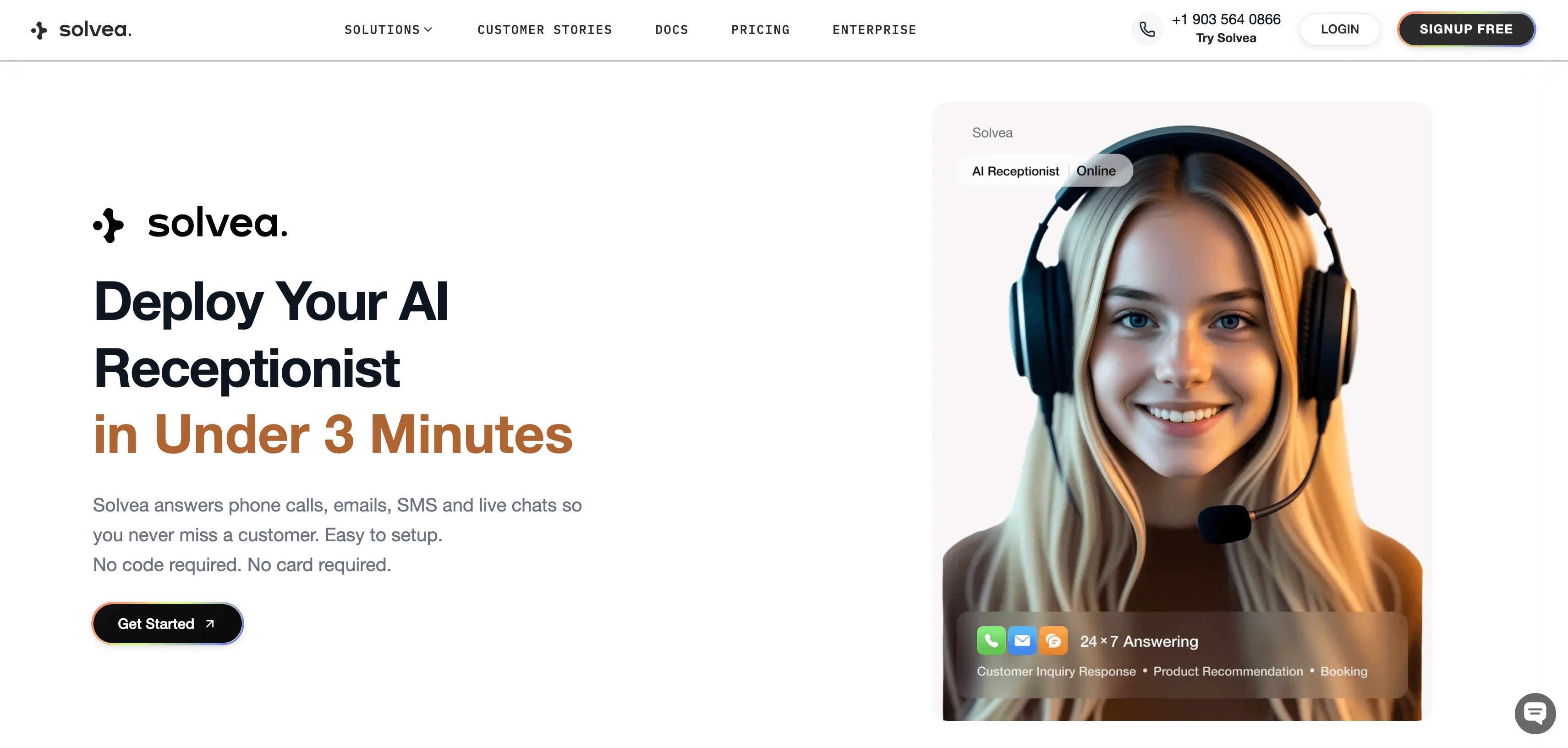
Solvea transcends the capabilities of a mere chatbot builder, establishing itself as a sophisticated enterprise-grade AI workflow orchestration platform. It serves as the central nervous system for your AI initiatives, seamlessly bridging the gap between diverse communication channels and critical business actions. Solvea empowers businesses to design, deploy, and manage intelligent AI agents that automate complex processes, personalize customer interactions, and extract actionable insights from vast datasets, effectively creating a team of 'AI employees' tailored to your specific operational needs.
1.No-Code Agent Creation: Begin by defining your desired AI agent’s role and workflow using plain English. Solvea’s intuitive interface allows business users, without coding expertise, to translate complex business logic into automated, intelligent processes.
2.Custom Knowledge Base Integration: Empower your AI agents with proprietary information by easily integrating and building custom knowledge bases. Upload documents, FAQs, and internal data to ensure agents provide accurate, context-aware responses and actions.
3.Plugin and Tool Integration: Extend your AI agent’s capabilities by seamlessly connecting it with existing business tools and third-party services. Integrate with CRM systems, calendar applications, payment gateways, and more to enable comprehensive workflow automation.
4.Multi-Channel Deployment: Deploy your AI agents across all critical customer touchpoints, including website chat, popular messaging platforms, email, and even voice channels, ensuring consistent and ubiquitous engagement.
5.Scalable AI Agents: Design agents that can grow with your business. From handling simple FAQ automation for startups to orchestrating complex, multi-step workflows for large enterprises, Solvea’s architecture ensures seamless scalability.
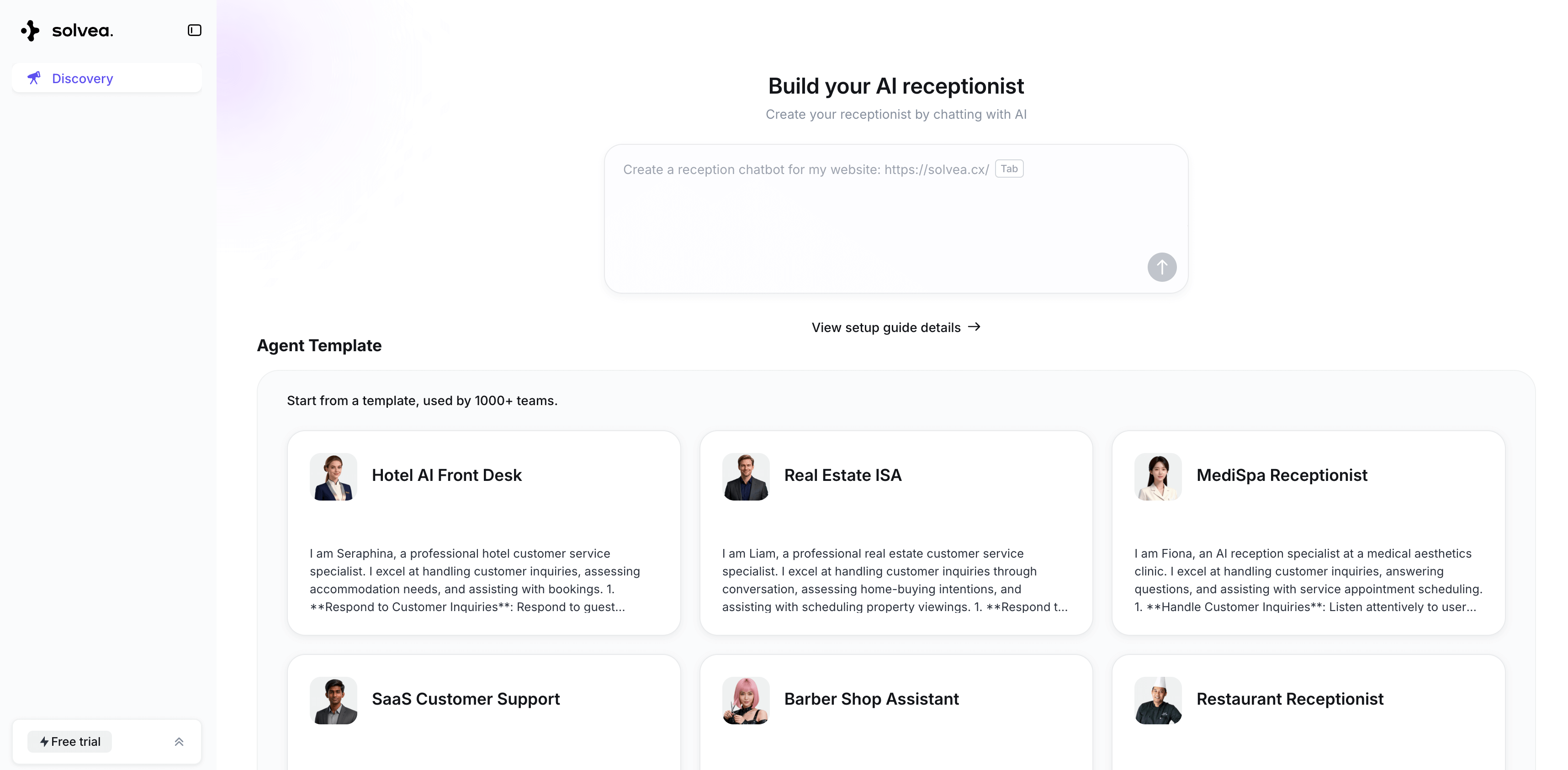
6.Industry-Specific Templates and Use Cases: Accelerate deployment with a rich library of pre-built templates tailored for various industries such as e-commerce, real estate, and SaaS. Learn from successful implementations by industry leaders like Anker and Dreame, who leverage Solvea to drive their business growth.
Conclusion
AI creates value when it is applied to real operational challenges — slow response times, manual data entry, inconsistent follow-ups, disconnected systems, and underutilized data. Businesses that focus on clear use cases and measurable outcomes see improvements in productivity, conversion rates, and decision accuracy.
As adoption accelerates, competitive advantage will depend less on simply having AI tools and more on how deeply they are integrated into daily workflows. Companies that treat AI as a strategic infrastructure layer — not just a feature — will be better positioned to grow sustainably in an increasingly data-driven market.
FAQ
1. How to use AI in business?
Businesses can use AI to automate repetitive tasks, analyze data for smarter decisions, improve customer experience, increase operational efficiency, and unlock new revenue opportunities.
2. Is AI suitable for small businesses?
Yes. In fact, AI is a "force multiplier" for small teams, allowing them to provide the same level of 24/7 service and responsiveness as much larger corporations.
3. Do I need technical skills to use AI in my business?
Not anymore. Modern AI orchestration tools like Solvea offer no-code interfaces and natural language setup, making it accessible to any business owner.
4. What is the best AI tool for business?
The "best" tool depends on your specific needs. While Zendesk and Intercom are great as chatbot, and tools like Clay or Apollo excel at lead generation, Solvea offers a comprehensive solution that integrates these capabilities into a unified workflow.
5. What industries benefit most from AI?
E-commerce, SaaS, real estate, healthcare, and professional services see the most immediate impact. Solvea provides tailored solutions across all these sectors.
6. Can AI replace human employees?
AI is designed to augment human teams, not replace them. By handling the "drudge work" of repetitive tasks, AI frees up your employees to focus on high-level strategy and relationship building.