Your clients have the same questions every time. Before the first showing, before signing, before closing — the calls and texts arrive in waves: "How long does this take?" "What are closing costs?" "Should I wait for rates to drop?" If you're answering these manually on repeat, you're losing hours every week to questions you've already answered a hundred times.
A real estate FAQ page solves this. Put your best answers in one place, link it from your website and email signature, and let clients find answers on their own time — including at 10pm when they're anxious about an offer they just submitted.
This template gives you a ready-to-use framework covering the five question categories clients ask most. Copy it, fill in your specifics, and publish it. The whole thing takes under an hour.
TL;DR
Field | Details |
What it is | A Q&A page on your website answering your most common client questions |
Template sections | Buying Process · Financing · Pricing & Negotiation · Timeline · Working with an Agent |
Who it's for | Real estate agents, brokers, and small real estate teams |
Formats | Copy into your website, Word, Notion, or Google Docs |
Next step | Upload to an AI receptionist to answer these questions automatically, 24/7 |
Your AI Receptionist, Live in Minutes.
Scale your front desk with an AI that never sleeps. Solvea handles unlimited multi-channel inquiries, books appointments into your calendar automatically, and ensures zero missed opportunities around the clock.
What Is a Real Estate FAQ Page?
A real estate FAQ page is a section of your website — or a standalone document — that answers the questions your clients ask before, during, and after a transaction. It's not a contact form or a listing page. It's a resource that reduces the back-and-forth between you and clients who need basic information before they're ready to meet.
The difference between a FAQ page and a knowledge base: a FAQ covers the most common surface-level questions ("What are closing costs?") while a knowledge base goes deeper into your processes, policies, and market-specific guidance. For most independent agents and small teams, a well-organized FAQ page is the right starting point.
Free Real Estate FAQ Template
Copy the template below and replace bracketed text with your specific details. Keep answers concrete — exact numbers, timelines, and policies — not placeholders.
Buying Process
Q: What is the first step to buying a home? A: The first step is getting pre-approved for a mortgage. A pre-approval letter tells you exactly how much you can borrow and shows sellers you're a serious buyer. I can refer you to trusted lenders in [your area] if you don't already have one.
Q: Do I need a buyer's agent? A: You're not legally required to have one, but as a buyer, using an agent costs you nothing — the seller typically pays both agents' commissions. A buyer's agent represents your interests, helps you interpret inspections, and negotiates on your behalf. Without one, you're negotiating directly against the seller's agent, who is paid to represent the seller.
Q: How many homes should I tour before making an offer? A: There's no set number, but most buyers in [your market] tour [5–10] homes before finding the right fit. The more clearly you define your must-haves upfront, the fewer you need to see. I'll help you filter listings before we schedule any tours.
Q: What happens after my offer is accepted? A: Once your offer is accepted, you'll enter a contract period (typically [30–45] days in [your market]). During this time you'll complete your home inspection, finalize your mortgage, conduct a title search, and prepare for closing. I'll walk you through every step and coordinate with your lender and the title company.
Financing
Q: What credit score do I need to buy a home? A: Most conventional loans require a minimum score of 620, though scores of 740+ qualify for the best rates. FHA loans accept scores as low as 580 with a 3.5% down payment. Your lender will pull your full credit report during pre-approval and advise based on your situation.
Q: How much do I need for a down payment? A: It depends on the loan type. Conventional loans can go as low as 3–5% down. FHA loans require 3.5%. VA and USDA loans may require 0% down for eligible buyers. A larger down payment reduces your monthly payment and may eliminate private mortgage insurance (PMI).
Q: What are closing costs and how much should I budget? A: Closing costs typically run 2–5% of the loan amount and cover lender fees, title insurance, appraisal, prepaid taxes and insurance, and other transaction expenses. On a $400,000 purchase, expect to budget $8,000–$20,000 in closing costs. Your lender will provide a Loan Estimate within three business days of your application.
Q: Can I use gift money for my down payment? A: Yes, in most cases. Conventional and FHA loans allow gift funds from family members, though most lenders require a gift letter confirming the money doesn't need to be repaid. Ask your lender for their specific gift fund requirements before transferring any money.
Pricing & Negotiation
Q: How do you determine the right listing price for my home? A: I prepare a Comparative Market Analysis (CMA) using recent sales of similar homes in your area — same size, condition, and neighborhood. I factor in your home's upgrades, current inventory levels, and buyer demand. Overpricing is the most common mistake sellers make; it leads to longer days on market and ultimately a lower sale price.
Q: Should I price my home higher to leave room for negotiation? A: Rarely. Homes priced at or slightly below market value receive more showings, more offers, and often sell above asking in competitive markets. An artificially high price deters buyers before they even schedule a tour, and price reductions signal weakness to the market.
Q: How do you handle multiple offer situations? A: When multiple offers arrive, I'll present each one and explain the trade-offs: price vs. contingencies vs. closing timeline vs. buyer financing strength. We'll decide together which offer best meets your goals — highest price isn't always the strongest offer if the buyer's financing is shaky or they're asking for significant concessions.
Q: What repairs should I make before listing? A: Focus on items that directly affect buyability: anything a home inspector is likely to flag (roof condition, HVAC, electrical, plumbing), visible cosmetic issues (paint, flooring, fixtures), and curb appeal. Skip large renovations — you rarely recoup the full cost. I'll walk through your home before listing and give you a specific list.
Timeline
Q: How long does it take to buy a home? A: From starting your search to closing, the average timeline in [your market] is [60–90] days for buyers who are pre-approved. The search phase varies widely — some buyers find their home in two weeks, others take three months. The contract-to-close period is typically 30–45 days once you're under contract.
Q: How long does it take to sell a home? A: In [your market], homes currently spend an average of [X] days on the market. Once under contract, closing typically takes 30–45 days. From listing to closing, budget [45–75] days in normal market conditions. I'll give you a precise estimate based on current inventory when we meet.
Q: When is the best time of year to sell? A: Spring (March–May) is typically the most active season for buyers, leading to faster sales and stronger prices. That said, [your market] specifics matter more than national trends. Lower inventory in winter sometimes means less competition for sellers. I'll show you month-by-month data for your neighborhood so you can make a data-informed decision.
Q: What is the closing process? A: Closing is the final step where ownership transfers. You'll sign loan documents, pay your closing costs, and receive the keys. In [your state], closings are handled by [an escrow company / a closing attorney]. The signing appointment takes approximately one hour. Your funds need to be wired to escrow 24–48 hours before your closing date.
Working with an Agent
Q: How is your commission structured? A: My fee is [X]% of the sale price, paid at closing from the proceeds of the sale. For buyers, I'm compensated by the seller in most transactions — working with me costs you nothing out of pocket. I'm happy to explain exactly how this works before we start.
Q: How will you communicate with me throughout the process? A: I send [weekly updates / updates when there's something actionable], respond to messages within [X hours], and am available by phone during [your hours]. At the start of every transaction, we'll agree on your preferred communication method — text, email, or calls — so I'm reaching you the way that works best.
Q: What happens if I'm not happy with your service? A: My goal is that you never feel that way, but if you do, tell me directly. I'd rather address a concern early than lose your trust. Most listing agreements include a cancellation clause — I'll explain the terms when we review your contract.
Real Questions Real Estate Clients Actually Ask
These aren't hypothetical — they're the questions that appeared most in r/FirstTimeHomeBuyer, r/RealEstate, and on Zillow's and Redfin's published Q&A resources. According to Reddit's 2024 real estate data, "Should I buy?" questions increased 45% from 2022 to 2023 on the platform — clients are more anxious and more likely to search for answers outside of business hours.
The questions your FAQ is most likely to miss:
- "Why is the seller moving?" — Buyers always want to know, but agents rarely address it upfront.
- "Do I really need a realtor?" — A common Reddit thread topic; if you don't answer it, someone else will.
- "Should I wait for interest rates to drop?" — One of the most-asked questions in every rate environment.
- "What if the inspection finds problems?" — First-time buyers are often terrified by inspections; a clear answer reduces drop-off.
- "Who pays the buyer's agent?" — New compensation rules since August 2024 have made this genuinely confusing. A clear answer prevents misunderstandings at the start.
Add at least two of these to your FAQ. They represent the gap between what agents think clients are asking and what clients are actually searching for.

How to Customize This FAQ Template
Step 1: Fill in your market-specific details Replace every bracketed value: [your market], [X days], [X]% commission, your communication hours, your state's closing process. Vague answers ("it varies") are worse than no answer — if you don't know the current average days on market in your zip code, look it up before publishing.
Step 2: Add or remove categories If you work exclusively with sellers, remove the buyer financing section. If you specialize in investment properties or luxury homes, add a section for questions specific to those clients. The five categories above cover about 80% of what a general residential agent gets asked — trim or expand from there.
Step 3: Write in your voice Read each answer out loud. If it sounds like a press release, rewrite it the way you'd actually say it to a client sitting across from you. Formal language signals that you're not approachable; conversational language builds trust before the first call.
Step 4: Publish it where clients look At minimum: a dedicated FAQ page on your website, linked from your footer and your "About" or "Work with Me" page. Optionally: embed answers in listing email nurture sequences, add a FAQ section to your Zillow or Realtor.com profile, and paste the most common questions into your email auto-reply.
Beyond Templates: Let Your AI Receptionist Answer Real Estate FAQs Automatically
A FAQ page answers the clients who look for it. The majority don't — they call, text, or message you directly with the same questions your FAQ already covers, often after hours.
That's the gap an AI receptionist fills. Solvea is an AI receptionist platform designed for SMBs.

It reads your FAQ document and uses it to answer client questions automatically — over phone, chat, or email — 24 hours a day. When a buyer calls at 9pm asking about closing costs or whether they need a buyer's agent, Solvea answers from your FAQ instantly, in your voice, without requiring you to pick up the phone.
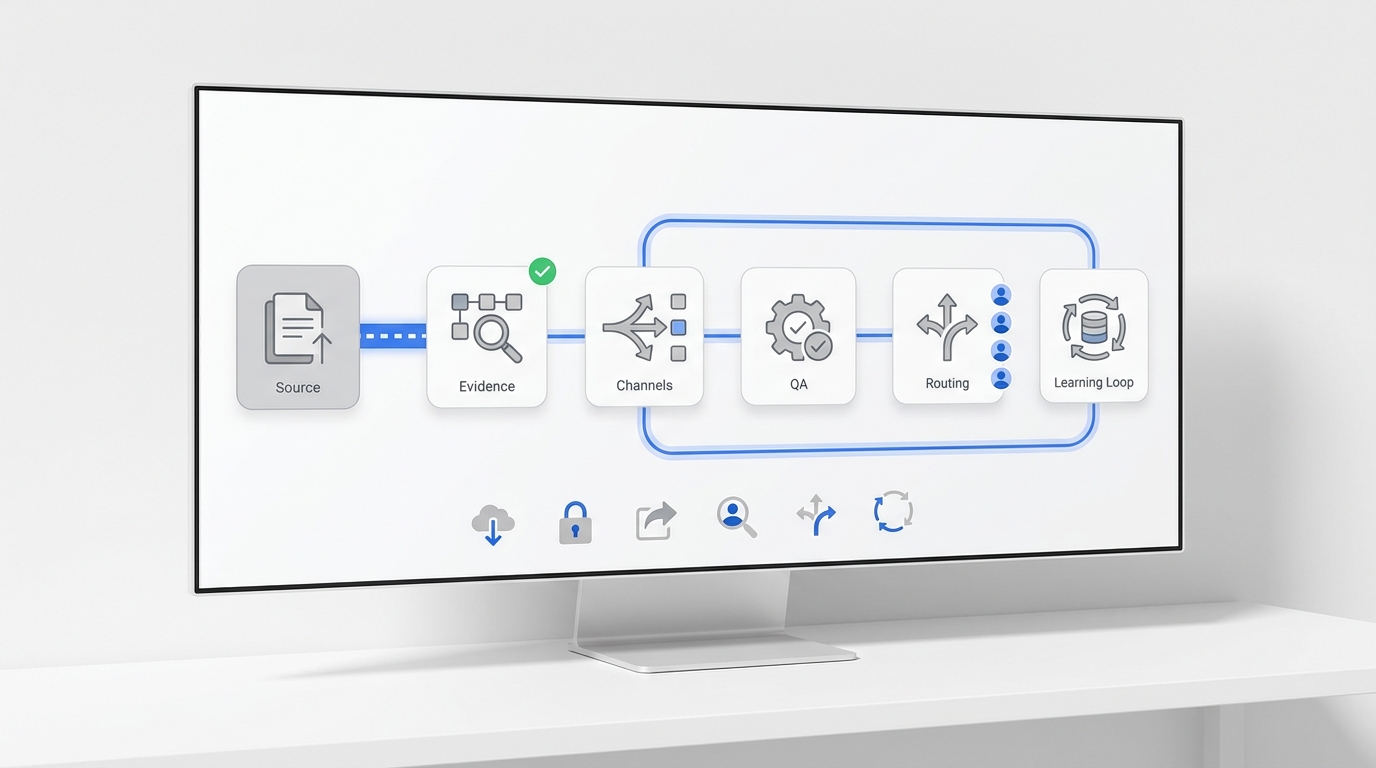
The setup is straightforward: you upload your FAQ document (the customized version of this template) once, and Solvea uses it as its knowledge base. Questions it can't find in your FAQ are flagged and routed to you so you can follow up during business hours — and those edge cases become prompts to go back and add more answers to your FAQ.
Solvea is designed for real estate agents and small teams who handle high inquiry volume. You write the answers once; it handles the repetition.
Frequently Asked Questions
What questions should every real estate agent include in a FAQ?
At minimum: how the buying or selling process works step by step, how commission is structured and who pays it, what closing costs are and how much to budget, how long the process takes in your specific market, and what happens after an offer is accepted. These five areas account for the majority of client questions before the first meeting.
How long should a real estate FAQ answer be?
2–4 sentences for straightforward questions (what is a closing cost?); up to a short paragraph for nuanced ones (should I price high to negotiate down?). The goal is a complete answer, not a brief one. If a client still needs to call you after reading the answer, rewrite it.
Should I add a FAQ page to my real estate website?
Yes. FAQ content improves your site's SEO by matching the exact phrasing clients type into Google ("what are closing costs?" "how long does it take to sell a house?"). It also increases time on site and reduces the number of basic inquiry calls you receive — both of which eventually affect your lead quality.
What's the difference between a real estate FAQ and a knowledge base?
A FAQ answers specific questions with short answers. A knowledge base is broader — it might include your market reports, guides to the buying process, neighborhood overviews, and vendor referral lists, in addition to FAQs. For most agents, start with a FAQ page and expand into a full knowledge base as your content grows.
Can I use AI to answer real estate FAQ questions automatically?
Yes. Tools like Solvea let you upload your FAQ document and use it to power an AI receptionist that answers client questions via phone, chat, and email — 24/7, without you being available. It works from the same answers you've already written, so there's no extra content to create.
How often should I update my real estate FAQ?
Review it every time market conditions shift significantly (interest rate changes, new buyer/seller compensation rules, major inventory swings), and do a full audit every 6 months. Outdated answers — especially on commission structure and financing rules — can create legal and trust problems.