Jensen Huang doesn't do understatement.
Standing on the GTC 2026 stage in San Jose on March 16, the NVIDIA CEO compared OpenClaw to Linux, to HTTP, to Kubernetes. Then he asked the room a question that landed like a strategic directive: "For the CEOs, the question is, what's your OpenClaw strategy?"
And then he answered it for them. That answer is NemoClaw.
NVIDIA announced NemoClaw at GTC 2026 — a new open-source platform that takes OpenClaw, the wildly popular personal AI agent framework, and wraps it in enterprise-grade security, privacy controls, and NVIDIA's existing AI model infrastructure. If OpenClaw is the consumer internet, NemoClaw is the corporate intranet: the same underlying idea, built for a completely different set of requirements.
This guide explains what NemoClaw actually is, how it works, and what it means for anyone thinking about enterprise AI agents.
TL;DR
NemoClaw | |
Announced | March 16, 2026, GTC keynote |
Built on | OpenClaw |
Core components | OpenShell (sandbox security) + Nemotron (NVIDIA models) |
Open source | Yes |
Hardware requirement | None — hardware-agnostic |
Status | Early alpha |
Target audience | Enterprise teams deploying AI agents at scale |
Install | claw install nemoclaw |
What NemoClaw Actually Is
NemoClaw is NVIDIA's enterprise platform for deploying OpenClaw agents securely at scale.
The simplest way to understand it: OpenClaw is powerful but unpredictable. Agents can access files they shouldn't, make network connections you didn't authorize, and behave inconsistently across deployments. For individual developers, that's manageable. For enterprises handling customer data, financial records, or regulated information, it's a hard blocker.
NemoClaw solves this by adding two layers on top of OpenClaw: a security and sandboxing layer called OpenShell, and a model layer called Nemotron. Together, they turn OpenClaw from a tool for technically sophisticated individuals into infrastructure that a company's IT department can actually govern.
According to TechCrunch's reporting from the GTC keynote, NVIDIA's pitch is that NemoClaw gives companies "control over how agents behave and handle data" — the missing piece that has kept enterprises on the sidelines while consumer adoption of OpenClaw exploded.
The timing is deliberate. OpenAI acquired OpenClaw and its creator Peter Steinberger in February 2026. That acquisition created an opening: the enterprise market needed a credible, independently governed alternative that wouldn't route company data through OpenAI's infrastructure. NVIDIA stepped into that gap.
The Two Core Components: OpenShell and Nemotron
NemoClaw's architecture has two distinct pieces, each solving a different part of the enterprise problem. Both were reported in detail by SiliconANGLE following the GTC announcement.
OpenShell — The Security Layer
OpenShell runs OpenClaw inside a sandbox environment. The practical effect: an agent can only access files that are explicitly relevant to the task it's performing. It can't browse your entire filesystem. It can't make arbitrary network connections.
Configuration happens in YAML. An IT team can write rules that specify exactly which directories an agent can read, which external services it's allowed to contact, and under what conditions. Some of these rules are hot-swappable — they can be changed without restarting the agent, which is important for live enterprise deployments where uptime matters.
A software team could, for example, write a YAML policy that permits an agent to connect to a cloud-hosted AI tool while blocking all other outbound connections. That level of granularity didn't exist in base OpenClaw.
Nemotron — The Model Layer
Nemotron is NVIDIA's existing suite of open models, now integrated directly into NemoClaw. It includes more than half a dozen models optimized for different tasks: text generation, graph analysis, and other specialized functions. You can configure agents to route certain prompt types to specific Nemotron models based on what they're optimized for.
Critically, NemoClaw isn't locked to Nemotron. According to SiliconANGLE, it also supports cloud-hosted models from OpenAI, Anthropic, and other providers. A Privacy Router component sits between the agent and any external LLM, screening outbound requests to ensure sensitive data isn't transmitted to third-party models — the piece that makes NemoClaw viable in regulated industries like healthcare. If you're evaluating whether to run models locally via Nemotron or rely on cloud APIs, our breakdown of the best local models for OpenClaw covers the hardware requirements and trade-offs in detail.
NemoClaw vs OpenClaw — Same Name, Different Mission
The naming is intentional, not coincidental. NVIDIA explicitly positioned NemoClaw as an enterprise complement to OpenClaw, not a replacement or a fork. Here's how the two differ in practice:
OpenClaw | NemoClaw | |
Governance | Community-driven, now OpenAI-owned | NVIDIA-led, open-source |
Security | Minimal built-in controls | OpenShell sandbox, YAML policies |
Model flexibility | Any model via API | Nemotron + external models via Privacy Router |
Hardware | Any | Any (hardware-agnostic) |
Target user | Developers, technical individuals | Enterprise IT, regulated industries |
Status | Mature, widely deployed | Early alpha |
Huang's choice of words at GTC was itself a signal. He called OpenClaw "the most important software release probably ever" — then announced a platform built on top of it. That's not competitive positioning. That's an endorsement and an extension simultaneously.
Peter Steinberger, OpenClaw's creator, contributed a quote to NVIDIA's press release: "With NVIDIA and the broader ecosystem, we're building the claws and guardrails that let anyone create powerful, secure AI assistants." Coming from the person who built the original, and who now works at OpenAI, that endorsement carries weight.
Who NVIDIA Is Pitching It To
NVIDIA didn't build NemoClaw and wait for the market to find it. According to CNBC's March 10 report — three days after Wired broke the story — NVIDIA's CEO has been personally pitching the platform to Salesforce, Cisco, Google, Adobe, and CrowdStrike.
The strategy behind those specific names matters. Salesforce means CRM: agents that can manage customer records and trigger workflows. Cisco means networking: agents that can monitor infrastructure and respond to incidents. CrowdStrike means cybersecurity: agents that can detect threats autonomously. Each represents a vertical where security guardrails are non-negotiable.
No formal partnerships have been confirmed as of the GTC announcement. Since NemoClaw is open source, early collaborators would likely receive free access in exchange for contributing to the project — similar to how Red Hat built its enterprise Linux ecosystem.
Gartner placed the agentic AI market at a projected $28 billion by 2027, while also finding that 73% of organizations face integration issues when deploying agentic AI. NemoClaw is directly targeting that gap: the majority of enterprises that want agents but can't deploy them safely with current tools.
The Alpha Warning You Should Know About
NVIDIA is being unusually transparent about NemoClaw's current state. On its website, directed at developers, the company states: "Expect rough edges. We are building toward production-ready sandbox orchestration, but the starting point is getting your own environment up and running."
That's not a soft disclaimer buried in documentation. It's the opening statement. For a company announcing a product at its flagship conference to a room full of enterprise buyers, that level of candor is notable.
The practical implication: NemoClaw is ready for exploration and evaluation. It's not ready for production deployment in regulated environments. Early adopters who contribute to the project will help shape what production-ready looks like — which is the point of shipping an alpha at scale rather than polishing it in private.
How to Get Started
NemoClaw installs with a single command, according to SiliconANGLE's reporting from the GTC launch:
Run: claw install nemoclaw
This installs both OpenShell and the Nemotron model suite. From there, you configure your YAML security policies for the environments and data sources your agents will interact with.
For teams already running OpenClaw agents, NemoClaw is designed to be an additive layer — not a migration. Your existing skills and workflows should continue to function inside the OpenShell sandbox, with security policies applied on top.
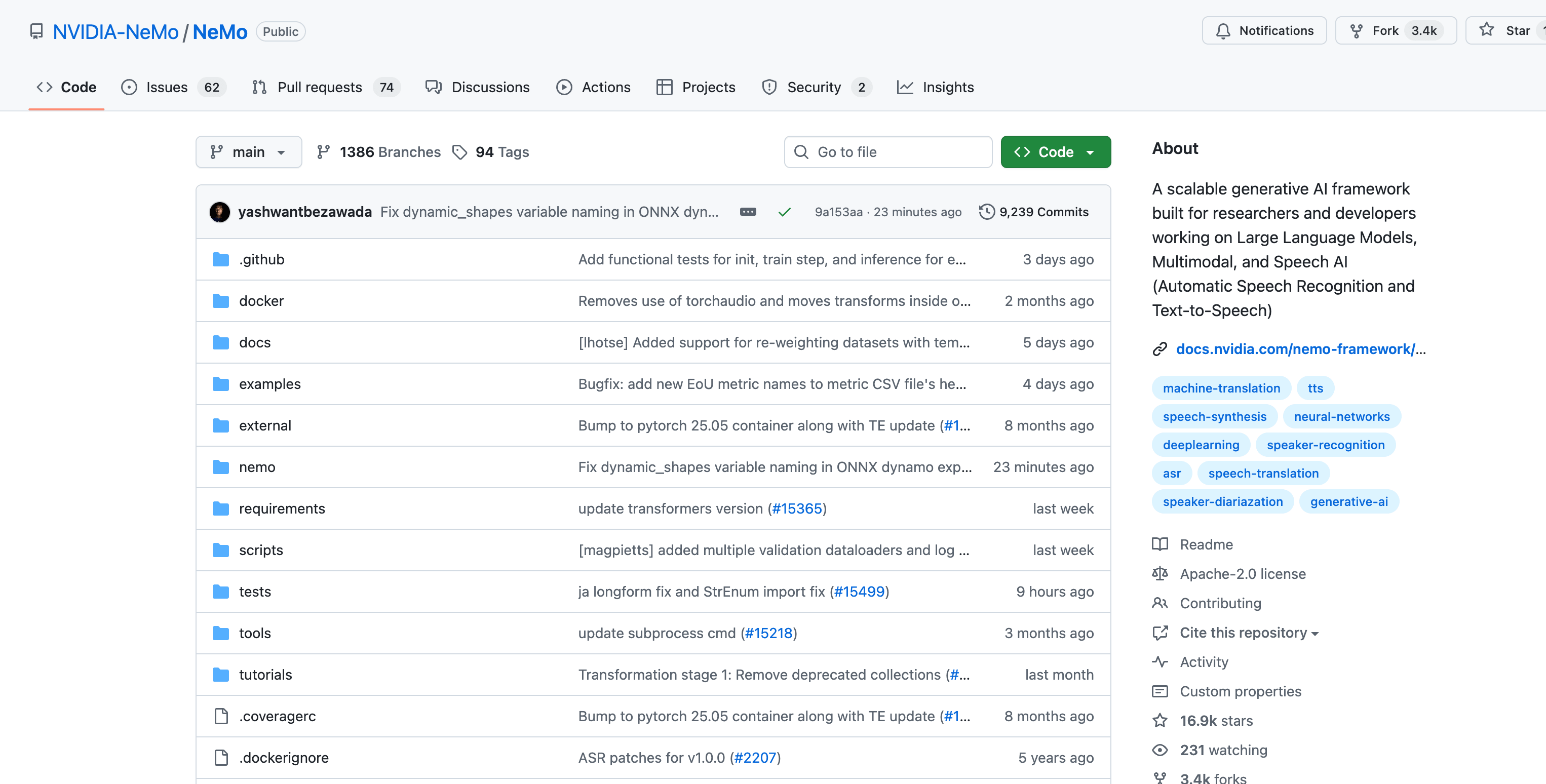
NVIDIA's NeMo platform documentation covers the full configuration reference. The NemoClaw GitHub repository is where active development and community contributions are happening. If you're new to the OpenClaw ecosystem, our guide to the most popular OpenClaw skills is a good place to start building your agent's capabilities once NemoClaw is running.
Wondering how AI like this can help your business? Solvea uses the latest AI to answer your customer calls, emails, and chats — 24/7, no setup required. |
Your AI Receptionist, Live in Minutes.
Scale your front desk with an AI that never sleeps. Solvea handles unlimited multi-channel inquiries, books appointments into your calendar automatically, and ensures zero missed opportunities around the clock.
Frequently Asked Questions
What is NemoClaw and how is it different from OpenClaw?
NemoClaw is NVIDIA's open-source enterprise platform for deploying OpenClaw agents securely. It adds OpenShell (a sandbox restricting agent file and network access via YAML policies) and Nemotron (NVIDIA's open AI models) on top of OpenClaw. OpenClaw is a personal agent framework; NemoClaw is enterprise infrastructure for IT governance and regulated deployment at scale.
Is NemoClaw open source?
Yes. NemoClaw is open source and hardware-agnostic — it runs on any chip, not just NVIDIA GPUs. NVIDIA is pitching early access to Salesforce, Cisco, Google, Adobe, and CrowdStrike, with free usage likely in exchange for project contributions. It integrates with NVIDIA's NeMo framework but is not locked to NVIDIA infrastructure.
How do I install NemoClaw?
NemoClaw installs with a single command: claw install nemoclaw. This installs both OpenShell and the Nemotron model suite. As of March 2026, NemoClaw is in early alpha — NVIDIA explicitly warns to expect rough edges. It's suitable for evaluation but not yet recommended for production deployment in regulated environments.
The Bottom Line
NemoClaw is what enterprise AI agents have been waiting for: the power of OpenClaw, with the guardrails that make it deployable in environments where security and compliance actually matter.
The alpha caveat is real. This is not a production-ready product today. But the pieces — OpenShell's sandboxing, Nemotron's model flexibility, the Privacy Router, the YAML configuration layer — are the right architecture for where enterprise agents need to go.
Huang's framing at GTC wasn't accidental. Linux didn't win because it was the best operating system on launch day. It won because the ecosystem coalesced around it. NVIDIA is betting that the same pattern applies to enterprise AI agents — and that NemoClaw is early enough to shape the standard before it hardens.