You've had three last-minute cancellations this week. You blocked two hours for a body contouring session. The client ghosted. Your provider showed up, prepped the room, and waited. That time is gone — and it can't be billed.
Appointment deposits exist to solve exactly this. A deposit doesn't eliminate no-shows entirely, but it changes the math for clients: cancelling now costs them something rather than nothing. That one change — putting skin in the game — meaningfully reduces the rate at which clients walk away from booked time.
The catch is that deposits, done wrong, can reduce bookings. A $300 prepayment requirement on a $150 facial will lose you clients before they ever try your services. This guide explains how med spa deposits work, what options you have, and how to structure a deposit policy that protects your revenue without scaring off new clients.
TL;DR
Field | Summary |
What it is | A partial or full payment collected at booking to secure an appointment slot |
Typical amounts | 25–50% of service cost; or flat amounts ($50–$300 by service type) |
Who it's for | Med spa owners and practice managers who want to reduce no-shows and last-minute cancellations |
When to use deposits | Higher-cost services ($200+), new clients, or clients with a no-show history |
Key rule | Deposits should be applied to the service cost at appointment — not charged on top of it |
What Is an Appointment Deposit?
An appointment deposit is a partial or full payment collected at the time of booking. It serves two purposes: it secures the appointment slot and creates a financial commitment that makes clients less likely to cancel without notice.
Deposits are different from cancellation fees in an important way: the money is collected upfront rather than after a missed appointment. This matters because enforcing a cancellation fee requires having a card on file and actually charging it — a process that generates disputes, awkward conversations, and sometimes chargebacks. A deposit is already collected, which shifts the burden of the argument: the client has to actively request a refund rather than dispute a charge.
Most med spas apply deposits toward the total service cost at the appointment. A client who pays a $100 deposit on a $350 laser treatment pays $250 at the time of service. The deposit isn't an extra fee — it's a pre-payment.
Types of Appointment Deposits
Flat-Amount Deposits by Service Category
The simplest approach is to set a fixed deposit amount by service type:
Service Category | Common Deposit Range |
Short services (under 30 min) | $25–$50 |
Standard services (30–60 min) | $50–$100 |
Longer / higher-cost services (60–90 min) | $100–$200 |
Laser / body contouring / multi-session | $150–$300 |
Surgery-adjacent procedures | 25–50% of total cost |
Flat amounts are easy to communicate at booking and easy to enforce consistently. The tradeoff is that they're less proportional — a $50 deposit on an $800 procedure doesn't create much commitment.
Percentage-Based Deposits
Some practices collect a fixed percentage — commonly 25–50% of the service cost. Percentage-based deposits scale with the value of the appointment: a client booking a $600 laser resurfacing session pays $150–$300 upfront, which is a meaningful commitment.
Most booking platforms allow deposits to be configured as either a fixed amount or a percentage of service price, applied when the client books online. Square Appointments, for example, lets you apply deposits to all services or selected services only.
Percentage deposits are cleaner for practices with a wide pricing range. The downside: clients booking high-cost services may push back on large upfront payments if they don't yet know your quality.
Full-Prepayment Deposits
For some services — particularly multi-session packages, surgery-adjacent procedures, or repeat no-show clients — full prepayment is appropriate. The entire service cost is collected at booking, and the appointment is confirmed only after payment clears.
Full prepayment is most common for:- Package purchases (e.g., a 6-session laser package)- Procedures requiring ordering of specific materials or medications- Clients who have no-showed or late-cancelled two or more times
Most practices don't apply full prepayment to first-time clients unless the service cost warrants it. Presenting new clients with a full prepayment requirement before they've experienced your services can reduce conversion, particularly for higher-cost treatments.
How Deposits Are Collected
At Online Booking
Modern booking platforms (Booksy, Square Appointments, DaySmart, Acuity, DigiMEDSPA) integrate deposit collection directly into the booking flow. When a client books a service that requires a deposit, they're prompted to pay before the booking is confirmed. The appointment shows as "pending" or "unconfirmed" until payment processes.
DigiMEDSPA's guide describes this as: deposits are an "advance payment required when a patient books a service or procedure," visible to staff when they accept or decline pending appointments.
This is the cleanest collection method because the deposit requirement is presented before the booking is confirmed — not as an afterthought after the client thinks the slot is already theirs.
At Phone or In-Person Booking
When booking by phone or in person, the deposit is collected by sending the client a payment link or processing the card on file at the time of booking. Eleven19 Medical Spa states their policy directly on the booking page: clients "may be prompted to make a deposit for certain treatments and services" when scheduling, and that deposit "will go towards the cost of your treatment."
The key is that the booking is not confirmed until the deposit is received. A client who books by phone but doesn't pay the deposit within 24 hours should not have a guaranteed slot.
Deposit Refund and Forfeiture Rules
How you handle refunds is as important as how you collect deposits. Your policy needs to answer three questions clearly:
1. When is the deposit fully refundable?The standard is: if the client cancels or reschedules within your notice window (typically 24–48 hours), the deposit is refundable or transferable to a new appointment. Most practices don't refund deposits for cancellations within the notice window — but they may allow the client to apply it to a future booking instead.
2. When is the deposit forfeited?Late cancellations (within the notice window) and no-shows typically result in deposit forfeiture. Royal Medical Spa's policy states: "Clients who do not show up for their appointment without prior notice will be charged the full deposit amount collected." Couture Med Spa: "if you arrive more than 5 minutes late or no show you will lose your deposit."
3. What happens to the deposit if the client reschedules?A reschedule made within the notice window should be treated as a cancellation — the deposit should not automatically roll over. If the reschedule is made outside the notice window, most practices allow the deposit to transfer to the new appointment date without penalty.
Write these rules explicitly in your policy and communicate them at booking. The most common deposit disputes arise from clients who expected their deposit to roll over to a new appointment automatically, and it didn't.
When to Require Deposits (and When Not To)
Not every service or every client needs a deposit requirement. Overusing deposits — particularly for low-cost services or new clients on their first booking — can reduce your conversion rate without a meaningful improvement in no-show rate.
When deposits are most valuable:- Service cost is $200 or higher- The service requires significant provider prep time or specific materials- The client is new and has no prior history with your practice- The client has previously no-showed or late-cancelled
When deposits may reduce bookings more than they protect :- Low-cost services under $100 (a $50 deposit on a $75 facial signals distrust)- Returning clients with a consistent attendance history- Services that are easy to fill from a waitlist (short appointments, standard facials)
A tiered approach — requiring deposits only for services above a threshold (e.g., $200+) and for clients with a no-show history — balances revenue protection against booking friction.
How to Communicate Deposits Without Losing Bookings
The framing matters. Presenting a deposit as "we need to protect our time" lands differently than "your deposit secures your appointment slot." Both mean the same thing, but the second version centers the client's benefit.
Practical communication tips:- State the deposit at the start of the booking process, not at confirmation. Clients who've already filled in their details feel tricked if the deposit requirement appears at the last step.- Confirm that the deposit applies toward the service cost. Clients who think the deposit is an extra charge on top of the service price will push back.- Include the deposit policy in your booking confirmation email — not buried in terms, but in the first paragraph.- For phone bookings, send the payment link immediately and confirm the appointment is held for 24 hours pending payment.
From Deposit Collection to Automated Confirmation: How AI Helps
Collecting deposits manually — sending payment links, chasing unpaid bookings, confirming receipt — adds significant front desk work, particularly when you're managing multiple booking channels at once.
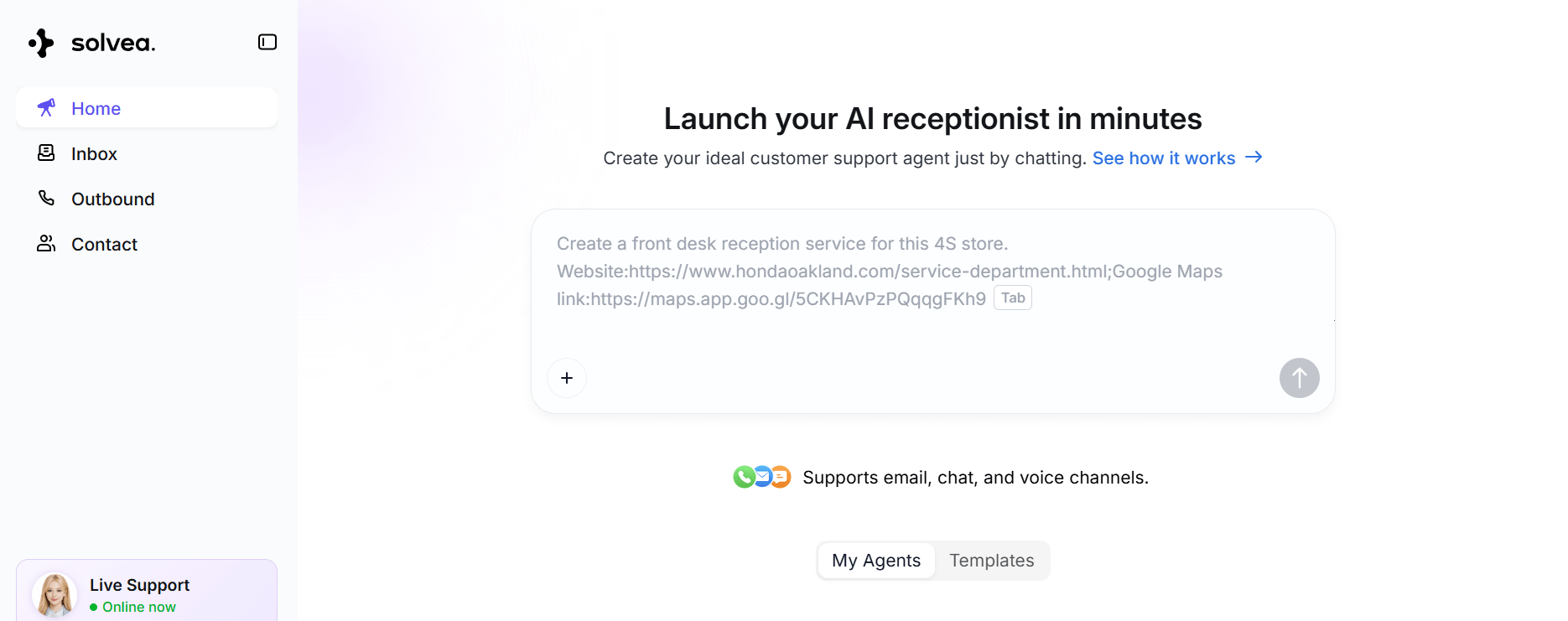
With Solvea, you configure your deposit rules once. When a client books by phone or chat and asks how deposits work, Solvea explains your policy, sends the payment link, and confirms the appointment once payment processes. The AI handles the "how much is the deposit?" and "is it refundable?" questions automatically, using the policy you've uploaded, so your front desk isn't fielding the same questions twenty times a day.
Common Deposit Mistakes to Avoid
❌ Collecting a deposit but not confirming how it applies to the service cost✓ Write: "Your $100 deposit will be applied to your total service cost at the time of your appointment."
❌ Allowing clients to book without paying the deposit and calling it "confirmed"✓ Write: "Your appointment is held for 24 hours pending deposit payment. The booking is confirmed once payment is received."
❌ Having no written policy on what happens to the deposit if the client reschedules✓ Write: "Deposits may be transferred to a new appointment if rescheduled outside our 48-hour cancellation window. Rescheduling within 48 hours forfeits the deposit."
❌ Requiring a deposit for every service regardless of cost✓ Apply deposit requirements proportionally — higher-cost or prep-intensive services first.
Your AI Receptionist, Live in Minutes.
Scale your front desk with an AI that never sleeps. Solvea handles unlimited multi-channel inquiries, books appointments into your calendar automatically, and ensures zero missed opportunities around the clock.
FAQ
Do deposits get refunded if I cancel in time?
In most med spa policies, yes — cancellations made outside the cancellation window (typically 24–48 hours before the appointment) result in a full refund or the deposit being applied to a future appointment. Cancellations within the notice window, or no-shows, typically result in forfeiture of the deposit.
Is a deposit the same as a booking fee?
A deposit is applied to the total cost of the service — it's a pre-payment. A booking fee is charged separately and is not applied to the service cost. Most med spas use deposits rather than booking fees because clients understand (and accept) a pre-payment better than an additional charge.
What happens to my deposit if the spa cancels my appointment?
If the practice cancels your appointment, your deposit should be fully refunded or transferred to a rescheduled appointment at your preference. Most practices include this explicitly in their cancellation policy — check before booking.
Can a med spa charge more than the full service cost as a deposit?
No. A deposit should not exceed the cost of the service being booked. Requiring more than 100% of the service cost as a "deposit" would be unusual and likely to generate chargebacks and regulatory scrutiny.
How do I know if my deposit is non-refundable?
The practice's cancellation and deposit policy — which should be presented at booking and included in your confirmation — specifies whether the deposit is refundable and under what conditions. If you don't see clear language about refund conditions, ask before you pay.