Lots of businesses claim to value and manage customer feedback, but how much of it is truly acted upon? Customers always get polite, robotic responses instead of genuine communication. At last, they lose faith in the brand and turn to competitors who are better at listening.
Where the customer feedback management (CFM) works. It can systematically collect, analyze, and turn feedback into actionable insights to deliver better customer experiences (CX). In fact, improving CX is more critical than ever. 71% of customers will switch to other brands after a bad customer experience, as Yotpo reported.
Then, what's the best customer feedback management software? How to manage customer feedback effectively? This blog post breaks down everything you need to know about these questions. Let's start exploring.
What is Customer Feedback Management
Customer feedback management is a systematic process that collects, analyzes, and acts on customer feedback to optimize your products, services, and CX. Nowadays, AI-powered CFM tools can automatically gather customer feedback across various channels, turn it into actionable insights, and share them with relevant departments. Ultimately, it helps a business stay agile, relevant, trusted, and truly customer-centric.
A complete customer feedback management process usually includes the 3 core components below:
- Collection: Gather customer feedback through multiple channels, including customer surveys, review sites, social media, and ticketing systems. It often integrates with tools, like automated surveys and social listening, to collect real-time feedback.
- Analysis: Once collected, it will review and analyze feedback to identify customer trends and areas for improvement. This stage uses advanced AI tools, like speech analytics and sentiment analysis, to understand what customers actually care about.
- Action: This step is where feedback drives changes. Whether to improve a flawed product, upgrade internal workflow, or optimize customer service, actions ensure the feedback has a tangible impact.
What Types of Customer Feedback Should You Manage
To manage customer feedback effectively, it's necessary to consider various types. Customer feedback can be categorized into the following 4 types:
- Direct customer feedback: This feedback occurs when customers intentionally provide their opinions. It's often collected through surveys, interviews, emails, and support tickets. This direct collection is valuable because it clearly expresses customer expectations, pain points, and satisfaction levels.
- Indirect customer feedback: This type comes from channels where customers express opinions without being asked, such as purchasing patterns, website interactions, and forum discussions. It's less structured and requires careful analysis and interpretation to understand customer preferences and trends.
- Quantitative customer feedback: It's numerical and easy to benchmark. Common examples include Net Promoter Score (NPS), Customer Satisfaction Score (CSAT), and churn rates. It offers measurable insights to track agent performance and compare performance across teams.
- Qualitative customer feedback: This type provides descriptive customer reviews and suggestions in depth. It often comes from open-ended questionnaire surveys, interviews, and review comments.
Why Is Customer Feedback Management System Important for Businesses
A customer feedback management system is important because it delivers a host of benefits:
- Higher customer retention
- Enhanced customer satisfaction
- Reduced customer churns
- Improved product and service quality
- Stronger customer relationship
- …
According to Gartner's report, over 50% of customers read reviews for products they already know before deciding which brand to buy, and over 30% of customers even check reviews after they've purchased one. These reviews not only affect customer preference but also drive purchase decisions and trust at every stage. Here's why customer feedback management systems are so important.
The feedback system is a treasure of valuable insights that pinpoint areas for product, service, and CX improvements. Addressing this feedback can boost their satisfaction and loyalty, and reduce customer churn, ultimately driving business growth.
5 Best Feedback Management Tools Shortlist
Check out the top 5 G2-rated customer feedback management software we've put to the test.
Platform | Best for | Free trial | Pricing |
SurveyMonkey | Unified customer feedback and surveys for businesses of all sizes | 14-day free trial | Starts around $25–$30/month on paid plans |
Typeform | Engaging, conversational surveys and feedback collection | 14-day free trial | Starts around $25/month |
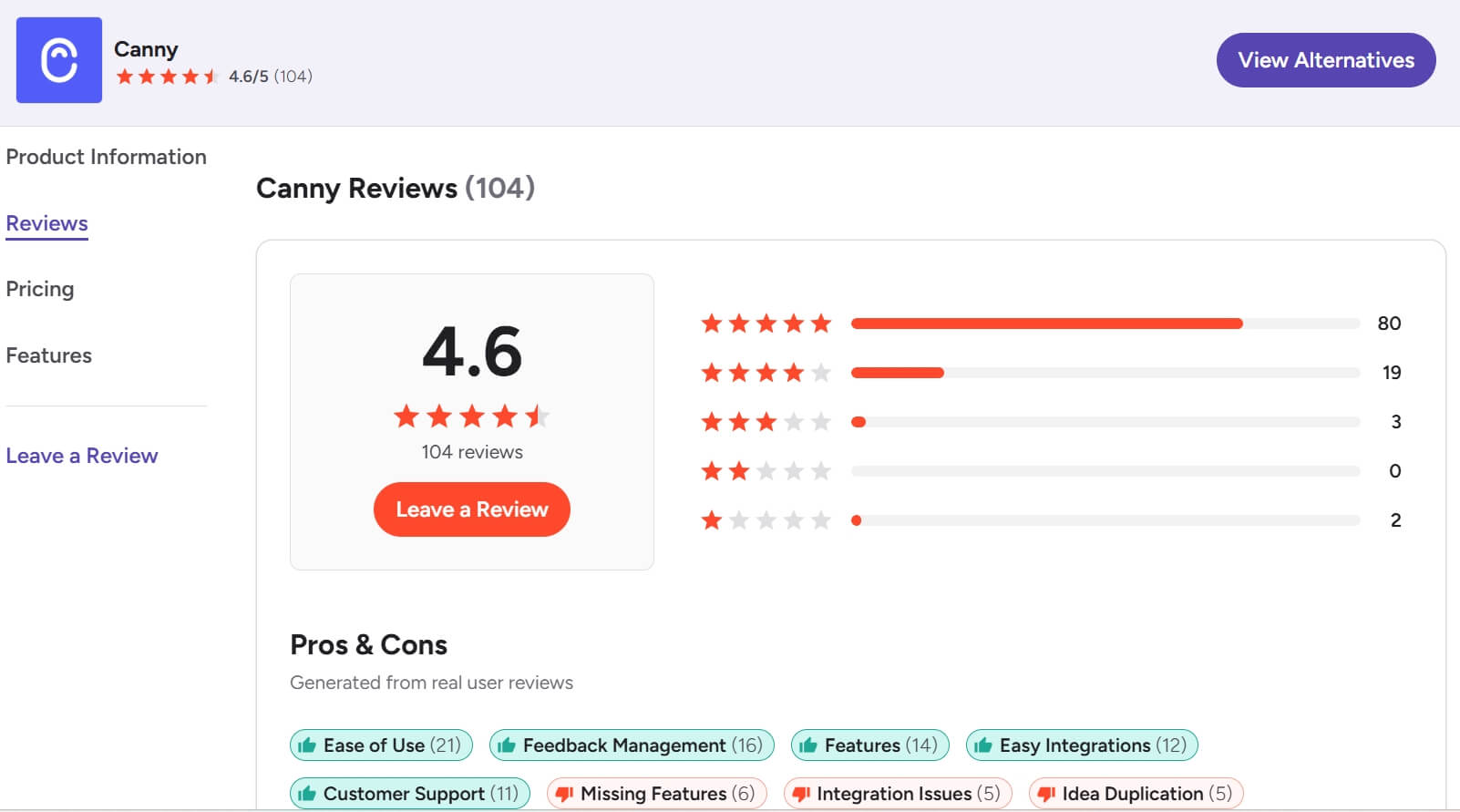
Canny | Product feedback & feature request boards | 14-day free trial | Start at $79/month |
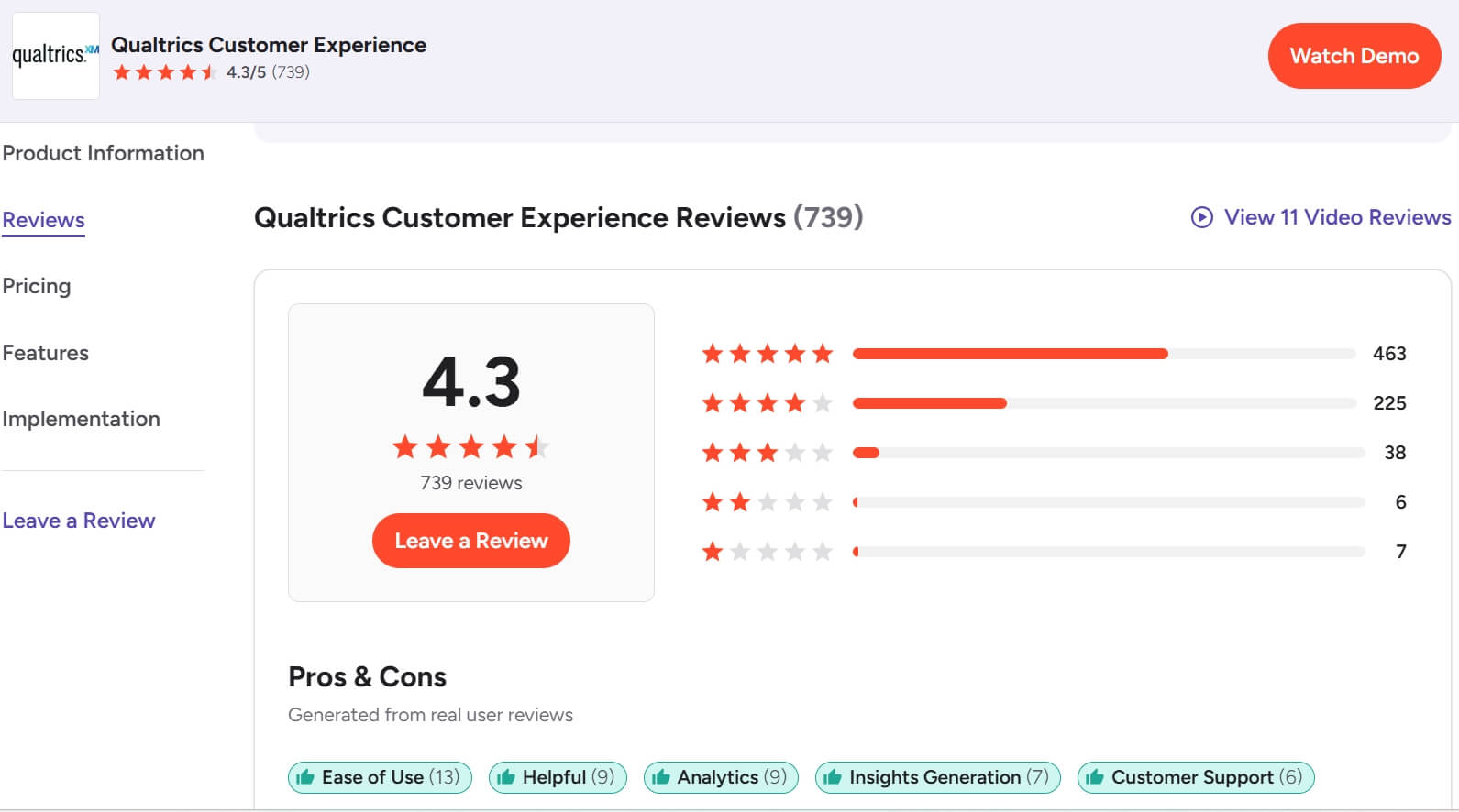
Qualtrics | Enterprise-level feedback & advanced analytics | 10-day free trial | Custom pricing |
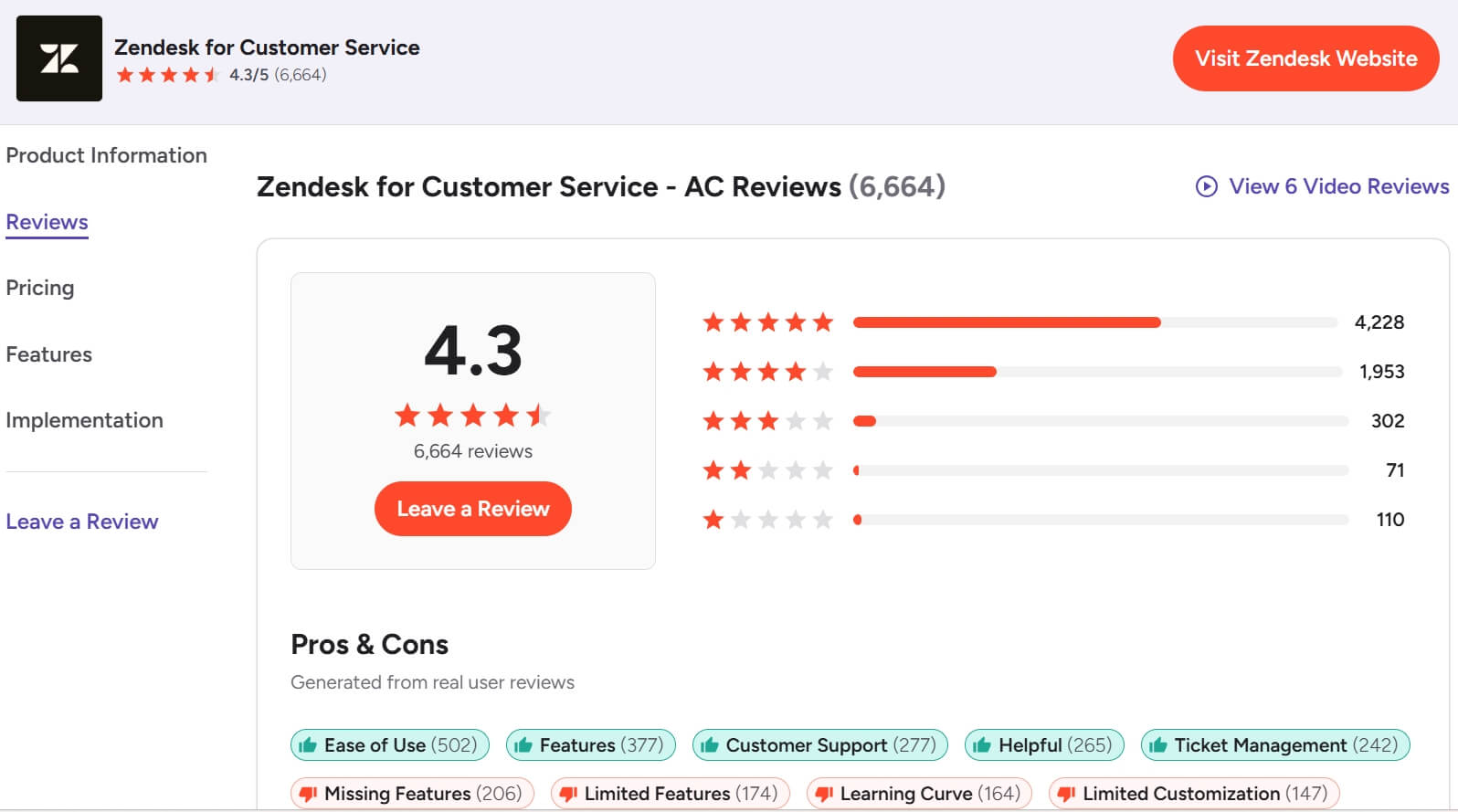
Zendesk | Customer support–centric feedback tied to tickets | 14-day free trial | Starts at $19/agent/month (billed annually) |
1. SurveyMonkey
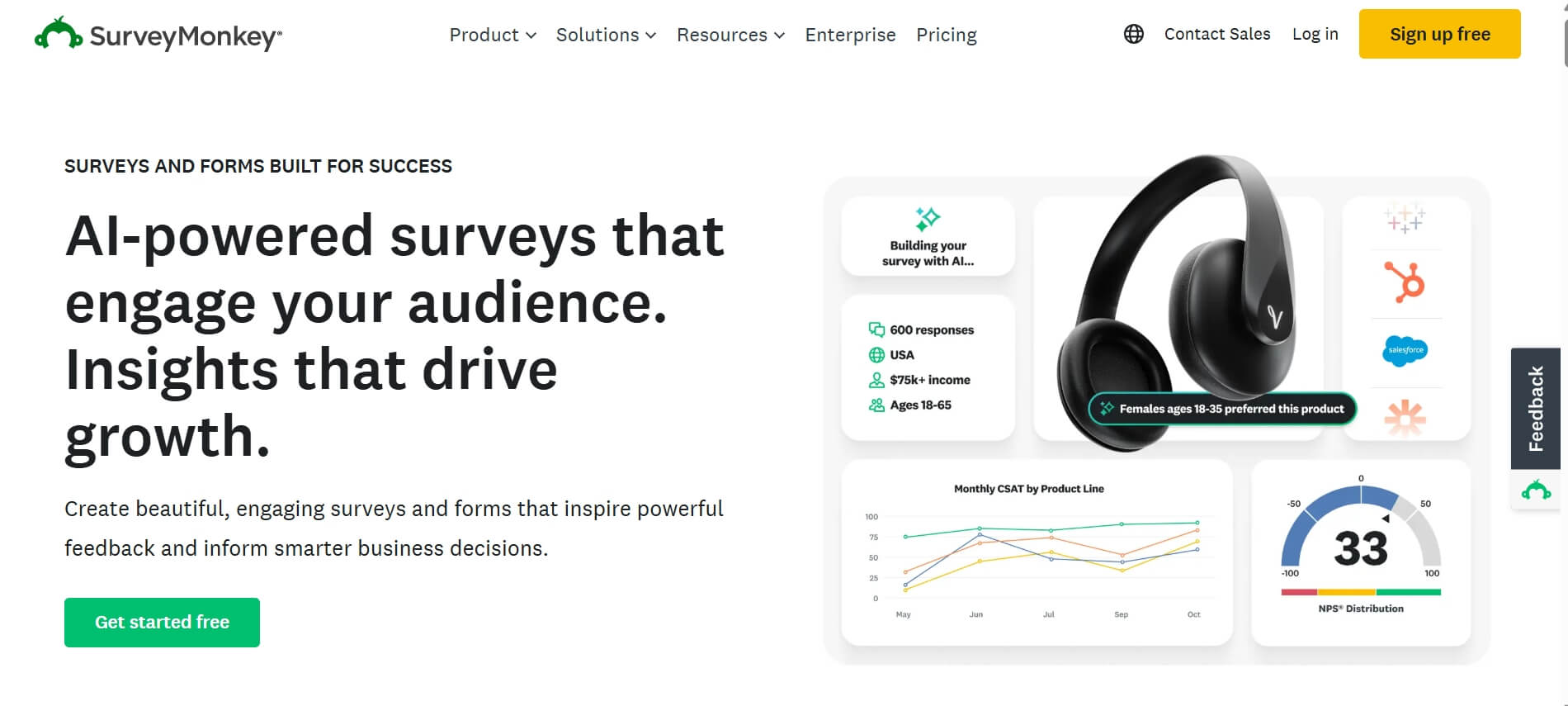
SurveyMonkey is a development tool that allows users to design and customize surveys for feedback collection. It offers various templates to set up detailed and targeted customer surveys, making it ideal for businesses pursuing in-depth insights from their customers. It also gives you full control over the software structure and layout of the survey questions and pages.
Why I picked it: SurveyMonkey is the top pick for its G2-rated flexibility in creating tailored surveys across teams.
Key features:
- Drag-and-drop survey builder
- AI-driven data analysis
- Customer segmentation for targeted surveys
- Real-time reporting dashboards
Integrations: Zendesk, HubSpot, Google Sheets, Microsoft Teams, MailChimp, CleverX, and Salesforce.
Pros | Cons |
l Intuitive user interface l Extensive customization options l Robust feedback analysis capabilities | l Limited customer support in basic plans l Higher costs for advanced features |

2. Typeform

Typeform is a user-friendly customer feedback management tool that specializes in creating dynamic, conversational surveys to boost response rates. It asks one question at a time and includes logic branching to tailor surveys to respondents. In addition to collecting data, it enables you to create an engaging user experience with its interactive design.
Why I pick it: Typeform is perfect for businesses that want surveys to feel less like a chore and more like a conversation.
Key features:
- Conversational survey flow
- Logic jumps and answers piping
- Incomplete response analysis
- Customizable templates
Integrations: Zendesk, Slack, Mailchimp, Google Sheets, Slack, Notion, Intercom, and Zapier.
Pros | Cons |
l Fater response rates with interactive design l A wide variety of question types l Highly engaging user experience | l Limited enterprise-level support in basic plans l Less robust for large-scale data analysis |

3. Canny
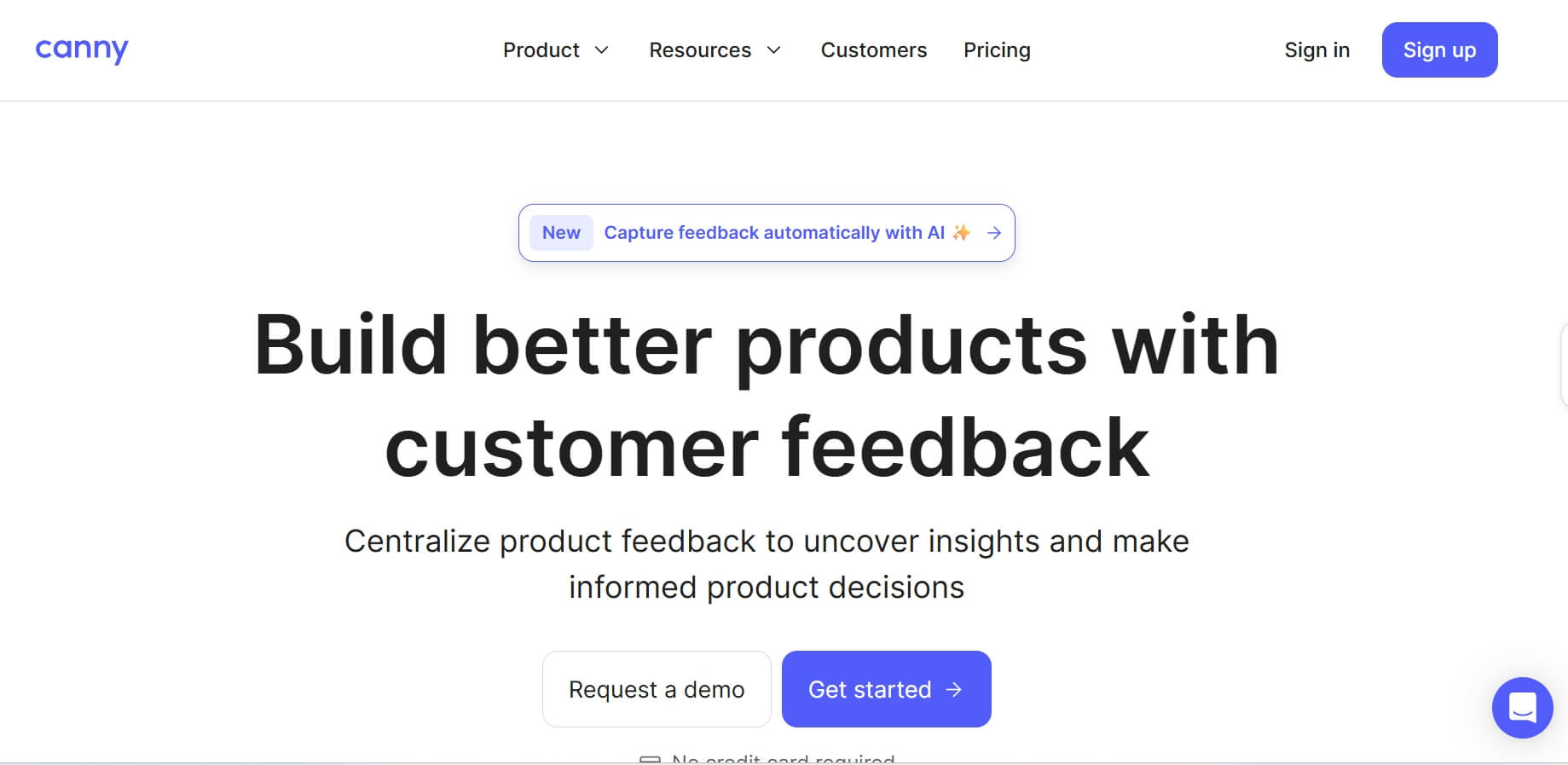
Canny is a feedback management tool that specifically focuses on collecting and tracking customer feedback and feature requests. It offers multiple channels for customer feedback, including a public feedback board, in-app widgets, and integrations with tools like Intercom and Slack. It's a great tool for shaping a business's future product development and improvement.
Why I pick it: Built for product teams, it's an essential tool in collecting and prioritizing feature requests.
Key features:
- Public & private feedback boards
- Request a voting system
- Integration with product management tools
- Real-time feedback alerts
Integrations: Jira, Slack, Zendesk, Figma, Discord, Microsoft Teams, Google Workspace, and Okta SSO.
Pros | Cons |
l Voting drives higher user engagement l Easy to set up l Roadmap visibility increases transparency | l No built-in survey tools l Limited advanced reporting capabilities |
4. Qualtrics

Qualtrics is a customer experience management platform that enables you to perform advanced user experience feedback and research. It offers robust tools for customer survey creation, distribution, and analysis. It’s an optimal choice for businesses that seek an excellent user experience while providing in-depth customer feedback analysis.
Why I picked it: Qualtrics offers a wide range of tools to deliver comprehensive user experience insights.
Key features:
- Omnichannel customer surveys
- AI-powered sentiment analysis
- Diverse question library
- Predictive intelligence capabilities
Integrations: Salesforce, Slack, Microsoft Teams, Tableau, Zendesk, Jira, and Freshdesk.
Pros | Cons |
l Customizable survey flows l Robust data analytics features l Interactive dashboards | l Complex data export l Pricing details are not publicly available |
5. Zendesk

Zendesk is a leading customer experience (CX) platform that centralizes feedback management across channels. The software is widely used by growing and enterprise teams to collect feedback directly from support experiences. It automates customer surveys, analyzes their sentiments in real time, and seamlessly integrates with CRM systems to give teams full customer context.
Why I picked it: Omnichannel customer support and strong integration between support tickets and feedback data.
Key features:
- Automated CSAT and NPS surveys
- AI-powered quality assurance (QA)
- Ticket-based feedback tracking
- Omnichannel feedback collection
Integrations: Salesforce CRM, Slack, HubSpot, Jira, SurveyMonkey
Pros | Cons |
l Full CX suite (customer feedback + support management) l AI-driven sentiment analysis l Strong customer support tools | l Higher starting price for enterprise features l Steep learning curve for advanced tools |
How to Build an Effective Feedback Management System
This section shows you how to build an effective feedback management system in 4 accessible steps.
Step 1. Clear Your Goals
The first and foremost step is to clearly outline what your business wants to achieve. Do you want to improve support response times and boost customer satisfaction? How do you measure business success using metrics, such as CSAT, NPS, or churn rate? For example, a goal might be: increasing CSAT scores from 80% to 90% in 3 months.
Step 2. Choose Your Feedback Collection Channels
As discussed above, there are different feedback collection channels and types. Select the ones that align with your goals. Consider using AI-powered software, like automated surveys, for direct feedback, and social listening tools (e.g., Sprinklr) for indirect feedback.
Step 3. Automate Workflow
In addition to manual feedback collection, use cloud-based feedback management systems, like Salesforce Service Cloud, to conduct surveys, sync feedback with your CRM, and alert your team to urgent issues.
Step 4. Drive Actionable Changes
Once you get clear customer feedback, it's high time to drive actionable changes. If there is a repeated issue across multiple reviews or feedback, work across the company to address the problem. Always inform customers promptly about the action you are taking to resolve their issues, which shows you value their feedback.
Best Practices to Common Feedback Management Challenges
Challenge 1. Employees Not Fully Engaged in Customer Feedback
If your team sets feedback as a performance metric not a learning method, it may cause the interaction to become a transaction. For example, the service agent beg for "5-start rating" to get a high score, running the customer experience.
Solution: Redefine the meaning of feedback. Ask open questions like, "What one tweak would improve your experience?" to shift from the scoring to learning. Besides, pair with agent coaching to offer personalized service.
Challenge 2. Teams' Resistance to Change
When customer feedback breaks through the current workflow, it means extra workload, unintended chaos, or threats to familiar routines. This fear of disruption drives resistance to feedback-driven adjustments.
Solution: Start small and prove its value. Avoid implementing massive adjustments across the team. For instance, test a new product with a small customer segment and gather direct feedback on it. Once a change proves its value, you can begin to scale it.
Challenge 3. Feedback Without Action
Another common issue is that collected feedback rarely turns into action. Many companies fall into this cycle because the feedback data is scattered across various systems, making it difficult to act.
Solution: Use a cloud-based unified customer experience management tool to assign clear ownership and route feedback to relevant teams. Pair direct feedback, like repeated purchases or recurring issues, with behavioral data. For example, if a customer abandons his online shopping cart, that's unspoken feedback.
Your AI Receptionist, Live in Minutes.
Scale your front desk with an AI that never sleeps. Solvea handles unlimited multi-channel inquiries, books appointments into your calendar automatically, and ensures zero missed opportunities around the clock.
FAQs
1. What is product feedback management?
Product feedback management is a process that focuses on collecting and analyzing customer suggestions, complaints, and praises about your products or services. It helps businesses upgrade or optimize their product features, like a fitness app using feedback to add a "workout tracking" feature.
2. What is employee feedback management?
Employee feedback management is the process of collecting, delivering, and acting on input from employees, such as engagement surveys, formal reviews, and one-on-one meetings. Unlike CFM, it focuses on improving internal teamwork efficiency and reducing employee turnover rate.
3. What's the best enterprise feedback management software?
The best enterprise feedback management software depends on your specific needs and business size, but the top reviewed ones include Qualtrics, Zendesk, Medallia, Sprinklr, etc. These platforms stand out due to their powerful AI capabilities, analytics depth, scalability, and robust integrations.
4. What are the four types of feedback?
The four types of feedback include positive feedback, negative feedback, corrective feedback, and coaching feedback.
- Positive feedback: Highlight strengths and acknowledge good performance to reinforce positive behaviors.
- Negative feedback: Point out specific issues about past performance.
- Corrective feedback: Offer detailed and actionable suggestions to address some issues.
- Coaching feedback: Provide direct analysis and strategies to support long-term development.