A customer calls after a missed appointment, a delayed order, or a poor service experience. They are not asking for a perfect explanation. They want to know whether the business understands what went wrong and what will happen next.
That is where a customer apology letter matters. It gives the business a clear way to acknowledge the issue, take responsibility, and repair trust. When the complaint starts through a phone call, email, SMS, or live chat, an AI receptionist like Solvea can help capture the situation early so the apology is based on real context, not a generic response.
What Is a Customer Apology Letter?
A customer apology letter is a written message that acknowledges a problem, expresses regret, explains the next step, and shows the customer that the business is taking the issue seriously.
It can be sent by email, chat, SMS, or formal letter. The format matters less than the substance. A useful apology should be specific, timely, and connected to a real action.
A good apology letter to customer should answer four questions:
- What happened?
- Why does it matter to the customer?
- What is the business doing now?
- How can the customer get further help?
If the first complaint came through a call, the apology should reflect what the customer actually said. That context makes the difference between a message that feels sincere and one that feels automated.
Research in the Journal of Marketing links complaint handling to customer justice evaluations, satisfaction, and loyalty. In practical terms, customers judge not only the original mistake, but also how the company responds after the mistake is raised.
When to Send Customer Apology Letter
Apology Letter to Customer for Mistake
Send an apology letter to customer for mistake when the business caused confusion, delay, incorrect information, billing problems, missed communication, or a service failure.
Common situations include:
- A wrong charge
- A missed callback
- A scheduling error
- A delayed delivery
- An incorrect order
- A broken promise
- A poor support experience
- A staff communication issue
The timing matters. The longer the customer waits, the more the apology has to repair. A Journal of Retailing article on complaint management highlights timeliness, compensation, and communication as important complaint-handling responses, with effectiveness depending on the failure type and customer relationship.
Inconvenience Apology Letter to Customer
An inconvenience apology letter to customer is appropriate when the issue cost the customer time, effort, or confidence, even if the business did not cause major financial harm.
Examples include long wait times, repeated transfers, confusing instructions, a missed update, or a last-minute change. These situations may look small internally, but they create friction for the customer.
A stronger apology might say:
We apologize for the inconvenience caused by the delayed update on your appointment. You should not have had to contact us twice to understand the status. We have now confirmed the new time and added a follow-up reminder so this does not happen again.
That response works because it names the inconvenience, avoids excuses, and gives a next step.
How to Write Apology Letter to Customer
Start With the Real Issue
To write an apology letter to customer, start by naming the specific issue. Avoid vague openings like “We apologize for any inconvenience.” The customer should be able to tell that the message was written for their situation.
A stronger opening might be:
We apologize for missing your appointment on [date]. You set aside time for our visit, and we did not communicate the schedule change clearly enough.
Acknowledge the Customer Impact
A useful apology explains why the issue mattered. This does not need to be dramatic. It just needs to show that the business understands the inconvenience, delay, confusion, or frustration the customer experienced.
For example:
We understand this caused extra waiting time and required you to contact us again for an update.
Explain the Next Step
After the apology, explain what the business is doing now. This may include a refund, replacement, callback, appointment change, investigation, staff review, or timeline for follow-up.
Be specific about what will happen and when.
We have rescheduled your appointment for [date and time], and [team member] will confirm the details with you by [timeframe].
Use a Customer Apology Letter Template
A customer apology letter template is useful for structure, but it should never remove personalization. Use the template to guide the message, then add details from the actual customer interaction.
Dear [Customer Name],
We apologize for [specific issue]. We understand this caused [specific customer impact].
We take responsibility for the experience and have taken the following action: [resolution].
To help prevent this from happening again, we are [prevention step].
If you have any questions, please contact us at [contact method].
Sincerely,
[Name]
[Company]
Business Apology Letter to Customer
Apology Letter From Business to Customer
An apology letter from business to customer should match the customer’s situation, not just the company’s tone. A retail customer waiting for a refund needs a different message from a hotel guest affected by a room issue or a home services customer whose appointment was missed.
For businesses that receive complaints through calls, email, SMS, or live chat, the apology should reflect the original interaction. This is where Solvea fits the workflow: it helps capture the customer’s request at the front desk, route it to the right person, and preserve enough context for a specific apology.
Retail and Ecommerce
Retail and ecommerce apologies often involve delivery delays, wrong items, damaged products, refund timing, stock issues, or unclear return instructions.
A useful apology should confirm what happened and what the customer can expect next.
Dear [Customer Name],
We apologize for the issue with your order. We understand that receiving [wrong item, damaged item, or delayed shipment] created frustration and extra work for you.
We have reviewed the order and will [send a replacement, issue a refund, or provide return instructions] by [timeframe].
Thank you for giving us the chance to correct this.
Hotel
Hotel apologies should recognize the guest’s time, comfort, and expectations. Common situations include booking errors, room readiness problems, noise complaints, service delays, or missed guest requests.
Dear [Guest Name],
We apologize for the issue during your stay. Your room experience did not meet the standard you should expect from us, and we understand this affected your comfort.
We have shared the details with our team and will [specific resolution or follow-up].
Thank you for bringing this to our attention.
Real Estate
Real estate apologies often involve missed calls, delayed listing follow-up, showing conflicts, or incomplete property details. The message should recognize that timing matters when a customer is making a high-stakes decision.
Dear [Customer Name],
We apologize for the delay in following up on your inquiry about [property or request]. We understand that timely communication matters when you are evaluating a property.
We will send [listing details, showing options, or next step] by [timeframe].
Sincerely,
[Name]
Medspa
Medspa apologies should be calm, respectful, and careful. Common issues include appointment delays, scheduling confusion, unclear preparation instructions, or service communication problems. Avoid medical claims and avoid promising outcomes.
Dear [Customer Name],
We apologize for the confusion around your appointment. You should have received clear information before your visit, and we understand this caused inconvenience.
Our team will contact you by [timeframe] to review the next step and answer your questions.
Sincerely,
[Name]
Home Services
Home services apologies often involve late arrivals, missed appointments, unclear estimates, incomplete work, or lack of updates.
The customer usually wants a practical next step.
Dear [Customer Name],
We apologize for the missed appointment on [date]. We understand that you set aside time for our visit, and we did not communicate clearly enough.
We have scheduled a follow-up for [date and time] and assigned [team member or technician] to confirm the details with you.
Thank you for your patience while we make this right.
Barber Shop
Barber shop apologies are usually about wait times, scheduling confusion, or a customer feeling rushed. A warm, direct tone usually works best.
Dear [Customer Name],
We apologize for the wait during your recent visit. We know your time matters, and your appointment should have been handled more smoothly.
We will review our schedule and make the next visit easier to manage.
Sincerely,
[Name]
Restaurant
Restaurant apologies may involve reservation problems, long wait times, incorrect orders, poor service, or missed takeout details.
A good apology should acknowledge the guest experience and offer a clear recovery step when appropriate.
Dear [Guest Name],
We apologize for the experience you had with your recent order. The delay and communication gap did not reflect the service we aim to provide.
We have shared your feedback with the team and will [specific resolution] by [timeframe].
Thank you for letting us know.
Freelancer
Freelancer apologies should protect trust around timelines, deliverables, and communication. Be specific about what will be delivered and when.
Dear [Client Name],
I apologize for the delay in delivering [project or task]. I understand this affected your timeline, and I should have communicated the update sooner.
I will send [specific deliverable or update] by [timeframe].
Sincerely,
[Name]
Software
Software apologies often involve bugs, outages, login problems, billing errors, integration issues, or unclear support responses.
A strong software apology should avoid vague language and give the user a status or next step.
Dear [Customer Name],
We apologize for the issue affecting [feature, account, or workflow]. We understand this interrupted your work and created unnecessary friction.
Our team has identified [brief issue if appropriate] and is working on [resolution or next update]. We will share another update by [timeframe].
Thank you for your patience while we work to resolve this.
Company Apology Letter to Customer
When the Issue Affects Trust
A company apology letter to customer is useful when the issue affects brand trust or multiple customers. It should be used for larger service failures, system issues, repeated communication problems, policy confusion, or broad operational mistakes.
This letter should still be specific, but it can speak on behalf of the company rather than one location, staff member, or individual interaction.
A company apology letter should include:
- A direct apology
- The affected service or experience
- The customer impact
- The action already taken
- The next update
- A contact path for follow-up
Company Apology Letter Example
Use this format when the issue affects more than one customer or reflects a broader company process.
Dear [Customer Name],
We apologize for the recent issue affecting [service, order, appointment, account, or experience]. We understand this caused [specific impact], and we take responsibility for addressing it.
We have reviewed what happened and are taking the following steps: [actions].
We will continue to keep you updated through [contact method or timeframe].
Sincerely,
[Company Name]
How Solvea Helps Before the Apology Letter
Customer Context
A good apology depends on context. If the business does not know what the customer said, who handled the issue, or what was promised, the apology becomes generic.
Solvea helps by acting as an AI receptionist across customer touchpoints. When a customer calls, emails, texts, or starts a live chat, the system can help capture the request and move it into the right workflow.
That can support apology handling in practical ways:
- Capturing the original complaint
- Collecting contact details
- Identifying urgency
- Routing to the right person
- Supporting appointment follow-up
- Keeping conversation context available
This does not mean every apology should be automated. It means the business can respond with better information.
Follow Up
A customer apology letter should not be the final action if the issue is unresolved. Follow-up shows that the business meant what it said.
A good follow-up might confirm:
- The refund was processed
- The appointment was rescheduled
- The replacement was shipped
- The support case was reviewed
- The customer received the promised update
Solvea is relevant here because many apology moments begin as routine customer inquiries. A receptionist workflow can help make sure the issue is captured and routed instead of being forgotten after the first call.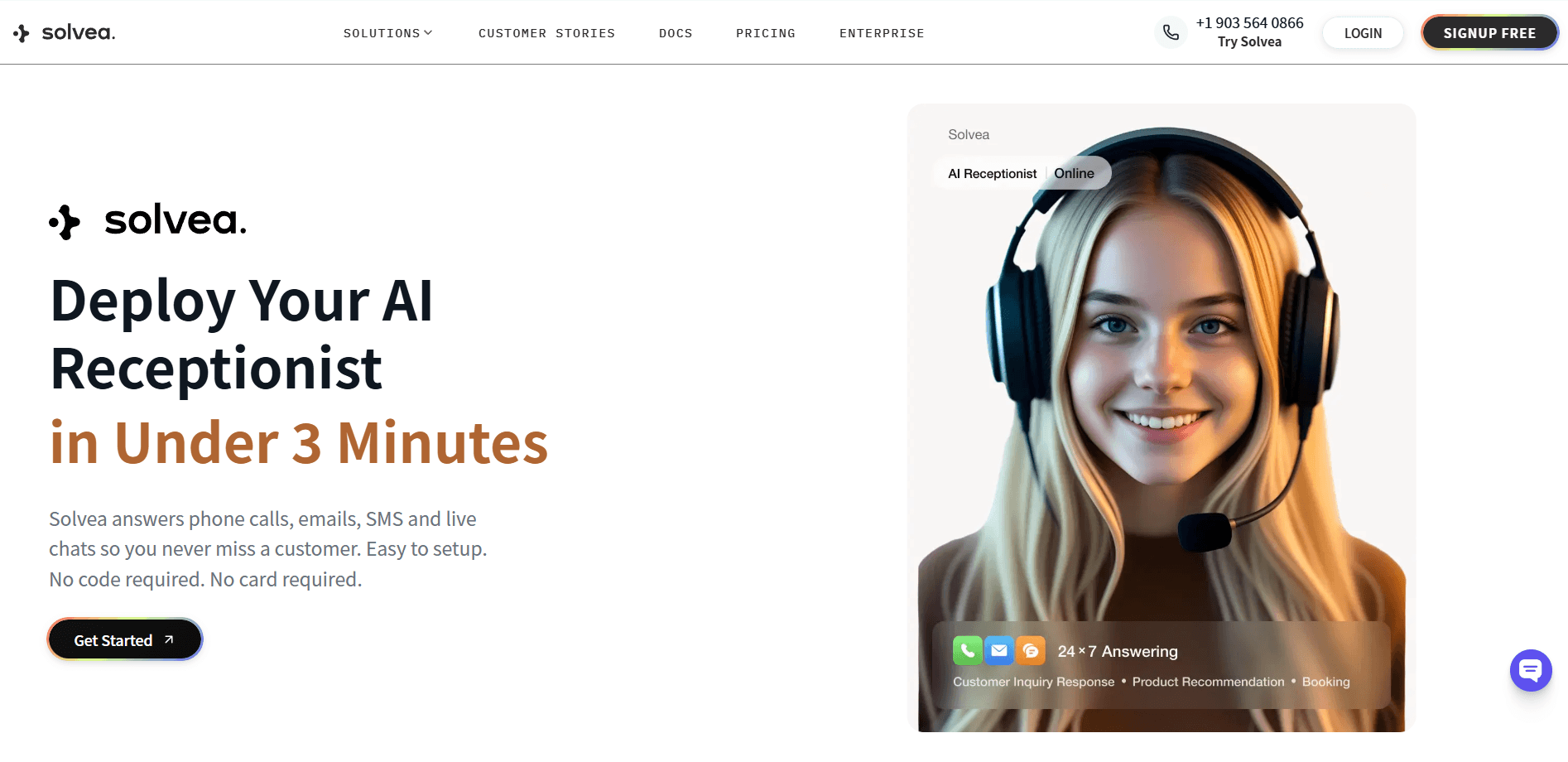
Customer Apology Letter Mistakes
Generic Language
Generic language makes customers feel ignored. If the letter could be sent to anyone, it probably does not say enough.
Avoid:
We apologize for any inconvenience this may have caused.
Use:
We apologize for the delayed appointment confirmation. You contacted us on Monday and did not receive the update we promised.
Specificity shows the customer that the business understands the actual problem.
Defensive Explanations
An explanation can help, but defensiveness weakens the apology.
Avoid long internal explanations about staffing, systems, vendors, weather, or policy complexity unless the customer needs that information. Keep the focus on impact and resolution.
Promises Without Timelines
Do not promise something the business cannot control. If the issue needs review, say that. If the refund takes three business days, say that. If staff need to call back, give a realistic window.
Strong apologies are specific because they are honest.
Your AI Receptionist, Live in Minutes.
Scale your front desk with an AI that never sleeps. Solvea handles unlimited multi-channel inquiries, books appointments into your calendar automatically, and ensures zero missed opportunities around the clock.
FAQ
What is a customer apology letter?
A customer apology letter is a written message that acknowledges a problem, expresses regret, explains the corrective action, and gives the customer a clear path for follow-up.
When should you send customer apology letter?
Send a customer apology letter when the business makes a mistake, causes inconvenience, delivers poor service, gives incorrect information, misses a commitment, or needs to repair trust after a complaint.
How do you write apology letter to customer?
Write an apology letter to customer by naming the issue, acknowledging the impact, taking responsibility, offering a solution, explaining the prevention step, and giving a clear contact option.
What should a business apology letter to customer include?
A business apology letter to customer should include a direct apology, the specific issue, the customer impact, the action being taken, a prevention step, and a professional signature.
Can I use a customer apology letter template?
Yes. A customer apology letter template is useful for structure, but it should be personalized with the customer’s name, issue, timeline, and resolution.
What should I avoid in a company apology letter to customer?
Avoid blaming the customer, using vague language, overexplaining, making excuses, sounding defensive, or promising a fix that the business cannot deliver.
How can Solvea help with customer apology letters?
Solvea can help capture customer complaints across phone, email, SMS, and live chat, route issues to the right person, and preserve context so the apology letter is more specific and actionable.