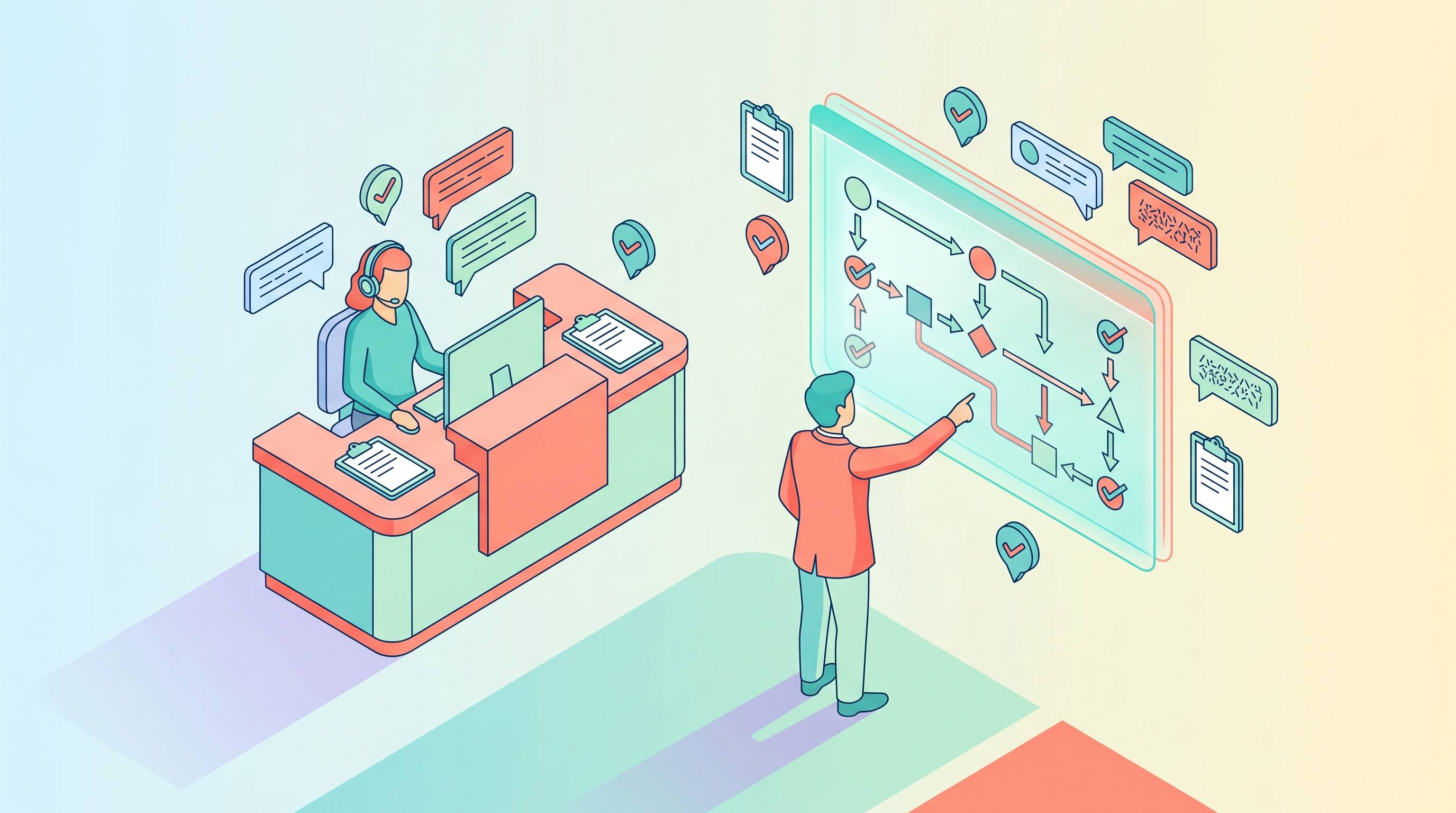
If you are searching for OpenClaw for small business, you are probably not asking a technical question first.
You are asking a business question.
Can this actually help a small team save time? Can it reduce repetitive work? Can it help you respond faster, capture more leads, and avoid missing important customer messages without immediately hiring more people?
That is the right way to think about it.
For most small businesses, the value of OpenClaw is not that it is an interesting AI tool. The value is that it can sit between your communication channels, workflows, and AI systems and help a lean team operate with more consistency and less manual overhead.
This is why the conversation around OpenClaw for small business matters. Small teams often do not need more software in theory. They need fewer missed messages, better customer follow-up, faster replies, and less time wasted on repeat work. If you want the official product reference, the best starting point is the OpenClaw docs.
TL;DR
- OpenClaw for small business is most valuable when a small team is handling too many repetitive messages and workflows manually.
- The biggest benefits are faster response times, more consistent communication, better lead capture, and broader coverage outside business hours.
- The best small business use cases include customer service, lead qualification, appointment routing, after-hours reply coverage, and internal assistant tasks.
- OpenClaw is especially useful for lean teams where each inquiry matters and missed follow-up has a real cost.
- The main OpenClaw costs usually come from model/API usage, hosting, and any extra tools connected to the workflow.
- For many small businesses, the right question is not “Is OpenClaw cheap?” but “Is it cheaper than losing time, leads, and customer opportunities?”
Why Small Businesses Need OpenClaw
Small businesses usually do not have the luxury of specialized teams for every function.
The same people often handle sales, support, scheduling, admin work, follow-up, and operations at the same time. That creates a predictable problem: important work gets mixed together with repetitive work.
That is where OpenClaw becomes interesting.
A small business may not need a giant AI transformation plan. It may simply need a better way to handle the same questions that come in every day, the same follow-up steps that get delayed, or the same customer requests that arrive after working hours.
This is the core reason OpenClaw for small business has practical value. It helps small teams create more coverage without needing to instantly add more headcount.
Small teams are overloaded
In many small businesses, one person is doing the work of three people.
That means customer replies get delayed, internal tasks pile up, and repetitive communication starts taking time away from the higher-value work that actually grows the business. OpenClaw can help absorb some of that operational pressure by handling repeatable workflows more consistently.
Leads and inquiries get missed
A missed message is not just an inbox problem. It can be a lost sale, a missed appointment, or a customer who moves on to someone else.
Small teams are especially vulnerable to this because there is less redundancy. If one person is busy, nothing gets answered. That is why tools that improve response coverage can matter so much more in a small business than in a large organization.
Customers expect faster replies
Whether someone is contacting a local service business, a small agency, a clinic, or an online shop, they usually expect a fast answer.
They do not care that your team is small. They care that they have a question right now.
OpenClaw can help small businesses respond more quickly and more consistently, which improves both customer experience and the chances of converting interest into action.
Manual admin work steals selling time
A lot of small business friction comes from low-level work: answering common questions, repeating the same business information, sorting inquiries, summarizing requests, and forwarding messages to the right person.
None of this is glamorous. But it consumes real time.
That is why the real value of OpenClaw for small business is often not “AI magic.” It is the reduction of repetitive admin drag.
What Results OpenClaw Can Create for Small Businesses
The reason small businesses care about OpenClaw is not the software category. It is the outcome.
If OpenClaw is useful, it should create visible business effects.
Faster response times
One of the clearest benefits is speed. If your business gets recurring questions or common inquiry types, OpenClaw can help respond faster than a fully manual process.
That matters because quick response time often shapes whether a customer keeps engaging with you at all.
More consistent communication
Small teams often sound different depending on who replies, how busy they are, and what time the message arrived.
OpenClaw can make early-stage communication more consistent. That consistency matters for trust, especially when a customer is deciding whether your business feels reliable.
Better lead capture
Many small businesses lose opportunities not because demand is low, but because the intake process is messy.
If an inquiry arrives and nobody captures the name, need, timing, budget, or contact details properly, the lead may never turn into anything. OpenClaw can help standardize that intake layer so fewer opportunities disappear in the gaps.
More coverage after hours
Small businesses do not stop receiving demand just because the owner stopped checking messages.
An after-hours message can still be the start of a sale, an appointment, or an important client conversation. OpenClaw can help create a first-response layer when the human team is offline.
Less repetitive work for lean teams
This may be the biggest day-to-day advantage.
If your team keeps repeating the same explanations, sorting the same inquiry types, and doing the same message cleanup work, OpenClaw can remove some of that repetition. That creates more space for work that actually requires judgment.
Best OpenClaw Use Cases for Small Business
Not every small business needs OpenClaw in the same way.
But some use cases are much more natural than others.
Your AI Receptionist, Live in Minutes.
Scale your front desk with an AI that never sleeps. Solvea handles unlimited multi-channel inquiries, books appointments into your calendar automatically, and ensures zero missed opportunities around the clock.
Customer service and FAQ handling
This is one of the easiest starting points.
Small businesses often answer the same questions over and over: pricing basics, opening hours, availability, service areas, turnaround times, booking steps, and general “how does this work?” questions.
OpenClaw can help handle that first layer of communication more efficiently. If you want to think about this in a more customer-facing workflow, it overlaps naturally an OpenClaw AI receptionist.
Lead capture and qualification
A lot of businesses do not need every new inquiry to go straight to a human immediately. They need the inquiry to be captured properly first.
OpenClaw can help collect the key details that make a lead useful: contact information, request type, urgency, budget range, project scope, or preferred timing.
That means the business can spend more time working qualified opportunities and less time manually reconstructing context.
Appointment and inquiry routing
For appointment-based businesses, routing matters almost as much as responding.
If someone wants to book, reschedule, ask a billing question, request a quote, or follow up on an order, the conversation should go to the right place quickly. OpenClaw can help sort those flows and reduce the amount of manual back-and-forth.
After-hours response coverage
This is a strong use case for small businesses because after-hours demand often gets ignored by default.
A small team cannot stay available all the time. But a business still benefits when customers receive a timely first response, basic information, and a clear next step outside office hours.
Internal assistant workflows
OpenClaw is not only useful for customer-facing work.
It can also help with internal tasks like summarizing long message threads, organizing notes, surfacing information, or helping a small team reduce low-value admin work. For businesses trying to stay lean, that internal efficiency matters too.
Which Small Businesses Benefit Most?
OpenClaw is not equally useful for every business.
It tends to be most helpful for small businesses with three characteristics:
- they receive recurring inquiries or repeated questions
- they have limited staff time
- each missed lead or delayed response has real business impact
That often includes:
- local service businesses
- agencies and small consultancies
- appointment-based businesses
- clinics and advisory services
- e-commerce support teams
- lean B2B teams
In other words, OpenClaw for small business is strongest when communication volume is meaningful, workflows are repetitive, and human attention is limited.
OpenClaw for Small Business Cost: What You Actually Pay For
This is one of the most important parts of the conversation.
OpenClaw usually does not fit the simple “one flat SaaS fee” mental model. The real cost depends on how you run it and what you connect it to.
In practice, the main cost buckets are usually:
- model or API usage
- hosting or infrastructure
- any additional tools or services in the workflow
If you want the deeper version of this topic, it connects directly to OpenClaw cost.
For a small business, the most useful framing is not just “how much does OpenClaw cost?”
It is “what problem is this replacing?”
If OpenClaw helps your business respond faster, capture more leads, reduce repetitive work, and keep conversations moving after hours, then the cost should be compared against lost time, missed demand, and manual overhead.
That does not mean every setup will be cheap. A more complex workflow with multiple channels, heavier model usage, and more automation layers will cost more than a small single-channel setup.
But for many small businesses, starting narrow is exactly the advantage. You do not need to automate everything at once to get value.
Is OpenClaw Worth It for a Small Business?
In the right situation, yes.
OpenClaw is worth serious attention when a small team is stretched thin, customer communication matters, repetitive workflows are common, and missed follow-up is expensive.
It may be less compelling if your business receives very few inquiries, has almost no repeat communication, or would be better served by a much simpler tool.
That is why the right decision is contextual.
The strongest use case for OpenClaw for small business is not “every small business should use AI.” It is “some small businesses have exactly the kind of communication and workflow pressure that makes OpenClaw valuable.”
Final Verdict
The real promise of OpenClaw for small business is not novelty. It is leverage.
It helps small teams respond faster, communicate more consistently, capture more useful information, and reduce repetitive operational work without immediately expanding headcount.
That is why the use cases matter so much. If the business has recurring inquiries, limited staff bandwidth, and real costs attached to slow or inconsistent follow-up, OpenClaw can be a strong fit.
And if your main priority is customer conversations specifically, Solvea is the more direct path to turning that AI value into a customer-facing workflow.
FAQ
Is OpenClaw good for small businesses?
Yes, especially for small businesses that handle repeated customer questions, inquiries, and follow-up work with a lean team.
What can a small business use OpenClaw for?
Common use cases include customer service replies, lead capture, appointment routing, after-hours messaging, and internal assistant workflows.
How much does OpenClaw cost for a small business?
It depends on your setup. The main costs usually come from model usage, hosting, and any connected services or tools.