TL;DR: OpenClaw ist leistungsstark, aber nicht von Haus aus sicher. Bitsight-Forschende beobachteten mehr als 30.000 exponierte OpenClaw-Instanzen zwischen dem 27. Januar und dem 8. Februar 2024, was bedeutet, dass Tausende ungesicherte Agenten über das offene Internet erreichbar waren. Sofern Sie Linux-Server nicht härten, API-Schlüssel verwalten und jede Integration überwachen können, riskieren Sie, einem unausgereiften Agenten uneingeschränkten Zugriff auf Ihre Kalender, Posteingänge und SaaS-Tools zu geben.
Warum die Frage gerade jetzt wichtig ist
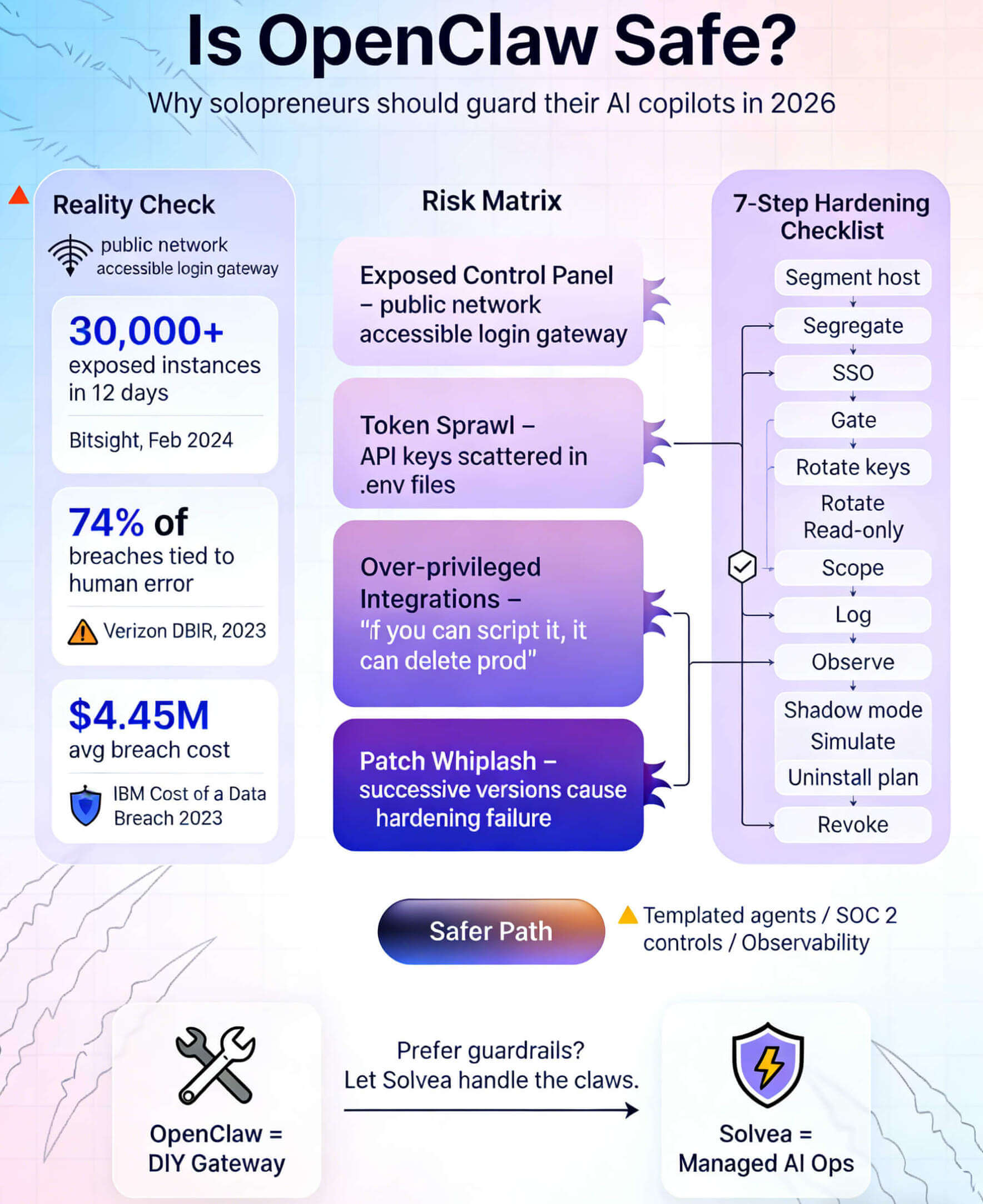
Solopreneure setzen KI-Copiloten schneller ein als große Unternehmen. Stripe Atlas berichtet, dass ein typischer SaaS-Stack für Einzelgründer inzwischen mehr als 12 verbundene Apps umfasst, von CRMs bis hin zu Rechnungstools. Wenn Sie OpenClaw an diesen Stack anschließen, geben Sie einem Agenten Root-Zugriff auf alles von Slack bis zu Bankbenachrichtigungen. Laut IBMs Bericht 2023 Cost of a Data Breach liegen die weltweiten durchschnittlichen Kosten einer Datenschutzverletzung bei 4,45 Millionen US-Dollar, ein Betrag, den Startups offensichtlich nicht verkraften können. Selbst wenn Sie „nur“ 1.000 Kunden-E-Mails preisgeben, kann der Reputationsschaden eine junge Marke über Nacht lähmen.
Ist OpenClaw seriös oder ein Risiko?
OpenClaw ist Open Source und wird aktiv gepflegt; in diesem Sinne ist es also „seriös“: Sie können den Code prüfen, ihn selbst hosten und frei erweitern. Seriosität ist jedoch nicht gleichbedeutend mit Sicherheit. Der Projektersteller warnt ausdrücklich: „Most non-techies should not install this.“ Diese Warnung gibt es, weil OpenClaw:
1. als privilegierte Steuerungsebene läuft, die Shell-Befehle ausführen, E-Mails senden und Dateien bearbeiten kann.
2. auf vom Nutzer bereitgestellte API-Schlüssel für Messaging-, Cloud- und LLM-Anbieter angewiesen ist.
3. ein Web-Kontrollpanel bereitstellt, das Angreifern bei unzureichender Absicherung direkte Kontrolle über Ihren Agenten gibt.
Anders gesagt: OpenClaw ist nur so sicher wie die Person, die OAuth-Anmeldedaten, Reverse Proxys und Firewall-Regeln konfiguriert. Verizons Data Breach Investigations Report 2023 führt 74% der Sicherheitsverletzungen auf das „menschliche Element“ zurück: Fehlkonfigurationen, gestohlene Zugangsdaten oder Social Engineering. OpenClaw vergrößert dieses Risiko, weil ein einzelner Tippfehler in .env oder ein unsicher abgesicherter Tunnel den gesamten Assistenten offenlegen kann.
Dokumentierte Sicherheitsprobleme bei OpenClaw
Risiko | Was passiert | Warum es wichtig ist |
Über das Internet exponierte Instanzen | Bitsight fand in einem 12-tägigen Zeitraum mehr als 30.000 Gateways, die über das öffentliche Web erreichbar waren. | Angreifer können sich beim Panel anmelden, Protokolle einsehen und Automatisierungen aus der Ferne auslösen. |
Token-Wildwuchs | API-Schlüssel für WhatsApp, Slack, GitHub und Cloud-Dienste liegen in Klartext-Konfigurationsdateien. | Ein kompromittierter Host liefert vollständigen API-Zugriff auf jede angebundene Plattform. |
LLM-Lieferkette | Nutzer verbinden häufig nicht offengelegte LLM-Endpunkte von Drittanbietern, um Geld zu sparen. | Ein bösartiger LLM-Proxy kann Prompts protokollieren und nachgelagerte Zugangsdaten stehlen. |
Überreichende Integrationen | OpenClaw folgt dem Prinzip: „Wenn Sie es skripten können, kann der Agent es tun.“ | Ohne Least-Privilege-Kontrollen kann der Agent Datenbanken löschen oder betrügerische Rechnungen versenden. |
Patch-Disziplin | Releases erscheinen schnell; im Februar gab es fünf Breaking Changes in acht Tagen. | Solo-Gründer haben selten Zeit, nach jedem Update Härtungsmaßnahmen erneut anzuwenden. |
Die Dokumentation von OpenClaw bietet zwar Einrichtungshinweise, aber keinen Härtungsleitfaden auf Enterprise-Niveau. Wenn Sie solche Leitplanken möchten, müssen Sie eigene Ansible-Playbooks schreiben oder nach Plattformen mit vorgefertigten Vorlagen suchen, etwa Solveas Leitfaden zu OpenClaw-Alternativen.
Sicherheitscheckliste für mutige DIY-Anwender
Wenn Sie weiterhin mit OpenClaw experimentieren möchten, behandeln Sie es wie jede andere Produktions-Workload. Nutzen Sie diese verkürzte Checkliste, bevor Sie das System mit Kundendaten arbeiten lassen:
1. Host segmentieren. Stellen Sie es in einem Zero-Trust-Segment oder auf einer Cloud-VM bereit, deren eingehender Traffic auf Ihre IPs beschränkt ist.
2. SSO für das Kontrollpanel erzwingen. Verbergen Sie die UI hinter OAuth oder mutual TLS; setzen Sie sie niemals direkt dem Internet aus.
3. Zugangsdaten wöchentlich rotieren. Speichern Sie API-Schlüssel in einem Secrets Manager statt in .env -Dateien.
4. Zuerst schreibgeschützte Scopes verwenden. Geben Sie dem Agenten zunächst nur Lesezugriff auf Kalender und CRMs, bevor Sie Schreibaktionen aktivieren.
5. Jede Aktion protokollieren. Leiten Sie Gateway-Logs an ein SIEM weiter, damit Sie unerwartete Befehle rückgängig machen können.
6. Shadow-Modus. Führen Sie Automatisierungen sieben Tage lang im „Dry Run“ aus und aktivieren Sie destruktive Aktionen anschließend schrittweise.
7. Deinstallation planen. Halten Sie ein Runbook bereit, um die VM zu löschen, Tokens zu widerrufen und Partner zu informieren, falls es zu einer Offenlegung kommt.
Dieser siebenstufige Prozess kann bei der ersten Umsetzung 8–10 Engineering-Stunden in Anspruch nehmen. Wenn das abschreckend klingt, ist es ein starkes Signal, dass OpenClaw möglicherweise nicht zu Ihrer aktuellen Risikobereitschaft passt.
Eine sicherere Alternative: Solvea
Solvea ist eine verwaltete KI-Operationsplattform, mit der Sie autonome Copiloten bauen können, ohne Ihr eigenes Gateway beaufsichtigen zu müssen. Statt jede Integration von Hand zu verdrahten, beschreiben Sie den Workflow, und Solvea liefert gesteuerte Ausführung über verschiedene Kanäle hinweg.
Wenn Sie schnell einen Assistenten bereitstellen möchten, führt Sie der Assistent Build Agent with Template in wenigen Minuten durch das Festlegen von Berechtigungen, das Zuordnen von Tools und den Launch auf WhatsApp, Slack oder E-Mail. Wenn Datenhygiene Ihr Hauptanliegen ist, nimmt das Sync from Platforms Playbook CRM-, E-Commerce- und Support-Datensätze über geprüfte Connectors auf, sodass Sie nie wieder rohe API-Schlüssel in .env-Dateien einfügen.
Solvea-Funktion | Was sie leistet | Warum sie gegenüber OpenClaw wichtig ist |
Agent Builder mit Vorlagen | Startet Multi-Channel-Agenten aus geprüften Blueprints mit eingegrenzten Berechtigungen. | Kein Bedarf, ein DIY-Kontrollpanel zu exponieren oder OAuth-Scopes manuell zu verwalten. |
Geprüfte Datensynchronisationen | Leitet CRM-, E-Commerce- und Ticketdaten durch gesteuerte Connectors. | Beseitigt Klartext-API-Schlüssel und reduziert das Risiko von Datenlecks. |
Governance-Kontrollen | SOC 2-orientiertes Logging, Rate Limits und Freigabeprozesse. | Sie übernehmen Sicherheitsprüfungen und 5 Trust-Service-Kriterien, statt Richtlinien selbst zu schreiben.[^aicpa] |
Observability & Recovery | Integrierte Aktionsprotokolle, Rollbacks und Alerts. | Gibt Solopreneuren das Sicherheitsnetz eines Ops-Teams, wenn Automatisierungen fehlschlagen. |
Da Solvea als Service bereitgestellt wird, erhalten Sie außerdem Patch-Management, Credential Vaulting und erzwungenes Least Privilege. So bleibt der Fokus auf der Kundenarbeit, während die Plattform die „claws“ dort hält, wo sie hingehören: innerhalb einer gesicherten Grenze.
Ihr KI-Rezeptionist ist in Minuten live.
Skalieren Sie Ihren Empfang mit einer KI, die nie schläft. Solvea bearbeitet unbegrenzte Anfragen über mehrere Kanäle, bucht Termine automatisch in Ihren Kalender und verhindert rund um die Uhr verpasste Chancen.
FAQ
Ist OpenClaw seriös?
Ja, es ist ein Open-Source-Projekt mit einer aktiven Community. „Seriös“ bedeutet jedoch nicht produktionsreif. Ohne Kontrollen auf Enterprise-Niveau bleibt OpenClaw ein Hobby-Tool, das Geschäftsdaten gefährden kann.
Was sind die größten Sicherheitsrisiken bei OpenClaw?
Die größten Risiken sind exponierte Kontrollpanels, API-Tokens im Klartext, überprivilegierte Integrationen und schnelle Release-Zyklen, die manuelle Härtung zunichtemachen. Jede dieser Lücken kann Gegnern ermöglichen, Ihren Agenten aus der Ferne zu betreiben.
Kann ich OpenClaw ausreichend für Kundenarbeit härten?
Wenn Sie DevSecOps-Erfahrung haben, können Sie OpenClaw in einer abgesicherten VPC sandboxen und es mit SSO, Logging und automatischem Patching umgeben. Dennoch finden die meisten Solo-Gründer es schneller, eine verwaltete Alternative wie Solvea einzusetzen, die mit Governance im Mittelpunkt entwickelt wurde.
Fazit
OpenClaw ist ein faszinierender Ausblick auf die Zukunft persistenter KI-Agenten, aber „Ist OpenClaw sicher?“ bleibt eine berechtigte Frage, besonders für Solopreneure ohne Sicherheitsteams. Wenn innerhalb von weniger als zwei Wochen Zehntausende von Kontrollplattformen online exponiert sind, liegt die Beweislast beim Betreiber, nicht beim Tool. Nutzen Sie die obige Checkliste, wenn Sie unbedingt selbst hosten müssen, aber erwägen Sie stattdessen, Ihre Automatisierungsideen in Solvea umzusetzen. Sie erhalten weiterhin kanalübergreifende KI-Copiloten, tun dies jedoch in einer Umgebung, die darauf ausgelegt ist, das Vertrauen Ihrer Kunden zu schützen.