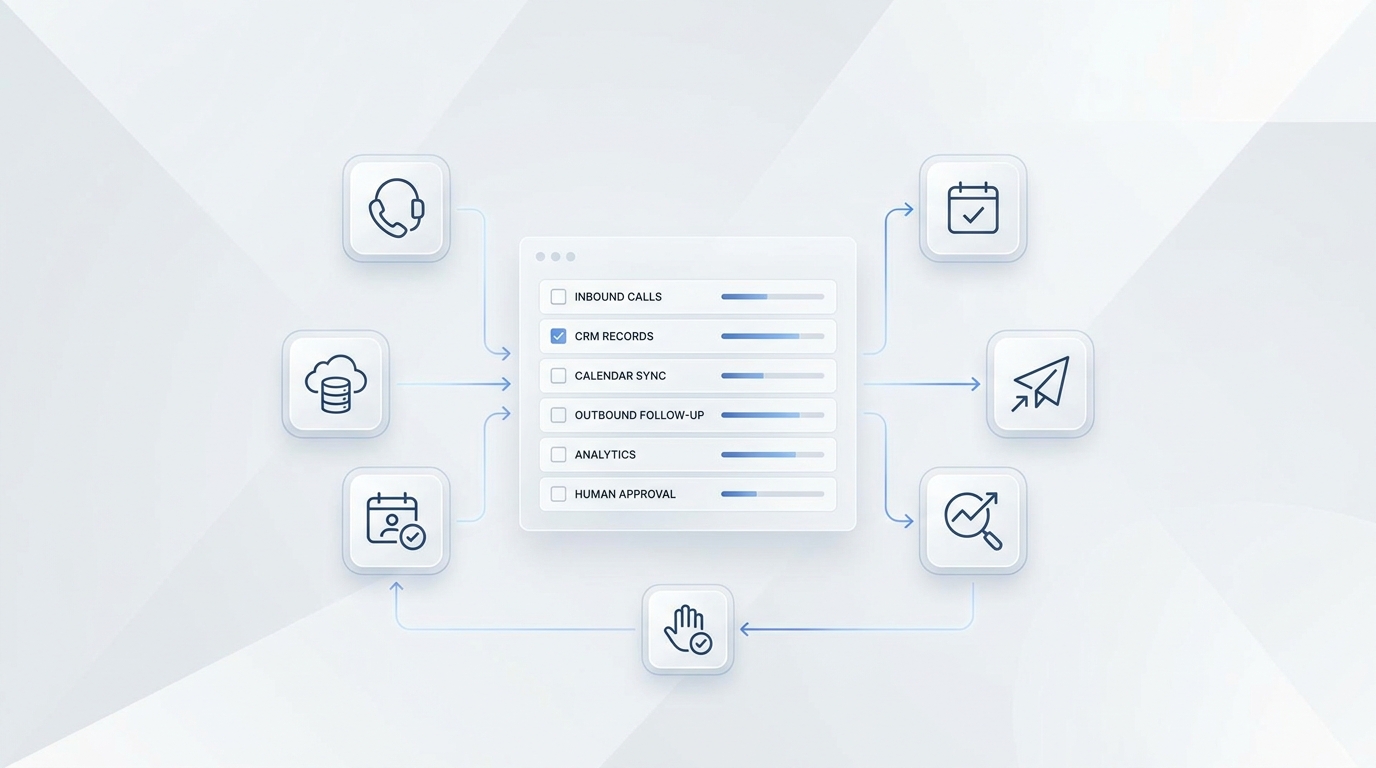
Sales reps spend a significant portion of their time chasing leads that will never close. Not because the reps are bad at their jobs — but because the qualification process happens too late, too manually, and with too little data. By the time a human rep engages, the window to capture intent has often already passed.
AI changes the economics of lead qualification. When the system captures, scores, and routes a lead before a human ever sees it, reps arrive at every conversation with context — and spend their hours on the deals most likely to move. AI-powered sales tools reduce time spent on low-value lead follow-up, freeing reps for conversations that actually convert.
This guide breaks down the five core steps of an AI lead qualification process, what happens at each stage, and the most common mistakes teams make when building one.
TL;DR
Field | Detail |
What it is | A system that uses AI to capture, assess, score, and route inbound leads without manual triage |
Why it matters | Reps stop chasing cold leads; high-intent buyers get faster responses |
Key steps | Capture → Enrich → Score → Qualify → Route |
Who it's for | SMBs, B2B sales teams, and service businesses with more inbound volume than reps can manually review |
How Solvea fits | Solvea qualifies inbound phone and chat leads in real time, routing warm prospects to the right team member automatically |
What Is AI Lead Qualification?
Lead qualification is the process of deciding whether a prospect is worth pursuing — whether they fit your target customer profile, have budget, and are ready to buy now (or soon). Traditional qualification relies on a human, usually an SDR, asking a set of questions and using judgment to rank the lead.
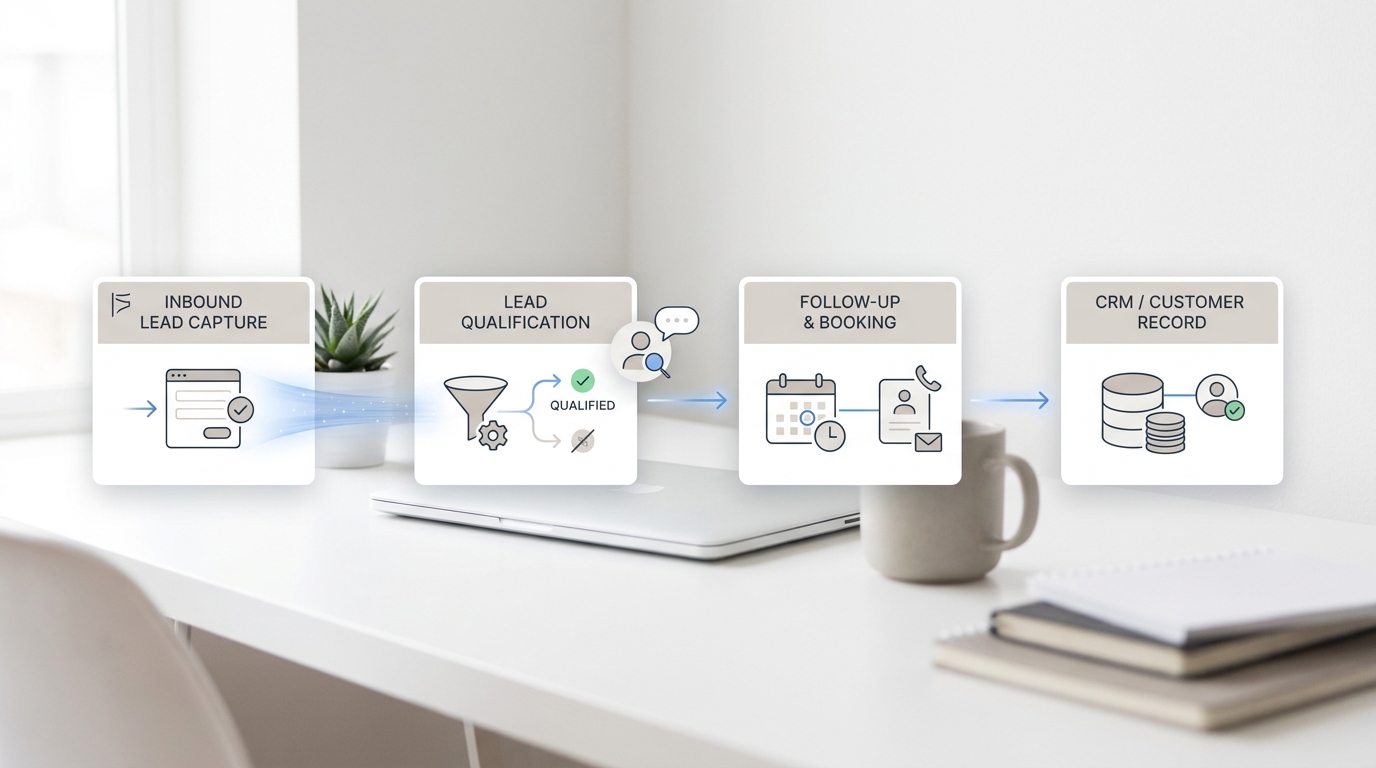
AI lead qualification replaces or augments that triage with automated data collection, behavioral signals, and rule-based or model-driven scoring. The output is a qualified or disqualified label — and a routing decision — without requiring a rep to evaluate every inbound contact.
The difference between a FAQ system and an AI lead qualifier is intent. An FAQ system answers questions a visitor already has. A lead qualifier generates structured data about that visitor — budget, timeline, fit — and acts on it. Both run on the same underlying model: the better the data you give the AI, the better it performs.
The 5 AI Lead Qualification Process Steps
Step 1: Capture — Get Every Inbound Contact into One System
The first failure point in most lead qualification processes is fragmentation. Leads come in through web forms, chatbots, phone calls, social DMs, and email. If each channel feeds a different inbox or spreadsheet, scoring is impossible.
AI qualification requires a single intake layer. Every inbound inquiry — regardless of channel — must feed one workflow. This means:
- Web forms send directly to your CRM (not a rep's email)
- Chat conversations are logged with transcript
- Phone calls are recorded and transcribed
- Social inquiries are tagged and forwarded to a central queue
Without a unified capture layer, you are scoring a subset of leads and making decisions with incomplete data.
What AI does here: AI can monitor multiple channels simultaneously and normalize the incoming data into a consistent format, even when the inquiry arrives as unstructured text (like a phone transcript or a chat conversation).
Step 2: Enrich — Add the Data Points You Didn't Ask For
A lead who submits a form gives you what they typed. AI enrichment adds what they didn't: company size, technology stack, funding stage, job title, website traffic, intent signals from third-party data providers.
Enrichment tools pull from sources like LinkedIn, Clearbit, ZoomInfo, and Apollo to fill in the profile automatically. A lead who typed "Jane, marketing" becomes "Jane Doe, VP of Marketing at a 200-person SaaS company in Austin, $15M Series A."
Why this matters for qualification: Fit criteria (ICP matching) are almost entirely enrichment-dependent. You can't know whether a lead fits your target customer profile from form fields alone.
Companies that use data enrichment as part of their lead qualification process see measurably better lead-to-opportunity conversion rates, because reps spend time on leads that already meet baseline criteria.
Step 3: Score — Assign a Number That Reflects Real Buying Intent
Lead scoring translates qualitative signals into a number your team can act on. AI scoring models analyze two categories of signals:
Fit signals (does the lead match your ICP?): - Company size, industry, geography - Job title and seniority - Technology stack (relevant to your product) - Funding stage
Intent signals (how ready are they to buy?): - Pages visited on your website (pricing page = high intent) - Content downloaded - Email engagement (opens, clicks, replies) - Chat or call transcript sentiment - Time-to-first-contact after inquiry
A basic scoring model weights these signals and outputs a score from 0–100. Scores above a threshold go to sales; below threshold go to nurture or disqualification. AI models can update these scores continuously as behavior changes — a lead who visits your pricing page three times in a week moves from 40 to 80 without anyone touching it.
Step 4: Qualify — Confirm Fit Through Conversation
Scoring tells you who to talk to. Qualification tells you whether the conversation confirms what the score predicted. This is where AI — specifically AI-powered voice agents and chat assistants — replaces the first SDR touchpoint.
An AI qualification agent asks a defined set of questions: - "What's prompting your interest right now?" - "How many leads does your team receive per month?" - "Are you evaluating other solutions?" - "What's your timeline for making a decision?"
The AI captures the responses, maps them to BANT (Budget, Authority, Need, Timeline) or whatever framework your team uses, and updates the lead record. No human needed for the first pass.
What makes this step work: The AI must have a defined qualification playbook — the exact questions, the logic for each response (e.g., "if timeline > 12 months → nurture"), and the routing rules. Without a clear playbook, the AI qualifies inconsistently.
Step 5: Route — Send Every Lead to the Right Next Step Without Delay
The final step is routing: sending the lead to the right queue, rep, or action based on their score and qualification outcome. Routing rules typically look like:
Score | Qualification Outcome | Routing Action |
80–100 | Budget confirmed, timeline < 3 months | Direct to senior AE, same-day callback |
60–79 | Need confirmed, timeline 3–6 months | SDR sequence, 48hr follow-up |
40–59 | Fit match, no budget conversation | Nurture sequence, monthly touchpoint |
< 40 | No fit or out-of-ICP | Disqualify, log reason |
Speed matters here. IBM Institute for Business Value (2024) found that leads contacted within five minutes of inquiry convert at 9x the rate of leads contacted after 30 minutes. AI routing eliminates the delay between qualification and handoff.
How to Build Your AI Lead Qualification System
Building the system means connecting the five steps above with tools and rules. Here is the minimum viable setup for a small sales team:
Tools needed: - A CRM that supports automation (HubSpot, Salesforce, Pipedrive, or similar) - A web form connected to your CRM - An enrichment tool (Clearbit, Apollo, or native CRM enrichment) - An AI scoring model (most CRMs have one built-in, or use Clay/Mutiny for custom models) - An AI qualification agent for first-touch conversations (voice or chat)
The build sequence:
- Define your ICP in writing — company size range, industry list, title level, geography
- Map ICP criteria to fit score weights (50 points total)
- Define intent signals and weights (50 points total)
- Write your qualification playbook (5–7 questions, branching logic)
- Set routing thresholds and actions for each score band
- Connect your intake channels to a single CRM workflow
- Run 20–30 leads through the system manually first to validate the scoring is calibrated
Common Mistakes in AI Lead Qualification
Scoring without enrichment. If your model only uses form-submitted data, it's working with 10% of the available signal. Enrich first, score second.
Building qualification before defining ICP. You can't score fit if you don't know what fit looks like. Teams that skip the ICP definition step end up with scores that don't correlate with close rates.
One routing tier instead of four. Most teams build a binary system: qualified vs. not qualified. A four-tier system (hot / warm / nurture / disqualify) triiples the precision of your follow-up without adding headcount.
Treating AI qualification as a replacement for the playbook. AI executes the playbook — it doesn't write it. If the qualification questions are vague or the routing logic is undefined, the AI produces vague, inconsistent outputs.
Not logging disqualification reasons. Every disqualified lead is data. When you log why leads fail qualification (wrong budget, wrong industry, too early), you can refine your scoring model and fix the top of funnel.
From Qualification to Automated Follow-Up: How AI Receptionist Fits In
The qualification process described above handles what happens after a form is submitted. But many service businesses — appointment-based, phone-heavy, inbound-first — have a different first-contact point: the phone call.
When a prospect calls and no one answers, the lead qualifies itself out. They call the next name on the list.
With Solvea, you upload your qualification playbook once — the questions, the routing logic, the handoff criteria — and the AI receptionist runs the first conversation automatically, 24/7. It asks qualification questions, logs the responses, scores the lead, and either books an appointment with the right team member or routes to a follow-up sequence.
The qualification data flows directly into your CRM. Your reps see a lead record that already includes: what the prospect said, what their score is, and what next step they were offered. No first call wasted on data collection.
This is particularly relevant for loan officers, home services teams, and healthcare providers where the first contact is almost always inbound voice — a segment where AI voice qualification is replacing SDR first-touch entirely.
Your AI Receptionist, Live in Minutes.
Scale your front desk with an AI that never sleeps. Solvea handles unlimited multi-channel inquiries, books appointments into your calendar automatically, and ensures zero missed opportunities around the clock.
Frequently Asked Questions
What is the first step in AI lead qualification? The first step is unified capture — making sure every inbound inquiry, regardless of channel, enters a single system before any scoring or routing happens. Without a unified intake layer, scoring is incomplete and routing breaks down.
How does AI score leads? AI lead scoring combines fit signals (company size, industry, job title) and intent signals (website behavior, email engagement, transcript sentiment) to assign a numerical score. Most CRMs include a built-in AI scoring model; more sophisticated teams build custom models using tools like Clay or Mutiny.
How many steps does a lead qualification process need? A complete AI lead qualification process needs five steps: Capture, Enrich, Score, Qualify, and Route. Teams that skip enrichment or route only on score (not on qualification conversation) see significantly lower conversion rates at the rep handoff stage.
Can AI qualify leads over the phone? Yes. AI voice agents can conduct structured qualification calls, ask defined questions, log responses, and route based on outcomes. This is most common in appointment-based businesses (home services, healthcare, lending) where the first contact is inbound voice rather than a form submission.
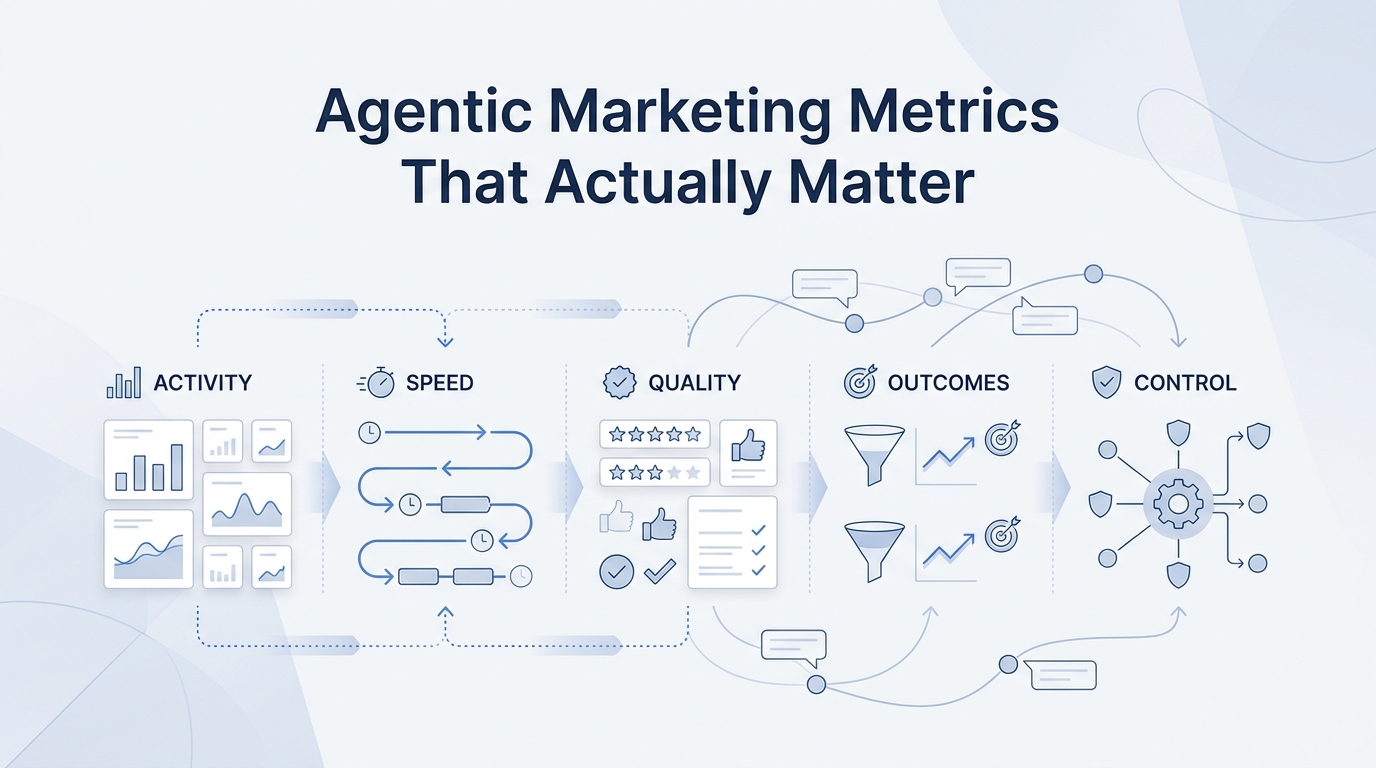
How do I measure if my AI lead qualification system is working? Track three metrics: (1) lead-to-opportunity conversion rate by score band — high scores should convert significantly better than low scores, (2) speed-to-first-contact for hot leads, and (3) disqualification reason distribution — if 60% of disqualified leads share one reason, fix the top-of-funnel targeting. If your AI qualification system is working, rep time on unqualified leads should drop month-over-month.
Does Solvea integrate with my CRM for lead qualification? Solvea connects with major CRMs and passes structured lead data — qualification questions answered, lead score, routing decision — directly into the lead record. Your reps see a fully qualified lead profile before they make first contact.